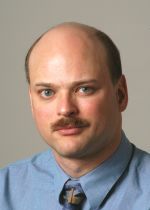
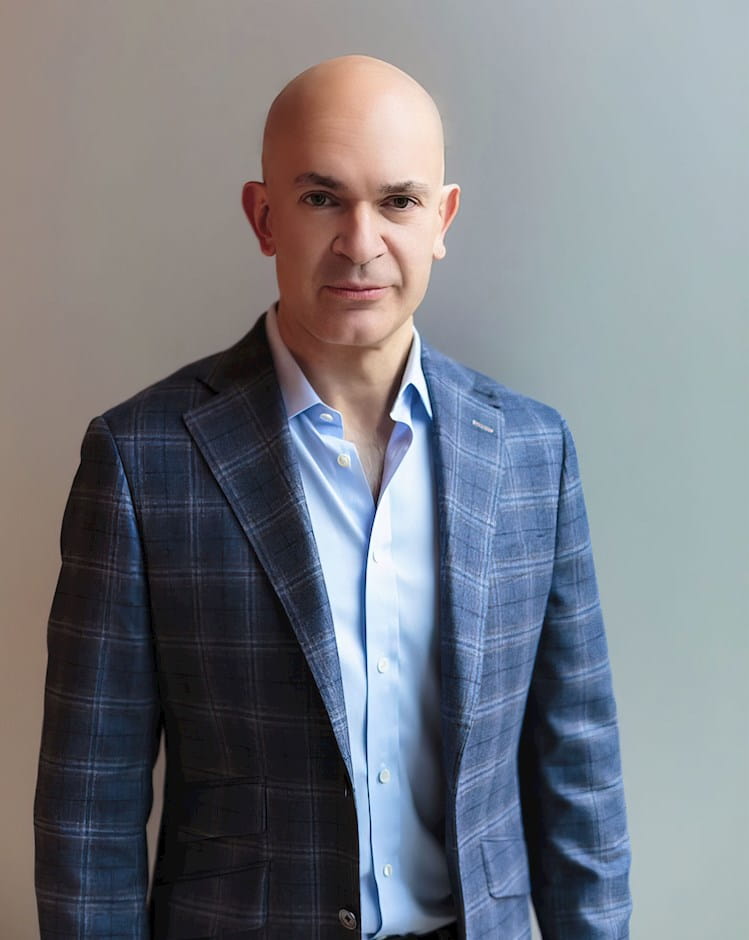
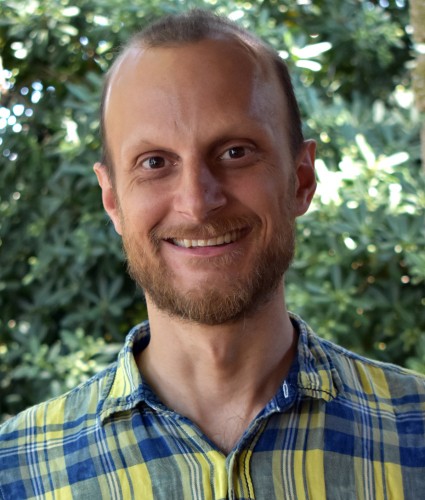
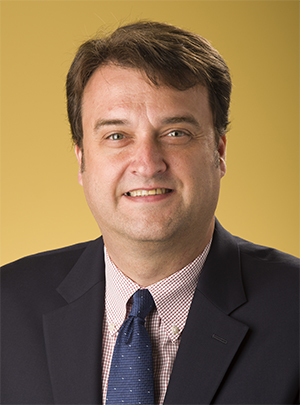
Prof. Julia Hearts is a Professor at the Technical University of Munich (TUM) , affiliated with the School of Natural Sciences . Her research focuses on biomedical imaging , particularly advancing X-ray computed tomography through phase-contrast and dark-field radiography for clinical and biological applications. Developing spectral detection techniques to enhance diagnostic accuracy Quantitative imaging for element-specific parameter extraction Utilizing synchrotron radiation and standard X-ray tubes Her recent publications demonstrate expertise in dark-field radiography for lung and breast imaging, phase-contrast tomography for tissue characterization, and multi-spectral X-ray analysis for material decomposition. Collaborative work spans oncology , pulmonology , and materials science . Contact: julia.herzen@tum.de
Nuno Pinto is a Senior Lecturer in Urban Planning and Urban Design at the University of Manchester's School of Environment, Education and Development. He holds a PhD in Planning from BarcelonaTech (Spain) and a Civil Engineering degree from the University of Coimbra (Portugal). Previously, he held academic positions at the University of Coimbra and served as a Researcher at the Polytechnic Institute of Leiria. His research focuses on quantitative approaches to urban planning, including decision support systems, urban simulation, integrated transport planning, and big data applications. He is particularly known for his work on cellular automata models and agent-based simulations in urban policy analysis. Nuno has secured significant funding, including a £663k EPSRC grant for the 'Resilience Beyond Observed Capabilities Network+' and a £19k Turing-Manchester grant for VR analytics in digital twins. Teaching expertise spans data science applications in planning, GIS, and decision-support methods across multiple master's programs. He advises on PhD topics combining quantitative methods with Iberian/Latin American urban contexts. Nuno is a Fellow of the Higher Education Academy and recipient of the 2011 Breheny Prize for outstanding urban planning research. Notable projects include 'Synthetic Cities' digital twin frameworks, peri-urban climate change analyses (PERI-CENE), and cross-border collaborations like the FAPESP-University of Manchester initiative. Current research explores smart city strategies in Latin America and carbon accounting systems. Supervised over a dozen PhD students, including works on mobility decision systems, metropolitan data analytics, and serious gaming for urban participation. Active in professional networks such as the COST TU1408 Air Transport and Regional Development initiative.
Professor John D. Kubiatowicz is a faculty member at the University of California at Berkeley in the Department of Electrical Engineering and Computer Sciences since 1998. He holds a PhD in Electrical Engineering and Computer Science (minor in Physics) from MIT (1998), an M.S. in EECS (1993), and a double B.S. in Electrical Engineering and Physics (1987) from MIT. His research interests span Quantum Computing Architectures Distributed Systems and Storage Network Security and Peer-to-Peer Protocols Introspective and Manycore Operating Systems Edge and Fog Computing Hardware-Assisted Security He has pioneered systems like OceanStore , a global-scale distributed file system, and Tessellation , a manycore OS with continuous adaptation. The scientific awards he has received include Presidential Early Career Award (PECASE, 2000) Scientific American 50 (2002) Diane S. McEntyre Teaching Award (2003) IEEE ICRA Best Paper (2025) George M. Sprowls Award for MIT PhD thesis (1998) Okawa Research Grant (1998) Best Paper at International Conference on Supercomputing (1993) His recent publications focus on Quantum Circuit Design and Optimization Edge/Fog Computing Architectures Secure Runtime Systems Distributed Garbage Collection Manycore OS Innovations Hardware-Assisted Security Mechanisms He leads the Quantum Architecture Research Center and co-founded the SWARM Lab at Berkeley, advancing a vision of self-adapting, secure systems from the chip level to internet scale.
Lillie R. Albert is a Professor and Program Director for Secondary Education at Boston College’s Lynch School of Education, Department of Teaching, Curriculum, and Society. Her work bridges mathematics education, sociocultural contexts, and social justice, focusing on teacher training and equity in high-need schools. Education: Ph.D. (University of Illinois at Urbana-Champaign), M.A. (Xavier University), B.A. (Dillard University) Her research explores the pedagogical implications of writing-to-learn strategies, Vygotskian psychology in mathematical problem-solving, and multicultural education. She leads a $1.78 million NSF-funded project preparing teacher leaders for Boston’s high-need districts and co-authored a book on South Korean elementary math teaching. Recent publications highlight multilingual education, metalinguistic awareness, and textbook analysis. She received the 2023 Drylongso Anti-Racism Leadership Award and has secured multiple NSF and foundation grants for STEM equity initiatives. Scientific Awards: Drylongso Anti-Racism Leadership Award (2023) She has contributed to projects like WGBH Educational Foundation’s Keep Going! Building a Culture of Perseverance in the Math Classroom and developed technology badges for teacher preparation programs.
Camilla Crea is an Associate Professor at the University of Sannio in Italy, affiliated with the Department of Law, Economics, Management and Quantitative Methods (DEMM) . Her work focuses on Private Law , European Economic Law , and Trademarks , with interdisciplinary intersections in Human Rights and Environmental Law . Research interests span European Private Law , Comparative Jurisprudence , and Legal Semiotics . Recent publications analyze Digital Vulnerability in EU frameworks, Trademark Semantics in multicultural contexts, and Environmental Disasters like the Ilva case. She contributed to Antigone and Portia , examining mythological legal references, and co-edited The New Shapes of Digital Vulnerability (2024).
Günter J. Hitsch is the Kilts Family Professor of Marketing at the University of Chicago Booth School of Business, where he has been a faculty member since 2001. His academic leadership extends to editorial roles as Co-Editor of the Journal of Quantitative Marketing and Economics and Associate Editor at Marketing Science and Management Science. Hitsch's educational journey includes an undergraduate degree from the University of Vienna (1995), followed by master's degrees in economics (1997, 1998), and a PhD in economics from Yale University (2001). This strong foundation in economics informs his approach to marketing research. His research program focuses on quantitative marketing and industrial organization, with particular emphasis on dynamic models of firm and consumer decision-making. Key areas include advertising effectiveness, pricing strategies, sequential learning and experimentation, and intertemporal consumer choice. Hitsch is pioneering in applying causal inference and machine learning to solve practical marketing problems such as optimal customer targeting. His work on dating and marriage markets demonstrates innovative application of economic theory to social phenomena. Hitsch's publication trajectory shows evolution from foundational work on consumer choice and switching costs to more recent applications of machine learning in marketing contexts. His research spans theoretical development and practical application, examining everything from private label demand during economic recessions to television advertising effectiveness across hundreds of brands. Co-Editor, Journal of Quantitative Marketing and Economics Associate Editor, Marketing Science Associate Editor, Management Science Hitsch's editorial leadership has significantly shaped the direction of quantitative marketing research. His commitment to methodological rigor and generalizable results ensures his work provides reliable inputs for both marketing practitioners and academic researchers. As an educator, Hitsch teaches advanced courses in quantitative marketing and business analytics, with scheduled courses for 2024-2026. He emphasizes that 'good marketing isn't fluffy,' challenging students to develop analytical approaches to marketing problems. His research philosophy prioritizes providing generalizable results that apply beyond specific case studies, serving as inputs for both practitioner decision-making and academic advancement.
Paco Martorell is an Assistant Professor at the School of Education, University of California, Davis, where he has been faculty since 2014. He maintains an adjunct appointment as an Economist at the RAND Corporation, continuing a relationship that began in 2005. Previously, he served as a Professor at the Pardee RAND Graduate School (2006-2014) and Research Scholar at the University of Texas at Dallas Center for Research on Education Policy (2012-present). Education includes: PhD in Economics, University of California, Berkeley (2005) BA in Economics and Mathematics, Carleton College (1999) Martorell's research spans higher education and K-12 policy with emphasis on: Developmental education reforms and college placement systems Grade retention impacts and student promotion policies Economic analysis of for-profit colleges and community college subsidies School infrastructure investments and resource allocation Military service consequences on education and economics Healthcare economics including dementia cost studies His work employs quasi-experimental designs and field experiments to evaluate policy effectiveness. Research publications predominantly focus on education policy evaluation and health economics, with recurring themes of equity in educational access, economic analysis of interventions, and longitudinal impacts of policy decisions. Quantitative methods form the core of his analytical approach. Awards and honors include: Huddleson Award for Outstanding Teaching (2009) RAND President's Award (2008) Public Policy Research Award from UC Berkeley (2005) Grant leadership includes multiple Institute of Education Sciences (IES) projects as Principal Investigator and Co-Investigator, examining: School facility spending impacts (R305A140363) Developmental education interventions (R305H130026) Long-term effects of grade retention (R305E120006) Community college subsidy impacts (R305A100369) Additional funding sources include Spencer Foundation, NICHD, and Smith Richardson Foundation. He teaches doctoral courses in education policy and previously taught econometrics at Pardee RAND Graduate School (2006-2013).
Dr. Marc Schmitt serves as a Research Associate in the Department of Computer Science at the University of Oxford while concurrently leading as Managing Director of the DEIM Research Institute in Germany. His interdisciplinary work bridges academic research and industry applications across artificial intelligence, cybersecurity, and financial systems. Academic Background: PhD in Computer and Information Sciences (AI in Finance), University of Strathclyde MSc in Quantitative Finance, University of Strathclyde MSc in Software Engineering, University of Oxford BA in Business Administration, Technische Hochschule Nürnberg Georg Simon Ohm Dr. Schmitt's research focuses on AI-driven decision-making at the intersection of finance, business analytics, and cybersecurity. His work examines how intelligent systems integrate into organizational structures while addressing systemic risks in digital ecosystems. Recent investigations include generative AI threats in social engineering, no-code AutoML applications, and policy frameworks for AI-enhanced security systems. His publications demonstrate consistent methodological innovation across theoretical and applied domains. Analysis of his publication trajectory reveals growing emphasis on generative AI security implications (2024-2025), with foundational work in business analytics applications (2023). The research shows strong interdisciplinary connections between computer science, financial economics, and human-centered design principles, reflecting his unique background spanning technical and business domains. Prior to academia, Dr. Schmitt held strategic positions including Senior IT Partner for Equity Finance at Siemens Financial Services and management consulting roles at d-fine and Deloitte, where he advised Fortune 500 companies on digital transformation and risk management. His industry experience directly informs his research approach, emphasizing practical implementation challenges alongside theoretical innovation.
Taiwo Amoo is an Assistant Professor of Business and Quantitative Methods at Brooklyn College, CUNY , where he has been employed since 1999. His academic career spans institutions including Baruch College (substitute and adjunct roles, 1993-1999) and Kaduna Polytechnic, Nigeria (1987-1988). With a PhD in Operations Research (University of Exeter, 1992) and a BSc in Statistics (University of Ibadan, 1986), Amoo specializes in operations management, statistical analysis, and educational innovation. Current position: Assistant Professor (Brooklyn College, CUNY) Key expertise: Operations Management, Queueing Theory, Rating Scale Methodology Technological proficiency: SAS, SPSS, Oracle Database Systems His research focuses on optimizing rating scale design , integrating technology in education , and interdisciplinary approaches to business programs . Publications from 2000-2002 examine biases in survey construction, humor as an educational tool, and the relevance of traditional disciplinary structures in modern academia. Notable awards include PSC CUNY Grants and recognition as the Best Statistics Student at the University of Ibadan. Current affiliations: Brooklyn College (CUNY) Past affiliations: Baruch College (CUNY), University of Exeter, Kaduna Polytechnic
J.C. Bradbury is a Professor of Economics at Kennesaw State University , affiliated with the Department of Economics, Finance, & Quantitative Analysis. He maintains active research profiles on Google Scholar and SSRN , with a personal website at jcbradbury.com . Education : Ph.D. and M.A. in Economics from George Mason University; B.A. in Economics and Philosophy from Wofford College. His research focuses on Sports Economics , Stadium Subsidies , and Local Economic Development . Key contributions include analyzing the economic impacts of sports stadiums, film tax incentives, and labor dynamics in professional sports leagues. His work frequently appears in journals like Economic Inquiry , Journal of Sports Economics , and Public Finance Review . Recent publications examine fiscal impacts of stadium projects, attendance determinants in MLS, and policy critiques of government film industry support. He has served as a consulting expert on Economic Development , Athlete Valuation , and Sports Labor Issues , with references available upon request. He maintains active social media presence at Bluesky (9.2K posts) and Twitter, frequently commenting on sports policy, economic development, and local governance issues. His consulting work spans performance analysis, athlete valuation, and public policy evaluation.
Mohsen Heidari is an Assistant Professor in the Department of Computer Science at Indiana University, Bloomington. He is affiliated with the IU Quantum Science and Engineering Center (QSEc) and the NSF Center for Science of Information (CSoI). He previously held positions as a Visiting Assistant Professor at Purdue University and as a Postdoctoral Research Associate at CSoI. Ph.D. in Electrical Engineering (2019) and M.Sc. in Applied Mathematics (2017) from the University of Michigan His research focuses span quantum computing, theoretical machine learning, and information theory. Key themes include: Quantum algorithm design and sample complexity Fourier-based learning frameworks Quantum-classical duality in learning problems Information-theoretic approaches to biological systems Article trends show a strong emphasis on quantum-classical learning intersections (6/15 papers), Fourier analysis applications (5/15), and information-theoretic foundations (12/15). Notable venues include NeurIPS, IEEE Transactions, and ISIT. He directs research involving: Quantum Neural Network development Quantum measurement simulation Quantum data compression techniques Quantum algorithm implementation constraints
Veronica Israel Turim is a Doctoral student and Researcher in the Society, Technology, Religion and Media program at the Faculty of Communication and International Relations Blanquerna. She maintains an active research profile with an h-index of 22 and is involved in multiple significant research projects including AGORAS (2024-2025), Catholic Media Influencers (2024-2025), DIALOCAT (2023-2024), GenerAccions (2023), and STReaM: Society, Technology, Religion and Media (2022-2025). Dr. Turim's research program centers on the critical intersection of digital media, religious discourse, and societal trends. Her work employs both quantitative big data analytics and qualitative methods to examine how social media platforms shape religious understanding, political engagement, and sustainability awareness. She has developed particular expertise in analyzing Instagram, TikTok, and Twitter dynamics within Spanish and Catalan contexts, with strong methodological skills in exploratory data analysis and social network mapping. Her publication record reveals a clear trajectory examining misinformation patterns across different domains - from religious journalism to vaccine discourse to political communication. This thematic consistency demonstrates her commitment to understanding how information (and misinformation) flows through digital networks and impacts societal understanding. Her research has gained significant attention, with articles shared across multiple X (Twitter) accounts, Facebook pages, and referenced in Wikipedia. Dr. Turim collaborates extensively within a robust research network led by M. Díez Bosch and A. Sabaté Gauxachs, working alongside colleagues including V. Laferrara and J.L. Micó Sanz. Her current projects focus on interfaith dialogue, media representation, gender perceptions, and Catholic media influencers, demonstrating both continuity with her established research interests and expansion into new applications of her methodological expertise.
Orly Sade is a Visiting Associate Professor of Finance at the Leonard N. Stern School of Business, New York University, a position she has held since 2006. She is also a tenured Associate Professor of Finance at the School of Business Administration, Hebrew University of Jerusalem. Her academic work bridges experimental and behavioral finance with practical applications in public policy and financial regulation. Her educational background includes a Ph.D. in Finance from the University of Utah (2001), an MBA from Tel-Aviv University (1995), and a B.A. in Economics and Management from Tel-Aviv University (1993). Her research focuses on behavioral finance , household finance , crowdfunding , and experimental economics and finance . She investigates investor behavior, auction mechanisms, market liquidity, and the psychological aspects of financial decision-making. Her work often combines laboratory experiments with real-world market data. Her publications appear in leading journals such as the Journal of Financial and Quantitative Analysis , Journal of Monetary Economics , Review of Financial Studies , and Journal of Financial Economics . The articles reflect a consistent focus on auction design, investor psychology (e.g., the 'ostrich effect'), and market microstructure, with strong empirical and experimental foundations. She has received notable recognition including: Abe Gray Award from the President of the Hebrew University Research grants from the Israel Science Foundation Professor Sade has advised numerous financial institutions on debt offerings, tenders, and financial strategy. She has served on key public committees including the Ministry of Finance’s capital market advisory board, the investment committee for the 'Hadassah' pension fund, and the Israeli Securities Authority board. She previously worked in the banking sector and at the Banking Supervision Department of the Bank of Israel. She has directed the BA program at Hebrew University and served on multiple investment committees for university funds and mutual funds. She has been affiliated with leading institutions globally, including visiting positions at IE Business School (Madrid) and New Economic School (Moscow). She is actively involved in shaping financial policy and governance in Israel.
Prof. Freek J. Beekman is a Full Professor and head of the Biomedical Imaging section within the Department of Radiation Science & Technology at Delft University of Technology (TU Delft), Faculty of Applied Sciences. He is a leading figure in biomedical imaging, with extensive contributions to nuclear imaging technologies, including SPECT, PET, and CT. His research spans detector development, image reconstruction algorithms, hybrid photonic imaging, and the application of artificial intelligence in medical imaging. Research Interests: His work focuses on advancing imaging modalities through innovations in hardware (e.g., multi-pinhole collimators) and software (e.g., deep learning for attenuation correction). He has pioneered ultra-high-resolution imaging systems, particularly for preclinical and clinical SPECT, and has developed integrated platforms like U-SPECT-BioFluo. His recent research explores glymphatic delivery of nanoparticles, infection imaging, and AI-driven reconstruction techniques, reflecting a strong translational focus. Publication Trends: His most recent publications (2021–2023) emphasize deep learning in SPECT, multi-isotope imaging, high-resolution ex vivo systems, and applications in neuroimaging and oncology. The articles demonstrate a consistent focus on improving image quality, resolution, and clinical utility through physics-informed and AI-enhanced methods. Scientific Awards: NWO Physics Valorization Prize Innovation of the Year Award by the World Molecular Imaging Society (2015, 2018) Edward Hoffman Memorial Award (2017) Bruce Hasegawa Memorial Award (2021) FOM Valorization Award (2013) TU Delft Entrepreneurial Award (2010) Advising and Grants: While specific student names are not listed, his leadership in large collaborative projects and supervision of numerous publications suggests active mentoring. He has secured significant funding through national and international grants, evidenced by his invention of over 20 patent families and successful technology transfer. His founding and leadership of MILabs BV (sold to Rigaku) highlights his impact on commercialization and industry-academia collaboration. Labs and Teams: He leads the Biomedical Imaging research group at TU Delft, which develops cutting-edge imaging systems such as VECTor (SPECT-PET) and EXIRAD-HE. His teams have produced technologies used globally in academic and pharmaceutical research, contributing to tracer development and therapeutic innovation.
Sanni Kotimäki is a University Lecturer at the INVEST Research Flagship Centre, University of Turku, where she conducts research on life-course dynamics, socioeconomic health disparities, intergenerational effects, and the role of early-life experiences. Her work integrates quantitative methods and applied statistics to analyze complex social and health outcomes. Research Interests: Her research centers on understanding how parental resources, childhood environments, and socioeconomic conditions shape health and wellbeing across the lifespan. She investigates mechanisms behind health inequalities, including the influence of parental education, mental health, and family structure. A key focus is on intergenerational transmission of disadvantage and resilience, particularly through the lens of family policies such as parental leave. Publication Trends: Her recent publications (2020–2024) reflect a consistent focus on population health, using sibling fixed-effects models, administrative data, and mixed-methods approaches. Themes include fatherhood and workplace peer effects on parental leave, birth outcomes and NEET status, prenatal mental health disparities, and the long-term impacts of parental death. These works demonstrate methodological rigor and policy relevance. Scientific Awards: No awards mentioned in the provided text. Advising and Grants: There is no mention of students or advising roles in the available information. While no specific grants are listed, her affiliation with the INVEST Research Flagship Centre suggests involvement in large-scale, funded research initiatives focused on social and health disparities. Labs and Teams: Sanni is actively involved with the INVEST Research Flagship Centre, a multidisciplinary research environment at the University of Turku dedicated to understanding early-life determinants of health and wellbeing. She collaborates closely with researchers such as Satu Helske, Simon Chapman, and Juho Härkönen, contributing to both academic and public-facing outputs including blogs and policy reports.