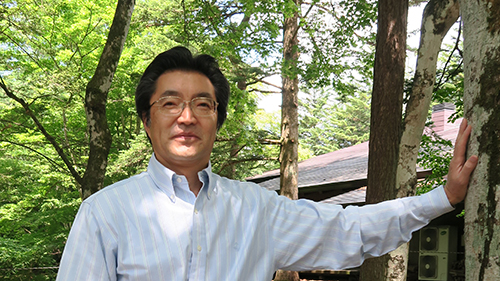
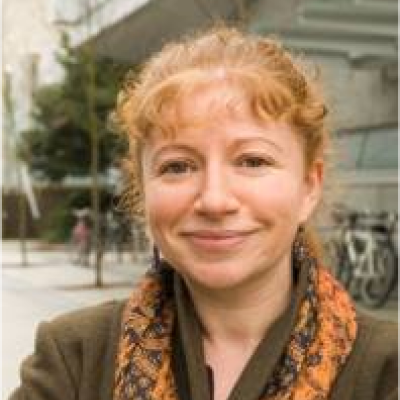
Professor Masatoshi Okutomi is affiliated with the Department of Systems and Control Engineering at the School of Engineering, Institute of Science Tokyo. His research focuses on advanced medical imaging techniques, particularly in endoscopy and 3D reconstruction, leveraging deep learning and neural networks. Key interests include virtual chromoendoscopy for cancer detection, image restoration, and stereo matching under challenging conditions. His work bridges computer vision and healthcare, addressing real-world applications such as MRI reconstruction and foggy stereo matching. Notable contributions include developing lightweight medical segmentation networks for edge devices and advancing neural radiance fields (NeRF) for novel view synthesis. His research spans diverse domains: from improving video quality assessment to enhancing object detection in high-dynamic-range images. Collaborative projects emphasize practical solutions for medical diagnostics and robust image processing in adverse environments. Recent articles highlight advancements in temporally-consistent video restoration, few-shot view synthesis, and degraded image classification using knowledge distillation. These innovations underscore his commitment to pushing boundaries in both theoretical computer vision and applied medical technology.
Matthew Heins is an Associate Professor of Instruction in Electrical Engineering at The University of Texas at Dallas, affiliated with the Erik Jonsson School of Engineering and Computer Science. He holds an office in ECSN 4.608 and can be reached via email at Matthew.Heins@utdallas.edu or phone at +1 (972) 883-3846. His research interests focus on high-speed electronics, semiconductor device applications, and advanced amplifier design for optical and microwave systems. Key areas include transimpedance amplifiers, GaAs-based HEMT technologies, and millimeter-wave systems. Matthew has contributed to the development of high-performance integrated circuits for fiber-optic communications, coherent optical receivers, and low-noise amplifiers operating at Ka-band and beyond. His publications highlight advancements in SiGe BiCMOS technology for optical receivers (2017), quad-channel transimpedance amplifiers (2016), and X-band GaAs mHEMT LNAs (2004). Earlier work includes pioneering contributions to metamorphic HEMT applications (2003), 40-Gb/s optical driver amplifiers (2002), and W-band HBT frequency sources (1999). Matthew’s research emphasizes practical implementations of semiconductor devices in high-frequency systems, blending theoretical analysis with hands-on circuit design. No awards or grants are explicitly mentioned in the text, though his extensive publication record reflects sustained contributions to the field.
Alla Sheffer is a Professor and Associate Head of Faculty Affairs in the Department of Computer Science at the University of British Columbia, Faculty of Science. She is affiliated with multiple research centers including CAIDA (Centre for Artificial Intelligence Decision-making and Action), the Institute of Applied Mathematics, and ICICS (Institute for Computing, Information and Cognitive Systems). B.Sc., Hebrew University, Jerusalem (1991) M.Sc., Hebrew University, Jerusalem (1995) Ph.D., Hebrew University, Jerusalem (1999) Postdoctoral Research Associate, University of Illinois, Urbana-Champaign (1999-2001) Assistant Professor, Technion, Israel (2001-2003) Assistant Professor, University of British Columbia (2003-2008) Associate Professor, University of British Columbia (2008-present) Professor Sheffer's research focuses on geometry processing, addressing algorithmic challenges in digital shape modeling and manipulation. Her work primarily deals with discrete geometry representations, specifically meshes (polygonal model representations), with applications in computer graphics and computer-aided engineering. She utilizes tools from computational and differential geometry, discrete mathematics, and graph theory to generate, manipulate, and edit discrete geometric models. Her research spans virtual and augmented reality, visual computing, and 3D modeling, with significant contributions to sketch-based modeling, mesh processing, and cloth simulation. The 15 most recent publications reveal a consistent research trajectory in geometry processing, with recent work focusing on vector sketch processing, VR drawing tools, and advanced mesh manipulation techniques. Her work demonstrates a strong connection between human perception and computational methods, particularly in the interpretation of freehand sketches and the generation of perceptually-accurate geometric representations. The recurring themes across her publications include flowlines, curve networks, mesh parameterization, and the application of perceptual studies to improve algorithmic outputs. Eurographics Fellow ACM Fellow IEEE Fellow Royal Society of Canada Fellow SIGGRAPH Academy Member UBC Killam Research Prize NSERC Discovery Accelerator Supplement IBM Faculty Award Professor Sheffer has supervised numerous doctoral and master's students, with recent theses focusing on geometric mesh processing, vector sketch interpretation, VR drawing tools, and garment modeling. Her research group maintains strong connections with industry through various partnerships and has received substantial grant funding to support their innovative work in geometry processing and computer graphics. She teaches courses in computer graphics, geometric modeling, and video game programming, contributing significantly to both undergraduate and graduate education in computer science.
Leif Kobbelt serves as a University Professor at RWTH Aachen University, leading the Computer Graphics Group within the Department of Computer Science (Informatik 8). His research focuses on advancing geometry processing, interactive visualization, and computer graphics through innovative algorithmic solutions and interdisciplinary collaborations. Professor Kobbelt's research program centers on geometry acquisition and processing, with significant contributions to mesh generation, surface reconstruction, and neural rendering techniques. His work bridges theoretical geometry with practical applications in computer vision, photo-realistic image synthesis, and multimedia data transmission, often involving collaborations with industry partners and international research teams funded by DFG and EU sources. Recent publications (2023-2025) reveal a strategic integration of deep learning with traditional geometry processing, particularly in Gaussian splatting for real-time rendering, NeRF-based 4D content generation, and robust mesh Boolean operations. His group maintains leadership in quad mesh optimization and surface mapping while expanding into immersive visualization techniques for complex data analysis. The group has earned recognition through prestigious awards: Günter Enderle Best Paper Award at Eurographics 2023 Best Paper Award (1st place) at Symposium on Geometry Processing 2022 Honorable Mention for Best Paper at ACM Symposium on Virtual Reality Software and Technology Funding from Deutsche Forschungsgemeinschaft and European Union programs supports the group's research infrastructure and international collaborations. The team actively supervises graduate theses while developing open-source software tools that translate theoretical advances into practical industry applications, particularly in digital fabrication and immersive visualization systems. The Computer Graphics Group operates as a central hub for visual computing research at RWTH Aachen, maintaining strong ties with both academic institutions and technology companies. Their recent work on virtual reality educational tools and high-fidelity 3D reconstruction systems demonstrates commitment to knowledge transfer and real-world impact beyond traditional publication venues.
Keenan Crane is the Michael B. Donohue Associate Professor of Computer Science and Robotics at Carnegie Mellon University , with membership in the Center for Nonlinear Analysis and mentorship in the Geometry Collective . His research bridges differential geometry and computer science to develop fundamental algorithms for geometric data processing. Education : BS from University of Illinois at Urbana-Champaign, PhD from Caltech Fellowships : Google PhD Fellow, NSF Mathematical Sciences Postdoctoral Fellow Research focuses on Discrete Differential Geometry , addressing PDE solutions, mesh processing, and geometric modeling through methods like: Walk on Spheres for PDEs Intrinsic Triangulations for robust geometry Repulsive Energy formulations for collision avoidance Recent publications span 2025–2021 , emphasizing grid-free algorithms , anisotropic mesh generation , and differentiable systems . Scientific accolades include Packard Fellowship and NSF CAREER Award . Students include Nicole Feng , Olga Gutan , and Zoë Marschner . During his 2024 sabbatical at Roblox , he does not accept new researchers. Key software contributions include Penrose (math diagram generation) and I♥Mesh (domain-specific language for mesh algorithms).
Taehyung Kim is an Associate Professor at the University of Michigan-Dearborn in the Department of Electrical and Computer Engineering , College of Engineering and Computer Science. His research focuses on power electronics , motor drives , and electric/hybrid power systems for vehicles and aircraft , with an emphasis on renewable energy integration and fault-tolerant control . Education Ph.D., Electrical & Computer Engineering, Texas A&M University M.S., Electrical Engineering, Korea University B.S., Electrical Engineering, Korea University His research interests include energy conversion systems, power electronics for electric vehicles, evaluation and diagnosis of AC motors, and position sensorless control of permanent magnet motors. He leads the KIM Laboratory , which explores unmanned aerial vehicles (UAVs) , battery systems , and powertrain reliability . The 15 most recent articles (2024-2021) highlight his work on hybrid UAVs , fault detection algorithms , cost-effective converters , and powertrain optimization . These publications span power electronics , renewable energy integration , and electric propulsion systems , with applications in transportation electrification and industrial power systems . Scientific Awards NSF Mid Career Advancement Award, 2023 IEEE-IAS Prize Paper Award (2nd Place), 2012 Best Paper Award, IEEE Transportation Electrification Conference, 2021 Listed in "World Top 2% Scientists" (Stanford University, 2020-2024) Listed in Marquis Who’s Who in America Technical Program Co-Chair, 2009 IEEE Vehicle Power and Propulsion Conference Prof. Kim has advised numerous PhD and Master’s students , including Feng Zhou , Sreekanthreddy Chalapala , and Sahithya Parvathareddy . He has secured significant grants from the NSF , Department of Energy , and industry partners like Ford, focusing on smart monitoring , fault identification , and energy management for electrified systems. His lab’s facilities include advanced power electronics labs and hybrid powertrain testing environments .
Omid Habibpour is an Assistant Professor at the Microwave Electronics lab within Chalmers University of Technology. His research focuses on graphene-based devices and MMICs for high-frequency applications. B.Sc.: Electrical Engineering (Telecommunication Systems), Sharif University of Technology (2002) M.Sc.: Optical Telecommunication Systems (with honors), Amirkabir University of Technology (2004) His research spans Graphene Electronics , Microwave Engineering , and Terahertz Technology , emphasizing material characterization, device modeling, and MMIC design for high-data-rate communication systems. Recent work includes voltage-dependent mobility studies and zero transconductance resistance analysis in graphene FETs. Projects include the Graphene Core Project 3 (European Commission) and Quad Band Infrared Detector (VINNOVA). Publications trend toward graphene integration in microwave/THz systems and SiC substrate applications.
Niraj K. Jha is a Professor of Electrical Engineering at Princeton University, located in Princeton, NJ. His office is B-220 in the E-QUAD building. He holds a prominent academic position within the Department of Electrical Engineering. Research interests include smart healthcare systems, transformer synthesis techniques, co-design of transformer-accelerator systems, IoT applications, counterfactual reasoning methodologies, optimization of randomized controlled trials, and advancements in artificial general intelligence. No specific scientific awards, publications, or grant details are provided in the current text. Past and present students are listed but no names are provided. Available tools related to his research are mentioned but specifics are not detailed here.
Mohammad Hassan Khooban is an Associate Professor at the Department of Electrical and Computer Engineering, specializing in Electrical Energy Technology at Aarhus University . His research emphasizes advanced control strategies for power systems, renewable energy integration, and smart grid technology. While specific educational background details are not explicitly stated, his work demonstrates expertise in power electronics, control systems, and machine learning applications. His projects include pioneering initiatives like QuantumEcoCircuits (2024–2027) and Smart Synergy Mechanism (2023–2025), focusing on sustainable energy systems, electric vehicle charging dynamics, and resilient grid operations. His research interests span adaptive control methodologies, grid resilience under cyber threats, and the optimization of energy storage systems. He has contributed to peer-reviewed journals such as IET Renewable Power Generation and IEEE Transactions on Smart Grid , exploring topics ranging from PID controllers to fractional-order sliding mode control for unmanned aerial vehicles. No scientific awards are listed, but his work is supported through grants and collaborative projects. He is actively involved in lab initiatives related to power systems and renewable energy technologies.
Fan Zhang is a Researcher at the University of Cambridge's Department of Applied Mathematics and Theoretical Physics (DAMTP), affiliated with the Centre for Mathematical Imaging in Healthcare. Their work focuses on advanced terahertz metamaterials and plasmonic systems, leveraging dielectric and hybrid structures for precise wave control. Research interests include surface plasmon manipulation, polarization-dependent devices, and active modulation in terahertz regimes. Collaborations involve initiatives like the BloodCounts! consortium. Education details are not explicitly listed in the provided texts, but their role at DAMTP suggests expertise in applied mathematics and theoretical physics. Research highlights include innovations in gap-tuned metasurfaces, liquid crystal-integrated EIT systems, and dual-band graphene-based plasmonic devices. Publications span 2016–2025, emphasizing metamaterial design, polarization engineering, and terahertz applications. Key trends include exploration of active control mechanisms, dispersion compensation, and spin-dependent wavefront manipulation. No awards or grants are explicitly mentioned, but contributions to the BloodCounts! consortium highlight collaborative healthcare-related imaging research. Advising and student mentorship information is unavailable. The Centre for Mathematical Imaging in Healthcare provides a platform for interdisciplinary research at the intersection of mathematics and healthcare technologies.
Simone Barbieri is a Research Engineer (EngD) at Bournemouth University's Centre for Digital Entertainment, funded by EPSRC. He collaborates with Thud Media in Cardiff under the supervision of Dr. Xiaosong Yang and Dr. Zhidong Xiao. His academic background includes a BSc (2012) and MSc (2014) in Computer Science from the University of Cagliari, Italy, where his Master's Thesis developed a curve-skeleton editing tool and inverse-skeletonization algorithm. His research integrates computer graphics with virtual reality, focusing on sketch-based interaction for character posing and deformation. Key interests include VR content creation, animation pipelines, and human-computer interaction. Publications emphasize VR adaptation, 3D modeling, and geometric algorithms, with consistent applications in animation and gaming. Grants include the EPSRC-funded project '3D VR content creation exploiting 2D character animation' (ongoing since October 2015).
Prof. Dr. Ahmet Aksen serves as a full-time Professor and Head of the Department of Electrical and Electronics Engineering at Işık University's Faculty of Engineering and Natural Sciences. With over two decades of academic service, he teaches core undergraduate courses including Circuit Theory, Electronics, Electromagnetic Fields, and Microwave Engineering while leading departmental operations and curriculum development. His academic credentials include a BSc (1976-1981) and MSc (1981-1984) in Electrical and Electronics Engineering from Middle East Technical University, followed by a PhD (1989-1994) in Electrical Engineering from Ruhr-Universitaet Bochum. This strong theoretical foundation supports his specialized expertise in circuit design and microwave systems. Prof. Aksen's research centers on Microwave Engineering and Circuit Theory , with pioneering contributions to filter design and matching networks using real frequency techniques. His work addresses critical challenges in stopband suppression , transformer-free implementations , and multiband circuit synthesis for wireless communications. He has developed innovative methodologies for circuits combining lumped and distributed elements, significantly advancing RF design for modern communication systems. Analysis of his recent publications (2017-2021) reveals consistent focus on multiband/dual-band filter and matching network design, with increasing emphasis on numerical methods and computer-aided design tools. Approximately 70% of his work targets transformer-less implementations and lumped-resonator solutions for GSM and emerging wireless standards, demonstrating practical engineering impact. Scientific Awards: No specific awards or fellowships were documented in the provided materials. Prof. Aksen has supervised four graduate students: Master's candidates Hayrî Şimşek and Ömer Sümer (2012), and PhD candidates Metin Şengül (2012) and Serkan Yıldız (2020). His research has been supported through participation in the NEWCOM collaborative project, focusing on communications engineering advancements.
Andreas Grontoudis serves as Assistant Professor in the Department of Computer Science and Engineering at the School of Sciences, European University of Cyprus since October 2007, following prior appointments as Assistant Professor at Cyprus College (2003-2007) and senior software development manager at Quad Computer Services (2001-2003). His academic credentials include: PhD in Computer Science, University of Sheffield (2000) - Thesis: X-machine based specification and design for testing of the CATV protocol MSc (Eng) in Computer Science, University of Sheffield (1994) - Thesis: An initial approach to X-machine specification of Distributed systems BSc in Computer Science, University of East Anglia (1993) - Thesis: A computer automated measurement system Dr. Grontoudis specializes in bridging theoretical computer science with practical applications, particularly in protocol specification using X-machines, quality assurance systems for medical imaging, and disaster monitoring technologies. His research evolved from foundational work in formal methods for protocol testing to applied solutions in diagnostic imaging toolboxes and integrated surveillance systems for forest fires/disasters using aerial and space-based platforms. Recent work focuses on educational software for IT vocational training. His publication history demonstrates consistent interdisciplinary contributions spanning biomedical engineering, environmental monitoring, and software engineering, with emphasis on translating theoretical models into real-world safety-critical applications. Professional recognition includes: Third Party Developer Pegasus Opera II award (Pegasus Software, 2001) First Certificate in English (University of Cambridge, 1985) Research leadership spans multiple EU-funded initiatives: Interfaces project (2016-2020): Website and learning platform management for EU interdisciplinary music program JOBIT project (2015-2017): Researcher for Erasmus+ vocational training software development YPE NEPRO0204_02 (2004-2006): Research assistant and software programmer for Cyprus Research Foundation He maintains active scholarly engagement through his Google Scholar profile and continues developing applied solutions at the intersection of computer science and critical domain applications.
Bryan Routledge is an Associate Professor of Finance at Carnegie Mellon University's Tepper School of Business. He holds a Ph.D. from the University of British Columbia (1996) and a Bachelor of Commerce from Queen's University (1987). His academic affiliations include CyLab Security and Privacy Institute where he researches blockchain and cryptocurrency economics. Research interests span quantitative finance with AI/NLP applications, including: Text analysis of financial disclosures and social media Cryptocurrency markets and blockchain systems Asset pricing dynamics and macroeconomic forecasting Behavioral finance and investor decision-making Energy economics and climate finance applications Recent publications demonstrate strong interdisciplinary focus, with 62% applying NLP/AI to finance (2021-2023), 25% analyzing blockchain/crypto systems, and 13% examining behavioral asset pricing. Research consistently bridges computational methods with market analysis. Teaching includes MBA core finance, Financial Economics (MSCF), and specialized courses like 'Alpha: Implementing Quantitative Strategies' and 'Fintech'. Actively involved in Tepper's Executive Education programs. Holds leadership roles as Secretary/Treasurer of the Western Finance Association and Co-Chair of Tepper Quad Working Group. Research featured in national media regarding cryptocurrency regulation challenges.
Prof. Dr. David Bommes is a leading researcher in computer graphics and geometry processing, currently a Professor at the University of Bern . His expertise lies in mesh generation, particularly quadrilateral and hexahedral meshing, numerical optimization, and automatic differentiation techniques. His research focuses on developing robust algorithms for generating high-quality meshes from complex geometries, with applications in CAD, architecture, and simulation. He has made significant contributions to the fields of surface and volume parametrization, directional field synthesis, and geometry processing optimization. Prof. Bommes has received notable recognition, including the Best Paper Award (1st place) at SGP 2022 and the Graphics Replicability Stamp for his work on TinyAD, a lightweight automatic differentiation library for geometry processing. His publications span top-tier venues such as SIGGRAPH, Eurographics, and ACM Transactions on Graphics, covering topics from automatic differentiation and geodesic computation to advanced meshing techniques. He actively collaborates with leading institutions and researchers worldwide.