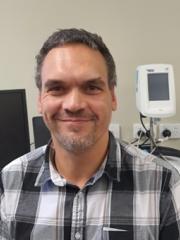
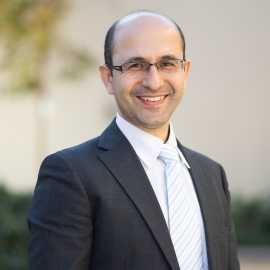
Roman Starykh is a Research Fellow at the School of Chemical Engineering , University of Queensland. His work focuses on high-temperature metallurgical processes, phase equilibria, and thermodynamic modeling in systems involving copper, nickel, and slags. Research Interests: Metallurgy, Materials Science, Phase Equilibria, Thermodynamic Modeling, Sustainable Metallurgy, Copper Production, Nickel Ores Processing, Slag Processing, High-Temperature Experiments Roman's publications reveal a consistent focus on experimental studies of phase equilibria and thermodynamic modeling in complex metallurgical systems. His recent work (2025) includes oxygen quantification in iron oxidation states using Electron Probe Microanalysis and conductivity measurements in iron silicate slags. Earlier studies examine metal/slag interactions, sulfur-containing alloys, and industrial process optimization for recycling applications. Current supervision includes advising PhD projects on high-temperature slag viscosity and copper electric slag cleaning furnace optimization . Roman collaborates with leading metallurgists like Professor Evgueni Jak , Dr Maksym Shevchenko , and Dr Evgenii Nekhoroshev . He is available for supervision at the University of Queensland and can be contacted via email: r.starykh@uq.edu.au .
Minna Rämä is a Researcher at the School of Chemical Engineering, focusing on extractive metallurgy and sustainable materials processing. Her work addresses critical challenges in metallurgical sustainability and circular economy applications. Educational Background: Dipl.ins. in Chemical Engineering (2017), Tekn.kand. in Materials Engineering and Rock Engineering (2016) Her research spans pyrometallurgy, zinc recovery, and non-fossil reductant utilization. Key projects include: ENICON (2022–2026): Sustainable processing of low-grade ores into battery-grade metals TOCANEM (2020–2023): Carbon-neutral metals production SYMMET (2018–2020): Symbiosis of metals production and environmental conservation CMEco (2017–2019): Aluminum oxide and copper smelting research Her publications highlight experimental investigations into zinc and lead residue processing, leveraging biochar and non-fossil reductants for environmental compliance and resource conservation. Trends include slag optimization, metal removal, and scalable metallurgical solutions. Her contributions intersect with UN Sustainable Development Goals in environmental stewardship and sustainable industrial practices. Research Outputs: 5 publications (2018–2023) in journals like ACS Omega and Journal of Cleaner Production , focusing on residue treatment and carbon-neutral metallurgy. Collaborations: Projects with EU Horizon Europe, Business Finland, and industry partners
Anna Klemettinen is a University Lecturer at Aalto University's College of Engineering within the Department of Chemical and Metallurgical Engineering. Her academic work focuses on sustainable metallurgical processes and battery recycling technologies. Institution: Aalto University Academic Title: University Lecturer Key Research Areas: Battery recycling, circular economy, sustainable metallurgy, critical raw materials recovery Anna's research explores the integration of pyrometallurgical and hydrometallurgical approaches for recovering valuable metals from end-of-life lithium-ion batteries. She develops innovative methodologies for process optimization using multi-dimensional sustainability indicators and statistical entropy analysis. Her recent publications (2021-2025) demonstrate expertise in: Lithium-ion battery recycling technologies NdFeB magnet rare earth recovery Slag cleaning process optimization Integration of flotation and pyrometallurgy Circularity metrics in metallurgical systems Graphite valorization from battery waste
Junmo Jeon is a Postdoctoral Researcher at Aalto University's School of Engineering , affiliated with the Metallurgical Thermodynamics and Modelling research group. Their work focuses on high-temperature material interactions in metallurgical processes. Research Interests : Metallurgical thermodynamics Phase equilibria in alloy systems Slag-refractory interactions Carbon and nitrogen behavior in liquid metals Computational materials modeling Publications Trends : Recent works emphasize thermodynamic modeling of non-ferrous metallurgical systems, with particular focus on refractory corrosion mechanisms, liquid alloy phase behavior, and computational methods like the Modified Quasichemical Model.
Dr. Farshid Pahlevani is a Researcher at the University of New South Wales (UNSW), Faculty of Engineering, School of Materials Science and Engineering, and a key member of the Centre for Sustainable Materials Research and Technology (SMaRT). With an international research career spanning prestigious institutes in Japan, Singapore, and Australia, Dr. Pahlevani specializes in innovative waste management solutions and sustainable metallurgical processes. His work focuses on transforming industrial waste into valuable resources, contributing significantly to environmental sustainability and cost efficiency in manufacturing. Dr. Pahlevani's primary research interests encompass Waste Management , Metallurgical Processes , Sustainable Materials , High Temperature Processing , Resource Recovery , Green Manufacturing , and Steel Production . His groundbreaking work has led to the development of novel methods for incorporating waste materials into metals manufacturing and transforming non-metallic wastes into green materials. He has published over 100 articles in leading journals, secured 6 international patents (with 4 licensed to companies across Japan, South Korea, Thailand, and Singapore), and attracted millions of dollars in research funding. Analysis of Dr. Pahlevani's recent publications reveals a strong focus on waste-to-resource conversion technologies. His research spans multiple disciplines including materials science, metallurgy, environmental engineering, and sustainable manufacturing. Key themes include thermal transformation of carbon-rich wastes, development of novel composites from recycled materials, surface engineering for corrosion resistance, and advanced recycling techniques for plastics and textiles. His work consistently demonstrates practical applications for industrial waste streams, contributing to the circular economy and sustainable manufacturing practices. Dr. Pahlevani's scientific achievements have been recognized with numerous awards: Most innovative engineer of the year (2020) Licensing award for liquid forging technology (2013) Nominated for Sawamura and Guimaraes awards (2012) Best industrial oriented research at SIMTech, Singapore (2011) Best research at Iron and Steel Institute of Japan (2010) Hata-no award for young researcher, Tohoku University (2009) Best National project for Al casting method in Japan (2007) As a process metallurgist at UNSW's SMaRT Centre since April 2015, Dr. Pahlevani has established strong industry partnerships and secured significant research funding. His work bridges fundamental science with industrial applications, focusing on practical solutions for waste management challenges. He has successfully adapted metallurgy knowledge to achieve the transformation of various waste streams into valuable materials, demonstrating the commercial viability of sustainable manufacturing approaches. The Centre for Sustainable Materials Research and Technology (SMaRT) provides the primary research environment for Dr. Pahlevani's work. This innovative center focuses on developing new technologies for utilizing waste as a resource in the production of next-generation green materials and products. Through this platform, Dr. Pahlevani collaborates with interdisciplinary teams to advance sustainable manufacturing practices and waste transformation technologies.
Heikki Lappalainen is a Doctoral Researcher at the Department of Chemical and Metallurgical Engineering, School of Chemical Engineering. His work primarily focuses on Lithium Processing , Life Cycle Assessment (LCA) , and Hydrometallurgy , with significant contributions to sustainable battery material production. Active in Lithium-Ion Battery recycling and production Specializes in simulation-based LCA methodologies Collaborates on sodium sulfate electrodialysis and sulfuric acid roasting His research explores the environmental impacts of lithium extraction processes using Scandinavian ore sources and evaluates pyrometallurgical recycling techniques . Key findings include optimizing resource efficiency in lithium hydroxide production from spodumene concentrate. Recent publications highlight the integration of process simulation with LCA to model battery material supply chains and compare electrochemical/mechanical energy storage systems. His work aligns with UN Sustainable Development Goals for climate action and sustainable industry . Activities include hosting academic visitors (2024-2025) and media engagement regarding electrified interfaces and hydrogen evolution (2022 coverage).
Deepoo Kumar is an Assistant Professor in the Department of Metallurgical Engineering and Materials Science at the Indian Institute of Technology Bombay. His work bridges fundamental thermodynamics and industrial metallurgical processes, with strong affiliations to pyrometallurgy and materials processing. Education: B.Tech & M.Tech, Metallurgical Engineering and Materials Science, IIT Bombay (2013) M.S., Materials Science and Engineering, Carnegie Mellon University (2016) Ph.D., Materials Science and Engineering, Carnegie Mellon University (2018) His research interests include steelmaking and casting, refractory interactions with steel and slag, additive manufacturing, metal recycling, thermodynamics and kinetics of metallurgical processes, mass transport in pyrometallurgical systems, and inclusion characterization. His work emphasizes both experimental and modeling approaches to improve steel quality and process efficiency. The recent publications reflect a strong focus on kinetic modeling of ladle refining, MgO inclusion behavior, advanced microstructural analysis using plasma FIB, and innovative use of slags in nanostructure synthesis via the VLS mechanism. These works span journals such as Metallurgical and Materials Transactions B and Ceramics International , indicating expertise in both ferrous metallurgy and ceramic materials. Scientific Awards: No awards listed in the provided text. Regarding advising and grants, there is no explicit mention of students supervised or external funding secured in the available information. However, his active publication record since 2013 suggests ongoing research engagement and potential supervision of graduate students at IIT Bombay. There is no specific mention of laboratories or research teams led by Dr. Kumar in the provided text, though his research areas suggest involvement in high-temperature processing, inclusion analysis, and kinetic modeling facilities within the MEMS department.
Dr. Yvonne Durandet is an Associate Professor (Advanced Manufacturing) in the Department of Mechanical and Product Design Engineering at Swinburne University of Technology, and Academic Director (Work Integrated Learning) for the School of Engineering. She holds an Orcid identifier 0000-0001-8265-0688 and can be reached at ydurandet@swin.edu.au. Her research focuses on advanced manufacturing, metallurgical engineering, and sustainable materials processing, with over 100 publications in journals and conferences. Research Interests: Dr. Durandet’s work spans metallurgical and surface engineering, casting/solidification, laser processing, additive manufacturing, and recycling of battery materials. She has pioneered studies on mechanically plated coatings, origami-based energy absorbers, and functionally graded lattices. Her industry collaborations include projects with CAST CRC, AutoCRC, and BHP, leading to innovations in laser-assisted manufacturing and material recycling. Awards: She received the David StJohn CAST Industry Partners’ Award (2009), two CAST Commercialisation Awards (2010), and holds a 1985 PhD scholarship from the University of Adelaide. Her work in aluminothermic reduction for battery recycling and origami metamaterials is highly impactful. Grants & Industry Projects: Active projects include advanced nanomaterial coatings for polyamide filaments (Solaft Filtration Solutions) and lunar-based metal casting technologies (Lunar Resources). She has secured funding from ARC, Excellence Australia, and Defence Department for initiatives in additive manufacturing and high-power laser processing. Professional Activities: Member of TMS, AIST, and Materials Australia, with roles as Committee Member (AIST Metallurgy Committee) and President (Materials Australia Vic/Tas Branch). She has reviewed for Helmholtz Gemeinschaft and led international collaborative projects. Teaching & Supervision: Supervises doctoral candidates in additive manufacturing, energy absorption materials, and battery recycling. Her teaching integrates industry-relevant projects and work-integrated learning programs aligned with automotive and aerospace sectors.
Anna Krammer is a Professor at the Chair of Thermal Processing Technology. Her research focuses on the sustainable transformation of industrial residues into construction materials, particularly through thermal processing and upcycling of slags and mineral wastes. Chair of Thermal Processing Technology (580) Research Interests: Development of innovative building materials from industrial by-products Carbothermal reduction processes for waste valorisation Alkali-activated materials using metallurgical residues Thermal chemistry in slag systems Circular economy applications for mineral waste Sustainable construction practices Publication Trends: Recent works emphasize the physical and chemical transformation of industrial residues through thermal processing. Key areas include cement industry applications, alkali-activated materials, and pyrometallurgical phosphide formation analysis. Collaborations: Active in international networks, with co-authored contributions at the 9th Slag Valorisation Symposium in Leuven, Belgium. Collaborates with researchers like Karin Doschek-Held, Florian R. Steindl, and Christoph Gatschlhofer.
Dr. Thomas McFarlane Hoad is a Professor and Chair of Thermal Processing Technology, focusing on advanced materials and sustainable processing methods. His research bridges engineering and environmental science. Recent work includes evaluating refractory material performance in pyrometallurgical recycling of lithium-ion batteries, contributing to circular economy goals. Collaborative efforts involve institutions like Leoben University. His research interests span refractory materials, battery recycling technologies, and thermal processing under reducing atmospheres. Key trends in his publications include innovations in metallurgical sustainability, material behavior under extreme conditions, and resource recovery from electronic waste.
Umay Çınarlı is a Research Assistant at the Department of Materials Science and Nanotechnology Engineering, Faculty of Engineering, Yeditepe University. She holds a PhD in Materials and Nanotechnology Engineering from Yeditepe University and a Master's Degree in Chemical and Process Engineering from Yalova University. Engineering Fundamental Field Materials and Metallurgical Engineering Ceramic Materials Powder Metallurgy Metallic Materials In 2021, she published a key article on alumina-based ceramic production from aluminum black dross in Mining Metallurgy & Exploration , focusing on sustainable material processing methods. Her work integrates hydrometallurgical and pyrometallurgical approaches. Scientific Awards: Genç Araştırmacı Ödülü (Young Researcher Award) from TMMOB Metalurji ve Malzeme Mühendisleri Odası
Rajiv Shekhar is a Professor in the Department of Materials Science & Engineering at the Indian Institute of Technology Kanpur (IITK). With a PhD from the University of California, Berkeley, his career spans over 30 years of teaching, research, and leadership in metallurgy, electrochemistry, and sustainable energy systems. Education: PhD in Metallurgical Engineering, UC Berkeley (1988) MS in Metallurgical Engineering, UC Berkeley (1985) BTech in Metallurgical Engineering, IITK (1982) His research focuses on extractive metallurgy , solar thermal energy , electrochemical processes , and environmental remediation . He has pioneered advancements in Hall-Heroult cell design, rare earth extraction, and solar energy applications for metal processing. His work bridges metallurgy with environmental engineering and energy policy. Scientific Contributions: He has developed novel methods for electroremediation of heavy metals, electrochemical drilling, and large-scale solar thermal systems. His 15 most recent publications highlight innovations in open volumetric air receivers, neodymium electrolysis, and sustainable steel production. Projects & Grants: Led major initiatives for MNRE, ADB, and BRNS, including establishing a solar thermal research center at IIT Jodhpur. His consultancy work spans industries like Hindalco and Shree Cements, focusing on process optimization and feasibility studies.
Takashi Murata is an Assistant Professor at Waseda University's Faculty of Science and Engineering, focusing on metallurgical engineering and recycling technologies. Since 2024, he has advanced research in pyrometallurgical processes for precious metal recovery. Ph.D. in Engineering (2023, Waseda University) M.Sc. in Creative Science and Engineering (2021–2023, Waseda University) His research centers on high-temperature metallurgy, slag chemistry, and platinum group metal (PGM) recycling. Key projects analyze phase equilibria in oxide systems and metal-slag partitioning for catalyst and alloy recovery. Recent publications highlight advancements in PGM extraction, including studies on terbium recovery from alloys, silver solubility in slag, and platinum distribution across slag-metal interfaces. These works span disciplines like metallurgy, materials science, and chemical engineering. 2023 : Annual Paper Award (Mining and Materials Processing Institute of Japan) 2022 : Best Poster Award (International Symposium on East Asian Resources Recycling) 2021 : Effort Award and Excellent Poster Award (Japanese Iron and Steel Association, Japan Institute of Metals and Materials) Murata teaches undergraduate laboratory courses and graduate seminars in extractive metallurgy at Waseda University. His work bridges academic research and industrial applications in sustainable metal processing.
Professor Brian Monaghan is a faculty member at the University of Wollongong (UOW), holding the position of Professor in the School of Mechanical, Materials, Mechatronic and Biomedical Engineering. He is a leading pyrometallurgist with over a decade of expertise in high-temperature metals processing, focusing on sustainability challenges in steel production. Currently, he serves as Director of the Engineering Materials Strength at UOW and leads the UOW PYRO Group. His leadership roles include membership in the Research Management Committee of the Steel Research Hub, overseeing the Sustainable Steel Manufacturing Program. Education: PhD in Materials Engineering from the University of Strathclyde (1996), BSc (Hons) in Materials Science from the same institution (1989). Research Interests: Professor Monaghan's work centers on pyrometallurgical processes, slag dynamics, phosphorous removal in steelmaking, and sustainable steel production. He actively investigates methods to recycle steelmaking byproducts and reduce environmental impact through projects like 'Phosphorous Recovery from Slag' and 'Zero-CO2 Production of Technological Metals.' Awards: AIST Kent D. Peaslee Award (2019), ACARP Research Excellence Award (2018), John A. Brodie Medal (2011, 2016), and multiple contributions to the Australasian Welding Journal. Supervision & Grants: He supervises numerous PhD/MPhil students in topics like hydrogen-based steelmaking and slag recycling. His grants include ARC Linkage Projects, Steel Research Hub leadership, and collaborations with industry partners like ACARP and ARENA. Labs/Teams: Leads the UOW PYRO Group and collaborates with the Steel Research Hub, focusing on innovative metallurgical solutions for environmental challenges.
Fiseha Tesfaye is an Adjunct Professor (Metallurgical Thermodynamics) at the Laboratory of Molecular Science and Engineering, Åbo Akademi University, and holds roles as a Process Metallurgist at Metso Metals Oy and Associate Editor of JOM (Springer Nature). He earned his M.Sc. and Ph.D. in metallurgy from Aalto University. His research focuses on metallurgical thermodynamics, circular economy of materials, and renewable energy production. Dr. Tesfaye has published over 100 peer-reviewed articles and received the 2018 TMS Young Leader Award. He leads projects like GLCE (greener metal extraction) and innovative e-waste recycling initiatives. Education: M.Sc. in Materials Processing Technology (Aalto University) Ph.D. in Metallurgy (Aalto University) Research Interests: Circular economy for materials and energy Thermodynamic modeling of inorganic systems Pyrometallurgical recycling processes Waste-to-resource valorization Awards: 2018 TMS Young Leader Award Springer Nature Editor of Distinction Awards (2025) Teaching & Supervision: Co-teaches courses in chemical thermodynamics and inorganic materials. Supervises undergraduate/postgraduate students and postdocs. Active in conference organization (e.g., TMS 2024 Energy Technologies Symposium) and editorial work for journals. Labs/Teams: Principal Investigator in projects such as GLCE (2024–2025) and innovative e-waste recycling (2022–2023). Collaborates globally in material science and energy technology.