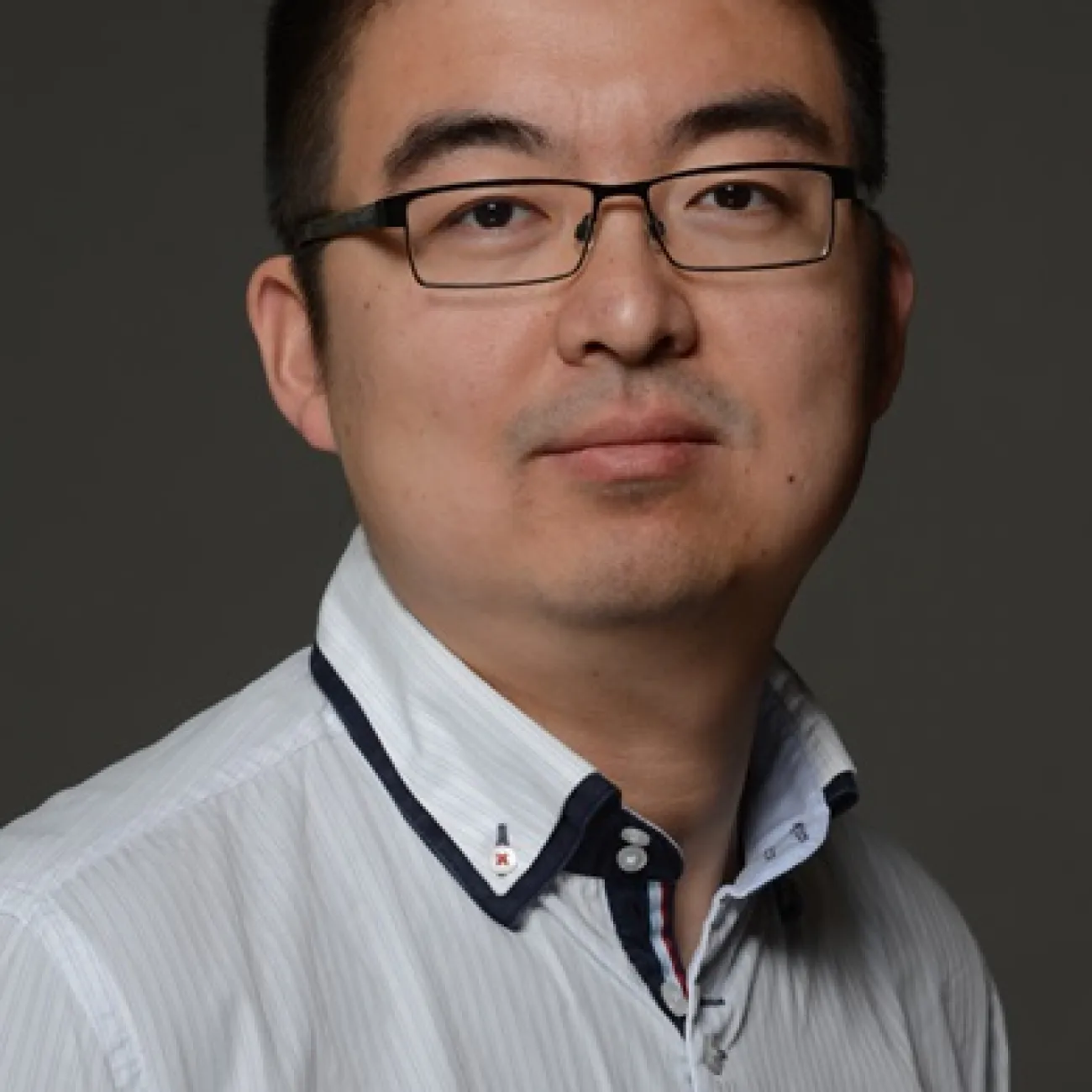
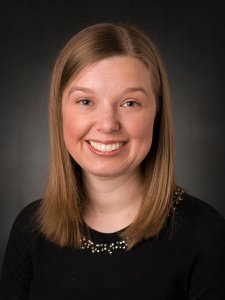
Hossein Nami is an Associate Professor at the Department of Green Technology (IGT) and SDU Life Cycle Engineering at the University of Southern Denmark . His research focuses on Power-to-X , Hydrogen production , E-fuel , and system modeling for sustainable energy solutions. PhD, University of Tabriz (2018) Postdoc, Technical University of Denmark (2020-2022) Assistant Professor, University of Southern Denmark (2022-2025) Nami's research output includes 15 articles (2024-2026) on topics like ammonia-fueled fuel cells , geothermal cycles , chemical looping combustion , and electrolysis optimization . His work emphasizes techno-economic analysis, exergy efficiency, and multi-objective optimization for low-carbon energy systems. He leads the FLEX-ENVIRONMENT project (2024-2027) on electrolyzer integration and contributes to CARMA-Green Fuels (2023-2026) and GRACE (2025) for carbon management and grid-aware investment. His teaching includes supervision of MSc theses on renewable hydrocarbons and power-to-X technologies at SDU.
Regina Ragan is a Professor in the Department of Materials Science and Engineering at the Samueli School of Engineering, University of California, Irvine. Her research focuses on nanomaterials, self-assembly, and surface-enhanced Raman scattering (SERS) for applications in optical communication, energy systems, and biomedical diagnostics. Education: Ph.D. in Applied Physics, California Institute of Technology, 2002 M.S. in Applied Physics, California Institute of Technology, 1998 B.S. in Materials Science and Engineering, University of California, Los Angeles, 1996 Her work integrates scanning probe microscopy and first-principles calculations to study thermodynamic driving forces in self-assembly and structure-function relationships. Recent publications highlight applications in antimicrobial susceptibility testing, environmental monitoring, and plasmonic device fabrication. The Ragan group develops low-cost diagnostic tools using SERS for telemedicine applications. Current lab members include graduate students and postdoctoral researchers working on nanoscale systems from atomic to mesoscale. Scientific Awards: NSF CAREER Award for fundamental studies of biological/inorganic interfaces Research Trends: Recent articles show a focus on SERS-based diagnostics, plasmonic nanoantennas, machine learning-assisted spectral analysis, and scalable synthesis of 3D graphene architectures. Subfields span quantum plasmonics, stress-activated materials, and biofilm monitoring.
Vincent Dufour-Décieux is a researcher at the Professorship for Energy and Process Systems Engineering at ETH Zürich , focusing on developing computational methods for material screening in separation processes and global net-zero transitions. He earned his Master's in Materials Chemistry from Ecole Polytechnique (France) and a PhD in Materials Science from Stanford University , where he pioneered statistical methods combining Kinetic Monte Carlo and random graph theory to study planetary diamond formation. Research Highlights: Application of Classical Density Functional Theory (cDFT) for 100x faster adsorption property predictions in porous materials Development of science-based definitions for "hard-to-abate" emissions to guide climate action prioritization Integration of Coulombic interactions in cDFT for CO2 adsorption accuracy Article Trends : His work spans computational materials science (cDFT, random graph theory) and climate policy analysis, with recent publications in Joule , AIChE Journal , and Physical Review E . These studies emphasize scalable solutions for carbon capture, material screening efficiency, and accurate thermodynamic modeling. Collaborations : Active in international conferences (FOA15, MolMod, Gordon Research Conference) and cross-institutional projects with teams at Stanford, ETH Zürich, and industry partners.
Dr. Guohong Tian is a Senior Lecturer in Automotive Engineering at the University of Surrey's School of Mechanical Engineering Sciences. He holds roles including Departmental representative for the Faculty International Relations Committee and coordinator for Headstart and Summer School programs. His research focuses on advanced engine technologies, alternative fuels, and thermal management systems. Prior to Surrey, he was at Newcastle University (2010–2015) and Birmingham University as a Research Fellow (2008–2010). Education: PhD in Mechanical Engineering (Birmingham University). Collaborations: Jaguar Land Rover, Cummins, BP, Shell, JCB, and Avid. Research areas include: Internal combustion engines: novel designs (free piston, scroll engines), waste heat recovery via ORC, and desalination integration. Battery thermal management using capillary-driven cooling and heat pipes. Soot oxidation mechanisms and catalytic diesel particulate filters. Key projects: KTP project with William Medcalf Limited improving vintage engine performance. ADVICE-ADvancing thermal energy management in hybrid vehicles. Publications emphasize combustion diagnostics, emission reduction, and scroll expander optimization. He supervises students on pyrolysis oils and scroll expander development. His lab includes a state-of-the-art engine test bench with FTIR emission analysis and high-speed imaging systems.
Xiaoqing Pan is a Professor and Henry Samueli Endowed Chair in Engineering at the University of California, Irvine, with dual appointments in the Department of Materials Science and Engineering and the Department of Physics and Astronomy. He serves as Director of the Irvine Materials Research Institute (IMRI) and the Center for Complex and Active Materials (NSF MRSEC). A renowned electron microscopy expert, Pan has developed advanced transmission electron microscopy (TEM) techniques for atomic-scale material characterization. Ph.D., Universität des Saarlandes, Germany (1991) His research focuses on atomic-scale structure-property relationships in oxide heterostructures, ferroelectrics, nanocatalysts, and 2D functional materials. Pan leads development of novel 4D-STEM and momentum-resolved vibrational electron microscopy methods to study single-atom catalysts and complex oxides. With over 400 high-impact publications in Nature , Science , and Nature Materials , his work has been recognized by major fellowships and awards from the American Ceramic Society, American Physical Society, and National Science Foundation. Pan's recent work includes: Atomic-scale analysis of grain boundary phonon anisotropy Advances in FeSe/SrTiO 3 interface electron-phonon coupling Plastic waste upcycling through carbon intermediate interception Control of metal-support interactions in photocatalysts Strain engineering in high-entropy oxide films His laboratory at UCI represents the forefront of materials characterization technology development.
Plamen Atanassov is a Chancellor’s Professor in the Department of Chemical and Biomolecular Engineering with a joint appointment in Materials Science and Engineering at the Samueli School of Engineering, University of California, Irvine . His work focuses on developing advanced electrocatalysts for energy conversion and storage systems. Department: Chemical and Biomolecular Engineering, Materials Science and Engineering Academic Rank: Professor (Chancellor’s Professor honorific) Research Themes: Electrocatalysis, Bio-electrocatalysis, Fuel Cells, Energy Harvesting Research Interests: Prof. Atanassov specializes in non-platinum and platinum-based electrocatalysts for fuel cells, bio-inspired energy systems , and carbon dioxide valorization technologies . His group has pioneered: Atomically dispersed metal-nitrogen-carbon catalysts Novel synthesis methods for durable electrocatalysts Machine learning-guided fuel cell optimization Electrochemical ammonia and urea production Hydrogen evolution reaction with non-precious metals Scientific Contributions: With over 380 peer-reviewed papers (101 h-index), 50 issued US patents , and 35+ PhD students advised , his work bridges fundamental electrochemistry and industrial-scale energy solutions. Recent publications emphasize catalyst durability under realistic conditions, CO2 reduction, and sustainable manufacturing practices.
David B. Graves is a Professor of Chemical and Biological Engineering at Princeton University, affiliated with the Princeton Plasma Physics Laboratory. He holds a B.S. (1978) and M.S. (1981) from the University of Arizona and a Ph.D. (1986) from the University of Minnesota. Research focuses on non-equilibrium plasma for semiconductor fabrication, biomedical applications, and sustainable chemical processing. Leadership in plasma-surface interactions, atomic layer etching, and plasma medicine. His work bridges plasma physics, surface chemistry, and machine learning, addressing challenges in nanofabrication and energy-efficient plasma processes. Notable contributions include plasma-roadmap initiatives and innovations in plasma-enabled additive manufacturing. Awards: Plasma Chemistry Award (2025), ISPlasma Prize (2024), and multiple fellowships (APS, AVS, IOP). Labs/Teams: Graves Group, collaborating on plasma applications in nanotechnology and biomedicine.
Professor Jukka Konttinen serves as Professor of Chemistry of Biorefining at Tampere University within the Faculty of Engineering and Natural Sciences and Department of Materials Science and Environmental Engineering. Previously, he held professorships at the University of Jyväskylä (2009-2014) and research positions at Åbo Akademi University and industry firms including Carbona Inc. His expertise spans thermochemical biomass conversion and sustainable energy systems. Education: D. Sc. (Chemical Engineering), Åbo Akademi University, 1998 Research Interests: Konttinen specializes in biorefining via thermochemical conversion processes including gasification, pyrolysis, hydrothermal liquefaction, and combustion. His work encompasses hybrid energy systems integrating solid/liquid biofuels, biogas, and solar power at distributed scales. He develops chemical process engineering solutions through modeling, simulation, and experimental validation from laboratory to commercial implementation. Publication Trends: His recent publications (2013-2024) demonstrate concentrated expertise in biomass conversion technologies, emphasizing process optimization for lignocellulosic feedstocks, syngas quality enhancement, and techno-economic-environmental assessments. Key themes include pretreatment methods, gasification kinetics, and integration of thermochemical processes with circular economy principles across agricultural and industrial waste streams. Scientific Awards: Supervisor of Best Academic Dissertation (Tiina Keipi) by Tampere University (2019) Supervisor of Best Academic Dissertation (Tiina Keipi) by Academic Engineers and Architects in Finland TEK (2019) Advising and Grants: Konttinen has supervised 13 PhD students (10 completed, 3 ongoing), 70 Master's theses, and 25 Bachelor's theses. His funding portfolio includes €250k as PI for Bio4all (Business Finland, 2024), €861k as WP leader for BL2F (EU Horizon, 2019-2024), plus €425k in confidential contracts (2014-2024) and €1.5M in prior grants. Labs and Teams: He leads the Bio and Circular Economy research unit and previously directed the Laboratory of Chemistry and Bioengineering (2017-2018). Current projects include EU Horizon's BL2F and Business Finland's Bio4all initiatives focused on climate-neutral energy systems and biorefinery commercialization.
Niklas Hedin is a Professor and Head of the Department of Chemistry at Stockholm University . His research group specializes in developing advanced materials for environmental and energy applications, with a particular focus on CO₂ capture technologies , green material synthesis , and biochar-based solutions for pollution mitigation and sustainable resource utilization. Professor at Department of Chemistry Head of Department Stockholm University affiliation The research spans from fundamental molecular spectroscopy studies to industrial-scale applications . Key projects include the use of activated limestone for Baltic Sea eutrophication control, colloidal porous liquids for energy-efficient carbon capture, and engineered biochars for dual environmental remediation and agricultural applications. Recent publications highlight 2025 breakthroughs in aminated cellulose aerogels , graphene oxide composites for direct air capture , and ultrasound-assisted hydrogen peroxide synthesis . These works demonstrate Hedin's commitment to multiscale material engineering combining experimental validation with computational modeling. The group includes several PhD students and postdoctoral researchers working on specialized aspects of material synthesis and environmental application. His team actively collaborates with industrial partners and government agencies to translate laboratory findings into real-world solutions for sustainable chemistry and climate change mitigation .
Tomasz Majka serves as a Lecturer at the Department of Polymer Chemistry and Technology within the Faculty of Chemical Engineering and Technology at Tadeusz Kościuszko Cracow University of Technology. His academic career spans over a decade with continuous research and teaching activities focused on polymer engineering and materials science. His educational background includes a Licentiate in Applied Chemistry (2008) and Pedagogical Preparation (2008) from State Higher Vocational School in Tarnów, followed by MSc in Plastics Technology (2010) and Dr. Eng. in Technical Sciences (2015) from Tadeusz Kościuszko Cracow University of Technology. Majka's research primarily centers on polymer processing technologies , with special emphasis on thermal analysis and flammability of polymer materials , nanocomposite development , and terminal ballistics . His work bridges fundamental polymer science with practical industrial applications, particularly in developing sustainable flame retardant systems using biobased materials like lignosulfonamides. Recent publications reveal a strong focus on circular economy approaches through polymer recycling and biodegradable material development. His scientific contributions demonstrate consistent output in high-impact journals, with a notable shift toward sustainable polymer solutions since 2020, particularly in biodegradable composites and recycling technologies. The 15 most recent publications show expertise spanning flame retardancy mechanisms, nanocomposite engineering, and sustainable polymer processing. III place at International Session of WIiTCh Krakow University of Technology Science Clubs (2010) Award in 'Sustainable Development - Scientific Debut 2010' competition (2010) Award in 'Poster about famous scientist - Norio Taniguchi' competition (2011) II Prize in B-Innovative 'Be Entrepreneurial' business plan competition (2013) Majka actively supervises the Ballistic and Flammability Research Section within WIiTCH PK Chemistry Research Club and maintains strong industry connections through numerous industrial research projects. His professional engagements include international research stays at University of Bolton (UK) and Academy of Sciences of the Czech Republic, focusing on fire testing and polymer materials innovation. He serves as a scientific advisor for several industrial projects related to polymer processing and material safety. His laboratory work spans multiple specialized facilities including thermal analysis equipment, scanning electron microscopy, and polymer processing machinery. Current research directions include developing halogen-free flame retardants from lignin derivatives, optimizing biodegradable polymer composites, and advancing recycling technologies for post-consumer plastics.
Peter Awakowicz is a Senior Professor and former head of the Chair of Electrical Engineering and Plasma Technology at the Faculty of Electrical Engineering and Information Technology , Ruhr-Universität Bochum . His work focuses on plasma physics and technology, with applications in surface treatment, sterilization, and diagnostics. He is affiliated with the Department of Applied Electrodynamics and Plasma Technology, where he leads interdisciplinary research combining experimental plasma science with technological innovation. Research Interests: Plasma-assisted surface modification and thin-film deposition Dielectric barrier discharges and atmospheric pressure plasmas Plasma sterilization and biomedical applications Plasma-catalysis for environmental and energy applications Advanced plasma diagnostics and optical emission spectroscopy His recent publications demonstrate a strong focus on volatile organic compound (VOC) conversion , NO dynamics in low-pressure plasmas , microdischarge behavior , and plasma-assisted pyrolysis . These works highlight his expertise in both fundamental plasma physics and applied plasma engineering. Contact & Resources: Email: awakowicz@aept.rub.de Faculty Page: https://etit.ruhr-uni-bochum.de/en/faculty/professorships/prof-dr-ing-peter-awakowicz/ Google Scholar: https://scholar.google.de/citations?user=MPKunGAAAAAJ
Professor Jun Huang is a faculty member in the School of Chemical and Biomolecular Engineering at the University of Sydney, where he holds the rank of Professor and is Director of the Laboratory for Catalysis Engineering. He is also a Domain Leader for Materials at the nanoscale at Sydney Nano Institute and a member of several interdisciplinary institutes, including the China Studies Centre and Sydney Institute of Agriculture. His research focuses on catalysis engineering, with an emphasis on developing sustainable processes for renewable fuels, pollutant treatment, and greenhouse gas mitigation. Huang has held prestigious awards such as the Australia Research Council Future Fellowship (2022) and the Sydney Accelerator Fellowship (2018). Education: Huang earned his PhD from the University of Stuttgart (2008) and completed postdoctoral research at Georgia Institute of Technology and ETH Zurich. He joined the University of Sydney in 2010 as a Lecturer, advancing to Senior Lecturer, Associate Professor, and Professor. Research Interests: Huang's work centers on catalyst design for green chemical processes, including biomass conversion to biofuels, wastewater treatment, and CO2 utilization. He emphasizes sustainable manufacturing and environmental impact reduction through innovative catalytic systems. Current Projects: These include catalytic transformation of hydrocarbons/CO2/biomass, nano-catalysts for renewable energy, and advanced NMR spectroscopy for catalysis analysis. Collaborative projects involve anti-cancer therapies and drug pharmacology studies. Awards: Over 15 awards, including the 2021 ACS Sustainable Chemistry & Engineering Lectureship and 2017 Vice-Chancellor’s Research Excellence Award. Teaching: Huang instructs courses such as CHNG2801 (Conservation Processes), CHNG3802 (Industrial Systems), and advanced chemical engineering topics. He supervises PhD/Master students in catalysis and sustainable engineering. Labs/Teams: Leads the Catalysis Engineering Lab and collaborates with Sydney Nano Institute on nanomaterials research.
Dr. Xi Yu is a Lecturer in Chemical Engineering at the University of Southampton, affiliated with the Faculty of Engineering and the Environment. He holds a Bachelor's from Tianjin University and a Ph.D. from the University of Sheffield. His research focuses on low carbon fuels, granulation techniques, and computational fluid dynamics. He has supervised PhD students such as Jerin Jacob and is currently accepting new PhD applicants in these areas. Dr. Yu's educational background includes degrees in Chemical Engineering and prior academic roles at Aston University and the Energy and Bioproducts Research Institute (EBRI). His work spans bioenergy systems, particle technology, and multi-physics modeling. Key research projects include advancements in biomass gasification, biofuel production, and sustainable energy systems. His publications emphasize computational modeling, fluid dynamics, and biomass utilization. Recent articles explore topics like absorption chiller systems, fluidization validation, and bio-oil aging strategies. He contributes to teaching modules such as CHEG3000 and CHEG3004, reflecting his commitment to both research and education.
Heather Preisendanz is a Professor in the Department of Agricultural & Biological Engineering at Pennsylvania State University. Her research focuses on the fate, transport, and impacts of emerging contaminants, particularly PFAS, in agricultural and environmental systems. She leads interdisciplinary projects addressing water quality, contaminant mitigation, and sustainable land management. Recent work includes studies on PFAS contamination in private wells and agricultural fields, the efficacy of vegetative buffers, and low-cost water treatment solutions using biochar. She has been recognized as an Institute of Energy and the Environment (IEE) Fellow and contributed to projects like 'Developing Water Treatment Technologies for PFAS Removal in Disadvantaged Communities.' Her research integrates hydrology, biogeochemistry, and socio-technical systems to address environmental challenges. Collaborations include the USDA, Monash University, and the Chesapeake Bay watershed initiatives. She emphasizes translational science, bridging academic research with practical solutions for water sustainability. Affiliations: College of Agricultural Sciences, IEE Fellow, Agricultural & Biological Engineering Department Grants: USDA grants, IEE seed grants, and interdisciplinary funding for PFAS and water quality projects Key Projects: PFAS removal technologies, agroecosystem contaminant mitigation, and policy-relevant environmental assessments
Anker Degn Jensen is a Professor in the Department of Chemical and Biochemical Engineering at the Technical University of Denmark (DTU), where he is affiliated with the CHEC Research Centre. His research spans chemical reaction engineering, catalysis, and particle technology with applications in energy and sustainability. His research interests include chemical reaction engineering , catalysis , combustion , gasification of solid fuels , flue gas cleaning (especially NOx and Hg removal), production of liquid fuels , and fluidized bed processes for coating and agglomeration in white biotechnology. His work significantly contributes to UN Sustainable Development Goals related to clean energy and climate action. The recent publications highlight a strong trend in bio-oil upgrading , ammonia synthesis , plasma-assisted methane conversion , and adsorption modeling . These works reflect a deep engagement with sustainable fuel production, catalytic process optimization, and fundamental surface reaction mechanisms. Conversion of Furfural as a Bio-Oil Model Compound An Adsorption Isotherm That Includes Interactions Plasma-Assisted Non-Oxidative Coupling of Methane Optimisation of a Haber-Bosch Synthesis Loop Production of Phenolic Compounds from Argan Shell Waste Anker Degn Jensen is actively supervising multiple PhD students and leading research projects in hydrogen production, CO2 and H2O electrochemical reduction, bio-oil hydrotreating, and catalytic upgrading of biomass. He is involved in over 100 projects, including active grants on Conversion of hydrocarbons to hydrogen , Modeling electrochemical CO2 reduction , and Catalytic upgrading of pyrolysis oil . He is associated with the CHEC Research Centre at DTU, a hub for chemical engineering and catalysis research. His team collaborates on advanced reactor designs and catalytic processes for renewable fuels and chemicals.