Dr. Sharon O'Rourke is an Assistant Professor and Ad Astra Fellow at the University College Dublin (UCD) School of Biosystems and Food Engineering since 2019. Previously, she held roles at the University of Sydney and UCD's School of Agriculture and Food Science, focusing on soil science and environmental protection. She holds a BAgrSc from UCD and a PhD in Soil Nutrient Management from Queen's University Belfast. Research Interests: Her work centers on sustainable soil management, soil carbon sequestration, and environmental protection. She employs spectral techniques (e.g., mid-infrared, hyperspectral imaging) and modeling to study soil geochemistry, carbon dynamics, and climate change mitigation. Current projects include ClimateCropping (EU-wide soil carbon management), PRISM (in-field soil sensors), and CFunction (carbon-nutrient stoichiometry). Grants & Projects: Key grants include funding from Teagasc, the Department of Agriculture, and the Sustainable Energy Authority of Ireland. Notable projects include proximal soil sensing for carbon monitoring and bio-based product development via pyrolysis. Teaching: She coordinates modules such as 'Carbon & Sustainability,' 'Soil Technology,' and 'Research Skills,' emphasizing agricultural systems and climate-smart practices. Awards: Recognized as an Ad Astra Fellow, highlighting her contributions to innovative soil science research.
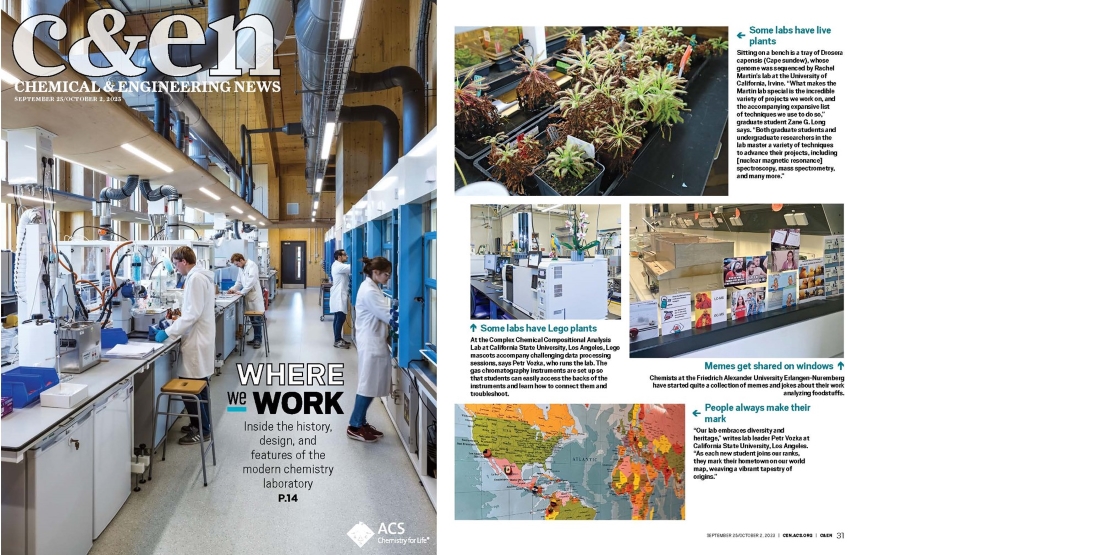
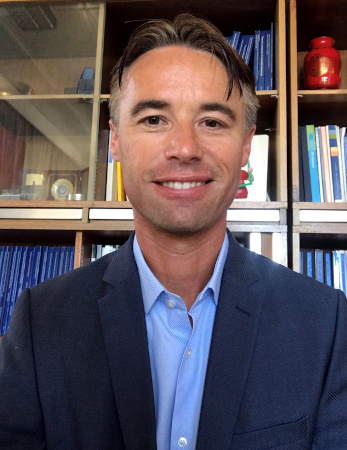
Dr. Petr Vozka is an Assistant Professor in the Department of Chemistry and Biochemistry at California State University, Los Angeles, where he leads the Complex Chemical Composition Analysis Lab (C³AL). His research focuses on the characterization of complex chemical mixtures using state-of-the-art techniques, including two-dimensional gas chromatography and high-resolution mass spectrometry, with applications in environmental science, plastic waste conversion, and forensic analysis. Dr. Vozka's research interests span multiple critical areas including the analysis of complex chemical mixtures, microplastics in the environment, conversion of plastic waste into alternative fuels, environmental impact of oil spills, and forensic fingerprint analysis. His work on microplastics has gained significant attention, with media coverage highlighting his findings that microplastics can penetrate blood vessels and have been found in the brain. His research on the Huntington Beach oil spill investigated the long-term effects of oil contamination on beaches used for recreation. Dr. Vozka has organized significant academic events including the Multidimensional GC: From Petroleum to Beyond symposium at ACS Fall 2025 and serves on the organizing committee for the Multidimensional Chromatography Workshop (MDCW). His laboratory, C³AL, is equipped with advanced instrumentation including GC-TOFMS, GC×GC-FID, and GC×GC-TOFMS systems, supported by partnerships with LECO Corporation and Anton Paar. Recipient of LECO Corporation's Pegasus® BT GC-MS instrument through a competitive selection process Principal Investigator for research funded by Naval Air Warfare Center Aircraft Division Collaborator with researchers from Purdue University, UCT Prague, Delft University of Technology, and California State Polytechnic University Dr. Vozka actively mentors undergraduate and graduate students, with numerous students receiving research awards including CSU COAST Undergraduate Student Research Grants, NSF REU placements, and Dean's List honors. His students regularly present research at national conferences including ACS meetings and the Multidimensional Chromatography Workshop. The C³AL lab provides hands-on experience with cutting-edge analytical instrumentation, preparing students for careers in analytical chemistry and related fields. As part of the LECO-C³AL Facility partnership, Dr. Vozka's lab serves as a training ground for students in comprehensive two-dimensional gas chromatography and mass spectrometry techniques. The facility aims to enhance knowledge and expand opportunities for students while equipping them with skills necessary to excel in graduate programs and analytical positions in industry and the military.
Khalifa Aguir is a Professor at Aix-Marseille University, affiliated with the Department of Detection, Radiation and Reliability (DETECT) and the Microsensor Instrumentation (MCI) Team. His research focuses on gas sensing technologies , particularly metal oxide semiconductors , nanomaterials , and thin films for environmental and biomedical applications.
Naoko Ellis is a Professor in the Department of Chemical and Biological Engineering at the University of British Columbia, Faculty of Applied Science. Her work bridges advanced multiphase reaction engineering with pressing sustainability challenges, focusing on fluidized-bed technologies for CO₂ capture, biomass valorisation, and clean energy production. Research Interests Multiphase reaction engineering & fluidized beds CO₂ capture via calcium looping and chemical looping combustion Biomass gasification, pyrolysis, and tar mitigation Bio-oil upgrading and biochar engineering for environmental applications Engineering education innovation for sustainability literacy Recent publications (2020-2024) reveal an integrated approach combining rigorous reactor modeling, novel catalyst development, and educational scholarship. Energy and environmental engineering dominate the portfolio, with emerging use of machine-learning tools for process optimisation and extensive exploration of biochar and bauxite-residue valorisation. Scientific Recognition Guest editor for memorial special issues honouring Prof. John R. Grace (Canadian Journal of Chemical Engineering, Powder Technology, 2023-2024) Invited prefatory contributions on chemical engineering education (Canadian Journal of Chemical Engineering, 2024) Advising & Grant Landscape No specific student names or funding details were provided in the supplied text; however, the breadth of collaborative publications and education-focused papers indicates active supervision of graduate researchers and leadership in curriculum-development grants. Labs & Teams Operates within the multiphase reaction engineering laboratory environment at UBC Chemical and Biological Engineering, leveraging pilot-scale fluidized-bed facilities and advanced analytical instrumentation for thermochemical conversion studies.
Kevin Van Geem is a full professor at Ghent University's Faculty of Engineering and Architecture, leading the Laboratory for Chemical Technology (LCT) and directing the Center of Sustainable Chemistry. His research focuses on thermochemical reaction engineering, transitioning fossil-based processes to renewable feedstocks, and integrating machine learning with chemical analysis. Director of Ghent University's pilot plants for steam cracking and chemical recycling Author of over 400 publications and founder of a spin-off company Specializes in kinetic modeling, process intensification, and sustainable chemistry His work spans chemical recycling, olefin production, and advanced analytical techniques for complex hydrocarbon mixtures. Recent articles highlight AI-driven catalysis, pyrolysis of polymers, and plasma-assisted CO2 utilization. Scientific awards include: Fulbright Research Scholar He bridges academia and industry through patented technologies and collaborative pilot-scale projects.
Bishnu Acharya serves as an Associate Professor and Saskatchewan Ministry of Agriculture Chair in Bioprocess Engineering within the Department of Chemical and Biological Engineering at the University of Saskatchewan. His research program focuses on sustainable conversion of agricultural biomass into high-value products through advanced bioprocessing techniques, addressing critical environmental and energy challenges. His primary research domains include: Cellulose-based biomaterials and nanocomposites for biomedical and packaging applications Thermochemical conversion (pyrolysis, gasification) and biochemical processing of agricultural residues Engineered biochar systems for wastewater remediation and soil enhancement Integration of remote sensing and machine learning for precision agriculture optimization Development of biodegradable materials from flax, wheat straw, and camelina meal Analysis of his 2024-2025 publications reveals a strong interdisciplinary trajectory bridging chemical engineering, environmental science, and agricultural technology. Key thematic clusters involve circular economy implementation in biomass valorization, nanocellulose-based advanced material development, and sustainable wastewater treatment solutions. His work consistently emphasizes practical applications for Canadian agricultural systems, particularly in Saskatchewan and Prince Edward Island contexts. Professional Recognition: Saskatchewan Ministry of Agriculture Chair in Bioprocess Engineering While specific grant details are not publicly enumerated in available materials, Dr. Acharya's prolific output across high-impact journals indicates substantial research funding and active supervision of graduate students. His collaborations span environmental remediation, advanced materials development, and sustainable agricultural technologies, reflecting a systems-thinking approach to bioresource management. Laboratory infrastructure likely includes biomass processing units, nanomaterial characterization facilities, and bioreactor systems supporting his diverse research portfolio.
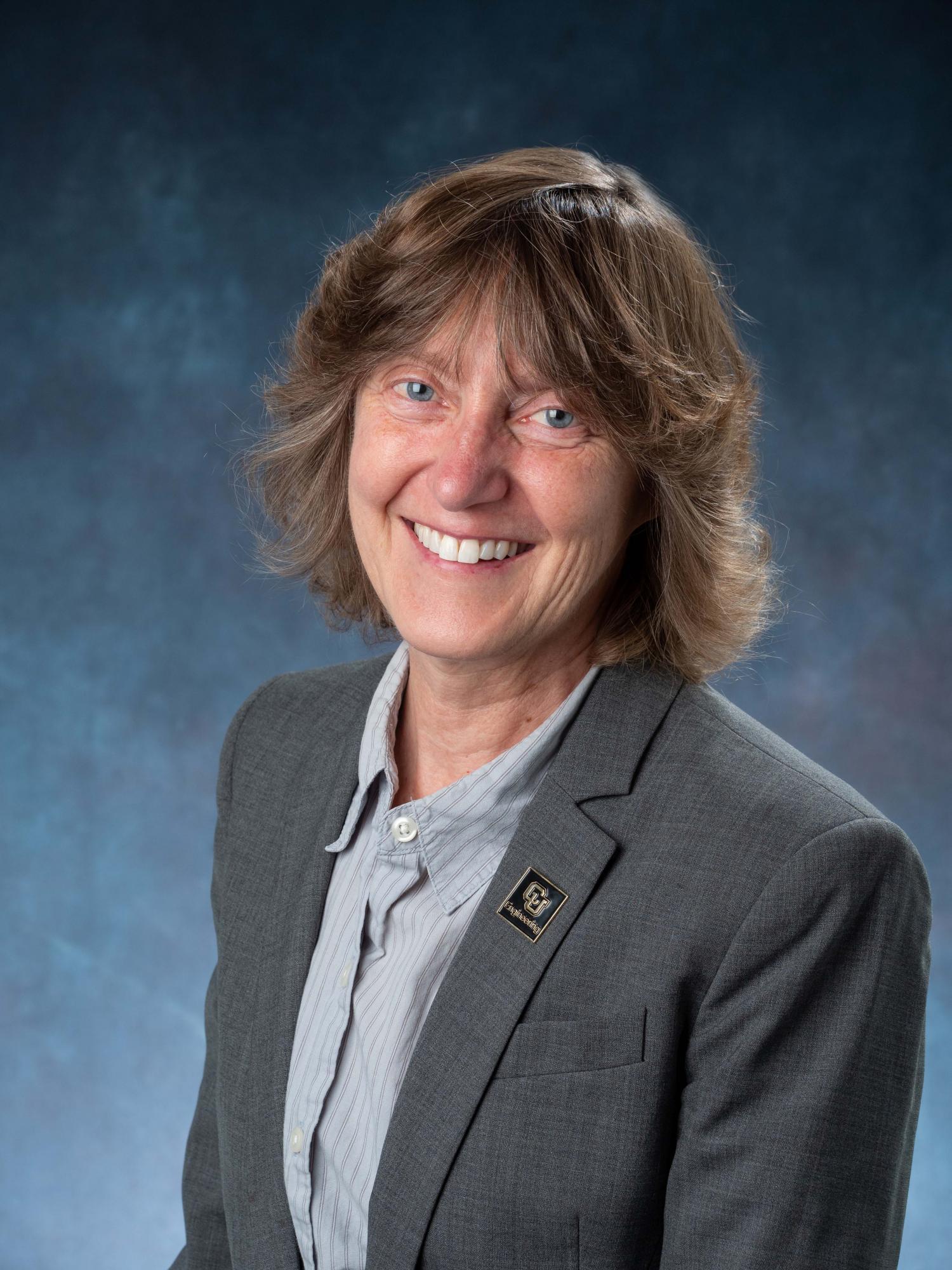
Dr. Hope Michelsen is an Associate Professor in the Department of Mechanical Engineering at the University of Colorado Boulder, specializing in Thermo Fluid Sciences and Air Quality. Her research focuses on carbonaceous particle formation mechanisms, combustion diagnostics, and their environmental impacts. She leads efforts in developing laser/X-ray-based diagnostic tools for studying soot evolution in flames and atmospheric systems. Research Interests include soot inception/growth, black carbon climate effects, and particle synthesis control. She has pioneered studies on resonance-stabilized radicals' role in soot formation and developed novel sampling techniques like jet-entrainment methods. Her work bridges fundamental combustion science with practical applications in air quality and climate mitigation. Awards: Fellow, American Physical Society Fellow, The Optical Society Alameda County Women’s Hall of Fame Inductee Lab facilities include advanced diagnostics at ECME 1B68/ECNW 180. Research collaborations involve multi-scale modeling of emissions and atmospheric transport. Current projects address wildfire soot dynamics and Arctic methane monitoring through inverse modeling techniques.
Prof. Erdem Günay is a full Professor in the Department of Energy Systems Engineering at Istanbul Bilgi University, where he has been serving since 2013, rising through the academic ranks. He holds a Ph.D. in Chemical Engineering from Bogazici University, where he also completed his B.S. and M.S. degrees, and conducted postdoctoral research. His academic journey reflects a deep commitment to energy systems and sustainable technologies. B.S. in Chemical Engineering, Bogazici University, 2002 M.S. in Chemical Engineering, Bogazici University, 2005 Ph.D. in Chemical Engineering, Bogazici University, 2012 Postdoctoral Research Associate, Catalyst Design and Reaction Engineering Laboratory, Bogazici University, 2013 Prof. Günay’s research centers on the integration of machine learning and artificial intelligence with energy systems engineering. His work spans renewable energy (solar, wind, bioenergy), hydrogen production, CO₂ utilization, fuel cells, and energy demand forecasting. He employs advanced data mining, neural networks, and explainable AI to model, simulate, and optimize complex energy processes, contributing significantly to sustainable energy solutions. His interdisciplinary approach bridges chemical engineering, environmental science, and computational modeling. His recent publications demonstrate a strong trend in applying machine learning to sustainable bioenergy, catalysis, and environmental management. From optimizing biochar production to forecasting global temperature anomalies and enhancing microbial fuel cells, his research leverages AI to address pressing energy and environmental challenges. The articles reflect a consistent focus on sustainability, efficiency, and innovation in energy technologies, with a growing emphasis on explainability and real-world applicability of AI models. Prof. Günay has not been mentioned to have received any specific scientific awards, but his extensive publication record in high-impact journals indicates strong recognition in his field. He has advised several Master’s students, including Muaaz Jnani, Duru Akalın, and co-advised Ahmet Coşgun and Meltem Baysal. He actively supervises senior design projects in areas such as biogas production, biodiesel from shea butter, pyrolysis, and solar desalination, fostering hands-on learning and innovation among students. While no external grants are explicitly mentioned, his research output suggests active involvement in funded projects. His teaching portfolio includes core courses such as Thermodynamics, Fluid Mechanics, Fuels and Combustion, and Energy Systems Modeling and Simulation. Although specific lab or research team names are not provided, his frequent collaborations with researchers like Ramazan Yıldırım, N. Alper Tapan, and Ahmet Coşgun suggest active participation in a research group focused on AI-driven energy and catalysis research at Istanbul Bilgi University.
Professor Kalpit Shah is a distinguished Chemical Engineer at RMIT University, serving as Deputy Head of Research & Innovation in the Department of Chemical and Environmental Engineering. He leads strategic research initiatives and industry engagement, fostering innovation in waste-to-energy and resource conversion. His roles include Deputy Director of the ARC Training Centre for Transforming Biosolids and leader of the Bioenergy theme at the TREMS Hub. With 24 years of industry and academic experience, he has pioneered technologies like PYROCO, advancing biosolids to biochar, and secured over $44.5M in funding. His team at the iRWT research group focuses on thermochemical, hydrothermal, and biological processes for circular economy solutions. Supervising 24 HDR students and mentoring researchers, he has authored over 160 journal articles, including 87% in Q1 journals, with an H-index of 44 and 6,213 citations. Research Interests: - Thermochemical conversion of biomass and waste. - Advanced carbon materials (biochar, hydrochar). - Pollutant remediation and PFAS management. - Circular economy and resource recovery. - Bioenergy production and pyrolysis technologies. Key Projects: PYROCO technology for biosolids-to-biochar conversion. ARC Training Centre collaborations on biosolids innovation. Hydrothermal processing of sewage sludge. Development of Ag-modified solvochar for multi-heavy metal removal. Funding & Grants: $44.5M secured over 12 years, including ARC grants, government, and industry partnerships. Collaborations span 28 industry partners and 4 universities nationally. Labs & Teams: Leads the iRWT group at RMIT’s $8M pilot facility, focusing on low-emission processes and circular economy technologies.
Xiaotao Bi is a Professor in the Department of Chemical and Biological Engineering at the Faculty of Applied Science, University of British Columbia. He is a Fellow of The Canadian Academy of Engineering, recognized for his significant contributions to the field of chemical engineering, particularly in biomass energy systems and environmental technologies. Dr. Bi's research focuses on developing environmental systems analysis and life cycle assessment tools to model and evaluate biomass energy systems. His work encompasses Canadian wood pellets, animal wastes, agricultural residues, and integrated impacts assessment of various biomass conversion processes including combustion, gasification, torrefaction, and pelletization. Current research interests include electrostatic charging of dielectric particles in gas-solids fluidized beds, dual fluidized bed for biomass steam gasification, and novel i-CFB reactors for catalytic NOx reduction. His extensive publication record demonstrates expertise across multiple domains of sustainable energy and environmental engineering. Recent work shows a strong emphasis on biomass conversion technologies, particularly microwave-assisted processes, fluidized bed systems, and waste valorization. There's a clear trend toward developing more efficient and environmentally friendly processes for converting various biomass feedstocks into energy and valuable products, with particular attention to addressing technical challenges like tar formation in gasification and electrostatic issues in particle handling. Dr. Bi has been recognized with the prestigious honor of being named a Fellow of The Canadian Academy of Engineering, which acknowledges his significant contributions to engineering research and practice in Canada. As a research leader, Dr. Bi has supervised numerous graduate students and secured funding for his research team to investigate innovative approaches to biomass conversion and environmental engineering challenges. His work bridges fundamental research with practical applications for sustainable energy systems. Dr. Bi leads a research team focused on developing advanced technologies for biomass conversion and environmental protection. His laboratory facilities likely include specialized equipment for fluidized bed operations, biomass processing, and analytical tools for characterizing biofuels and byproducts.
Dr. Priya Samudrala is a Senior Lecturer and Deputy Director of Education in Monash University's Department of Chemical and Biological Engineering. Her research spans heterogeneous catalysis, green chemistry, and sustainable processes, with expertise in biomass conversion, glycerol valorization, and 3D-printed catalysts for renewable fuel production. Recent publications (2017-2025) demonstrate consistent focus on sustainable catalyst design for biomass conversion, including catalytic reforming, hydrogenolysis, and CO2 valorization. Article trends emphasize catalyst innovation for circular economy applications, particularly in waste glycerol utilization and biomass-derived chemical production. Professional credentials include a PhD in Applied Chemistry from RMIT University and Master of Teaching from Monash University. Research contributions have been recognized through awards including the Martin Bennett Research Excellence Award.
LIN Yaochen is a Lecturer affiliated with the University of Strasbourg, France. He is a member of the MATISEN Team (Materials for information technology, sensors, and energy conversion) at ICube laboratory, where he contributes to research and teaching in materials science and optoelectronics. Role: Lecturer Research Focus: Photovoltaic materials, liquid crystal devices, nanomaterials for energy conversion Teaching: Involved in multiple Master's programs including Micro/Nano-Electronics, Condensed Matter and Nanophysics, and Materials Science Research Interests LIN's work centers on photovoltaic spatial light modulators , self-powered smart windows , and liquid crystal-nanoparticle composites . His research explores material selection, processing techniques, and device optimization to enhance performance in energy conversion and optical modulation. Key areas include: Material synthesis (e.g., TiO2/MWCNT nanohybrids) Charge transport in liquid crystals Dielectric properties of nanocolloids Smart glass technology Atomic-scale modeling of materials Scientific Awards No specific awards mentioned in available texts. Advising & Collaborations Supervises Master's level internships Active in interdisciplinary projects with physics and engineering departments Focuses on material innovation for optoelectronic devices
Dr. Jianbing Li is a Professor and Professional Engineer (P.Eng.) in the Environmental Engineering Program at the University of Northern British Columbia (UNBC), holding prestigious fellowships from CSCE, CSSE, EIC, and Engineers Canada. His research program addresses critical environmental challenges with significant real-world impact, particularly in northern and remote communities of British Columbia. Education: PhD in Environmental Systems Engineering, University of Regina Research Focus: Dr. Li's work centers on environmental pollution control , petroleum waste management , soil and groundwater remediation , environmental modeling , risk assessment , and oil spill response . His innovative approaches integrate machine learning, advanced materials, and sustainable engineering principles to develop practical solutions for complex environmental problems, with particular emphasis on resource recovery from waste streams. Publication Trends: Analysis of his 15 most recent publications (2023-2025) reveals a strategic focus on oil spill response technologies, wastewater treatment innovations, and waste valorization. Key advancements include nano/micro bubble flotation systems, chitosan-based adsorbents, and machine learning models for pyrolysis optimization, demonstrating his leadership in translating laboratory research to field applications. Scientific Recognition: 2024 Fellow of Engineers Canada and Engineering Institute of Canada 2023 CSCE Dr. Albert E. Berry Medal (Canada's top environmental engineering award) Multiple UNBC Research Excellence Awards (2010, 2014, 2019, 2023) 2013 Northern BC Business and Technology Award with Husky Energy Best paper awards from International Academy of Science and Environmental Geotechnology Society Research Leadership: Dr. Li has secured over $800,000 in 2023 and $1.9 million in 2020 for oil spill response research through NSERC, DFO, and NRCan. His current portfolio includes groundwater protection for Indigenous communities, next-generation decanting technologies, and water security for remote regions. He actively mentors PhD, MSc, and MASc students while serving on NSERC evaluation committees and co-directing the UNBC/UBC environmental engineering program (2013-2017). Collaborative Networks: Dr. Li leads multi-institutional partnerships with UBC, government agencies, industry (including Husky Energy), and Indigenous communities like Lheidli T'enneh First Nation. His work through the Multi-Partner Research Initiative addresses practical challenges in rural British Columbia while advancing fundamental knowledge in environmental systems engineering.
Michalis Konsolakis is a Full Professor at the School of Production Engineering and Management, Technical University of Crete (TUC). He holds a B.Sc. (1997) and Ph.D. (2001) in Chemical Engineering from the University of Patras, with postgraduate research at Cambridge University under a Greek-British Joint Research Programme. Previously, he served as Lecturer (2004–2010) and Assistant Professor (2010–2013) in TUC’s Department of Sciences before moving to his current position. His research focuses on heterogeneous catalysis, materials science, and surface science, particularly in energy/environmental processes like CO₂ hydrogenation, catalytic reactor design, and renewable energy systems. He has published over 200 peer-reviewed articles and serves on editorial boards of >10 journals. Konsolakis directs the Materials Science and Processes Lab (MatProLab) and the Industrial, Energy and Environmental Systems Lab at TUC. Teaching highlights include over 10 undergraduate and 5 postgraduate courses in chemistry, thermodynamics, materials science, and catalysis. He authored a general chemistry textbook and lecture notes. His work emphasizes sustainable energy solutions, including CO₂ conversion to synthetic fuels and green hydrogen production. Recent research trends in his publications emphasize advanced catalytic materials (e.g., ceria-based nanomaterials), electrochemical systems for hydrogen production, and techno-economic assessments of bioenergy processes. His labs develop novel catalysts for industrial applications, bridging fundamental science and engineering. Professional roles include editorial board memberships and international peer review for >100 journals. He collaborates globally on projects addressing environmental challenges through catalysis and materials innovation.
Isnaldi R. Souza Filho is a Junior Professor (Chair of Sustainable Metallurgy) at the French National Centre for Scientific Research (CNRS) , affiliated with the Institut Jean Lamour (UMR 7198), Université de Lorraine . He also serves as Group Leader for Sustainable Synthesis of Materials at the Max Planck Institute for Sustainable Materials since 2021. Education: PhD, MSc, and BSc in Materials Engineering from the University of São Paulo (2016-2019, 2013-2015, 2008-2013). Research Interests: Focus on sustainable metallurgy , particularly hydrogen plasma-based reduction of iron ores and microstructural characterization of Mn-containing steels . His work addresses decarbonization in steel production, scrap-compatible alloy design , and waste valorization (e.g., red mud conversion to green steel). Publication Trends: Recent studies emphasize hydrogen plasma smelting reduction of iron ores, kinetic modeling of reduction processes, and microstructure engineering for enhanced mechanical properties. Collaborative work spans CO2-neutral steelmaking , elemental partitioning , and high-entropy alloy synthesis . Scientific Awards: CAPES Thesis 2020 for Best National Doctoral Thesis in Engineerings II (Brazil) Multiple undergraduate awards (CREA-SP, ABM, Engineering Institute) for top academic performance in 2013 Grants and Affiliations: Affiliated with the Dierk Raabe Lab at the Max Planck Institute and leads the Sustainable Synthesis of Materials group. Research funded by institutions supporting climate-neutral metallurgy and recycling strategies .