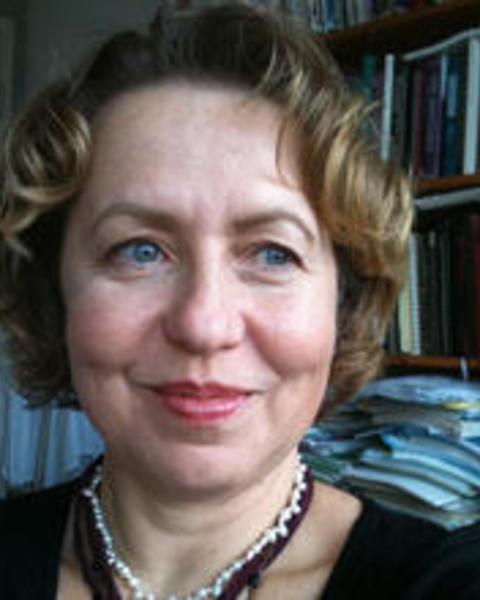
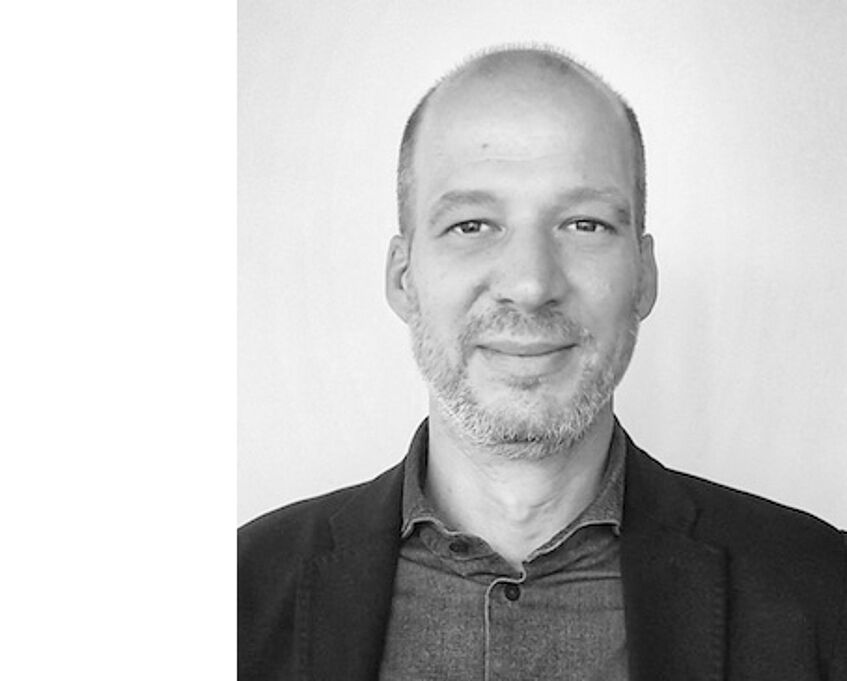
John Burn is an Honorary Postdoctoral Fellow in the Faculty of Arts at Macquarie University. He holds a PhD in Egyptology (2020) from Macquarie University, alongside earlier degrees in Environmental Science and Education from the University of Wollongong. His research focuses on integrating environmental and ecological perspectives into archaeological studies of ancient Egypt, particularly the Old Kingdom and First Intermediate periods. He has conducted fieldwork at sites linked to these periods, emphasizing how landscapes shaped societal development. Education: BSc in Environmental Science, University of Wollongong (1983) Dip.Ed, University of Wollongong (1985) Master of Arts in Egyptology, Macquarie University (2008) PhD in Egyptology, Macquarie University (2020) Research Interests: John advocates for a landscape-oriented approach to understanding historical changes, arguing that environmental factors (e.g., climate, geography) profoundly influenced ancient Egyptian societies. His work examines how resource acquisition practices, such as fishing and aquaculture, adapted to ecological shifts, particularly during the Old Kingdom's decline. He employs interdisciplinary methods, combining archaeological data with ecological modeling. Grants & Projects: Principal Investigator: RAT_3rd_Millenium: Resilience, Adaptation and Transformation: Upper Egypt in the Late 3rd Millennium (2020–present). Labs/Teams: Collaborates on the Pyramid Texts and tomb decoration in Dynasty Six dataset (Macquarie University), analyzing symbolic and ecological themes in tomb art.
Turgay Celik is a full Professor at the Department of Information and Communication Technology , University of Agder (Norway). His research focuses on machine learning applications in remote sensing, explainable AI, and data analysis . He leads projects related to radiometric normalization, sentiment analysis for low-resource languages, and biomedical prediction models. Research Interests : Machine learning for geospatial data, explainable NLP, adaptive learning systems, and domain adaptation frameworks Recent Publications : 15+ articles on topics spanning remote sensing image processing, multilingual NLP, and counterfactual credit scoring explanations Collaborations : Active in international research with co-authors from institutions in Norway, Iran, South Africa, and China His methodological work includes Trust-Region Reflective algorithms, Laplacian Pyramid Fusion, and SAM transfer learning for water segmentation tasks. He contributes to open-source frameworks evaluation and systematic reviews in computer vision and financial AI.
Dr. Julia Hamilton is a Lecturer in Egyptology at Macquarie University's School of Humanities, Department of History and Archaeology, where she joined in September 2022. She is also affiliated with the Global Indigenous Futures Research Centre. Dr. Hamilton's academic journey includes a DPhil in Oriental Studies from the University of Oxford (awarded 2020), an MA (First Class) in Ancient History from the University of Auckland (2014), and a BA (Hons) (First Class) in Ancient History from the University of Auckland (2013). Her educational background includes: DPhil in Oriental Studies, University of Oxford (Awarded April 5, 2020) MA (First Class) in Ancient History, University of Auckland (Awarded November 1, 2014) BA (Hons) (First Class) in Ancient History, University of Auckland (Awarded May 1, 2013) Dr. Hamilton's research sits at the intersection of multiple sub-fields within Egyptology, including philology, art history, and archaeological and anthropological theory. Her work focuses on Old Kingdom Saqqara, where she works with the Oxford Expedition to Egypt. She has a particular interest in the materiality and multi-modality of ancient Egyptian language, with ongoing work on a monograph titled "Lives and afterlives of ancient Egyptian names." Her research also encompasses graffiti on Old Kingdom monuments of the late 3rd Millennium BCE and the multisensoriality and haptics of the graffiti-making process. Her extensive publication record demonstrates consistent scholarly output across multiple disciplines within Egyptology. Her most recent works (2023-2025) focus on ancient Egyptian personal names, graffiti studies, and social history, particularly examining the lives of women and girls in ancient Egypt. Earlier works (2021-2022) explore Saqqara necropolis, tomb inscriptions, and religious practices during the Old Kingdom period. Her research shows a clear trajectory from technical epigraphic studies toward broader anthropological and social interpretations of ancient Egyptian culture. Dr. Hamilton has received several prestigious awards: Faculty of Arts Teaching Excellence Award (December 2024) Faculty of Arts Early-Career Research Fellowship ($5,000) (June 2023) SEDA (Staff and Educational Development Association) UK Supporting Learning Award (October 2020) University of Oxford Clarendon Scholarship (£108,049) (2015) Institut français d'archéologie orientale (IFAO) Cairo doctoral bursary (€1,000) (2019) Dr. Hamilton actively supervises MRes and PhD candidates whose research interests align with her expertise, particularly in the art, language, and material culture of Egypt in the 3rd Millennium BCE. Her supervision spans archaeological semiotics, multimodality in art and language, and social anthropological theory in Egyptology. She is also open to co-supervising topics on museology, archival studies, and histories of archaeology. Dr. Hamilton has been involved in multiple research projects, including "Lives and afterlives of ancient Egyptian names" (2021-present), "Writing the self into history: Graffiti in Old Kingdom Saqqara" (2020-2022), and "Ancient Egyptian personal names of the Old Kingdom" (2015-2020). Dr. Hamilton is actively involved with the Oxford Expedition to Egypt at Saqqara, working under Dr. Yvonne Harpur and Paolo Scremin. From 2025, she will also work on the Old Kingdom site of Tehnā al-Gabal in Egypt, north of Minya. She has organized international conferences on graffiti in ancient Egypt and serves in various academic community roles, including as a Faculty of Arts ECR Representative at Macquarie University (2024-present) and mentor for Australasian ancient history graduate students.
Litao Yu is a Part-Time Lecturer and Visiting Scholar at the Faculty of Engineering and Information Technology, University of Technology Sydney. Concurrently, he serves as a Senior Data Analyst at Australia's Department of Agriculture, Fishery and Forestry. His academic appointments include Research Fellow at UTS (2019-2024) and post-doctoral positions at Griffith University and Queensland University of Technology. Education: PhD from The University of Queensland (2013-2016) MPhil from Dalian University of Technology (2009-2012) BSc from Dalian Maritime University (2003-2007) Dr. Yu's research focuses on computer vision and machine learning with applications in agriculture, multimedia systems, and multimodal learning. His work spans few-shot learning, semantic segmentation, fine-grained recognition, and multimodal fusion techniques. Key application domains include animal welfare monitoring, aquaculture quality control, and travel information enhancement. His publications demonstrate strong thematic convergence around efficient visual recognition systems , with recurring focus on few-shot learning paradigms and attention mechanisms. Recent work shows increasing emphasis on agricultural applications of computer vision, including poultry monitoring, fish processing automation, and sheep tracking. Blockchain integration for supply chain transparency represents another emerging theme. No scientific awards are mentioned in available records. Teaching responsibilities at UTS include courses on Real-time Operating Systems and Shell Programming . No information is available regarding research grants, supervised students, or laboratory affiliations.
Susanne Åberg is a Senior Lecturer at the Department of Business Administration, Uppsala University, Sweden. Her research spans business networks, industrial marketing, innovation, and technology transfer, with notable collaborations including CERN and studies on sustainability and buyer-supplier dynamics. Education: FD (PhD equivalent) - Specific field not detailed in text. Research Interests: Susanne's work delves into how businesses navigate complex networks, innovate within constraints, and transfer knowledge across sectors. Key areas include: Market-political ambidexterity in renewable energy sectors Heuristic decision-making in supplier relationships Sustainable branding within industrial networks Technology translation in developing markets Post-bankruptcy business relationship dynamics Her research often employs case studies, such as the Swedish solar market and CERN's procurement impacts, to derive theoretical insights. Scientific Awards: No specific awards mentioned in the provided text. Collaborations & Labs: Susanne has collaborated extensively with international researchers and institutions. Notable projects include studies on CERN's innovation ecosystem and sustainable business practices in emerging markets. She appears to work within Uppsala University's broader business administration research environment, though specific lab affiliations aren't detailed.
Sabina Berretta, MD , is an Associate Professor of Psychiatry at Harvard Medical School and an investigator at McLean Hospital, where she directs a laboratory focused on the molecular and cellular pathology of psychiatric disorders. Academic Affiliations: Harvard Medical School – Department of Psychiatry McLean Hospital – Belmont, Massachusetts Research Focus: The Berretta laboratory investigates how molecular and cellular abnormalities disrupt brain circuits underlying emotion regulation. A central theme is the role of the amygdala in schizophrenia and bipolar disorder , with particular emphasis on circadian control of gene expression and the involvement of extracellular matrix (ECM) components such as perineuronal nets (PNNs) and chondroitin sulfate proteoglycans . Recent work demonstrates that circadian patterns of somatostatin expression in the human amygdala are disturbed in bipolar disorder, while ECM abnormalities in the thalamic reticular nucleus may contribute to thalamo-cortical disconnectivity in schizophrenia. Methodological Approaches: The group integrates single-cell RNA-sequencing , spatial multi-omics , quantitative mass spectrometry , and natural language processing of clinical records to dissect disease mechanisms across brain regions, cell types, and peripheral tissues. Publication Landscape (2019–2025): Over this period, Dr. Berretta has co-authored more than 40 high-impact papers. These publications reveal a trajectory from foundational neuropathological descriptions of ECM alterations to cutting-edge systems-biology analyses of PTSD, major depressive disorder, Alzheimer’s disease, Huntington’s disease, and suicide. Notable studies include multi-cohort single-nucleus transcriptomic atlases of Parkinson’s disease, identification of somatic DNA-repeat expansions driving neurodegeneration, and integrative glycomic-proteomic dissections of myelinated versus non-myelinated brain regions in psychiatric disease. Scientific Awards & Recognition: While specific awards are not detailed in the provided text, Dr. Berretta’s sustained publication record in Nature , Cell , Science , and JAMA Psychiatry underscores international recognition for her contributions to the molecular understanding of serious mental illness. Collaborations & Funding: She collaborates extensively with the Psychiatric Genomics Consortium PTSD Working Group, the Harvard Brain Tissue Resource Center, and multiple NIH-funded initiatives. Her work bridges basic neuroscience and clinical psychiatry, positioning her laboratory at the forefront of precision psychiatry research. Laboratory Website: Berretta Laboratory at McLean Hospital
Berthold Hub serves as a private professor at the University of Vienna's Institute of Art History within the Faculty of History and Cultural Studies. He maintains an active academic career with recent visiting professorships at Beuth University of Applied Sciences Berlin (since SS 2020), the University of Vienna (Winter semester 2019), and the University of Zurich (Winter semester 2017/Summer semester 2018). His academic journey includes significant research positions at ETH Zurich (HS 2017-HS 2019) and the Kunsthistorisches Institut in Florence (2013-2015). Hub's research spans multiple interconnected domains including the aesthetics of antiquity, cultural history of the gaze, theories of vision, and architecture and architectural theory of the Italian Renaissance. His work on Neoplatonism and Michelangelo represents a significant contribution to Renaissance studies, while his investigations into Spanish architecture and sculpture of the 17th-18th centuries and early 20th century architects' trips to Italy demonstrate remarkable breadth. His habilitation work on Filarete established him as a leading scholar on this Renaissance architect. Analysis of Hub's recent publications reveals a consistent focus on Renaissance architectural theory, particularly examining Filarete's contributions. His work demonstrates strong interdisciplinary connections between architectural history, philosophical aesthetics, and religious studies. The publications show particular interest in the relationship between text and image in architectural theory, the symbolic dimensions of perspective, and the reception of classical antiquity in Renaissance architecture. Erwin Schrödinger Fellow of the Austrian Science Fund (FWF) Fellow of the Kunsthistorisches Institut in Florence (Max Planck Institute) Scholarship from the Emanuel and Sofie Fohn Foundation (Vienna) Fellow at the Warburg Institute, London (Austrian Academic Exchange Service) Hub has supervised numerous academic projects and contributed to major research initiatives including the 'Ethics and Architecture' project at the Kunsthistorisches Institut in Florence. His international collaborations with institutions in Zurich, Berlin, and Florence demonstrate his significant standing in the field of art history. The Institute of Art History at the University of Vienna serves as his primary academic base where he contributes to both teaching and research activities.