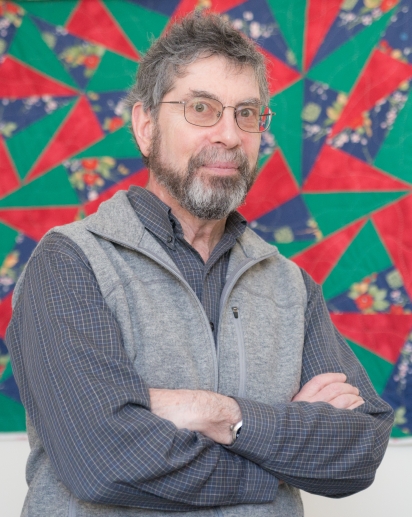
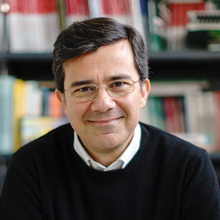
Peter Winkler is William Morrill Professor of Mathematics and Computer Science at Dartmouth College, conducting research in discrete mathematics, probability, and theoretical computer science. His work connects combinatorial problems with statistical physics and algorithmic complexity. Key research areas include: Probabilistic methods in combinatorics and game theory Phase transitions in discrete structures Geometric probability and optimization Mathematical puzzles and paradoxes Winkler's publications resolve fundamental questions in pursuit-evasion theory, geometric set optimization, and combinatorial phase transitions. His work on mathematical puzzles has influenced both academic research and popular mathematics. Current projects explore limit permutations, abelian networks, and new puzzle collections. Honored with the Mathematical Association of America's Lester R. Ford Award and David P. Robbins Prize, Winkler has held visiting positions at the Institute for Advanced Study and Mathematical Sciences Research Institute.
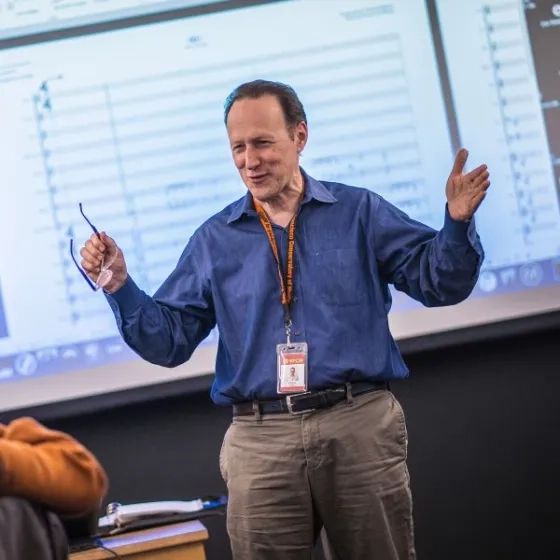
Lennie Moore serves as a faculty member in the Technology and Applied Composition (TAC) program at the San Francisco Conservatory of Music (SFCM), where he teaches Applied Lessons, Tools, Techniques and Analysis, and Orchestration for the Media Composer. With decades of experience as a composer, arranger, and orchestrator for video games, commercials, film, and television, Moore brings real-world industry expertise to his academic role. His teaching extends beyond SFCM, having developed and taught courses in Composing for Video Games at USC and UCLA Extension. Moore's research interests focus on the complex puzzle of video game scoring, emphasizing the deconstructionist approach required for interactive media. His work explores how to break down compositions into vertical layers and horizontal procedural components that can be implemented into music playback systems in real-time based on player choices. He specializes in open-world environments where music must smoothly transition through different game areas. His passion for building computers and video games outside of traditional music informs his innovative approach to media composition. His recent work includes the 2024 release of Outcast: A New Beginning , a sequel to his groundbreaking 1999 score for the original Outcast game, which was one of the first live orchestra and choir scores in gaming history. This new project involved approximately two hours and fifteen minutes of music with complex interactive elements, recorded during the pandemic with remote sessions. Best Soundtrack Album, G.A.N.G. Awards, 2011 Best Interactive Score, G.A.N.G. Awards, 2011 Best Audio — Other, G.A.N.G. Awards, 2008 Moore actively mentors students in the TAC program, with notable alumni including Kyle Randall (winner of the American Prize in composition), Shengyuan Li (Top 10 Finalist in the Berlin International Film Scoring Competition 2023), and Shawne Workman (now SFCM TAC faculty). His 2023 album Mentors pays tribute to his influences including Weather Report, Steps Ahead, Arif Mardin, Michael Gibbs, Don Grolnick, David Mash, Nick & Andy, Ken Kraintz, and Toshiko Akiyoshi. Moore emphasizes to students that 'Failure is an option' and encourages them to consider 'Who am I as an artist?' early in their development.
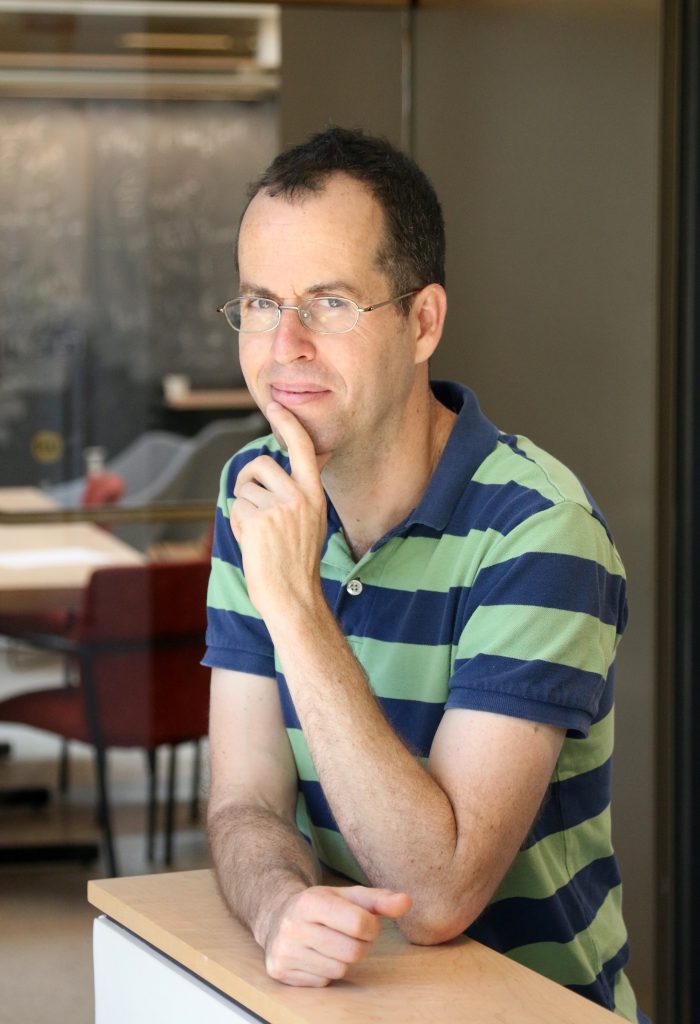
Elchanan Mossel is a Professor of Mathematics at the Massachusetts Institute of Technology (MIT), with a joint appointment at the Institute for Data, Systems, and Society (IDSS). His research focuses on probability, combinatorics, statistical inference, and their applications to computer science and social choice theory. He earned his B.Sc. from the Open University of Israel, and both his M.Sc. (1997) and Ph.D. (2000) in Mathematics from the Hebrew University of Jerusalem. Before joining MIT in 2016, he was a faculty member at UC Berkeley and held visiting positions at the Weizmann Institute and the Wharton School of the University of Pennsylvania. Mossel's work bridges theoretical foundations and applied problems, including computational complexity, randomized algorithms, Markov random fields, and evolutionary biology. He has made significant contributions to the theory of social choice, game theory, and the mathematical underpinnings of machine learning. Notable achievements include resolving the Majority Is Stablest conjecture and advancing phylogenetic reconstruction methods. His awards include the Sloan Fellowship and Miller Fellowship. He has mentored numerous graduate students, including Sebastien Roch, Allan Sly, and Miklos Racz, and has held editorial roles in journals like the Electronic Journal of Probability . Mossel's teaching spans topics from introductory probability to advanced courses on social networks and game theory.
Christian Ikenmeyer is Professor in Computer Science and Mathematics at the University of Warwick. His research focuses on algebraic complexity theory, geometric complexity theory (GCT), and representation theory, with emphasis on tensor rank, Kronecker coefficients, and polynomial identity testing. Research Focus: Dr. Ikenmeyer develops mathematical frameworks to solve fundamental problems in computational complexity, including P vs NP. His work connects representation theory with algebraic geometry to establish complexity lower bounds and classify computational hardness. Leadership: He organizes workshops on algebraic complexity and GCT, including the 2023 Algebraic Complexity Theory Workshop at ICALP. His research is funded by EPSRC and DFG grants, supporting investigations into homogeneous complexity and branching programs. Teaching: Courses include 'Groups and Representations' and programming contest coaching. He has previously taught at MIT, Texas A&M, and Saarland University, developing lecture notes on GCT.
Jill Dunham is an Associate Professor in the Department of Mathematics at Schmid College of Science and Technology , Chapman University. Her research spans topological graph theory , computational problems in discrete mathematics , recreational mathematics , and pedagogy , focusing on tactile learning and course assessment. She earned a B.Sc. from Iowa State University and M.Sc. and Ph.D. from George Mason University. Education: B.Sc. in Mathematics, Iowa State University M.Sc. in Mathematics, George Mason University Ph.D. in Mathematics, George Mason University Her research projects include finding the maximum touching number for coin graphs , enumerating solutions to paper-folding problems , and applying graph theory to commutative algebra structures . She also contributes to pedagogical innovations through hands-on activities in undergraduate mathematics education. Recent publications include work on round-robin tournaments , edge colorings in Hamiltonian cycles , and coin graph representations . Her collaborations appear in volumes like The Mathematics of Various Entertaining Subjects and Numery .
Kai-Min Chung is a Distinguished Research Fellow at the Institute of Information Science (IIS), Academia Sinica, Taiwan. His research focuses on quantum cryptography, complexity theory, and pseudorandomness. Prior to this role, he completed a postdoctoral fellowship at Cornell University (supported by the Simons Foundation) and earned his Ph.D. in computer science from Harvard University under Salil Vadhan. Education Ph.D. in Computer Science, Harvard University (Advisor: Salil Vadhan) Postdoctoral Researcher, Cornell University Research Interests Chung's work bridges quantum computing and cryptography, addressing challenges in secure communication, post-quantum cryptography, and complexity-theoretic foundations. His contributions include groundbreaking results on quantum-resistant protocols, zero-knowledge proofs, and cryptographic primitives resilient to quantum adversaries. Recent research emphasizes the theoretical limits of quantum algorithms and their implications for cryptographic security. Professional Activities Program Committee Chair: Asiacrypt 2024, ITC 2023 Membership on committees for CRYPTO, EUROCRYPT, STOC, FOCS, and others Awards Best Student Paper Award at TCC 2010 Distinguished Paper Award at PLDI 2023 Simons Postdoctoral Fellowship Teaching & Mentoring Chung teaches advanced courses on modern cryptography and advises students in theoretical computer science. He actively recruits postdoctoral researchers and students to his lab, focusing on cutting-edge quantum and classical cryptographic systems.
Dr. Gabriella Mosca is a Junior Group Leader at the Centre for Biochemistry (ZMBP) at the University of Tübingen, leading the Biomechanical Modeling of Morphogenesis (BM²) Lab within the Department of Genetics. Her research focuses on understanding the interplay between biomechanics and morphogenesis in plant systems, particularly using computational tools like MorphoMechanX . This software integrates finite element methods to model 3D tissue growth, cell wall mechanics, and genetic signaling in plant development. Her work bridges computational modeling with experimental data from partner labs, addressing questions such as how mechanical forces influence growth patterns and cell fate decisions. Key areas include explosive seed dispersal mechanics, leaf shape diversity, and ovule primordium development. She collaborates internationally on projects involving plant cell mechanics, tissue stiffness, and developmental constraints. Publications highlight contributions to understanding plant cell geometry, cytokinin signaling in roots, and the role of organ geometry in reproductive cell fate. Current projects emphasize developing customizable computational frameworks to simulate plant growth dynamics from confocal imaging data. The lab actively recruits students with backgrounds in physics, computer science, and mathematics to tackle interdisciplinary challenges in plant morphogenesis.
Thorsten Koch is a Professor for Software and Algorithms for Discrete Optimization at Technische Universität Berlin , with multiple leadership roles including Head of the Applied Algorithmic Intelligence Methods (A²IM) , Digital Data and Information for Society, Science, and Culture (D²IS²C) , Kooperativer Bibliotheksverbund Berlin-Brandenburg (KOBV) , and Forschungs- und Kompetenzzentrum Digitalisierung Berlin (digiS) . Based at Zuse Institute Berlin and affiliated with TU Berlin's Institute for Mathematics, he focuses on integrating mathematical optimization with high-performance computing and artificial intelligence to solve complex real-world problems. Research Pillars : Mathematical optimization algorithms Quantum computing applications AI/ML integration in decision systems Energy systems optimization Scientific software development Leadership Roles : Head of Applied Algorithmic Intelligence Methods (A²IM) Head of Digital Data & Information for Society, Science, and Culture (D²IS²C) Head of Kooperativer Bibliotheksverbund Berlin-Brandenburg (KOBV) Head of Forschungs- und Kompetenzzentrum Digitalisierung Berlin (digiS) Key Collaborations : Working with IBM Quantum on quantum optimization Collaborating across institutions for energy system modeling Developing open-source optimization tools like SCIP Contributing to digital library infrastructure Recent Research Trends : Quantum optimization benchmarking Machine learning-aided optimization Multi-objective decision frameworks Energy infrastructure optimization Adaptive algorithm design CO2 network modeling Impact : Advancing hybrid optimization methods Developing open-source tools for scientific computing Building digital infrastructures for libraries and research Exploring quantum-classical algorithm synergies
Matthias Becker is a Professor at the Institute for Practical Computer Science within the Faculty of Electrical Engineering and Computer Science at Leibniz University Hannover, where he has been a core member of the Human-Computer Interaction group since 2019. He serves as Internship Coordinator for Computer Science and Computer Engineering and holds key roles in the Computer Science Examination Board and Selection Committee, actively shaping academic governance and student development. His academic journey began with PhD studies at the University of Bremen (1996-2000) supported by a DFG grant, followed by a postdoctoral permanent position at Leibniz University Hannover (2000-2019), an Associated Assistant Professor role at École des Mines de Nantes (2000), and a Habilitation in Computer Science in 2013. This foundation enabled his transition to a full professorship in 2019. Becker's research spans Human-Computer Interaction, Simulation and Modeling, and Bio-inspired Computing, with applications in agriculture, renewable energy, and manufacturing. His work integrates distributed systems, optimization algorithms, and wireless sensor networks to solve complex real-world problems, such as greenhouse monitoring, wind farm logistics, and tire noise reduction. Recent publications reveal a strategic focus on practical validation of simulation models and cross-domain applications of nature-inspired algorithms. His 15 most recent publications (2018-2024) demonstrate consistent innovation in applying simulation techniques to offshore wind farm installation, agricultural pest management, and sports science. These works emphasize real-world validation, collaborative problem-solving, and the development of domain-specific optimization frameworks that bridge theoretical algorithms and industrial implementation. As Internship Coordinator, Becker facilitates critical industry-academia connections for students, while his examination board responsibilities ensure rigorous academic standards. His leadership in the Human-Computer Interaction group drives research on interactive systems for agriculture, energy, and health, with particular emphasis on user-centered design in complex operational environments like wind farm logistics and greenhouse automation.
Mike J. Harman serves as Assistant Professor of Psychology at the University of Northern Iowa within the College of Social & Behavioral Sciences, specializing in behavior analysis with applications to developmental disorders and decision-making processes. His academic credentials include: Ph.D. in Psychology from University of Wisconsin-Milwaukee (2018) M.S. in Psychology from University of Wisconsin-Milwaukee (2015) B.S. in Psychology from University of Wisconsin-Superior (2013) Dr. Harman's research program investigates three interconnected domains: skill acquisition interventions for developmental disorders (particularly autism), covert verbal behavior in complex repertoire development, and parameters influencing delay discounting and impulsive choices. His work bridges experimental analysis with clinical applications, emphasizing methodological rigor in behavior analytic procedures. His 14 recent publications (2018-2024) reveal consistent focus on treatment integrity measurement, verbal behavior mechanisms, and decision-making paradigms across human and animal subjects. The corpus demonstrates strong methodological innovation in single-case designs while addressing clinically relevant questions in autism intervention and behavioral economics. Dr. Harman actively mentors students whose work regularly appears at national conferences and in top behavior analysis journals. He serves on the editorial board of The Analysis of Verbal Behavior and reviews for Behavior Modification , Journal of Applied Behavior Analysis , and other leading publications. He maintains an active research laboratory focused on experimental analysis of behavior, where students conduct hands-on investigations of verbal behavior, delay discounting, and skill acquisition protocols.
Ronald Graham is a Professor in the Computer Science and Engineering Department at the University of California San Diego (UCSD), affiliated with the Jacobs School of Engineering. He also serves as Chief Scientist at the California Institute for Telecommunications and Information Technology (Calit2). Graham’s career spans academia and industry, including a 37-year tenure at Bell Labs and leadership roles at AT&T Labs. He is renowned for contributions to combinatorics, Ramsey theory, scheduling algorithms, and discrete mathematics. His Erdős number of 1 underscores his collaborative ties to Paul Erdős, a legendary mathematician. Education: Graham earned his PhD in Mathematics from UC Berkeley in 1962. Research Interests: Graham’s work focuses on combinatorics, graph theory, number theory, computational geometry, scheduling theory, and quasi-randomness. He has also explored recreational mathematics, notably through his book Magical Mathematics (2011), which intertwines card tricks with mathematical principles. His research has influenced internet infrastructure design, including foundational work on routing algorithms and the development of Akamai Technologies. Notable Achievements: Graham has received the Steele Prize for Lifetime Achievement (2003), Euler Medal (1994), and Polya Prize in Combinatorics (1972). His concept of “Erdős numbers” revolutionized academic collaboration tracking, later adapted into Hollywood’s “Six Degrees of Separation” game. Advising & Grants: Graham mentors students and faculty, inspiring future generations through teaching and mentorship. The UCSD CSE Department established the Ronald L. Graham Chair in Computer Science in 2015 to honor his legacy, funded by an $18.5M alumni donation. Labs & Collaborations: As Calit2’s Chief Scientist, Graham advises on strategic directions, emphasizing interdisciplinary research in information technology and communications. His work bridges theoretical mathematics and applied computing, shaping global technological advancements.
Atom Egoyan is a renowned Armenian-Canadian filmmaker and academic, currently serving as Professor of Film at The European Graduate School (EGS). He has held teaching roles at the University of Toronto and is a Distinguished Scholar in Residence at Ryerson University. His work interrogates themes like technology's distortion of human communication, Armenian cultural memory, and existential anxiety. Egoyan's films often blend psychological complexity with formal innovation, earning him international acclaim. Educated in International Relations at Trinity College, University of Toronto, Egoyan's artistic journey began with his 1979 short film Howard in Particular . Notable films include The Sweet Hereafter (Academy Award-nominated), Ararat (first major film addressing the Armenian Genocide), and Chloe . He has published extensively, including screenplays, essays, and interviews that explore film theory and cultural narrative. Egoyan's awards include Canada's highest civilian honor (Officer of the Order of Canada, 1999) and the Dan David Prize (2008). His articles and interviews discuss directing techniques, artistic philosophy, and the interplay between personal and cultural history. Though primarily a filmmaker, his academic contributions span film education and critical discourse.
Dr. N.R. Aravind is an Associate Professor in the Department of Computer Science and Engineering at the Indian Institute of Technology Hyderabad. Holding a Ph.D. in Theoretical Computer Science from The Institute of Mathematical Sciences, Chennai, he is affiliated with the College of Engineering. His research spans algorithms, graph theory, combinatorics, and determinantal complexity, with a focus on parameterized algorithms and approximation techniques for NP-hard problems. Education: Ph.D., The Institute of Mathematical Sciences, Chennai (Advisor: Prof. C.R. Subramanian) Postdoctoral research under Prof. Sundar Vishwanathan at IIT Bombay Aravind's research explores structural questions in graph theory, social network modeling, and complexity bounds. His work on parameterized algorithms addresses tractable instances via input parameters, while his studies in graph coloring and forbidden subgraphs contribute to theoretical understanding. Recent publications focus on matching cut problems, happy coloring, and determinantal complexity. His 15 most recent publications (2010-2024) span computational complexity, graph algorithms, coloring problems, and determinantal complexity. These works emphasize parameterized approaches, structural graph theory, and algorithmic bounds for intractable problems. Scientific Awards: Aravind has mentored numerous PhD and MTech students, including Roopam Saxena, Anjeneya Swami Kare, and R.B. Sandeep, now holding academic positions at prestigious institutions. He has taught courses like Algorithms, Probability in Computing, and Cryptology, often collaborating with co-instructors such as Dr. Rakesh Venkat. His office is located in Room CS-408, Indian Institute of Technology Hyderabad.
Marcello Pelillo is a **Full Professor** at the Department of Environmental Sciences, Computer Science and Statistics at Ca' Foscari University of Venice. His research focuses on machine learning, pattern recognition, computer vision, and adversarial machine learning. He has contributed significantly to graph-based methods, clustering algorithms, and security in machine learning systems. Pelillo is affiliated with the European Center for Living Technology (ECLT) and the Research Institute for Complexity Communications . His work spans theoretical advancements in graph theory and practical applications in cultural heritage digitization, climate science (e.g., ice core analysis), and AI security. Recent projects include entropy-guided graph clustering, backdoor poisoning defenses, and benchmark datasets for puzzle-solving tasks. Publications emphasize interdisciplinary applications, such as AI-assisted historical document digitization and energy-latency attacks in networks. He has supervised multiple collaborative projects involving institutions like the Research Institute for Complexity and the European Interuniversity Research Center.
Adele Goldberg is the Moses Taylor Pyne Professor of Psychology and Associate Chair at Princeton University. She leads the Psychology of Language Lab, where she conducts research on the usage-based constructionist approach to language, emphasizing emergent generalizations based on construction functions, input statistics, and domain-general cognitive processes. Dr. Goldberg's research spans construction grammar, language acquisition, metaphor processing, autism and language, neurolinguistics, and computational linguistics. Her groundbreaking work demonstrates that humans learn language through general cognitive processes rather than language-specific knowledge. She has shown that knowledge of language consists of form-function correspondences (constructions) and that conventional metaphors are more emotionally engaging than literal paraphrases, as evidenced by increased amygdala activation in fMRI studies. Her research on autism has revealed challenges faced by autistic individuals in language learning, particularly regarding flexible extension of word meanings and processing complex word meanings. She has extensively studied statistical preemption in language learning - how speakers learn to constrain generalizations based on the frequency of competing alternatives. Her work with Boyd demonstrated that younger children are less likely to generalize abstract constructions compared to older learners when exposed to the same input. Moses Taylor Pyne Professor of Psychology, Princeton University Associate Chair, Department of Psychology Director, Psychology of Language Lab Dr. Goldberg has mentored numerous students including Abby Fergus and collaborates extensively with researchers like Sammy Floyd, Arielle Belluck, and Karina Tachihara. Her recent work explores parallels between usage-based constructionist approaches and large language models, examining how both human and artificial systems learn from statistical patterns in language input.