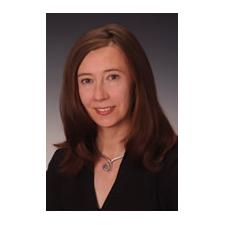
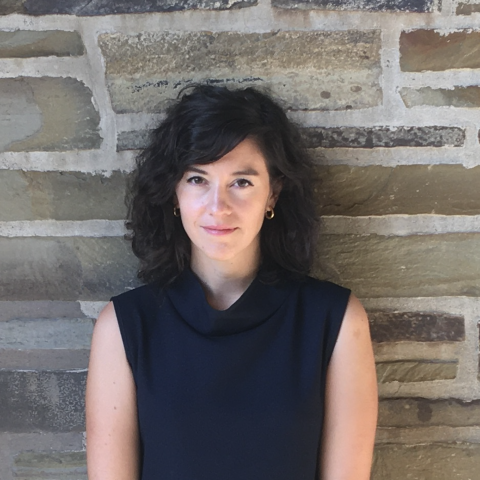
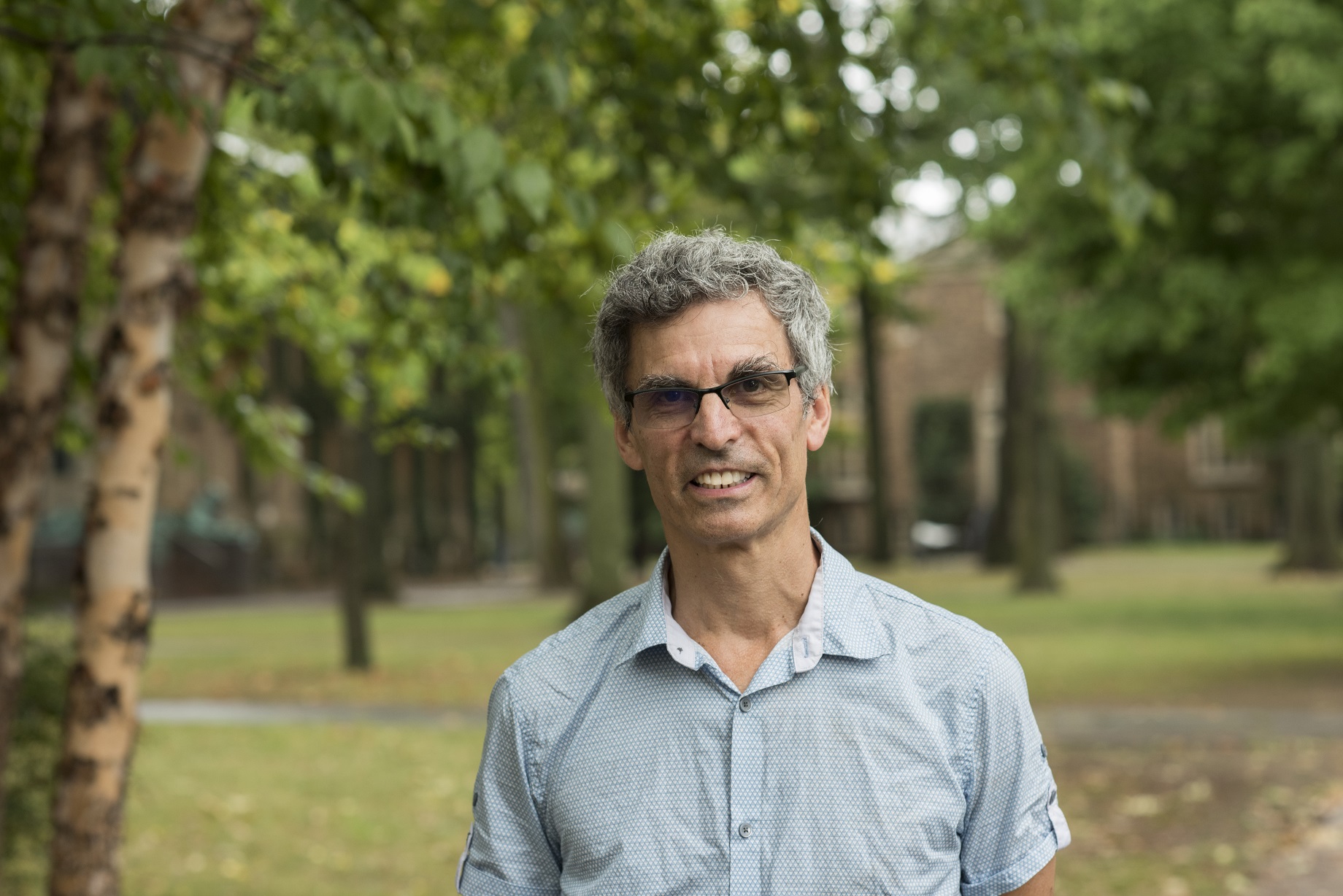
Alexis Peri is an Associate Professor of History at Boston University, specializing in modern Russian and Soviet history, with a focus on war, gender, and private life. Her work bridges cultural history, environmental history, and transnational studies. She holds a B.A., M.A., and Ph.D. from the University of California, Berkeley. Her research explores Soviet beauty pageants, US-Soviet women’s correspondence, and environmental dimensions of the Crimean War (co-authored with Catherine Ashcraft). Major publications include The War Within: Diaries from the Siege of Leningrad (2017) and Dear Unknown Friend: the Remarkable Correspondence between American and Soviet Women (2024). Dr. Peri has received the 2018 Pushkin House Book Prize, 2019 Gitner Teaching Prize, and 2024 Metcalf Award. Her research has been supported by the Fulbright Program, Kennan Institute, and others. She teaches undergraduate courses on Russian/Soviet history and directs multiple collaborative research projects.
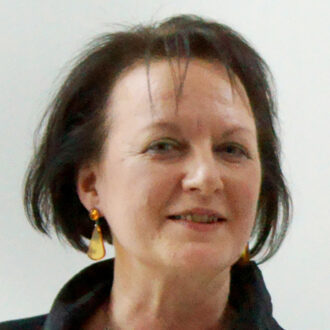
Svetlana Evdokimova is a Professor of Slavic Studies and Comparative Literature at Brown University, where she has been a faculty member since 1991. She previously taught at Yale University and holds a PhD in Slavic Languages and Literatures from Yale University and an MA in French Language and Literature from St. Petersburg University. She is a leading scholar in Russian literature of the 19th and 20th centuries, with a focus on Pushkin, Dostoevsky, Tolstoy, and especially Chekhov. Her research explores the intersections between literature, philosophy, history, and aesthetics. She has published extensively on Russian Romanticism, the Russian intelligentsia, and the cultural significance of St. Petersburg. Her major works include Pushkin's Historical Imagination (1999) and Staging Existence: Chekhov's Tetralogy (2023), with a forthcoming monograph A Genius of Culture: The Chekhov Phenomenon . The recent publications reflect a deep engagement with Chekhov’s aesthetics, corporeality, and cultural philosophy, as well as Dostoevsky’s dialogues with Nietzsche and postmodern thought. Her work frequently examines the ethical dimensions of literature and the interplay between fiction and historical consciousness. Choice Outstanding Academic Title (2004) for Alexander Pushkin's Little Tragedies: The Poetics of Brevity NEH Research Fellowship (1995–1996) IREX Research Fellowship (1995) The Bogliasco Foundation Residency Fellowship (2018) Paul C. Gignilliat Fellowship, Yale University (1988–1989) Council on Russian and East European Studies Summer Fellowship, Yale University (1985) She has advised numerous graduate students and has secured competitive research grants from the National Endowment for the Humanities, IREX, and Brown University. She is actively involved in scholarly communities, including the Modern Language Association, AATSEEL, and author-specific societies such as the North American Chekhov Society and the North American Dostoevsky Society. She teaches courses on Russian Romanticism, major novelists, theater, and cultural history.
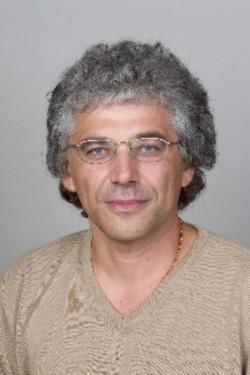
Vladimir Golstein is Professor of Slavic Studies and Interim Chair of Slavic Studies at Brown University. He has previously held teaching positions at Oberlin College (1990–1993) and Yale University (1993–2003), where he taught a wide range of courses on Russian and Western literary traditions. Ph.D. in Slavic Languages and Literatures, Yale University, 1992 B.A. in Philosophy, Columbia University, 1982 M.S. in Computers, Moscow Institute of Management His research centers on Russian culture, religion, philosophy, and poetry from the 19th and 20th centuries. He has published extensively on major Russian authors including Pushkin, Gogol, Tolstoy, Dostoevsky, Chekhov, Tsvetaeva, and Bulgakov. His book Lermontov's Narratives of Heroism (1998) explores heroism in 19th-century Russian literature. He is currently completing a monograph on generational conflict in Russian society. The recent publications reflect a consistent engagement with Russian intellectual and cultural history, blending literary analysis with philosophical and religious inquiry. His work often examines the moral and spiritual dimensions of literature, particularly in relation to the role of the intelligentsia and artistic expression under political pressure. There are no scientific awards listed in the provided text. Professor Golstein has supervised graduate and undergraduate students and teaches courses such as Russian Culture: From Peter the Great to Putin , Dostoevsky , Russian Poetry: Silver Age , and Roaring Twenties: Literature, Arts, and Politics in Post-Revolutionary Russia . While specific grant information is not mentioned, his ongoing research and publication record suggest active scholarly engagement. He is deeply involved in the academic life of the Department of Slavic Studies at Brown, contributing to curriculum development and leadership as Interim Chair. His interdisciplinary approach connects literature with philosophy, religion, and visual arts, fostering a holistic understanding of Russian cultural evolution.
Sarah Wilson is Professor of Modern and Contemporary Art at The Courtauld Institute of Art, University of London. She has been a faculty member since 1982 and has held leadership roles including Head of the Modern and Contemporary Section (2005-2008) and Head of Diploma programmes (2014-2015). She is internationally recognized as the English-language expert on Post-War European art and has held visiting positions at Paris-IV Sorbonne and the University of Versailles-Saint Quentin. Wilson was educated at the University of Oxford (BA English Literature) and at the Courtauld Institute of Art (MA and PhD). She was awarded the title Chevalier des Arts et des Lettres in 1997 for services to French art and culture, and received the International Association of Art Critics' Award for Distinguished Contribution to Art Criticism in 2015. She has held visiting professorships at Paris-IV Sorbonne (2002-2004), École Nationale Supérieure des Beaux-Arts (2006-2007), and University of Versailles-Saint Quentin (2012-2013). Sarah Wilson's research spans post-war and Cold War European art, contemporary global art practices, and the intersections between conceptual art, political theory, and visual culture. Her work extends from European avant-gardes to contemporary art across the former Soviet Union and Asia. She is particularly known for her expertise in French Stalinism, neo-Marxism and the arts, and conceptual art practices beyond the 'first world.' Wilson has initiated important academic programs such as the 'Global Conceptualism' MA course with Boris Groys, which connects Anglo-American conceptual art with practices from Moscow and beyond. She has also expanded her research to include modern and contemporary Asian art since 2013. Her extensive publication record shows a consistent focus on European art history with increasing engagement with global perspectives, particularly Asian contemporary art since 2013. Wilson's scholarship bridges art historical analysis with philosophical inquiry, especially regarding French theory and its visual manifestations. Her major publications include 'Paris, Capital of the Arts, 1900-1968' (2002) and 'The Visual World of French Theory: Figurations' (2010), with a second volume 'The Visual World of French Theory II: Interventions' in preparation. Chevalier des Arts et des Lettres (1997) International Association of Art Critics' Award for Distinguished Contribution to Art Criticism (2015) Marie Curie Actions – RBUCE-UP, Chaire d'excellence, Université de Versailles-Saint Quentin (2012-2013) Professor Wilson has supervised 36 PhD students to completion and over 230 MA dissertations, creating what she describes as 'a unique English-language archive in the field of post-1945 European and global art history.' Her former students now hold prominent positions in major institutions worldwide including Tate, the British Museum, Design Museum, Scottish National Gallery of Modern Art, British Council, Centre Georges Pompidou, Kunsthalle Bremen, and universities across Europe and North America. She has received significant research funding including a Marie Curie Actions grant for her project 'Globalisation before globalisation: avant-gardes, academies, revolutions.' Wilson is actively involved with the Courtauld alumni's former East Wing Collection (now VS1, Vernon Square) and has contributed to the Research Forum's programmes. She has curated numerous exhibitions including the 'Global Conceptualism'-related projects and served on the curatorial team of the 1st Asian Biennale (China-Guangzhou) in 2014. Her commitment to women artists has led to early exhibitions of artists like Zofia Kulik and Alina Szapocznikow before their international prominence. She is involved with CCRAC (Cambridge-Courtauld Russian Art Centre), Calvert 22, and Pushkin House in London, reaching out to Russia and Eastern Europe.
Jenifer Presto is an Associate Professor of Comparative Literature at the University of Oregon, with affiliations in the Clark Honors College and the Russian, East European, and Eurasian Studies program, which she directed for nine years. Her research spans modern Russian literature, gender studies, environmental criticism, and transnational cultural interactions. Education Ph.D. and M.A. in Slavic Languages and Literatures, University of Wisconsin-Madison (CompLit minor) M.A. in Russian Language, Middlebury College (with a year at Pushkin Institute in Moscow) A.B. in Russian Literature, Smith College (magna cum laude, Phi Beta Kappa) Her work explores intersections of modernism, gender, and ecological themes, including coedited special issues on Russian geopoetics and the 1917 Revolution's global impact. She is currently authoring Nature's Icons: The Spiritual Ecology of Painter Olga Volchkova , analyzing how the artist's icon restoration practices address climate change. Scientific awards include the Andrew W. Mellon Postdoctoral Fellowship. She collaborates with UO Libraries on the digital humanities internship Slavic Immigrant Artists in the Northwest (SIAN) , which trains students in public research on diasporic art. She serves as secretary for the Association for Women in Slavic Studies (AWSS) and founded the book series East European and Eurasian Ecologies: Past, Present, and Future .
Edyta Bojanowska serves as Professor of Slavic Languages and Literatures at Yale University with an affiliated appointment in the Department of History. Her academic career bridges literary scholarship and historical analysis, focusing on imperial and postcolonial frameworks within Russian and Central European contexts. Bojanowska earned her Ph.D. in Slavic Languages and Literature from Harvard University and completed her undergraduate studies at Barnard College with a dual major in English and Russian. Her educational trajectory established the foundation for her interdisciplinary approach to Slavic studies. Her research program critically examines 19th-century Russian literature through the lenses of empire, nationalism, and globalization. Key interests include settler colonial dynamics, spatial theory, travel writing, and the interplay between ideology and literary form. She has pioneered methodologies connecting Russian cultural production to global imperial histories, particularly through her award-winning work on Goncharov's The Frigate Pallada and Gogol's Ukrainian-Russian identity negotiations. Bojanowska's publication record reveals consistent engagement with colonial paradigms in Russian literature, evolving from early studies of Gogol and Pushkin toward broader imperial frameworks. Her recent scholarship demonstrates increasing focus on racial discourse, indigenous land rights, and the spatial dimensions of empire, culminating in the Ab Imperio Award-winning analysis of Tolstoy's Bashkir estate. The thematic continuity across her work establishes her as a leading voice in post-Soviet imperial historiography. National Humanities Center Fellowship (Spring 2025) Ab Imperio Award for Best Study in New Imperial History (2022) Guggenheim Fellowship (2020-2021) AATSEEL Best Book in Literary Scholarship (2019) MLA Scaglione Prize for Best Book in Slavic Studies (2007-2008) Bojanowska actively shapes her field through editorial leadership on Ab Imperio and the PMLA Advisory Committee. Her teaching portfolio reflects her research expertise, featuring undergraduate seminars on War and Peace and Russian short fiction alongside graduate courses on spatial theory and imperial culture. Current leave status for Spring and Fall 2025 accommodates her National Humanities Center residency while maintaining her position as a central figure in Slavic literary studies.
Professor Pamela Davidson is a distinguished scholar of Russian Literature at University College London's School of Slavonic and East European Studies (SSEES). With over four decades of academic experience, she has held various leadership positions including Head of the Russian Department (2003-2006), Head of Teaching and Graduate Tutor (2012-2014), and currently serves as Admissions Tutor for Languages & Cultures programmes. Her scholarly work has significantly shaped the field of Russian literary studies, particularly in areas of Russian Symbolism, literary prophecy, and the interaction between religion and culture. Doctor of Philosophy, University of Oxford, 1984 Undergraduate studies in Russian, French and Italian, Newnham College, Cambridge Professor Davidson's research spans several interconnected areas within Russian and comparative literature. Her work on the "construction and dynamics of literary tradition" examines how Russian writers positioned themselves within broader cultural and historical contexts. She has made significant contributions to understanding "the interaction of religion and culture," particularly through her edited volume "Russian Literature and Its Demons," which opened up new interdisciplinary research avenues. Her long-standing interest in "Silver Age poetry" has focused extensively on Viacheslav Ivanov, whose work she has studied through multiple lenses including his engagement with Dante and classical antiquity. Most notably, she has developed an extensive body of work on "the representation of the writer as prophet in Russia," tracing this tradition from its biblical and classical roots through to the Soviet period. Professor Davidson's recent publications reveal a consistent focus on the prophetic dimension of Russian literature, with particular attention to Viacheslav Ivanov and Fedor Glinka. Her scholarship demonstrates a sophisticated interweaving of literary analysis, religious studies, and cultural history. Over the past decade, her work has increasingly examined how Russian writers engaged with biblical and classical traditions, often reinterpreting them within specifically Russian contexts. The recurring themes across her publications include the tension between Athens and Jerusalem in Russian thought, the role of the writer as moral authority, and the complex relationship between religious tradition and literary innovation. Her comparative approach frequently bridges Russian literature with Western European intellectual traditions, revealing unexpected connections and influences. Travelling Junior Research Fellowship at Queen's College Leverhulme Research Fellowship (2019-2021) Director of the CEELBAS Centre for Doctoral Training (2020-2021) Member of the AHRC Peer Review College of Assessors (2003-2007) As an academic mentor, Professor Davidson has supervised numerous doctoral students in Russian literature and thought, with particular expertise in 19th and early 20th century literature, Silver Age poetry, and comparative literature. Her leadership roles have included serving as Graduate Tutor and Chair of BA and MA Examination Boards at SSEES. In terms of research funding, she has successfully secured competitive grants including the Leverhulme Research Fellowship that supported her recent work on literary prophecy. Her collaborative projects have often involved international partnerships, particularly with Russian academic institutions including the Institute of Russian Literature (IRLI) in St Petersburg. Professor Davidson has also contributed to major scholarly initiatives such as the 12-volume academic edition of Ivanov's collected works. While Professor Davidson's work is primarily in humanities rather than laboratory-based research, she has been instrumental in building academic networks and collaborative projects. She served as Director of the CEELBAS Centre for Doctoral Training, liaising with the Arts and Humanities Research Council (AHRC) and consortium members at Cambridge, Manchester and Oxford. Her long-standing collaboration with the St Petersburg Institute of Russian Literature has been particularly significant, resulting in the completion of the first comprehensive bibliography of Viacheslav Ivanov's works. Professor Davidson has also been active in the international scholarly community through her membership on the Board of Directors of the Foundation "Centro Studi e Ricerche Vjacheslav Ivanov" in Rome.
Svetlana Booth is an Associate Lecturer (Education Focused) in Russian and Russian Year Abroad Co-ordinator at the University of St Andrews' School of Modern Languages. She holds an undergraduate degree from Yaroslavl State Pedagogic University (Russia), an MLitt in Russian Studies from the University of St Andrews (2005), and a degree in 'Russian as a Foreign Language and Teaching Methodology' from Pushkin State Institute of Russian Language. Her teaching focuses on Russian language instruction at all undergraduate levels, including oral, AV, translation, and written classes. She coordinates extracurricular activities such as the National Russian Essay Competition and organizes Russian film evenings to enhance cultural understanding. Notable projects include: «Моя Россия» (“My Russia”) – a student-led initiative documenting Study Abroad experiences through multimedia. «Когда словари не помогают» (“When Dictionaries do not help”) – an e-learning resource for Russian language learners. A short course on 'Scots tramping the roads to Russia,' exploring cultural and historical links between Scotland and Russia. Her research interests include children's bilingualism and innovative language teaching methodologies. She has successfully guided students to win major prizes in national competitions across all academic levels.
Sophie Pinkham is Professor of Practice in the Comparative Literature Department at Cornell University and an IES Faculty Associate at the Institute for European Studies. She holds teaching positions in Cornell's College of Arts and Sciences, where she contributes to the Russian and Comparative Literature programs, teaching courses including 'The Revolutionary as Author: Autobiography and Political Myth' and 'Writing for the Public: Adapting Academic Work for a General Audience' for Spring 2025. Columbia University (PhD in Slavic Languages and Literatures) Harriman Institute (MA in Russian, Eurasian, and Eastern European Studies) Yale University (BA) Pinkham's research centers on post-Soviet and post-socialist literature, culture, and politics, with a particular focus on Russia and Ukraine. Her academic interests encompass literature and film of the Russian Empire, Soviet Union, and post-Soviet states; memory politics and post-socialism; environmental humanities; poetics of censorship; language politics and translation; and Siberia. Her current major project is a history of the forest in the Russian imagination, exploring the forest's role in myth, culture, and politics throughout Russian history from Mongol invasions to contemporary conflicts in Ukraine. Her extensive publications reveal consistent thematic trends across disciplines including Russian studies, political analysis, environmental history, and literary criticism. Pinkham's work demonstrates particular expertise in analyzing the intersection of cultural production with political realities in post-Soviet spaces, often highlighting how historical narratives shape contemporary conflicts. Her articles frequently examine how environmental factors, historical memory, and cultural artifacts intersect with political power structures. 2023 British Journalism Award for 'Lost in a Dark Wood' on migrants in the forest on the Belarusian-Polish border Shortlisted for True Story Award for the same article Pinkham has received significant research support, most notably a 2022-23 National Endowment for the Humanities Public Scholar grant supporting both her book project 'The Oak and the Larch: A Forest History of Russia and Its Empires' and her award-winning Economist 1843 story. Her work bridges academic scholarship and public intellectual engagement, with frequent contributions to major publications serving as a critical voice on Russian and Ukrainian affairs during a period of escalating geopolitical tensions. While she previously worked in international public health in Eastern Europe and Central Asia focusing on HIV, drug use, and women's health, her current focus remains firmly on cultural and political analysis of the post-Soviet space. Though not explicitly affiliated with a specific research lab, Pinkham's work connects with broader scholarly networks through her involvement with Cornell's Institute for European Studies and her interdisciplinary approach that bridges literary studies, history, political science, and environmental humanities.
Dr. Alexandra Smith is Reader in Russian Studies at the University of Edinburgh's School of Literatures, Languages and Cultures, where she has been teaching since 2007 and was promoted to Readership in 2008. She previously held academic positions at the University of Essex, University of Bristol, University of Canterbury (New Zealand), and the University of Sheffield. Dr. Smith is an active researcher, supervisor, and member of numerous editorial boards, including The Dostoevsky Journal and Experimental Poetics and Aesthetics . Her research spans Russian literature from the 19th through 21st centuries, with particular focus on literary and film theory, critical theory, comparative literature, émigré writing, and the relationship between literature and other arts. Dr. Smith has published extensively on Russian modernism, particularly on Marina Tsvetaeva, Pushkin reception, and Soviet-era literature. Her work demonstrates a consistent interest in canon formation, memory studies, and intermediality, examining how literary works interact with other art forms like theater, film, and visual culture. Dr. Smith's scholarly output reveals a trajectory from early work on Tsvetaeva and Pushkin toward broader examinations of canon formation, national identity, and post-Soviet cultural memory. Her recent publications increasingly address contemporary Russian literature and film, examining how modern Russian writers and filmmakers engage with historical trauma, national mythology, and cultural memory. This evolution reflects both her deepening expertise in Russian literary history and her responsiveness to contemporary cultural developments in Russia. Alexander Nove Prize (2022) for Poetic Canons, Cultural Memory and Russian National Identity after 1991 Co-winner of ASEES's Pushkin Prize contest for 'The Poetics of Expressiveness and Some Aspects of Non-Verbal Communication in Pushkin's Work' Dr. Smith has supervised an impressive number of graduate students, including 12 completed PhD theses and several current projects across Russian Studies, Comparative Literature, and European Theatre. She has secured significant research funding, including a major £450,757 AHRC grant for 'Reconfiguring the Canon of Twentieth-Century Russian Poetry, 1991-2008' and multiple smaller grants for conferences and workshops on Russian literature and culture. Her knowledge exchange activities extend beyond academia through media appearances, public lectures, and collaborations with theater companies, including translating Russian plays for the National Theatre of Scotland. As an active member of the academic community, Dr. Smith serves on numerous committees at the University of Edinburgh, acts as External Examiner for several institutions, and participates in professional organizations including BASEES, AATSEEL, and ASEEES. Her work bridges traditional literary scholarship with contemporary cultural analysis, making significant contributions to our understanding of Russian literature's evolution and its ongoing relevance to questions of national identity and cultural memory.
Daniel Beer is Professor of Modern History at Royal Holloway, University of London, specializing in Russian history with particular focus on the social and cultural history of the Russian Empire. He is affiliated with the Department of History and the Conflict, Violence and Terrorism Research Centre at Royal Holloway. Professor Beer's research interests center on crime and punishment in Imperial Russia, Siberian exile systems, revolutionary movements, and political violence. His acclaimed work explores how the human sciences shaped attempts by liberal elites to create a civil society governed by rule of law, as well as the development of Russian political culture through confrontations between revolutionaries and the state. His recent publications reveal a consistent focus on the intersection of political power, punishment, and resistance in Imperial Russia. Beer's scholarly output demonstrates expertise in both broad historical narratives and specific case studies of political violence, exile systems, and revolutionary ideologies. Cundill History Prize (2017) for The House of the Dead: Siberian Exile Under the Tsars Shortlisted for Wolfson Prize Shortlisted for Longman History Today Prize Shortlisted for Pushkin House Book Prize Professor Beer has supervised research students in Russian history and secured research funding from prestigious organizations including the Leverhulme Trust and British Academy. His current research project explores the 'Emperor Hunt' - the revolutionary campaign from 1879 to 1881 to assassinate Tsar Alexander II. He is actively engaged in public scholarship through contributions to major publications and media appearances. Professor Beer teaches undergraduate courses including 'The Russian Empire in the Age of Reform and Revolution', 'Stalinism', and 'European Culture in the Fin de Siècle', while welcoming research students interested in biopolitics, empire, law, punishment, and violence in Modern Russia.
Andrew M. Drozd is an Associate Professor of Russian at the Department of Modern Languages and Classics, University of Alabama. He serves as the Russian Program Director and Russian Minor Advisor, specializing in 19th-century Russian literature, Czech-Russian literary interrelations, and Slavic folklore. PhD, Indiana University (1995) Teaches courses: First-Year/Second-Year Russian, Russian Phonetics, Business Russian, Russian Folklore, Dostoevsky, Tolstoy, and Russian Science Fiction His research examines the intersections of Russian and Czech literary traditions during political upheavals, with a focus on Chernyshevskii’s works and their ideological impacts. Recent publications include Modern Czech Literature: Writing in Times of Political Trauma (2025) and co-edited volumes on Russian radicalism and Darwin’s reception in Russia. The 15 most recent articles reveal a trajectory from 19th-century Russian critiques of Darwinism to contemporary Czech literary analysis, spanning dialectology, intertextuality, and ideological narrative structures. Dr. Drozd’s editorial work includes Revisiting Russian Radicals (2024) and Reading Darwin in Imperial Russia (2023), alongside contributions to journals like Slavic and East European Journal and Germano-Slavica .
Stuart H. Goldberg is a Professor of Russian at Georgia Tech's School of Modern Languages. He specializes in Russian and Polish literature/culture with a focus on poetry, digital humanities, and language pedagogy. His research explores sincerity in Russian poetry, Symbolist influence, and intercultural literary dynamics. He has published two major books: *An Indwelling Voice* (2023) and *Mandelstam, Blok and the Boundaries of Mythopoetic Symbolism* (2011), the latter honored as a Choice Outstanding Academic Title. Dr. Goldberg teaches Russian language courses and directs the Riga summer immersion program. He pioneered the Critical Languages Song Project, integrating song into language education. His Fulbright-funded research in Russia (2005-06) supported archival studies. Awards include an ACLS fellowship and recognition from the Polish Academy of Sciences for *Konrad and Jacob* (2001). His articles span journals like *Russian Review* and *Slavic Review*, analyzing texts from Pushkin to Mandelstam. He emphasizes intertextual analysis and historical contextualization in understanding poetic authenticity.
Michael Wachtel serves as Professor and Director of Undergraduate Studies in the Department of Slavic Languages and Literatures at Princeton University, with additional affiliation in the Department of Comparative Literature. His office is located in 225 East Pyne Building, and he can be contacted at wachtel@princeton.edu. Dr. Wachtel's educational background: PhD in Comparative Literature, Harvard University (1990) MA in Comparative Literature, Harvard University (1986) BA in Comparative Literature, Yale University (1982) His research centers on Russian poetry and poetics from the eighteenth century to the present, with particular emphasis on literary interpretation and the integration of individual works into broader Russian and European traditions. Key figures in his scholarship include Aleksandr Pushkin and Viacheslav Ivanov, with significant contributions to Russo-German literary relations and the study of German influences on Russian Symbolism. His work bridges historical periods through close analysis of poetic form and cross-cultural adaptation. Wachtel's publication trajectory reveals sustained engagement with Russian poetic evolution, examining translation practices, literary correspondence, and metrical innovation across centuries. His scholarship consistently explores how Russian poets creatively adapt Western European models while maintaining distinct national traditions, with recurring focus on Pushkin's legacy and Symbolist movements. As an educator, Professor Wachtel teaches undergraduate courses on Russian poetry (in Russian) and literature in translation, alongside graduate seminars covering Pushkin, Russian Symbolism, and the development of Russian poetic form. His leadership as Director of Undergraduate Studies shapes curriculum and academic pathways for students in Slavic studies.
Roman Leibov is an Associate Professor of Russian Literature at the University of Tartu's Faculty of Arts and Humanities, within the Institute of Foreign Languages and Cultures. He has held academic positions since 1988, specializing in 19th-century Russian literature, particularly Fyodor Tyutchev, Alexander Pushkin, and Leo Tolstoy, as well as the formation of the Russian literary canon and Soviet song. He earned his Doctorate in 2000 with a thesis on Tyutchev's lyrical fragments. His research includes projects on the reception of Russian literature in Estonia, the ideological dynamics of translation, and the Russian literary canon. He has participated in international projects like 'The Future of Russian: Language Culture in the Era of New Technology' (2009–2012). Key research interests span Russian poetic concepts, Stalinist-era literature, Pushkin's narrative techniques, and Soviet cultural heritage. His publications include monographs and articles on Russian literary history, poetics, and cultural theory.