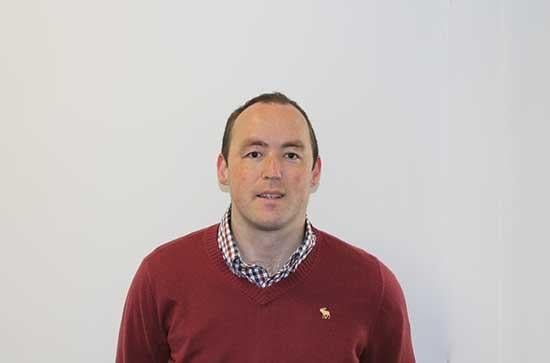
Renan Matsuda is a Postdoctoral Researcher at the School of Science , Aalto University, focusing on advanced Transcranial Magnetic Stimulation (TMS) techniques and their applications in neuroscience and clinical settings. His work bridges biomedical engineering , robotics , and neurophysiology . His research emphasizes: Real-time tractography-guided neuronavigation for TMS precision Multi-locus TMS systems with pulse-width modulation Understanding corticospinal excitability in motor control Autonomous robotic targeting for brain stimulation Recent publications highlight his contributions to optimizing TMS protocols for clinical deployment and exploring muscle-length dependencies in neural excitability. His collaborations span institutions in Finland and Brazil , reflecting interdisciplinary expertise in neurotechnology and biomedical signal processing . Contact: renan.matsuda@aalto.fi .
Ahmed Ismail Mohamed Ali is an Assistant Professor at the Department of Electrical Engineering , Faculty of Engineering , South Valley University , Egypt, and a Post-Doctoral Research Fellow at Aalto University , Finland. He holds a B.Sc. and M.Sc. in Electrical Engineering from South Valley University (2013, 2017) and a Ph.D. in Electrical Engineering from Nagoya Institute of Technology , Japan (2022). Education: B.Sc. in Electrical Engineering, South Valley University (2013) M.Sc. in Electrical Engineering, South Valley University (2017) Ph.D. in Electrical Engineering, Nagoya Institute of Technology (2022) Research Interests include power electronics, specifically PWM techniques for bidirectional AC/DC converters , single-phase and three-phase multilevel converters , modular multilevel converters (MMCs) , isolated grid-tied differentially based DC-AC inverters , EV battery chargers , and renewable energy applications . His work focuses on improving efficiency, power quality, and complexity in renewable energy systems and electric vehicle charging infrastructure. Publications (15 most recent) span 2018–2025, with a strong emphasis on photovoltaic (PV) inverters , multilevel converter topologies , model predictive control (MPC) , and leakage current minimization . Recent work (2024–2025) explores advanced modulation strategies and grid-tied renewable energy integration. Laboratory Affiliation: He is part of the Computational Electromechanics research group at Aalto University, contributing to postdoctoral research in power electronics and renewable energy systems.
Tyrone Fernando is a Professor at the University of Western Australia (UWA), Department of Electrical, Electronic and Computer Engineering (EECE) within the School of Engineering. He joined UWA in 1996 after earning his BE (Honours) in 1990 and PhD in 1996 from the University of Melbourne. His professional roles include Deputy Head of School (2009–2010) and editorial leadership for journals like IEEE Transactions on Circuits and Systems II and IEEE Access. He is a Senior Member of IEEE and former Chair of the IEEE Circuits and Systems Society’s Power and Energy Technical Committee. Education: Bachelor of Engineering with Honours (1990), University of Melbourne Doctor of Philosophy (1996), University of Melbourne Research Interests: His work focuses on power systems, renewable energy integration, and estimation theory applications. Key emphases include DC microgrid control, advanced battery technologies (e.g., vanadium redox, lithium-ion), model predictive control (MPC) strategies, and sensorless control methods for motor drives. He also investigates stability criteria for power systems with high penetration of power electronics and energy storage optimization. Grants & Projects: He leads grants such as: Seeding marine innovation in SW WA with a WEC deployment in Albany (Blue Economy CRC, 2021–2025) Mine Electrification (CRC for Future Battery Industry FBI, 2022–2024) Project Symphony (Western Power, 2021–2023) These initiatives address grid resilience, battery-electric vehicle infrastructure, and renewable energy integration challenges. Awards: Outstanding Engineer award, IEEE PES WA Chapter (2019) Collaborations: His research involves interdisciplinary teams and industry partners, including Western Power and the Department of Industry, Science and Resources (Australia). He contributes to projects like DC-link capacitance estimation and stability analysis of offshore wind farms.
Professor Shin Dong-gyu is a faculty member in the Department of Computer Engineering at Sejong University, where he leads research in cybersecurity, cyber warfare, and machine learning applications. He is affiliated with both the Cyber Warfare Research Institute and the Smart Convergence Technology Research Institute, directing the Multimedia & Internet Lab which has produced over 100 graduates since its founding in 1998. His students have gone on to work at government research institutes, corporate research centers, and mid-sized technology companies. Professor Shin's research focuses on cybersecurity with particular emphasis on cyber resilience, intrusion detection systems, malware analysis, cyber range development, and the application of machine learning to security challenges. His work bridges theoretical security frameworks with practical defense mechanisms, often incorporating military and national security applications. The research spans both defensive cybersecurity measures and offensive cyber operations analysis. His recent publications (2023-2025) demonstrate a consistent research trajectory in cyber resilience metrics, data sanitization against poisoning attacks, DNS security, layered defense approaches for critical infrastructure, and the integration of Zero Trust architecture with threat modeling frameworks like MITRE ATT&CK. His work shows increasing sophistication in applying deep learning techniques to security problems while maintaining focus on practical, implementable security solutions. Professor Shin actively mentors graduate students through doctoral dissertation research, master's thesis research, and specialized courses including Algorithms and Practice, Computer Vision and Deep Learning for Drones, and Special Topics in Smart Computing Technology. His teaching schedule indicates regular engagement with both master's and doctoral students.
SALİH NACAR is a Lecturer in the Department of Electrical Engineering at Bandırma Onyedi Eylül University's Faculty of Engineering and Natural Sciences since 2021, and previously held a Lecturer role at Kastamonu University (2011–2021). He currently serves as the Deputy Head of the Department and specializes in power electronics, hydrogen energy systems, and resonant converter technologies. His research focuses on fuzzy logic control, soft switching techniques, and induction heating applications. He has actively contributed to over 11 journal articles and 10 conference papers, with recent work emphasizing hybrid-controlled resonant converters, induction heating systems, and hydrogen production optimization. His academic teaching spans courses in power electronics, electrical engineering fundamentals, and hydrogen energy technologies. Dr. Nacar leads ongoing projects like the design of Class-E resonant inverters and LED drivers, and has advised three master’s theses in advanced power electronics. His research portfolio includes collaborations on digitally controlled DC-DC converters and investigations into resonance-based energy conversion systems for renewable applications. He remains a key figure in advancing energy-efficient power electronics and hydrogen storage solutions.
Paolo Stefano Crovetti is an Associate Professor in the Department of Electronics and Telecommunications at Politecnico di Torino. He is a member of the Interdepartmental Center PEIC (Power Electronics Innovation Center) and serves on the Joint Committee for Teaching. His research and teaching focus on cutting-edge areas of electrical engineering, particularly in analog and mixed-signal circuit design for ultra-low power applications and sustainable energy systems. Dr. Crovetti's research spans digital-based analog and mixed signal circuits, digital-to-analog converters, electromagnetic compatibility, and ultra-low power and ultra-low voltage electronics. His work addresses critical challenges in power electronics for Internet of Things applications, photovoltaic systems, and sustainable energy conversion, aligning with UN Sustainable Development Goals for health, sustainable cities, and responsible consumption. His publication record demonstrates consistent innovation in circuit design, particularly in digital-based analog techniques, power optimization for renewable energy systems, and electromagnetic compatibility solutions. Key research themes include ultra-low voltage operational transconductance amplifiers, advanced digital pulse width modulation techniques, and novel approaches to power conversion for sustainable applications. IEICE Symposium Excellent Paper Award (2009) ICECS Best Student Paper Award (2019) IEEE Fellow (2020-) Dr. Crovetti actively supervises seven PhD students working on advanced topics in power electronics and integrated circuit design. He leads multiple significant research projects including MicroBioNIC (2025-2027), NEUROPULS (2023-2027), and ULPIoT (2017-2020), securing substantial funding from national and international sources. His editorial roles include serving as Associate Editor for IEEE Transactions on VLSI Systems and as Guest Editor for Electronics Letters. He is an active member of the Microwave and Optoelectronics Group (MOG) within the Department of Electronics and Telecommunications, contributing to the university's research excellence in advanced electronic systems for power conversion and sustainable energy applications.
Andrea Formentini is an Associate Professor at the Department of Naval, Electrical, Electronic and Telecommunications Engineering (DITEN) at the University of Genoa. His research focuses on power electronics, electrical machines, and control systems with applications in electric vehicles (EVs), aerospace systems, and renewable energy integration. His recent work analyzes multilevel converter technologies, predictive control algorithms, and energy storage optimization. Notable trends include air-gap modeling for ferrite-core inductors, sensorless motor control techniques, and advanced modulation strategies for improved efficiency. Teaching Responsibilities: ELECTRIC MACHINES AND MAINTENANCE ELEMENTI DI CONVERSIONE STATICA DELL'ENERGIA TECHNICAL-ELECTRONIC ENGINEERING FOR ELECTRICAL ENGINEERING DIGITAL ELECTRIC DRIVE CONTROL
Dr. Mark Broadmeadow is a faculty member at Queensland University of Technology (QUT) in the School of Electrical Engineering & Robotics within the Faculty of Engineering. He holds a PhD from QUT along with several graduate certificates in academic practice and research commercialisation. His educational background includes: Doctor of Philosophy (Queensland University of Technology) Graduate Certificate in Academic Practice (Queensland University of Technology) Graduate Certificate in Research Commercialisation (Queensland University of Technology) BEng(Hons)(Infomechatronics) (Queensland University of Technology) Dr. Broadmeadow's research focuses on power electronics, particularly in the areas of power converters, modular multilevel converters, battery storage systems, and power quality. His work has significant applications in renewable energy integration, electric vehicles, and power grid stability. He has made notable contributions to the development of advanced control strategies for power electronic systems and has explored innovative approaches to improve efficiency and reliability in power conversion. His publication record shows a consistent progression from fundamental gate driver research to sophisticated battery-integrated converter systems and machine learning applications for battery state estimation. His scientific contributions span various aspects of power engineering, with a particular emphasis on practical implementations and hardware solutions. His research often involves collaboration with industry partners to address real-world challenges in power electronics, as evidenced by his numerous conference papers presented at major power engineering conferences. Dr. Broadmeadow has been actively involved in supervision, with topics including 'Small, high efficiency, low cost appliance UPS.' His laboratory work appears to focus on power hardware implementation, with research involving modular power converters, FPGA-based control systems, and experimental validation of novel power electronic topologies.
HRISTO NEDEV HRISTOV is a Professor and Vice-Rector at the Technical University of Gabrovo, Bulgaria. He is affiliated with the Faculty of Mechanical Engineering and Instrument Making, where he serves in the Energy Technology Department. With a Doctorate in Technical Sciences, he has established himself as a prominent figure in the fields of pneumatic and hydraulic systems, control engineering, and renewable energy. His research interests span across several key areas in engineering: Pneumatic and electropneumatic systems Hydraulic power transmission and control Fluid mechanics and dynamics Renewable energy sources and applications Mathematical modeling of mechanical systems Energy efficiency in fluid power systems Analysis of his recent publications reveals a strong focus on advanced control techniques for pneumatic systems, particularly using Pulse Width Modulation (PWM) with high-speed valves. His work demonstrates significant contributions to improving the precision, efficiency, and linear characteristics of electropneumatic positioning systems. There's also a consistent thread of research into renewable energy applications, particularly in the Gabrovo region of Bulgaria. Professor Hristov has successfully supervised six PhD students, with research topics centered around dynamic processes in electrohydraulic and electropneumatic systems, cavitation phenomena, and PWM control applications. His grant portfolio includes eight completed research projects, ranging from internal university projects to externally funded initiatives like the Competence Center "Intelligent Mechatronic, Eco- and Energy-Saving Systems and Technologies." His laboratory work appears to focus on experimental test stands for studying pneumatic and hydraulic systems, with specialized equipment for analyzing frequency responses, wear resistance, and dynamic processes in fluid power systems.
Mihai Lucanu is a Professor at the Gh. Asachi Technical University of Iasi , serving as Dean of the Faculty of Electronics and Telecommunications. His academic work focuses on advanced power electronics and electromagnetic phenomena. Subjects taught: Industrial Electronics, Power Electronics, Pulse Width Modulation Techniques Research areas: Power Converters, Fuzzy Controllers, Electromagnetic Scattering Research Highlights: His expertise spans power electronics optimization, including soft switching converters , power factor correction , and multi-level inverters . In computational electromagnetics, he specializes in Wave Iterative Process simulations for complex scattering problems. Academic Output: His publications cover topics from high-frequency AC choppers to electromagnetic diffraction analysis, with recent 2025 work on voltage ripple and neural network implementations in 3D semiconductor technology. Contact: mlucanu@etc.tuiasi.ro
Zivko Kokolanski is a researcher at the Institute for Electrical Measurements and Materials at the Faculty of Electrical Engineering and Information Technologies (FEIT), Ss. Cyril and Methodius University in Skopje (UKIM). He holds a PhD in Electrical Engineering (2013), Master's (2010), and Bachelor's (2007) degrees from FEIT. His research focuses on data acquisition systems, programmable instrumentation, ionizing radiation measurement, and X-Ray Fluorescence. He has conducted international research visits at TU Ilmenau (Germany) and AGH Krakow (Poland), and collaborated with the IAEA on cultural heritage analysis. Key contributions include advancements in sensor-microcontroller interfaces, calibration techniques, and smart grid metering. His work emphasizes improving measurement accuracy and reducing uncertainty in embedded systems. He has authored/co-authored over 25 publications in peer-reviewed journals and conferences, focusing on sensor signal conditioning, real-time data acquisition, and metrological performance optimization. Current affiliations include the Institute for Electrical Measurements and Materials, where he contributes to teaching and applied research in electrical measurements and materials science. His lab activities involve developing cost-effective, high-precision measurement systems for industrial and academic applications.
Matti Stenroos is a Senior Lecturer at Aalto University's Department of Neuroscience and Biomedical Engineering , where he also serves as Vice Head of the Department . His research focuses on biomedical engineering, neuroimaging, and electromagnetic field applications. Doctoral degree in Engineering and Technology (2008), Helsinki University of Technology Licentiate degree in Engineering and Technology (2005), Helsinki University of Technology Master's degree in Engineering and Technology (2002), Helsinki University of Technology Stenroos specializes in Transcranial Magnetic Stimulation (TMS) , Magnetoencephalography (MEG) , and Electromagnetic Field Modeling . His work improves brain stimulation devices , neural source localization , and biomedical signal analysis , contributing to depression treatment and pain management. Recent articles focus on Pulse-Width Modulation and multi-locus stimulation systems . Stenroos received the IFMBE Young Investigator Competition award in 2005. He has organized international conferences like the Science Factory: TMS-EEG Summer School and participates in editorial activities. As principal investigator for the Device-Independent Real-Time MEG/EEG Source Localization project (2015-2016), he pioneered adaptive neuroimaging techniques. His laboratory collaborates globally on biomedical electromagnetic modeling and clinical neuroengineering applications .
Georgios Konstantinou is an Associate Professor in Energy Systems at the School of Electrical Engineering and Telecommunications, University of New South Wales (UNSW) Sydney. He leads the Real-Time Simulations Laboratory (RTS@UNSW), which hosts the largest Real-time Digital Simulation Laboratory in Australia. Dr. Konstantinou is also an ARC Future Fellow (FT240100038, 2025-2029) for the project "Integration and Stability of Power Electronics Defined Low Inertia Grids," and previously held an ARC Early Career Research Fellowship (DE170100370) focused on High-voltage DC grids. Dr. Konstantinou's educational background includes: PhD in Electrical Engineering from the University of New South Wales (UNSW), Sydney, Australia (2012) Thesis: "Harmonic Elimination Pulse Width Modulation of Modular and Hybrid Multilevel Converter Topologies" Diploma of Electrical Engineering (5-year degree, equivalent to Masters) from Aristotle University of Thessaloniki, Greece (2007) Graduate Diploma in University Learning and Teaching from UNSW (2015) His research focuses on power electronics and energy systems, with particular expertise in HVDC transmission systems, multilevel converters, real-time digital simulations, and hardware-in-the-loop testing. Dr. Konstantinou's work addresses critical challenges in grid integration of renewable energy and energy storage systems, with an emphasis on stability and control of power electronics-defined grids. His research bridges theoretical advancements with practical applications through close collaboration with industry partners including CSIRO and AGL. Analysis of Dr. Konstantinou's recent publications reveals a strong focus on grid-forming converters, digital twin technologies, and advanced control strategies for power systems with high renewable penetration. His work increasingly integrates artificial intelligence and machine learning techniques with traditional power system engineering to address stability challenges in low-inertia grids. Key themes include real-time simulation methodologies, fault analysis in HVDC systems, and innovative control approaches for power electronics interfaces. Dr. Konstantinou's scientific recognition includes: ARC Future Fellow (FT240100038, 2025-2029) ARC Early Career Research Fellow (DE170100370) Australia-China Young Scientist Exchange Program participant (2015) Next Steps Initiative Grant awardee (2016) Associate Editor for IEEE Transactions on Power Electronics Dr. Konstantinou actively supervises research students in areas including multilevel power electronics converters, HVDC systems, modular multilevel converters, and grid integration of large-scale renewable energy systems. His current research is supported by multiple grants totaling over $1.5 million, including an ARC Future Fellowship ($1,066,000), CSIRO Global Power System Transformation Initiative grants ($365,000 each), and various international collaboration grants. These projects focus on real-time simulation, grid integration of renewables, and stability of power electronics-defined grids. As the leader of the Real-Time Simulations Laboratory (RTS@UNSW), Dr. Konstantinou oversees Australia's largest Real-time Digital Simulation Laboratory with extensive capabilities in HVDC networks, multiterminal DC grids, power system protection relay testing, renewable energy systems, and smart grids. The laboratory serves as a critical resource for both academic research and industry collaboration, providing hardware-in-the-loop testing capabilities for next-generation power system technologies.
John Dooley is an Assistant Professor in the Department of Electronic Engineering at Maynooth University , Ireland. He also serves as the Programme Director for the BE/ME Electronic Engineering program. He is a Principal Investigator on the ORCHESTRA-6G project, funded by Science Foundation Ireland (SFI), and a Funded Investigator in the SFI CONNECT Centre for Telecommunications and the SFI ADVANCE Centre for Research Training . Education: Ph.D. in Electronic Engineering, University College Dublin, 2008 Research Focus: Dr. Dooley’s research spans digital signal processing , spectrally efficient modulation schemes , and applications to high-frequency circuits . His work has significantly impacted power efficiency optimization in wireless communication devices and networks, particularly in digital compensation techniques for mmWave terrestrial and satellite systems . His recent focus includes 6G wireless technologies and next-generation modulation techniques . Publications Trends: His research output reflects a strong emphasis on nonlinear system modeling , power amplifier linearization , and digital predistortion techniques . The articles span from RF circuit design to system-level optimization in wireless communications, with a clear trajectory toward 5G and 6G applications . Grants & Affiliations: Principal Investigator, ORCHESTRA-6G , SFI Frontiers for the Future Grant Funded Investigator, SFI CONNECT Centre for Telecommunications Funded Investigator, SFI ADVANCE Centre for Research Training Labs & Teams: Dr. Dooley is affiliated with the Hamilton Institute at Maynooth University, a multidisciplinary research institute focused on applied mathematics and communications systems. His work also intersects with the Radiospace research group, which explores advanced wireless technologies.
Stanislaw Gubanski is a Professor at the Electrical Engineering department of Chalmers University of Technology, specializing in high voltage engineering and electrical insulation systems. His research spans multiple areas including polymer nanocomposites, power systems, and diagnostic methods for electrical equipment. His research interests focus on High Voltage Engineering , Electrical Insulation , Dielectric Materials , Polymer Nanocomposites , Power Systems , Partial Discharge Analysis , Electrical Treeing , and HVDC Cable Insulation . His work addresses critical challenges in electrical infrastructure reliability, particularly in transmission systems and insulation technologies. Analysis of his recent publications (2019-2024) reveals a strong focus on HVDC cable insulation systems, electrical treeing phenomena, and diagnostic methods for power equipment. His research spans both fundamental material science investigations and practical applications in power grid reliability, with field studies conducted in multiple countries including Ethiopia, Australia, Malaysia, Sri Lanka, and the UK. His scientific contributions include patented innovations in polyolefin compositions for high voltage cables and novel diagnostic methods for insulation systems. His work on voltage stabilizers and polymer compositions has practical applications in next-generation cable technologies. Professor Gubanski has extensive experience in power transformer diagnostics, surface potential decay analysis, and electrical tree formation mechanisms. His international collaborations reflect the global relevance of his research in electrical insulation systems and high voltage engineering.