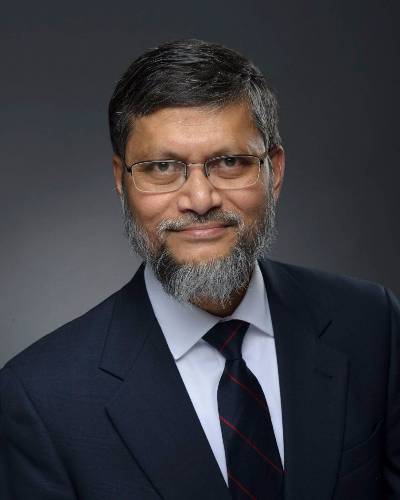
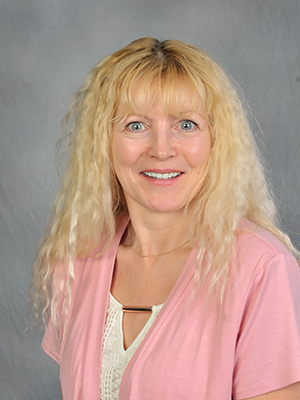
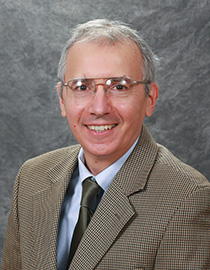
Assoc Prof Daniel T.H. New is an Associate Professor at the Division of Aerospace Engineering, School of Mechanical & Aerospace Engineering, Nanyang Technological University (NTU), Singapore. His academic journey includes a B.Eng. (Honors) and PhD from the National University of Singapore (NUS), followed by postdoctoral research at the University of Texas, Arlington, and a Lecturer role at the University of Liverpool. His research focuses on fluid dynamics, jet-in-crossflow phenomena, vortex dynamics, and flow control strategies, supported by agencies like MINDEF, DSO, and industry partners. Education: B.Eng. Mechanical Engineering, NUS (1998) PhD in Fluid Dynamics, NUS (2004) His research interests span jet mixing enhancement , bio-inspired flow control , and high-speed aerodynamics . Current projects include vortex-ring collision dynamics, jet-cylinder impingement, and tandem jets-in-crossflow analysis. He has contributed to defense-related research and holds grants from multiple national and industrial sponsors. Teaching responsibilities include courses like Aerodynamics I and Engineering Fluid Mechanics . His lab focuses on experimental fluid dynamics using facilities like low-speed water tunnels.
Dr. John W. McClory is a Professor of Nuclear Engineering at the Air Force Institute of Technology (AFIT) , where he has been affiliated since 2008. He serves as the Director of Nuclear Expertise for the Advancing Technology (NEAT) Center, Director of the Nuclear Weapons Effects Graduate Certificate Program, and holds the AFTAC Endowed Term Chair for Materials. His academic career spans military service as a former Army officer and teaching at the United States Military Academy. Education : Ph.D. in Nuclear Engineering (AFIT, 2008), M.S. in Physics (Texas A&M, 1993), B.S. in Physics (Rensselaer Polytechnic Institute, 1984) Dr. McClory’s research focuses on radiation effects on military electronics , nuclear forensics , and nuclear weapon proliferation . His work includes neutron detection , scintillator development , and radiation transport modeling , with applications in nuclear security and materials science . His recent publications emphasize radiation-hardened materials , computational modeling of nuclear effects , and machine learning applications in nuclear forensics . Collaborative projects span neutron spectroscopy , high-power microwave detection , and radiation-induced defect analysis in semiconductors. Scientific Awards : MOAA AFIT Outstanding Military Professor (2010) Dr. Leslie M. Thornton Teaching Excellence Award (2011) Military Legion of Merit (2012) Dean's Distinguished Teaching Professor Award (2019) Ohio Magazine Excellence in Education Honoree (2013) Dr. McClory has advised 22 PhD and 41 MS students and secured 25 research grants . He leads the NEAT Center and contributes to nuclear weapons effects curriculum and AFTAC materials research .
Ming Zheng is a Professor at the University of Windsor's Faculty of Engineering, specializing in automotive and combustion engineering. His research focuses on advanced ignition strategies, clean fuels (e.g., DME), emissions reduction, and engine efficiency improvements. He is recognized for contributions to combustion science and automotive innovation. Key achievements include his SAE Fellow designation (2015) and Engineering Medal of Excellence (2017). His work addresses decarbonization in road transportation and sustainable propulsion systems. Recent studies explore plasma-based ignition, oxygenated fuels, and catalytic NOx aftertreatment technologies. Research Highlights: DME combustion optimization, lean burn strategies, hydrogen-methane combustion, and renewable fuel applications. Awards: SAE Fellow, Medal of Excellence (UWindsor Engineering). Grants: Involved in NSERC-funded projects advancing automotive technologies.
Kurt Rouser is an Assistant Professor in the Department of Mechanical and Aerospace Engineering at Oklahoma State University (OSU), part of the College of Engineering, Architecture and Technology (CEAT). He holds a Ph.D., M.S., and B.S. in Aeronautical/Mechanical Engineering from institutions including the Air Force Institute of Technology and the US Air Force Academy. His research focuses on thermodynamics, aerospace propulsion systems, gas turbine engines, and pressure gain combustion. Rouser has received numerous awards, including the 2020 Golden Torch Faculty Award and the Frank J. Seiler Award for Research Excellence. He teaches advanced courses such as MAE 5343 (Advanced Aircraft Propulsion & Power) and MAE 4374 (Aerospace System Design). He serves as faculty advisor for Tau Beta Pi and Sigma Gamma Tau honor societies. His work spans academic teaching, military engineering roles, and contributions to propulsion system design and validation. Rouser’s publications address topics like turboelectric power systems, pulsed detonation turbines, and unmanned aircraft inlet design. His career combines academic research with practical engineering experience, emphasizing both technical innovation and educational excellence.
Fred Schauer is an Associate Professor in the Department of Aeronautics and Astronautics at the Air Force Institute of Technology (AFIT), part of Air University at Wright-Patterson Air Force Base, Ohio. He is a leading researcher in propulsion systems, particularly in the development and analysis of detonation-based engines such as pulsed and rotating detonation engines. His work integrates experimental testing, thermodynamic modeling, and advanced diagnostics to advance aerospace propulsion technologies. His educational background includes: BS in Mechanical Engineering, University of Dayton, 1993 Ph.D. in Mechanical Engineering, University of Illinois at Urbana-Champaign, 1998 Air War College, 2008 Dr. Schauer's research focuses on energy, propulsion, and power, with special emphasis on novel thermodynamic cycles, detonation dynamics, laser diagnostics, and flame-turbulence interactions. His work has significantly contributed to understanding and optimizing rotating and pulsed detonation engines, including performance scaling, nozzle integration, and fuel injection strategies. He has explored both conventional and bio-derived fuels to enhance efficiency and sustainability in small-scale propulsion systems. The 15 most recent publications reflect a strong trend toward experimental validation of rotating detonation engines, thermodynamic modeling, and performance optimization. These works span high-speed propulsion, combustion stability, and integration with turbines and ejectors. Keywords across these articles include aerospace engineering, propulsion, combustion, and mechanical systems, with subfields such as rotating detonation, pulsed detonation, nozzle dynamics, fuel efficiency, and thermodynamic modeling. His scientific achievements have been widely recognized: AFRL Commander’s Cup and Innovation Award Two-time winner of the AFRL Science & Technology Achievement Award ASME Airbreathing Propulsion Award Finalist for the Collier Trophy Finalist for Aviation Laureate AFRL Fellow Air Force Scientist of the Year AIAA Engineer of the Year Dr. Schauer has served as a research advisor for numerous M.S. and Ph.D. students and maintains active collaborations with AFRL, NASA, DOE, and academic institutions. His research group has published extensively and led major projects, including the AFRL in-house detonation propulsion research program from 1997 to 2019. He previously led the Propulsion and Power Advanced Concepts Group, which operated the Detonation Engine Research Facility and the Small Engine Research Laboratory, driving innovation in next-generation propulsion systems. His research labs and teams include the Detonation Engine Research Facility and the Small Engine Research Laboratory, where experimental and computational studies on advanced propulsion concepts are conducted. These facilities support high-pressure, high-speed combustion research and enable the development of practical applications for military and aerospace platforms.
Assistant Professor Jackson Crane at Queen's University (Smith Engineering, Mechanical and Materials Engineering) specializes in renewable energy conversion technologies, electrocatalysis, and low-carbon combustion. His research spans detonation fundamentals for high-efficiency engines and CO2-reduction electrocatalysis for alternative fuel synthesis. Education: SB (MIT), MSc & PhD (Stanford), Postdoc (Queen's University) His research combines electrochemical CO2 conversion with detonation dynamics , focusing on multiphysics modeling and experimental validation. Current projects include: High-pressure CO2 reduction systems Detonation propagation in curved channels Pulse electrolysis for stable CO2 reduction Scientific awards include: Bernard Lewis Fellowship (2024) NSF Graduate Research Fellow (Stanford) Stanford Graduate Fellow
M. Ruhul Amin is a Professor in the Mechanical & Industrial Engineering Department at Montana State University's College of Engineering. His research focuses on heat transfer, fluid mechanics, and energy systems with applications spanning from advanced manufacturing to environmental sustainability. With over three decades of academic experience, he maintains an active research program with numerous publications in leading journals. Dr. Amin's research interests center on computational heat transfer and fluid flow phenomena. His work includes modeling of solidification processes, analysis of nanofluid behavior, development of compact heat exchangers, and investigation of thermal management systems. His research bridges fundamental thermal science with practical engineering applications in energy systems, manufacturing processes, and environmental engineering. His recent publications demonstrate a strong focus on advanced manufacturing techniques including laser welding, friction stir welding, and additive manufacturing processes. He also investigates energy applications ranging from fuel cell systems to solar thermal technologies and emission control systems for developing countries. His work consistently applies computational methods to solve complex thermal-fluid problems. Fulbright Scholar Award, 2008 Montana State University Alumni Association/Bozeman Chamber of Commerce Award for Excellence, 2008 Multiple Outstanding Researcher awards from Montana State University Outstanding Teacher awards in both Mechanical Engineering and Mechanical Engineering Technology Recognition as ASME Faculty Advisor Multiple listings in Who's Who publications across science, engineering, and education Dr. Amin has secured significant research funding for projects including software development for pulse detonation engine optimization, analysis of heat transfer in porous media, thermal management of magnetohydrodynamics systems, and development of compact recuperators for hybrid fuel cell systems. His research has practical applications in space vehicles, aircraft engines, geothermal energy, and manufacturing processes. His laboratory work focuses on computational modeling of thermal-fluid systems with applications in advanced manufacturing, energy systems, and environmental engineering. Current projects include numerical analysis of nanoparticle diffusion during solidification, additive manufacturing process modeling, compact recuperator design for fuel cell systems, and analysis of permanent ice covers in Antarctic lakes.
Albina Tropina is a Research Professor in the Department of Aerospace Engineering at Texas A&M University. Her primary affiliation is with the College of Engineering, focusing on advanced plasma physics and combustion engineering. She holds a D.Sc., Ph.D., and M.S. from Ukrainian institutions, including the National Aviation University and V.N. Karazin National University. Education: D.Sc., Mechanics of Liquid, Gas and Plasma, National Aviation University, Kyiv, Ukraine Ph.D., Mechanics of Liquid, Gas and Plasma, V.N. Karazin National University, Kharkiv, Ukraine M.S., School of Mechanics and Mathematics, V.N. Karazin National University, Kharkiv, Ukraine Research Interests: Tropina specializes in plasma-assisted combustion, ignition systems for engines, turbulent flows, and nonequilibrium plasma dynamics. Her work integrates experimental and computational methods to advance ignition technologies and plasma applications in high-speed flows. Key topics include femtosecond laser-induced filaments, dual-pulse ignition systems, and aero-optical effects in hypersonic environments. Awards & Honors: “Honorary Professor of Science,” Ukrainian Ministry of Education and Science (2016) Fulbright Grant, US Department of State (2009–2010) Window on Science Program, Air Force Office of Scientific Research (2011–2014) Advising & Grants: Tropina has led multiple research initiatives funded by agencies like the Air Force Office of Scientific Research and the US Department of State. Her work emphasizes collaborations, including a visiting scientist role at Princeton University’s Applied Physics Lab (2014–2015). She contributes to plasma simulation models and experimental setups for ignition systems. Labs & Teams: Her research is part of the Plasma Simulation Laboratory at Texas A&M, focusing on modeling plasma-assisted ignition, combustion, and detonation processes. She also engages in computational fluid dynamics and high-resolution diagnostics for plasma dynamics.
Olivier Petit is a researcher at the Department of Thermo and Fluid Dynamics at Chalmers University of Technology, Sweden. His work focuses on aerodynamics , propulsion systems , and computational fluid dynamics (CFD) , with emphasis on turbofan engines, open rotor designs, and boundary layer ingestion technologies.
Carl Knowlen is a Research Associate Professor in the Department of Aeronautics and Astronautics at the University of Washington. He holds a PhD from the same institution, specializing in ram accelerators and hypervelocity propulsion. His roles include teaching and leading experimental research in shockwave reactors, detonation engines, and green propellant technologies. Knowlen has collaborated internationally, including a 3-month stint in Japan (1996), and transitioned from postdoctoral roles to senior research positions before his current faculty appointment in 2015. Education: PhD (1991), MSAA (1985), BSAA (1983) in Aeronautical and Astronautical Engineering from the University of Washington. Research focuses on energy conversion, combustion physics, and hypervelocity propulsion systems. Key areas include ram accelerators for space launch applications, rotating detonation engines (RDEs), and cryogenic energy storage. His work emphasizes integrated experimental and computational modeling, with notable contributions to baffled-tube ram accelerator design and detonation wave dynamics. Recent studies address pre-ignition propellant mixing in RDEs and scaling effects in rocket propulsion systems. Students advised include Quentin Roberts (AIAA Zarem award winner) and Carter Vu (NSF GRFP recipient). Research facilities utilized include the Kirsten Wind Tunnel and experimental setups for RDE combustor testing. Labs/Teams: Active in the UW Ram Accelerator Program and collaborations with Tohoku/Hiroshima Universities. Current projects include shockwave reactors for hydrocarbon upgrading and green microthrusters for CubeSats.
Mikhail Slipchenko is a Research Professor of Mechanical Engineering at Purdue University, affiliated with the Maurice J. Zucrow Laboratories and the College of Engineering. His research focuses on advanced laser diagnostics for high-speed flows, combustion, and plasma physics. He specializes in developing cutting-edge optical techniques such as burst-mode laser systems, coherent anti-Stokes Raman scattering (CARS), and high-repetition-rate planar laser-induced fluorescence (PLIF). These tools enable precise measurements of temperature, velocity, and chemical composition in extreme environments like hypersonic wind tunnels, rotating detonation engines, and shock tubes. Affiliations: Purdue University, College of Engineering, Mechanical Engineering Department, Maurice J. Zucrow Laboratories Research interests include laser-based flow visualization, plasma diagnostics, and the development of ultra-fast diagnostic systems for transient phenomena. His work addresses challenges in aerospace propulsion, combustion optimization, and fundamental fluid dynamics. Recent studies involve kHz-rate OH-PLIF imaging in rotating detonation combustors, 100-kHz CARS thermometry in shock tubes, and microwave scattering for plasma characterization. Publications highlight innovations in laser sources, such as narrowband KTP optical parametric oscillators and burst-mode systems for extended diagnostics. His methodologies have been applied to analyze reactant refill dynamics in rotating detonation engines, hypersonic boundary-layer instabilities, and multiphase blast fields. No scientific awards are explicitly listed, but his contributions to high-speed diagnostics are widely recognized in the field. Slipchenko collaborates on grants related to laser technology and combustion science, advancing both academic and industrial applications. He is actively involved in mentoring students and contributes to the Maurice J. Zucrow Laboratories' mission to solve critical problems in propulsion and fluid dynamics.
University of Illinois Urbana-ChampaignUnited States
Sean Kearney is a Professor in the Department of Aerospace Engineering at the University of Illinois at Urbana-Champaign (UIUC), effective October 2024. He holds a Ph.D. and M.S. in Mechanical Engineering from UIUC (1999 and 1995, respectively) and a B.S. in Mechanical Engineering from Clarkson University (1992). Prior to his academic role, he served as a Distinguished Member of Technical Staff at Sandia National Laboratories (1999–2024) and Technical Director at Spectral Energies, LLC (2017–2018). His research focuses on laser-based diagnostics, incompressible and compressible fluid mechanics, hypersonics, and reacting flows. Key projects include developing advanced CARS (Coherent Anti-Stokes Raman Scattering) techniques for temperature/pressure measurements in compressible flows, laser velocimetry for aerodynamics, and combustion diagnostics in high-enthalpy environments. Recent work includes studies on free-piston shock tunnels, nitrogen thermometry in plasma torches, and deflagration dynamics in multi-component fuels. He has contributed to over 12 peer-reviewed articles in journals like Annual Review of Fluid Mechanics, Optics Letters, and Shock Waves. His teaching includes AE 312 (Compressible Flow).
Ephraim Gutmark is a Professor in the Department of Mechanical and Materials Engineering at the University of Cincinnati's College of Engineering, where he directs the Gas Dynamics and Propulsion Laboratory. His extensive research portfolio spans propulsion systems, fluid dynamics, combustion, and biomedical applications, with over 50 major research grants totaling millions of dollars secured from 2000-2024. Dr. Gutmark earned his Doctoral Degree from Technion-Israel Institute of Technology. His research interests include gas turbines for power generation and propulsion systems, experimental fluid mechanics, detonation and combustion, heat transfer, rocket and airbreathing propulsion, aeroacoustics, and biomedical applications related to airway, voice, and hemodynamics. His work bridges fundamental fluid dynamics with practical applications in propulsion and biomedical engineering, focusing on jet noise reduction, advanced propulsion systems, performance enhancement of Pulse/Rotating Detonation Engines (PDE/RDE), combustion control for low emissions, and innovative hydrodynamics for oil explorations. Analysis of his recent publications (2022) reveals a strong interdisciplinary focus connecting propulsion engineering with biomedical applications, particularly in airway dynamics and voice production. His work demonstrates consistent innovation in rotating detonation engines, jet noise reduction technologies, and biomedical fluid dynamics, with significant contributions to understanding flow-structure interactions in both engineering and physiological systems. Dr. Gutmark has secured substantial research funding from diverse sources including the Department of Defense (Navy, Air Force), NASA, National Institutes of Health, National Science Foundation, Ohio Board of Regents, and major industry partners including General Electric, Halliburton, and Northrop Grumman. His grant portfolio demonstrates exceptional longevity and diversity, with continuous funding spanning more than two decades. He directs the Gas Dynamics and Propulsion Laboratory at the University of Cincinnati, which maintains specialized facilities for jet noise reduction research, biomedical fluid dynamics studies, advanced propulsion system testing, and oil exploration hydrodynamics. The laboratory supports collaborative research with Cincinnati Children's Hospital Medical Center and multiple defense contractors, focusing on both fundamental fluid mechanics and applied engineering solutions.
Paul Cizmas is a Professor in the Department of Aerospace Engineering at Texas A&M University, part of the College of Engineering. He holds a Ph.D. from Duke University (1995) and a Dipl.-Ing. from the Polytechnic Institute, Bucharest (1984). His research focuses on propulsion systems, computational fluid dynamics (CFD), unsteady aerodynamics, and aeroelasticity, with a strong emphasis on reduced-order models and thermal management in turbomachinery. He has authored influential books like Aerothermodynamics and Jet Propulsion (Cambridge University Press, 2022). Dr. Cizmas leads research on sonic boom reduction, turbulence modeling, and combustion mechanisms. His work integrates advanced numerical methods, such as proper orthogonal decomposition (POD), to enhance computational efficiency in simulating complex flows. He has contributed to the development of the UNS3D CFD solver, validated through AIAA workshops. Awards include the Boeing Research and Technology Performance Award (2018) and the Herbert H. Richardson Faculty Fellowship (2009). Education: Ph.D., Duke University, 1995 Dipl.-Ing., Polytechnic Institute, Bucharest, 1984 Awards: Research and Technology Performance and Innovation Award (Boeing, 2018) Structures and Dynamics Committee Best Paper Award (ASME, 2011) Herbert H. Richardson Faculty Fellow Award (Texas A&M, 2009) His advising and grants focus on CFD applications in propulsion, with collaborations spanning academic and industrial partners. He directs the Computational Fluid Dynamics for Aerospace Applications group, advancing methodologies for low-boom aircraft design and multiphase flow dynamics. His lab develops open-source software tools for turbulence modeling and reduced-order simulations.
Bydgoszcz University of Science and TechnologyPoland
Kindracki Jan is a full-time Professor at the Division of Aircraft Engines , Faculty of Power and Aeronautical Engineering , Warsaw University of Technology . His office is located in room 306b, and he can be contacted at Jan.Kindracki@pw.edu.pl . Research Leadership: Chair of Educational Team for Space Technology Projects at PAN, Editor for "Journal of Power Technologies" Teaching: Courses on Aerospace Propulsion, Celestial Mechanics, and Experimental Techniques Research activities focus on Aerospace Propulsion and Combustion Physics , particularly: Rotating Detonation Engines (RDE) Cold Gas/Resistojet Propulsion Hybrid Propellant Combustion Spacecraft Robotics Microgravity Simulation Computational Modeling of Detonation Scientific Achievements include: Multiple Rector's Awards (2007-2019) PECS ESA Project Participation NCN Sonata Grant Leadership NCBiR Project Leadership (2016-2019) Awards span team and individual recognitions, including the Professor Zygmunt Szlachta Award and Best Paper Award at ISHPMIE 2012. Academic Leadership involves organizing international conferences like the Development Trends in Space Propulsion Systems series and mentoring over 138 engineering students and 77 interim projects as of 2020.