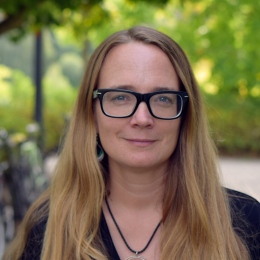
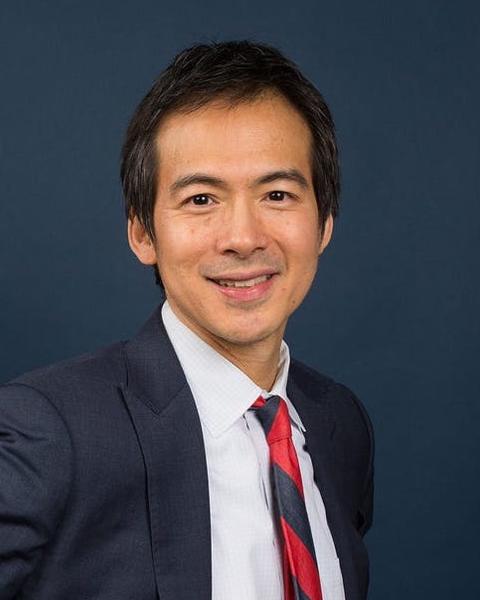
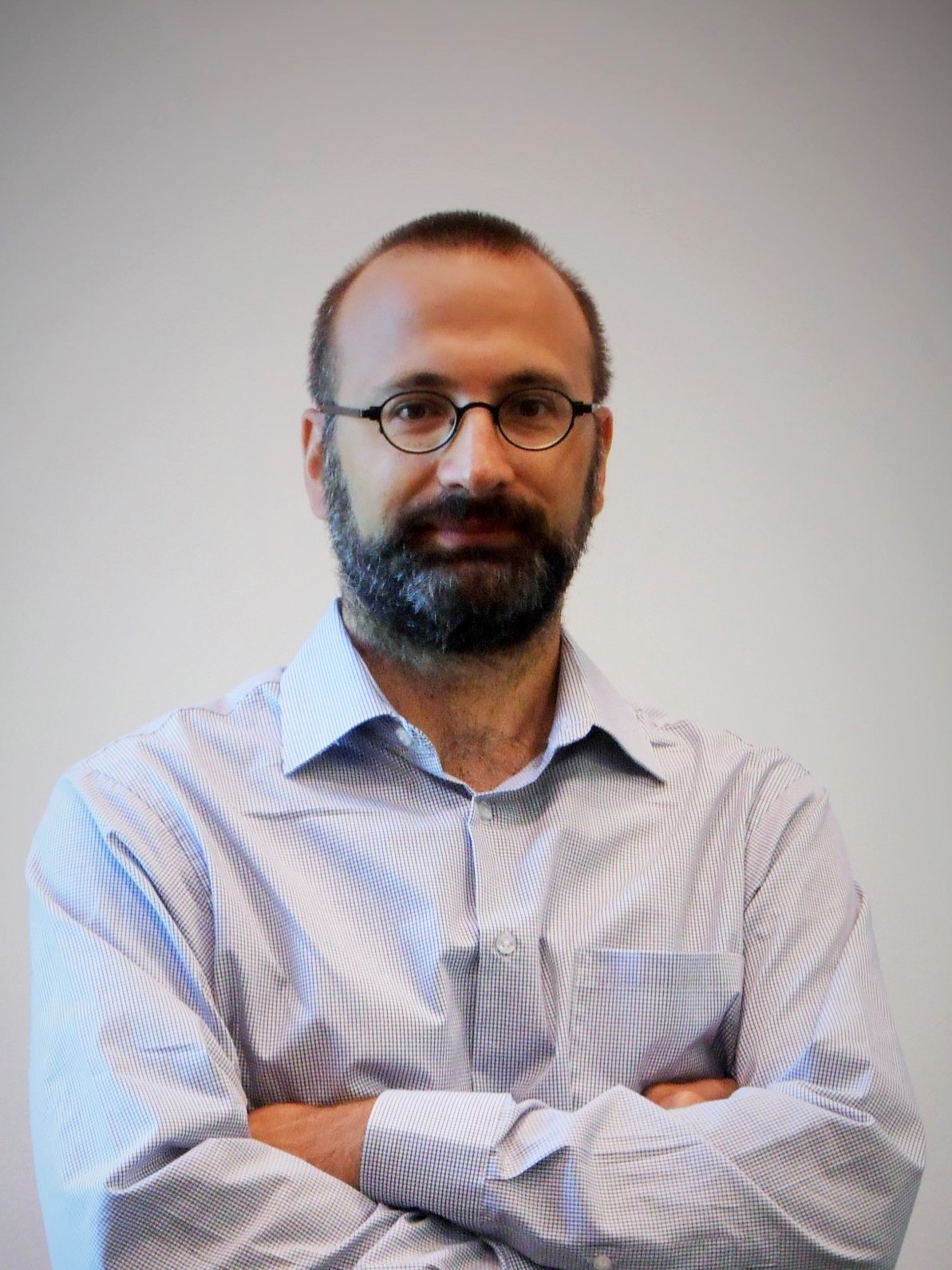
Andrea Voyer is a Professor of Sociology at Stockholm University , focusing on social norms, boundaries, and their role in shaping social inequality , particularly in the context of immigrant integration , class disparities, and ethnic inequality. She employs both qualitative and computational methods , including large-scale text analysis and cultural theory, to explore these themes. Her research has received funding from Riksbankens Jubileumsfond , the Swedish Research Council , the National Science Foundation (USA) , and the Russell Sage Foundation . Voyer serves as a program coordinator for master's programs in sociology and applied social research, and leads the department's research groups in qualitative methods , computational sociology , and cultural sociology . She is also an editorial board member for Sociological Theory and American Journal of Cultural Sociology , and contributes to public discourse on immigration, segregation, and social norms. Her recent publications highlight the use of computational techniques to analyze immigrant incorporation through shifts in mainstream discourse, the cultural processes of inequality during the COVID-19 pandemic , and the evolving role of class distinction-making in etiquette literature. These works bridge cultural theory with empirical analysis, offering actionable insights for addressing social inequality.
Professor Hendrik Vollmer is a faculty member in the Accounting Group at Warwick Business School , University of Warwick, since 2020. He previously served as Head of the Accounting Division at the University of Leicester (2015–2020) and worked at Bielefeld University in Germany for 16 years. His research bridges accounting, sociology, and environmental studies, focusing on accounting as a social practice and its role in addressing ecological challenges. Senior Fellow of the Higher Education Academy Associate Editor of European Accounting Review Member of editorial boards for Zeitschrift für Soziologie, Accounting, Organizations and Society, and Social and Environmental Accountability Journal Active in sustainability accounting research and education Contributor to interdisciplinary accounting literature Recent publications explore accounting's role in climate change mitigation, public value creation, and the spatialization of worth. His teaching modules include Accounting for Sustainability, People, Planet and Financial Accounting: Theory and Context .
Walter W. Powell is the Jacks Family Professor of Education at Stanford University, with courtesy appointments in Sociology, Organizational Behavior, Management Science and Engineering, and Communication. He serves as Faculty Co-Director of the Stanford Center on Philanthropy and Civil Society (PACS), which he co-founded in 2006, and leads the Civic Life of Cities Lab examining civil society organizations across global metropolitan areas. Powell is also an External Faculty member at the Santa Fe Institute and co-directs the CASBS summer institute on Organizations with MIT's Bob Gibbons. His educational background includes a PhD in Sociology from SUNY-Stony Brook (1978), an MA in Sociology from the same institution (1975), and a BA from Florida State University (1971). Powell's research fundamentally explores how ideas and practices transfer across organizational boundaries, with particular emphasis on network structures that enable or constrain knowledge diffusion. His work spans organizational theory, institutional analysis, university-industry relations, economic sociology, and comparative analysis of nonprofit, public, and private institutional forms. Powell's publications reveal consistent focus on network dynamics and institutional evolution, particularly examining how organizations navigate between market, hierarchy, and network governance structures. His research demonstrates how knowledge spillovers operate within biotechnology clusters, how institutional isomorphism shapes organizational fields, and how civil society organizations adapt to technological and economic pressures across different urban contexts. Dean's Award for Excellence in Graduate Teaching (2018-19) Max Weber Award for "Neither Market Nor Hierarchy" Viviana Zelizer Prize for "Network Dynamics and Field Evolution" Administrative Science Quarterly Recognition Member of Swedish Royal Academy of Science Member of The British Academy Member of American Academy of Arts and Sciences Honorary Degrees from Uppsala University, Copenhagen Business School, and Aalto University Powell has made substantial contributions to graduate education, receiving Stanford's highest teaching honor. His leadership of PACS and SCANCOR (1999-2010) demonstrates sustained commitment to advancing organizational research through collaborative initiatives. He supervises postdoctoral fellows and runs annual PhD workshops in Europe, fostering the next generation of organizational scholars. His research has been supported by grants enabling comparative studies of university-industry relations and civil society across multiple national contexts. Through the Civic Life of Cities Lab at PACS, Powell directs comparative research on civil society organizations across seven global cities, examining how these organizations navigate technological change, economic pressures, and political environments. His work bridges theoretical organizational sociology with practical applications in philanthropy, civil society development, and knowledge transfer between academic and commercial sectors.
Dr Alison Powell is an Associate Professor in the Department of Media and Communications at the London School of Economics and Political Science (LSE), serving as Programme Director for the MSc Media and Communications (Data and Society). Her research focuses on technology design, public sector technology, and digital futures. She is known for her book Undoing Optimization: Civic Action in Smart Cities (2021) and her participatory research method, data walking. From 2019–2023, she directed the JUST AI network, supported by the Ada Lovelace Institute and UKRI, advancing AI ethics research. Her work integrates critical theory, participatory methods, and interdisciplinary collaboration. Education: PhD in Communication from Concordia University (Canada), MA in Media Studies from Toronto Metropolitan University, and postdoctoral research at the Oxford Internet Institute. Prior to academia, she worked in the film and TV industry. Research interests include civic engagement in data-driven governance, ethical AI, and participatory urbanism. She has advised projects like Africa Just AI and Operationalising Ethics for AI, funded by Horizon Europe, AHRC, and the Open Society Foundations. Her articles address topics such as AI governance, urban light ecology, feminist research praxis, and the ethical implications of technology for marginalized communities. She contributes to blogs like Media@LSE and leads initiatives at Polis and the LSE’s Digital Futures for Children project. Grants and collaborations include work with Projects by IF, Open Rights Group, and the Human Data Interactions Network (EPSRC). She explores intersections of technology, justice, and sustainability, emphasizing equitable and inclusive innovation.
Zizi Papacharissi is a UIC Distinguished Professor of Communication and Political Science at the University of Illinois at Chicago (UIC), serving as Department Head of Communication. She is also a University Scholar and affiliate faculty at the Discovery Partners Institute (University of Illinois System). Her research explores the social and political implications of digital media, with a focus on affective publics, networked identities, and democratic processes. She holds a PhD from the University of Texas at Austin and has authored over 10 books and 80+ journal articles. Education: PhD, University of Texas at Austin (2000) in New Media Technologies and Political Communication MA, Kent State University (1997) in Communication Studies BA, Mount Holyoke College (1995) in Media Studies and Economics Research Interests: Dr. Papacharissi investigates how digital media shape political participation, identity formation, and public discourse. Key areas include affective publics (emotional dimensions of online activism), the role of social media in democracy, and the ethical implications of AI and connective technologies. Her work bridges communication studies, political theory, and sociology. Recent Contributions: Her 2021 book After Democracy explores post-democratic futures in the digital age. She edits Social Media & Society and collaborates with tech firms like Facebook/Meta and Tencent on media ethics and policy. Her research on #Egypt and #OWS movements highlights social media’s role in mobilizing protests. Awards & Recognition: 2018 Wayne Danielson Award (National Communication Association) 2015 Best Book Award (NCA Human Communication and Technology Division) High-Impact Scholar (University of Texas at Austin) Advising & Grants: While no student names are listed, her courses (e.g., Democracy in a Digital Age ) reflect her mentorship in critical media studies. She has secured grants from the National Academies of Science and the Institute of Medicine for projects on youth well-being and digital media. Labs & Teams: Her research lab focuses on digital media’s societal impact, collaborating with global institutions like the Oxford Internet Institute and the Harvard Kennedy School. She chairs UIC’s interdisciplinary Digital Media and Democracy initiative.
Deborah Fox is Associate Professor in Midwifery at the University of Technology Sydney (UTS), Faculty of Health, and a core member of the Centre for Midwifery, Child and Family Health. She serves as Co-lead of the Maridulu Budyari Gumal SPHERE Maternal and Women's Clinical Theme and Chair of the National Publicly Funded Homebirth Consortium. In 2024, she received the Faculty of Health Dean's Academic Excellence Award for Research (Mid Career Researcher), following her 2021 award as Highest Performing Early Career Researcher from the School of Nursing and Midwifery. Her research focuses on optimizing physiological processes and positive experiences for women with complex pregnancies, with particular emphasis on the mediation of technology in midwifery practice. Current projects include evaluation of non-invasive fetal ECG beltless and wireless fetal monitoring in labor and birth, and examining the social, economic and environmental impacts of telemonitoring and telehealth in pregnancy and postpartum care. Dr. Fox's scholarly work demonstrates consistent focus on technology's role in maternity care, women's experiences of monitoring during labor, and innovative approaches to midwifery practice. Her recent publications show increasing emphasis on digital health solutions, AI applications in women's health, and pandemic impacts on maternal care systems globally. Faculty of Health Dean's Academic Excellence Award for Research (Mid Career Researcher) 2024 Highest Performing Early Career Researcher award from School of Nursing and Midwifery 2021 Editorial Board Member, Women and Birth journal Dr. Fox is actively involved in higher degree research supervision and has developed innovative teaching resources, including an Objective Structured Clinical Examination for perinatal mental healthcare. She is scheduled to spend three months as a Visiting Scholar at the University of Oxford in 2025.
Arvind Karunakaran is an Assistant Professor at Stanford University in the Department of Management Science and Engineering. He holds affiliations with the Center for Work, Technology, and Organization (WTO) , Stanford Technology Ventures Program (STVP) , Stanford Institute for Human-centered Artificial Intelligence (HAI) , and the Digital Economy Lab (DEL) . His research focuses on authority and accountability in the workplace , particularly under technological change and human-AI augmentation. Education: Ph.D. from MIT Sloan School of Management (2018) His work employs ethnographic and field-based methods to study empirical puzzles in workplace dynamics, complemented by comparative-historical analysis and quantitative/textual data analysis . Key research areas include social/algorithmic evaluation of workers , human-AI reskilling , and conflicts in symmetrical relations . Recent publications analyze AI's impact on workplace inequality , platform governance , and crowd-based accountability . His findings are published in top journals like Administrative Science Quarterly and Organization Science . Scientific Awards & Recognitions: Best Published Paper Award (ASA, 2025) Gerard J. Tellis Best Junior Faculty Paper Award (AIM Conference, 2025) W. Richard Scott Article Award (ASA, 2024) Responsible Research in Management Award (RRBM, 2024) Future of Organizations Fellowship (2024) Professor Karunakaran advises doctoral and master's students in areas related to technology and organizations , and teaches courses on organizational behavior , organizational theory , and innovation management .
Marcela Echeverri Muñoz is an Associate Professor in the Department of History at Yale University, affiliated with the Faculty of Arts and Sciences. Her scholarship bridges history, anthropology, and political theory, with a focus on Latin America, the Atlantic World, and the Spanish Empire. She is recognized for her interdisciplinary approach to understanding political subjectivities, state formation, and social transformation during the Age of Revolutions. PhD in Latin American and Caribbean History, New York University, 2008 MA in History of the Hispanic World, Fundación MAPFRE-Tavera and CSIC, Madrid, 2006 MA in Social and Political Theory, The New School for Social Research, 2001 BA in Anthropology, Universidad de los Andes, Bogotá, 1997 Her research centers on the interplay of race, gender, law, and political theory in colonial and 19th-century Latin America. She investigates how enslaved and Indigenous peoples navigated imperial and republican transitions, particularly through royalist affiliations. Her work challenges peripheral narratives of Spanish America in Atlantic slavery studies, positioning the region as a central site of abolitionist and constitutional experimentation. The trends in her recent publications reveal a sustained focus on slavery, abolition, and political transformation in the Spanish American mainland. She analyzes how anti-slavery movements were intertwined with republicanism, citizenship, and state formation, especially in Gran Colombia. Her scholarship spans legal history, Atlantic processes, and transimperial dynamics, often highlighting marginalized voices in revolutionary contexts. She frequently contributes to major reference works and edited volumes on Atlantic revolutions and Latin American independence. Her scientific awards and fellowships reflect her standing in the field: James Alexander Robertson Prize Michael Jiménez Prize Bolton-Johnson Prize Honorable Mention Yale Heyman Prize for Outstanding Scholarly Publication Alexander von Humboldt Research Fellowship MacMillan Research Fellow, Yale Mellon Residential Fellow, CUNY NEH Summer Institute Participant, Johns Hopkins Fellowships from John Carter Brown Library, CSIC, Fundación Mapfre, and Instituto Colombiano de Antropología e Historia Echeverri has secured significant research grants from Harvard’s Atlantic History Seminar, CUNY Research Foundation, and Yale. She has co-edited special issues on Gran Colombian history and Spanish American abolition, and led key academic initiatives including the Race and Slavery in the Atlantic World Working Group and the Early Modern Empires Workshop at Yale. Though student advising is not explicitly detailed, her role as a senior scholar implies mentorship of graduate students. She is affiliated with several research networks and has been a visiting scholar at institutions such as Freie Universität Berlin. Her ongoing book project on Gran Colombian slavery underscores her commitment to redefining the hemispheric significance of Latin American abolition. She remains an active contributor to both scholarly and pedagogical conversations in Atlantic and Latin American history.
Archon Fung is the Winthrop Laflin McCormack Professor of Citizenship and Self-Government at the Harvard Kennedy School. His research focuses on policies and institutional designs that enhance democratic governance, particularly in areas of public participation, deliberation, and transparency. He co-directs the Transparency Policy Project and leads democratic governance programs at the Ash Center for Democratic Governance and Innovation. Fung has authored five books, including Full Disclosure: The Perils and Promise of Transparency and Empowered Participation: Reinventing Urban Democracy , and over fifty articles. He holds degrees from MIT: two S.B. degrees in philosophy and physics, and a Ph.D. in political science. Affiliations: Director of the Ash Center, Faculty Associate of the Ethics Center, Member of the Faculty Committee since 2009. Research Interests: Democratic innovation, participatory governance, transparency in public policy, and institutional design for equitable decision-making. His recent work explores democratic erosion, AI's impact on elections, and inclusive governance frameworks. Fung teaches courses on participation, ethics, and social innovation at the Harvard Kennedy School. He co-founded Participedia, a global platform documenting participatory governance practices. Sponsored projects include initiatives on institutional antiracism, transparent engagement, and sustainable governance reforms. His work emphasizes bridging theory and practice to strengthen democratic institutions globally.
Ignacio Ojea Quintana serves as Assistant Professor at Ludwig Maximilian University of Munich's Faculty of Philosophy, Philosophy of Science and Religious Studies within the Chair of Philosophy of Science. He joined LMU in 2022 after a three-year research fellowship at the Australian National University's School of Philosophy. His academic foundation includes a PhD in Philosophy from Columbia University (2019), supervised by Philip Kitcher with focus on formal social epistemology, and prior Masters/BA degrees in Philosophical Logic from the University of Buenos Aires where he collaborated with the Buenos Aires Logic Group. Ojea Quintana's research employs formal methodologies to examine digital technologies' impact on knowledge organization across scientific and public spheres. His work intersects Social Epistemology , Philosophy of Data Science , and Autonomous Systems Ethics , with significant contributions to social media network analysis of controversial movements. Current projects analyze Twitter dynamics in racial justice movements, ethical constraints in AI decision systems, and consensus formation in scientific modeling. His 2021-2022 publications reveal an interdisciplinary trajectory bridging philosophy, computer science, and social sciences. Key trends include computational analysis of online discourse, formal modeling of group rationality under uncertainty, and ethical frameworks for AI systems. Works appear in high-impact venues including Nature Humanities and Social Sciences Communications and the AAAI/ACM Conference on AI, Ethics, and Society. Ojea Quintana maintains active collaborations with the "Humanising Machine Intelligence" initiative (formerly at ANU) and the Buenos Aires Logic Group. His research program demonstrates sustained engagement with technology's societal implications through formal modeling approaches and empirical digital trace analysis.
Jean-François Le Gall is a full Professor at Université Paris-Saclay and a member of the Orsay Mathematics Laboratory (LMO) since 2006. He has held prominent positions at Pierre and Marie Curie University (1988-2006) and École Normale Supérieure (1997-2007). A Senior Member of the University Institute of France (2007-2017) and an elected member of the Academy of Sciences since 2013, he served as Vice-President of Research for the Mathematics Department at Orsay (2020–present) and led the ERC Advanced Grant GeoBrown (2017–2023). Education: Ecole Normale Supérieure (1978–1982), PhD in stochastic differential equations (1982), State Doctorate on Brownian motion (1987) Research Interests focus on probability theory , particularly Brownian motion , superprocesses , random trees , planar maps , and their connections to PDEs and geometric models. His work bridges stochastic analysis , branching processes , and coalescence phenomena . Selected Publications include foundational studies on the Brownian map , random geometry , and spatial branching processes . His 2025 paper on The area of spheres in the Brownian plane explores fractal properties of random metric spaces, while the 2020 Growth-fragmentation processes work links Brownian trees to fragmentation models. Scientific Distinctions : 1986 Rollo Davidson Prize 1997 Loève Prize in Probability 2005 Sophie Germain and Fermat Prizes 2019 Wolf Prize in Mathematics 2022 BBVA Frontiers of Knowledge Award Academic Leadership includes directing the Probability and Statistics Team (2013–2019) and the Master 2 in Probability and Statistics (2007–2015). He chairs editorial roles in Grundlehren der mathematischen Wissenschaften (since 2020) and Probability Theory and Related Fields (2005–2010).
Andrea Lanza serves as Associate Professor in the Department of Italian Studies within the Faculty of Arts & Science at the University of Toronto. Originally from Italy, he completed his academic training in France at the École des Hautes Études en Sciences Sociales (EHESS), earning both his Diplôme d'Études Avancées and Doctorat degrees, following his Laurea from Università degli Studi di Milano La Statale. His scholarly profile demonstrates extensive transnational engagement with French political thought while maintaining institutional affiliation with Italian Studies. Doctorat, École des Hautes Études en Sciences Sociales (Paris) Diplôme d'Études Avancées, École des Hautes Études en Sciences Sociales (Paris) Laurea, Università degli Studi di Milano La Statale Lanza's research focuses on the historical intersections between political thought and social science, with particular emphasis on Early French Socialism (1800-1850), the making of French working classes, and Contemporary French Political Thought. His scholarly trajectory follows two interrelated axes: the emergence of socialist discourse in 19th century France and historic-philosophical debates on democratic society, especially regarding French thinkers like Lefort, Gauchet, Rosanvallon, Foucault, and Rancière. His work demonstrates remarkable interdisciplinary range, connecting political philosophy with historical anthropology, sociology, and religious studies. His recent publications reveal a growing engagement with contemporary issues including decolonization debates, cancel culture, and the epistemological challenges facing social sciences today. Lanza has also held significant administrative roles, serving as Associate Chair for Undergraduate Studies in the Department of Italian Studies during 2022-2023. Administrative Service: Associate Chair - Undergraduate, Department of Italian Studies (2022-2023) Lanza's scholarly network extends across North America and Europe, with collaborations spanning multiple disciplines. His recent editorial work on Claude Lefort's political philosophy and Marcel Gauchet's theories of democratic society demonstrates his position at the forefront of contemporary political thought scholarship.
Dr. hab. Piotr Łukomski is an Associate Professor at the Department of Political Theory, Institute of Political Science, University of Wrocław. His academic career focuses on the intersection of political theory, philosophy, and cultural analysis, with notable contributions to Hannah Arendt's philosophy, game theory applications in politics, and the role of imagination in political thought. Department: Political Theory Email: piotr.lukomski@uwr.edu.pl ORCID: 0000-0002-5307-616X Research Interests: His work spans conceptual metaphors in political theory, decision-making under hazardous conditions, cultural evolution of tyranny, and the aestheticization of politics. He examines how digital technologies (like VR) reshape political identity and how Arendtian frameworks apply to modern governance. Teaching: Coordinates social consulting labs and teaches decision-making processes in political contexts, with a focus on practical applications in hazardous conditions. Publications: Recent articles analyze VR-era political identity, Hannah Arendt's relevance to modern democracy, and the integration of problem-solving strategies in political thought.
Jay David Bolter holds the Wesley Chair of New Media and serves as Professor and Director of Computational Media at the Georgia Institute of Technology, where he is affiliated with the School of Literature, Media, and Communication within the Ivan Allen College of Liberal Arts. A foundational figure in digital media studies, he is renowned for his influential theoretical works and practical contributions to new media forms. His research spans Augmented Reality , Virtual Reality , Digital Culture , and the History of Media , with particular emphasis on remediation theory (developed with Richard Grusin) and the evolution of digital writing. As an active member of the Augmented Environments Lab, Bolter creates narrative-driven AR applications for cultural heritage sites and educational contexts, blending theoretical rigor with experimental design. His work consistently examines how new media technologies reshape human perception and cultural practices. Recent publications reveal a concentrated exploration of reality media (AR/VR) as narrative spaces, with articles addressing biofeedback integration in VR fitness, agency-driven interactive storytelling, and theoretical frameworks for understanding immersive experiences. His scholarship bridges historical media analysis with cutting-edge technical implementation, demonstrating how remediation processes continue to evolve in mixed reality environments. This trajectory reflects his lifelong investigation into the interplay between technological capabilities and human expression. Bolter maintains significant collaborative partnerships, including co-authoring seminal texts like Remediation and developing the Storyspace hypertext system with Michael Joyce. His leadership in the Augmented Environments Lab drives interdisciplinary projects that merge humanities perspectives with technological innovation, particularly in creating culturally resonant AR experiences. Teaching responsibilities include advanced courses in mixed reality design, computational media, and digital media theory, shaping the next generation of media scholars and practitioners.
Quoc Thong Le Gia is an Associate Professor in the School of Mathematics & Statistics at the University of New South Wales (UNSW), Sydney. He holds a PhD in Mathematics from Texas A&M University (2003), an MS in Mathematics from Texas A&M University (2000), and a BSc in Mathematics and Computer Science from UNSW (1998). His research focuses on Numerical Analysis , Approximation Theory , Partial Differential Equations , and Stochastic Processes , with particular expertise in problems on spherical domains. His work bridges theoretical mathematics with practical applications in computational science, data science, and machine learning. Le Gia's recent publications demonstrate a strong focus on numerical methods for PDEs on spheres, stochastic analysis, and machine learning applications. His work shows consistent progression from theoretical foundations to practical implementations, with increasing interdisciplinary applications in recent years. L. F. Guseman Prize in Mathematics, Texas A&M University (2003) As a dedicated academic mentor, Le Gia has supervised numerous PhD, Master's, and Honours students across computational mathematics and data science topics. He has secured significant research funding through ARC Discovery Projects including DP220101811 (2022-2024) and DP180100506 (2018-2020). Professionally, he serves as External Associate Editor for Frontiers in Applied Mathematics and Statistics , Secretary for ANZIAM's Computational Mathematics Group, and Co-chair of Mathematics of Computation and Optimisation (AustMS Special Interest Group).