
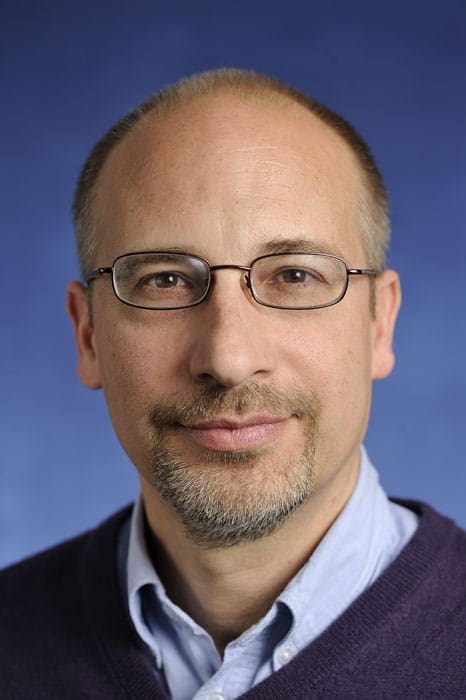
Joel Andreas is a Professor of Sociology at Johns Hopkins University since 2003, serving as Program Director of the East Asian Studies Program. His research focuses on political contention, social inequality, and social change in contemporary China. He holds a PhD in Sociology from UCLA and teaches social theory, political sociology, and courses on Chinese society. He has held visiting positions at universities including the University of Sydney, Hong Kong University, and Ningxia University. His work examines labor movements, rural land policies, and class dynamics in China. Recent research includes analyses of staff-worker congresses, rural land dispossession, and the persistence of militarism in U.S. policy. He critiques market reforms and explores the legacy of the Cultural Revolution. Andreas has contributed to debates on China’s transition to capitalism and the decline of socialist systems. His publications span topics from urbanization to state coercion in rural development. He maintains an active role in academic exchanges and policy-relevant research on China’s socio-political landscape.
جستجوی استاد راهنمای دانشگاهی
برای مسیر پژوهشیتان، استاد راهنما، استاد دانشگاه و پژوهشگر مناسب را پیدا کنید و با آنها ارتباط بگیرید.
نمایش ۱-۱۵ از ۱۷٬۵۸۳ استاد راهنما
اطلاعات پروفایلها از صفحات عمومی دانشگاهها گرفته شده و ممکن است بهروز نباشد.
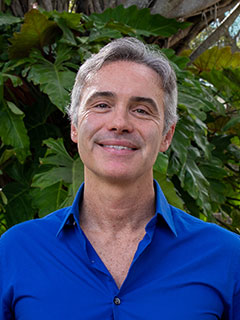
Andrew Lynch serves as Professor and Associate Dean for Program Development in the Department of Modern Languages & Literatures within the College of Arts and Sciences at the University of Miami. His academic leadership extends beyond teaching responsibilities to include significant administrative contributions to program development across the institution. Lynch's research interests center on sociolinguistics with particular focus on Spanish language dynamics in Miami, heritage language socialization, bilingualism, and language ideology. His work examines how language functions within specific social contexts, especially in workplace environments where Spanish heritage speakers navigate linguistic demands. He investigates the complex interplay between language, identity, and social structures in postmodern urban settings, with special attention to the Cuban diaspora experience in South Florida. His publication record reveals consistent scholarly engagement with heritage language education, Spanish language variation, and the sociolinguistic landscape of global cities. Lynch's research demonstrates how language practices in Miami reflect broader patterns of linguistic adaptation and resistance within diasporic communities. His work often addresses the tension between linguistic heritage and social integration, examining how language ideologies shape educational practices and community identity. Lynch's scholarly contributions span multiple formats, including single-authored books, co-authored publications, handbook chapters, and journal articles in both English and Spanish. His work frequently appears in high-impact sociolinguistics and language education journals, reflecting his interdisciplinary approach that bridges theoretical linguistics with practical educational implications.

Adam Hollowellمشاهده پروفایل
استادیار مدعو
Adam Hollowell is an Adjunct Assistant Professor in the Program in Education at Duke University, where he also serves as Senior Research Associate at the Samuel DuBois Cook Center on Social Equity and Director of the Inequality Studies Minor. His teaching spans ethics, inequality studies, and history across Duke’s Kenan Institute for Ethics, Sanford School of Public Policy, and Department of History. Hollowell holds a Ph.D. from the University of Edinburgh (2009). His research focuses on inequality, higher education, public policy, and ethics, with notable work on pandemic impacts, telemedicine in education, and reproductive health access during crises. In Inequality Studies , Hollowell emphasizes understanding policies to drive social change, as highlighted in recent media coverage. His publications explore topics like student behavior shifts during the pandemic, telemedicine adoption in universities, and James Baldwin’s ethical challenges. He is a finalist for the Judith Deckers Prize (2024). Professionally, Hollowell leads projects such as Bass Connections on college contraception access and Story+ initiatives. His work bridges academia and public engagement, addressing systemic inequities through interdisciplinary approaches.
- Inequality Studies
- Higher Education
- Public Policy
- +۳ مورد دیگر

Abhijit Banerjee is a Professor in the Department of Economics at the Massachusetts Institute of Technology (MIT). His research focuses on development economics, public health policy, and social protection programs, particularly addressing poverty and inequality in low- and middle-income countries. He has conducted large-scale experiments evaluating interventions such as conditional cash transfers, universal basic income, and healthcare policies. Key areas of interest include the design and implementation of anti-poverty programs, behavioral economics, and the long-term health impacts of infectious diseases like COVID-19. His work often integrates experimental methods to assess policy effectiveness, with contributions to global health studies and economic development strategies. Notably, his research on the RECOVERY trial evaluates treatments for hospitalized COVID-19 patients, while other studies explore financial spillover effects of electronic government transfers in Indonesia and savings behavior interventions in Chile. Banerjee has collaborated on projects analyzing post-COVID-19 health outcomes, labor market dynamics in India, and the role of trusted messengers in public health communication during crises. Despite the breadth of his contributions, specific details about his educational background, grants, or lab affiliations are not explicitly provided in the source text.

Abhishek Jainمشاهده پروفایل
دانشیار
Abhishek Jain is an Associate Professor in the Department of Computer Science at Johns Hopkins University and a Senior Scientist at NTT Research. He is affiliated with the Data Science and AI Institute, the Information Security Institute, and the Algorithms and Complexity group. University: Johns Hopkins University Department: Computer Science Academic Rank: Associate Professor Institutional Roles: Co-director of the Advanced Research in Cryptography group, member of the Theory Group, and co-leader of the Cryptography Group Education: Ph.D. in Computer Science from the University of California Los Angeles (2012), advised by Amit Sahai and Rafail Ostrovsky. Recipient of the Symantec Outstanding Graduate Student Award during his Ph.D. Research Interests Cryptography Secure computation Proof systems Program obfuscation Privacy Blockchain Theoretical computer science Research Trends: His recent publications emphasize cryptographic protocols for homomorphic encryption, zero-knowledge proofs, and secure multi-party computation, alongside applications in blockchain and privacy-preserving systems. Key themes include scalability, verifiable evaluation, and adapting cryptographic techniques to dynamic and distributed environments. Scientific Awards 2020 NSF CAREER Award Best Paper Awards at Eurocrypt and the International Conference on the Theory and Applications of Cryptographic Techniques Advising & Grants: Mentors Ph.D. students and interns/postdocs at NTT Research. Research funded by NSF, DARPA, JP Morgan, Ethereum Foundation, Stellar, Cisco, Samsung, and JHU Catalyst awards. Labs & Teams: Co-leads the Cryptography Group at Johns Hopkins, participates in the DC Area Crypto Day, and organizes the weekly Theory Seminar. Collaborates with institutions including MIT CSAIL, BUSEC, and Microsoft Research New England.
- Cryptography
- Computer Security
- Privacy
- +۵ مورد دیگر

David Noyce is a Professor and Executive Director of the Traffic Operations and Safety (TOPS) Laboratory at the University of Wisconsin-Madison's Department of Civil & Environmental Engineering. He also serves as Associate Director of the Safety Research Using Simulation (SaferSIM) Center, a University Transportation Center. His work focuses on transportation safety, traffic operations, and automated/connected vehicle systems. Key roles include leading over $35M in research since 2003 through the TOPS Lab and advancing technologies like V2V/V2I communication, winter maintenance strategies, and work zone safety. Education: PhD (Texas A&M, 1999), MS (Civil Engineering, UW-Madison, 1995), MBA (UW-Whitewater, 1994), BS (UW-Madison, 1984). Research interests span traffic control devices, driver behavior analysis, crash reconstruction, and multi-modal transportation systems. He pioneered the national implementation of flashing yellow arrow signals and developed the Wisconsin Connected and Automated Transportation Consortium. Current projects include C-V2X localization frameworks, automated vehicle safety testing, and winter maintenance efficiency. Recognized with 20+ awards, including ITE and ASCE Fellowships and the Dr. Arthur F. Hawnn Professorship. His labs offer full-scale driving simulators and field-testing capabilities for real-world validation of innovations.

Samuel J. Gershman is a Professor of Psychology at Harvard University, affiliated with both the Department of Psychology and the Center for Brain Science. He directs the Computational Cognitive Neuroscience Lab (CCNLab), where he investigates how the brain acquires richly structured knowledge about the environment and uses this knowledge to guide adaptive behavior. Gershman received his B.A. in Neuroscience and Behavior from Columbia University in 2007 and his Ph.D. in Psychology and Neuroscience from Princeton University in 2013, followed by postdoctoral training in the Department of Brain and Cognitive Sciences at MIT (2013-2015). His research spans computational neuroscience, cognitive psychology, and machine learning. His primary research interests include learning, memory, decision making, and computational neuroscience. Gershman's work integrates behavioral, neuroimaging, and computational techniques to understand cognitive processes. He has made significant contributions to understanding memory systems, reinforcement learning, and the computational principles underlying human cognition. Analysis of Gershman's recent publications reveals a strong focus on computational approaches to understanding cognitive processes, with particular emphasis on memory systems, decision-making mechanisms, and the intersection of artificial intelligence with cognitive neuroscience. His work often bridges theoretical computational models with empirical neuroscience data, exploring how the brain implements efficient cognitive algorithms. Gershman actively mentors graduate students and postdoctoral researchers, with current advisees working on diverse projects spanning computational modeling, neuroimaging, and behavioral experiments. His lab investigates topics ranging from dopamine signaling to social cognition using a combination of theoretical and experimental approaches. The CCNLab, which Gershman directs, brings together researchers from psychology, neuroscience, computer science, and related fields to explore the computational principles of cognition. The lab utilizes a range of methodologies including behavioral experiments, neuroimaging, computational modeling, and theoretical analysis to address fundamental questions about how the mind works.
- Learning
- Memory
- Decision Making
- +۶ مورد دیگر

Sean Caoمشاهده پروفایل
دانشیار
Sean Cao serves as Associate Professor (with tenure) at the Robert H. Smith School of Business, University of Maryland, where he is Director and Co-founder of the AI Initiative for Capital Market Research. He also holds an affiliation as professor at Harvard Business School's D 3 Institute. His academic journey began with a Ph.D. from the University of Illinois at Urbana-Champaign. Dr. Cao's research focuses on the intersection of artificial intelligence and capital markets, with particular expertise in how machine learning transforms financial analysis, corporate disclosure practices, and investment decision-making. His work examines the evolving relationship between human analysts and AI systems, blockchain applications in financial reporting, and the strategic adaptation of corporate communications for machine readership. He has pioneered research on the "AI divide" among investor groups and developed frameworks for human-AI collaborative stock analysis. His publication portfolio spans top journals including Journal of Financial Economics, Review of Financial Studies, Journal of Accounting Research, and Management Science. The research demonstrates consistent thematic progression toward increasingly sophisticated AI applications in finance, with recent work exploring distributed ledger technologies for auditing, machine learning for extracting private information from disclosures, and the economics of greenwashing in ESG funds. His studies frequently combine textual analysis with traditional financial metrics to uncover novel market insights. Fama-DFA Prize from Journal of Financial Economics for best paper in capital markets and asset pricing Michael J. Brennan Award from Review of Financial Studies Deloitte Initiative for AI and Learning award for developing trustworthy AI for social equity PanAgora Asset Management's Dr. Richard A. Crowell Memorial Prize Multiple best paper awards from Midwest Finance Association, Global AI Finance Conference, and Asian Finance Association Dr. Cao has delivered over 200 invited research talks at major institutions including the Central Bank of Japan, Central Bank of Thailand, and U.S. Securities and Exchange Commission. He serves as Guest Associate Editor for Management Science and has co-chaired Review of Financial Studies conferences on FinTech and Machine Learning. His educational initiatives include a widely adopted free AI textbook for finance and accounting that has been implemented at universities worldwide including Indiana University, UT Dallas, and University of Minnesota. As Director of the AI Initiative for Capital Market Research, Dr. Cao leads a multidisciplinary team exploring practical AI applications in finance. The initiative has secured significant funding including a $150,000 grant from GRF CPAs & Advisors. His research group maintains strong industry connections through partnerships with regulatory bodies, financial institutions, and technology companies, facilitating the translation of academic research into practical financial applications.
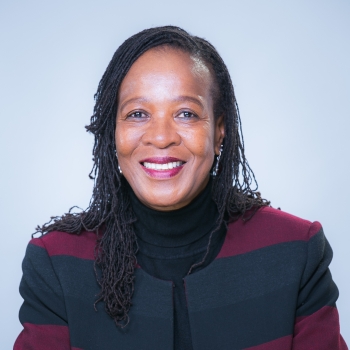
Teboho Mojaمشاهده پروفایل
استاد بالینی
Teboho Moja is a Clinical Professor of Higher Education at New York University's Steinhardt School, holding concurrent roles as an Extraordinary Professor at the University of the Western Cape and a Visiting Research Fellow at the University of Pretoria. She has served as an Executive Director under President Mandela's administration, leading the National Commission on Higher Education, which shaped South Africa's post-apartheid reforms. Her research focuses on higher education policy, equity in education systems, and international development in Africa. She has been honored with the Martin Luther King Jr. Faculty Award and the National Research Foundation Lifetime Achiever Award, among others. Education: She holds an Honorary Doctorate in Education from the University of Pretoria (2020). Her academic contributions include over 50 peer-reviewed publications and keynote addresses at global conferences. She has advised governments and international bodies such as UNESCO and the Councils of Universities in South Africa. Research Interests: Dr. Moja's work emphasizes equitable access to education, international partnerships in higher education, and the role of philanthropy in African universities. She explores how global institutions influence policy reforms, particularly in transitional justice contexts and post-colonial education systems. Her recent publications analyze the relevance of university rankings in Africa and collaborative models between U.S. foundations and African institutions. Awards: Martin Luther King, Jr. Faculty Award (2019) National Research Foundation Lifetime Achiever Award (2019) Women in International Education Award (2019) Graduate Students Star Award (2019) Honorary Doctorate in Education (University of Pretoria, 2020) Advising and Grants: She has led national policy commissions, advised education ministers, and contributed to international bodies. Her work bridges academia and policy, with a focus on systemic reforms and inclusive education models. She has designed field-based courses on South Africa's educational reforms and global perspectives in Indian higher education. Professional Networks: She has held visiting professorships at the Universities of Oslo, Tampere, and Hong Kong. She chairs multiple international advisory boards and collaborates with global scholars on projects addressing equity and development in education.

Steven Jackson is a Professor of Information Science and Science and Technology Studies at Cornell University's Bowers College of Computing and Information Science, with additional graduate field appointments in Communication and Public Affairs. Since July 2023, he has served as Vice-Provost for Academic Innovation at Cornell, and previously held leadership positions as Chair of Information Science and Dean of William Keeton House. His work bridges academic research with significant institutional leadership in higher education innovation. Dr. Jackson's research focuses on critical intersections of technology, society, and the environment, with three primary strands: technology ethics, law and policy; maintenance, repair and sustainability; and technology, inequality and global development. His work draws from American pragmatism, political economy, and science and technology studies, integrating methods from sociology, anthropology, philosophy, and media studies. He is particularly interested in how computing practices meet social and material worlds, with implications for infrastructure, collaboration, sustainability, and cultural practice. His recent publications reveal a strong emphasis on repair as both theoretical concept and practical methodology, exploring 'ordinary hope' as a framework for technological engagement and examining unmaking as a necessary counterpart to design. The research spans diverse geographical contexts from the global North to South, addressing caste dynamics in computing, digital authoritarianism, and infrastructure challenges in developing contexts. Dr. Jackson has received significant recognition including an NSF CAREER award and more than twenty paper awards at leading computing and information science venues. His research has been supported by major organizations including the U.S. National Science Foundation, Social Science Research Council, Ford Foundation, Sloan Foundation, World Bank, Intel Research, Atkinson Center for Sustainability, and the Canadian Social Science and Humanities Research Council. As an advisor, Dr. Jackson has mentored numerous graduate students who have gone on to prominent positions at institutions worldwide. He currently advises Jen Liu, Amy Cheatle, Daniel Mwesigwa, Johan Michalove, and Ritik Batra, while his former students include Palashi Vaghela (Assistant Professor at Simon Fraser University), Samir Passi (Responsible AI Researcher at Microsoft), Maggie Jack (Assistant Professor at NYU), and Ranjit Singh (Senior Researcher at Data and Society). Dr. Jackson convenes the Computing On Earth Lab, an experimental collaboration bringing together social scientists, humanists, artists, and engineers to rethink the material and planetary foundations of computing. The lab reflects his commitment to interdisciplinary approaches that address computing's environmental impacts and sustainability challenges.
Joselyn Muhleisen serves as a Lecturer in the Department of Public Affairs at the Marxe School of Public and International Affairs, Baruch College, City University of New York. She teaches core courses including Citizenship and Public Affairs, Comprehensive Public Policy & Administration, and capstone seminars in Public and International Affairs, with active teaching assignments extending through Spring 2025. Her academic foundation includes: PhD in Political Science, The Graduate Center, CUNY (2016) MPhil in Political Science, The Graduate Center, CUNY MA in European Union International Relations and Diplomacy, College of Europe Brugge, Belgium BS in Public Affairs and English, Baruch College Dr. Muhleisen's research centers on international regimes, regulatory politics, and global governance , with specialized expertise in trade/financial regulation within transatlantic frameworks. Her scholarship critically examines EU-US regulatory convergence, Brexit's implications for global finance, and the institutional dynamics of international organizations. She has established herself as a leading voice in comparative policy analysis through foundational texts and systematic field reviews. Her 2016-2020 publications reveal a cohesive scholarly trajectory focused on advancing methodological rigor in comparative policy studies. The works collectively analyze historical evolution, theoretical frameworks, and cross-national applications of policy analysis, with particular emphasis on European and transatlantic contexts. This body of work demonstrates consistent engagement with both classical scholarship and contemporary developments in governance studies. Her honors include: Fulbright Study Grant to European Union (2007-2008) Getting to Know Europe Grant (European Commission) Doctoral Student Research Grant (2011) 23rd Street Scholarship for Excellence in Public Affairs (2007) Alfred Zweifach Award (2007) Colin Powell Fellowship (2007) Grant for Internship Travel to Romania (2005) USA Today Best and Brightest Nomination (2005) As Faculty Advisor since 2015, she mentors honors students and serves on multiple committees including the Excelsior Service Fellowship Committee and Undergraduate Honors Program Committee. Her grant portfolio features significant research funding including Fulbright and European Commission support for transatlantic regulatory studies. She actively contributes to academic governance through the Journal of Comparative Policy Analysis Award Committee and International Comparative Policy Analysis Forum leadership. She maintains active collaboration with the International Comparative Policy Analysis Forum as an officer and regularly presents at major conferences including the European Union Studies Association. Her research network includes prominent scholars like Iris Geva-May and Diane Hoffman, with ongoing projects examining post-Brexit financial governance structures.

Dr. Elaine T. Jurkowski serves as Professor in Social Work at Southern Illinois University's College of Health and Human Sciences, holding multiple leadership roles including Graduate Program Director (2021-present) and Program Director for Gerontology Programs (2020-present). She maintains cross-appointments as Adjunct Professor in the School of Medicine's Family Practice Residency Program and Professor in the Department of Health Education, demonstrating her interdisciplinary impact. B.S.W. (Industrial Social Work), University of Manitoba, Canada M.S.W. (Policy and Administration), University of Manitoba, Canada Ph.D., Public Health, University of Illinois at Chicago M.B.A., Southern Illinois University Carbondale (2022) Dr. Jurkowski's research program centers on health disparities, access to mental health services, aging, and disability issues, with particular focus on rural populations. Her work bridges public health, social work, and gerontology through innovative approaches to program evaluation, technology-enhanced teaching, and culture change in long-term care settings. She has developed expertise in international health planning and inter-professional collaboration across diverse cultural contexts. Her publication portfolio shows consistent thematic development across decades, with recent work focusing on medical tourism during the pandemic, rural-urban health disparities, and technology applications in gerontology education. These publications reflect her commitment to addressing healthcare access challenges for vulnerable populations through both scholarly inquiry and practical interventions. Great Cities Research Fellow in Health Provost Faculty Fellow (2018) Provost Assessment Fellow (2016) Student Hotspotting certification (2018-present) A.P.M. Assessment Academy certification (2016, 2017) Dr. Jurkowski has successfully secured over $1 million in research funding from agencies including Health Resources and Services Administration, The Hartford Foundation, and Administration on Aging. Her grant portfolio demonstrates sustained commitment to improving services for older adults and people with disabilities, particularly in rural settings. She has served as Graduate Program Director twice (2003-2014, 2021-present), mentoring numerous social work students through their academic and professional development. Her professional activities extend beyond campus through international consulting in West Africa, Hong Kong, India, China, Russia, and Egypt, and community engagement via the "Dare to Care" radio show and board service with Caring Counseling Ministries, Supporting People in Need, and UNA/USA Southern Illinois Chapter.
- Health/Mental Health
- Disability
- Aging
- +۸ مورد دیگر
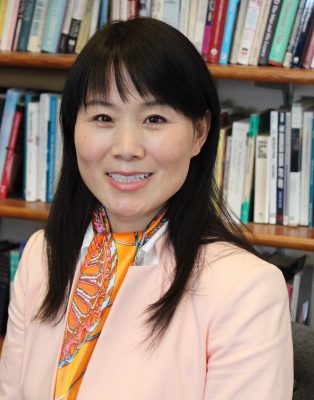
Jing Lei is a Professor at Syracuse University , serving as Associate Dean for Academic Affairs . Her research explores how information and communication technologies can prepare future citizens for a globalized, digitized world. Education: Ph.D. in Learning, Technology, and Culture, Michigan State University M.S. in Higher Education and Comparative Education, Peking University B.S. in School Education, Henan University Her scholarly focus includes technology integration in schools , social-cultural and psychological impacts of technology , emerging technologies for education , and technology-supported subject learning . Recent publications address critical edtech challenges and cultural perspectives in Asian education. Her work has been funded by organizations like the Kauffmann Foundation , National Science Foundation , and IREX . She has also served as a review expert for the NSF and contributed to influential journals such as The Teachers College Record . Dr. Lei teaches courses in technology integration , instructional design , and development and evaluation . Her research has been highlighted in media outlets like USA Today , US News & World Report , and Education Week .
Hernan Galperin is a Professor of Communication and Director of Doctoral Studies at the USC Annenberg School for Communication and Journalism. His expertise lies in Internet policy, digital inequality, and the intersection of technology adoption with social stratification. He holds affiliations with institutions like the Annenberg Research Network on International Communication (ARNIC) and the USC Annenberg Innovation Lab. Galperin has authored four books and published in leading journals such as Telecommunications Policy and New Media & Society. His research, funded by organizations like the Pew Charitable Trust and the Inter-American Development Bank, focuses on broadband accessibility, digital inclusion, and policy impacts. Notable awards include membership in the World Economic Forum’s Global Future Council and top paper awards from the International Communication Association (2020, 2022). Education background: While not explicitly detailed in the provided text, his academic roles and publications imply advanced training in communication studies, public policy, or related fields. His work integrates quantitative methods with policy analysis to address global challenges in technology access. Research highlights include studies on broadband’s role in poverty reduction (Ecuador), geographic discrimination in the gig economy, and the gender digital divide in Latin America. He has contributed policy briefs on the Affordable Connectivity Program and digital inclusion in public housing, demonstrating real-world policy impact. His affiliations with global institutions reflect a focus on international collaboration in addressing digital divides. Grants and awards: His funding sources include the Pew Charitable Trust, IDRC-Canada, and the Internet Society. Awards highlight his contributions to cyberpolicy and global media governance. His work often bridges academic research with actionable policy recommendations, particularly in underserved regions. Labs and teams: He directs ARNIC and collaborates with the USC Annenberg Innovation Lab and USC Price Center for Social Innovation, fostering interdisciplinary approaches to communication and technology challenges.
Brendan Russoمشاهده پروفایل
دانشیار
Brendan Russo serves as an Associate Professor in the Department of Civil Engineering, Construction Management, and Environmental Engineering at Northern Arizona University, where he conducts influential research in transportation safety and traffic engineering. His work focuses on improving safety outcomes for vulnerable road users through rigorous analysis of crash data, traffic operations, and emerging mobility technologies, with significant contributions to Arizona-specific transportation challenges and national safety practices. Russo's research program centers on bicycle and pedestrian safety, crash severity analysis, and the integration of autonomous systems into transportation networks. He employs advanced methodologies including spatial analysis, statistical modeling (e.g., random parameters bivariate probit models), and observational studies to investigate traffic stress levels, intersection safety, and the impacts of infrastructure treatments. His work consistently bridges theoretical transportation engineering with practical applications for safer community design. Analysis of Russo's recent publications reveals a strong emphasis on emerging transportation technologies and their safety implications, particularly regarding autonomous delivery robots and vehicle-pedestrian interactions, while maintaining core focus on traditional safety concerns like bicycle crash frequency and severity. His research demonstrates increasing integration of spatiotemporal analysis and scenario-based testing methodologies, with a clear geographic concentration on Arizona metropolitan regions that provides valuable localized insights applicable to broader transportation contexts. No scientific awards were mentioned in the provided text. No specific information about advising responsibilities or grant funding was provided in the text, though his extensive publication record and dataset contributions indicate active research leadership. Russo collaborates within a robust research network centered on transportation safety, frequently partnering with colleagues including Gehrke, Smaglik, and Holliday on projects involving field data collection, bicycle infrastructure evaluation, and safety performance metrics. His work leverages both observational studies and simulation approaches to develop data-driven guidance for transportation practitioners, with particular attention to Arizona's unique transportation environment and metropolitan planning challenges.