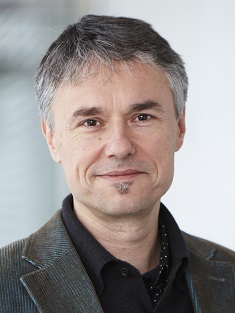
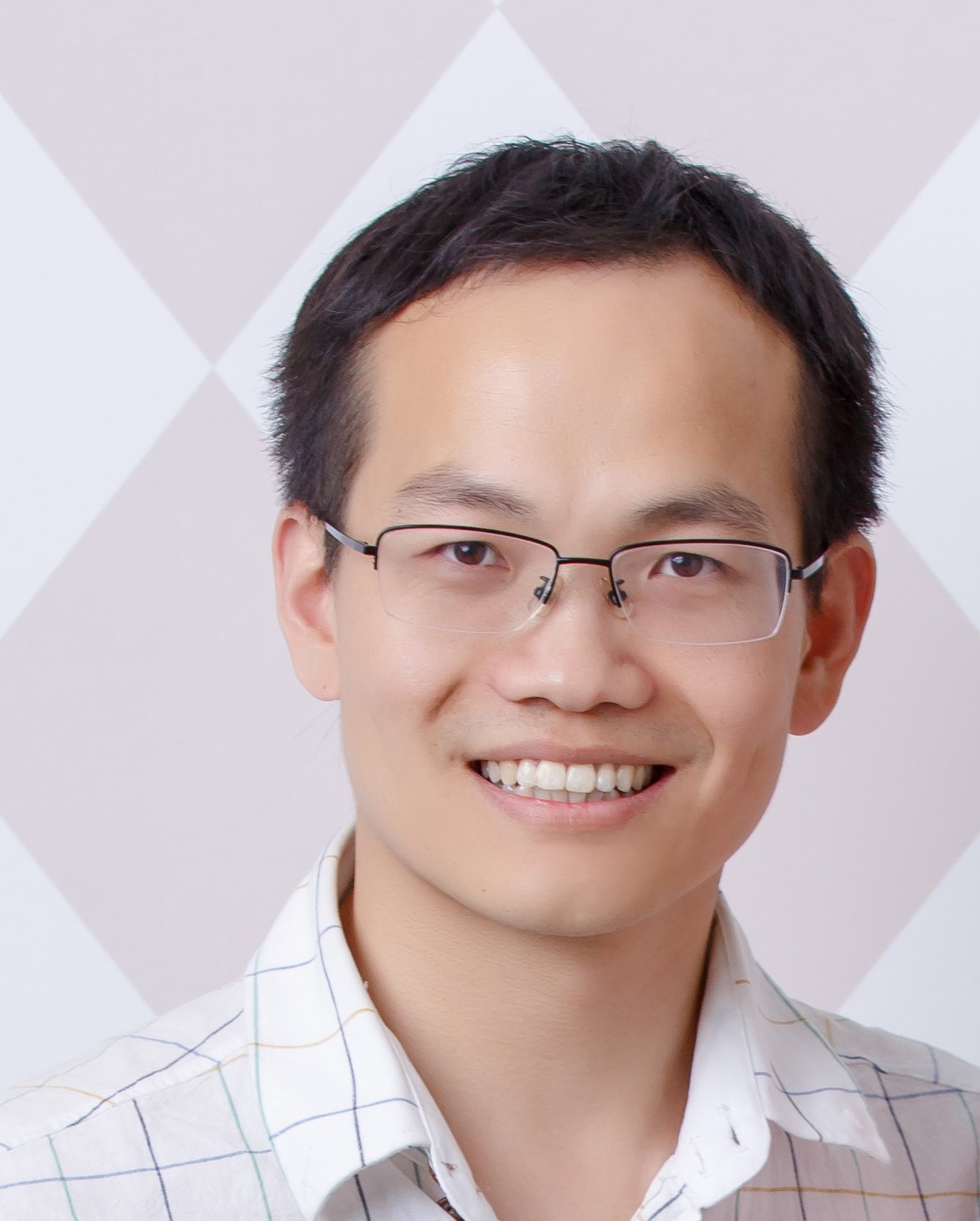
Dr. YANG Guomin is an Associate Professor of Computer Science at Singapore Management University's School of Computing and Information Systems, where he coordinates the BSc Cybersecurity Track. His research focuses on privacy-preserving cryptography, authentication systems, and secure IoT frameworks. Research spans cryptographic protocols for cloud security, blockchain applications, and federated learning with emphases on efficiency and practical implementation. Recent publications demonstrate innovations in threshold authentication, redactable blockchains, and privacy-aware communication protocols. Advisees include LI Huilin and WANG Jiaheng, with research projects examining hardware-enhanced encryption, biometric authentication policies, and space network security. Work consistently addresses tension between security guarantees and computational efficiency in distributed systems.
Willem Jonker is a Full Professor at the Digital Society Institute, specializing in Semantics, Cybersecurity & Services. His research focuses on encryption schemes, access control, and privacy-preserving technologies. He has contributed to over 120 publications, with recent work addressing CVE-to-CWE mapping, anomaly detection in network traffic, and functional encryption systems. His expertise aligns with UN Sustainable Development Goals related to secure digital systems and privacy. Jonker has supervised 10 students and actively participates in academic conferences, presenting on topics like secure data management and cryptographic protocols. Research interests include cryptographic protocols, secure data management, and cybersecurity solutions. Notable projects involve developing methods for detecting covert channels, enhancing data privacy in healthcare, and improving secure search over encrypted data. He has also contributed to standards in digital rights management and forensic image recognition.
Daniel J. Weitzner serves as Founding Director of the MIT Internet Policy Research Initiative (IPRI) and 3Com Founders Senior Research Scientist at MIT Computer Science and Artificial Intelligence Laboratory (CSAIL). His work bridges technical research and public policy across critical domains including privacy frameworks, data accountability systems, cybersecurity risk assessment, and trustworthy AI governance, with significant influence on national and international policy development. Weitzner's research spans multiple interconnected domains: Privacy and Data Governance: Leading the MIT Future of Data Initiative to develop responsible data stewardship frameworks Cybersecurity Risk Measurement: Directing the SCRAM project for quantifiable security assessment methodologies Pandemic Response Technology: Co-leading the PACT project whose privacy-preserving contact tracing architecture directly informed the Apple-Google Exposure Notification system deployed globally Accountability Systems: Developing cryptographic techniques for Practical Accountability of Secret Processes Encryption Policy: Authoring the seminal "Keys Under Doormats" analysis of exceptional access risks Election Security: Conducting the influential security analysis of Voatz internet voting systems that prompted state-level policy changes As an academic mentor, Weitzner advises current graduate students Kevin Liao (EECS PhD/Harvard JD), Nicola Lawfard, Lisa Baer, and Chelsea Conard across MIT's Technology and Policy Program and EECS department. His alumni include Mike Specter (EECS PhD 2022, Georgia Tech faculty), Jonathan Frankle (EECS PhD 2023), and numerous practitioners shaping cybersecurity policy. He teaches foundational courses including "Foundations of Internet Policy" and the MIT-Georgetown joint course "Privacy Legislation Law and Technology". Weitzner directs the MIT Internet Policy Research Initiative as a cross-disciplinary hub connecting computer scientists, legal scholars, and policy experts. His leadership extends to major initiatives including the SCRAM cybersecurity project, the EU-US Privacy Bridges collaboration, and the National Academy of Sciences study committees on authentication technologies. His work consistently translates technical research into real-world policy frameworks through partnerships with government agencies, civil society organizations, and industry stakeholders.
Dr. Bharanidharan Shanmugam is an Associate Professor in Information Technology at Charles Darwin University's Faculty of Science and Technology. He specializes in cybersecurity, IoT security, and cyber risk management in microgrids. His research focuses on addressing real-world challenges in IoT, smart grids, and medical devices to enhance community impact. **Research Interests:** - IoT Security - Cyber Risk Assessment in Microgrids - Network and Information Security - Applied Cybersecurity Solutions - Blockchain and Privacy-Preserving Technologies **Key Projects (2019–2025):** - Cyber Territory Skills Hub (2023–2025) - Renewable Energy Microgrid Hub (2021–2024) - Blockchain-Based Digital Identity (2019–2020) **Publications:** Focuses on IoT security frameworks, intrusion detection systems, and AI-driven cybersecurity solutions. Recent works include studies on smart grid load forecasting, medical IoT threat detection, and water leakage detection using machine learning. **Grants & Supervision:** Principal Investigator on multiple ARC-funded projects. Supervises PhD students in DevSecOps and IoT security. Active in organizing workshops on digital awareness for indigenous communities.
Nicola Dragoni is a Professor in Cybersecurity Engineering at the Department of Applied Mathematics and Computer Science, Technical University of Denmark (DTU). As Deputy Director and Head of Section, he leads research initiatives focused on securing emerging technologies. Key Research Areas : Internet of Things (IoT) security, machine learning for intrusion detection, cyber-deception techniques, fog computing, malware analysis, blockchain applications, and wireless sensor network security. Supervision : Actively supervising multiple PhD students in projects related to cyber-deception, moving target defense, and bio-inspired security mechanisms. Recent Publications : Contributions to IoT honeypots, drone identification via RF signals, passkey adoption challenges, and cyber range taxonomies.
Ueli Maurer is a Full Professor of Computer Science at ETH Zurich and heads the Information Security and Cryptography research group. He received his diploma and Ph.D. in Electrical Engineering from ETH Zurich in 1985 and 1990 respectively. After a fellowship at Princeton University, his research focuses on foundational aspects of cryptography and information security. Education Diploma in Electrical Engineering, ETH Zurich (1985) Ph.D. in Electrical Engineering, ETH Zurich (1990) DIMACS Research Fellow, Princeton University (1990-1991) His research spans information security, cryptographic protocols, discrete mathematics, and theoretical computer science. Key areas include provably secure systems design, digital signatures, public-key infrastructures, and trust management. His work bridges theoretical foundations with practical applications in digital security. His publications demonstrate a consistent focus on advancing cryptographic theory and security proofs. Recent works explore anamorphic encryption, blockchain security frameworks, and composable protocol design. Primary trends include privacy-preserving communication, adaptive security models, and information-theoretic approaches to cryptography. Awards & Honors IEEE Fellow ACM Fellow IACR Fellow Member, German Academy of Sciences (Leopoldina) Rademacher Lecturer (2000) Vodafone Innovation Award (2013) RSA Mathematics Award (2016) TCC Test-of-Time Award (2016) He advises doctoral students on cryptographic protocols and security proofs. His research group works on diverse projects including secure multi-party computation and blockchain technologies. He co-founded the Zurich Symposium on Privacy and Security and serves on editorial boards of major cryptography journals.
Anja Feldmann is Director at the Max Planck Institute for Informatics in Saarbrücken and Professor of Internet Network Architectures at Technische Universität Berlin (since 2006). Previously she held a full professorship at Technische Universität München (2002–2006) and conducted research at AT&T Labs Research , Saarland University , and Carnegie Mellon University , where she earned her Ph.D. in 1995. Education Ph.D. in Computer Science, Carnegie Mellon University, 1995 M.Sc. in Computer Science, Carnegie Mellon University, 1991 Diplom in Computer Science, Universität Paderborn, 1990 Research Interests Anja Feldmann’s research centers on measurement-driven understanding of the Internet. She tackles challenges such as software-defined networking , cloud-network interactions , performance debugging , and traffic characterization . A growing focus is the privacy and security of networked systems, evidenced by recent studies on online tracking, DNS security, and disinformation ecosystems. Her group designs scalable measurement platforms that combine passive and active monitoring , programmable data planes , and machine-learning analytics to dissect phenomena ranging from terabit-scale traffic to covert tracking on illegal streaming sites. Recent Publication Themes The 2021-2025 publications reveal a methodological evolution toward large-scale, longitudinal measurement . Topics include: Impact of global events (COVID-19, CrowdStrike outage) on Internet traffic Cross-country tracking ecosystems and privacy leaks DNS root and routing plane stability and security ML-driven real-time monitoring at terabit speeds Disinformation campaigns on encrypted messaging platforms Scientific Awards Gottfried Wilhelm Leibniz Prize (2011) – Germany’s highest research honor Berliner Wissenschaftspreis (2011) Elected Member of the German National Academy of Sciences Leopoldina (2009) Advising & Grants While individual student names are not listed, Prof. Feldmann leads a vibrant team at MPI-INF’s Internet Architecture department. She has supervised numerous doctoral candidates and post-doctoral researchers whose work is reflected in the co-authored papers. Funding sources include the German Research Foundation (DFG) via the Leibniz Prize and EU Horizon projects, although explicit grant numbers are not provided in the source material. Labs & Teams She heads the Internet Architecture department at MPI-INF, located at the Saarland Informatics Campus . The department operates state-of-the-art measurement infrastructure—including programmable switches, honeynets, and global vantage points—to support empirical network science.
Affiliations Full-time Assistant Professor of Computer Science at the School of Computing and Information Systems (SCIS) , Singapore Management University (SMU). Research focuses on cryptography, post-quantum systems, and secure protocols. Previously affiliated with PolyU for select teaching and collaborations. Education PhD in Computer Science, Chinese Academy of Sciences (2015). Research Interests Specializes in advanced cryptographic techniques including: Post-Quantum Cryptography (e.g., lattice-based systems) Threshold Cryptography (e.g., secure distributed ECDSA) Zero-Knowledge Proofs and Privacy-Preserving Technologies Authenticated Key Exchange (AKE) protocols Efficient implementations of cryptographic primitives (e.g., Kyber, NewHope) Notable Awards First Prize (LAC.PKE) and Second Prize (SIAKE, LAC.KEX) in Chinese Post-Quantum Cryptography Competition (2020) Best Paper Awards at IWSEC 2015 and ProvSec 2014 Advising & Collaborations Advises PhD students JIANG Bowen and WANG Jiaheng at SMU. Collaborates with researchers such as Guofeng Tang (post-doc) and international teams. Active in organizing conferences (e.g., CCS, ProvSec) and contributes to open-source projects like the Preprocess-then-NTT library. Labs & Teams Leads research initiatives at SMU focused on cryptographic protocol design and implementation. Collaborates with PolyU on advanced security projects.
Esfandiar Mohammadi is an Associate Professor at the Institute for IT Security, University of Lübeck, leading the Privacy & Security (PrivSec) group and directing the AnoMed competence cluster. He has held tenured faculty positions since 2019 after postdoctoral research at ETH Zürich (2016-2019) and a PhD at Saarland University (2015). University of Lübeck (2015-present) ETH Zürich (2016-2019) Saarland University (2015) His research focuses on privacy-preserving technologies in machine learning, anonymous communication protocols, and formal verification of security properties. Recent work includes advancements in Mixnet scalability and federated learning with differential privacy guarantees. Key publication trends reveal a strong emphasis on privacy-preserving algorithms for machine learning (2024), cryptographic protocols for anonymous communication (2025), and security analysis of decentralized systems (2023-2025). Collaborations span institutions like ETH Zürich, Saarland University, and industry partners EnergieDock/NAECO Blue for the VeDS project. His group includes 11 researchers (5 PhD students) and software engineers working on topics like Differential Privacy Secure Multi-Party Computation Trusted Execution Environments
Henry Corrigan-Gibbs is an Assistant Professor at the Massachusetts Institute of Technology (MIT) in the Department of Electrical Engineering and Computer Science. He is affiliated with the Computer Science and Artificial Intelligence Laboratory (CSAIL) and collaborates with the PDOS and CSS research groups. Henry co-hosts the MIT Security Seminar series. Education : PhD in Computer Science from Stanford University (advisor: Dan Boneh), Postdoc at École polytechnique fédérale de Lausanne (EPFL) (host: Bryan Ford), and B.S. in Computer Science from Yale University . Research Interests Henry focuses on computer security , cryptography , and systems research , building technologies that: Empower end users through privacy-preserving design Implement strong cryptographic security in real-world deployments Scale to millions of users while maintaining security Key projects include: Tiptoe for private web search Prio for privacy-preserving aggregate statistics used by Apple and Google Express for metadata-hiding communication SafetyPin and True2F for secure authentication Scientific Contributions Standards Influence : IETF and NIST standards recommend his private-aggregation systems Industry Impact : Deployed in Apple iOS , Google Android , and Mozilla Firefox Non-profit Deployment : Co-founder of Divvi Up for real-world Prio implementations Academic Recognition 2023 MIT EECS Jerome Saltzer Award for teaching excellence 2020 ACM Doctoral Dissertation Honorable Mention 2016 Caspar Bowden Award for PET research 2015 IEEE Security & Privacy Distinguished Paper Award Multiple IACR Best Young Researcher Paper Awards (2015–2018) Advising and Collaborations Current advisees include: PhD students: Alexandra Henzinger , Ryan Lehmkuhl Postdoc: Emma Dauterman Collaborates with industry (Apple, Google, Mozilla) and standards bodies (IETF, NIST) to translate research into practice.
Dr. George O'Mahony serves as Head of Department of Computer Science at Munster Technological University (MTU) and is a CONNECT Associate Investigator with Research Ireland. He leads Ireland's Cyber Range infrastructure development and acts as WorldSkills Ireland Expert for Cybersecurity Skill 54, driving national cybersecurity initiatives through academia-industry collaboration. Education: B.E. in Electrical and Electronic Engineering, University College Cork (UCC) Ph.D. in Electrical and Electronic Engineering, University College Cork (UCC), 2021 His research pioneers cyber resilience frameworks for OT/IoT systems, zero-trust architectures, and machine learning applications in anomaly detection. He develops low-complexity security solutions for resource-constrained edge devices, with emphasis on wireless sensor networks, GPS applications, and penetration testing methodologies. His work bridges theoretical innovation with practical infrastructure implementation. Recent publications reveal accelerating focus on quantum-resistant cryptography, MQTT-ZT secure brokers, and unified cyber resilience models. His scholarly output consistently addresses interference detection in wireless networks while expanding into satellite communications security and AI-driven network customization, reflecting strategic adaptation to emerging cyber threats. Research Leadership: CONNECT: Associate Investigator advancing cyber security research NCF Cyber Shock: Co-Principal Investigator Cyber Explore: Principal Investigator at MTU Cyber Range: National infrastructure lead (mobile/cloud) Horizon Telemetry: Core research team member As STEM advocate and Cyber Futures Academy contributor, O'Mahony shapes cybersecurity education through WorldSkills Ireland engagement and industry-focused cyber range deployments that serve academic, governmental, and commercial sectors.
Zheng Yang is a Professor at Tsinghua University's School of Software, with significant research contributions in cryptography, cybersecurity, and privacy-preserving systems. His work spans multiple institutions including collaborations with University of Helsinki's Secure System Group and Chongqing University of Technology. He maintains active research in both theoretical and applied security domains, with particular focus on industrial applications. Professor Yang's research interests center on cryptographic protocols, authentication mechanisms, and security for emerging technologies. His work addresses critical challenges in Cyber-Physical Systems security, Industrial Internet of Things protection, and privacy-preserving computation. He has made significant contributions to secure key exchange protocols, authentication systems, and defenses against sophisticated network attacks including DDoS mitigation strategies. His research bridges theoretical cryptography with practical implementations for resource-constrained environments. Analysis of Professor Yang's recent publications reveals a strong trend toward practical security solutions for industrial and embedded systems. His work increasingly focuses on balancing security with performance constraints in Cyber-Physical Systems and Industrial IoT environments. Key research themes include lightweight cryptography for resource-constrained devices, privacy-preserving location services, and novel authentication mechanisms that maintain security while minimizing computational overhead. His publications demonstrate consistent innovation in adapting cryptographic techniques to real-world security challenges. Professor Yang has established himself as a leading researcher through his extensive publication record in top security venues including IEEE Security & Privacy, USENIX Security, and ACM conferences. His work has been published consistently in high-impact journals and conferences, demonstrating sustained research productivity and influence in the security community. Professor Yang maintains active research collaborations with numerous institutions globally, evidenced by his extensive co-authorship network. His research has attracted significant funding for projects addressing critical security challenges in emerging technologies. His work on secure authentication protocols and privacy-preserving systems has practical applications across multiple industry sectors. Professor Yang leads research initiatives focused on secure Cyber-Physical Systems and Industrial IoT security. His laboratory work emphasizes practical implementations of cryptographic protocols for real-world systems, with particular attention to performance constraints in embedded environments. Current research directions include secure communication for programmable logic controllers, privacy-preserving location services, and adaptive defenses against sophisticated network attacks.
Aamir Anwar is a researcher affiliated with the University of West London , focusing on interdisciplinary applications of artificial intelligence, machine learning, and human-computer interaction. His work bridges technology with education, healthcare, and cybersecurity, as evidenced by his publications on topics like emotion-aware online learning , malware detection in IoT devices , and smart systems for people with disabilities . Research Interests : Machine Learning, Sentiment Analysis, Online Learning, EEG Signal Processing, Smart Systems, Healthcare Informatics. Key Collaborations : Co-authored studies with researchers in cybersecurity, nursing education, and neuromarketing. Publication Trends : Recent articles span 2021–2024, emphasizing AI in education (emotion detection), deep learning for cybersecurity , and health-focused technologies (frailty assessment, seizure prediction).
Stefan Decker is a full University Professor (Universitätsprofessor) at RWTH Aachen University, Germany, where he heads the Chair of Information Systems and Databases (Informatik 5) within the Faculty of Mathematics, Computer Science and Natural Sciences. He is actively involved in teaching, research, and the supervision of numerous ongoing and completed doctoral, master’s, and bachelor theses. Education & Academic Background Doctorate (Dr. rer. pol.) – field of Information Systems or related (exact institution/year not stated in text). Appointed as University Professor and Chair of Information Systems and Databases at RWTH Aachen University. Research Interests Prof. Decker’s work lies at the intersection of databases, knowledge graphs, semantic web technologies, data science, and cybersecurity . He investigates architectures and algorithms for large-scale, privacy-preserving, decentralized data analytics , develops ontology-driven information systems , and explores the use of large language models (LLMs) for educational technology, anomaly detection, and incident-response playbooks. Additional focal areas include smart energy systems, mixed-reality learning environments, FAIR data principles, and federated machine learning . Scientific Contributions & Trends His recent publications (2022-2025) demonstrate a clear trend toward explainable AI, LLM-enhanced systems, secure data spaces, and semantic interoperability . Key contributions include novel anomaly-detection frameworks for encrypted power-grid communications, knowledge-graph-driven chatbots for higher-education support, and methodological advances in decentralized analytics and FAIR data sharing. These works are disseminated in top-tier venues such as AAAI, IEEE ISGT Europe, ESWC, IDEAL, and various Springer LNCS and IEEE Transactions. Supervision & Grants Doctoral Theses Advised: A. T. Neumann – “Chatbots as professional companions in large-scale community information systems” (2024) S. M. Welten – “Methods for practical data sharing and decentralized analytics” (2025) Master’s Theses Co-Advised: A. R. Küsters – “Object-centric process constraints using variable bindings” (2025) Additionally supervising more than 30 ongoing bachelor, master, and doctoral projects covering topics such as LLM-driven cybersecurity playbooks, knowledge-graph construction for German law, privacy-preserving analytics in smart grids, and mixed-reality learning agents. Principal investigator or senior researcher in large collaborative projects including NFDI4DS, WestAI, champI4.0ns and several EU/national initiatives on sovereign data spaces and AI services. Labs & Teams Prof. Decker leads the Information Systems & Databases (DBIS) Research Group . The group operates well-equipped laboratories for knowledge-graph engineering, mixed-reality applications, privacy-enhancing technologies, and secure distributed analytics . Current team size exceeds 30 researchers including PhD candidates, postdocs, and scientific programmers, supported by national and EU funding streams.
Li Yi is a Tenured Associate Professor at the School of Microelectronics, Southern University of Science and Technology (SUSTech) , with expertise in nanoplasmonics, nano-optics, and biochips. His career spans institutions including KU Leuven, Imperial College London, and Ludwig-Maximilians-Universität München. Education: Ph.D. (2015, KU Leuven & IMEC), M.S. (2010) and B.S. (2007) in Biomedical Engineering from Zhejiang University. Career: Associate Professor (2021–present) and Assistant Professor (2019–2020) at SUSTech; LMU Research Fellow (2018–2019); Research Associate (2015–2018) at Imperial College London. Research Interests focus on single-molecule biochips, DNA data storage, and nanopore sequencing. His work bridges nanotechnology with biomedical applications, including: Integrated circuit-compatible optical/electrical devices Computational lithography and nanoscale imaging Neural network training for biosensing Publications include >60 peer-reviewed articles with 25 H-index. His recent work emphasizes DNA-based data encryption, nanopore engineering, and portable biosensing systems. Key journals: Nature Communications, Nano Letters, ACS Nano. Scientific Awards : LMU Research Fellowship (Marie Curie COFUND) imec Excellent Scientific Award Shenzhen 'Peacock Plan' Category B Talent Outstanding Poster Award at Surface Plasmon Photonics 2017 Participation in Lindau Nobel Laureates Meeting (2019) Grants include Ministry of Science and Technology Key R&D Youth Program, NSFC General Program, and Guangdong Provincial Key Program. His lab develops: Fluidic nanopores for single-molecule sensing Optical antennas for enhanced detection Training programs in biochip design and nano-optics