Sophia Yakoubov is an Associate Professor at the Department of Computer Science, Aarhus University, specializing in cryptography and secure multi-party computation. Her research focuses on advancing protocols for dynamic networks, threshold schemes, and privacy-preserving systems. Key affiliations: ORCID Email: sophia.yakoubov@cs.au.dk Research Interests : Yakoubov's work centers on cryptographic protocols for secure communication in incomplete networks, ring signatures for anonymity, and optimizing multi-party computation (MPC) efficiency. She explores adaptive corruptions, modular security frameworks, and broadcast-optimal protocols. Recent Projects : Leads the SCI: Secure Computation Infrastructures for Retail project (2024-2027), focusing on cryptographic solutions for retail industry security. Her publications address YOSO (You Only Speak Once) MPC, threshold signatures, and post-quantum security models. Collaborations : Works with researchers like Dan Boneh (Stanford), Rosario Gennaro (City College), and Daniele Venturi (Sapienza). Engaged in international projects on secure computation and distributed systems.
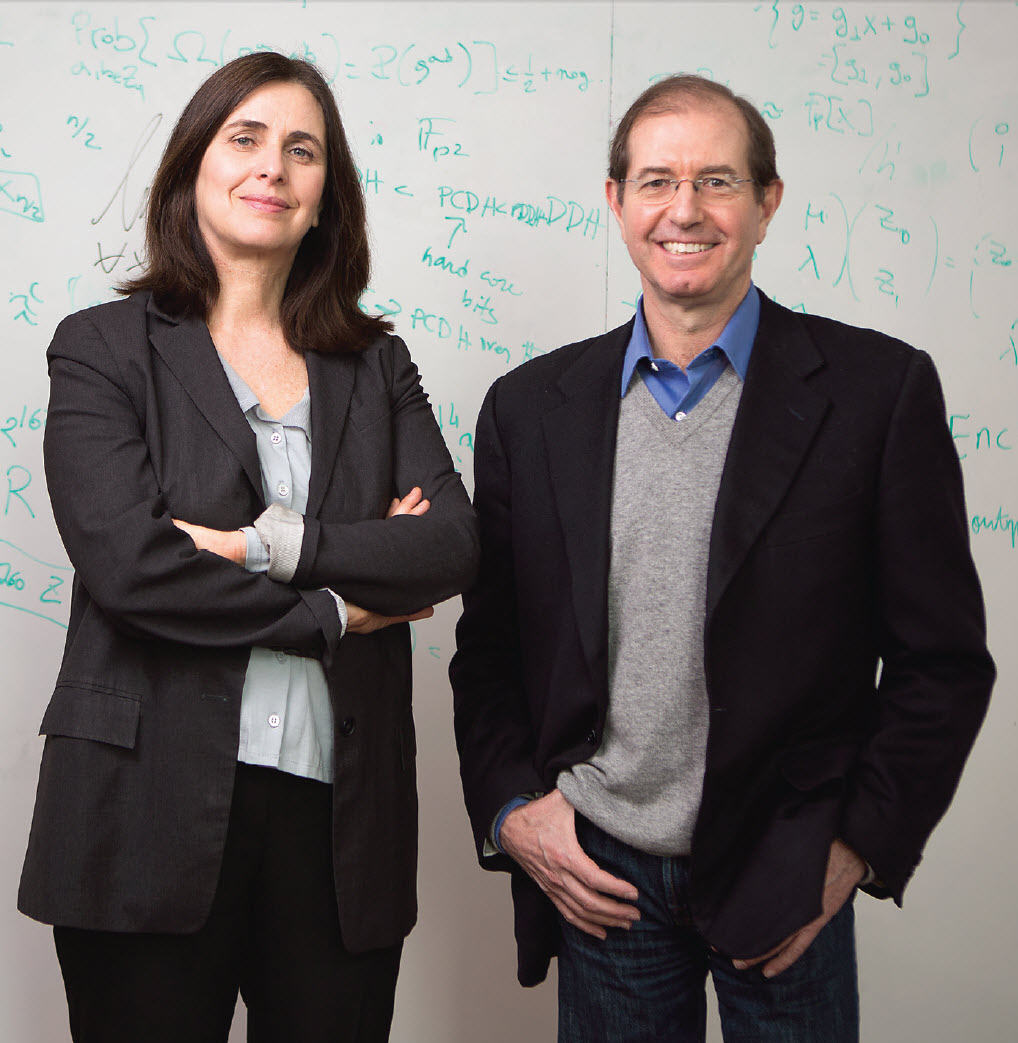
Ran Canetti is a distinguished Professor of Computer Science at Boston University, where he directs the Center for Reliable Information System and Cyber Security (RISCS). He also serves as the director of the Check Point Institute for Information Security at Tel Aviv University. Canetti is a Fellow of both the International Association for Cryptologic Research (IACR) and the Association for Computing Machinery (ACM), and was awarded the prestigious RSA Award for Excellence in Mathematics in 2018. Canetti received his academic foundation at the Technion in Haifa, earning a BA in Computer Science (1989), a BA in Physics (1990), and an M.Sc. in Computer Science (1991). He completed his PhD in 1995 at the Weizmann Institute under the supervision of Prof. Oded Goldreich. Following post-doctoral training at MIT under Prof. Shafi Goldwasser, he joined IBM's T.J. Watson Research Center, where he worked until 2008 before moving to Boston University. His research spans multiple aspects of cryptography and information security, with particular emphasis on the design, analysis and use of cryptographic protocols. Canetti's seminal contributions include the development of the HMAC message authentication protocol and the formulation of the Universally Composable (UC) security framework, which revolutionized how cryptographic protocols are analyzed for security in complex environments. More recently, his work has expanded into the co-design of law, policy and algorithms, focusing on accountability, transparency of algorithms, and data privacy. Canetti's publications demonstrate a consistent focus on foundational cryptographic principles that have evolved to address contemporary security challenges. His early work established critical standards for message authentication and secure communication, while his more recent research explores the intersection of cryptography with societal concerns like privacy regulations and algorithmic accountability. His work bridges theoretical cryptography with practical implementations that have become internet standards. RSA Award for Excellence in Mathematics (2018) Fellow of the IACR and ACM Multiple IBM Research Awards including Outstanding Innovation Award (2006), Corporate Award (2005), and Research Division Award (1999) Rothschild post-doctoral scholarship (1995-96) Kennedy Thesis Award from the Weizmann Institute (1996) As director of the Center for Reliable Information System and Cyber Security at Boston University and the Check Point Institute for Information Security at Tel Aviv University, Canetti leads significant research initiatives in cybersecurity. His work has resulted in multiple patents and internet standards, including HMAC (RFC 2104), TESLA multicast authentication, and Group Key Management Architecture. Canetti has also been active in the cryptographic community as co-organizer of major workshops and as Program Committee chair for the Theory of Cryptography Conference. Canetti maintains strong connections with both academic and industry research communities, evidenced by his past work at IBM Research and ongoing collaborations with organizations like Identiq, where he serves as an advisor. His research continues to influence both theoretical cryptography and practical security implementations worldwide.
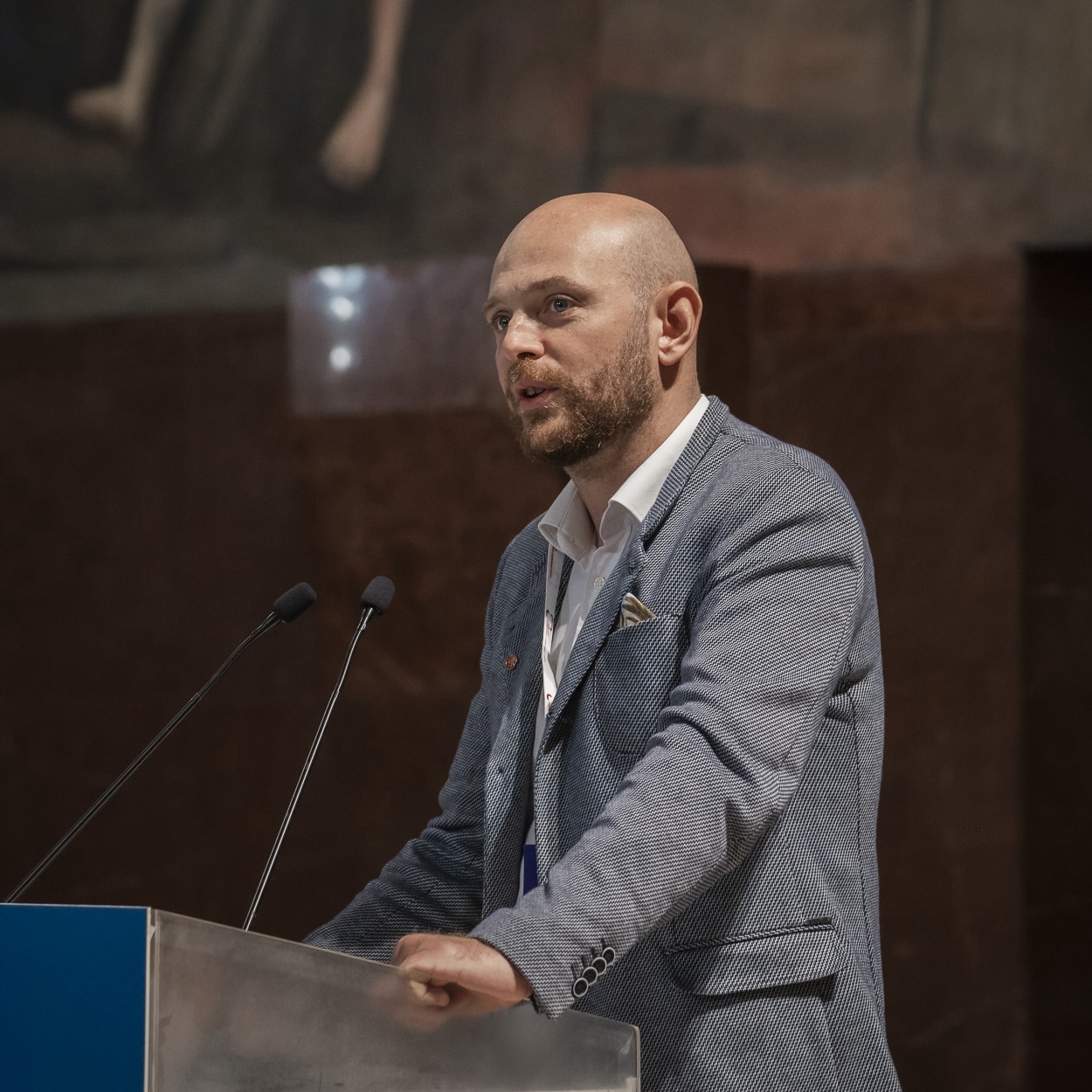
Daniele Venturi is a Full Professor at the Department of Computer Science, Sapienza University of Rome, appointed in April 2022. His expertise lies in theoretical and applied cryptography, with a focus on secure multi-party computation, leakage resilience, and digital watermarking. Research Interests: Theoretical Cryptography Applied Cryptography Watermarking in Generative Models Predicate Encryption Financial Fairness in Cryptographic Protocols Leakage-Resilient Cryptography His recent publications span top-tier venues including ICML 2024 , EUROCRYPT 2023 , IEEE Transactions on Information Forensics and Security , IEEE Transactions on Information Theory , and IACR Transactions on Symmetric Cryptology . Contact: Email: venturi@di.uniroma1.it Office: Dipartimento di Informatica, Viale Regina Elena, 295 (Edificio G), II piano, st. G29
Shafi Goldwasser is a prominent computer scientist holding dual appointments as the RSA Professor of Electrical Engineering and Computer Science at the Massachusetts Institute of Technology (MIT) and as a Professor of Computer Science and Applied Mathematics at the Weizmann Institute of Science in Israel. Her groundbreaking work has fundamentally shaped modern cryptography and theoretical computer science, earning her numerous prestigious awards including the ACM A.M. Turing Award in 2012 (shared with Silvio Micali). Dr. Goldwasser received her B.S. in Mathematics from Carnegie Mellon University (1979), followed by an M.S. (1981) and Ph.D. (1984) in Electrical Engineering and Computer Science from the University of California at Berkeley. Her academic career at MIT began with a Bantrel Postdoctoral Fellowship in 1983, followed by positions as Assistant Professor (1983-1987), Associate Professor (1987-1992), and Professor (1992-present). She also serves as Co-Leader of MIT's Cryptography and Information Security Group (1995-present) and has held a parallel appointment at the Weizmann Institute since 1993. Goldwasser's research has revolutionized theoretical computer science and cryptography through several landmark contributions. She pioneered the concept of zero-knowledge proofs, which allow one to prove the validity of a statement without revealing any information beyond the statement's truth. Her work with Micali on probabilistic encryption established the now-standard definitions of security for encryption and digital signatures. Goldwasser also made fundamental contributions to interactive proofs, multi-prover systems, probabilistically checkable proofs (PCPs), and property testing. Her research has not only transformed cryptography into a rigorous mathematical science but has also had profound implications for computational complexity theory. Analysis of her publication record reveals consistent innovation across decades, with major contributions spanning from foundational work in the 1980s (zero-knowledge proofs, probabilistic encryption) through to contemporary research on delegated computation, code obfuscation, and side-channel attack resistance. Her work consistently bridges theoretical computer science and practical cryptographic applications. ACM A.M. Turing Award (2012) ACM Athena Lecturer Award (2008) Two SIGACT Gödel Prizes (1993, 2001) ACM Grace Murray Hopper Award (1996) RSA Award in Mathematics (1998) Franklin Institute Benjamin Franklin Medal (2010) IEEE Emanuel R. Piore Award (2011) Memberships in all three major US National Academies As an advisor, Goldwasser has mentored numerous graduate students, with Johan Håstad being noted as her first exceptional doctoral student. Her research group at MIT has been instrumental in advancing the field of cryptography and theoretical computer science. Recent work has focused on delegated computation, code obfuscation, and protection against side-channel attacks, addressing emerging challenges in cloud computing and information security. Outside of her academic pursuits, Goldwasser is known to practice "Playback Theater," an improvisational interactive group experience, reflecting her interest in creative expression beyond computer science.
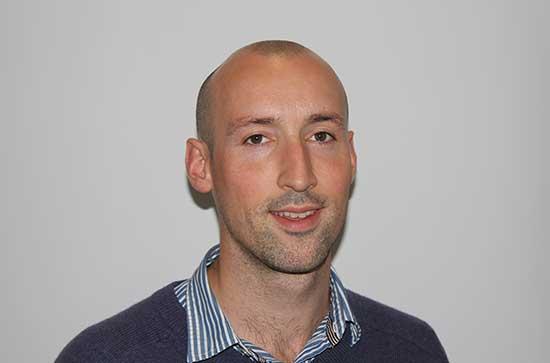
Bryan Hennelly is an Associate Professor in the Department of Electronic and Electrical Engineering at Maynooth University's Faculty of Science & Engineering . His research bridges biomedical engineering and biophotonics , focusing on optoelectronic microscopy systems for clinical pathology applications. PhD in Optical Engineering (University College Dublin, 2005) Established biophotonics laboratory (2012) Science Foundation Ireland Starter Researcher Grant recipient His work integrates holographic microscopy and Raman micro-spectroscopy for automated diagnostics, particularly in early-stage bladder cancer detection from urine samples. Collaborations span industry , academia , and HSE institutions . Key research themes include: 3D imaging systems using digital holography Optical encryption techniques Signal processing algorithms for biomedical applications Background subtraction and noise reduction in spectroscopy Publications (over 100) demonstrate expertise in Raman spectroscopy , digital holography , and optical signal processing . Current projects involve developing advanced diagnostic platforms combining imaging and spectroscopy with machine learning.
Beata Megyesi is a Professor of Computational Linguistics at Stockholm University , leading groundbreaking work in Historical Cryptology and Digital Humanities . Her research bridges Artificial Intelligence with Philology to decode secret historical documents through projects like DESCRYPT (2025-2032) and DECRYPT (2018-2024), funded by Riksbankens Jubileumsfond and Vetenskapsrådet . Current Chair of Swedish Research Council's Linguistics Review Group (2024-2025) Director of the international Master's Program in AI and Language Advisor to PhD candidates Micaella Bruton and Crina Tudor Research Focus includes: Automatic analysis of 17th-19th century ciphers with AI Development of Linked Open Data infrastructure for cryptology Decryption of papal and diplomatic correspondences from 1500-1965 Creation of HistCorp multilingual historical corpus collection Key Collaborations span institutions in Sweden, Norway, Spain, Germany, Hungary, and the USA , with notable projects like DECODE2LOD and Swe-CLARIN . Her lab has pioneered automated key extraction and neural network-based alignment of encrypted manuscripts to plaintext.
Somayyeh Timarchi is a Lecturer in Electronic Circuits and Systems at the School of Electronic Engineering and Computer Science, Queen Mary University of London . She holds a B.Sc. in Computer Engineering from Shahid Beheshti University (SBU), M.Sc. and Ph.D. in Computer System Architecture from Sharif University of Technology (SUT) and SBU, and completed postdoctoral research on computer arithmetic at Delft University of Technology (TUDelft). Previously an assistant professor and associate professor at SBU's Electrical Engineering Department, she now focuses on high-speed, low-power digital architecture. Research Interests include Computer arithmetic Approximate computing for neural networks Neuromorphic computing ASIC/FPGA design for signal processing and cryptography Residue and Redundant Number Systems Recent Publications emphasize approximate computing, error compensation, and energy-efficient hardware for IoT and biomedical applications. Key trends include optimizing CORDIC-based architectures for spiking neural networks, improving FPGA memory allocation, and developing low-power cryptographic solutions. Scientific Awards : Fellow of the Higher Education Academy (FHEA) Teaching includes ECS502U - Microprocessor Systems Design , covering microcontroller architecture, programming, and design principles for electronic circuits.
Professor Sklavos Nikolaos serves in the Computer Hardware and Architecture Department at the University of Patras, where he leads research in hardware security and cryptographic engineering. His academic profile demonstrates deep expertise in securing embedded systems and IoT devices through innovative hardware implementations. His research spans Hardware Security , Cryptographic Engineering , Cybersecurity , Hardware Design , and Embedded Systems with particular focus on lightweight cryptography for resource-constrained environments. Current investigations include quantum-resistant security architectures, privacy-preserving e-health systems, and secure implementations for 5G/6G communications. His work bridges theoretical cryptography with practical hardware constraints, emphasizing side-channel attack resistance and energy efficiency. Analysis of his recent publications reveals strong trends in hardware-accelerated cryptography (particularly FPGA/ASIC implementations), IoT security frameworks , and privacy mechanisms for healthcare applications . Notable subfields include lightweight cryptographic standards, hardware trojan detection, and security for tinyML devices. His research consistently addresses real-world constraints like area minimization, power efficiency, and latency requirements while maintaining robust security guarantees. Professor Sklavos actively supervises doctoral, master's, and undergraduate thesis projects while teaching advanced courses in Cybersecurity, Embedded Systems, and Hardware Security. He maintains the SCYTALE research group focused on cryptographic engineering and hardware security solutions. His educational initiatives include integrating hands-on cybersecurity training for 5G/6G technologies into STEM curricula.
Ahmet ŞANSLI is a Lecturer at Sakarya University's Faculty of Computer and Information Sciences, Department of Computer Engineering. His academic journey includes a Bachelor's in Computer Engineering (2005), Master's in Computer and Information Engineering (2007), and Doctorate from the same institute (2020). He served as Deputy Director of the Computer Research and Application Center from 2018-2023. Research Expertise: Specializes in information security, cryptology, computer software engineering, and distributed systems. Key technical domains include web programming, cloud computing (BSM 470), mobile application development (BSM 447), and graduation project supervision. Publication Focus: Research spans cybersecurity applications (smart grids, DRM systems), network simulation tools, digital literacy studies, and biometric security. Recent works emphasize large-scale network analysis and critical infrastructure protection. Administrative & Projects: Deputy Director: Computer Research Center (2018-2023) Board Member: Distance Education Center (2022) Research projects: Real-time Ethernet protocol optimization (2010-2011)
José Luis Rosales Bejarano is a Lecturer at Universidad Politécnica de Madrid (UPM) and Senior Programme Manager in Quantum Communication initiatives. He leads the Quantum Technologies Laboratory and participates in the Research Group on Information and Quantum Computing (GIICC) and the Center for Research in Computational Simulation (CCS) . His work spans quantum simulation, cryptography, and entrepreneurship programs. Education: Ph.D. in Theoretical Physics (1994, Universidad Autónoma de Madrid, CUM LAUDE) Postdoctoral work at Universität Freiburg (1996–1997) Master Project Management Professional (2013, ESDEN Business School) Bachelor in Sciences, Physics (1981–1986, UAM) Research Interests: Quantum Computing, Quantum Key Distribution (QKD), Quantum Simulation, and Advanced Numerical Computation. He explores the intersection of quantum mechanics with mathematics and cybersecurity, including hardware encryption and satellite-based QKD integration. Article Trends: His recent posters focus on MadQCI infrastructure, EuroQCI alignment, and industrial collaboration. Earlier works connect quantum gravity with cosmological anomalies and propose quantum simulations for factorization problems. Teaching: Lecturer in Quantum Information (Mathematics and Computational Sciences Degree, 2016–2024), Advanced Numerical Computation (Master Universitario de Software y Sistemas), and EIT Digital entrepreneurship modules. Projects: Leads MadQuantum-CM (2023–2025), contributing to QKD networks with INDRA, Telefónica, and GMV. Previously involved in European initiatives like OPENQKD and CiViQ, focusing on discrete/continuous variable QKD and quantum infrastructure. Labs & Teams: Active member of UPM's Quantum Technologies Laboratory and the Research Group on Information and Quantum Computing since 2015.
Mehmet Merkepçi serves as an Assistant Professor in the Department of Computer Engineering at Gaziantep University's Faculty of Engineering, Turkey. Holding a Doctorate in Electrical and Electronic Engineering (2017), he has maintained continuous academic affiliation with the university since 2007 through progressive roles from Research Assistant to his current position. Academic Background: Doctorate (2017): Gaziantep University, Institute of Science, Electrical and Electronic Engineering Master's (2009): Gaziantep University, Institute of Science, Electrical and Electronics Engineering Bachelor's (2000): Karadeniz Technical University, Faculty of Engineering, Electrical-Electronic Engineering Merkepçi's research demonstrates exceptional interdisciplinary breadth with core emphasis on Cryptography and Artificial Neural Networks . His recent work pioneers neutrosophic number theory applications in public key cryptography, significantly advancing RSA and El Gamal algorithms. Parallel research trajectories include biomedical signal processing using photoplethysmography for non-invasive monitoring systems, and textile engineering innovations in fabric porosity and air permeability analysis. This multifaceted approach bridges theoretical mathematics with practical engineering solutions across diverse domains. Publication analysis reveals 10 journal articles concentrated in 2022-2025, with cryptographic research constituting 60% of recent output. The remaining publications demonstrate sustained engagement in biomedical engineering (20%) and textile science (20%), indicating strategic diversification while maintaining cryptographic expertise as the research cornerstone. This distribution reflects deliberate specialization in security-critical applications alongside targeted explorations of neural network implementations in physical systems. Merkepçi teaches advanced courses including Security Engineering and Occupational Safety at graduate level, and foundational undergraduate instruction in Computer Programming, Database Management, and Engineering Mechanics. His administrative service includes Department Vice Chairman (2020-present) and former Department Head (2020-2024), demonstrating institutional leadership alongside research and teaching responsibilities.
Nikolay Milovanov is an Assistant Professor at the Department of Telecommunications within New Bulgarian University. With 17 years of experience in IP networks and software engineering, he also co-founded thingslog.com , a platform for remote metering and monitoring services. His academic journey includes a BSc and MSc in Telecommunications from Technical University Sofia and a PhD from New Bulgarian University focusing on IPv4 to IPv6 network transformation . His professional background spans roles at Nokia (Comptel), SevOne/Programista, and T-Systems GmBh, where he developed expertise in cloud/SAAS architecture, DevOps, and network security. Research Interests: IP network modernization, IPv4/IPv6 transitions, software-defined networking (SDN), telecom infrastructure innovation, IoT-enabled monitoring systems, and embedded systems optimization. His work bridges practical telecom engineering with cutting-edge software development. Teaching: He instructs courses including Software-Defined Networks (SDN) , Network Administration , and Telecom Virtualization , reflecting his industry experience in network engineering and cloud technologies.
Kotzanikolaou Panagiotis serves as an Associate Professor specializing in Security and Privacy of New Generation Networks at the Department of Informatics, University of Piraeus, where he also directs the Department's Security Laboratory. With a strong academic foundation including a degree in Informatics and a PhD in information systems security, both from the University of Piraeus, he has established himself as a leading expert in network security and privacy domains. University of Piraeus - BSc in Informatics University of Piraeus - PhD in Information Systems Security Professor Kotzanikolaou's research focuses on the critical intersection of security and privacy within next-generation communication networks. His work addresses fundamental challenges in securing modern network infrastructures against evolving threats while preserving user privacy. He has developed expertise in cryptographic techniques, authentication mechanisms, and security protocols specifically designed for emerging network technologies including 5G, IoT, and edge computing environments. His research approach combines theoretical rigor with practical implementation considerations, ensuring relevance to real-world security challenges faced by communication systems today. Analysis of his publication record reveals a consistent focus on addressing security challenges in evolving network technologies, with increasing attention to AI-driven security solutions, quantum-resistant cryptography, and privacy-preserving techniques for distributed systems. His work demonstrates a progression from traditional network security approaches to more sophisticated methods addressing the unique challenges posed by next-generation networks, including 5G infrastructure, IoT ecosystems, and edge computing environments. CISSP (Certified Information Systems Security Professional) ISO 27001 Lead Auditor certification Professor Kotzanikolaou actively participates in research and development projects for both public and private sector entities in the field of Information and Communication Systems Security. He serves on organizing committees for international conferences and contributes as a guest editor and reviewer for prominent scientific journals in security. His professional engagement extends to practical applications through previous work as a Special Scientist at the Communications Privacy Assurance Authority (ADAE) and as a systems security consultant in the private sector. As director of the Department's Security Laboratory at the University of Piraeus, he leads research initiatives focused on cutting-edge security challenges in modern communication networks. The laboratory serves as a hub for collaborative research involving academic researchers, industry partners, and government agencies working together to develop innovative security solutions for next-generation network infrastructures.
Professor Jiankun Hu is an IEEE Fellow and full professor of Cyber Security at the School of Engineering and Information Technology, University of New South Wales at the Australian Defence Force Academy (UNSW@ADFA), Australia. His primary research focuses on computer networking and security, particularly biometric security and cybersecurity applications. Professor Hu earned his Bachelor's degree in industrial automation in 1983 from Hunan University, China, followed by a PhD in engineering in 1993 from Harbin Institute of Technology, China. He completed a Master's degree in computer science and software engineering from Monash University, Australia in 2000. His postdoctoral work includes research at Harbin Shipbuilding College (1995), Ruhr University in Germany as an Alexander von Humboldt Foundation fellow (1995-1997), and Delft University of Technology in the Netherlands (1997). His research spans multiple domains including cybersecurity, biometrics, image processing, and artificial intelligence. Key areas include intrusion detection systems, applied cryptography, network security, biometrics security, image and video processing, and machine learning applications. He has made significant contributions to fingerprint recognition systems, privacy-preserving biometric authentication, and cybersecurity for smart grids. Professor Hu's recent publications demonstrate a strong focus on privacy-preserving technologies for biometric systems, blockchain security, smart grid protection, and advanced machine learning applications for cybersecurity. His work bridges theoretical advances with practical implementations in real-world systems, particularly in securing critical infrastructure and developing robust biometric authentication methods. He has received significant recognition including IEEE Fellow status and has been awarded ten Australian Research Council Grants. He has served in editorial roles for prestigious journals including IEEE TIFS (as Senior Area Editor), Journal of Security and Communication Networks, KSII TIIS, IET CPS, and IEEE OJCS. Professor Hu has held leadership positions in major conferences, serving as Security Symposium Co-Chair for IEEE GLOBECOM '08 and IEEE ICC '09, and Program Co-Chair of the 2008 International Symposium on Computer Science and its Applications. He maintains an active research program with numerous publications across top-tier venues.
Dr. Mamun Abu-Tair is a Research Fellow at Ulster University's School of Computing, specializing in intelligent systems. He works at the Belfast campus (2-24 York Street, BT15 1AP) with expertise in IoT and blockchain technologies. Research Interests Internet of Things (IoT) Security Blockchain Applications Software Defect Prediction Edge Computing Meta-Learning Algorithms His work contributes to UN Sustainable Development Goals through IoT innovations. Recent publications include SHIELD: Secure holistic IoT environment with ledger-based defense (2025) and a GDPR compliance use case (2024). Scientific Awards BCS & Computing UK IT Industry Awards Security Innovation of the Year (Shortlisted, 2023) Digital Innovation of the Year - 5G-Enabled Edge Compute (Highly Commended, 2020) TM Forum: Highly Commended - Outstanding Catalyst Innovation (2020) Active in BTIIC Phase 2 project (2024-2028) and has organized workshops on IoT uncertainty management.