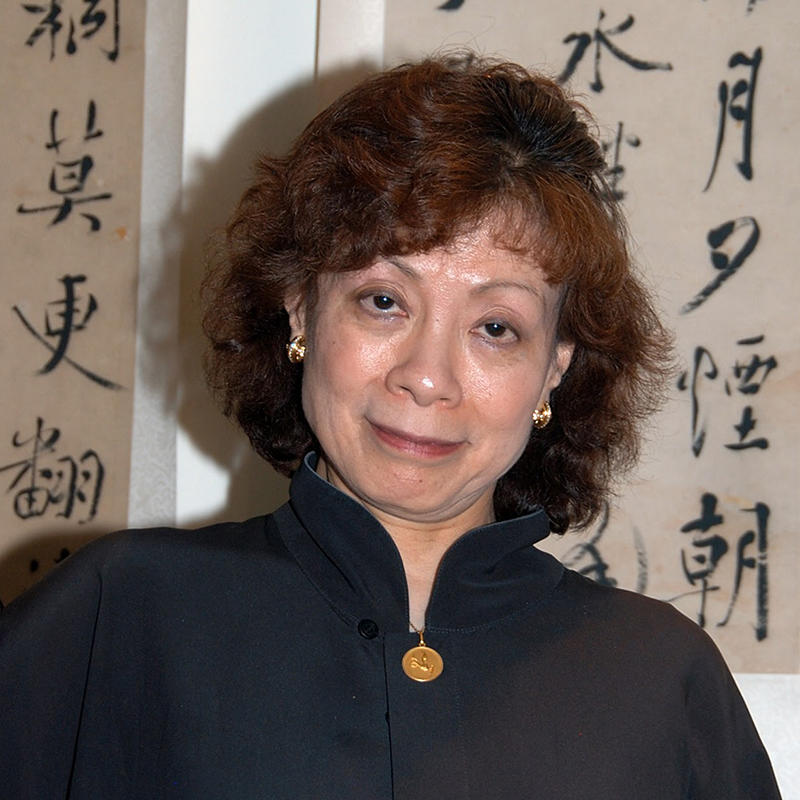
Wen-hsin Yeh is a Professor and Richard H. and Laurie C. Morrison Chair Professor of History at the University of California, Berkeley. A Distinguished Professor, her work focuses on East Asia with specialization in late imperial and modern China, Taiwan, and Maritime East Asia. BA, National Taiwan University PhD, University of California, Berkeley Her research explores the interplay of culture, politics, and economics in China’s historical development. Key areas include ideological movements, urban transformation, and regional dynamics during the late Qing and Republican eras. Yeh’s publications span theoretical and empirical analyses of modern Chinese history. The 2008 monograph Shanghai Splendor investigates economic sentiments and urban modernity, while Provincial Passages (1996) examines cultural geography and early communist movements. Her 1994 China Quarterly article on Zhejiang radicals highlights regional intellectual networks during the May Fourth Movement. Earlier work like The Alienated Academy (1990) dissects academic culture under Republican governance.
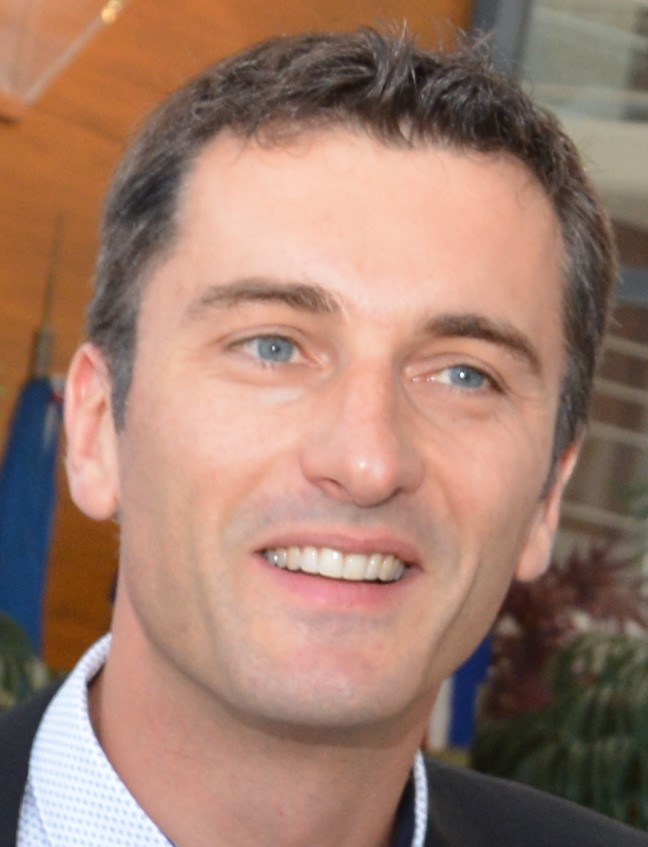
Laurent Bricault is a Professor of Roman History at the University of Toulouse Jean Jaurès, affiliated with the ERASMUS research team (Reception of Antiquity: Sources, Memory, Issues) under the Heritage, Literature, History (PLH) unit. His academic career spans institutions like the University of Poitiers (Master's 1986), Sorbonne (Doctorate 1994, HDR 2006), and Toulouse (since 2008). He specializes in the history of ancient religions, particularly Egyptian cults in the Roman world, provincial coinage, and Lagid/Roman Egypt. University of Poitiers - Master's in Ancient History (1986) Sorbonne - Doctorate in Egyptology (1994) Sorbonne - Habilitation to Direct Research (2006) Bricault's research explores the diffusion of Isiac cults, religious syncretism, and numismatic evidence for ancient beliefs. His recent publications focus on Mithraic studies, Egyptian deities in the Mediterranean, and domestic religious practices. He organizes international conferences and edits the Bibliotheca Isiaca series, contributing to the understanding of polytheistic traditions. Bricault co-edits the Supplements to the Bibliotheca Isiaca and collaborates on the Roman Provincial Coinage project. He curated the international exhibition Rome and the Mystery of Mithra (2021-2023) and maintains the RICIS online database for Isiac cult inscriptions. His work bridges epigraphy, numismatics, and cultural history to analyze religious networks across the Roman Empire.
Laverne Jacobs, PhD, is a Full Professor at the University of Windsor's Faculty of Law where she holds the Research Chair in Disability Equality & Administrative Justice. She serves as the founder and Director of the Law, Disability & Social Change Project, a research and public policy center dedicated to fostering inclusive communities. Notably, Professor Jacobs was elected to the United Nations Committee on the Rights of Persons with Disabilities in 2022, becoming the first Canadian to serve on this UN Human Rights Treaty Body. She also serves as Co-Director of the Disability Rights Working Group at Berkeley Law's Center for Comparative Equality & Anti-Discrimination Law and previously held the position of Associate Dean (Research & Graduate Studies) for the Faculty of Law from 2018-2021. B.A. (Honours), McGill University, 1994 LL.B., McGill University, 1999 B.C.L., McGill University, 1999 Ph.D., Osgoode Hall Law School, York University, 2009 Professor Jacobs' research sits at the intersection of disability equality law and administrative law and justice, characterized by an interest in the everyday work of the administrative justice system and the lived experiences of people who use it, particularly persons with disabilities. Her work spans disability rights, administrative justice, human rights law, socio-legal theory, and empirical research methodologies. She has made significant contributions to understanding accessibility legislation, transportation inequality, post-secondary education access for students with disabilities, and the implementation of disability equality principles in administrative decision-making. Her scholarship bridges theoretical legal frameworks with practical applications, emphasizing citizen participation in policy development and the importance of inclusive design in legal systems. Analysis of Professor Jacobs' recent publications reveals a consistent focus on how administrative law can better serve persons with disabilities through inclusive design and accessible processes. Her work demonstrates growing attention to intersectional issues, particularly how women with disabilities experience administrative systems, and increasingly examines the implementation challenges of accessibility legislation across Canadian jurisdictions. She frequently employs empirical research methods to ground her legal analysis in real-world experiences of marginalized communities. Scientific Awards and Honors: Canadian Bar Association Touchstone Award (2021) Canadian Association of Law Teachers (CALT) Academic Excellence Award (2022) Hummingbird Award from the Disabled Women's Network of Canada (DaWN), 2022 Election to the United Nations Committee on the Rights of Persons with Disabilities (2022) Professor Jacobs has held significant leadership roles including service on the Board of Directors of the Income Security Advocacy Centre and the Canadian Institute for the Administration of Justice. Through her role as Director of the Law, Disability & Social Change Project, she has secured research funding to support policy-relevant scholarship on disability rights and administrative justice. Her work has influenced accessibility legislation development across Canada, particularly through her annotated version of the Accessible Canada Act. She provides expert consultation to government bodies and international organizations on disability rights implementation. The Law, Disability & Social Change Project serves as Professor Jacobs' primary research hub, bringing together interdisciplinary scholars, disability advocates, and policy makers to develop practical solutions for creating more inclusive legal and administrative systems. The project has produced numerous research reports, policy briefs, and public resources that translate academic research into actionable recommendations for improving accessibility and disability equality in Canadian society.
Kären Wigen is the Frances and Charles Field Professor in History at Stanford University, specializing in Japanese history and the history of cartography. She holds a Ph.D. in Geography from the University of California, Berkeley (1990). Her research spans: Historical geography of East Asia Early modern Japanese regional economies Geographies of the imagination Transnational maritime histories Critical cartography and spatial analysis Her publications include eight major works from 1992-2025 analyzing spatial transformations in Japan and global metageography, with recent projects focusing on temporal dimensions in cartographic representation. She co-edited Seascapes (2007) and Cartographic Japan (2016), and serves as Director of Stanford’s Mellon Fellowship of Scholars in the Humanities since 2022.
Prof. Zeljko Miletic serves as a full professor at the Department of Archaeology, Faculty of Philosophy, University of Zadar, where he has been employed since 1986. He teaches core courses across all archaeology study levels including Institutions of the Roman World, Roman Army in Illyricum, Romanization of Ancient Illyricum, Economy of Roman Dalmatia and Histria, and Ancient Religion in the Adriatic-Danubian Region. His educational credentials include: Graduate Archaeologist and Art Historian, Faculty of Philosophy in Zadar (1986) Master of Science (Topography of the Salonitan necropolises), Faculty of Philosophy in Zagreb (1989) Doctor of Science (Mithraism in the Roman province of Dalmatia), Faculty of Philosophy in Zadar (1997) Miletic specializes in religious practices and military history within Roman provincial contexts, with particular focus on the Eastern Adriatic region. His research integrates field archaeology with socio-economic analysis of Romanization processes, examining how religious syncretism and military infrastructure shaped cultural transitions in Dalmatia and Pannonia. This interdisciplinary approach bridges classical archaeology, anthropology, and historical geography to reconstruct lived experiences in Roman frontier provinces. No scientific awards are documented in the source material. As academic leader, Miletic coordinated the Archaeology of the Eastern Adriatic postgraduate program and served as doctoral mentor/head until 2015. He secured principal investigator roles for the MZOS-funded projects Religious Life on the Eastern Adriatic in Roman Times and Cult and Religion on the Eastern Adriatic Coast in Roman Times, while collaborating on international initiatives including Corpus Monumentorum Mithriacorum with Heidelberg University. His grant portfolio demonstrates sustained focus on Roman provincial religious networks. Miletic directs field operations at Krka National Park's Burnum archaeological site and established antiquities collections at Humac Museum in Bosnia and Herzegovina. His excavation teams operate across key Adriatic-Danubian sites including Salona, Nin, Galovac, and Asseria, with continuous fieldwork spanning over three decades to document Roman provincial infrastructure.
Lyndsay Campbell is a Professor at the University of Calgary, cross-appointed between the Faculty of Law and the Department of History in the Faculty of Arts. Her work bridges Canadian and American legal history, comparative law, and constitutional studies. Ph.D., Jurisprudence and Social Policy, University of California, Berkeley (2008) Master of Law, University of British Columbia (1999) J.D., University of British Columbia (1995) M.A., English Literature, University of Toronto (1991) B.A., English Literature, University of British Columbia (1990) Campbell's research focuses on Canadian and American legal history , libel law , constitutionalism , and imperial legalities . Her work examines intersections between legal and extralegal regulatory strategies, comparative approaches to law, and 19th-century Canadian constitutionalism. Current projects include an edited collection on Legal Histories of Empire with Shaunnagh Dorsett. Her publications analyze legal histories of censorship , racial justice in law , and gender-related legal frameworks . Recent work includes the 2022 monograph Truth and Privilege and the 2020 co-edited open-access volume Canada’s Legal Past . Fellow, Constitutional Law and History Program, University of California, Berkeley (2008) William Nelson Cromwell Fellowship in Legal History (2007) Dean's Normative Time Fellowship, UC Berkeley (2004) Regents Intern Fellowship (2001) Osgoode Society Legal History Prize (1998) SSHRC doctoral fellowship (1997) Campbell teaches courses in Canadian and American history, legal theory, and the undergraduate Law and Society program. She previously practiced law in British Columbia and clerked for justices at the British Columbia Court of Appeal.
Thompson S.H. Teo is a Professor in the Department of Analytics and Operations (DAO) at the National University of Singapore (NUS) Business School. He holds editorial roles in top journals including European Journal of Information Systems, International Journal of Information Management, and Communications of the AIS. His research spans information systems strategy, business-IT alignment, e-commerce, sustainability, and AI's societal impacts. With over 200 publications, he ranked #143 globally in 2023 among business scientists (research.com) and was recognized in Stanford's top 2% global scientists (2021-2023). Awards include the Best Associate Editor Award (2017) and AIS Distinguished Membership. Thompson's research interests include IT adoption, cyberloafing, supply chain digitalization, and green innovation. He teaches courses on innovation, Industry 4.0, and strategic IT at undergraduate, masters, and executive levels. Notable contributions include frameworks for commute experience analysis and AI adoption market signals. His work bridges theory and practice, addressing challenges in sustainability, organizational behavior, and digital governance. Affiliations: NUS Business School, Distinguished Editorial Advisory Board (IJoIM), Senior Member (INFORMS) Grants & Leadership: Extensive editorial leadership, supervised China Scholarship Council PhD students, and executive programs on innovation design thinking. Key Contributions: Over 270 publications, four co-edited books on IT/e-commerce, and policy-relevant studies on environmental regulations and green tech adoption. His research often employs mixed methods (e.g., QCA for corruption analysis, PLS-SEM for cyberloafing models) and addresses global issues like fake news mitigation via ChatGPT and pandemic-era customer engagement in short videos.
Susan Smith-Peter is a Professor of History at the College of Staten Island, City University of New York, specializing in Russian history beyond Moscow and St. Petersburg. Her research focuses on regional identity, civil society development, and imperial governance in 19th-century Russia, with particular attention to Siberia and provincial dynamics. She holds a Ph.D. from the University of Illinois at Urbana-Champaign and a B.A. from Ohio University. Her work analyzes how Tsarist administrative frameworks fostered subnational identities through statistical bureaus, agricultural societies, and provincial newspapers. Notable contributions include *Imagining Russian Regions* (2018), which argues that autocracy’s civil society initiatives inadvertently fueled revolutionary movements. Her research has been supported by grants from the Fulbright Program, American Historical Association, and IREX. Professor Smith-Peter’s publications span journals like *Slavic Review* and *Kritika*, exploring topics from sugar beet industries to colonial Alaska. She has translated key texts into Russian and edited historical documents such as *The Great Republic Tested by the Touch of Truth*. She serves on campus committees and previously chaired Columbia University’s Seminar on Slavic History and Culture. Key Awards: Fulbright Fellowship, American Historical Association Grant, IREX Grant Grants: Fulbright-Hays Fellowship, University of Illinois Grant, CUNY Grant Her interdisciplinary approach bridges economic, cultural, and political history, emphasizing regional agency within imperial contexts. Ongoing projects explore Siberian historiography and the legacy of 19th-century provincial activism.
Dr. Gabrielle Kremer is a Senior Research Associate and Guest Researcher at the Austrian Academy of Sciences (OeAW), focusing on provincial Roman archaeology with emphasis on the Danube provinces and Gallia Belgica. She has taught at the University of Vienna since 2001 and coordinates interdisciplinary projects on Roman stone monuments, including the Corpus Signorum Imperii Romani Carnuntum series. Her work bridges epigraphy, sculpture analysis, and funerary architecture studies. Research focuses include: Religious practices in Roman provinces Stone monument provenance and reuse Cultural identity in Noricum and Pannonia Interdisciplinary analysis of Roman material culture Monumental grave architecture in the Treveri region Current projects involve the PolychroMon initiative (2023–2025) analyzing polychromy in Roman monuments and the Accommodation/Living in a Sacred Context study. She co-edited multiple international colloquium proceedings and led the "Religion and Society" working group (2017–2020) at OeAW's Institute for Cultural History of Antiquity.
Patrice Faure is a University Professor of Roman History at the University of Lyon 3 since 2022, with a career spanning roles at multiple French universities. His research focuses on the Roman army, political and cultural history of Roman provinces, Latin epigraphy, and prosopography. He holds a Habilitation à Diriger des Recherches in Roman History (2021) and a Doctorate (2006) from the University of Grenoble 2. Roman History, University of Lyon 3 (2022-present) Lecturer in Roman History, University of Lyon 3 (2010-2022) Lecturer in Ancient History, University of Le Havre (2007-2010) His research examines the Roman military's social and political impact, provincial integration of elites, and epigraphic documentation. He collaborates on digital epigraphic databases (Epigraphica Romana, EpiCherchell) and contributes to exhibition curation, notably at the Musée Lugdunum. Awarded the SOPHAU Thesis Prize (2007) and multiple scholarships (Thiers Foundation, IFAO, EFR), his publications include co-edited volumes on Roman military culture and monographs on Severan-era centurions. Current projects include publishing his HDR thesis Grandir pour l'empire and expanding the Inscriptions antiques de Césarée de Maurétanie corpus.
Dr Lionel K Glassey is an Honorary Research Fellow in the Department of History at the University of Glasgow. His work focuses on early modern British political and religious history, with a particular emphasis on 17th-century monarchical transitions and historiography. He is currently preparing a new edition of Gilbert Burnet's The History of My Own Time (1688-1734) for Oxford University Press. His research interests include the Revolution of 1688-1689, the Exclusion Crisis under Charles II, and the interplay between religious reformers like John Knox and political structures. Glassey has published extensively on topics such as provincial governance during interregnums, historiographical narratives of revolutionary events, and early modern correspondence analysis. Teaching responsibilities include the postgraduate course Early Modern Palaeography within the MSc in Information Management & Preservation program.
Professor Christopher Howgego is a Research Keeper at the Heberden Coin Room of the Ashmolean Museum and a faculty member at Wolfson College, University of Oxford. He holds degrees MA and DPhil (Oxon) and has been affiliated with the Ashmolean since 1988, serving in roles like Acting Keeper and Keeper before his current position. Academic Background: Joined Ashmolean in 1988; extensive curatorial and leadership roles in numismatic projects. Research Keywords: Roman Numismatics, Coin Hoards, Roman Provincial Coinage, Roman History. His research explores how ancient coinage illuminates historical, economic, and cultural dynamics. He has authored seminal works like Ancient History from Coins and co-edited Coinage and Identity in the Roman Provinces . He focuses on Antonine coinage in Roman Egypt and hoarding patterns, contributing to the Roman Provincial Coinage series and digital initiatives like Roman Provincial Coinage Online . Scientific Awards: Bronze Medal of the Norwegian Numismatic Society Silver Medal of the Norwegian Numismatic Society As a teacher, he lectured on Roman Numismatics until 2022 and supervised 19 doctoral and 10 master’s students. He currently welcomes graduate research on Roman hoards. His roles include directing major numismatic projects and serving on the Scientific Advisory Board of the Austrian Archaeological Institute. Labs/Teams: Leads the Roman Provincial Coinage Online and Coin Hoards of the Roman Empire projects, co-founded with Andrew Wilson. Also contributes to Iron Age Coins in Britain and Celtic Coin Index Digital initiatives.
Professor Nigel Pollard is a historian and archaeologist at Swansea University's School of Culture and Communication, specializing in the protection of cultural heritage in conflict zones with particular focus on lessons from World War II. His current research applies historical experiences, including the activities of the Allied Monuments, Fine Arts and Archives organization (the 'Monuments Men'), to contemporary cultural property protection policy and practice. His academic journey began with extensive work on Roman history and archaeology, conducting fieldwork in Syria, Egypt, Tunisia, Italy and the UK. His monograph Bombing Pompeii: World Heritage and Military Necessity (2020) examines the 1943 bombing damage to Pompeii and its implications for current heritage protection practices. He previously published Soldiers, Cities and Civilians in Roman Syria (2000) and co-authored The Complete Roman Legions (2012) with Joanne Berry. Pollard's research output shows a clear transition from Roman military and archaeological studies to contemporary heritage protection, with his most recent publications focusing on cultural property destruction in conflicts, WWII heritage protection lessons, and the evolution of international legal frameworks for cultural property protection from the 1907 Hague Convention to the 1954 Hague Convention. Board member of UK Blue Shield ('Red Cross for monuments') Member of UK military's Cultural Property Protection Working Group Contributor to training of UK armed forces' Cultural Property Protection Unit Contributor to UK government heritage policy development His teaching focuses on Roman history, art and archaeology, and heritage protection, with modules covering heritage in conflict, Roman imperial history, and cultural heritage policy. He actively supervises PhD and MA students on topics ranging from Roman military studies to modern cultural heritage protection challenges, while continuing to publish extensively in both historical and contemporary heritage protection fields.
Professor Michael Pollitt is a faculty member at the University of Cambridge , holding the title of Professor of Business Economics . He serves as Director of the MPhil in Technology Policy Programme and is affiliated with the Centre for Business Research (CBR) . Additionally, he holds advisory roles on Ofwat's Water 2020 board and the National Infrastructure Commission's Regulatory Challenge Panel , and is a Joint Academic Director at CERRE Centre on Regulation in Europe . His research focuses on industrial economics , privatisation and regulation of utilities (particularly electricity), productive efficiency measurement , and the intersection of Christian ethics with business practices . He has advised numerous governmental and international bodies, including the UK Competition Commission , World Bank , and European Commission , and has consulted for major energy firms like National Grid and Eneco . His publications address critical energy and regulatory issues, with recent work exploring electricity market design , carbon pricing , net zero transitions , and infrastructure productivity . He contributes to academic governance as a member of editorial boards for journals such as The Energy Journal and Utilities Policy , and leads the Association of Christian Economists, UK .
Professor Li Hui serves as the executive dean of the School of Network and Information Security at Xidian University, where he holds the position of second-level professor and doctoral supervisor. He is nationally recognized as a distinguished teacher and serves in multiple prestigious roles including member of the National Steering Committee for Postgraduate Education in Cryptography, inaugural president of ACM SIGSAC CHINA, and director of several major academic societies related to cryptography and information security. Professor Li's research spans cryptographic information security, privacy computing, information theory, and coding theory, with significant contributions to network and cyberspace security. His work demonstrates a strong focus on both theoretical foundations and practical applications, particularly in developing security protocols for emerging technologies like blockchain, federated learning systems, and IoT environments. His research output shows consistent innovation in balancing security requirements with computational efficiency across diverse application domains. With over 300 publications and more than 15,000 Google Scholar citations (H-index 60), Professor Li's scholarly impact is substantial. His recent publications demonstrate increasing emphasis on privacy-preserving machine learning, secure multi-party computation, and cryptographic protocols for distributed systems, reflecting the evolving security challenges in the AI era. Three second-class national teaching achievement awards Special prize and first-class national teaching achievement awards Four first-class provincial and ministerial science and technology progress awards Privacy Computing Theory award (Qian Weichang Chinese Information Processing Science and Technology Award) Multiple patents with over 80 granted inventions Professor Li leads the Cyber Changan Team and serves as head of the Shaanxi Provincial Innovation Team for Mobile Internet Security. He has successfully supervised numerous doctoral and master's students who have gone on to win prestigious competitions like the National College Student Information Security Competition. His research is supported by major national grants including a National Key R&D Program project and key projects from the National Natural Science Foundation of China.