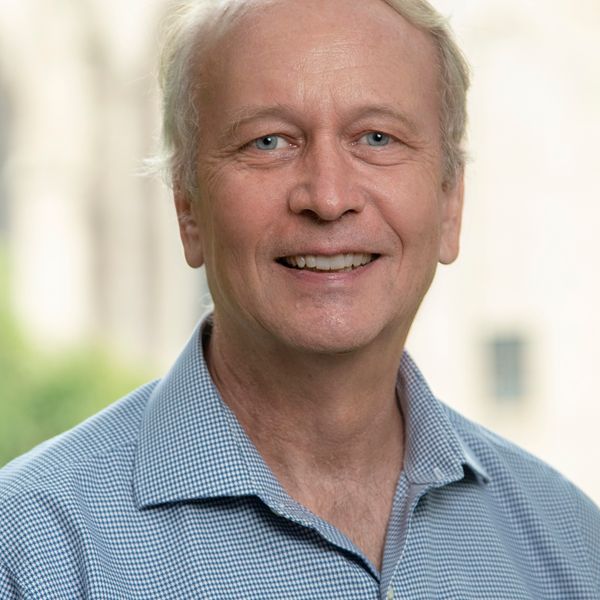
Bryan Dowd is a Professor in the Division of Health Policy & Management at the University of Minnesota. With a PhD in Public Policy Analysis from the University of Pennsylvania (1982), MS in Urban Administration from Georgia State University (1976), and BA in Architecture from Georgia Institute of Technology (1972), his work focuses on health economics , statistical modeling , and healthcare financing . PhD, Public Policy Analysis, University of Pennsylvania, 1982 MS, Urban Administration, Georgia State University, 1976 BA, Architecture, Georgia Institute of Technology, 1972 His research spans health insurance dynamics , payment models , and statistical methodologies in healthcare. Key themes include upcoding practices , instrumental variable applications , and policy implications of risk ratios . Publications often address healthcare access , economic incentives , and data-driven policy evaluation . Recent article trends highlight moral hazard decomposition , odds ratio critiques , and switching cost analysis in Medicare Advantage. These works emphasize causal inference , economic modeling , and policy design challenges . Contact: dowdx001@umn.edu
Randall P. Ellis is a Professor of Economics at Boston University, specializing in Health Economics, Industrial Organization, and Econometrics. His research focuses on healthcare payment systems, insurance design, predictive modeling, and international health economics. He holds a PhD from MIT and has contributed extensively to understanding managed care systems, risk adjustment frameworks, and healthcare policy evaluation. Education: PhD in Economics from Massachusetts Institute of Technology. Research Interests: Ellis’s work spans health care payment reforms, risk selection mechanisms, and the application of machine learning to health economics. He examines issues such as Medicaid managed care, obesity treatment economics, and the impact of anti-corruption programs on healthcare systems. His research emphasizes improving equity and efficiency in healthcare markets, particularly through innovative payment systems and risk adjustment models. Key Contributions: Ellis has developed frameworks for disease surveillance and risk adjustment (e.g., Diagnostic Items Classification System), evaluated payment system performance, and analyzed factors influencing healthcare utilization and costs. His work bridges theoretical economic models with practical policy applications, informing both academic and policy audiences. Grants & Collaborations: While specific grants are not detailed here, his research frequently involves collaborations with institutions like Harvard and MIT through the Health Economics Seminar. His work often addresses global health challenges, including pandemic financing and healthcare corruption in developing regions. Labs/Teams: Ellis is affiliated with Boston University’s economics department and collaborates with interdisciplinary teams on projects related to health policy and econometric modeling.
Prof. Dr. Michael Gerfin is a Professor of Public Economics at the University of Bern, affiliated with the Center for Regional Economic Development (CRED). His research focuses on health economics, labor economics, and tax-benefit models. He holds an office at A315 and can be reached via email. His work examines topics such as healthcare demand, physician incentives, and policy design, with recent contributions analyzing drug pricing, pandemic response strategies, and educational interventions in developing countries. Key themes in his publications include understanding how financial mechanisms influence provider behavior and designing effective social policies. Gerfin's research spans empirical studies on healthcare utilization, wage dynamics, and household decision-making. His analysis often integrates microsimulation techniques to evaluate policy impacts, such as in-work benefits and active labor market policies. Collaborations with Swiss statistical agencies highlight his engagement with real-world data, such as studies on adverse healthcare events and nursing staff ratios. His work bridges theoretical economic models with practical policy applications, emphasizing evidence-based solutions for public welfare challenges. Labs/Teams: Core member of the Center for Regional Economic Development (CRED), contributing to interdisciplinary projects on regional economic trends and public policy evaluation.
Christopher M. Shea, PhD, is a Professor in the Department of Health Policy and Management and Adjunct Associate Professor in Social Medicine at the University of North Carolina’s Gillings School of Global Public Health. He serves as the PhD Program Director, leading interdisciplinary training in public health policy and management. His work focuses on implementation science, organizational readiness for change, and telehealth adoption, with expertise in mixed-methods research. Dr. Shea holds a PhD in Public Administration (2008) from North Carolina State University, an MPA (2004) and MA in English (1998), and a BBA in Finance and English (1995). His research bridges organizational behavior, health informatics, and quality improvement, particularly in healthcare innovation adoption. His research interests include assessing organizational preparedness for change, telehealth policy, and strategies to support 'innovation champions.' Key projects involve evaluating telehealth utilization in rural settings and analyzing how financial factors influence telemedicine adoption for critical care in hospitals. Dr. Shea’s recent work explores maternal telehealth access disparities, opioid use disorder treatment policies, and the role of social needs screening in primary care. His articles often address implementation barriers and strategies in healthcare systems, with a focus on translating research into practice through mixed-methods approaches. He has contributed to initiatives like the Gillings Innovation Labs, emphasizing practical solutions for public health challenges. His grants and collaborations focus on improving healthcare equity through evidence-based strategies, such as community resource referral systems for cardiovascular disease in rural North Carolina.
Ching-To Albert Ma is a Professor at Boston University, specializing in Incentives and Contract Theory, Industrial Organization, and Health Economics. He holds a PhD from the London School of Economics. His research explores topics such as moral hazard in disability insurance, physician agency, healthcare quality incentives, and competition dynamics between public and private sectors. He has lectured internationally on industrial organization and health economics in Finland, Germany, Italy, Norway, Spain, and Switzerland. His work analyzes healthcare payment systems, technology adoption by physicians, and the impact of public policies on healthcare markets. Notable themes include the interplay between altruism and profit motives in healthcare, equity in healthcare access, and the design of efficient health insurance systems. His contributions span theoretical frameworks and empirical analyses of real-world healthcare systems. Ma has advised on healthcare governance reforms and has explored behavioral economics through experimental methods. His articles address issues ranging from antibiotic resistance economics to vaccination externalities, reflecting a commitment to bridging policy and academic research.
Stephen G. Cecchetti is the Rosen Family Chair in International Finance at the Brandeis International Business School (Brandeis University). He also serves as Vice Chair of the European Systemic Risk Board's Advisory Scientific Committee, a Research Associate at the National Bureau of Economic Research (NBER), and a Research Fellow at the Centre for Economic Policy Research (CEPR). Previously, he was Economic Adviser and Head of the Monetary and Economic Department at the Bank for International Settlements (2008–2013), Executive Vice President and Director of Research at the Federal Reserve Bank of New York (1997–1999), and editor of the Journal of Money, Credit, and Banking (1992–2001). His research focuses on monetary policy, financial regulation, macroeconomics, and central banking. Education: B.S. in Economics from MIT, Ph.D. in Economics from the University of California, Berkeley, and an honorary doctorate from the University of Basel (2016). His honors include the Distinguished Lecturer title from Ohio State University (2002) and the O. John Olcay Lecture at the Peterson Institute for International Economics (2019). His work emphasizes global financial stability, banking reform, and the intersection of monetary and fiscal policy. Recent publications highlight central bank interventions during financial crises, the fiscal consequences of central bank losses, and the future of banking in a digital era. He advocates for stricter regulatory frameworks post-2008 crisis and emphasizes the evolving role of central banks in addressing systemic risks. Cecchetti’s blog Money and Banking provides insights on current economic and financial issues.
Dr. Andrew Michael Ryan is a Professor in the Department of Health Services, Policy, and Practice at Brown University and Director of the Center for Advancing Health Policy through Research. His work focuses on evaluating the impact of healthcare payment reforms, particularly in Medicare and accountable care organizations (ACOs). Ryan has extensive experience analyzing longitudinal healthcare data and has contributed to national policy discussions on payment incentives and value-based care. Previously, he served as a professor at the University of Michigan. Education: PhD from Brandeis University. Research Interests: Dr. Ryan’s research examines how payment models influence healthcare quality, spending, and patient outcomes. Key areas include bundled payments, Medicare Advantage plan performance, and the role of financial incentives in driving system-wide improvements. His work often combines econometric methods with policy analysis to inform actionable reforms. Publications Trends: Recent work highlights critiques of Medicare Advantage rating systems, analysis of bundled payment impacts on care quality, and examinations of hospital payment policies. A recurring theme is the interplay between financial incentives and measurable improvements in healthcare value. Awards: No explicitly listed awards in provided texts. Advising & Grants: Ryan has led research grants examining payment reform efficacy and has advised federal technical panels. His team’s work frequently involves collaborations with economists and healthcare policymakers to translate findings into practice. Labs/Teams: Directs the Center for Advancing Health Policy through Research, fostering interdisciplinary collaborations on payment and delivery system innovations. Key partners include researchers from epidemiology, biostatistics, and clinical medicine.
Hilary J. Allen is a Professor of Law at American University Washington College of Law, where she teaches Banking Law, Securities Regulation, and Business Associations. She is an internationally recognized expert on financial stability regulation and new financial technologies, regularly sharing her expertise with regulatory bodies across the United States, EU, UK, Canada, and Australia, as well as with international institutions including the IMF, World Bank, and Financial Stability Board. Allen earned her LL.M. from Georgetown University Law Center in 2010 (where she received the Thomas Bradbury Chetwood, S.J. Plaque for graduating first in her class), her Bachelor of Laws from the University of Sydney in 2003, and her Bachelor of Arts from the University of Sydney in 2001. Prior to entering academia, she spent seven years working in financial services groups of prominent law firms in London, Sydney, and New York, and in 2010 worked with the Financial Crisis Inquiry Commission. Professor Allen's research focuses on critical intersections between financial regulation, emerging technologies, and systemic risk. Her work examines how artificial intelligence, blockchain, and cryptocurrency create new challenges for financial stability, while also addressing traditional regulatory concerns through modern lenses. She has published extensively on regulatory sandboxes, precautionary approaches to financial product approval, and the relationship between climate change and financial stability. Her book Driverless Finance: Fintech's Impact on Financial Stability (Oxford University Press, 2022) has become a significant contribution to understanding how emerging financial technologies introduce systemic risks requiring new regulatory tools. Analysis of her recent publications reveals a consistent focus on how technological innovation in finance requires corresponding innovation in regulation. Her work spans from practical regulatory mechanisms like sandboxes to broader conceptual frameworks for understanding financial stability in the digital age. She has particularly emphasized the need for common language in international financial regulation and the importance of addressing emerging threats from crypto, AI, and climate change. Professor Allen has testified before both the House Financial Services Committee and the Senate Banking Committee, demonstrating the practical impact of her scholarship on real-world policy. She is regularly quoted in the popular press and actively participates in scholarly conferences worldwide. Her research has been supported through invitations to present at roundtables with central banks and international regulatory bodies, reflecting her standing in the global financial regulation community. As an educator, Allen brings her deep practical experience from the financial services industry to the classroom, connecting theoretical concepts with real-world applications. Her expertise in both traditional banking law and emerging fintech issues provides students with a comprehensive understanding of the evolving financial regulatory landscape.
Michael Dworsky is a Senior Economist and Professor of Policy Analysis at the RAND School of Public Policy. He specializes in health economics, labor economics, and public finance, with a focus on workers' compensation, health insurance, disability, and healthcare utilization. His work applies quasi-experimental methods to large administrative datasets, particularly in California's workers' compensation system. He leads studies on topics such as racial disparities in injury economic consequences, minimum wage impacts on employer-sponsored insurance, and Affordable Care Act effects on healthcare use. His research includes evaluations of Medicare Advantage Value-Based Insurance Design (VBID) models, tradeoffs in insurance pricing using consumer data, and alternatives to workers' compensation mental health care for first responders. He has published in journals like the American Economic Review and Health Affairs. He holds a Ph.D. in Economics from Stanford University and is affiliated with the RAND Corporation, contributing to policy-relevant studies on healthcare, insurance, and labor markets. Recent projects include a NIOSH-funded study on injury disparities, analysis of hospital indemnity insurance for Medicare beneficiaries, and studies on nurse practitioner-led primary care under Medicaid pay parity. His work often addresses systemic challenges in healthcare access, cost management, and policy design.
Susan Busch is the Susan Dwight Bliss Professor of Public Health and Professor in the Institution for Social and Policy Studies at Yale School of Public Health. She holds primary appointments in the Department of Health Policy and Management and secondary appointments in the Institution for Social and Policy Studies. Her work bridges academic research with practical policy applications in the healthcare sector. PhD from Harvard University Professor Busch's research focuses on the intersection of public policy, behavioral health, and healthcare payment systems. She examines how payment structures influence access to behavioral health services, with particular attention to mental health and substance use disorders. Her work investigates insurance parity, the impact of private equity on behavioral health treatment, and innovative payment models that could improve care coordination for individuals with serious mental illness. She has extensively studied the integration of behavioral health services into accountable care organizations and Medicare systems. Her recent publications reveal a strong focus on the commercialization of behavioral health services, particularly examining private equity ownership in psychiatric hospitals and outpatient treatment facilities. Her research also addresses critical gaps in access to evidence-based treatments for substance use disorders, including opioid use disorder and alcohol use disorder. Professor Busch has made significant contributions to understanding how policy changes, such as Medicare coverage expansions for opioid treatment programs, affect treatment access and utilization patterns. As an educator, Professor Busch teaches a course on U.S. Mental Health Policy at Yale, helping to train the next generation of healthcare policy experts. Her work has significant implications for healthcare reform efforts aimed at improving access to behavioral health services and addressing the fragmentation that often characterizes mental health and substance use treatment in the United States.
Zvonimir Šafranko is an Assistant Professor at the Faculty of Economics and Business , University of Zagreb, specializing in Business Law . Since 2019, he has taught Commercial Law and Law of International Trade at both the Faculty of Economics in Zagreb and the Faculty of Organization and Informatics in Varaždin. He earned his PhD in Legal Sciences (2016) from the University of Zagreb with a thesis on Legal Aspects of Electronic Transferable Records in Commercial Transactions . Research Focus: Electronic commerce law, contract classification, EU corporate law, and digital finance. External Engagement: Member of the Organization and Program Committees for the International Conference on European Company Law & Corporate Governance ; editorial board member of InterEULawEast Journal . Recent Publications (2016–2024): Analyze EU law harmonization, electronic commercial records, smart contracts, and digital trade frameworks. His work bridges Croatian law with EU standards, emphasizing legal certainty in e-commerce and corporate sustainability. Awards & Grants: No specific scientific awards listed in the provided texts.
Hye-Chung Kum is a Professor in the Department of Health Policy & Management at Texas A&M University, where she pioneers Population Informatics to transform digital data into evidence-based health policy solutions. Her work bridges computer science, public health, and social work to address critical data challenges in healthcare systems. Education: PhD, University of North Carolina at Chapel Hill (UNC-CH), 2004 MSW (Master of Social Work), UNC-CH, School of Social Work, 1998 MS, UNC-CH, Department of Computer Science, 1997 BS, Yonsei University, Seoul, Korea, Department of Computer Science, 1995 Research Vision: Dr. Kum develops privacy-preserving human-computer hybrid systems for cleaning and integrating chaotic real-world data (e.g., EHRs, administrative records). Her Population Informatics framework enables ethical large-scale analysis while addressing data genocide in marginalized communities through innovations like the Secure Decoupled Linkage (SDLink) system. Publication Trends: Recent work (2024-2025) reveals three dominant threads: (1) Mental health service utilization dynamics during/post-pandemic, (2) Racial/ethnic disparities in emergency department use and cancer outcomes, and (3) Ethical data sharing frameworks for vulnerable populations. Her Texas-focused studies on Medicaid payment models and AI-driven record linkage demonstrate practical policy applications. Research Infrastructure: As director of the Population Informatics Lab, she leads cross-disciplinary teams developing Privacy-by-Design tools that balance public health needs with data sovereignty—particularly for American Indian and Alaska Native communities. Her grant-funded work consistently addresses Medicaid transformation and healthcare cost drivers through secondary data analytics.
Susan Averett is a Professor in the Economics Department, specializing in gender economics and health economics. She joined the faculty in 1991 and teaches courses such as Fundamentals of Econometrics and Women and the Economy. Her research explores intersections between gender, health, and policy, with notable publications in journals like the Review of Economics and Statistics and Journal of Health Economics . A co-author of over 50 scholarly articles and co-editor of The Oxford Handbook of Women and the Economy , she also serves as co-editor of Economics and Human Biology . Dr. Averett holds a Ph.D. and M.A. in Economics from the University of Colorado and a B.S. in Economics from Colorado State University. Her work frequently addresses topics such as the gender wage gap, childcare tax credits, and immigration policies. Media outlets including the Wall Street Journal and Vox have featured her research findings. Her research interests include the economic impacts of public policies on health outcomes, labor market dynamics, and social equity. Notable projects have examined the effects of minimum wage laws on immigrant children’s health, the long-term consequences of China’s one-child policy, and the relationship between obesity and labor market performance. As an educator, she contributes to interdisciplinary programs like Women’s, Gender, and Sexuality Studies via courses such as Gender and Economics. Her textbook Women and the Economy: Family, Work, and Pay remains a foundational resource in the field.
Prof. Dr. Carsten Herresthal is a full-time Professor at the University of Regensburg, Faculty of Law, where he holds the Chair of Civil Law, Commercial and Corporate Law, European Law and Legal Theory. His work is centered on German and European corporate law, with a focus on banking, capital markets, compliance, arbitration, and European private law. He emphasizes methodological rigor and foundational legal principles in both national and EU contexts. University: University of Regensburg School: Faculty of Law Department: Department of Civil Law, Commercial and Corporate Law, European Law and Legal Theory Position: Professor Email: carsten.herresthal@ur.de, sekretariat.herresthal@jura.uni-regensburg.de Prof. Herresthal’s research spans key areas such as corporate governance, financial regulation, contract law, and legal methodology. He is particularly active in analyzing judicial decisions on standard terms, prepayment penalties, and EU legal harmonization. His work often critiques legislative and judicial overreach, advocating for clarity and coherence in legal frameworks. The recent publications of Prof. Herresthal reveal a strong trend in banking and capital markets law, especially concerning consumer protection, contract validity, and EU regulatory alignment. His articles frequently engage with rulings from the Federal Court of Justice (BGH) and the European Court of Justice (ECJ), analyzing their doctrinal soundness and practical implications. Topics include prepayment compensation, negative interest clauses, and the scope of consumer credit directives. His contributions are primarily in authoritative German legal journals such as NJW, ZIP, and WuB, reflecting his influence in national legal discourse. Prof. Herresthal is deeply involved in academic publishing and education. He serves as co-editor of the book series 'Writings on Corporate Law' (Nomos Verlag) and has contributed to major legal commentaries including the Münchener Kommentar zum HGB and the Staudinger Kommentar. He also co-authored a textbook on legal methodology for law students. He supervises doctoral and master’s theses and organizes a lecture series that bridges theoretical and practical aspects of corporate law, featuring leading practitioners from international law firms. His editorial roles and consistent scholarly output underscore his leadership in legal academia. He has not received explicitly mentioned scientific awards in the provided text, but his editorial positions and frequent publications in top-tier journals indicate high professional recognition. He also contributes to public legal discourse through commentary on legislative proposals, such as those concerning dormant accounts and supply chain due diligence. Prof. Herresthal leads a research team comprising scientific staff, student assistants, and a dedicated secretariat. He organizes academic events and fosters collaboration between academia and legal practice. His chair supports young scholars through thesis supervision and participation in scholarly publications. The ongoing projects include major commentary works on commercial and civil law, reflecting a sustained commitment to doctrinal scholarship and legal education.
Professor Subhajit Basu is a leading academic at the University of Leeds , holding the position of Professor of Law and Technology within the School of Law . His work bridges Law, Artificial Intelligence, Big Data, and Emerging Technologies , with a focus on the Global South . He has authored influential books including Privacy and Healthcare Data (Routledge, 2016) and Global Perspectives on E-Commerce Taxation Law (Ashgate, 2008). PhD, Liverpool John Moores University LLB, Calcutta University Called to the Bar in 1998, specializing in Corporate Law in India Research Interests span Regulation of Emerging Technologies, AI Governance, Health Data Privacy, Autonomous Systems, and Online Harm . His recent projects include CoR: Sextortion in the Age of Blockchain and Deepfakes (Naif Arab University, 2025–2026) and Autonomy and Moral Agency in Bioethics (WBNUJS, 2024–2025). He previously led EU Horizon projects like PASCAL (2019–2023) on Connected and Autonomous Vehicles. Scientific Awards include the Hind Rattan (Jewel of India, 2020) and fellowships from the Royal Society of Arts and Higher Education Academy . His editorial leadership includes Editor-in-Chief of the International Review of Law Computers and Technology and associate roles on five journals. Notable Grants include funding from Naif Arab University (Saudi Arabia), EU Horizon 2020, EPSRC, and the Atlantic Philanthropies. He has provided consultancy to the National Cybercrime Research Centre (Poland), the Government of Saudi Arabia on AI frameworks, and The Dialogue (India) on IT Rules.