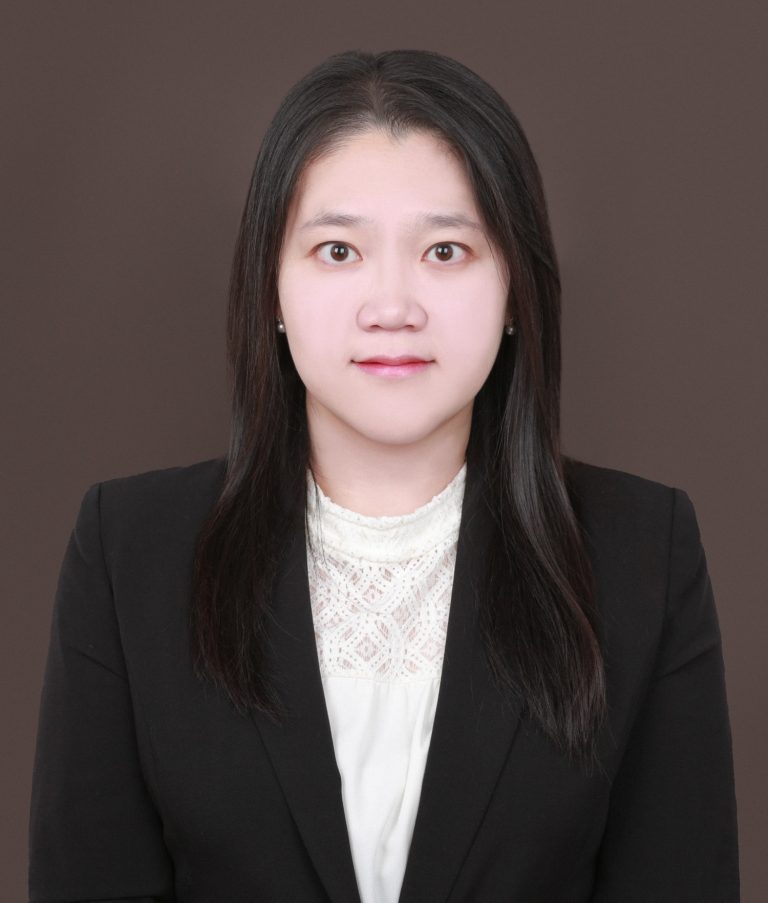
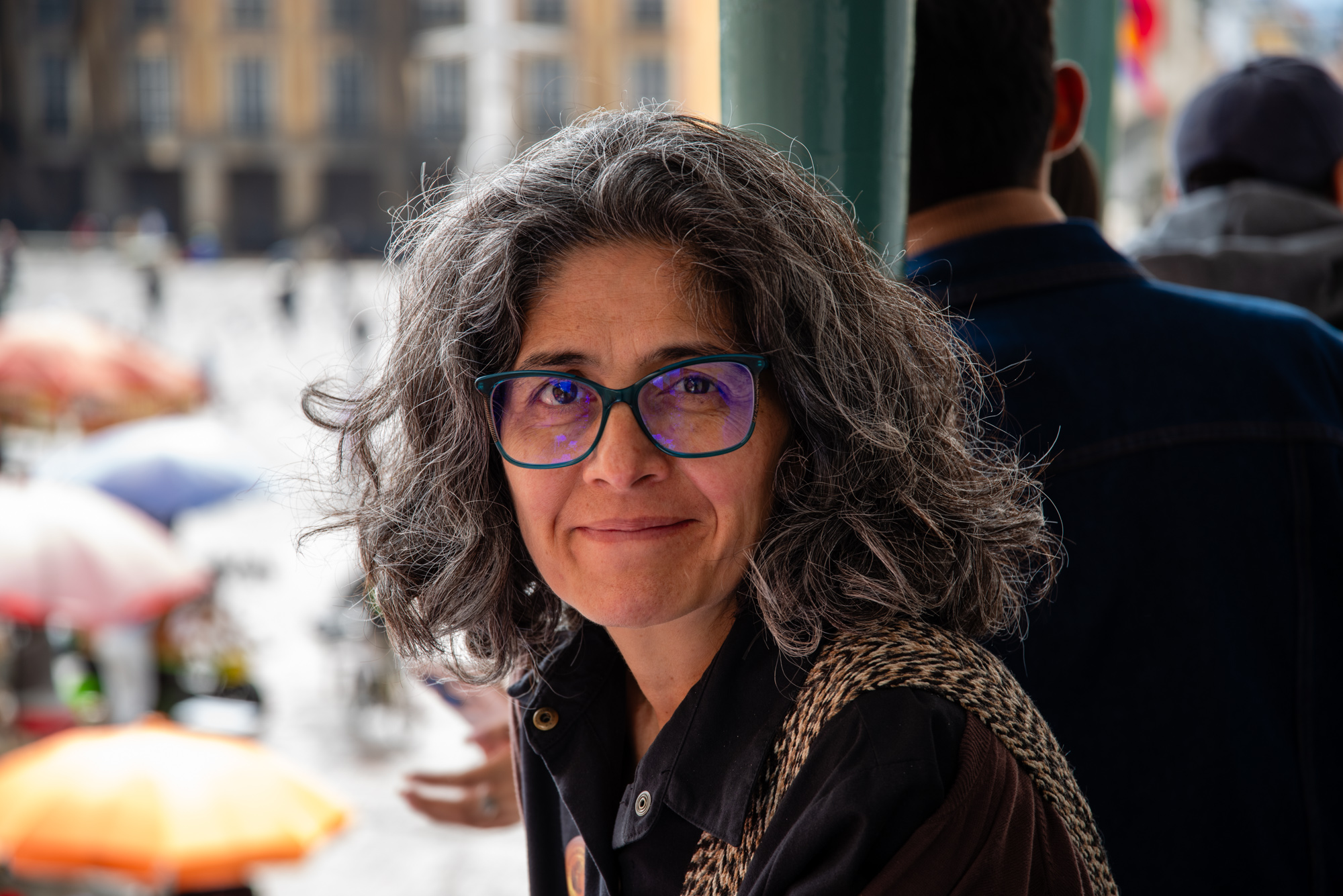
Lee Su-hyeon is an Assistant Professor at the Department of Clothing and Textiles in Seoul National University's College of Human Ecology . Previously, she served at Jeonbuk National University (2021-2023) and conducted postdoctoral research at the Korea Institute of Industrial Technology (2018-2021). Her work focuses on smart textiles , superhydrophobic materials , and conductive fabrics for wearable technology. Ph.D. (2018), Seoul National University M.Sc. (2012), Seoul National University B.Sc. (2009), Ewha Womans University Research interests include: Surface chemistry of textiles Water-repellent fabric structures Conductive yarn blending Metal-organic framework coatings E-textile manufacturing automation Thermo-electric clothing systems Her 15 most recent publications (2018-2023) demonstrate expertise in superhydrophobic polyester films , smart sports bras , MIL-100(Fe) cotton coatings , and carbon nanotube composites . Key trends show integration of conductive materials with environmental sustainability approaches. Scientific recognition includes: 2022 FTEX Best Reviewer Award 2021 Korea Fashion Business Association New Researcher Award Multiple Korean Society of Clothing and Textiles presentation awards (2013-2018) Lectures on undergraduate courses: Basic chemistry of clothing materials , Clothing material composition , Cleaning principles . Graduate courses: New clothing materials , Textile physics , Smart fabric evaluation .
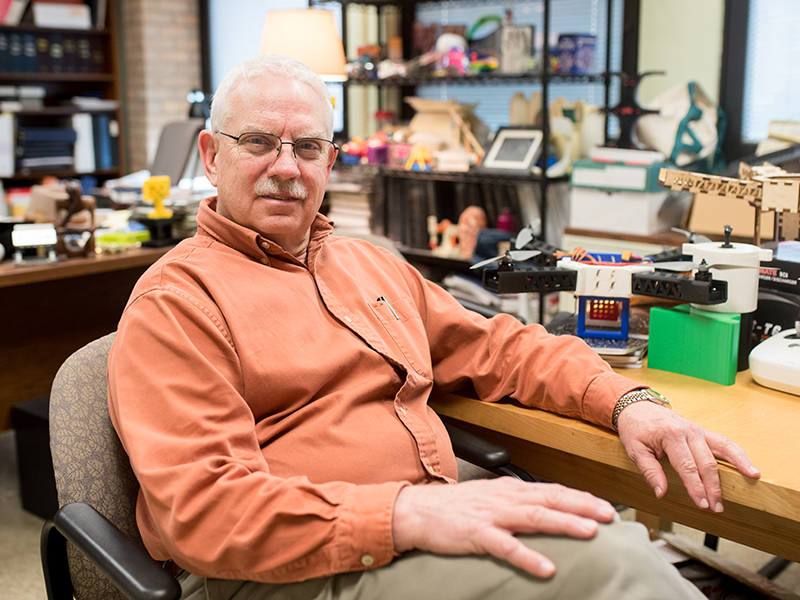
Richard H. Crawford is a Professor of Mechanical Engineering at The University of Texas at Austin, holding the Earl N. & Margaret Brasfield Endowed Faculty Fellowship and serving as Director of the Design Projects Program. His educational background includes a BSME from Louisiana State University (1982), and MSME (1985) and Ph.D. (1989) from Purdue University. Dr. Crawford's research spans computer-aided mechanical design, design theory, and engineering education, with four primary focus areas: (1) computer representations for conceptual design and design retrieval; (2) geometric modeling for engineering design and manufacturing; (3) additive manufacturing including design tools and applications; and (4) pre-college engineering education. His industrial collaborations include faculty internships at Ford Motor Company, IBM, and Sandia National Laboratory. His recent publications demonstrate consistent emphasis on design optimization, metamodeling (particularly NURBS-based approaches), additive manufacturing applications, and biomedical engineering solutions for prosthetics and orthotics, reflecting integration of computational methods with practical engineering challenges. Dr. Crawford has received significant recognition: 1995 Fred Merryfield Design Award from the American Society for Engineering Education 2010 Ralph Coates Roe Award for exemplary Mechanical Engineering education 2011 University of Texas System Regents’ Outstanding Teaching Award He co-founded the Design Technology and Engineering for All Children (DTEACh) program providing K-12 teacher training, and partnered with UTeach to develop the "Engineer Your World" high school curriculum adopted by over 200 school districts, featuring a dual-credit option through UT System institutions.
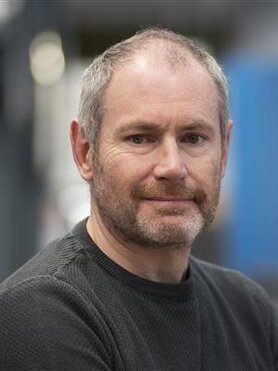
Juan Jesús García Domínguez is a Professor in the Department of Electronics at the Universidad de Alcalá. His primary research focuses on sensor systems, wearable technology, and their applications in healthcare and smart environments. He leads the GEINTRA research group, dedicated to Electronic Engineering Applied to Intelligent Spaces and Transport. Dr. García Domínguez holds a PhD from Universidad de Alcalá (2006) with a thesis on infrared obstacle detection in railway environments. His research interests include biomedical sensors, inertial measurement units (IMUs), indoor localization systems (BLE/UWB), and elderly care technology. He has pioneered work on non-invasive behavioral monitoring, gait analysis, and wearable devices for vulnerable populations. Recent projects involve developing systems for activity recognition, fall detection, and telemedicine applications. Key contributions include the FrailWear wearable IoT device, BLE-based behavioral analytics frameworks, and multi-sensory systems for long-term patient monitoring. His work bridges electronic engineering with healthcare, emphasizing practical solutions for aging-in-place and smart transportation safety. Teaching includes digital electronics and active learning methodologies in engineering education. Dr. García Domínguez has published extensively on topics like acoustic positioning systems, IMU calibration algorithms, and NILM techniques for energy management. His lab focuses on translating sensor data into actionable insights for medical and environmental applications.
Matthew Lease is a Professor at the School of Information, University of Texas at Austin, where he serves as Director of Doctoral Studies and Assistant Graduate Advisor. He is a Distinguished Member of the Association for Computing Machinery (ACM), a Senior Member of the Association for the Advancement of Artificial Intelligence (AAAI), and an Amazon Scholar. Lease co-directs the $20M NSF-Simons AI Institute for Cosmic Origins (CosmicAI) and is a faculty founder and leader of UT's Good Systems, an eight-year, $20M university-wide Grand Challenge aimed at designing responsible AI technologies. In 2023-2024, he was invited four times to address the Texas Legislature on responsible AI. Ph.D. Computer Science, Brown University, 2010 M.Sc. Computer Science, Brown University, 2004 B.Sc. Computer Science, University of Washington, 1999 Lease directs the UT Austin Laboratory for Artificial Intelligence and Human-Centered Computing (AI&HCC), where his research spans artificial intelligence modeling and human-computer interaction design. His work focuses on creating novel datasets, building AI models, and evaluating both model performance and their impact on end-users. When automated AI falls short, his team designs human-in-the-loop approaches, leveraging AI model explanations and creative user interfaces. To promote fair AI, they focus on better annotation techniques to avoid bias and develop modeling strategies to mitigate dataset biases. Their work tackles real-world problems as part of UT Austin's Good Systems Grand Challenge, with an ongoing emphasis on content moderation—exploring automated, human-in-the-loop, and human-safe practices to combat disinformation, hate speech, and online polarization. Lease's recent publications (2021-2024) demonstrate a strong focus on human-centered AI, particularly in the areas of fair and explainable AI, content moderation, fact-checking, and crowdsourcing. His research integrates technical AI development with human factors considerations, emphasizing the importance of designing AI systems that work effectively with human users. The publications reveal a consistent theme of addressing bias in AI systems, improving human-AI collaboration, and developing methods to ensure the ethical deployment of AI technologies in sensitive domains like content moderation and misinformation detection. His work shows progression from foundational techniques in crowdsourcing and human computation toward more sophisticated approaches that consider psychological impacts and ethical implications. 2024 Test of Time Paper Award, AAAI Conference on Human Computation and Crowdsourcing (HCOMP) 2024 Most Influential Paper Award, IEEE/ACM International Conference on Automated Software Engineering (ASE) 2024 Best Paper Honorable Mention, ACM Conference on Computer Supported Cooperative Work (CSCW) 2022 Best Student Paper, Conference on Information Systems and Technology (CIST) 2020 Conference Award Track, Journal of Artificial Intelligence Research (JAIR) 2019 Best Student Paper, European Conference for Information Retrieval (ECIR) Early Career awards from DARPA, NSF, and IMLS Lease has secured significant funding for his research, including the $20M NSF-Simons AI Institute for Cosmic Origins and the $20M Good Systems Grand Challenge. His lab, AI&HCC, has developed numerous tools and methodologies for human-AI collaboration, particularly in the context of content moderation and fact-checking. He has advised numerous students who have gone on to publish in top-tier conferences and journals in AI, HCI, and NLP. Lease actively collaborates with industry partners including Amazon, where he serves as an Amazon Scholar, and has served on advisory boards for JASIS&T, Texas Advanced Computing Center (TACC), and UT Austin-Amazon Science Hub. His research has led to practical tools like SQUARE for aggregating crowd responses and methods for transparent AI evaluation. Lease leads the UT Austin Laboratory for Artificial Intelligence and Human-Centered Computing (AI&HCC), which has developed innovative approaches to human-AI collaboration. The lab's work on content moderation addresses critical challenges in online safety, including the psychological well-being of content moderators who face traumatic material. Their research on fair and explainable AI has produced methods for detecting toxic speech while maintaining accuracy across demographic groups. The lab actively collaborates with fact-checking organizations through co-design processes to create tools that meet real-world needs. As part of UT Austin's Good Systems initiative, the lab is developing AI technologies that prioritize human values and social responsibility from the outset of the design process.
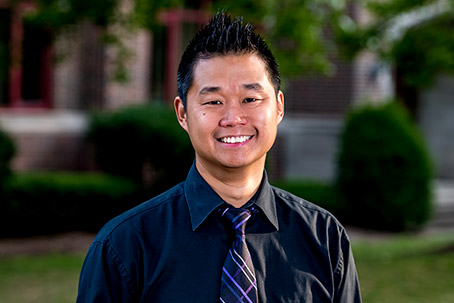
Dr. Alan W. Chiu serves as Professor and Samuel F. Hulbert Endowed Chair in the Department of Biology & Biomedical Engineering at Rose-Hulman Institute of Technology, where he specializes in neural engineering applications for neurological rehabilitation and assistive technologies. His academic credentials include: PhD in Electrical and Computer Engineering from University of Toronto (2006) MASc in Electrical and Computer Engineering from University of Toronto (2002) BASc in Engineering Science from University of Toronto (2000) Dr. Chiu's research centers on developing neural models and brain-computer interfaces (BCI) to restore functionality for individuals with neurological disabilities. His work integrates oscillator-based neural modeling with real-time BCI systems, focusing on neuroprosthetics and error-correction mechanisms in cognitive tasks. Current projects explore mixed reality environments for prosthetic control and strategies to mitigate sensory distractors in BCI applications. Analysis of his 2021-2024 publications reveals a dual trajectory: advancing BCI robustness through machine learning-enhanced signal processing (particularly in SSVEP and ERP paradigms), while simultaneously innovating biomedical engineering education through interdisciplinary curriculum design. His research consistently bridges theoretical neural modeling with practical assistive device implementation. His primary honor is the Samuel F. Hulbert Endowed Chair. Additional distinctions may exist but are not documented in the source material. Dr. Chiu actively mentors undergraduate researchers as supervisor of year-round and summer projects, building on his prior role as co-director of Rose-Hulman's Independent Project/Research Opportunities Program (IPROP). He contributes to accreditation standards as BMES Commissioner for ABET's Engineering Accreditation Commission, though specific grant funding details remain undisclosed. His research group focuses on translating neural engineering concepts into functional prototypes, with particular emphasis on EEG-based control systems and cognitive error detection frameworks for communication assistance.
Michael Philippsen is a Professor at the Department of Computer Science at Friedrich-Alexander-Universität Erlangen-Nürnberg (FAU), where he leads the Chair of Programming Systems (Lehrstuhl für Informatik 2). His research spans software engineering, programming languages, high-performance computing, and machine learning applications. He has directed multiple significant research projects including Holoware (software visualization in VR/AR), ORKA (OpenMP for FPGAs), and CS4MINTS (computer science education initiatives). Prof. Philippsen's research focuses on improving software quality and developer productivity through innovative approaches. His work in software testing includes novel methods for detecting flaky tests using version history and test execution data. In compiler research, he has pioneered automated testing techniques and optimization methods, particularly for FPGA acceleration using OpenMP extensions. His Holoware project revolutionized software visualization by applying city metaphors in virtual reality to enhance program comprehension. Additionally, he has made significant contributions to machine learning applications in software engineering, including few-shot out-of-domain detection in natural language processing systems. His publication record demonstrates a strong trend toward interdisciplinary research bridging traditional software engineering with emerging technologies. A significant portion of his recent work focuses on optimizing compiler techniques for heterogeneous architectures, particularly FPGA acceleration through OpenMP extensions. His research in software visualization has produced award-winning work on layered software city metaphors that significantly improve program comprehension compared to traditional visualization techniques. The consistent theme across his work is applying practical, measurable solutions to real-world software engineering challenges. Best Paper Award for 'Multipurpose Cacheing to Accelerate OpenMP Target Regions on FPGAs' (2023) Best Paper Award for 'A Layered Software City for Dependency Visualization' (2020) Prof. Philippsen has secured substantial research funding from the German Federal Ministry for Economic Affairs and Energy (BMWE), the Bavarian State Ministry of Science and the Arts (StMWK), and the Fraunhofer Society. His projects often involve industry collaboration to ensure practical applicability. He has supervised numerous student theses contributing to his research in compiler testing and software visualization. His research group maintains specialized laboratories for VR/AR software visualization, FPGA acceleration, and educational tool development as part of the CS4MINTS project.
Professor Annamaria Visco is an Associate Professor for the SSD ING-IND/22 (Materials Science and Technology) at the Department of Engineering of the University of Messina (UniMe). She belongs to the Ministerial area 09 - Industrial and information engineering as a Second level tenured professor in the Competition macro-sector 09/D - CHEMICAL AND MATERIALS ENGINEERING, specifically in the Competition sector 09/D1 - MATERIALS SCIENCE AND TECHNOLOGY. Education: Degree in Chemistry from the University of Messina (5/12/1991) with grade 110/110 cum laude Qualification to practice as a Chemist (April 1992) Specialization in "Chemical process technologies" (20/12/1993) with grade 50/50 PhD in "Chemistry of Materials for Special Uses" (01/07/1997) Professor Visco's research focuses on the modification and chemical-physical and mechanical characterization of polymeric materials, bioplastics, nano-composite materials, polymer blends and (nano) composite materials with a polymer matrix. Her work spans biomedical, environmental, and naval applications in the field of materials engineering, accompanied by the study of suitable production methods and technologies. Her specific research lines include polymer matrix coatings for environmental applications, nano composites and biopolymer blends for biomedical applications, nano-structured materials for nanomedicine, and recycling of materials with "green" plastics production from agri-food waste. Her recent publications demonstrate a strong focus on sustainable materials development, particularly in the areas of biocomposites from agri-food waste, bioplastics from renewable sources, and anti-corrosion coatings for marine applications. The research trends show an increasing emphasis on mathematical modeling of material properties and practical applications addressing Sustainable Development Goals 3 (Good health and well-being) and 9 (Industry, Innovation, and Infrastructure). Scientific Awards: Start Cup dell'Università degli Studi di Messina 2017 Professor Visco has served as scientific tutor for 10 PhD students and has been actively involved in numerous research projects. She has been Scientific Manager for several significant projects including THALASSA (PON 2014-2020), SI-MARE (PO FESR 2014-2020), and LIFE RESTART (LIFE 2021). Her editorial work includes serving as Associated Editor for the International Journal of Polymer Analysis and Characterization and as a member of the editorial board for Polymers journal. She is actively involved in multiple research groups including MTP-Mechanical Treatment Prototype, Laboratorio Polimeri, biopolimeri e composti, Laser plasmi e materiali innovativi, STrutture lIght-weight e biomateriaLi per applicazioni biomedichE (STILE), and progettazioNe grEen e lighTweight di navi e strutTUre off-shore.
Brigitt Antonia Egloff serves as Lecturer and Deputy Head of Textile Design at Lucerne University of Applied Sciences and Arts (HSLU) within the School of Design, Film and Art. With continuous teaching since 1999 in the BA Textile Design program and from 2012-2018 in the Master's program, she maintains active research and teaching roles while leading international collaborations with institutions including National Institute of Design (India), Beijing Institute of Fashion Technology, and Sichuan School of Fine Arts (China). Her research centers on sustainable material strategies, specializing in textile recycling systems, natural fiber applications, and innovative color systems for solar photovoltaics. She pioneers the cross-disciplinary integration of textile design methodologies into non-textile domains—particularly solar energy systems—while emphasizing the symbiotic relationship between research and pedagogy. Current projects explore circular economy frameworks, sustainable medical textiles, and architectural solar integration. Recent publications reveal strong thematic focus on circular textile design (33% of recent output), solar-textile integration (27%), and sustainable manufacturing processes (20%), with growing emphasis on medical applications and cross-cultural design pedagogy. Her work consistently bridges theoretical research with industrial implementation through Innosuisse projects. Egloff's artistic contributions have earned significant recognition: Berlin Studio Fellowship for Artistic Work (2017) Chicago Studio Fellowship for Artistic Work (2017) Artistic Work Grant (2008) Artistic Work Grant (1998) She directs multiple interdisciplinary research initiatives including CIMProW (Circular Innovation: Medical Protective Wear), Solar Design Tools, and Textile Recycling 4.0, collaborating with EMPA, SUPSI, and textile industry partners. Her leadership extends to the Textile Design program's Examination Board and supervision of student research in sustainable material innovation. Current projects like Circle Up Textiles 2 and SpinnLab demonstrate her commitment to closing textile waste loops through industrial-academic partnerships. As Deputy Head of Textile Design since 2010, Egloff shapes curriculum development and research strategy within HSLU's Textile Design Lab, fostering student engagement with real-world sustainability challenges through projects like Viscosilab and TESS (Textile Eco System Sleep). Her 'Design and Sustainability' framework informs both pedagogy and industry collaborations.
Dr. Thijs Smit is affiliated with the Professur für Biomechanik at ETH Zürich, holding a researcher position within the biomechanics field. His work focuses on advanced biomedical engineering solutions, particularly in spinal fusion implants, regenerative medicine scaffolds, and topology optimization techniques. Primary affiliation: ETH Zürich, Department of Biomechanics Research interests: Patient-specific implant design, 3D-printed biomaterials, topology optimization in medicine, regenerative scaffold development His research combines computational modeling with additive manufacturing to create innovative medical devices. Notable projects include LEGO-inspired titanium scaffolds for tissue engineering and patient-specific spinal fusion cages optimized via topology methods. His work bridges engineering principles with clinical applications in orthopedics and regenerative medicine. Publications emphasize interdisciplinary approaches, with recent trends in 3D-printed biomaterials for regenerative medicine and computational optimization tools for medical device design. His 2024 studies highlight advancements in anatomically conforming spinal implants. Earlier work includes FEA analysis of non-rigid origami structures and transportation node attitude measurement. No awards or grants are explicitly listed in the provided information. Advising roles or student collaborations are not detailed here. His current projects likely involve collaboration with the Biomechanics Professorship team to advance surgical implant technologies and biomaterial applications.
Mathias Ciliberto is a Research Fellow in the Department of Computer Science and Technology at the University of Cambridge. His work focuses on wearable sensor technology, human activity recognition, and multimodal data analysis. He has contributed to major datasets such as the Sussex-Huawei Locomotion and Transportation Dataset, advancing transportation mode recognition and sensor-based analytics. His research includes innovations in earable technologies for gait monitoring, holistic motion analysis, and sensor fusion across audio, inertial, and GPS systems. Key contributions involve developing robust algorithms for activity recognition in challenging data scenarios, including missing data and poor annotations. He has organized international challenges (e.g., SHL Challenge series) and workshops (HASCA), fostering collaboration in sensor-based research. His projects emphasize practical applications in healthcare, sports biomechanics, and human-computer interaction, with a focus on real-world deployment of wearable systems.
Jacques M.B. Terken is an Associate Professor in the Department of Industrial Design at Eindhoven University of Technology, specializing in automotive human factors and human-technology interaction. He leads the iCave project, investigating communication between autonomous vehicles and road users. His research spans speech technology, user experience in autonomous vehicles, and design methodologies. Academic Background: Earned his PhD in Psycholinguistics from Leiden University (1985) after graduating from Utrecht University (1979). Held roles at the Max Planck Institute for Psycholinguistics (1985-1986) and the Institute for Perception Research (IPO, 1986-2002). Co-founded the User-Centered Engineering group, now part of TU Eindhoven's Industrial Design department. Research Interests: Focuses on enhancing safety and usability in autonomous vehicle systems through interdisciplinary approaches. Key areas include driver-vehicle interaction, pedestrian communication, and design processes for emerging transportation technologies. Awards: AHFE 2016 Best Paper Award AutomotiveUI '20 Honorable Mention Award CHI '20 Best Paper Award Best Demo Award (2017) Best Poster Award (2015) Advocacy & Grants: Supervises over 100 PhD projects in automotive human factors. Actively contributes to advancing automotive interaction design through collaborative research initiatives. Labs/Teams: Leads the iCave project, collaborating with multidisciplinary teams to address autonomous vehicle integration challenges.
Professor Mathias Broth at Linköping University's Department of Culture and Society (IKOS) specializes in multimodal interaction analysis, examining how humans coordinate communication through speech, gestures, and environmental cues. His research spans interaction in traffic environments, preschool mobility practices, and language-culture dynamics. Develops multimodal interaction analysis methodologies Studies traffic interaction between autonomous vehicles and human drivers Investigates preschool children's participation in traffic safety practices Explores communication in driver training contexts Research trends focus on embodied communication, showing how people coordinate gaze, gesture, and verbal cues in real-time interactions across different environments including: Traffic situations with autonomous vehicles Preschool group movements Driver training instruction Human-robot interaction Media production scenarios Second language classrooms Broth contributes to the Language and Culture research environment while supervising PhD students in interaction studies.
Dr. Gert Pasman is affiliated with the Faculty of Industrial Design Engineering at Delft University of Technology. He specializes in Human-Centered Design and Human Technology Relations, focusing on healthcare interventions, assistive technologies, and inclusive design. His research bridges design methodologies with healthcare challenges, particularly for neurological conditions like Parkinson's disease and dementia. Key research interests include co-design approaches for patient-centered solutions, smart object interaction, and innovation strategies for small businesses. He teaches courses such as Interactive Formgiving , emphasizing hands-on design processes. Recent publications highlight creative therapies for Parkinson's patients, assistive tools for dementia care, and automotive innovation in SMEs. His work integrates user-centric principles with technological advancements to address societal challenges. No scientific awards are explicitly listed, but his contributions span academic and applied design domains. He collaborates with interdisciplinary teams and is based in room 32.C-3-300 at TU Delft.
Andrea Botero Cabrera is an Associate Professor at Aalto University's Department of Design, where she leads the INUSE research group focusing on designer-user relations in socio-technical change. She also serves as Adjunct Professor at Universidad de los Andes' Faculty of Architecture and Design in Bogotá, Colombia, and as Guest Professor at Aalborg University's Centre for Sustainable and Digital Transformation. Education: Bachelor of Arts in Industrial Design, Universidad Nacional de Colombia Master of Arts in Product and Strategic Design, Aalto University Doctor of Arts in New Media, Aalto University Her research explores participatory design at the intersection of science and technology studies, transformative creative practice, and social innovation. She investigates how collectives shape design spaces and create environments for relational, caring interactions across people, collectives, and environments. Her funded projects include European Union initiatives, Finnish Research Council grants, and Aalto University seed funding. She teaches courses on design research, collaborative techniques, and doctoral thesis analysis while supervising MA and DA researchers continuously. Her recent publications focus on participatory design methodologies, decolonization in design, feral mapping experiments, and wearable technologies for environmental entanglement. She co-founded the collective design research studio Suo&co and contributes to Finnish NGO Ninho ry and Colombian NGO Utopiabio regarding diversity and community development.
Raj Sunderraman is a Professor of Computer Science at Georgia State University, specializing in databases, data mining, and logic programming. His research focuses on deductive databases, semantic web technologies, bioinformatics, and graph data modeling. He holds a B.E. (Honors) in Electronics Engineering from Birla Institute of Technology and Science, an M.Tech. in Computer Technology from Indian Institute of Technology Delhi, and a Ph.D. in Computer Science from Iowa State University. His research projects include NeuronBank—a tool for cataloging neuronal circuitry—and work on scalable graph storage systems for big data. He has developed a programming environment for protein structure data and contributed to the paraconsistent relational data model. His teaching and research emphasize practical applications in bioinformatics, geoinformatics, and software systems. Key areas of exploration include reasoning with incomplete/inconsistent data, deductive database semantics, and graph query languages. Recent work involves lambda calculus visualization tools and 3D perception benchmarks for UAVs. He has authored over 150 publications and a textbook on Oracle 10g programming.