Professor Thomas Meier is a Visiting Professor at the Department of Life Sciences, Imperial College London (since 2015), and Director of the Centre for Structural Biology (2017–2021). He leads research on ATP synthase structure, drug targets for tuberculosis, and molecular mechanisms of disease. Previously, he was a Group Leader at the Max-Planck-Institute of Biophysics (2006–2015) and ETH Zurich's Institute of Microbiology. His work combines structural biology (X-ray crystallography, electron microscopy) with biochemical studies. Education: Dr. sc. nat. (2002) and Dipl. sc. nat. (1998) from ETH Zurich. Awards include the Wellcome Trust Investigator (2015–present). Research focuses on ATP synthase's role in energy conversion, drug development, and structural biology. His lab includes postdocs and students like Lisa Uhrig and Anthony Cheuk. Key affiliations: Centre for Structural Biology, Membrane Biology Group, and Bacterial Pathogenesis studies. Languages: German, English, French (fluent), Latin (read/write). Publications span structural biology, planetary science, and drug discovery. His work on ATP synthase inhibitors for TB has clinical implications, while astrophysical studies explore planetary formation via giant impacts.
Matthew W. Kunz is an Associate Professor of Astrophysical Sciences at Princeton University, serving as Associate Chair of the Department of Astrophysical Sciences and Director of Graduate Studies for the Program in Plasma Physics. He holds a B.S. in Astronomy-Physics and B.A. in Music from the University of Virginia (2003), and a Ph.D. in Physics from the University of Illinois at Urbana-Champaign (2009). His research focuses on astrophysical plasma dynamics, including instability, turbulence, and transport in weakly collisional and poorly ionized plasmas, with applications to galaxy clusters, accretion disks, and the solar wind. Dr. Kunz's work employs analytical and numerical methods to study multi-scale plasma dynamics, aiming to understand angular momentum transport in accretion disks, kinetic turbulence cascades, and magnetic field evolution. His research has been recognized with several awards, including an NSF CAREER Award (2020-25), Alfred P. Sloan Research Fellowship (2017-20), and NASA Einstein Postdoctoral Fellowship (2011-14). He teaches courses on plasma astrophysics (AST 521), irreversible processes in plasmas (AST 554), and astrophysical research methods (AST 303). His publications demonstrate a consistent focus on plasma turbulence, magnetic reconnection, and cosmic ray propagation, with recent work emphasizing collisionless plasma dynamics and high-energy astrophysical phenomena.
Oliver Shorttle is a Professor of Natural Philosophy at the University of Cambridge, holding a joint position between the Department of Earth Sciences and the Institute of Astronomy. His research focuses on planetary evolution, extrasolar planets, and geochemical cycling, integrating geological and astronomical perspectives. He explores topics such as exoplanet habitability, volcanic processes on distant worlds, and the role of volatiles in planetary systems. Education and Career: Shorttle earned his undergraduate degree in Natural Sciences from Cambridge, followed by a PhD in Earth Sciences. He held postdoctoral positions at Caltech and as a JSPS fellow in Japan before returning to Cambridge as faculty. Research Themes: His work spans planetary chemistry, magma dynamics, and the interplay between planetary interiors and atmospheres. Key projects include analyzing protoplanetary disks, simulating volcanic activity on exoplanets, and investigating phosphorus’s role in prebiotic chemistry. Collaborations: Leads the Planetary Chemistry group, collaborating across disciplines at Cambridge and internationally. Current projects involve modeling exoplanet atmospheres, studying mantle melting processes, and developing geochemical methods to probe planetary formation. Labs/Teams: Directs the Planetary Chemistry research group, fostering interdisciplinary research between geology and astronomy. Active in fieldwork, lab analysis, and computational modeling.
Paul Wiegert is a Full Professor in the Department of Physics and Astronomy at the University of Western Ontario , where he has been since 1996 after positions at York University and Queen's University. He is a member of the Institute for Earth and Space Exploration (IESX) and the Centre for Planetary Science and Exploration (CPSX) . His research spans asteroid dynamics , exoplanet systems , and celestial mechanics , with notable work on Earth co-orbital asteroids like (3753) Cruithne and Earth's first Trojan asteroid 2010 TK7. Education : PhD in Astronomy (University of Toronto, 1996) Research Domains : Planetary Science, Astronomy, Big Data Analytics His recent publications focus on interstellar transport mechanisms , asteroid impact risks , and exomoon detection . Key findings include quantifying risks from asteroid 2024 YR4's potential lunar impact and demonstrating the feasibility of detecting alpha Centauri-origin material in our solar system. He actively supervises graduate students like Cole Gregg and participates in NSERC-funded summer research programs for undergraduates. For planetary defense, he has analyzed collision probabilities for Apophis and developed meteoroid hazard models for spacecraft. His work appears in Planetary Science Journal , Nature Astronomy , and Astrophysical Journal Letters , with media coverage in 60+ outlets and 126 X (Twitter) mentions .
Gordon J. Stacey is the David C. Duncan Professor in the Physical Sciences and CCAT Project Director at Cornell University's Department of Astronomy. He received his PhD in Astronomy from Cornell in 1985 and joined the faculty in 1991 after postdoctoral work at UC Berkeley. His research focuses on star and galaxy formation across cosmic time, utilizing far-infrared/submillimeter spectroscopy. He leads the CCAT Project, developing the FYST telescope in Chile, and is Principal Investigator for the POEMM mission targeting protoplanetary disks. Notable contributions include instrumental advancements like ZEUS-2 and EoR-Spec, as well as seminal studies on [CII], [NII], and [OIII] lines in high-redshift galaxies. Education: PhD in Astronomy from Cornell University (1985). Research emphasizes interstellar medium interactions, cosmic evolution, and instrumentation. Key projects include EoR-Spec for FYST (first light 2027) and the VIPA-based POEMM mission (2029 balloon flight). Awards include the David C. Duncan Professorship. His work bridges observational cosmology, galaxy evolution, and technological innovation in astronomy. Scientific awards include the endowed David C. Duncan Professorship. Current roles involve directing the CCAT Project and advancing instrumentation for submillimeter astronomy. Future projects focus on protoplanetary disk studies via POEMM and FYST observations of the Epoch of Reionization.
Henrik Nils Latter is a Professor at the Department of Applied Mathematics and Theoretical Physics (DAMTP), University of Cambridge, and a Fellow of Girton College. His research focuses on astrophysical fluid dynamics, particularly in protoplanetary disks, Saturn's rings, and galaxy cluster plasmas. Doctorate in Astrophysics (2006), University of Cambridge Master of Science (2003), University of Sydney Bachelor of Arts and Science (2000), University of Sydney Latter's research spans instabilities, waves, and turbulence in astrophysical disks. Key areas include the vertical shear instability (VSI) in protoplanetary disks, gravitoturbulence, and magnetothermal instability (MTI) in galaxy clusters. His work combines analytical methods with large-scale numerical simulations. His recent publications (2022-2025) address topics such as streaming instability in debris disks, thermal hysteresis in planetary rings , and MHD dynamos in gravitoturbulent systems . These studies often appear in journals like MNRAS and A&A, reflecting his expertise in disk dynamics and magnetic plasma behavior. Scientific Awards: Adams Prize Latter has supervised numerous PhD and Master's students on disk turbulence, planetary ring instabilities, and magnetic field dynamics. He contributes to outreach through the Faculty of Mathematics' Astrophysical Fluid Dynamics group and maintains active collaborations in computational astrophysics.
Maria Schönbächler is a Full Professor and Deputy Head of the Institute of Geochemistry and Petrology at ETH Zürich. Her research focuses on the formation of the Solar System and planets, with expertise in cosmochemistry, isotopic analysis, and meteorite studies. She leads projects on nucleosynthetic isotope anomalies, volatile element distribution, and planetary accretion processes. Her recent publications highlight isotopic studies of asteroid Ryugu samples, titanium and zirconium isotope heterogeneity, and volatile depletion in carbonaceous chondrites. Key themes include early solar system water circulation, presolar grain dynamics, and Hadean mantle evolution. Collaborations span planetary science, analytical chemistry, and astrophysics. Notable trends in publications: Isotopic constraints on planetary formation (Ryugu, Vesta, Earth's mantle) Volatile element mobility in meteorites and planetary bodies Protoplanetary disk heterogeneity and nucleosynthetic processes Advanced mass spectrometry techniques (MC-ICPMS, TIMS) Implications for solar system accretion and core formation
Cecilia Ceccarelli is a world-leading Professor at Université Grenoble Alpes , affiliated with the Institut de Planétologie et Astrophysique de Grenoble (IPAG) . She has held prestigious positions since 1986, including at NASA Ames Research Center and CNR Istituto di Fisica dello Spazio Interplanetario. Key Roles : ERC Advanced Grant Recipient (2017-2022), Coordinator of EU-funded ITN ACO (2019-2024), Associated Editor of Monthly Notices of the Royal Astronomical Society (since 2023). Research Focus : Astrochemistry, star formation, and organic chemistry in solar-type protostars. Her work bridges astrophysics and chemistry to decode molecular processes during planetary system formation. Article Trends : Recent publications (2017-2023) emphasize astrochemical modeling , organic molecule diversity , and high-resolution studies of star-forming regions, with collaborations across quantum chemistry and astrophysical simulations. Scientific Awards : 2023 Spiers Memorial Medal (Royal Society of Chemistry) 2006 Prize Irène Joliot-Curie (Femme Scientifique de l'année) 1981 Academia dei Lincei Best Student Award Advising & Grants : Mentored multiple PhD students and Post-Docs (e.g., Tinacci, Pantaleone, Enrique-Romero). Led EU-funded ITN ACO (2019-2024) and ERC Advanced Grant project 'the Dawn of Organic Chemistry' (2017-2022).
Stephanie Werner is a Professor at the University of Oslo's Department of Geosciences and serves as Co-Centre Leader of the Centre for Planetary Habitability since 2023. She has held various significant positions including Director of the Norwegian Research School for Dynamics and Evolution of Earth and Planets (2016-2024) and Team Leader of Earth and Beyond/Comparative Planetology at the Center for Earth Evolution and Dynamics (2013-2023). Her educational background includes: Dr. rer. nat. (PhD) from Free University of Berlin, Germany (2005) with thesis: "Major Aspects of the Chronostratigraphy and Geologic Evolutionary History of Mars" Diplom in Geophysics from the University of Kiel, Germany (1999) Professor Werner's research focuses on comparative planetology, planetary dynamics, exoplanet systems, and planetary geophysics . Her work spans the formation and evolution of planets and planetary systems, cratering chronology and processes, remote sensing of Earth and planets, and potential field data interpretation. She has made significant contributions to understanding the geological evolution of Mars, lunar cratering chronology, and the dynamics of planetary systems. Her recent publication trends reveal a strong focus on cratering chronology across solar system bodies , with particular attention to the Moon, Mars, and outer solar system satellites. She has led important revisions to lunar cratering chronology models and has investigated impact rates on Jupiter's, Saturn's, and Uranus' moons. Another major theme is the study of exoplanets around K-dwarf stars , examining their composition and formation processes. Her work also includes significant contributions to Mars exploration , particularly through the Planetary Terrestrial Analogues Library project supporting the ExoMars mission. Professor Werner holds several prestigious appointments: Co-Lead, ESA - Ariel Science Team Norwegian representative and Co-I, ESA - PLATO Consortium Member of the European Space Agency's ExoMars Rover Science Operations Working Group Member of the ESA - NASA Mars Sample Return Science Planning Group EGU Division President of Planetary and Solar System Sciences (2017-2021) She has supervised numerous students through the Norwegian Research School for Dynamics and Evolution of Earth and Planets, which she directed from 2016-2024. Her research has been supported by multiple grants from the European Space Agency and Norwegian research councils, enabling participation in major space missions including ExoMars, PLATO, and Ariel. Professor Werner leads the Planetary Terrestrial Analogues Library (PTAL) project, which provides crucial support for Mars missions by creating a comprehensive database of terrestrial analogues for Martian environments. She also contributes to the Mars Missions Analogue Sample Library (MM ASL) and the CRATER CLOCK project focused on calibrating cratering chronometers for planetary evolution studies.
Sarah Dodson-Robinson is a Professor of Physics & Astronomy at the University of Delaware, part of the College of Arts & Sciences. She joined UD in 2014 and holds a Ph.D. from the University of California, Santa Cruz (2008) and a B.S. from Rochester Institute of Technology (2002). Her research focuses on observational and theoretical astrophysics, particularly planet formation mechanisms, exoplanet detection, and frequency-domain analysis of stellar activity. She develops advanced statistical methods to analyze time-series data from telescopes and spacecraft, addressing challenges like stellar variability in exoplanet searches. Her work spans protoplanetary disks, debris disks, and the interplay between planetary systems and their host stars. Notable contributions include studies on dust dynamics in disks, the role of magnetized turbulence in disk evolution, and the use of spectral line diagnostics to identify planetary signals. She collaborates with NASA missions and leads projects like the EXPRES Stellar Signals initiative, aiming to refine radial velocity techniques. Publications highlight her expertise in analyzing binary star systems, detecting Earth-mass exoplanets, and modeling giant planet formation. Her research bridges astrophysics and data science, with applications to upcoming NASA missions targeting exoplanet habitability.
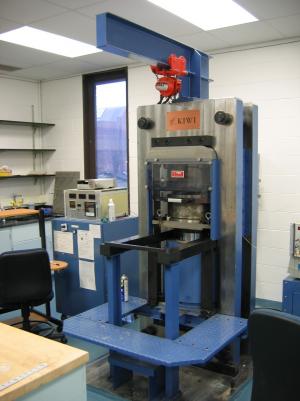
Shun-ichiro Karato is a Professor of Earth & Planetary Sciences at Yale University, affiliated with the Department of Geology and Geophysics. His research focuses on high-pressure materials science, mantle dynamics, and planetary evolution. He leads experimental studies using advanced facilities like the 1000-ton Kawai-type Multi-anvil Apparatus and field-emission SEM with EBSD for microstructural analysis. Education: PhD in Geophysics, University of Tokyo, 1977 MSc in Geophysics, University of Tokyo, 1974 BSc in Geophysics, University of Tokyo, 1972 His research interests include water distribution in planetary interiors, deformation mechanisms of mantle minerals, and the role of volatiles in Earth’s dynamics. He collaborates across disciplines to integrate experimental, theoretical, and observational approaches. Recent work explores hydrogen dissolution in bridgmanite, mantle rheology under high pressure-temperature conditions, and the implications of seismic anomalies for mantle structure. Labs/Facilities: Karato oversees cutting-edge facilities enabling high-pressure/temperature experiments, including rotational Drickamer apparatuses and synchrotron-based deformation studies. These tools support investigations into phase transitions, deformation mechanisms, and melt localization in the mantle. Teaching: Teaches courses like Introduction to Earth Materials (G&G 319/519), Deformation of Earth Materials (G&G 450/650), and Seminar on Mantle and Core Geophysics (G&G 744).
Eva-Maria Ahrer is a postdoctoral researcher in the Atmospheric Physics of Exoplanets department, focusing on exoplanetary atmospheres and data analysis techniques for space-based telescopes like JWST and HST. Her work bridges observational astronomy with computational methods to advance planetary science. Her research spans exoplanet atmospheric characterization , planetary formation models , and JWST spectroscopic data analysis . Key projects include the BOWIE-ALIGN comparative survey and the KRONOS initiative, emphasizing the link between migration history and atmospheric composition. Recent publications highlight her contributions to understanding hot Jupiter alignment , metallicity , and chemical signatures using JWST’s NIRSpec and NIRISS instruments. She co-developed the open-source Eureka! pipeline for time-series observations and advocates for equity in STEM through the Equitea forum.
Dr. Philip Carter is a Senior Research Associate at the School of Physics, University of Bristol. His work focuses on astrophysics, planetary science, and cosmochemistry, with a particular emphasis on giant impacts, exoplanet formation, and collisional processes in protoplanetary disks. Current affiliation: University of Bristol Academic rank: Researcher Research interests include the thermodynamics of planetary collisions, atmospheric loss in exoplanets, formation of chondritic mixtures via impact vaporization, and the role of debris disks in planet evolution. His work combines computational modeling with observational data analysis from surveys like SDSS and TESS. Recent publications (2023-2025) explore topics such as the IVANS model for chondrule formation, super-Mercury creation via impacts, and atmospheric loss mechanisms in Super-Earth collisions. These studies highlight his expertise in impact physics and planetary composition. He has contributed datasets to Harvard Dataverse, including replication data for "Did Earth eat its leftovers?" and "Colliding in the shadows of giants." Dr. Carter collaborates internationally, with research themes centered on protoplanet collisions and nebular shocks.
Associate Professor Olivier Alard is a Geochemistry faculty member at the Research School of Earth Sciences (RSES) at ANU. He holds concurrent roles as Honorary Associate Professor at Macquarie University (2023–2028) and Research Director (DR2) at CNRS-Géosciences Montpellier. His research focuses on mantle processes, geochemical tracers, and planetary materials. Key areas include peridotite petrology, isotope systematics, and trace element geochemistry. He leads projects such as the ANU Futures 2022 initiative and the AusGeoChem data platform. Education: PhD from Macquarie University (Australia) and HDR from Université de Montpellier (France). Research interests span mantle dynamics, fluid-rock interactions, and extraterrestrial materials. Notable work includes studies of kimberlite xenoliths, subduction zone geochemistry, and meteorite composition. He supervises HDR students and collaborates internationally on projects like the Wet but Dry Mantle hypothesis and metallogenic processes in oceanic lithosphere. Recent publications address metasomatic controls in clinopyroxene xenocrysts, nitrogen recycling in subduction zones, and Rb-Sr geochronology advancements. His work integrates experimental petrology, isotope analysis, and novel analytical techniques to unravel Earth's deep processes and planetary formation histories.
James Owen is a Reader in Astrophysics at the Department of Physics within the Faculty of Natural Sciences at Imperial College London. He holds a Senior Royal Society University Research Fellowship and previously served as a Hubble Fellow at the Institute for Advanced Study in Princeton and a CITA Fellow in Toronto. His research focuses on planet formation, extrasolar planets, and accretion disc physics, with particular emphasis on atmospheric escape mechanisms and protoplanetary disc structures. He is affiliated with the Astrophysics Group and the Physics Permanent Researchers at Imperial College. His key research interests include understanding how close-in super-Earths and mini-Neptunes form and evolve under intense stellar irradiation, driving atmospheric evaporation. He also investigates structures in protoplanetary discs observed via high-resolution imaging, linking these to planet formation processes. His work combines analytic theory and simulations to study hydrodynamic instabilities and disc dynamics. Notable awards include the Hubble Fellowship and CITA Fellowship. His recent work highlights the role of disc photoevaporation on giant planet migration and the observational signatures of embedded planets. He actively contributes to missions like JWST and UV-SCOPE for exoplanet characterization. Key affiliations: Astrophysics Group, Physics Permanent Researchers, Physics of Universe Labs: Blackett Laboratory at South Kensington Campus Future research directions include analyzing the growing dataset of protoplanetary discs and advancing models of exoplanet atmospheric evolution through neural network emulations.