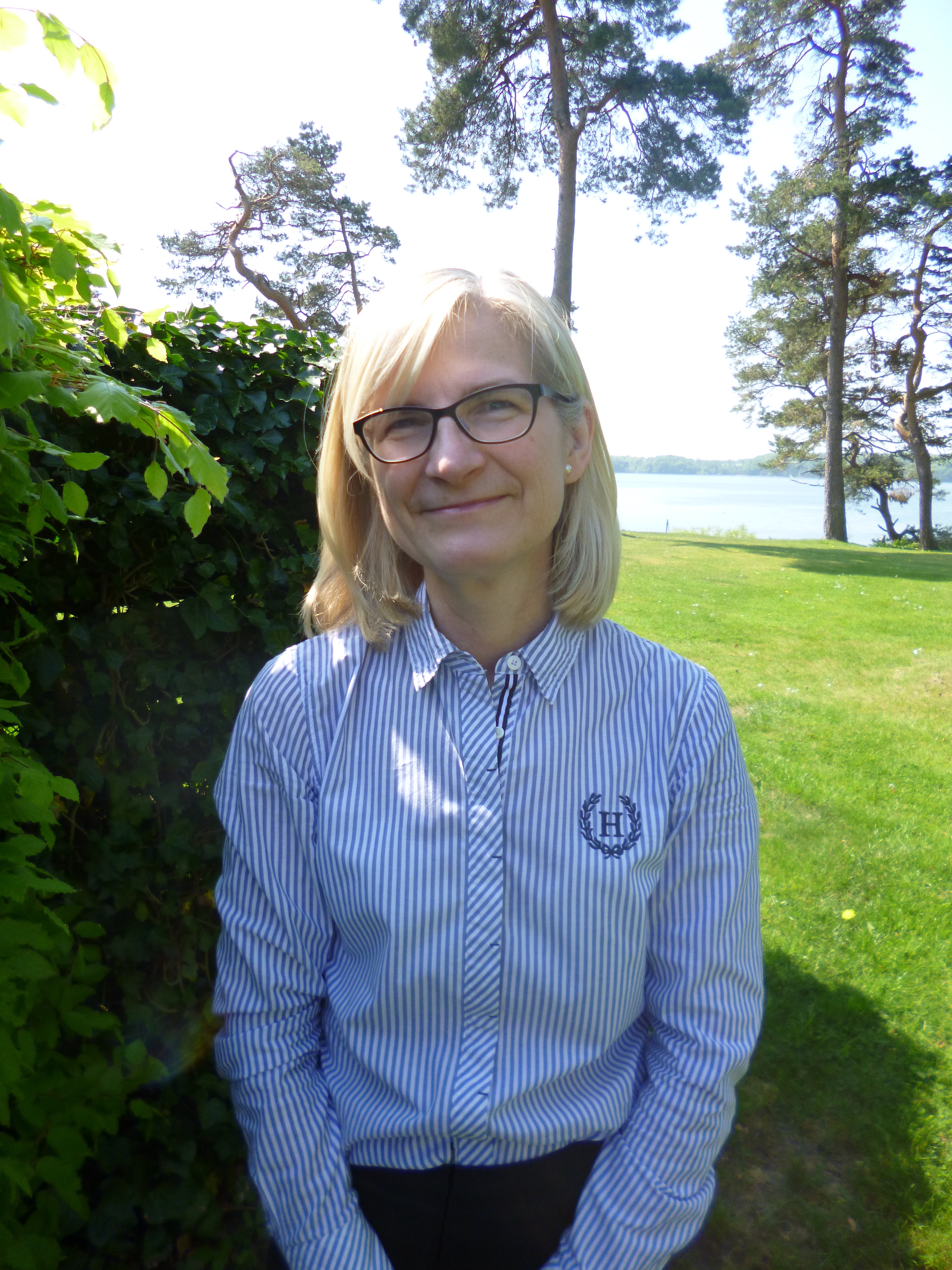
Jiri Srba is a Professor at Aalborg University's Department of Computer Science, part of the Technical Faculty of IT and Design. He leads research in the Distributed, Embedded and Intelligent Systems group and contributes to projects like "ControLing wAter In an uRban Environment" and "Collective Adaptive System SynThesIs using Non-zero-sum Games". His office is located at Selma Lagerløfs Vej 300, 9220 Aalborg Øst, Denmark. Contact him at +4599409851 or srba@cs.aau.dk. His core research focuses on formal methods and applied computer science: Model checking and verification of concurrent systems Petri nets and their applications Network protocol verification and synthesis Distributed system correctness Automated reasoning for industrial systems His publication record shows strong emphasis on network verification, model checking optimization, and applying formal methods to environmental systems. Recent work integrates computer science with sustainable engineering, particularly in water management systems and energy control.
Stephen Alstrup is a Professor in the Algorithms and Complexity section at the Department of Computer Science (DIKU), University of Copenhagen, Faculty of Science. His research bridges theoretical computer science with practical applications in modern computational challenges. His primary research interests include: Algorithm design and analysis Graph algorithms and data structures Big Data processing techniques Streaming algorithms and Internet distribution Theoretical foundations with practical implementations Alstrup's work demonstrates how theoretical algorithm research can lead to real-world applications, as evidenced by his development of Octoshape technology for large-scale Internet streaming. His research spans from fundamental theoretical problems to applications in Big Data, cloud computing, and information retrieval systems. He has published extensively with 93 research outputs including journal articles, conference proceedings, and books. His recent work focuses on graph spanners, semantic hashing, recommendation systems, and universal graph structures, showing continued productivity in theoretical computer science. Alstrup actively engages with industry and media, contributing to discussions about Big Data applications, technology innovation, and how businesses can collaborate with universities to access cutting-edge knowledge and funding opportunities. His work has been featured in 10 media contributions discussing practical applications of algorithms in education, municipal IT projects, and business innovation.
Christian Rønn Hansen is an Associate Professor at the Department of Clinical Research, University of Southern Denmark , specializing in radiation therapy and oncology. His work spans head and neck cancer, prostate cancer, and glioma treatment planning, with a focus on advanced radiation techniques like VMAT, IMRT, and hypofractionation. Academic Affiliation : Department of Clinical Research, University of Southern Denmark Research Collaborations : KI (Karolinska Institute), OUH (Odense University Hospital), Danish Head and Neck Cancer Group (DAHANCA) Research Interests : Christian's research integrates artificial intelligence with magnetic resonance imaging for treatment adaptation, clinical trial quality assurance for radiation therapy, and pattern of failure analysis in head and neck cancer. His work also addresses thromboembolic risk in glioma patients and proton therapy applications for grade 1–3 gliomas. Scientific Contributions : His recent publications include systematic reviews on loco-regional failure patterns in head and neck cancer (2025), national data solutions for radiation oncology (2025), and AI-driven prostate volume analysis in hypo-fractionated radiotherapy (2025). He contributed to the 2023 ACTA ONCOLOGICA AWARD-winning work and leads discussions on international radiotherapy quality assurance standards. Scientific Awards : ACTA ONCOLOGICA AWARD (2023)
Anne Elisabeth Haxthausen is an Associate Professor at the Software Systems Engineering section within DTU Compute , Technical University of Denmark . Her work focuses on formal methods, railway control systems, and safety-critical software engineering. Founder and leader of the DTU Railway Verification Group Member of European Technical Working Group on Formal Methods in Railway Control Editorial board member for Springer Formal Aspects of Computing Journal Active in the Overture Language Board Her research emphasizes formal verification of railway interlocking systems, particularly through compositional approaches and automated tools. She has contributed to projects like RobustRailS, Overture, and RAISE, focusing on model-based development and verification. She serves as a tutor for bachelor students and contributes to the advisory committee for DTU's Computer Science and Engineering MSc program. Her recent publications explore challenges in verifying autonomous and AI-driven railway technologies.
Diego F. Aranha is an Associate Professor in the Department of Computer Science at Aarhus University . His research focuses on cryptographic systems, cybersecurity, and privacy-preserving technologies with applications in voting systems, post-quantum cryptography, and secure computation. He has contributed extensively to homomorphic encryption, secure multiparty computation (MPC), and cryptanalysis of cryptographic implementations. Key projects include: MPCC (2025-2028) : Multi-Party Computation in the Confidential Cloud SCI (2024-2027) : Secure Computation Infrastructures for the Retail Industry RENAIS (2021-2026) : Residue Number Systems for Cryptography His work emphasizes practical efficiency and formal verification of cryptographic protocols. Recent publications highlight advancements in lattice-based cryptography, secure voting schemes, and mitigating side-channel vulnerabilities in post-quantum algorithms. He actively collaborates on open-source cryptographic libraries and standards, with a focus on bridging theoretical security and real-world implementation challenges.
Tijs Slaats is an Associate Professor in the Software, Data, People & Society section at the Department of Computer Science, University of Copenhagen. His research focuses on Business Process Management with particular emphasis on declarative and hybrid process notations to provide flexible workflow support for knowledge workers, funded by the Danish Council for Independent Research. His educational background includes: M.Sc. in Information Technology from IT University of Copenhagen Ph.D. in Computer Science from IT University of Copenhagen (supervised by Thomas Hildebrandt) Dr. Slaats specializes in declarative process modeling, particularly Dynamic Condition Response (DCR) graphs which enable flexible workflow systems. His work bridges theoretical foundations with practical applications in cross-organizational settings. Recent research extends into blockchain technologies, smart contracts, and applications in sensitive domains like asylum processing and refugee law. He combines formal methods with empirical evaluation to ensure both correctness and usability of workflow systems. His publication pattern shows increasing application of process mining techniques to blockchain technologies and socially impactful domains, while maintaining core research in Business Process Management. Notable trends include integration of DCR graphs with smart contracts, privacy-preserving techniques for asylum data, and object-centric approaches to process discovery. Research funding includes: Hybrid Business Process Management Technologies project (Danish Council for Independent Research) Technologies for Flexible Cross-organizational Case Management Systems (FLExCMS) industrial Ph.D. project Alongside his academic work, Dr. Slaats maintains strong industry connections through Exformatics A/S where he developed the DCR Graphs workflow solution (www.dcrgraphs.net), and previously worked as a software engineer in the Dutch e-commerce sector. His dual expertise in academia and industry ensures his research addresses real-world workflow challenges while maintaining theoretical rigor.
Dr. Rosario Giustolisi is an Associate Professor in the Department of Computer Science at the IT University of Copenhagen . His research centers on computer security with a focus on cryptographic protocols for decision systems (e.g., voting and exams), automated security analysis, accountability frameworks, and sociotechnical security aspects. Before joining ITU, he held postdoctoral roles at SICS RISE and Lund University, Sweden, and earned his PhD from the University of Luxembourg with work on secure exam protocols, culminating in his book Modelling and Verification of Secure Exams (Springer, 2018). Research Trends: His 15 most recent articles (2016–2025) span cryptographic protocol design, coercion-resistant voting/exams, zk-SNARK applications, differential privacy, automated security analysis, and sociotechnical threat modeling. Key subfields include secure decision systems, privacy-preserving mechanisms, and formal verification. Scientific Awards: Best Paper Award, NordSec 2017 Best Paper Award, SECRYPT 2014 Villum Experiment Grant (Sole PI) 2020 ICT TNG Postdoc Grant (Sole PI) 2016 CSC Best PhD Thesis Award 2016 Acknowledgments from Apple for Security Advisory Professional Service: Organized cybersecurity breakfast talks at ITU and served on conference committees for ACM SAC (Security track), STAST, E-VOTE ID, and NordSec. He also contributed as a journal referee and sub-reviewer for multiple conferences.
Carsten Schürmann is a Professor of Theoretical Computer Science at IT University of Copenhagen, where he serves as Center Manager for the Center for Information Security and Trust. His research spans information security, cryptographic voting protocols, identity management, and digital democracy, with significant contributions to security ceremonies and formal verification of protocols. Professor, Department of Computer Science Center Manager, Center for Information Security and Trust Principal Investigator for multiple DIREC projects through 2025 Active researcher with 64 publications and 20 projects listed His research focuses on the intersection of theoretical computer science and practical security challenges, particularly in voting systems and security ceremonies. Schürmann has developed formal methods for analyzing security protocols, with emphasis on human factors in security implementations and cryptographic voting systems. His work bridges logical frameworks with real-world security applications, addressing both technical and socio-technical aspects of security. Analysis of his recent publications reveals a strong emphasis on voting security, with multiple papers on risk-limiting audits, receipt-free voting, and election integrity. His work increasingly incorporates formal logical frameworks to verify security properties, while also addressing human factors in security ceremonies. The research spans theoretical foundations in linear logic to practical applications in election systems. As Principal Investigator, Schürmann leads several major projects funded by the Innovation Fund Denmark, including DIREC initiatives focused on Capacity Building, PhD School, Voting, and Entrepreneurship (2020-2025). He has also established working groups in Adversarial AI and Machine Learning. Organized workshops on Code Scanning (2014) and Verifying Security Protocols in Tamarin (2016) Active media commentator on security issues with 311 media appearances through 2025 Principal Investigator for 7 ongoing and 13 completed research projects Schürmann directs the Center for Information Security and Trust, which serves as a hub for interdisciplinary security research connecting theoretical computer science with practical security applications. His center focuses particularly on voting systems security and security ceremonies, bringing together researchers from multiple disciplines to address complex security challenges.
Omry Ross is an Associate Professor at the Department of Computer Science, University of Copenhagen. His research focuses on Programming Languages and Theory of Computation, with significant contributions to decentralized finance (DeFi), blockchain technology, and algorithmic governance. Research Interests: Decentralized Finance (DeFi) and Smart Contract Systems Blockchain Protocol Design and Cryptoeconomics Programming Language Theory and Formal Verification Token Governance in Decentralized Autonomous Organizations (DAOs) Algorithmic Game Theory and Market Mechanisms Recent publications highlight his work in AI moderation of online communities, compliance reporting in DLT systems, and MEV optimization in multi-block scenarios. His research bridges theoretical computer science with practical applications in financial cryptography. Scientific Awards: Nasdaq Nordic Foundation Grant (2021) Omry Ross collaborates extensively with researchers in blockchain and DeFi, including contributions to the Financial Cryptography and Data Security workshops.
Dr. Daniel Malz is an Assistant Professor at the Department of Mathematical Sciences, University of Copenhagen. His research focuses on quantum many-body systems, quantum optics, and quantum computing, with affiliations to research groups QA, QMATH, and QfL. His work bridges theoretical physics and mathematical modeling, addressing topics like superradiance, entanglement dynamics, and quantum state preparation. Key research interests include quantum information theory, non-Markovian dynamics, and the development of efficient quantum simulation techniques. His recent publications explore advanced topics such as photonic cluster states, tensor network simulations, and cross-platform quantum network verification. Much of his work addresses foundational questions in quantum mechanics while maintaining practical relevance for quantum technologies. His contributions span both theoretical derivations and numerical methods, with a focus on bridging classical and quantum many-body dynamics.
Brian Nielsen is an Associate Professor at Aalborg University's Department of Computer Science, under The Technical Faculty of IT and Design. His research focuses on Distributed Systems, Embedded Systems, Real-Time Systems, Model Checking, IoT Networks, and Autonomous Vehicles. He has been actively involved in projects such as domOS (operating system for smart buildings), FED (Flexible Energy Denmark), and compositional verification of multicore avionics systems. His work emphasizes model-based validation, formal methods, and industrial applications, particularly in safety-critical systems. Recent research highlights include energy-efficient motion planning for autonomous vehicles, comparative analysis of network simulators, and sigfox-based IoT modeling. He has received awards including the Application Coordinator Pool and START funds (both in 2007). Key Projects: domOS, FED, compositional verification of multicore systems Grants: Multiple EU-funded projects (e.g., Horizon Europe) and industry collaborations Awards: Application Coordinator Pool (2007), START funds (2007) His publications span over 80 articles, with a focus on real-time systems, IoT interoperability, and model-driven development. He has advised two PhD students and has been actively involved in organizing international conferences and workshops.
Christian Majenz is an Associate Professor in the Department of Applied Mathematics and Computer Science at the Technical University of Denmark (DTU), where he is affiliated with the Cybersecurity Engineering group and the Center for Quantum Technologies. His work bridges theoretical computer science and quantum cryptography, focusing on the security of cryptographic primitives in the post-quantum era. Institution: Technical University of Denmark (DTU) School: College of Engineering Department: Department of Applied Mathematics and Computer Science Research Groups: Cybersecurity Engineering, Center for Quantum Technologies His research centers on the foundations of post-quantum cryptography, particularly the Fujisaki-Okamoto transform, security in the presence of decryption failures, and quantum query models. He investigates how classical cryptographic constructions withstand quantum adversaries, using tools from complexity theory and information-theoretic security. His work often involves formal security proofs in idealized models such as the random oracle model and quantum superposition oracles. The recent articles reflect a strong trend in analyzing the robustness of post-quantum encryption schemes, especially under active quantum attacks and imperfect implementations. Topics include re-encryption attacks, worst-case correctness, round elimination in identification schemes, and quantum lower bounds via permutation oracles. His publications span high-impact conferences like Eurocrypt, STOC, and Crypto, as well as journals such as Physical Review A, demonstrating interdisciplinary reach across computer science and quantum physics. Christian Majenz actively supervises multiple PhD students in projects related to quantum-safe cryptology, including post-quantum key agreement, extractability, SHA-3 security, and key encapsulation mechanisms. He leads several funded research projects at DTU, focusing on efficient and provably secure post-quantum cryptographic protocols. While no specific grants or external funding bodies are named in the text, the structured PhD projects indicate institutional or national support. He is involved in academic activities such as organizing workshops, including 'Quantum Techniques for Provable Security' in October 2021, contributing to community engagement in quantum cryptography. There is no mention of teaching awards, fellowships, or scientific honors in the provided text.
Shikai Liu is a Postdoctoral Fellow at the Niels Bohr Institute, University of Copenhagen, specializing in Quantum Optics and Photonics within the Quantum Optics research group. His position is housed at the institute's main campus in Copenhagen Ø (Blegdamsvej 17). Dr. Liu's research centers on fundamental quantum phenomena with emphasis on quantum entanglement verification and light-matter interactions. His work bridges theoretical frameworks with experimental implementations in quantum photonics, specifically investigating how photon scattering on quantum emitters can violate Bell inequalities—a cornerstone test for quantum nonlocality. This research directly impacts quantum communication protocols and quantum computing architectures by providing new experimental pathways for generating and verifying entangled states. His landmark 2024 Nature Physics publication demonstrates a novel experimental violation of Bell inequalities through photon scattering on a two-level emitter, representing a significant advancement in quantum foundations. The work has generated substantial scholarly attention with 43 Mendeley readers, coverage in 4 news outlets, social media engagement across 13 X posts and Reddit, plus academic discussion in specialized blogs. The research is conducted within the Quantum Optics section of the Niels Bohr Institute, which maintains cutting-edge experimental facilities for quantum photonics including single-photon sources, cryogenic setups, and quantum emitter characterization systems. The group actively collaborates with international quantum technology initiatives and semiconductor nanofabrication centers.
Affiliations & Roles Michele Albano is an Associate Professor at the Department of Computer Science, Aalborg University, Denmark. He is affiliated with The Technical Faculty of IT and Design, focusing on research in IoT, Cyber-Physical Systems, and Edge Computing. He leads the Productive4.0 project (2017–2020), funded by Horizon Europe, addressing Industry 4.0 challenges in product lifecycle management. His work integrates formal verification tools like Uppaal with real-world applications in robotics, energy systems, and blockchain-based platforms. Research Interests Albano's research spans IoT architecture optimization , energy-efficient systems , and model-driven engineering . He develops tools for autonomous exploration algorithms (MAES), edge-cloud resource orchestration, and fault-tolerant computation offloading. His work bridges theoretical models (e.g., Uppaal SMC) with practical implementations in smart grids and robotic systems. Recent projects include blockchain-based crowdsourcing for machine learning and energy-aware thermal dynamics estimation in buildings. Collaborations & Impact He collaborates with the European Industry 6.0 community, contributing to the Arrowhead Framework for interoperable IoT systems. His research outputs include 112 publications, with 2025 highlights in human-inspired robotics and cognitive cloud frameworks. Media coverage in 2024–2025 highlights his work on green IT and secure API generation. Albano advises students on system modeling (e.g., ACSmt plugin development) and edge computing optimization. Labs & Teams His research group focuses on Cyber-Physical Systems and Smart Grids , with contributions to tools like RoutesMobilityModel and FlexHousing. He actively participates in workshops on New Trends in Software Architecture (SATrends '24) and IEEE conferences on Industrial Informatics.
Edlira Dushku is a Tenure Track Assistant Professor at the Department of Electronic Systems, Aalborg University (Denmark), affiliated with the Cyber Security Group. She holds a PhD in Computer Science from Sapienza University of Rome and has held postdoctoral positions at DTU Compute, Denmark. Her research focuses on IoT Security, Cybersecurity, Blockchain, and Fog Computing, particularly in remote attestation and hardware security. Education: 2023: University Pedagogical Programme, Aalborg University 2016–2020: PhD in Computer Science, Sapienza University of Rome 2013: MSc in Computer Science, University of Tirana 2010: BSc in Computer Science, University of Tirana Research Interests: Dr. Dushku specializes in securing IoT devices and distributed systems through remote attestation, blockchain applications, and machine learning-based security. She explores challenges in fog computing, PUF protection, and adversarial defense mechanisms. Her work emphasizes trust management and public verifiability in IoT ecosystems. Teaching: She teaches courses like Security in IoT and Cloud Architectures (MSc) and Computer System Security (BSc) at Aalborg University. Previously, she was an academic supervisor for students with special needs at DTU. Grants & Projects: Coordinator of the EUopStart proposal for MSCA (2024) Guest editor for MDPI Sensors Special Issue on IoT Security Program chairs for multiple conferences (e.g., FMEC 2021) Lab & Collaborations: Collaborates with industry partners like Terma and Develco Products, focusing on applied IoT security solutions. Her work bridges academia and industry through co-supervised theses and real-world system implementations.