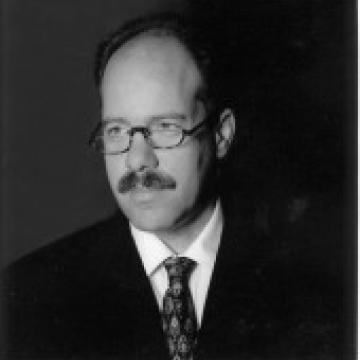
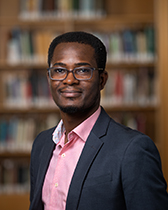
Walter Armbrust is a Professor of Modern Middle Eastern Studies at the University of Oxford, affiliated with the Faculty of Asian and Middle Eastern Studies and St Antony's College. His research focuses on the intersection of mass media, popular culture, and political dynamics in the Middle East, with a particular emphasis on Egypt. Key research areas: Mass media, popular culture, revolutions, anthropology, neoliberalism Current projects: Cultural analysis of post-Mubarak Egypt and historical studies of new media in Egypt (1919-1975) Armbrust explores how media and cultural production reflect and shape political movements, including the January 25th Revolution. His work spans film, television, literature, and digital platforms, emphasizing the role of symbolic narratives in societal change. Recent publications analyze counter-revolutionary dynamics, neoliberalism, and Islamic cultural representation. He teaches undergraduate and graduate courses on topics including popular culture, social anthropology, and mass media in the Middle East. His academic contributions are linked to Oxford's Middle East Centre and interdisciplinary collaborations.
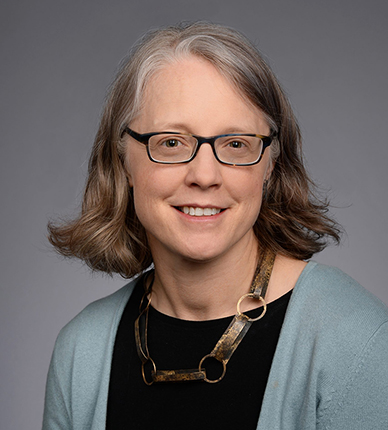
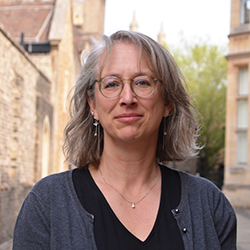
Kristin Schwain is a Professor in the Department of Art History at the University of Missouri's School of Visual Studies. She holds a PhD in Art History and Humanities from Stanford University and a BA in Art History and Humanities from Valparaiso University. Her interdisciplinary research examines marginalized objects and practices in American art history, emphasizing their cultural significance through lived experience. Her educational background includes: PhD in Art History and Humanities, Stanford University BA in Art History and Humanities, Valparaiso University Dr. Schwain's research centers on American Material and Visual Culture, Art and Religion, Arts of the African Diaspora, and Public Humanities. She investigates overlooked artifacts to reveal their influence on everyday life, challenging assumptions about modernization's impact on religious expression. Her work bridges historical analysis with contemporary relevance through studies of traditional craft, artist books, photojournalism, and mass-produced objects as lenses into social practices. Her recent publications demonstrate consistent focus on art-religion intersections in American cultural history, from Henry Ossawa Tanner's biblical paintings to Afro-Cuban religious themes in Ediciones Vigía artist books. This body of work reveals evolving methodologies for uncovering marginalized narratives through interdisciplinary frameworks spanning visual culture, material studies, and diaspora scholarship. Her scholarly recognition includes: First Biennial National Basketry Association Book Award for Rooted, Revived, Reinvented: Basketry in America Dr. Schwain has secured major grants from the Smithsonian Institution, Luce/American Council of Learned Societies, Center for the Study of Religion and American Culture, and Georgia O’Keeffe Museum Research Center. Her collaborative public humanities projects with the Missouri School of Journalism's Pictures of the Year International and Scruggs-Vandervoort-Barney department store collection demonstrate institutional partnerships that translate academic research into community engagement. She actively collaborates with the Museum of Art and Archaeology at the University of Missouri on exhibitions like Rooted, Revived, Reinvented: Basketry in America and Juan Roberto Diago: Foraged Materials, Assembled Histories , fostering cross-generational dialogues through multi-venue traveling shows and digital initiatives including The iCatalog .
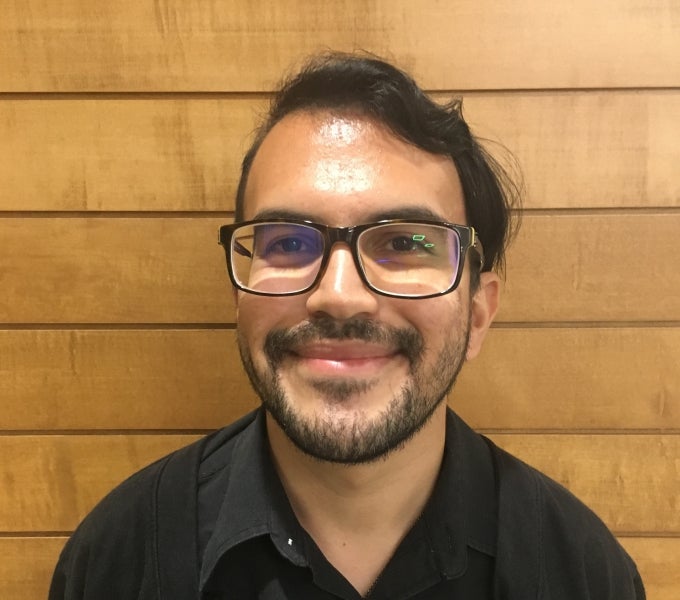
Elias Chavarria Mora is a Lecturer at the School of Political Science, University of Costa Rica, and a PhD candidate in Political Science at the University of Pittsburgh (expected 2025). He focuses on comparative political behavior and Latin American politics , with regional expertise in Central American electoral systems and party politics . Education: PhD in Political Science (2025, University of Pittsburgh) M.A. in Political Science (2020, University of Pittsburgh) Licentiate in Political Science (2017, University of Costa Rica) B.A. in Political Science (2015, University of Costa Rica) His research investigates social media's role in elections , ideology , and unconventional political participation . He employs data science methods , including text analysis, spatial econometrics, and machine learning. Recent publications analyze political education curricula , data protection laws , and electoral dynamics in Latin America. His work appears in journals like Latin American Politics and Society and Revista Latinoamericana de Opinión Pública . He coordinates the Observatorio de la Política Internacional Sergio Iván Moya Mena at the University of Costa Rica and has collaborated with the University of Salamanca's Parliamentary Elites in Latin America Observatory.
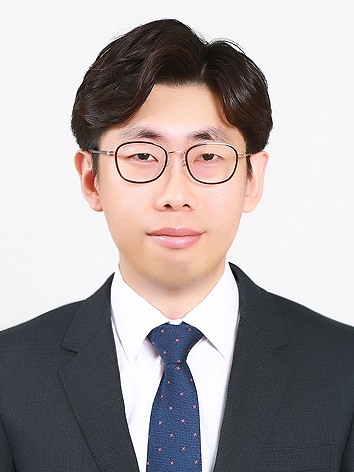
Inho Hong is an Assistant Professor at the Graduate School of Data Science, Chonnam National University (Gwangju, Korea), leading the Computational Social Science and Complex Systems Lab (CSL). His research explores socio-spatial systems through data science and complex systems methods, focusing on urban dynamics, human mobility, and AI's societal impact. Education: Ph.D. in Physics (2019), Pohang University of Science and Technology (POSTECH) M.S. in Physics (2012), POSTECH B.S. in Physics (2010), POSTECH Research Interests: Urban Data Science : Analyzing urban scaling laws and innovation pathways Human Mobility : Modeling intra-city movement patterns Social Impact of AI : Ethical and societal challenges Natural Language Processing : Text embedding for policy analysis Complex Systems : Network approaches to protests and epidemics Recent Work Trends: Over 2020–2022, his articles centered on pandemic control, protest networks, and urban green spaces' psychological impact. Recent 2023–2025 work extends to vocational education analysis and mobility laws within cities. His methods combine network science with large-scale data analytics. Awards: Young Statistical Physicist Award (Korean Physical Society, 2021) Best Paper Award (Korea Computer Congress 2021) Global Ph.D. Fellowship (NRF, 2014–2017) Grants & Labs: Current lab focuses on socio-spatial systems. Past roles include Associate Research Scientist at Max Planck Institute for Human Development (2020–2023) and Postdoctoral Fellowships at POSTECH and APCTP.
Judit Bodnar is a Professor in the Department of Sociology and Social Anthropology at Central European University (CEU), affiliated with the Doctoral School of History. Her research spans urban theory, political economy of globalization, public space, and the cultural dimensions of capitalism. She actively contributes to academic discourse through publications and editorial roles. Research Interests: Urban theory and history Modernity and capitalism (comparative and historical) Uneven development Public space and public art Political economy and culture of globalization Sharing economy and digital platforms Food and politics Her recent work focuses on the transformation of public and private boundaries in the context of digital platforms like Airbnb and home restaurants, as well as the racial and spatial segregation of Roma communities in urban Europe. She critically examines the legacies of 1968 as a global moment and the gentrification of urban spaces such as Chicago’s Cabrini Green. The publication trends reflect a deep engagement with urban sociology, political economy, and cultural critique, especially in the context of neoliberalism, digital transformation, and global inequality. Her work bridges historical analysis with contemporary urban challenges. Editorial Role: Co-editor, Critical Historical Studies , University of Chicago Press Academic Events: Privacy Goes Public: Airbnb, Home Restaurant and the Reconfiguring of Public and Private in the Sharing Economy (November 24, 2021) Racial Cities: The Segregation of Roma in Urban Europe (October 5, 2017) She advises doctoral students in the Doctoral School of History and supervises research on urban and historical sociology. Her work is supported by interdisciplinary collaborations and engagement with global scholarly networks. She is involved in critical urban research, often linking theory with social justice concerns. Labs and Research Groups: Active participant in urban sociology and globalization research clusters at CEU Contributor to transnational dialogues on the right to the city and urban commons
Dinah Ribard is a Director of Studies at the École des Hautes Études en Sciences Sociales (EHESS), working within the Centre de Recherches Historiques (CRH). She serves as Center Director for the GRIHL (Groupe de recherche interdisciplinaire sur l'histoire du libéralisme) research group. Her academic career has been dedicated to the historical study of work, intellectual practices, and cultural production from the early modern period through the 19th century. Ribard completed her thesis in December 2000 at the University of Paris III - Sorbonne Nouvelle under the direction of Alain Viala, entitled "Live Tell Think. Research on the literary status of the philosopher: the Lives of philosophers in France 1650-1766." She was formerly a student at the École Normale Supérieure (Ulm) and holds a degree in Modern Literature. Prior to her position at EHESS, she served as an ATER (Attaché Temporaire d'Enseignement et de Recherche) at Paris III University from 1999 to 2001 and taught at Lycée Jacques-Feyder in Epinay sur Seine from 2001 to 2003. Ribard's research focuses on the history of work from multiple perspectives - examining both intellectual work (1600-1900) and material labor. She investigates how work has been conceptualized, narrated, and institutionalized throughout history. Her work explores the relationship between knowledge production and labor, analyzing how different professions and social statuses have shaped intellectual and cultural practices. She examines the historical construction of disciplines, professions, and social classifications, with particular attention to how writing practices intersect with work identities. Her recent publications reveal a consistent focus on the relationship between writing, work, and social identity across the early modern and modern periods. Ribard's scholarship demonstrates how textual practices were embedded in specific work contexts, from artisanal workshops to academic institutions. Her work shows how literary forms were used to construct professional identities and how writing practices served as forms of political action. She has made significant contributions to understanding the historical relationship between intellectual labor and material production. Ribard has published extensively, including the notable 2023 book "Le Menuisier de Nevers. Poésie ouvrière, fait littéraire et classes sociales (XVIIe-XIXe siècle)" which examines how working-class poetry was historically constructed and marginalized. Her scholarship challenges traditional literary classifications and reveals how social categories have been historically produced through cultural practices. As Director of Studies at EHESS, Ribard supervises doctoral students and contributes to the academic training of historians. She co-responsible for the Grihl seminar and teaches courses at EHESS on topics including "Writings of the Past. Literature and History: Methods, Theories, Fields" and "History and stories of work." Her teaching reflects her research interests in the intersection of literary practices, historical methodology, and social analysis. Within the CRH, Ribard is affiliated with the GRIHL research group, which focuses on the interdisciplinary history of liberalism. Her work bridges historical, literary, and sociological approaches to understanding the development of social and intellectual categories. Through her research, teaching, and institutional leadership, Ribard has made significant contributions to the historical understanding of work, knowledge production, and cultural classification.
Prof. Cornelia Richter is a Professor of Systematic Theology and Hermeneutics at the Protestant Theological Faculty of the University of Bonn since 2012. She serves as Chair of the Senate of the University of Bonn since 2024 and has held leadership roles such as Dean of the Faculty of Protestant Theology (2020–2024). Born in 1970, she earned her doctorate (summa cum laude) from the University of Marburg in 2002 and habilitation in 2010. Her research focuses on Philosophy of Religion, Hermeneutics, and Resilience in Religion and Spirituality, notably leading the DFG-funded project FOR 2686. She has held visiting professorships in Zurich and Giessen and contributed to theology through editorial roles in journals like International Journal of Philosophy and Theology . Her work bridges theology with interdisciplinary studies, addressing modern challenges like pandemic resilience and interfaith dialogue. Education: PhD (2002), Habilitation (2010) – University of Marburg Studies in Protestant Theology and Philosophy – Universities of Vienna and Munich Research Fellowship – Center for Subjectivity Research, Copenhagen (2003–2005) Research Interests: Her work explores hermeneutical approaches to religious meaning, resilience in crises, and the interplay between theology and modern challenges. Key areas include: - Critical analysis of resilience frameworks in theology and philosophy - Theological engagement with modern existential issues (e.g., hope, fear, powerlessness) - Interdisciplinary dialogue on religion’s role in human sciences. - Resilience studies in healthcare and pandemic contexts. Grants & Projects: DFG-FOR 2686 “Resilience in Religion and Spirituality” (2019–2022) Editorial leadership in multiple theological journals and book series Co-director of the Bonn Institute of Hermeneutics Labs/Teams: Department of Systematic Theology, University of Bonn; interdisciplinary research groups on resilience and theology.
Jennifer Pan is a Professor of Communication at Stanford University, with courtesy appointments in Political Science and Sociology. Her research bridges political communication, digital media, and authoritarian politics, focusing on how censorship, propaganda, and information manipulation operate in the digital age. She employs experimental and computational methods to analyze large-scale political activity datasets, exploring how authoritarian and democratic regimes shape public preferences and behaviors through digital strategies. Her work extends to algorithmic effects on political attitudes and cross-national media dynamics. Key research areas: Authoritarian resilience, digital repression, social media manipulation, censorship mechanisms, computational political communication Methodologies: Experimental design, big data analysis, computational modeling, field studies in authoritarian contexts Her recent publications examine topics like disguised repression through non-political legal actions, gender compliance in authoritarian settings, and algorithmic amplification of political news. These studies often utilize randomized experiments and social media platform data.
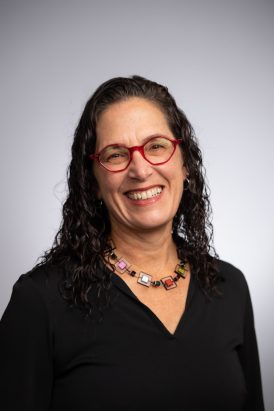
Sarah A. Soule is the Philip H. Knight Professor and Dean of Stanford Graduate School of Business and Morgridge Professor of Organizational Behavior. She has been a faculty member at Stanford since 2008 and previously taught at the University of Arizona and Cornell University. As of June 2025, she serves as the first woman dean of Stanford GSB, marking the school's centennial year. Her educational background includes a PhD and MA in Sociology from Cornell University (1995, 1991) and a BA in Sociology from the University of Vermont (1989). She has held significant leadership roles including Senior Associate Dean for Academic Affairs (2016-2023) and Director of the Center for Advanced Study in the Behavioral Sciences (2023-2025). Soule's research focuses on organizational theory, social movements, and political sociology, examining how social movements impact organizational and policy change. Her work bridges sociology and business, analyzing how protest influences corporate decisions and how organizations respond to social movement pressures. She has made significant contributions to understanding tactical innovation in social movements and the diffusion of protest strategies. Her scholarly output shows a consistent trajectory examining the intersection of social movements with business and policy. Early work focused on protest policing and movement tactics, while more recent research explores corporate activism, DEI initiatives, and the role of design thinking in organizational contexts. Her publications span top sociology and management journals, demonstrating interdisciplinary impact. Hank McKinnell-Pfizer Inc. Faculty Fellow, Stanford GSB, 2014 James and Doris McNamara Faculty Fellow, Stanford GSB, 2011 GSB Trust Faculty Fellow, Stanford GSB, 2010 Member, Sociological Research Association, 2009 Fellow, Michelle R. Clayman Institute for Gender Research, 2009 Magellan Circle Award for Excellence in Graduate Teaching, University of Arizona, 2006 Soule has served on multiple editorial boards including Sociological Science (founding team), Stanford University Press, and Cambridge University Press. She has advised numerous PhD students and has been actively involved in curriculum development, particularly in diversity, equity, and inclusion education. Her leadership extends to nonprofit boards including the Hasso Plattner Institute of Design (Stanford d.school) and the international advisory board to the president of the Stockholm School of Economics. She co-directs the Stanford LEAD Online Business Program and has developed executive education programs focused on coaching skills and diversity leadership.
Peter Gries is a Professor of Chinese Politics and the Lee Kai Hung Chair at the University of Manchester, serving as the founding Director of the Manchester China Institute. He previously held roles at the University of Oklahoma and the University of Colorado, Boulder. Born in Singapore, he holds degrees from Middlebury, the University of Michigan, and a PhD from UC Berkeley. His research focuses on political psychology, particularly U.S.-China relations and Chinese nationalism, with notable works including China’s New Nationalism and The Politics of American Foreign Policy . He leads initiatives like the UK-China International Photography Award and the UK-China Diplomatic Dialogue. His grants include funding from the Ford Foundation and Smith Richardson Foundation for projects on security dialogues and course development. He sits on editorial boards of The China Quarterly , Political Psychology , and Nations & Nationalism . Recent work explores racial stereotypes, intersectionality, and threat perception in international relations. Education : Bachelor's and Master's in Asian Studies from Middlebury and the University of Michigan PhD in Politics from UC Berkeley Research Interests : Political psychology of international affairs U.S.-China relations Chinese nationalism and foreign policy Public opinion dynamics Grants : $60,000 from Smith Richardson Foundation (2005–2006) Multiple grants from Ford Foundation and Mershon Center for Sino-American Security Dialogues $4,000 from Freeman Foundation for Chinese Foreign Policy course development Media Contributions : Expert commentary on BBC World News, NYT, and CGTN Discussions on U.S.-China trade wars, China’s Japan policy, and global perceptions of China Labs/Institutes : Manchester China Institute Former director of the Institute for US-China Issues at University of Oklahoma
Dotun Ayobade is an Assistant Professor of Performance Studies and Black Studies at Northwestern University. His research focuses on how embodied popular culture shapes community, justice, and activism in postcolonial West Africa, particularly examining the interplay of aesthetics and social performance in Nigeria. He holds a joint appointment across disciplines and has taught at the University of Texas at Austin and Brown University prior to Northwestern. His academic interests include African/Black Performance Theory, African Popular Culture, and the intersection of performance with postcolonial politics. He is currently completing a book on Nigeria’s Afrobeat Queens, analyzing their role in Fela Kuti’s music subculture, under contract with Indiana University Press. This work has earned him prestigious awards, including the University of Texas Continuing Fellowship and Brown University’s Salomon Award. His scholarly contributions span peer-reviewed journals like Dance Research Journal and Journal of African Cultural Studies , with articles exploring topics such as sonic embodiment in Nigerian music and the spatial poetics of protest. He also engages with public discourse through platforms like Africa is a Country , addressing issues like neoliberalism and cultural netizenship. Ayobade’s work bridges performance ethnography, gender studies, and postcolonial theory, emphasizing the agency of marginalized voices in shaping cultural narratives. His research integrates interdisciplinary methods to unpack how performance mediates between individual creativity and collective socio-political realities in Africa and its diasporas.
Sian Lazar is a Professor of Social Anthropology at the University of Cambridge, serving as Head of the Department of Social Anthropology and a Fellow at Clare College. Her research focuses on labor politics and social movements across Latin America, particularly within trade unions in Buenos Aires, Argentina, and collective mobilizations in El Alto, Bolivia. Research Interests include political anthropology, ethics and kinship in collective action, citizenship studies, and the anthropology of Latin America. She explores themes of labor agency, urban rebellion, and the interplay between state and non-state forms of political engagement. Recent Publications demonstrate a strong focus on labor organization in precarious economies, moral dimensions of political outrage, and comparative analyses of citizenship practices. Her work spans ethnographic studies of trade unions, indigenous movements, and the evolving role of infrastructure in political subjectivities. Teaching & Supervision at Cambridge includes courses on Social Anthropology, with a particular emphasis on labor, citizenship, and political movements. She supervises postgraduate students and contributes to the academic community through editorial and research leadership roles.
Joshua B. Guild is an Associate Professor in the Department of African American Studies at Princeton University. He is also an Associated Faculty member in the Program in Urban Studies and has been involved with the Center for Digital Humanities. His scholarly work bridges historical research with public engagement and digital innovation. His education includes a PhD in History and African American Studies from Yale University and an undergraduate degree from Wesleyan University, where he was a Mellon Mays Undergraduate Fellow. Professor Guild's research centers on 20th- and 21st-century African American social and cultural history, urban history, and the modern African diaspora. His interests include migration, black internationalism, black popular music, and the black radical tradition. He is deeply engaged in the digital humanities and public scholarship, organizing seminars and contributing to podcasts and public exhibitions. The recent publications and projects reflect a strong focus on urban Black communities, transnational migration, and cultural politics. Themes include the Great Migration, postwar New York and London, New Orleans after Katrina, and the Black 1980s. His work combines historical analysis with cultural critique and social justice advocacy. Scientific Awards and Fellowships: Mellon Mays Undergraduate Fellowship Andrew W. Mellon Foundation Fellowship Ford Foundation Fellowship Woodrow Wilson National Fellowship Foundation Award Charles Warren Center Fellowship (Harvard University) W.E.B. Du Bois Institute Fellow (Harvard University) Professor Guild has advised graduate students through seminars and collaborative projects, though no individual students are named. He has led initiatives supported by institutional grants, particularly in digital humanities and public engagement. His leadership in the 'Black Studies in the Digital Age' seminar and editorial work on the 'Black 1980s' special issue demonstrates his commitment to advancing the field through interdisciplinary collaboration. He is affiliated with the Program in Urban Studies and the Center for Digital Humanities at Princeton, where he contributes to shaping curricula and research directions in African American Studies and digital scholarship.
Pauline Jones is a Professor of Political Science at the University of Michigan (UM) and the Edie N. Goldenberg Endowed Director for the Michigan in Washington Program. She also founded and directs the Digital Islamic Studies Curriculum (DISC). Her research focuses on institutional change in Central Asia, state regulation of religion, and pandemic policy responses. She holds a Ph.D. (with distinction) from Harvard University. Education: Ph.D. (Government), Harvard University, with distinction M.S. (Government), Harvard University B.A. (Political Science and History), UC Berkeley, with honors Her research explores how state religious policies affect political attitudes, pandemic compliance behaviors, and historical memory's role in foreign aid support. She has authored five books, including Institutional Change and Political Continuity in Post-Soviet Central Asia and The Oxford Handbook on Politics in Muslim Societies . Current projects analyze protest impact on authoritarian policies and historical narratives' influence on foreign policy. She has held leadership roles at UM’s Islamic Studies Program (2011-14), International Institute (2014-20), and currently directs the Michigan in Washington Program. Affiliated with the Global Islamic Studies Center, Center for Political Studies, and Weiser Center for Emerging Democracies. Teaches courses on radical Islam, Central Asian politics, qualitative methods, and pandemic governance. Her work appears in American Political Science Review , Annual Review of Political Science , and Foreign Affairs .
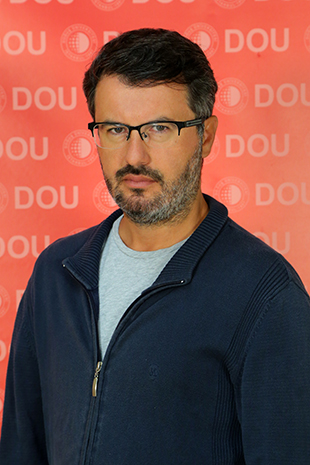
Prof. Dr. Barış ÇOBAN is a prominent academic and administrator at Doğuş Üniversitesi, serving as Dean of the Faculty of Arts and Sciences and Chair of the Department of Communication Sciences. He holds a PhD from İstanbul Üniversitesi (2004) and has held academic positions at multiple institutions since 1997, including roles as Assistant Professor at universities like Yeni Yüzyıl Üniversitesi and Okan Üniversitesi before becoming a full professor at Doğuş Üniversitesi in 2016. His academic journey also includes administrative roles like Dean (2018–present) and Department Chair at various institutions. His research focuses on alternative media, social movements, citizen journalism, and surveillance studies. Notable publications include works on digital journalism, Gezi Resistance activism, and counter-surveillance in Turkey. He has contributed to edited volumes such as Panoptikon 2.0 and Assault on Journalism , and his work frequently addresses media ethics, globalization impacts on communication, and the role of social media in societal change. Courses taught include 'Research in Mass Media,' 'Alternative Media,' and 'Media Ethics' in both Turkish and English. He has supervised over 10 master’s and doctoral theses on topics ranging from citizen journalism to media ethics in Turkey. His interdisciplinary approach bridges media theory with activism, emphasizing critical discourse analysis and media democratization efforts. Academic service includes roles on university boards, editorial work for journals like Communications , and contributions to international conferences on media freedom and journalist safety. His work highlights the intersection of technology, power dynamics, and media’s role in shaping societal narratives.