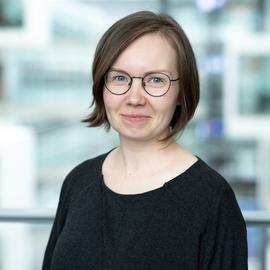
Dr. Amber Garcia is Professor of Psychology at the College of Wooster specializing in social psychology, gender studies, and prejudice. Her education includes a B.A. from Saint Mary’s College of California, M.A. from Claremont, and Ph.D. from Purdue University. Research examines stereotyping mechanisms, gender bias in hiring, LGBTQ+ perceptions, and interpersonal relationships. Publications demonstrate consistent focus on identity, discrimination, and social cognition across contexts like workplaces, healthcare, and education. No scientific awards documented. Extensive student mentorship includes advising 11 Independent Study projects (2021-2022) examining: Gender/ethnicity influences on stereotypes Childhood adversity impacts Body image mediators ADHD stigmatization Interracial relationship perceptions No laboratory affiliations reported.
Adam Berg is an Associate Professor in the Department of Kinesiology at the University of North Carolina Greensboro, where he also serves as Director of Undergraduate Studies. His research focuses on the intersections of American sport, culture, and politics, with a particular emphasis on Olympic history and the philosophical dimensions of sport. Berg holds a Ph.D. in Kinesiology from Pennsylvania State University and has taught at institutions including Penn State and Manhattanville College. Education: B.S. in Sport Management, Ithaca College M.A. and Ph.D. in Kinesiology (Sport History/Sport Philosophy), Pennsylvania State University Research explores topics such as Olympic resistance movements, sport ethics, and the philosophy of the body. His book The Olympics that Never Happened: Denver ’76 and the Politics of Growth (2023) examines how Colorado citizens rejected the 1976 Winter Olympics bid, reshaping urban and political landscapes. He has published widely in journals like Journal of Sport History and Journal of Sport and Social Issues , addressing themes like sport ethics, masculinity, and environmental activism. Professional roles include serving as Book Review Editor for Journal of Sport History and active membership in the North American Society for Sport History and International Association for the Philosophy of Sport.
Alison Novak is an Associate Professor in the Department of Public Relations and Advertising at Rowan University's Ric Edelman College of Communication & Creative Arts. She holds a Ph.D. in Communication, Culture, and Media from Drexel University. Her research focuses on digital activism, public policy, and media representation, with a particular emphasis on generational engagement, climate change communication, and social media influence. Dr. Novak has authored three books, including Media, Millennials, and Politics and The New Review Economy , and her work has been featured in Wired Magazine , NBC News , and BBC Radio . Her academic contributions include top paper awards from the International Communication Association (ICA) and the National Communication Association (NCA), as well as fellowships with the C-SPAN Archives and the Arthur W. Page Center. Her recent research explores offshore wind energy discourses, generational responses to climate change, and athlete activism in social justice movements. Dr. Novak teaches courses such as Public Opinion, PR Case Studies, and Graduate Strategic Communication, emphasizing practical and theoretical intersections in communication practices. Award Highlights: Top Paper Award at ICA (2020) Top Paper Award at NCA (2017) C-SPAN Archives Fellowship Arthur W. Page Center Fellowship Her work bridges academic research and real-world impact, addressing issues like digital review economies, policy debates on data privacy, and the role of social media in shaping public discourse. She actively collaborates with interdisciplinary teams and contributes to public dialogues on emerging communication challenges.
Swen Hutter is a Lichtenberg Professor of Political Sociology at Freie Universität Berlin and Director of the Center for Civil Society Research, a joint initiative with the WZB Berlin Social Science Center. His research bridges European politics and comparative political sociology, focusing on political conflict dynamics, civil society roles, and societal divides in European democracies. He holds a doctoral degree from Ludwig-Maximilians-Universität München (2011), recognized with the Munich University Society’s best dissertation prize for his comparative study of Western European protest politics. Education: B.A./M.A. in Political Science, Communication Science, and International Law from University of Zurich; Ph.D. in Political Science from University of Munich. Previous roles include Max Weber Fellow at European University Institute (Florence) and research associate at University of Munich. Research emphasizes Europe’s evolving protest landscapes, migration policy contentiousness, and the interplay between civil society and political parties. His work combines quantitative methods with experimental designs to analyze crisis responses, polarization, and social cohesion. Recent projects explore empathy during refugee movements, personality traits influencing social support, and the politicization of EU integration via referendums. Key Awards: Munich University Society’s Best Dissertation Prize (2011) His interdisciplinary approach integrates civil society engagement with academic research, reflected in collaborative projects on educational organizations and grassroots mobilization. Current institutional leadership includes directing research centers focused on civic engagement and European governance challenges.
Dr. Edgar Sar serves as a Research Fellow at Central European University's CEU Democracy Institute within the Research Group on De- and Re-Democratization. Holding a PhD in political science from Boğaziçi University with thesis "Contesting Electoral Authoritarianism: Electoral Strategies of the Political Opposition in Turkey and Hungary", he brings deep expertise in comparative autocratization processes. Sar simultaneously directs Istanbul Political Research Institute (IstanPol), bridging academic research with policy analysis. His scholarly focus encompasses: Autocratization mechanisms in contemporary regimes Strategic opposition tactics in electoral authoritarian contexts Theoretical frameworks of secularism and democracy State-religion-society dynamics in Turkey and the Middle East Sar's recent analytical output demonstrates consistent patterns examining democratic backsliding trajectories, particularly comparative studies between Turkey and Hungary. His publications reveal sophisticated understanding of electoral authoritarianism where formal elections persist but lack fairness, with special attention to opposition coalition-building challenges. As a regular Turkish media commentator, he translates complex political dynamics for broader audiences while maintaining academic rigor. Notable recognition includes contributions to Middle East Institute, ISPI Online, and Telex analyses on critical developments like the DEM Party's Kurdish policy approach and post-election political realignments. His work consistently connects theoretical frameworks with immediate political developments, particularly regarding protest movements and electoral strategies in constrained democratic environments. Formerly a CATS Fellow at SWP Berlin, Sar maintains strong European policy networks while directing his Istanbul-based think tank. His dual institutional affiliations uniquely position him to analyze converging political trends across Eastern Europe and the Middle East, with particular emphasis on how opposition actors navigate authoritarian challenges while maintaining democratic aspirations.
Yuko Sato is a Post-doctoral Researcher at the CEU Democracy Institute's De- and Re-Democratization Research Group, and a research associate at the University of Gothenburg's V-Dem Institute and Waseda University's Waseda Institute for Advanced Study (WIAS). She holds a PhD in Political Science from the University of Missouri (2021). Her work focuses on popular protests, voting behavior, and the dynamics of democratization/autocratization in Latin America. Education: PhD in Political Science (University of Missouri, 2021), MA in Political Science (Kobe University, 2015), BSc in Maritime Science and Technology (Kobe University, 2012). She has held prior roles including Assistant Professor at WIAS (Japan), Postdoctoral Fellow at V-Dem Institute (Sweden), and predoctoral fellowships at Tulane University's CIPR. Research Interests: Combines quantitative methods (time-series, cross-national studies, surveys) with qualitative fieldwork in Brazil to study protest impacts on polarization, authoritarian transitions, and policy change. Key themes include the role of protests in enhancing affective polarization, opposition strategies against autocratization, and the relationship between populism and democratic backsliding. Publications: Over a dozen peer-reviewed articles in journals like Political Research Quarterly , Electoral Studies , and Democratization . Current projects include a book manuscript on 'Crisis of Democracy: Protest and Affective Polarization' exploring how protests reinforce partisan identities.
Professor Gabriel Leon-Ablan holds a position at King’s College London’s Department of Political Economy, within the Faculty of Social Science & Public Policy. His research focuses on social unrest, historical political economy, and slavery, with a particular emphasis on riots, protests, and institutional development. He earned a BA in applied mathematics from Harvard and a DPhil in economics from Oxford, and previously served as the Bevil Mabey Fellow in Economics at the University of Cambridge. Leon-Ablan’s work examines topics such as the diffusion of violence, the causes/consequences of riots, and England’s political development. He is currently funded by a Leverhulme Fellowship for research on the abolition of slavery in the British Empire. His teaching includes courses on empirical political economy and economic history. His recent publications analyze the 2011 London riots, Swing Riots of 1830-31, and democratic reforms’ impact on activism. He sits on the editorial board of the Journal of Peace Research and collaborates with research groups like the Quantitative Political Economy and Comparative Politics. Notable awards include the Leverhulme Research Fellowship (2024-25). His research bridges formal theory and quantitative methods, often using archival data to explore historical and comparative political dynamics.
Lee Ann Banaszak is a Professor of Political Science and Women’s, Gender, and Sexuality Studies at Pennsylvania State University, affiliated with the Pond Laboratory. Her dual appointments underscore her interdisciplinary focus within the College of the Liberal Arts. She specializes in social movements, particularly women’s movements, and explores how gender influences public opinion and political behavior in advanced industrialized nations like Australia and German-speaking countries. Her research interests are centered on feminist governance, comparative political systems, protest tactics, and the historical context of women’s suffrage. Banaszak’s work integrates feminist institutionalism and policy analysis to examine institutional frameworks and their impact on gender equality. She has conducted extensive studies on the dynamics between women’s movements and conservative movements, as well as the effects of female political representation on policy outcomes. Banaszak’s recent articles emphasize feminist governance, the legacy of the 19th Amendment, and cross-national comparisons of protest and policy. Her scholarship bridges theoretical innovations with empirical evidence, contributing to debates in social movement theory and gender politics. She is also affiliated with the Pond Laboratory, where she investigates intersections between movements and governmental structures, including gendered federal systems and institutional change. Labs/Teams: Pond Laboratory
La Marr Jurelle Bruce is an Associate Professor of American Studies at the University of Maryland, College Park, with affiliate appointments in the School of Music, School of Theatre, Dance, and Performance Studies, and the Harriet Tubman Department of Women, Gender, and Sexuality Studies. He holds a B.A. from Columbia University and a Ph.D. from Yale University. His research focuses on Black expressive cultures, including literature, music, and performance, interrogating themes of madness, queer theory, disability studies, and everyday life. Dr. Bruce’s awards include the MLA Prize for a First Book (2021) and the Nicolás Cristóbal Guillén Batista Book Award. His book How to Go Mad without Losing Your Mind explores Black radical creativity through the lens of madness. He is currently a fellow at the Stanford Humanities Center (2024–2025). Education: B.A., Columbia University; Ph.D., Yale University Research Grants: Ford Foundation, Mellon Foundation, SSRC Teaching Interests: African American drama, Black protest music, diaspora studies His work bridges philosophy and cultural criticism, analyzing figures like Lauryn Hill and Dave Chappelle to explore intersections of art, madness, and resistance. Recent courses include SOUNDTRACK TO REVOLUTION: Black Protest Music from the Slave Ship to SoundCloud and READING IN THE DARK: Black Literature Underground .
Prof. Çiğdem KENTMEN ÇİN is a Professor of Political Science and International Relations at İzmir University of Economics (IUE), Turkey. She serves as the former Vice Rector for Academic Affairs (2018–2024) and holds editorial roles in journals like European Union Politics . Her research focuses on public opinion dynamics, EU integration, voter behavior, and environmental politics. She has conducted extensive studies on Turkish public preferences regarding energy policy, immigration attitudes, and EU membership. Education: Bachelor's in International Relations, İstanbul University (1999) Master's in European Studies, Bahçeşehir University (2002) PhD in Political Science, University of Missouri (2007) Research Interests: Public opinion measurement and analysis Euroscepticism and EU integration dynamics Comparative political behavior Environmental policy preferences Gender disparities in academic disciplines Key Projects: RAISE (Horizon Europe): Addresses recognition of injustice in equality frameworks Turkish Public Preferences for Energy series (4 projects) Awards: Recipient of the TÜBİTAK International Publication Promotion Awards (2008–2012) and the Outstanding Young Scientist Award from the Turkish Academy of Sciences (2014). Teaching: Courses include Research Methods, Comparative Politics, European Integration History, and doctoral thesis supervision at IUE.
Martina Santia is an Assistant Professor in the Department of Political Science and Law and the School of Communication and Media at Montclair State University, part of the College of Humanities and Social Sciences. She holds a Ph.D. from Louisiana State University. Her research focuses on interdisciplinary intersections between political communication and media effects, particularly examining how media messages influence public attitudes and voting behaviors, with emphasis on gender and race in political representation. Dr. Santia’s work explores topics such as ethnic blame in media narratives, emotional appeals in political campaigns, and the role of social media in shaping public perception. She has published widely on issues including racialized news coverage, gendered campaign messaging, and digital activism. Her research often employs experimental methods to analyze media effects and audience responses. Her recent articles highlight themes like the impact of pandemic-related media framing on minority communities, gender dynamics in political communication strategies, and the portrayal of Indigenous groups in global health crises. She has also investigated the role of social media in promoting women’s sports coaches and the psychological effects of racialized media content during crises. Dr. Santia’s contributions span academic journals and conferences, with a focus on advancing understanding of media’s role in political processes and social justice movements. Her work bridges communication studies and political science, offering critical insights into contemporary media landscapes and their societal implications.
Hanna Elina Wirman is an Associate Professor and Head of the MSc in Games programme at the Center for Digital Play, IT University of Copenhagen. She specializes in critical game design, game cultures, gender studies, and non-human animal play. Her research explores topics such as game fandom, esports dynamics, and the intersection of technology and animal behavior. Her research interests include marginalized gaming communities, protest gaming, and cross-species interaction through digital media. She has conducted studies on game arcades in Hong Kong, women's esports participation, and the application of serious games for autism education. Her work often combines ethnography and qualitative methods to analyze play practices and cultural contexts. Wirman leads the Nordic Alliance for Sustainability in Gaming (NASG) projects, focusing on integrating environmental and cultural sustainability into game education and design. She has organized international conferences like DiGRA and contributes to digital play research through collaborative projects and editorial roles. Her research bridges game studies with critical theory, emphasizing inclusive and ethical design practices. Key collaborations include studies on animal play with orangutans and investigations into global gaming ecosystems. She advocates for interdisciplinary approaches to address challenges in game development and education, leveraging her 20+ years of experience in the field.
Dr. Christine Hämmerling is a Researcher at the University of Göttingen's Department of Social Anthropology and Cultural Studies, coordinating the Master's program at Regina Bendix's chair since 2024. She holds a PhD from the University of Göttingen (2016), with prior roles including Senior Research Assistant at the University of Zurich (2014–2023) and a Junior Professorship in Hamburg (2022/23). Her research focuses on media's role in contemporary life, particularly authenticity's cultural significance and digitalization's societal impacts. Current projects analyze NGOs' professionalization challenges, street magazine vendors' hybrid labor identities, YouTube influencers' authenticity strategies, and smartphone usage resistance movements. Education: PhD in Empirical Cultural Studies (University of Göttingen, 2016) Masters in Empirical Cultural Studies, History, and Sociology (University of Tübingen/Prague, 2010) Research Interests: Media anthropology, cultural wars, digitalization's socio-cultural effects, authenticity economies, NGO sustainability, ethnography of labor, and presence-oriented practices. Key Projects: NGO professionalization's trust dynamics Street magazine sales as stigmatized labor Influencer authenticity in pregnancy content Smartphone usage critiques in educational contexts Teaching Experience: Guest Lecturer (Liechtenstein, Innsbruck, Göttingen) Junior Professor (Hamburg, 2022/23) Methodology: Combines media analysis with ethnographic fieldwork, emphasizing narrative and visual studies in social positioning research.
Dr Tom Fleming is a Lecturer in British and Comparative Politics at the Constitution Unit, University College London (UCL). He joined UCL in 2021 after previously serving as a Lecturer at the University of York (2020-2021) and completing his DPhil in Politics at the University of Oxford. His research focuses on legislative politics, parliamentary rules, and constitutional reform processes, with a particular emphasis on comparative perspectives. Key projects include the ESRC-funded 'The Politics of Parliamentary Procedure' and the ParlRulesData initiative, which tracks parliamentary rules globally. Fleming has advised UK parliamentary inquiries and contributes to debates on institutional reforms. His research explores topics such as centralized agenda control in Westminster, parliamentary scrutiny of legislation, and cabinet reshuffles' impacts. He has published in leading journals like Legislative Studies Quarterly , Parliamentary Affairs , and Political Studies . His work often bridges empirical analysis with practical policy recommendations, addressing challenges in democratic governance and institutional design. Fleming co-teaches undergraduate modules on British Politics and Introduction to Politics at UCL. His blog posts reflect his engagement with contemporary parliamentary issues, including reform of Prime Minister’s Questions, select committee elections, and delegated legislation scrutiny. He emphasizes the importance of procedural transparency and institutional adaptability in maintaining effective democratic systems.
Emiliano Huet-Vaughn is an Associate Professor of Economics at Pomona College, with affiliations at UC Berkeley/UCLA's California Policy Lab, CUNY's Stone Center, and IZA. His research focuses on public economics, behavioral economics, and political economy, emphasizing tax policies, labor markets, and decision-making under complexity. He holds a Ph.D. from UC Berkeley and advanced degrees from Washington University and LSE. His work bridges theoretical models and empirical evidence, addressing topics like minimum wage impacts, tax distortions, and electoral behavior. Education: Ph.D. in Economics, UC Berkeley; M.Sc. Economics & Philosophy, LSE; B.A. Economics & Philosophy-Neuroscience-Psychology, Washington University. Research interests include labor market concentration, behavioral responses to tax policies, and gendered competition dynamics. He uses field experiments and quasi-experimental methods to analyze real-world policy effects. Notable findings include evidence that highly concentrated labor markets experience positive employment effects from minimum wage hikes and that tax distortions reduce when aligned with taxpayer political preferences. His articles span top journals like Review of Economic Studies and American Economic Journal , addressing topics such as wage floors' electoral implications, social comparisons in labor supply, and pollution disclosure mechanisms. Media coverage includes New York Times , Wall Street Journal , and TED Talks. Key Awards: IZA Research Fellow, CUNY Stone Center Scholar. Teaching includes intermediate microeconomics and senior seminars. Current work explores moral preferences in policy contexts and asymmetries in wage policy impacts. He collaborates with institutions like NBER and the Stigler Center, contributing to policy debates on equitable growth and labor markets.