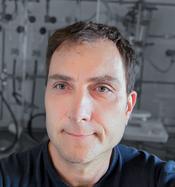
David Drew is a Professor of Biochemistry at Stockholm University, affiliated with the Department of Biochemistry and Biophysics at SciLifeLab. His research focuses on the structure and mechanism of solute transporters, particularly their roles in diseases like cancer and diabetes. Department: Department of Biochemistry and Biophysics Location: Room 6162, SciLifeLab, Solna, Sweden The Drew group employs crystallography and cryo-EM to investigate alternating-access mechanisms in solute transporters, aiming to bridge structural and functional gaps in membrane protein research. Their work has implications for drug development and understanding cellular homeostasis. Recent publications highlight advancements in transporter dynamics, lipid interactions, and disease-specific mechanisms. Trends show a focus on structural biology, membrane protein function, and therapeutic targeting of transport systems. Funding: Göran Gustaffson Foundation, Swedish Research Council, Knut and Alice Wallenberg Foundation, The Cancer Foundation Current group: 6 postdocs, 2 PhD students
Timothy Grant is an Assistant Professor of Biochemistry at the University of Wisconsin–Madison and an Investigator at the Morgridge Institute for Research , embedded within the John W. and Jeanne M. Rowe Center for Research in Virology . His laboratory, the Grant Lab , focuses on pushing the limits of cryo-electron microscopy (cryo-EM) to visualize ever-smaller and more dynamic biological macromolecules. Education & Academic Home: Faculty appointment: Assistant Professor, Department of Biochemistry, UW–Madison College of Agricultural and Life Sciences. Concurrent appointment: Morgridge Institute Investigator, Rowe Center for Research in Virology. Research Interests: The Grant group develops computational and experimental methods that extend cryo-EM into two major frontiers: size —capturing structures of very small proteins previously invisible to cryo-EM—and motion —resolving conformational changes of molecular machines in real time. These advances are integrated into the open-source software package cisTEM , which provides a user-friendly workflow for single-particle image processing. Publication Trends: Across the 15 most recent papers (2021-2025), Grant’s work spans method-centric algorithmic innovation, high-resolution structural studies of bacterial DNA replication-restart machinery, and integrative technologies that couple native mass spectrometry with cryo-EM. A clear trajectory emerges from tool development toward application in virology and antibiotic-target validation. Scientific Awards: None explicitly mentioned in the provided text. Students & Research Team: Grant currently mentors six graduate students (Colin Hemme, Gan Li, Heidy Elkhaligy, Peter Ducos, Roma Broadberry, Shashwat Shastri) and several postdoctoral researchers and staff, including Alex Duckworth, Raison Dsouza, and Tim Wagner. Laboratory & Collaborations: The Grant Lab is physically located within UW–Madison’s Biochemistry Building and leverages the Center for High-Throughput Computing shared between UW–Madison and Morgridge to perform large-scale cryo-EM data processing.
Robert Carrillo is an Associate Professor of Molecular Genetics and Cell Biology and Neuroscience Institute at the University of Chicago, with a joint appointment in the Committee on Neurobiology. He also serves as the Associate Dean for Diversity, Equity, and Inclusion for Basic Science. His research focuses on understanding the molecular mechanisms underlying neural circuit formation and function in Drosophila melanogaster . Dr. Carrillo's educational background includes: BS in Cybernetics from University of California, Los Angeles (2001) PhD in Pharmacology from Yale School of Medicine (2009) Dr. Carrillo's research program investigates how neural circuits are wired during development, with a particular focus on cell surface proteins in the immunoglobulin superfamily (Dprs and DIPs). His lab examines three main aspects of neural circuit formation: Finding the right partner(s) : How neurons identify appropriate synaptic partners through "lock-and-key" mechanisms mediated by cell surface proteins Growing together : How synaptic connections expand to maintain proper activity after initial formation Compensation upon loss of a neighbor : How neurons detect and respond to perturbations in neighboring neurons through synaptic plasticity Analysis of Dr. Carrillo's recent publications reveals a strong focus on Drosophila neural circuit development, particularly examining the roles of Dpr and DIP proteins in motor neuron targeting, synaptic plasticity, and neural wiring. His work combines genetic, biochemical, and functional approaches to uncover fundamental programs of nervous system development, with implications for understanding neurological disorders like autism spectrum disorder. Dr. Carrillo has received numerous scientific awards and honors: NSF CAREER Award (2021) NIH R01 grant as Principal Investigator (2021-2026) NIH K01 grant (2017-2020) Ford Foundation Predoctoral Fellowship (2005-2008) NIH/MARC Fellowship (1998-2001) Dr. Carrillo actively mentors students through various programs including the Neuroscience Early Training Opportunity (NEETO), Diversity Access to Research in Neuroscience (DARN), and Undergraduate Neuroscience Diversity and Outreach (UNDO). His lab has secured significant funding through NIH R01 grants, an NSF CAREER award, and participation in the University of Chicago PREP program as a Co-Principal Investigator. The Carrillo lab has made important contributions to understanding how cell surface proteins mediate neural circuit specificity and plasticity. The Carrillo Lab, located at the University of Chicago, is a vibrant research group studying neural circuit formation in Drosophila. The lab team includes graduate students, postdocs, and technicians working collaboratively on projects related to neural wiring, synaptic plasticity, and circuit function. Dr. Carrillo is also actively involved in diversity and inclusion initiatives in neuroscience education and research.
Matteo Dal Peraro is an Associate Professor at École polytechnique fédérale de Lausanne (EPFL) in the School of Life Sciences, where he leads the Laboratory for Biomolecular Modeling (LBM) within the Interfaculty Institute of Bioengineering (IBI). He also holds significant administrative roles as Head of IBI-SV Administration and Co-Director of IBI-STI Administration, demonstrating his leadership across both the School of Life Sciences and School of Engineering. His research bridges computational approaches with experimental validation to understand complex biological systems at multiple scales. His educational background includes a B.S. and M.S. in Physics from the University of Padua (2000), followed by a Ph.D. in Biophysics from the International School for Advanced Studies (SISSA) in Trieste (2004). He then completed postdoctoral training at the University of Pennsylvania under Professor M. L. Klein before joining EPFL as a Tenure Track Assistant Professor in late 2007. Dal Peraro's research focuses on computational biophysics and multiscale modeling of biological systems, with particular emphasis on membrane-protein interactions, nanopore sensing technologies, and structural biology. His work spans fundamental molecular mechanisms to applied educational technologies, demonstrating a commitment to both scientific discovery and knowledge dissemination. He has made significant contributions to understanding protein-membrane interactions, antibiotic resistance mechanisms, mitochondrial disorders, and viral pathogenesis through advanced computational approaches. His publication record shows a strong trend toward integrating augmented and virtual reality technologies with molecular modeling, exemplified by his development of the moleculARweb platform for chemistry and structural biology education. His research spans computational methods development, structural characterization of biomolecules, membrane biophysics, and applications to medically relevant problems including antibiotic resistance and neurodegenerative disorders. This interdisciplinary approach connects fundamental biophysical principles with practical applications in medicine and education. Dal Peraro has mentored numerous doctoral students through EPFL's PhD programs, particularly in Computational and Quantitative Biology. His leadership extends to serving on PhD program committees and directing research groups focused on computational molecular biology. He has established collaborations across multiple disciplines, facilitating integrative approaches to complex biological problems. He leads the Laboratory for Biomolecular Modeling (LBM), which develops and applies computational methods to study biological systems at multiple scales. The lab bridges molecular simulations with experimental validation, creating a synergistic approach to understanding complex biological phenomena. Dal Peraro's team has made significant contributions to membrane biophysics, protein folding, and the development of educational technologies that make structural biology accessible through augmented reality platforms.
Aleksandra Radenovic is a Full Professor at École Polytechnique Fédérale de Lausanne (EPFL) holding multiple positions across the institution. She is a Full Professor at the Laboratory of Nanoscale Biology (LBEN) within the School of Engineering (STI), a Full Professor in Teaching at the School of Life Sciences (SV), and a Full Professor in Teaching at the School of Engineering (STI). Additionally, she serves as Co-Director of both the IBI-STI and IBI-SV administrative units, and is a Member of both the STI School direction and SV School direction. Dr. Radenovic received her PhD from the University of Lausanne in 2003, where she worked with Prof. Dietler in the Laboratory of Physics of Living Matter. Prior to that, she studied physics at the University of Zagreb from 1994-1999, and completed her baccalaureate at a Classical gymnasium in 1994. She conducted postdoctoral research at the University of California, Berkeley from 2004-2007 in the group of Prof. Liphardt. Her research focuses on single molecule biophysics, with particular emphasis on developing techniques and methodologies based on optical imaging, biosensing, and single molecule manipulation. Her laboratory works on three major research directions: (i) developing and using nanopores as platforms for molecular sensing and manipulation, particularly solid-state nanopores in glass nanocapillaries and 2D-material membranes; (ii) studying biomolecular function, especially protein and nucleic acid interactions, using force-based manipulation techniques like optical tweezers and Anti-Brownian Electrokinetic traps; and (iii) developing super-resolution optical microscopy based on single molecule localizations for quantitative cellular imaging. Her work bridges physics, engineering, and biology to create innovative tools for understanding molecular processes at the nanoscale. Analysis of her recent publications reveals a strong focus on nanofluidics, 2D materials (particularly MoS 2 and hBN), nanopore sensing, super-resolution microscopy, and the development of novel instrumentation for biophysical applications. Her research demonstrates increasing interdisciplinary collaboration, integrating materials science, nanotechnology, and biological applications to address fundamental questions in molecular biophysics. Dr. Radenovic has received numerous prestigious awards and grants, including: 2021: ERC Advanced Grant 2021: Optica Fellow 2016: CCMX Materials challenge award 2015: SNSF-ERC Consolidator Grant 2010: ERC Starting Grant 2003: SNSF Fellowship She has successfully advised numerous PhD students whose research spans single molecule biophysics, nanofluidics, and optical techniques. Her laboratory, the Laboratory of Nanoscale Biology (LBEN), is well-equipped for advanced biophysical research, with capabilities in nanopore fabrication, optical trapping, super-resolution microscopy, and 2D materials characterization. Dr. Radenovic has secured significant research funding through competitive grants, including multiple ERC grants, which have supported her innovative research program at the intersection of physics, engineering, and biology.
Lukas Edward Dow is a Professor of Biochemistry and Biophysics at Weill Cornell Medical College (2025-present) and holds a secondary appointment in Medicine. His research spans genetic and non-genetic resistance mechanisms in KRAS-driven cancers, WNT signaling, and CRISPR-based cancer modeling. Ph.D. and B.Sc. from University of Melbourne Focus on CRC, pancreatic, breast, and prostate cancers Research interests include genetic resistance mechanisms , CRISPR applications , WNT pathway dependencies , and tumor microenvironment dynamics . Key publications reveal trends in mutant-specific therapies , epithelial plasticity , and precision genome editing . Current research projects funded by National Cancer Institute and Department of Defense investigate KRAS allelic imbalance, R-Spondin sensitization, and WNT pathway alterations. External collaborations include scientific advisory roles at Mirimus, Inc. and consulting at Revolution Medicines, Inc. His lab develops genetically engineered mouse models and organoid systems for studying cancer progression, with emphasis on metastasis , drug resistance , and epigenetic adaptations . The work has significant implications for improving cancer therapies through context-dependent targeting .
Laia Mogas-Soldevila serves as Assistant Professor of Graduate Architecture and Director of DumoLab Research at the University of Pennsylvania's Stuart Weitzman School of Design, pioneering radically sustainable material practices that bridge science, engineering, and the arts for architectural and product design innovation. Her academic credentials include: Interdisciplinary doctorate in biomaterials science, biomedical engineering, and advanced design from Tufts University School of Engineering Two master’s degrees from the Massachusetts Institute of Technology School of Architecture Licensed architect with Fine Arts minor from Polytechnic University of Catalonia and École Nationale Supérieure de Beaux-Arts Dr. Mogas-Soldevila's research reimagines matter as a fundamental design driver through biomaterials and bio-based fabrication , emphasizing environmental justice and circular economy principles. Her work partners with scientists to develop unprecedented material capabilities, spanning from molecular-scale biopolymer engineering to full-scale architectural applications that address climate challenges. Analysis of her 15 most recent publications (2020-2025) reveals dominant themes in carbon-sequestering living materials, agricultural waste valorization, and adaptive biological skins. These works consistently bridge architecture, material science, and environmental engineering, with increasing focus on participatory design and urban farming applications as seen in her 2024 Portable Bioremediation Technologies project. Her scientific recognition includes: Johnson&Johnson Foundation Woman in STEM2D Scholar Award Research funding encompasses Penn's Research Foundation Grant, Environmental Innovation Grant, Sachs Art Innovation Grant, and Global Engagement Fund, supporting her interdisciplinary exploration of sustainable material systems. Her pedagogy cultivates novel theory and applied methods for biomaterial implementation across design disciplines. As DumoLab Research Director, she leads cross-disciplinary collaborations developing material-driven computational workflows for digital fabrication, with recent projects exhibited at MoMA, Milan/London Design Weeks, and ACADIA conferences, translating laboratory innovations into tangible environmental solutions.
Assoc. Prof. Dr. Gonca Bilge Özel is an Associate Professor at Yeditepe University, Faculty of Engineering, Food Engineering Department. She also serves as Vice Dean of the Faculty of Engineering since 2023. Previously, she was an Associate Professor at Konya Food and Agriculture University, where she held administrative positions as Department Head (2021) and Deputy Department Head (2019). Current Position: Associate Professor, Yeditepe University, Faculty of Engineering, Food Engineering Department Administrative Role: Vice Dean of Faculty of Engineering (2023-present) Previous Position: Associate Professor at Konya Food and Agriculture University (2018-2022) Dr. Özel received her PhD in Food Engineering from Hacettepe University (2010-2016), with a thesis on "Laser-induced plasma spectroscopy in elemental analysis of foods." She also holds a Master's degree in Bioengineering (2008-2010) and an undergraduate degree in Food Engineering (2003-2008), both from Hacettepe University. Her research primarily focuses on food analysis using advanced spectroscopic techniques, particularly Laser-Induced Breakdown Spectroscopy (LIBS). She has made significant contributions to food authenticity, adulteration detection, elemental analysis, and non-thermal food processing methods like pulsed electric field technology. Her work spans across various food matrices including dairy products, meat, coffee, grains, and beverages. Dr. Özel has led and participated in numerous research projects, including EU-funded H2020 projects and national TÜBİTAK projects. She has supervised multiple Master's theses and is currently supervising PhD students. Her research has resulted in numerous publications in high-impact journals and several patents related to LIBS applications in food analysis. Poster Prize at 8th International Conference on Laser induced breakdown spectroscopy (LIBS 2014) As an educator, Dr. Özel teaches undergraduate courses such as Food Engineering Operations and Process Design, Food Process Engineering, and Food Chemistry, as well as graduate courses in Advanced Analytical Methods and Biosensors. She has also been involved in industry collaborations with companies like Deltamed Life Sciences and NANOSENS Advanced Technologies.
Anita L. Zimmerman is a tenured Professor of Molecular Microbiology and Immunology at Brown University’s Warren Alpert Medical School. Since 1987 she has progressed from Assistant to Associate to full Professor, served as Director of the MD/PhD Program (2005–2007), Vice Chair of the Department (2008–2021), and currently directs the Graduate Program in Molecular Pharmacology & Physiology. She also holds the position of Director of Student Welfare in the Therapeutic Sciences Graduate Program. Education PhD, Physiology & Biophysics, University of Miami Miller School of Medicine, 1982 AB, Zoology, University of California, Berkeley, 1978 Research Interests Dr. Zimmerman’s scientific career has centered on the molecular and cellular neurobiology of ion channels . Using patch-clamp electrophysiology, molecular biology, and heterologous expression systems, she has elucidated the mechanisms of cyclic-nucleotide-gated (CNG) channels, TRP channels, and their roles in visual phototransduction , UV-light signaling in melanocytes , and synaptic transmission . Her work has clarified how retinoids modulate CNG channel activity and how mutations in these channels lead to retinal disease. Although she no longer maintains an active wet-lab, she continues to provide critical consultation to ongoing projects at Brown and remains a key mentor in NIH-funded training programs. Scientific Awards & Honors Dean’s Excellence in Teaching Award (multiple years) Graduate School Faculty Award for Advising and Mentoring (2011) Brown Advance Scientific Leadership Award (2009) Salomon Faculty Research Award (1998) Rhode Island Foundation Research Grant (1998) Editorial Board Member, Journal of General Physiology (2006–2017) Council Member, Biophysical Society & Society of General Physiologists Training Grants & Mentorship Dr. Zimmerman co-directs the NIH T32 training grant “Interdisciplinary Training in Pharmacological Sciences” (GM139793, 2021-2026) and previously co-directed its predecessor T32 GM077995. She has mentored numerous MD/PhD and PhD students through the MPP Graduate Program and served as Associate Director and Director of the Brown MD/PhD Program (2000–2007). Laboratory & Team While her independent laboratory is now closed, she collaborates closely with colleagues such as Professor Elena Oancea on NIH-funded projects involving UV phototransduction and ion-channel signaling. She remains an integral part of Brown’s multidisciplinary neuroscience and pharmacology community.
Peng Mao is an Associate Professor in the Department of Pathology at the Renaissance School of Medicine, Stony Brook University . His research focuses on DNA damage repair mechanisms in chromatin, transcriptional regulation of repair pathways, and cancer cell adaptation to chemotherapeutic agents. Education: BS: Huazhong University of Science and Technology, China PhD: Peking University, China Postdoc: Washington State University, Pullman, WA The Mao Research Lab employs next-generation sequencing (NGS) and bioinformatics to investigate: (1) DNA repair protein dynamics in chromatin; (2) Transcription machinery's impact on DNA repair pathways; (3) Cancer-driven modulation of repair mechanisms to evade chemotherapy. His work bridges genomic instability and cancer therapy resistance . His recent publications highlight studies on UV-induced mutagenesis , cisplatin resistance , transcription-coupled repair , and chromatin remodeling complexes . These articles span genomic mapping , histone modifications , and transcription factor interactions in DNA repair contexts. Labs & Teams: Mao Research Lab, Stony Brook University
Michael Bronstein is a Professor at Università della Svizzera italiana (USI Lugano) in Switzerland and Imperial College London in the UK, where he holds the Chair in Machine Learning and Pattern Recognition. He serves as Head of Graph Learning Research at Twitter following the acquisition of his startup Fabula AI, and maintains a principal engineer position at Intel Perceptual Computing. His research focuses on the interplay between geometry, machine learning, and computer vision, with particular emphasis on non-Euclidean structured data. Professor Bronstein received his Ph.D. with distinction in Computer Science from the Technion in 2007. He has held visiting appointments at Stanford University, MIT, Harvard University (as a Radcliffe Fellow), and Tel Aviv University, and has been affiliated with multiple Institutes for Advanced Study including TUM-IAS where he was a Rudolf Diesel Industry Fellow (2017). He is a Fellow of IAPR, Senior Member of the IEEE, and a member of the Young Academy of Europe. His research program centers on theoretical and computational methods in spectral and metric geometry applied to computer vision, pattern recognition, and machine learning. He pioneered the field of geometric deep learning, developing novel neural network architectures that process non-Euclidean data structures like graphs and manifolds. His work spans from theoretical foundations to practical applications, with over 100 publications in top scientific journals and conferences, and has been featured in international media including CNN. Analysis of his recent publications reveals a strong trajectory in geometric deep learning with applications spanning computer vision, 3D shape analysis, social network analysis, and bioinformatics. His research consistently bridges theoretical innovation with real-world applications, developing novel neural architectures for processing complex data structures. The work demonstrates increasing interdisciplinary reach, connecting machine learning with fields from particle physics to molecular biology. Dalle Molle Prize (2018) Royal Society Wolfson Research Merit Award (2018) ERC Proof of Concept Grant (2018) Amazon AWS Machine Learning Research Award (2018) Fellow, International Association for Pattern Recognition (IAPR) Google Faculty Research Award (2017) Radcliffe fellowship, Harvard University (2017) Rudolf Diesel industrial fellowship, TU Munich (2017) ERC Consolidator Grant (2016) World Economic Forum Young Scientist (2014) Professor Bronstein has secured multiple ERC grants (Starting Grant 2012, Proof of Concept Grants 2016 and 2018, Consolidator Grant 2016) and has mentored numerous students who have contributed to over 30 granted patents. He has chaired more than a dozen conferences and workshops in his field and served as area chair at major computer vision conferences including ECCV 2016 and ICCV 2017. His research group at USI Lugano collaborates extensively with industry partners including Intel and Twitter. As a serial entrepreneur, Professor Bronstein co-founded Novafora (2005-2009) developing large-scale video analysis, Invision (2009-2012) which created low-cost 3D sensors and was acquired by Intel, and Fabula AI (2018-2019) focused on fake news detection which was acquired by Twitter. His work bridges theoretical research with commercial applications, with his technology contributing to Intel RealSense and Twitter's graph learning infrastructure.
Albert Erives is an Associate Professor in the Department of Biology at the University of Iowa , specializing in regulatory genomics, evolutionary genomics, and the evolution of metazoans. His research focuses on decoding gene regulatory logic in DNA sequences, particularly during animal embryogenesis, using comparative genomics to identify regulatory modules driving phylogenetic transitions. PhD from University of California, Berkeley His work spans eukaryotic gene regulation, integrating biochemistry, molecular genetics, and computational biology to uncover principles of organismal evolution. Recent studies include viral nucleosome structure, Notch signaling pathway evolution, and enhancer organization in model organisms like Drosophila and Ciona . Notable scientific awards include the NSF CAREER Award (2012, 2010) . He actively seeks graduate students and postdoctoral researchers for his laboratory, which utilizes core facilities such as the Carver Center for Genomics.
Kathleen J. Green, PhD, is the Joseph L. Mayberry, Sr. Professor of Pathology and Toxicology and Professor of Dermatology at Northwestern University's Feinberg School of Medicine . She serves as Associate Director for Basic Sciences at the Robert H. Lurie Comprehensive Cancer Center and is affiliated with the Skin Biology and Diseases Resource-Based Center and Center for Genetic Medicine . Education: PhD in Cell and Developmental Biology (Washington University, 1982), Postdoctoral Training in Cell Biology (Northwestern, 1987) Green's research focuses on desmosomes —cell-cell adhesion structures—and their roles in epithelial tissue morphogenesis, cancer progression, and genetic skin diseases . Her work bridges basic science with translational applications , particularly for inflammatory skin diseases, melanoma, and heart disease . Recent publications highlight her lab's exploration of desmosome-mediated signaling pathways in skin stratification, melanoma growth, and inflammatory responses. Key themes include mechanotransduction, polarity regulation, and endosomal trafficking of adhesion proteins. Scientific Awards: Elected, German National Academy of Sciences (2016) Humboldt Research Award (2015) Tripartite Legacy Faculty Prize (2019) Feinberg Distinguished Woman in Medicine and Science (2011) Kligman Frost Leadership Award (2015) Green has mentored over 30 years, with former trainees now faculty at institutions like Emory, Yale, and Penn State. Her lab fosters collaborative, interdisciplinary research using human disease models, proteomics, and biophysical approaches to study epithelial mechanics.
Ingeborg Schmidt-Krey is an Associate Professor in the Department of Biology at Georgia Institute of Technology. Her research focuses on the structure and function of eukaryotic membrane proteins, which are critical drug targets in biomedical research. She utilizes electron crystallography, cryo-EM, and 2D crystallization techniques to advance structural studies of these proteins. Education: B.S. in Biochemistry from Mississippi State University (1991) Ph.D. in Biophysics and Structural Biology from Karolinska Institute (1999) Research Interests: Ingeborg Schmidt-Krey investigates eukaryotic membrane proteins, particularly their structural determination via electron crystallography. Her work includes developing screening methods for 2D crystallization and improving cryo-EM data collection. Recent articles highlight advancements in nanodisc-reconstitution, lipid-dependent oligomerization studies, and refined sample preparation techniques like the Peel-Blot method. Scientific Awards: German Research Foundation Young Investigator Class of 1969 Teaching Fellow EMBO/EMBL/CERN Women in Science Ambassador EMBO long-term fellow Her laboratory’s efforts are directed toward understanding the biophysics of membrane proteins and their role in diseases such as inflammation and cancer.
Professor Gerhard Wolber leads the Molecular Drug Design research group at the Institute of Pharmacy , Freie Universitaet Berlin. His work focuses on computational approaches to drug discovery, with expertise in G-protein coupled receptors (GPCRs) , cytochrome P450 enzymes , Toll-like receptors , and viral protease inhibitors . He supervises a team of 13 PhD candidates 3 researchers 2 Master's students engaged in projects ranging from calcium channel blockers to CYP enzyme modulators for cancer therapy. Recent publications highlight his lab's contributions to pan-coronavirus drug discovery, TLR8 antagonism, and calcium channel inhibition. The team employs advanced methodologies including Molecular dynamics simulations Fragment-based de novo design Bayesian neural networks DFT calculations 3D pharmacophore modeling to bridge computational predictions with experimental validation. Notable projects include Virtual screening for TREM2-targeted glioblastoma therapeutics Allosteric communication path analysis via MDPath Immune checkpoint inhibitors for cancer immunotherapy Biased GPCR ligand development demonstrating a multidisciplinary approach to contemporary drug design challenges.