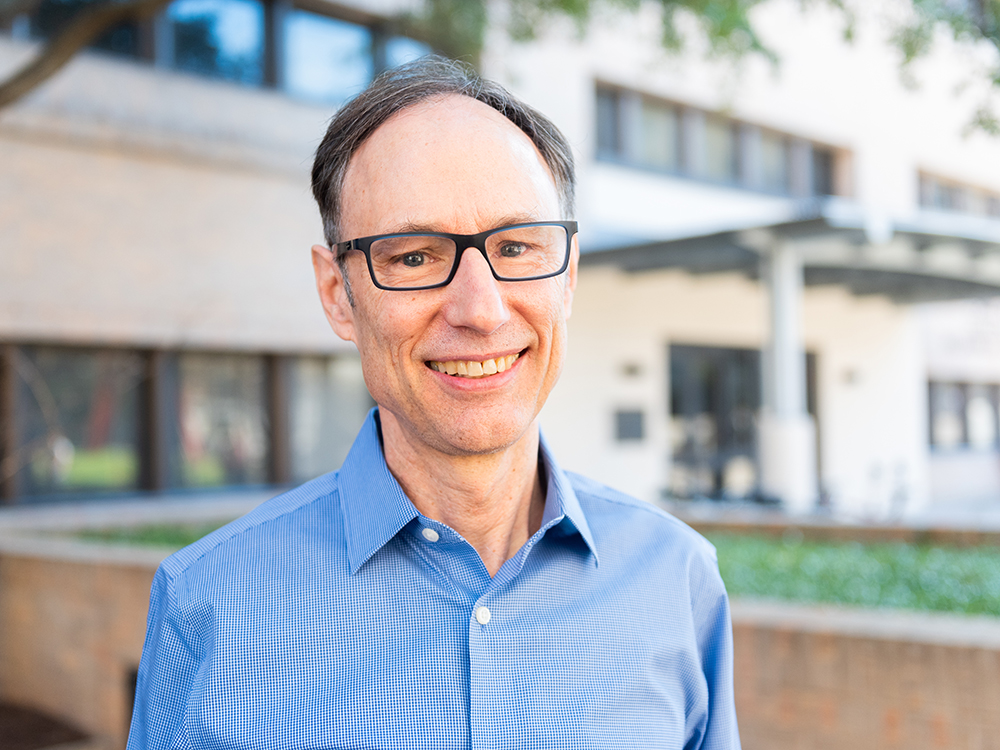
Keith Johnston is Professor and Cockrell Family Dean's Chair in Engineering Excellence in the Department of Chemical Engineering at the University of Texas at Austin's Cockrell School of Engineering. His research integrates materials chemistry, colloid science, and engineering to develop advanced nanoparticle systems for energy and biomedical applications. His educational background includes: B.S. from the University of Michigan (1977) Ph.D. from the University of Illinois (1981) Professor Johnston's research focuses on controlling nucleation, growth, and passivation of metal/metal oxide nanoparticles using ligands and polymeric stabilizers. Key areas include nanocluster assembly for novel materials, nanoparticle behavior at liquid/solid interfaces, subsurface nanotechnology for CO 2 sequestration and oil recovery, electrocatalysts for energy storage, and reversible protein nanoclusters for drug delivery. His biomedical work targets biodegradable plasmonic nanoclusters for cancer imaging/therapy that clear through kidneys. Analysis of his 2014-2017 publications reveals strong emphasis on CO 2 -in-water foams for subsurface applications (50% of recent work), protein stabilization for biologics delivery (30%), and electrocatalyst design (20%). These studies bridge fundamental colloid science with practical engineering challenges in energy and healthcare. His major recognitions include: National Academy of Engineering election (2011) AIChE's 100 Chemical Engineers of the Modern Era (2008) Fellow of American Institute of Medical and Biological Engineers (2013) Multiple AIChE awards including Industrial Gases Technology Institute Award (2004) University of Texas Faculty Excellence Awards (1990, 1995) Professor Johnston leads an active research group with significant interdisciplinary collaborations, particularly with petroleum engineers on subsurface applications. His work attracts substantial funding for developing earth-abundant catalysts and low-water-usage technologies. The lab maintains strong industry partnerships focused on translating nanoparticle research into energy and medical solutions. The research group operates specialized facilities for nanoparticle synthesis, colloid characterization, and subsurface simulation. Current projects emphasize greener oil recovery with minimal water usage, kidney-clearable imaging agents, and scalable electrocatalyst production. Future directions target commercialization of nanoparticle-stabilized CO 2 foams and self-administered biologic delivery systems.