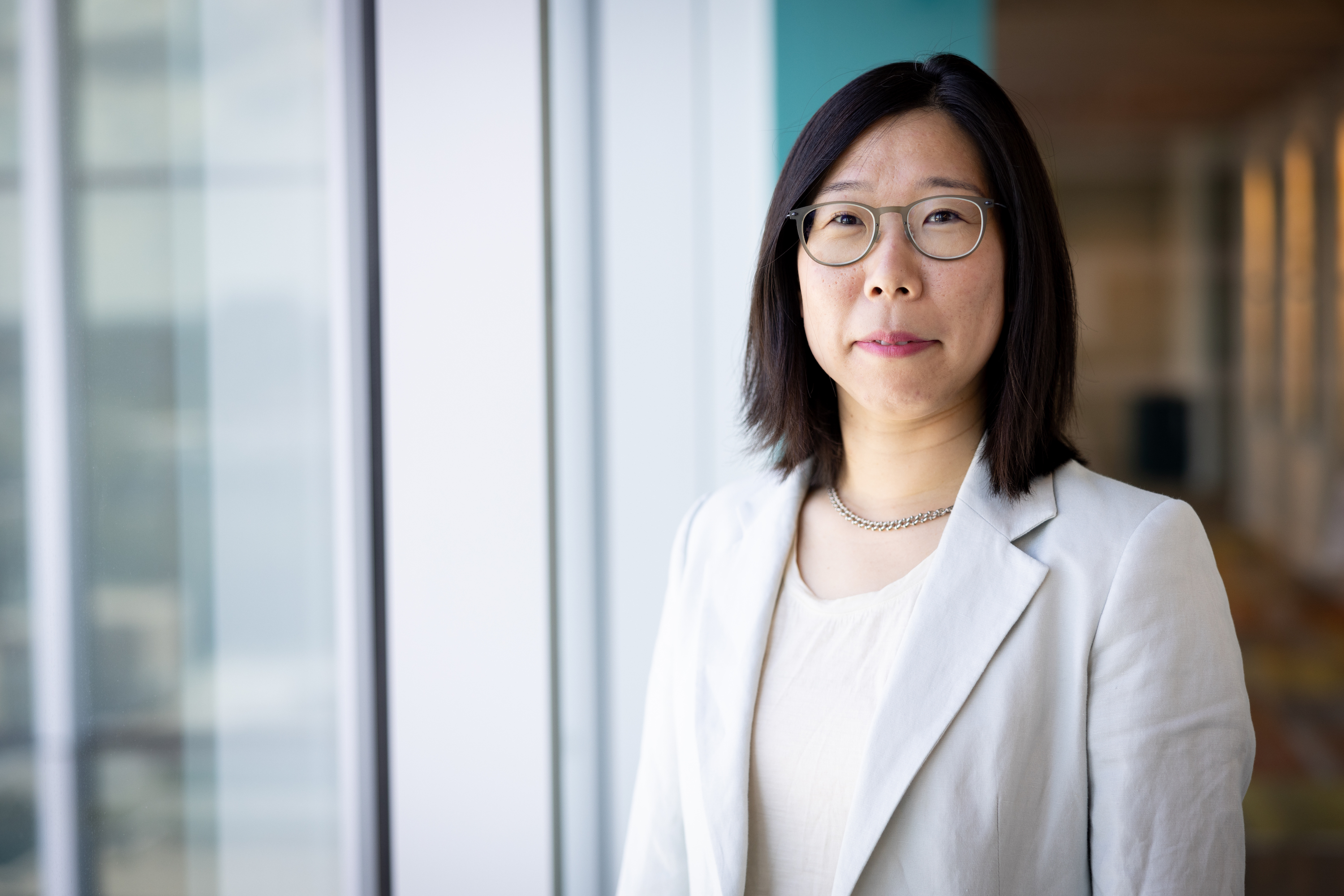
Wei Xu is an Associate Professor at Georgia Institute of Technology's College of Computing and School of Interactive Computing, with affiliations to the Machine Learning Center. Their research bridges machine learning, natural language processing, and social media with focus areas in large language models, cultural bias mitigation, multilingual capabilities, and human-AI collaboration in text evaluation. NSF CAREER and Google Academic Research Award recipient Director of NLP X Lab PhD from New York University, BSMS from Tsinghua University Research interests span: Multilingual Multicultural LLMs addressing representational gaps and cultural adaptation in language models (NAACL 2025, ACL 2024); Robustness and Reasoning through dynamic AGI evaluations (ACL 2024, EMNLP 2024); Interdisciplinary NLP applications in security, healthcare, and law (EMNLP 2024, ACL 2024). Recent publications focus on multilingual alignment (NAACL 2025), privacy risk estimation (arXiv 2025), cultural bias analysis (ACL 2024), and medical text simplification (EMNLP 2024). Key themes include bias mitigation, multimodal processing, and practical LLM evaluation. Scientific Awards : NSF CAREER, Google/Sony/Criteo research awards, ACL'24 Best Social Impact Award, COLING'18 Best Paper Advising 15 PhD/MS/BSMS students including Yao Dou (human-centered LLM evaluation), Tarek Naous (multilingual LLMs), and alumni like Chao Jiang (Apple AI/ML) and Yang Chen (NVIDIA research scientist). Teaches graduate courses on NLP and LLMs.
Stephen Licht is an Associate Professor of Ocean Engineering and Graduate Director at the University of Rhode Island's College of Engineering, where he directs the Robotics Laboratory for Complex Underwater Environments (R-CUE). His research focuses on developing maritime robots capable of operating in dynamic and unpredictable environments through biologically inspired propulsion, distributed pressure sensing, model-based optimal control, and compliant underwater manipulation technologies. Ph.D. in Oceanographic and Mechanical Engineering from MIT/WHOI Joint Program (2008) B.S. in Mechanical Engineering from Yale University (1998) Former Senior Research Scientist at iRobot and Senior Robotics Engineer at Vecna Robotics Current Research Affiliate with MIT Department of Mechanical Engineering Former Visiting Faculty at Libera Università di Bolzano (2019-2020) Dr. Licht's research spans marine robotics with emphasis on biologically inspired propulsion systems that provide high authority and bandwidth thrust, nonlinear attitude control for maneuvering in dynamic conditions, compliant underwater manipulation technologies, and unmanned aerial monitoring of coastal structures. His work bridges mechanical engineering principles with oceanographic applications to create more capable underwater robotic systems that can operate in complex marine environments. His recent publications demonstrate a strong trend toward soft robotics applications for deep-sea exploration, with particular focus on jamming grippers and neutrally buoyant manipulation systems. The research also shows increasing integration of additive manufacturing techniques for field-deployable solutions and computational methods for autonomous systems operating in challenging marine environments. His work spans fundamental control theory, mechanical design, and practical field applications. Dr. Licht has secured significant research funding as both Principal Investigator and Co-Principal Investigator from major organizations including the Office of Naval Research, NOAA, NSF, and various university collaborations. His grants focus on advancing unmanned underwater vehicle technology, soft robotics for deep-sea applications, and coastal monitoring systems. Active mentor to numerous graduate and undergraduate students in Ocean Engineering Successful track record of student placements at organizations including Jaia Robotics, Scripps Institution of Oceanography, FORSSEA Robotics, and government research labs Collaborates with researchers at MIT, WHOI, University of Connecticut, University of Maine, and international institutions Licht leads the R-CUE lab which develops innovative solutions for underwater robotics challenges, with particular expertise in biomimetic propulsion, soft robotics for deep-sea applications, and autonomous systems for environmental monitoring. The lab maintains strong industry connections with OceanGate Inc. and FabNewport, and engages with local educational institutions through outreach programs with Roger Williams Middle School.
Azizjon ALIMOV is a Full Professor at IÉSEG School of Management (University of Lille, France), specializing in Corporate Finance, Mergers and Acquisitions, and Law and Finance. He holds a Ph.D. in Finance from the University of Oregon (2007) and an MBA from Central Michigan University (2001). His HDR (Habilitation) in Management Sciences was awarded by the University of Lille in 2023. His research focuses on corporate governance, cross-border M&A dynamics, and the interplay between legal frameworks and financial decision-making. Key themes include intellectual property rights' impact on corporate debt costs, product market competition effects on corporate cash holdings, and government borrowing influences on acquisition strategies. His work frequently examines global contexts, with studies spanning North America, Asia, and Europe. Notable publications include analyses of IPO staging mechanisms (2024), managerial discipline through trade liberalization (2023), and the role of labor protection laws in loan contracting (2015). His recent work emphasizes reproducibility in management science methodology (2023) and cross-border regulatory challenges in M&A. No scientific awards are explicitly listed; however, his extensive publication record reflects sustained academic contributions. He has advised students across institutions including City University of Hong Kong and the Sauder School of Business, though specific advisee names are not documented here. His professional experience includes roles at the University of Arizona (2008–2010), California State University (2007–2008), and as an HSBC Visiting Assistant Professor at the University of British Columbia (2016–2018). He currently leads the Finance Track at IÉSEG, contributing to programs like the Grande École Master’s in Finance and MSc Corporate Finance courses.
University of Illinois Urbana-ChampaignUnited States
Dr. Jimeng Sun is a Health Innovation Professor at the Siebel School of Computing and Data Science and Carle Illinois College of Medicine at the University of Illinois Urbana-Champaign. Co-founder of Keiji AI , he leads groundbreaking research at the intersection of artificial intelligence and healthcare, actively deploying clinical AI systems and developing frameworks like PyHealth and Therapeutics Data Commons . His research spans four major areas: Clinical AI Systems : Developing interpretable models (e.g., RETAIN) for patient similarity, temporal event prediction, medication recommendation, and clinical outcome forecasting Drug Discovery : Creating molecular optimization frameworks, drug-target interaction models, and AI-driven platforms Clinical Trials : Pioneering patient-trial matching, outcome prediction, and optimization frameworks using deep learning and graph neural networks Biosignal Analysis : Advancing sleep staging, seizure classification, and automated EEG/Cardiac monitoring systems With over 500 top-tier publications (including in Nature , NEJM AI , and leading AI conferences) and an h-index of 99, his work has been recognized with the Top 100 AI Leaders in Drug Discovery and Advanced Healthcare award. He maintains active collaborations with institutions like Massachusetts General Hospital , Medidata Solutions , and OSF Healthcare . His recent publications reveal a strong focus on: Reinforcement learning applications in medical data analysis Large language model adaptation for clinical tasks Knowledge graph integration with AI systems Synthetic data generation for healthcare Multi-modal learning in clinical contexts Explainable AI for medical applications Dr. Sun's lab ( Sunlab ) emphasizes practical impact over theoretical work, actively collaborating with hospitals and healthtech companies. He welcomes contributions from clinicians, researchers, and industry partners through initiatives like his AI for Health webinar series .
Prof. Li LU is a Professor at the Department of Mechanical Engineering, National University of Singapore (NUS). His research focuses on energy storage materials, ferroelectric systems, and advanced battery technologies. He holds editorial roles at Functional Materials Letters and Materials Technology – Advanced Functional Materials . Education: PhD from KU Leuven (Belgium), M.Eng and B.Eng from Tsinghua University (China). Research interests include thin film deposition, nanostructured materials, and solid-state electrolytes. His work addresses challenges in lithium/ sodium-ion batteries, solid-state interfaces, and high-performance energy storage systems. Recent studies emphasize aerosol deposition techniques, composite electrolytes, and interfacial stability. Publications highlight advancements in battery materials and electrolyte design. Notable contributions include ultra-stable sodium-ion batteries, ferroelectric-engineered electrolytes, and optimizing lithium metal anodes. His research bridges fundamental material science with practical energy solutions.
Marlon Dumas is a Professor of Information Systems at the University of Tartu's Faculty of Science and Technology, with a 20-year academic career spanning Estonia and Australia. He holds a PhD in Computer Science from the University of Grenoble 1, France, and has served as Head of Chair and Programme Director in Software Engineering programs. Specializes in Business Process Management (BPM) and Process Mining Current research focuses on prescriptive process monitoring, simulation modeling, and data privacy Recipient of 25+ scientific awards, including multiple Test of Time Awards and the Estonian National Research Award in Technical Sciences Editorial leadership: Area Editor for Information Systems (Elsevier) and ERC Starting Grant Panel Chair His work bridges theoretical advancements in BPM with practical applications in financial services and anti-money laundering. He has developed tools like SIMOD, Kronos, and Kairos for process optimization and analysis. His research integrates AI/ML techniques (reinforcement learning, causal inference) with traditional process modeling. Key trends in his recent publications include: Prescriptive monitoring systems combining causal inference and machine learning Privacy-preserving process mining techniques (differential privacy, anonymization) Resource availability modeling and multi-objective process optimization LLM applications for process analysis and intervention policies Scientific honors include: 2024 BPM Best Paper & Prototype Awards 2023 ICPM Best Prototype Award 2019 ERC Advanced Grantee 2017 Estonian National Research Award in Technical Sciences 2019 MODELS Test of Time Award 2017 BPM Best Prototype Award He has mentored PhD candidates as thesis examiner and contributed to 30+ conference program committees, including General Co-Chair roles at ESEC-FSE 2019 and CAiSE 2018. His work has been supported by European Research Council grants and Estonian Science Foundation projects.
Dr Luke Garrod is a Senior Lecturer in Economics at Loughborough University's Loughborough Business School. He holds a PhD, MPhil, and BA from the University of East Anglia. His research focuses on industrial organization, competition policy, consumer policy, and behavioral economics, with a particular emphasis on modeling firm incentives in imperfectly competitive markets. He received the International Journal of Industrial Organization Best Theoretical Paper Award 2019 for his work on collusion mechanisms. His book on hub-and-spoke cartels provides critical insights into antitrust enforcement strategies. Teaching responsibilities include Principles of Microeconomics (ECA002) and Industrial Economics (ECC005). He serves as an Associate Editor for the International Journal of the Economics of Business and contributes to economic consultancy through his role at Economic Insight. His research has explored topics such as cartel damages quantification, digital market regulation, and the interplay between consumer protection and competition policies. Key awards include the 2019 Best Theoretical Paper Award, reflecting his contributions to advancing antitrust and competition policy frameworks. His work bridges theoretical economic modeling with practical regulatory applications, addressing emerging challenges in global competition dynamics and digital economy policies.
Fei Fang is an Associate Professor in the Software and Societal Systems Department at Carnegie Mellon University (CMU) , where she explores the intersection of artificial intelligence and multi-agent systems . Her work integrates machine learning with game theory to address challenges in security , sustainability , and mobility , aligning with the AI for Social Good mission. Ph.D. in Computer Science, University of Southern California (2016) B.Eng. in Electronic Engineering, Tsinghua University (2011) Recent research focuses on reinforcement learning , large language models (LLMs) , and human-AI collaboration . Her team’s work has been recognized with 15+ awards across prestigious venues like IAAI, AAAI, and IJCAI. Notable accolades include the 2023 Allen Newell Award , 2022 Sloan Fellowship , and NSF CAREER Award (2021) . She actively contributes to educational initiatives , including teaching "Demystifying AI for Everyone" at CMU, and has sought part-time teaching assistants for course development. Her research spans 15+ domains , including AI ethics , cyber defense , traffic optimization , and public health .
Nils Fleischhacker is an Assistant Professor for Cryptography at Ruhr University Bochum, where he leads the Theoretical Cryptography group within the Faculty of Computer Science. His research focuses on foundational aspects of cryptography with particular emphasis on zero-knowledge proofs, digital signatures, and secure computation. Prior to joining Ruhr University, he held postdoctoral positions at Johns Hopkins University and Carnegie Mellon University. Dr. Fleischhacker received his PhD in Computer Science from Saarland University in February 2017, advised by Dominique Schröder. During his doctoral studies, he was a research intern at Microsoft Research with Chris Brzuska and a research visitor at the University of Maryland, College Park with Jonathan Katz and Dana Dachman-Soled. His research spans theoretical cryptography with significant contributions to zero-knowledge proofs, multi-signature schemes, property-preserving hash functions, and security proofs for cryptographic primitives. Fleischhacker's work often addresses fundamental questions about the limits and possibilities of cryptographic constructions, with particular attention to black-box separations and lower bounds. His recent publications demonstrate a strong focus on lattice-based cryptography and post-quantum secure protocols. Fleischhacker's publications over the past five years reveal a consistent research trajectory focused on improving the efficiency and security of cryptographic primitives, with particular emphasis on signature schemes, zero-knowledge protocols, and secure computation frameworks. His work frequently appears in top-tier cryptography venues including CRYPTO, EUROCRYPT, and CCS. Dr. Fleischhacker actively mentors PhD students, with numerous successful graduations spanning from 2010 to 2024. His former PhD students include Önder Askin (2024), Floyd Zweydinger (2023), and Lars Schlieper (2022), among others. His research is supported through various academic channels and collaborations. He is affiliated with several prominent research organizations including the Horst Görtz Institute (HGI) for Information Security, the DFG Excellence Cluster CASA, the EU Marie Curie Network QSI, and the International Association for Cryptologic Research (IACR). These affiliations provide a strong institutional framework for his theoretical cryptography research.
California State University, Long BeachUnited States
Vesna Terzic is a Professor in the Department of Civil Engineering and Construction Engineering Management at California State University Long Beach's College of Engineering. Her research specializes in seismic performance assessment, infrastructure resilience, and probabilistic risk analysis of structures. Education includes a PhD in Structural Engineering from UC Berkeley, MS in Earthquake Engineering from Ss. Cyril and Methodius University, and BS in Structural Engineering from University of Belgrade. Research focuses on developing advanced computational frameworks for evaluating post-earthquake functionality of buildings and bridges. Her work integrates performance-based engineering with resilience quantification, emphasizing practical applications for seismic design and retrofitting. Recent publications demonstrate consistent focus on functional recovery modeling, structural health monitoring, and optimization of protective systems. Research trends show progression from component-level analysis to regional recovery simulation frameworks. Major awards: ACI Chester Paul Siess Award for Excellence in Structural Research (2017) Popert Fellowship, UC Berkeley (2009) Professional service includes membership on FEMA P-58 project committees and contributions to OpenSees development. Current projects investigate soil-structure interaction effects on tall buildings and recovery-based design methodologies.
New Jersey Institute of Technology (NJIT)United States
Steven I-Jy Chien serves as Professor and Director of the Transportation Program within the Department of Civil and Environmental Engineering at the New Jersey Institute of Technology (NJIT). His career spans academia, government, and industry with significant contributions to transportation engineering research and practice. His educational credentials include: Ph.D. in Civil and Environmental Engineering from University of Maryland-College Park (1995) M.S. in Civil and Environmental Engineering from University of Maryland-College Park (1991) B.S. in Civil Engineering from Tamkang University (1983) Professor Chien's research focuses on transportation system resilience, sustainable transit operations, and advanced traffic modeling. His work addresses critical challenges in urban rail networks, demand-responsive transit services, and energy-efficient transportation systems. He employs sophisticated computational methods including genetic algorithms, machine learning, and Bayesian approaches to solve complex transportation problems involving network vulnerability, passenger behavior, and infrastructure optimization under uncertainty. Analysis of his recent publications reveals strong emphasis on transportation resilience against cascading failures, sustainable operations for electric transit systems, and pandemic-responsive aviation scheduling. His research spans diverse geographic contexts including major Chinese metropolitan areas and U.S. transportation networks, demonstrating global applicability of his methodologies. His professional recognition includes: 2024 Keynote Speaker at Union-Tech Lecture, National Taiwan Ocean University 2022 Keynote Speaker at International Conference of Chinese Institute of Transportation 2022 Best Poster Award from New Jersey Department of Transportation Professor Chien has secured research funding from federal agencies including the Federal Highway Administration (FHWA) where he contributed to CORSIM traffic simulation software development. His industry experience with China Engineering Consultants Inc. and Information Dynamic Inc. informs his practical approach to transportation challenges. As Transportation Program Director, he oversees curriculum development and industry partnerships that prepare students for transportation sector careers. He maintains active collaboration with transportation agencies globally, particularly through his leadership in the Transportation Program at NJIT which serves as a hub for innovation in urban mobility solutions.
Patrick Rinke serves as an Adjunct Professor in the Department of Applied Physics at Aalto University, Finland. His research bridges theoretical physics, materials science, and computational methodologies with a strong focus on machine learning applications. His computational work spans electronic structure theory, materials design, and atmospheric chemistry. Rinke's research integrates Bayesian optimization, active learning, and high-throughput computational screening to accelerate materials discovery, particularly in hybrid perovskites, catalysts, and biomaterials. Recent work demonstrates machine learning's transformative potential in predicting molecular properties, optimizing materials functionality, and solving complex physical chemistry problems. His scientific contributions have been recognized with multiple awards: Thesis Prize from the Institute of Physics (2003) DFG Research Scholarship (2007-2009) Outstanding Postdoctoral Achievement Award (2009) Outstanding Referee of Physical Review Letters (2014) August-Wilhelm Scheer Visiting Professorship (2017)
James McCann is an Associate Professor at the Carnegie Mellon Robotics Institute, where he leads the Carnegie Mellon Textiles Lab. He has been a faculty member since May 2017 after working at Disney Research Pittsburgh. McCann's academic journey includes a PhD from Carnegie Mellon advised by Nancy Pollard, followed by a postdoc at Adobe Research and a period developing video games. McCann's research focuses on building creative tools that operate in real-time and build user intuition, with particular emphasis on textiles fabrication and machine knitting. His work spans computer-aided fabrication, simulation, graphics, and creative tools development. He has pioneered systems for machine knitting design, including compilers for knitting instructions and tools for automatic conversion of 3D meshes to knitting patterns. His recent publications demonstrate a strong trend toward computational textiles, with significant contributions to knitting semantics, deployable textile structures, and applications of machine knitting in healthcare and robotics. McCann's work bridges computer science, robotics, and textile arts, creating practical systems for once-off manufacturing with industrial knitting machines. McCann actively mentors students, with current PhD candidates working on solid knitting machines, knit calibration, and assistive devices. His teaching portfolio includes courses on Real-Time Graphics, Algorithmic Textiles Design, and Game Programming. He has taught at CMU since 2017, developing innovative courses that blend computer science with physical fabrication. As director of the Textiles Lab, McCann oversees research projects spanning machine knitting, robotic painting, and real-time graphics systems. His lab develops practical tools for creators, emphasizing intuitive interfaces and real-time feedback that lower barriers to advanced fabrication techniques.
University of North Carolina at Chapel HillUnited States
Gary Pielak is a Kenan Distinguished Professor of Chemistry, Biochemistry, and Biophysics at the University of North Carolina at Chapel Hill, with a joint appointment in the School of Medicine. His research focuses on high-resolution protein NMR studies in living cells and the biophysics of tardigrade desiccation-tolerance proteins, bridging structural biology and molecular biophysics. Education: BS in Chemistry from Bradley University (1977), PhD in Biochemistry from Washington State University (1983), Postdoc at the University of British Columbia (1983-1986), Postdoc at Oxford University (1986-1988). Research Interests center on understanding protein structure, stability, and function in physiologically relevant environments. Key areas include: In-Cell NMR: Quantifying protein behavior in living cells using advanced NMR techniques. Macromolecular Crowding: Studying synthetic polymers and proteins as crowding agents to mimic cellular environments. Tardigrade Biology: Exploring desiccation-tolerance mechanisms in intrinsically disordered proteins from water bears. Recent Publications highlight interdisciplinary trends, combining AI-driven stability prediction, solid-state NMR for dry protein analysis, and molecular glass/gel applications for preservation. His Scientific Awards include: NIH Pioneer Award DuPont and Morrow Young Faculty Awards Multiple UNC Mentorship Awards Mentorship is a cornerstone, with a focus on training graduate students and advancing NMR methodologies. His group employs Research Methods : 19F, 1H, 15N, and 13C NMR Circular Dichroism and Calorimetry Protein Expression in E. coli
Charalampos Papamanthou is an Associate Professor of Computer Science at Yale University, where he also serves as Co-director of the Yale Applied Cryptography Laboratory and a member of the Yale Institute for Foundations of Data Science. He holds affiliations with the Yale Center for Algorithms, Data, and Market Design. Additionally, he is Chief Scientist at Lagrange Labs. His research focuses on computer security and applied cryptography, particularly verifiable and privacy-preserving computations, leakage-abuse attacks on searchable encryption, and scalable blockchains/cryptocurrencies. He has advised numerous students and postdocs, and his work is supported by NSF, Protocol Labs, and JP Morgan. Research Interests: His primary areas include cryptographic protocols, privacy-preserving systems, blockchain infrastructure, secure cloud computing, and distributed consensus mechanisms. He has pioneered advancements in zero-knowledge proofs, private information retrieval, and dynamic searchable encryption. Awards: He has received prestigious awards such as the CCS Test-of-Time Award (2022), JP Morgan Faculty Research Award (2022), and NSF CAREER Award (2017). His contributions span over 140 publications in top venues like CRYPTO, CCS, and SODA. Teaching: He has taught advanced courses in cryptography, algorithms, and computer systems security at Yale and previously at the University of Maryland and Brown University. Recently, he chairs Yale’s PhD admissions in Computer Science. Labs & Teams: Leads the Yale Applied Cryptography Lab, focusing on real-world applications of cryptographic research. Collaborates with industry partners like Lagrange Labs to develop privacy-preserving technologies.