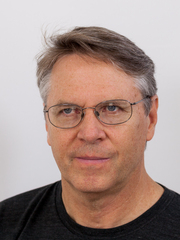
Serge Abiteboul is a prominent researcher affiliated with INRIA (France) specializing in database systems, data management, and distributed computing. His work spans foundational research in XML technologies, active XML systems, probabilistic databases, and ethical data science. He has contributed to influential projects like the Active XML framework and pioneered research on distributed data management systems. Holds the SIGMOD Edgar F. Codd Innovations Award (1998) Co-authored over 300 publications across journals like ACM TODS , VLDB Journal , and conferences such as SIGMOD, PODS, and ICDE Key research areas include: XML query languages and architectures Probabilistic and uncertain data management Workflow systems and collaborative computing Ethical considerations in data systems Notable contributions include the WebdamLog system for distributed data management and foundational work on Active XML . His recent focus on responsible data science addresses transparency, fairness, and regulatory compliance challenges.
Christian Glock is a Professor at the Department of Solid Construction and Building Construction within the College of Engineering at Rheinland-Pfälzische Technische Universität Kaiserslautern. His research focuses on sustainable concrete structures, digital construction technologies, and structural reliability. Academic Rank: Professor Department: Solid Construction and Building Construction University: Rheinland-Pfälzische Technische Universität Kaiserslautern Glock's research interests include climate-friendly concrete structures , digitalization in construction (e.g., BIM, drone-based monitoring), and resource-efficient building methods . His recent work addresses greenhouse gas reduction, circular economy principles, and innovative concrete applications. Key trends in his publications (2022-2025) span embodied carbon evaluation , DAfStb guidelines for climate protection , modular concrete systems , and 4D-BIM integration for lean construction processes. Contact: christian.glock@rptu.de
Silke von Lewinski serves as a Scientific Advisor at the Max Planck Institute for Innovation and Competition and holds the position of Extraordinary Professor at the Faculty of Law, University of Zagreb since 2020. With a distinguished career spanning over three decades, she has established herself as a leading authority in intellectual property law, particularly in copyright and related rights. Her work bridges academic scholarship with practical policy development at national, European, and international levels. Dr. von Lewinski earned her Doctor of Law (Dr. jur.) from the Free University of Berlin. She completed her legal clerkship (Assessorin) in Munich before joining the Max Planck Institute for Innovation and Competition as a scientific staff member. Since 1995, she has served as Head of Department for International Law and Special Problems of Developing Countries at the Institute. Her academic credentials were further recognized in 2020 when she was appointed as an Extraordinary Professor at the University of Zagreb's Faculty of Law. Her research interests focus on intellectual property law with particular expertise in copyright law, international copyright treaties, European copyright harmonization, digital copyright challenges, and the protection of traditional knowledge. She has extensively examined the intersection of copyright law with emerging technologies, including artificial intelligence and digital platforms. Her scholarly work addresses critical issues such as cross-border licensing, collective rights management, exceptions and limitations in the digital environment, and the implementation of the Digital Single Market Directive in Germany. Dr. von Lewinski's publication record demonstrates consistent engagement with evolving copyright challenges. Her recent work shows increasing focus on platform liability (particularly Article 17 implementation), artificial intelligence and copyright, performers' remuneration in digital environments, and the practical implications of CJEU case law. She has maintained a strong scholarly output through her editorial work on the comprehensive 'Copyright Throughout the World' series while producing timely analyses of specific copyright developments in Germany and Europe. The Hosier Distinguished Visiting IP-Scholar, DePaul University, Chicago (2005) First Distinguished Visitor to the Intellectual Property Research Institute of Australia (IPRIA) (2002) First Walter Minton Visiting Scholar, Center for Law and the Arts, Columbia University School of Law, New York (1998) Heinrich-Hubmann-Preis für die beste Monographie im Urheberrecht (1991) Dr. von Lewinski has advised numerous governments and international organizations on copyright matters. She has served as legal advisor to the European Commission, participated in WIPO diplomatic conferences that led to the Marrakesh and Beijing Treaties, and provided expertise to countries in Central and Eastern Europe, the former Soviet Union, and Asia through PHARE, TACIS, and other programs. Her extensive conference presentations across Europe, North America, Asia, and Australia demonstrate her global influence in copyright scholarship and policy development. At the Max Planck Institute, Dr. von Lewinski contributes to one of the world's leading research centers in intellectual property and competition law. She collaborates with an international team of scholars and participates in major research projects examining the future of copyright in the digital age. Her work with organizations like ALAI (where she serves as Vice President) and ATRIP connects her research to broader international intellectual property discourse.
Paul Francis is a tenured Professor at the Max Planck Institute for Software Systems (MPI-SWS) in Germany. His research focuses on practical data anonymization, including the development of Diffix—a robust data anonymization mechanism now part of the Open Diffix project. Previously, he co-founded Aircloak, a startup advancing these technologies. His career includes roles at Cornell University, MITRE, and Bellcore, with contributions to Internet routing (e.g., NAT, multicast protocols), P2P systems, and DHTs. Francis’s recent work emphasizes Internet privacy and ethical data practices. He has advocated for stronger privacy protections against tracking via browser technologies and participated in standards bodies like the W3C Tracking Protection Working Group. He has given keynotes on privacy and advertising, such as at CoNEXT 2011. His blog critiques industry practices in tracking and ad targeting, emphasizing the limitations of 'Do Not Track' mechanisms. Francis’s work bridges academic research with real-world applications, aiming to balance usability with privacy preservation.
Oana Goga is a Research Director at Inria, affiliated with the CEDAR team and Laboratoire d'Informatique de l'École Polytechnique (LIX). She holds a Ph.D. from Pierre et Marie Curie University. Her research focuses on AI and Society, addressing risks in online platforms, privacy, disinformation, and child protection. She leads interdisciplinary projects with economists, legal scholars, and social scientists. Awards & Grants: CNRS Bronze Medal (2024) Lovelace-Babbage Award (2023) ERC Starting Grant (2022) Andreas Pfitzmann Best Student Paper Award (2024) Advising & Tools: Guides Ph.D. students and postdocs on projects like CheckMyNews and AdAnalyst . Developed tools for auditing political ads and measuring platform risks. Labs & Collaborations: Active in the Inria CEDAR team and collaborates internationally on EU initiatives like the European Panel for Disinformation Monitoring .
Prof. Heidi Webber is a leading agricultural scientist at the Leibniz Centre for Agricultural Landscape Research (ZALF), serving as Co-Head of Program Area 3 'Agricultural Landscape Systems' and Head of the 'Integrated Crop Production Systems Analysis' working group. Her research focuses on climate risk assessment, crop stress modeling, and sustainable agronomic systems. She holds a Diplom-Agraringenieurin degree and has extensive experience in interdisciplinary studies combining biophysical and socio-economic analyses. Her expertise includes modeling plant growth under abiotic stresses and developing resource-efficient cultivation strategies. Notable contributions involve the AgMIP-Wheat initiative, high-yielding trait experiments, and climate-resilient crop systems in diverse regions like West Africa, South Korea, and Europe. She co-leads international projects addressing climate change impacts on agriculture and leads modeling efforts for crop diversification and adaptation strategies. Key research themes include: Climate risk assessment frameworks Multi-model ensemble approaches for crop yield prediction Abiotic stress tolerance mechanisms in cereals Climate-smart agricultural practices Agroecological transition in smallholder farming systems Her work bridges field experiments with advanced computational models, emphasizing data-driven solutions for sustainable intensification. Current projects explore index-based crop insurance, soil carbon dynamics, and the transformation of farming systems toward silicon-enhanced resilience.
Benedikt Folttmann is a Researcher at the Max Planck Institute for Tax Law and Public Finance since October 2022, concurrently serving as a legal trainee (Rechtsreferendariat) at the Higher Regional Court of Munich. He holds a focus on Tax Law and related disciplines within the Department of Business and Tax Law. Education: He studied Law at Bucerius Law School in Hamburg (2016-2022) with a specialization in Tax Law, and completed a scholarship program at Stanford Law School (2018). His academic training included a First State Examination in Law (March 2022) from the Hanseatic Higher Regional Court. Research Interests: His work bridges civil law principles and economic analysis in tax law domains. Key areas include inheritance tax systems, tax exemptions for family homes, and the interplay between legal frameworks and fiscal policy. He emphasizes methodological approaches that integrate economic reasoning with statutory interpretation. Professional Background: Previously, he served as a Student Research Assistant under Prof. Dr. Jörn Axel Kämmerer at Bucerius Law School (2017-2019) and under Prof. Dr. Dr. h.c. mult. Reinhard Zimmermann at the Max Planck Institute for Comparative and International Private Law (2019-2022). His current dual role combines judicial practice with academic research. Awards: He received a Konrad-Adenauer-Stiftung scholarship spanning his entire academic career (2016-2022), supporting his studies and research endeavors.
Florian Heider serves as Scientific Director of the Leibniz Institute for Financial Research SAFE since December 2022 and holds a professorship in Finance at Goethe University’s House of Finance. His research focuses on financial intermediation, monetary policy, market design, and corporate capital structure. He previously held roles at the London School of Economics, New York University Stern School of Business, and the European Central Bank (ECB), where he contributed to research, market infrastructure, and monetary policy functions. His academic career includes impactful work on banking sector dynamics, central bank policies under unconventional monetary conditions, and the implications of financial frictions for environmental and economic policy. He has authored numerous publications in leading academic journals and contributes to policy debates on European financial integration and stability. Key professional milestones include leadership in the ECB’s research and policy divisions, co-directing the Financial Intermediation department at SAFE, and maintaining an active advisory role in financial sector reforms. His contact is accessible via heider@safe-frankfurt.de . Research contributions span over two decades, with recent focus on the geopolitical dimensions of capital market integration, the design of deposit protection schemes post-SVB, and the evolving role of banks in a low-interest-rate environment. His work frequently bridges theoretical finance with policy implementation, particularly in the European context.
PD Dr. Michael Rohwerder is a Research Professor and Group Leader at the Max Planck Institute for Sustainable Materials in Düsseldorf, leading the Department of Interface Chemistry and Surface Engineering. His research focuses on corrosion mechanisms, advanced coatings, hydrogen embrittlement, and materials science. He holds a diploma in physics from the University of Hamburg (1992) and a PhD from the University of Düsseldorf (1997). After postdoctoral work at the University of Texas at Austin, he joined the University of Erlangen and later the Max Planck Institute, where he coordinates the Department since 2014. His work includes developing self-healing coatings, cryogenically processed alloys, and novel Kelvin probe techniques for corrosion analysis. He received the Christian Doppler Laboratory Award (2008) and declined a Full Professorship at Ohio State University due to a counter-offer. Education: Physics Diploma (1992), University of Hamburg PhD in Physics (1997), University of Düsseldorf Research Interests: Corrosion science and delamination Smart coatings and self-healing materials Hydrogen diffusion and embrittlement High-temperature oxidation and alloy design Awards: Christian Doppler Laboratory Award (2008) Grants/Labs: Scientific coordination of the Department of Interface Chemistry and Surface Engineering Development of the Scanning Flow Cell (SFC) and advanced Kelvin probe techniques
Dr. Felix Mark is a researcher at the Alfred Wegener Institute , specializing in Integrative Ecophysiology . His work focuses on understanding how marine organisms, particularly Antarctic fish and cephalopods, adapt to environmental challenges such as ocean acidification, warming, and hypoxia. Key responsibilities include coordinating the BIOACID project and leading Antarctic research initiatives. He integrates molecular and organismal approaches to study physiological responses and adaptation mechanisms. Research Interests : Cephalopod energy metabolism and hemocyanin function Synergistic effects of ocean acidification and warming on marine vertebrates/invertebrates Temperature adaptation in Antarctic fish mitochondria Transgenerational plasticity in marine species Projects : BIOACID (Biological Impacts of Ocean Acidification) Antarctic research under DFG SPP 1158 Cephalopod culture and physiology studies Labs/Teams : Affiliated with the Integrative Ecophysiology team at AWI, contributing to polar research infrastructure like the LTER Observatory HAUSGARTEN and the FRAM Ocean Observing System .
Md. Ismail Hossain is an active academic researcher with a focus on Artificial Intelligence , Machine Learning , and Cybersecurity . His work spans both theoretical and applied domains, including Neural Network Pruning , Electric Vehicle Charging Systems , and Security Analysis of emerging technologies. Key Research Themes : Neural network optimization, deepfake detection, and energy systems integration Recent Trends : Articles from 2022-2025 show increasing focus on AI model efficiency and security frameworks
Muhammad Bilal is an Associate Professor at Zhejiang University's School of Computer Science, Department of Computer Science and Technology. His research spans multiple cutting-edge domains in computer science and engineering, with a particular focus on edge computing, Internet of Things, and vehicular networks. His research interests include Edge Computing , Internet of Things , Vehicular Networks , Federated Learning , Digital Twins , and Cloud Computing . His work addresses critical challenges in resource allocation, latency optimization, privacy preservation, and intelligent decision-making in distributed computing environments. He has made significant contributions to developing novel frameworks for service caching, computation offloading, and secure data processing in next-generation networks. His recent publications reveal a strong trend toward integrating artificial intelligence with edge and cloud infrastructure, particularly focusing on privacy-preserving techniques and resource-efficient algorithms. His work spans applications from intelligent transportation systems to healthcare monitoring and meteorological services, demonstrating the versatility and real-world impact of his research. Dr. Bilal has established a prolific publication record with numerous high-impact papers in top-tier journals and conferences, reflecting his active engagement in the academic community. His collaborative approach is evident through extensive co-authorship networks, particularly with researchers in China, Pakistan, and internationally.
Konstantinos Alexandris Polomarkakis is a Professor of Law at Royal Holloway, University of London, and Director of Internationalisation for the School of Law and Social Sciences. He previously held positions at the University of Exeter, where he co-directed the Centre for European Legal Studies. His research focuses on the intersection of policy-making, labour rights, and non-discrimination law within the European context, particularly examining judicial influence on legislative gaps and the role of equality in legal professions. Key projects include investigations into ethnic disparities in legal qualifications and worker exploitation via UK agriculture/care visas. Education Background: Not explicitly stated in provided texts. Research Interests: EU legal frameworks, judicial decision-making, social Europe policy, and legal profession equity. His publications analyze judicial interpretation of EU labour laws, the evolution of Social Europe through case law, and the socio-legal dimensions of equality litigation. Recent work critiques labour commodification in EU rights frameworks and explores visa-related exploitation risks. He has collaborated with institutions like the Solicitors Regulation Authority and the Modern Slavery and Human Rights Policy Centre, contributing to policy-relevant studies on legal equity and migrant worker protections. Grants and projects include externally funded research on legal assessment biases and migrant worker vulnerabilities. His monograph under contract with Oxford University Press examines the CJEU's conceptualization of European labour law.
Fadi A. Aloul is an academic at the American University of Sharjah, UAE , with a focus on computer science and cybersecurity. His research spans Boolean satisfiability Machine learning applications IoT and mobile security Chaotic system modeling He has collaborated extensively on FPGA implementations, intrusion detection, and health monitoring systems. Research Trends : Recent work emphasizes machine learning for cybersecurity (e.g., Android malware detection, IoMT threat mitigation) and FPGA-based chaotic models for medical/disease simulation. Earlier studies highlight symmetry-breaking algorithms in satisfiability problems and mobile health applications. Collaborations : Co-authored with Imran A. Zualkernan Assim Sagahyroon Ahmed S. Elwakil Wassim El-Hajj across institutions in UAE, USA, and Egypt.
Farhan Amin is a prolific researcher in computer science with a focus on Internet of Things (IoT) technologies, data security, and smart systems. He has published extensively in high-impact journals like IEEE Access and PeerJ Comput. Sci., collaborating with international experts such as Rashid Abbasi and Gyu Sang Choi. His work spans domains including smart city analytics, medical data protection, and next-generation IoT frameworks. Key Contributions: Dynamic trust management in IoT, 3D arthritis detection models, and hybrid data watermarking techniques. Collaborators: Rashid Abbasi, Salabat Khan, Abdul Mateen, Isabel de la Torre Díez. His research bridges theoretical innovation and practical applications, particularly in cybersecurity for IoT, network navigation, and healthcare analytics. Recent publications highlight advancements in zero-knowledge proofs, deep learning for medical imaging, and 6G-enabled healthcare systems. Farhan’s work on anticancer peptide prediction and child custody decision modeling demonstrates interdisciplinary reach. While not explicitly stated, his output suggests a faculty or senior research role at an institution engaged in cutting-edge computational science.