Torbjörn Gräslund is a Professor of Medical Protein Technology at KTH Royal Institute of Technology . His work focuses on designing protein-based molecules for medical applications, particularly in cancer therapy and diagnosis. His research group develops drug conjugates targeting HER2 and EpCAM receptors, with an emphasis on minimizing healthy tissue impact while maximizing tumor efficacy. Key research areas include the development of targeted toxins, pretargeting strategies for cytotoxic drug delivery, and optimizing radiolabeling techniques for PET and SPECT imaging. He explores molecular design principles to enhance drug conjugate half-life and tumor uptake through albumin-binding domains (ABD) and protein fusion technologies. His articles highlight advancements in HER2/HER3-targeted therapies, albumin-binding domain applications, and novel imaging probes for oncological diagnostics. Collaborations involve interdisciplinary projects combining protein engineering with preclinical testing in mice models. Notable research contributions include the evaluation of Affibody molecules as therapeutic and diagnostic agents, and the use of designed proteins like DARPins for EpCAM imaging in pancreatic and prostate cancers. No scientific awards or grants are explicitly mentioned in the provided texts, though his extensive publication record indicates impactful work.
Prof. Dr. Klaus Kopka is a Full Professor for Bioinorganic and Radiopharmaceutical Chemistry at TU Dresden and Director of the Institute of Radiopharmaceutical Cancer Research at Helmholtz-Zentrum Dresden-Rossendorf (HZDR). His research focuses on developing radiopharmaceuticals for cancer diagnostics and theranostics, particularly targeting prostate-specific membrane antigen (PSMA), mutant IDH1 in gliomas, and somatostatin receptors. Key contributions include the design of PSMA-inhibitor-based PET/SPECT tracers, theranostic radionuclide pairs (e.g., 133La/225Ac), and copper- and mercury-mediated labeling strategies. Education & Career : - PhD in Chemistry (1996, WWU Münster) - Habilitation in Radiochemistry (2007, WWU Münster) - Associate Professor (2012, WWU Münster) - W3 Professor & Head of Radiopharmaceutical Chemistry Department at DKFZ (2013-2018) - Current roles since 2019: TU Dresden Professor & HZDR Institute Director Research Interests : Radiometal complexation, theranostic agents for prostate cancer, IDH1 mutation imaging, and preclinical evaluation of α-emitters like Actinium-225. His group develops novel chelators (e.g., macropa-based cryptands) and automation strategies for GMP-compliant radiopharmaceutical production. Award Highlights : - 2018 Stifterverband Science Prize for interdisciplinary research - 2022 Yong Whee Bahk Lectureship Award (Korean Society of Nuclear Medicine) Lab & Collaborations : His team operates advanced radiochemistry facilities at HZDR, focusing on cyclotron-produced radionuclides (e.g., 61Cu, 133La) and theranostic applications. Collaborations include clinical trials for PSMA-targeted therapies and preclinical models of pancreatic cancer metabolism.
Yujin Qi is a Lecturer at the School of Physics within the Faculty of Engineering and Information Sciences at the University of Wollongong (Australia), holding this position since 2021. Previously, they served as a Research Professor at the Shanghai Institute of Applied Physics (Chinese Academy of Sciences) from 2004 to 2012, and held postdoctoral and research roles at institutions such as Johns Hopkins Medical Institutions and McGill University. They earned a PhD in Nuclear Physics from McGill University (1994–1999), an MSc from the Institute of Modern Physics (China, 1990–1993), and a BSc from Lanzhou University (1981–1986). Dr. Qi's research focuses on quantitative biomedical radiation imaging, novel radiation instrumentation, and portable imaging devices. Key areas include low-dose CT imaging, proton therapy dosimetry, prompt gamma-ray detection for treatment verification, and brachytherapy innovations. Their work combines medical physics, radiation engineering, and computational modeling. Grant funding includes projects on AI-based gamma camera design (2024), bedside molecular imaging tools (2018), and prompt gamma-based dosimetry (2014). Supervised research spans topics like CT dose trends, in-vivo proton therapy verification, and brachytherapy device development. Collaborations emphasize multidisciplinary approaches to advancing clinical imaging and radiation therapy technologies.
Stephan G. Nekolla is an Associate Professor at the Technical University of Munich, where he works at the Clinic and Polyclinic of Nuclear Medicine. With a career spanning over three decades in medical physics and imaging, he has established himself as a leading researcher in the field of nuclear medicine and cardiovascular imaging. Dr. Nekolla's educational background includes training at the University of Wuerzburg, where he worked as a Physicist from June 1989 to June 1993. Since May 1993, he has been affiliated with the Technical University of Munich, initially as a Senior Physicist before advancing to his current position as Associate Professor. His primary research interests focus on the intersection of medical physics and clinical applications, with particular emphasis on: Medical Physics and Biophysics Biomedical Imaging and Diagnostic Imaging Computed Tomography and Magnetic Resonance Imaging Medical Image Analysis and Processing Cardiology applications of nuclear medicine Dr. Nekolla's recent publication record demonstrates a strong focus on hybrid imaging techniques, particularly PET/MRI applications in cardiology and oncology. His work spans multiple areas including myocardial viability assessment, cardiac sarcoidosis imaging, prostate cancer diagnostics, and radiation therapy optimization. A significant portion of his research involves developing and validating new imaging protocols, quantification methods, and machine learning approaches to enhance diagnostic accuracy and patient outcomes. As the leader of his research lab at the Technical University of Munich, Dr. Nekolla has built a multidisciplinary team focused on advancing nuclear medicine techniques and their clinical applications. His laboratory work bridges the gap between fundamental physics research and practical clinical implementation, with a particular emphasis on improving cardiac and oncological imaging.
Prof. Dr. Katharina Lückerath is a leading academic in nuclear medicine and serves as the Head of Preclinical Theranostics at the Clinic for Nuclear Medicine, University Hospital Essen, affiliated with the Faculty of Medicine at the University of Duisburg-Essen. Her research is centered on advancing theranostic approaches in oncology, integrating diagnostic imaging with targeted radionuclide therapies to improve cancer treatment outcomes. Her research interests span nuclear medicine, theranostics, radioligand therapy, molecular imaging, tumor biology, and resistance mechanisms in cancer . She investigates how tumor heterogeneity, metabolism, and microenvironmental factors influence treatment response, aiming to develop more effective and personalized therapies. Her work includes preclinical evaluation of PSMA- and FAPI-targeted agents, combination strategies, and the use of PET/CT and SPECT/CT for biomarker discovery. The recent publications reflect a strong focus on translational oncology , with studies on FAPI- and PSMA-based imaging and therapy, mechanisms of resistance, and novel pretargeting strategies. Her team utilizes advanced preclinical models and imaging technologies to validate new radioligands and optimize dosing and delivery. Collaborative work with international experts underscores the impact of her research in shaping clinical theranostic practices. Prof. Lückerath leads a multidisciplinary research group comprising PhD students, biologists, and radiopharmaceutical scientists, fostering innovation in experimental radiochemistry and preclinical imaging. Her team has access to state-of-the-art facilities including Molecubes PET/SPECT/CT systems and autoradiography tools, enabling high-throughput and high-resolution studies.
Valentina Giannini is an Assistant Professor at the Department of Oncology of the University of Turin , specializing in biomedical engineering and oncologic imaging. Her work focuses on applying artificial intelligence, radiomics, and deep learning to improve cancer diagnosis and treatment prediction. She teaches courses such as Bioengineering, Medical Imaging Systems, and Neurophysiological Techniques within the Scuola di Medicina . Her research emphasizes multi-center studies, AI-driven clinical decision support systems, and MRI/CT-based biomarkers for tumors like prostate and colorectal cancers. Giannini’s research has produced tools such as the METhodological RadiomICs Score (METRICS) for radiomics quality control and AI systems for automatic tumor segmentation. She collaborates across disciplines, integrating engineering principles with clinical oncology to enhance treatment outcomes. Her recent work highlights advancements in transparent AI systems, multi-vendor compatibility, and predictive analytics for therapy resistance. Key areas of expertise include: Radiomics and texture analysis in oncology Deep learning for medical image segmentation Prostate and colorectal cancer diagnostics AI ethics and algorithmic transparency Her contributions span 70+ peer-reviewed articles, emphasizing translational research bridging engineering and clinical practice. Giannini actively participates in EU-funded projects and collaborates internationally to drive innovation in cancer imaging technologies.
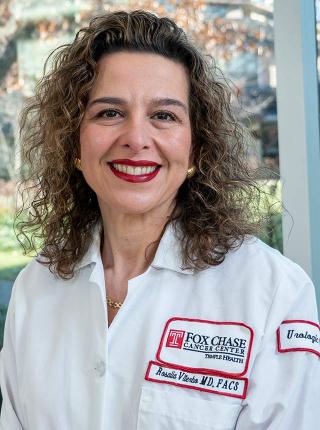
Rosalia Viterbo, MD, FACS, is a Professor in the Department of Urology at Fox Chase Cancer Center (Temple University Health System). She specializes in robotic and minimally invasive surgery for urologic cancers, including prostate, bladder, kidney, and adrenal malignancies. With over 1,500 robotic procedures performed, her clinical focus integrates innovative technology with patient-centered care. Education: Fellowship in Robotic Urologic Oncology, City of Hope National Medical Center Residency in General Surgery and Urology, Temple University Hospital MD, State University of New York at Buffalo School of Medicine (2000) Research Focus: Dr. Viterbo leads studies on prostate cancer therapeutics, robotic surgical techniques for cystectomy/nephrectomy, and diagnostic advancements in urologic oncology. Her work emphasizes risk-stratified treatment protocols and quality-of-life outcomes in cancer survivors. Awards & Honors: Fellow, American College of Surgeons (FACS) Philadelphia Magazine Top Doctor (2024, 2025) She maintains active membership in the Society of Urologic Oncology, American Urological Association, and Philadelphia Urological Society.
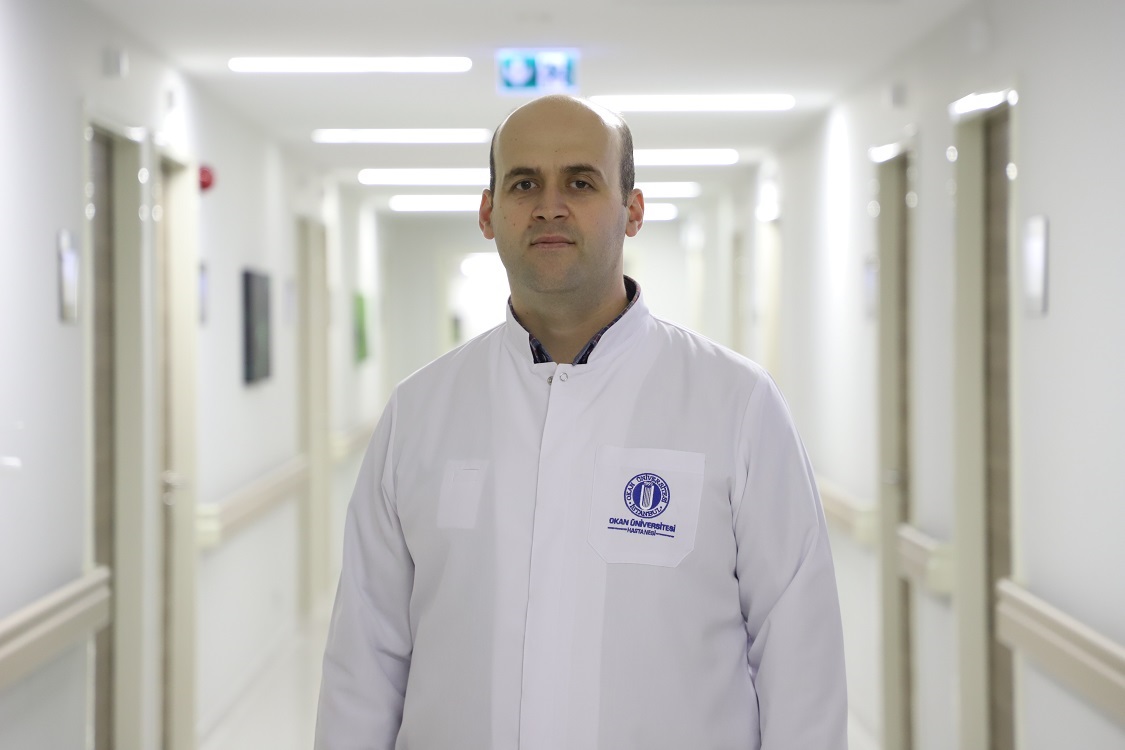
Uzm. Dr. Mustafa Aras is a specialist in Nuclear Medicine currently affiliated with Istanbul Okan University Hospital. With extensive expertise in PET/CT, SPECT/CT, and nuclear oncology applications, he contributes significantly to diagnostic imaging and treatment evaluation in oncology and cardiology. His educational background includes: Medical Degree from Marmara University School of Medicine (English program), 2001-2005 Master's Degree from Marmara University School of Medicine (English program), 2005-2008 Specialization in Nuclear Medicine from Marmara University, 2009-2014 Dr. Aras's research focuses on advanced nuclear medicine techniques, particularly in oncology applications. His work examines PET/CT and SPECT/CT imaging for cancer diagnosis, treatment response evaluation, and radionuclide therapies. He has made significant contributions to understanding physiological patterns in FDG uptake, diagnostic pitfalls in nuclear imaging, and applications in nuclear cardiology. His research bridges clinical practice with technological advancements in molecular imaging, enhancing diagnostic accuracy and patient management strategies. Analysis of Dr. Aras's publication record reveals a strong focus on practical applications of nuclear medicine in oncology. His work frequently addresses diagnostic challenges, false positives, and incidental findings that impact clinical decision-making. He has contributed significantly to understanding treatment response criteria across various imaging modalities and has explored specialized applications in rare conditions like Eisenmenger syndrome and uncommon tumor presentations. Dr. Aras has presented his research at numerous national and international conferences, including the European Association of Nuclear Medicine Annual Meetings and the Society of Nuclear Medicine and Molecular Imaging. His participation in these venues demonstrates active engagement with the global nuclear medicine community. Throughout his career, Dr. Aras has participated in various specialized training programs, including courses on nuclear cardiology, thyroid diseases, and PET-MR imaging. His continuous professional development reflects commitment to staying current with technological advances in nuclear medicine. His clinical work encompasses a wide range of nuclear medicine applications, with particular expertise in oncological imaging, treatment response assessment, and specialized diagnostic procedures using advanced hybrid imaging techniques.
Søren Ravn serves as a Ledende overlæge (Chief Physician) at Aalborg University Hospital within The Faculty of Medicine, specifically in the Department of Nuclear Medicine. His clinical and research activities focus on advanced nuclear imaging techniques and their application in oncology and cardiology. His primary research interests span Nuclear Medicine, Oncology, and Medical Imaging , with particular expertise in prostate cancer diagnostics, bone metastasis detection, and PET/CT imaging optimization. Recent work demonstrates significant contributions to radiation dose reduction methodologies in SPECT-CT systems while maintaining diagnostic accuracy. Analyzing his publication trends, Ravn's research shows a strong emphasis on clinical validation of imaging protocols and technological improvements in nuclear medicine . His 2024 publications reveal concentrated efforts in optimizing CT dose parameters using tin filters and iterative reconstruction techniques, while his 2022 work established critical benchmarks for observer accuracy in prostate cancer metastasis detection using novel PET tracers. Ravn was awarded his PhD by Aalborg University's Faculty of Medicine in December 2016 for research involving MR imaging applications before, during, and after treatment protocols. PhD awarded: December 2016 (Aalborg University) Primary clinical role: Chief Physician, Department of Nuclear Medicine Key research domains: Prostate cancer imaging, radiation dose optimization, myocardial perfusion studies Collaborative networks: Extensive work with Nordic regional cancer registries and imaging consortia
Dr. Sai Han is an Honorary Clinical Associate Professor at the University of Glasgow's School of Infection & Immunity, with affiliate status in the School of Cancer Sciences. Based at Glasgow Royal Infirmary & Gartnavel General Hospital under NHS Greater Glasgow and Clyde, his clinical and research practice focuses on advanced imaging techniques in oncology. His research specializes in nuclear medicine applications for cancer diagnostics, particularly PET/CT and SPECT/CT methodologies. Key areas include: Tumor staging and metabolic characterization in lung cancer Novel tracers for prostate cancer recurrence detection Optimization of radiotherapy planning using hybrid imaging Paraneoplastic syndrome evaluation through metabolic imaging Publication analysis reveals consistent focus on validating imaging biomarkers (SUVmax, tracer efficacy) across oncology subspecialties, with recent work emphasizing diagnostic algorithms for pulmonary nodules and mediastinal metastases. The research demonstrates translational impact through cost-effectiveness analyses and clinical management guidance. No awards, grants, or student advising relationships are documented in the provided materials. Professional collaborations include multidisciplinary teams across radiology, oncology, and surgical departments at Glasgow teaching hospitals.
Fei Jiang, PhD, MS is an Associate Professor in the Department of Epidemiology & Biostatistics at the University of California, San Francisco (UCSF) , School of Medicine. She previously served as an Assistant Professor in Statistics at the University of Hong Kong, where she contributed to the establishment of the Master of Data Science and Artificial Intelligence program. Her academic journey includes a Ph.D. in Statistics from Rice University, an M.S. in Biostatistics from The University of Texas at Houston, and a postdoctoral fellowship at Harvard University. Ph.D., Statistics, Rice University, Houston (2014) M.S., Biostatistics, The University of Texas at Houston (2010) Postdoctoral Fellow, Biostatistics, Harvard University, Boston (2016) Dr. Jiang's research centers on machine learning, high-dimensional modeling, functional data analysis, and measurement error models , with applications in neuroimaging, genetics, stroke, cardiovascular disease, and digital health . Her work bridges statistical theory and practical medical challenges, particularly in clinical trial design and analysis of complex biomedical data. She has developed methods for adaptive randomization, change point detection, and functional quantile regression, applied to datasets such as BOSS (blood pressure and stroke outcomes). Her recent publications reveal a strong trend in neuroimaging, oncology, and musculoskeletal health , with a focus on Alzheimer's disease, brain functional connectivity, osteoarthritis, and prostate cancer imaging . She frequently collaborates on interdisciplinary projects involving MEG/EEG, fMRI, and PET/MRI, leveraging advanced statistical frameworks to extract meaningful biological insights. Her work on digital twins for knee joints and brain metastasis atlases highlights her innovative approach to precision medicine. Her scientific contributions have been recognized with awards including: Stroke and Vascular Neurology High Impact Paper Award (2018) ENAR Distinguished Student Paper Award (2013) Rice Graduate Student Fellowship (2012) Dr. Jiang has secured significant research funding as Principal Investigator from the National Institutes of Health (NIH) and the Research Grants Council of Hong Kong . Her current projects include developing statistical tensor models for aneurysm growth prediction and machine learning frameworks for dementia. She has supervised and collaborated with numerous students and researchers, contributing to high-impact publications in journals like Nature Communications, NeuroImage, and Biometrics . She has also been involved in clinical trials related to acupuncture and pain management. Her lab, Jiang's Lab , focuses on creating data-driven tools for biomedical discovery.
Joost Haeck is a researcher affiliated with the Department of Radiology & Nuclear Medicine at Erasmus University Rotterdam. His work focuses on oncology, nuclear medicine, and biomedical engineering, particularly in glioblastoma and prostate cancer research. Research Interests: Development of CNS-penetrant drug candidates for glioblastoma Luciferase-based reporter gene imaging technologies Radionuclide therapy for prostate cancer Nanoparticle drug delivery systems for brain tumors Dual-modality imaging probes for surgical guidance Recent Publications: His recent work includes studies on lutetium-177 therapy, hyaluronic acid nanoparticles, and optical-radionuclide imaging agents, reflecting interdisciplinary approaches in oncology and imaging.
Asta Juzenienne serves as an Associate Professor in Biophysics and Medical Physics at the University of Oslo , Faculty of Mathematics and Natural Sciences. Her research bridges photobiology, radiation oncology, and vitamin D photobiology. Current focus on targeted alpha therapy and photodynamic treatment mechanisms Collaborative work with institutions like Oslo University Hospital and international research teams Her recent publications highlight innovations in: 224Ra/212Pb dual targeting for disseminated cancers PSMA-directed radioligands for prostate cancer UV radiation's role in vitamin D/folate dynamics Drug interactions with melanoma risk Advanced delivery systems for photosensitizers
Ekaterina Bezverkhniaia is a Researcher in the Department of Medicinal Chemistry at Uppsala University, Sweden. She specializes in radiopharmaceutical development for cancer imaging and therapy, with a focus on prostate cancer targets such as PSMA and GRPR. Her research spans the design, synthesis, and preclinical/clinical evaluation of radiolabeled peptides and affibody molecules for SPECT and PET imaging, as well as targeted radionuclide therapy. Key areas include theranostics, molecular imaging probe development, and optimizing pharmacokinetics through protein engineering. Recent work (2023-2025) demonstrates expertise in translating novel radiotracers from bench to bedside, with publications covering PSMA-targeted agents for prostate cancer, GRPR-targeted imaging, and half-life extension techniques. Her studies often involve technetium-99m, gallium-68, and lutetium-177, and address critical aspects like dosimetry and tumor uptake.
Ayman Abouzayed is a visiting researcher at Uppsala University's Department of Medicinal Chemistry, affiliated with the Translational PET Imaging unit. His work focuses on molecular imaging, theranostic applications, and radiopharmaceutical development for oncology. Research Interests: Prostate cancer imaging and therapy GRPR and PSMA targeting Radiolabeling techniques (Ga-68, Tc-99m, Lu-177) Theranostics using affibody molecules and peptides Preclinical evaluation of tumor-targeting agents Articles (2025-2022) demonstrate expertise in optimizing chelators, linkers, and conjugates for PET/SPECT imaging and radiotherapy. Key subfields include GRPR antagonists , affibody-drug conjugates , metabolic stability , and clinical translation of prostate cancer theranostics.