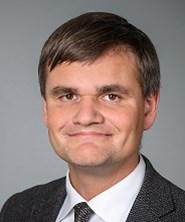
Edita Gruodytė is a tenured Professor at Vytautas Magnus University, specializing in Criminal Law (national, EU, and comparative perspectives), Legal Ethics , and Human Rights . She serves as Vice-Dean for Research at the Faculty of Humanities and Faculty of Law, and is Chief Editor of the legal journal Teisės apžvalga/Law Review . Key Affiliations : Department of Public Law, Faculty of Humanities, Faculty of Law, Vytautas Magnus University Expertise : EU Criminal Law, Business Crimes, Legal Education, Migration Policy Her research spans Criminal Policy (including drug laws and corruption prevention in healthcare), Digital Law (AI accountability and electronic personhood), and Human Rights (privacy vs. right to truth, migration crisis responses). She has authored 1+ books and 40+ articles, with recent work focusing on GDPR compliance in telemedicine and the impact of smart technologies on private law. As a legal practitioner with 17+ years of experience, she teaches courses in criminal law, business crimes, EU criminal law, and legal ethics.
Matthias Lamping is a Senior Research Fellow at the Max Planck Institute for Innovation and Competition, focusing on intellectual property law, competition law, and technology transfer. He serves as a visiting lecturer at the University of Munich, Europa-Kolleg Hamburg, and Tongji University in Shanghai, while advising public and private entities on IP and competition matters. PhD in Law (University of Salzburg) MBA (IESE Business School) Habilitand at Ludwig Maximilians University of Munich His research examines the interplay between property rights, competition, and innovation processes, with emphasis on: Patent law and market dominance TRIPS Agreement harmonization Regulation of emerging technologies EU patent system reforms Legal philosophy and economic analysis Key publication trends include: 2024 work on genomic techniques and plant breeding IP 2023 analysis of EU compulsory licensing frameworks 2019 proposals for antimicrobial innovation incentives 2016-2014 studies on TRIPS implementation and patent harmonization 2013-2010 critiques of EU patent integration
Anna Barczak is a Professor at the Faculty of Law and Administration of the University of Szczecin, specializing in environmental protection law, administrative law, and local government responsibilities. She holds a doctoral degree (2003) and habilitation (2014), and was awarded the title of Professor in 2016. Her research focuses on municipal waste management, environmental impact assessments, and legal frameworks for ecological security. Her academic roles include heading the Environmental Protection Law Research Team, editing the Administrative Studies journal, and coordinating postgraduate programs in environmental law. She has supervised over 350 theses and teaches courses on environmental law, administrative law, and public administration. Barczak actively participates in university governance, serving on the Scientific Council, Learning Outcomes Committee, and recruitment panels. Her work emphasizes legal aspects of environmental justice, public participation, and sustainable development. She contributes to international conferences and comparative legal analyses, particularly regarding EU environmental policies and municipal practices.
Dr. hab. Piotr Dniestrzański, professor at Wrocław University of Economics, specializes in mathematical and political science approaches to fair division problems, particularly in the context of degressively proportional allocation systems. He holds an academic position in the Department of Mathematics and Cybernetics. His research focuses on optimizing seat distributions in institutions like the European Parliament, addressing paradoxes in proportional representation, and applying mathematical models to political and economic challenges. Key research areas include: Apportionment methods and divisor-based allocation systems EU parliamentary configuration dynamics Optimization theory for fair resource distribution Statistical measures of inequality and disproportionality Recent work analyzes Brexit's impact on European Parliament structure, critiques the Cambridge Compromise framework, and explores entropy-based allocation strategies. His methodologies bridge mathematical rigor with practical governance applications. Consultation hours in 2024/2025: Thursdays 12:45-13:15 via Microsoft Teams (code rs9b0dy).
Jonas Hultin Rosenberg is an Associate Professor of Political Science at Mälardalen University's School of Business, Society and Engineering (Division of Economy and Political Science). He holds a PhD from Uppsala University (2017) and was appointed docent (associate professor) there in 2023. His research focuses on political philosophy, political sociology, and the intersection of AI with democratic systems. Current roles include Guest Researcher at Uppsala University's Centre for Multidisciplinary Research on Religion and Society (CRS) and associate editor of Philosophy & Technology . Research interests emphasize democratic inclusion criteria, political equality, AI's societal impact, and citizenship. Key themes include justification of democracy, voter turnout among marginalized groups (notably people with intellectual disabilities), and the ethical implications of algorithmic governance. His work bridges normative theory with empirical analysis, addressing questions like 'Who should be included in democratic processes?' and 'How does technology reshape political legitimacy?' Publications since 2012 reflect a trajectory from foundational democratic theory to contemporary challenges posed by AI and disability inclusion. Recent work explores AI's potential as both a disruptor and enabler of democratic values, alongside reinterpreting classical principles like the 'all-affected' criterion in modern contexts. He employs mixed methods, including conjoint experiments and longitudinal data analysis. Professional service includes editorial work for peer-reviewed journals and advisory roles in multidisciplinary research centers. Current projects likely continue investigating AI's socio-political dimensions and expanding inclusion frameworks to non-human actors (e.g., nature, AI systems).
Benjamin Joshua Ong is a Full-time Faculty Member and Assistant Professor of Law at the Yong Pung How School of Law , Singapore Management University (SMU). He holds a Bachelor of Arts (Jurisprudence, First Class) and a Bachelor of Civil Law from the University of Oxford, and previously earned an ACCA Advanced Diploma in Accounting and Business (2012). Appointed in January 2019, he also serves as Director of Undergraduate Admissions (since 2020) and is a member of the SMU Institutional Review Board. Education: Bachelor of Arts (Jurisprudence, First Class), University of Oxford (2014) Bachelor of Civil Law, University of Oxford (2015) ACCA Advanced Diploma in Accounting and Business (2012) Research Interests focus on Constitutional Law and Administrative Law , with emphasis on judicial review of executive action, constitutional supremacy, prosecutorial discretion, and the separation of powers. His work explores equality before the law, the constitutional right to religious profession, and legal responses to false statements. He has contributed to seminal texts like Halsbury’s Laws of Singapore on Administrative and Constitutional Law, and critically analyzed landmark cases in Singapore and Malaysia. Scientific Awards include multiple teaching honors: the SMU Dean’s Teaching Excellence Award (2022-2023), Most Promising Teacher Award (2020-2021), and Top LGST Teacher Award (2018-2019). He also received the Slaughter & May Prize for Legal History (2014), Wronker Prize for Tort (2014), and the St Edmund Hall Open Scholarship (2012-2014). Current Projects address judicial review of executive action on substantive grounds, legal responses to false statements, and the constitutional right to religious profession. His recent publications analyze developments in civil appeals, prosecutorial discretion, and constitutional rights review in Malaysia and Singapore, with a forthcoming 2025 article in the Asian Journal of International Law examining judicial-executive dynamics.
Felicitas Holzer is a Postdoctoral Fellow affiliated with the Bioethics Program at FLACSO Argentina, a WHO collaborating center. She serves on the editorial board of Development World Bioethics and has held international roles at institutions including the Hastings Center, Yale Interdisciplinary Center for Bioethics, and the European Commission's Directorate-General for International Partnerships (DG INTPA) in Brussels. Education: PhD in Political Philosophy (Sorbonne University), Master's in History and Philosophy of Science (University of Cambridge), BSc in Economics, MPhil in Political Philosophy, and MPhil in Bioethics. Her research bridges bioethics, socio-economic justice, and political philosophy, focusing on triage ethics, rare diseases, public health ethics, and global justice. Recent projects include an SNF-funded initiative on The Ethics of Triage and consulting work for the WHO on equitable vaccine access through COVAX. Key trends in her publications include analyses of vaccine distribution equity, triage guidelines, and pandemic management frameworks. Her work spans empirical and theoretical domains, emphasizing justice in global health policies and practices. Scientific Awards: DAAD Funding, CONICET Scholarships, Brocher Foundation Support, MTZ Foundation Grants. Holzer collaborates with institutions like the World Health Organization and contributes to interdisciplinary networks such as the UK-Latin American Network of Political Philosophy. She has worked on projects related to health policy, resource allocation, and ethical frameworks for global health governance.
Mattias Hjertstedt is an Associate Professor at the Department of Law and affiliated with the Unit of Police Work at Umeå University . His academic focus lies in procedural law and coercive measures, with a particular emphasis on their intersection with human rights and administrative law. Research Interests : Hjertstedt investigates legal frameworks governing coercive measures, age assessment in asylum processes, judicial review, and privacy rights. His work bridges theoretical legal analysis with practical implications in policing and migration law. Publications Trends : His recent scholarship explores the legal uncertainty surrounding coercive measures against minors, conflicts between confidentiality and interagency collaboration, and doctrinal critiques of procedural compliance in Swedish law. Publications span journals like Advokaten and Svensk Juristtidning , as well as edited volumes. Teaching : He actively contributes to the Swedish Law Programme, Police Officer training, and advanced courses in Criminal Procedural Law.
Dr. Dr. Leonard Hoeft is a researcher at the Humboldt-Universität zu Berlin , affiliated with the chair of Christoph Möllers. His work bridges Legal Philosophy , Behavioral Law & Economics , and Experimental Jurisprudence , focusing on normative systems, procedural law, and the intersection of cognition and legal behavior. Doctorate in Law (2020), awarded the Otto Hahn Medal Doctorate in Economics (2022), received the Doctoral Prize of the Friends and Sponsors of the Friedrich Schiller University Jena Hoeft's research explores the psychological and behavioral foundations of legal norms, power dynamics, and public goods. His recent publications analyze administrative order, proportionality in constitutional jurisprudence, and experimental approaches to punishment behavior. He has collaborated with institutions like the Max Planck Institute for Collective Goods and the University of Cambridge. Current position as scientific Assistant at Humboldt-Universität zu Berlin Visiting scholar at the Faculty of Philosophy, University of Cambridge (2016/2017) Scientific Awards : Otto Hahn Medal (2020) Doctoral Prize of the Friends and Sponsors of Friedrich Schiller University Jena (2023) Research Trends : Hoeft's publications emphasize experimental methods to study legal norms, power abuse, and cooperative behavior in public goods. His work integrates legal philosophy with behavioral economics, highlighting normative obligations and cognitive processes in moral decision-making.
Yun-chien Chang is the Jack G. Clarke Professor in East Asian Law at Cornell Law School , where he also serves as Director of the Clarke Program in East Asian Law & Culture. His work bridges law and economics , comparative property law , and empirical legal studies , with a focus on property theory, corporate governance, and judicial behavior. Research Themes : Property law efficiency and convergence/divergence between civil and common law systems Economic analysis of eminent domain, adverse possession, and takings compensation Empirical studies of judicial decision-making, settlement patterns, and legal aid participation Machine learning applications in comparative legal analysis Publication Trends : Recent work (2021-2025) emphasizes legal origins theory , judicial ideology , and behavioral economics in law Foundational papers (2010-2016) explore property customs , constitutional mechanisms , and economic modeling of legal institutions
Dr. Wanjiru Njoya serves as the Walter E. Williams Research Fellow at the Mises Institute, a non-profit organization dedicated to advancing the Austrian School of economics, individual freedom, and honest history. Her work critically engages with constitutional law, civil liberties, and political philosophy from a radical libertarian perspective. Her primary research focuses include: Constitutional Law (particularly First and Fourteenth Amendments) Civil Liberties and Free Speech erosion Political Philosophy (individualism vs. identitarian violence) Juridical foundations of justice in natural law Critique of civil rights legislation and equality laws Recent 2025 publications reveal a consistent analytical thread: how judicial interpretation of the Fourteenth Amendment enables progressive agendas that undermine First Amendment protections. She systematically applies Rothbardian principles to demonstrate how private property rights form the indispensable basis for genuine liberty, arguing that modern civil rights frameworks inevitably impose state coercion rather than expand freedom. As author of Economic Freedom and Social Justice (2021) and Redressing Historical Injustice (2023), her scholarship bridges theoretical economics with practical legal analysis, consistently challenging mainstream narratives about justice and equality through the lens of Austrian economic theory and libertarian jurisprudence.
Oğuz Köklü is a Lecturer in the Department of Mathematics Education at Marmara University. He earned his Ph.D. in Mathematics Education from the University of Georgia (2017), M.S. in Mathematics and Science Education from Boğaziçi University (2012), and B.S. in Mathematics Teaching from Boğaziçi University (2008). Ph.D.: Mathematics Education, University of Georgia (2017) M.S.: Mathematics and Science Education, Boğaziçi University (2012) B.S.: Mathematics Teaching, Boğaziçi University (2008) His research focuses on Statistics Education , Probability Education , and Mathematics Teacher Training , with particular emphasis on Bayesian reasoning , statistical variability , and geometric proportionality . Recent publications analyze preservice teacher misconceptions and technology-enhanced instruction methods. Köklü’s work includes grants from TUBITAK and NSF , such as a 2023 workshop leader role for a TUBITAK-funded project on data science education for gifted students. He has advised 5 Master’s students and contributed to curriculum design frameworks in Turkish journals.
Nicolene Steyn is a Senior Lecturer at the School of Law, University of the Witwatersrand. Her research focuses on intersections between technology, environment, and urban governance. She holds a Doctor of Law (LLD) from North-West University alongside an LLB and LLM. Her work spans critical areas including: Cyber Law and AI Governance Climate Resilient Urban Development Water Law and Smart Infrastructure International Humanitarian Law Challenges Notable projects include legislative analysis of non-revenue water management in South African cities and climate policy frameworks for Southern African municipalities. She contributes to the South African Research Chair on Cities, Law and Environmental Sustainability. Her publications emphasize legal mechanisms for addressing climate disparities, data transparency in public services, and ethical AI applications in resource management.
Benn Folkvord is a Professor of Law at the University of Stavanger (UiS), affiliated with the UiS School of Business and the Department of Accounting and Law. He is an active academic with a strong focus on tax law and policy, contributing extensively to scholarly and public discourse. University: University of Stavanger School: UiS School of Business Department: Department of Accounting and Law Academic Rank: Professor Email: benn.folkvord@uis.no His research interests center on tax law, particularly corporate taxation, international tax issues, tax avoidance, compliance, legislative quality, and policy reform. He has published widely on topics such as the BEPS initiative, VAT deduction rules, shareholder loans, and tax morality. His work often combines doctrinal legal analysis with economic and policy considerations. The recent publications show a consistent trend in analyzing Norwegian tax legislation in light of EU and international standards. His articles frequently address complexities in tax rules, fairness, compliance costs, and the balance between legal certainty and administrative discretion. He engages with both technical legal issues and broader societal implications of tax policy. Benn Folkvord actively contributes to public debate through media articles and guest lectures, demonstrating a commitment to disseminating tax knowledge beyond academia. He has co-authored major textbooks on Norwegian corporate tax law and participated in expert reports on resource rents and aquaculture taxation. Scientific Awards: No awards listed in the provided text. He advises on legal and policy matters through publications and commentary, though no formal PhD or Master’s students are listed. He has collaborated with key figures in Norwegian tax law, including Eivind Furuseth, Annette Alstadsæter, and Ole Gjems-Onstad. His work is primarily published in Skatterett , Tax Law , and by academic publishers such as Gyldendal and IBFD.
Katherine Curtis-Tyler is a Senior Lecturer in Child Health at the School of Health and Psychological Sciences, City, University of London. She is based in the Division of Health Services Research and Management and has a strong academic and research profile in child and maternal health, with a focus on user experiences, qualitative methods, and health service improvement. Her educational background includes a PhD in Health Services Research from City, University of London, an MSc (Distinction) in Applied Research Methods from the University of Westminster, a PGCE from the University of West of England at Bristol, and a BA (Hons) in English from the University of Bristol. Katherine’s research centers on how pediatric services function in real-world settings, particularly how they align with children's and families’ lives. She explores the integration of user experiences into clinical contexts and has extensive expertise in qualitative designs and synthesis. Her work often addresses health inequalities, community development, and ethical considerations in child health research. Her recent publications show a consistent trend in evaluating health services through qualitative and mixed-methods approaches, with a focus on child and adolescent health, diabetes care, music therapy, maternal health, and sexual health in diverse populations. These works reflect interdisciplinary engagement across public health, social science, and clinical domains. Senior Lecturer in Child Health, School of Health and Psychological Sciences (current) Programme Director, MRes Clinical Research (2017–2020) Senior Tutor for Research, Centre for Maternal and Child Health Research (2016–2019) Lead, Proportionate Ethics Review, Centre for Child and Maternal Health Research (2015–2020) Research Ethics Committee, School of Health Sciences (2015–2020) She has contributed to numerous scientific publications, including journal articles, book chapters, and research reports. Her work has been published in high-impact journals such as Archives of Disease in Childhood , BMJ , and Community Development Journal . Katherine actively supervises PhD students, serving as first or second supervisor on projects related to community development, adolescent sexual health, pediatric ophthalmic research, and public attitudes toward health systems. Her mentorship reflects a commitment to training the next generation of health services researchers. She is also affiliated with research teams focused on reducing health inequalities through community-centered interventions and has collaborated on projects involving systematic reviews, stakeholder engagement, and service co-design.