

Timothy Endicott is the Vinerian Professor of English Law at the University of Oxford's Faculty of Law and a Fellow of All Souls College. He holds a DPhil from the University of Oxford (1997), an MPhil from Oxford (1985), an LLB from the University of Toronto (1988), and an AB from Harvard College (1983). His career includes roles as Dean of the Faculty of Law (2007–2015), Professor of Legal Philosophy (2006–2020), and Fellow in Law at Balliol College (1999–2020). Endicott specializes in Philosophy of Law, Philosophy of Language, and Administrative Law. His research explores legal interpretation, judicial reasoning, constitutional principles, and the interplay between law and language. Key works include Administrative Law (5th edn) and seminal articles on judicial review, legal vagueness, and the rule of law. His recent publications address topics like the philosophical foundations of precedent, computational norms and the rule of law, and the legacy of legal theorists like Joseph Raz. Endicott’s scholarship bridges theoretical jurisprudence and practical legal analysis, emphasizing the clarity and precision required in legal adjudication. His teaching spans constitutional law, civil dispute resolution, and jurisprudence. He has contributed to debates on proportionality in judicial review, the role of human rights in executive actions, and the ethical boundaries of law.
جستجوی استاد راهنمای دانشگاهی
برای مسیر پژوهشیتان، استاد راهنما، استاد دانشگاه و پژوهشگر مناسب را پیدا کنید و با آنها ارتباط بگیرید.
نمایش ۳۱-۴۵ از ۶۵۰ استاد راهنما
اطلاعات پروفایلها از صفحات عمومی دانشگاهها گرفته شده و ممکن است بهروز نباشد.

- Criminal Law
- Criminal Procedure
- Mental Health Law
- +۴ مورد دیگر
E. Lea Johnston is the Clarence J. TeSelle Professor and Professor of Law at the University of Florida Levin College of Law. She is a leading expert in mental health law, criminal law, and criminal procedure, with her work appearing in top law reviews and peer-reviewed interdisciplinary journals. Her scholarship has been widely cited by legal scholars, appears in leading treatises, and has received attention from courts and social scientists. Her theory of sentencing forms part of the theoretical framework for the standard textbook for forensic psychiatry fellowship programs. Professor Johnston earned her A.B. from Princeton University and her J.D. (cum laude) from Harvard Law School. Before entering academia, she worked as a litigation associate at Arnold & Porter LLP in Washington, D.C., served as director of the Maryland Public Interest Research Group, and clerked for Judge Richard Tallman of the U.S. Court of Appeals for the Ninth Circuit. Johnston's research primarily focuses on the intersection of mental health and criminal justice. Her work examines how mental illness impacts criminal responsibility, competence to stand trial, sentencing, and diversion programs. She has made significant contributions to understanding diminished responsibility doctrines, insanity defenses, mental health courts, and assisted outpatient treatment. Her scholarship often employs interdisciplinary approaches, integrating legal analysis with insights from psychology, psychiatry, and behavioral sciences to develop more humane and just approaches to mentally ill offenders within the criminal justice system. Her publications demonstrate consistent scholarly output with significant impact across multiple disciplines. The trajectory of her work shows an evolution from foundational analyses of legal standards for mentally ill defendants toward more comprehensive reform proposals addressing systemic issues in how the criminal justice system handles mental illness. Elected to American Law Institute (2020) Former Chair of Criminal Justice Section, American Association of Law Schools Former Chair of Law and Mental Disability Section, American Association of Law Schools Member of Legal Scholars Committee, American Psychology-Law Society Professor Johnston has significantly influenced both legal scholarship and practice through her theoretical contributions and practical recommendations. Her work on sentencing theory for mentally ill offenders has been incorporated into forensic psychiatry training materials, demonstrating real-world impact beyond academia. While specific grant information isn't detailed in the provided text, her extensive publication record and leadership roles suggest substantial research support throughout her career. Her scholarship serves as a critical bridge between legal doctrine and clinical mental health practice, offering frameworks that balance therapeutic needs with justice considerations.

Dr. Elisabeth Hoffberger-Pippan is a Senior Researcher at the Peace Research Institute Frankfurt (PRIF), specializing in international security with a focus on verification mechanisms for biological/chemical weapons norms and the ethical implications of AI in military contexts. She holds affiliations with CBWNet and iPRAW initiatives, addressing arms control and autonomous weapons regulation. Her academic background includes postdoctoral research and lecturing at Johannes Kepler University Linz (2015–2022). She has contributed to policy dialogues, including a keynote speech in the Austrian Parliament, and serves on editorial boards for journals like Jahrbuch Digitalisierung und Recht . Key awards include the Ernst-Otto Czempiel Award and Hessian Peace Prize. Her work spans publications on UN compliance procedures, AI ethics, and legal frameworks for emerging technologies. Recent policy engagement includes analyses of Gaza conflict arms exports and Dutch court rulings on Israel’s military actions. Education: PhD in International Law (university details implicit in professional trajectory). Key Projects: Lead roles in iPRAW (autonomous weapons regulation) and CBWNet (biological/chemical weapons compliance). Publications emphasize interdisciplinary approaches to arms control, human rights in technology, and legal responses to modern warfare. She actively contributes to policy blogs (e.g., PRIF Blog) and edited volumes on digitalization and international law.
Yasuo Hasebe is a Professor at Waseda University's School of Law, with a distinguished career spanning multiple institutions including the University of Tokyo (1995-2014) and Gakushuin University (1982-1993). He has held significant roles such as Dean of the University of Tokyo's Law School (2007-2008) and leadership positions in academic organizations like the Japan Association of Constitutional Law (President, 2015-2017). Education: Graduated from the Faculty of Law at the University of Tokyo in 1979. Research Interests: Centered on public law, constitutional theory, and comparative constitutional law, with specific focus on the monarchical principle, war powers, judicial review, media regulation, and the intersection of law with political philosophy. His work examines constitutional identity in Japan, structured proportionality principles, and the historical reception of constitutional concepts like the Rechtsstaat. Recent Publications: His articles address topics such as comparative political process theory, judicial conscience in constitutional reasoning, and the evolution of broadcasting law in digital environments. These works reflect his engagement with constitutional legitimacy, global values, and the application of classical political philosophy to modern legal frameworks. Projects & Grants: Currently leads research on the monarchical principle's theoretical foundations and contemporary speech freedom challenges, funded by institutions like the Nomura Foundation and Japan Society for the Promotion of Science.

Professor Federico Ortino is a Professor of International Economic Law and Co-Director of the Centre for International Governance and Dispute Resolution (CIGAD) at King’s College London’s Dickson Poon School of Law. He joined King’s in 2007 and specializes in WTO law, international investment law, arbitration, and EU law. His research focuses on principles like non-discrimination, reasonableness, and proportionality, with recent emphasis on trade in services regulation, investment treaty standards, and labor rights in free trade agreements. Education: PhD (European University Institute), LLM (Georgetown University), LLB (University of Florence). Professional roles include editorial board memberships for journals like the Journal of International Economic Law , and consultancy for Clifford Chance. He collaborates with organizations such as UNCTAD, OECD, and the World Economic Forum. Research interests span international investment policy reforms, WTO dispute mechanisms, and sustainable development linkages. His recent publications address PTAs, EU investment reforms, and the role of public interest in arbitration. He has led projects on state-owned enterprises and investment treaty frameworks. Teaching includes courses on international investment law, WTO law, and EU law at both undergraduate and graduate levels. CIGAD, co-directed by Ortino, focuses on global governance challenges through academic, policy, and practitioner collaboration.

Wayne A Fullerمشاهده پروفایل
استاد پژوهش
Wayne A Fuller is a Research Professor at Iowa State University , specializing in survey methodology and sampling statistics. His work focuses on advanced techniques for handling missing data, small area estimation, and measurement error models, with applications to agricultural surveys and public health research. Education: PhD in Statistics from Iowa State University Research Interests: Fuller's work bridges theoretical and applied statistics through: Development of fractional hot deck imputation methods Bootstrap techniques for variance estimation Small area prediction under constrained models Measurement error correction in health and agricultural data Time series analysis with autoregressive components Integration of administrative data with survey samples Publication Trends: His recent work emphasizes computational approaches to small area estimation (2016-2025), including bootstrap prediction intervals and benchmarking techniques, alongside methodological advancements in imputation and measurement error correction (2004-2015). Contact: Email: waf@iastate.edu Phone: 515-294-5830 Location: Ames, Iowa
Thom Brooks is Professor of Law and Government at Durham University's Law School and will become Principal of Collingwood College, Durham from September 2024. He serves as an Associate Fellow of the Institute of Advanced Studies and holds associate memberships in both the Philosophy Department and School of Government & International Affairs. Previously, he was Durham Law School's longest-serving Dean (2016-2021) and has held visiting positions at numerous prestigious institutions including Harvard, Yale, Oxford, Columbia, and Chicago Law Schools. Ph.D. in Philosophy, University of Sheffield M.A. in Philosophy, University College Dublin M.A. in Political Science, Arizona State University B.A. Music and Political Science (dual major), William Paterson University of New Jersey Professor Brooks' research spans multiple interconnected fields at the intersection of law, philosophy, and public policy. His work on immigration law and policy has significantly influenced UK policy debates, particularly regarding citizenship tests and integration strategies. In penal theory , he has developed a unified theory of punishment that integrates retributive and consequentialist elements, which has been cited in landmark legal cases including the Connecticut Supreme Court decision abolishing capital punishment. His scholarship on Hegelian political philosophy offers a systematic reading of Hegel's Philosophy of Right that has reshaped contemporary understanding of Hegel's contributions to legal and political thought. His work in global justice has pioneered a cross-cultural approach that bridges theoretical rigor with practical policy applications. Brooks' recent publications demonstrate a consistent focus on practical applications of philosophical principles to contemporary policy challenges, particularly in immigration, citizenship, and criminal justice. His work bridges theoretical rigor with policy relevance, often directly informing parliamentary inquiries and government policy development. A notable trend is his increasing focus on AI applications in immigration law and policy, reflecting his commitment to addressing emerging challenges through interdisciplinary scholarship that connects academic research with real-world policy implementation. Fellow, Royal Statistical Society (2024) Jenny Jeger Prize, Fabian Society (2022) Principal Fellow, Higher Education Academy (2022) Elected Member, Academia Europaea (2021) Dean's Award, Durham Law School (2022) Excellence in Teaching and Learning Award, Durham University (2016) Professor Brooks has supervised 9 PhD and 3 MJur students to completion, including Gianluca Andresani, Hayley Whitaker, Jianxuan Hu, and Professor Oliver Crisp. His mentorship extends beyond formal supervision through his leadership roles, including as founding editor of the Journal of Moral Philosophy and service on 20 editorial boards. His policy impact is substantial, with his research on UK immigration policy directly influencing parliamentary committees and government policy development. Brooks currently serves as Chair of the American Philosophical Association's Committee on Public Philosophy and is an Academic Bencher of Inner Temple, demonstrating his commitment to connecting academic scholarship with practical legal and policy applications through extensive media engagement (over 2,000 appearances since 2013) and advisory roles with governmental bodies.
Yu Nieمشاهده پروفایل
استاد
Yu Nie is a Professor in the Department of Civil and Environmental Engineering at Northwestern University, affiliated with the NU-TREND research group within the McCormick School of Engineering. His work focuses on optimizing transportation networks, integrating human behavior, infrastructure design, and network topology to enhance mobility, reliability, and sustainability. He holds a Ph.D. from the University of California, Davis, an M.S. from the National University of Singapore, and a B.S. (cum laude) from Tsinghua University. His research interests span interdisciplinary approaches combining optimization, network science, traffic flow theory, economics, and statistics. Key areas include congestion pricing strategies, ride-hailing market dynamics, autonomous vehicle integration, and transit system design. He has contributed to studies on dockless bike-sharing systems, ethics-aware transit design, and traffic management in autonomous vehicle zones. Nie’s recent publications (2024–2025) highlight advancements in modular autonomous vehicle systems, co-modal freight solutions, and policy frameworks for sustainable urban mobility. His work often bridges theoretical insights with practical applications, addressing challenges like EV charging chaos and ride-pooling impacts. He received the 2021 Transportation Science Meritorious Service Award for his editorial contributions. His research also explores freight exchange platforms, taxi market resilience during pandemics, and the role of route choice models in transit design. Labs/Teams: Yu Nie is associated with the NU-TREND research group, specializing in innovative transportation solutions through interdisciplinary collaboration.

Johanna Starkمشاهده پروفایل
دانشگاهی
- Tax Law
- Corporate Law
- Legal Philosophy
- +۳ مورد دیگر
PD Dr. Johanna Stark is a Senior Research Fellow at the Max Planck Institute for Tax Law and Public Finance, with a habilitation in private law, corporate law, tax law, and legal philosophy from Ludwig-Maximilians-Universität München (LMU). She holds a doctorate (Dr. jur.) from LMU (2016) and has conducted research at Yale Law School and Oxford University. Her expertise spans tax law, corporate governance, legal philosophy, and regulatory competition. She teaches tax law courses at LMU and has received awards including the Therese von Bayern Prize (2023) and the Otto Schmidt Prize (2020). Stark’s research focuses on cross-border tax justice, corporate legal frameworks, and the philosophical implications of regulatory markets. Recent lectures include keynotes on 'Taxing Excess Profits in Energy Sectors' (2023) and 'Law as a Contested Commodity' (2022). She is affiliated with organizations like the Society for Comparative Law and the German Lawyers' Association. Her publications include Law for Sale: A Philosophical Critique of Regulatory Competition (OUP, 2019) and articles in leading journals like Oxford Journal of Legal Studies . She advises on tax policy and corporate law, with a focus on EU and international legal frameworks.
Jasper van den Boomمشاهده پروفایل
پژوهشگر ارشد
- Competition Law
- Digital Regulation
- Energy Law
- +۳ مورد دیگر
Dr. Jasper van den Boom is currently a Postdoctoral Research Fellow at the Chair for Civil Law, German and European Competition Law at Heinrich Heine University Düsseldorf. He holds a Master’s degree from Tilburg University in European Economic & Competition Law and completed his PhD there with a thesis on digital market regulation. His research focuses on competition law, digital regulation, energy law, and cybersecurity. He has taught at Utrecht University and supervised theses on competition law and digital governance. Key achievements include nominations for the Tilburg University Dissertation Award and KNHW Award for interdisciplinary work. His research spans topics like Digital Markets Act (DMA) enforcement mechanisms, ecosystem competition analysis, and cybersecurity policy. He contributed to policy reports for the Dutch National Cybersecurity Centre and co-authored studies on EU competition law’s interactions with digital markets. Dr. van den Boom’s work bridges legal frameworks with technological and economic realities, emphasizing practical regulatory solutions for modern challenges in digital ecosystems and energy sectors.

Axel Tschentscher serves as Professor of Constitutional Law, Legal Philosophy and Constitutional History at the University of Bern's Faculty of Law since 2005. His academic work bridges German and Swiss constitutional systems with expertise in fundamental rights interpretation, data protection frameworks, and comparative constitutional design. Affiliated with the Institute for Public Law, he maintains an active research profile through publications and case law analysis. His educational background includes law studies in Hamburg, a Cornell Law School LL.M. (1993), German bar admission (1996), American bar admission (1997), a dissertation in legal philosophy from Kiel University (1999), and a Master's in Philosophy from Würzburg University (2001). His habilitation in constitutional law was completed at Würzburg in 2004. Tschentscher's research focuses on constitutional theory , legal philosophy , and constitutional history , with significant contributions to data protection law, fundamental rights interpretation, and comparative constitutional analysis. His work often examines German and Swiss constitutional jurisprudence, particularly the jurisprudence of the German Federal Constitutional Court (BVerfG). Recent publications demonstrate evolving interests in digital privacy frameworks, climate protection obligations, and electoral system design. Analysis of his publications reveals strong emphasis on constitutional interpretation methodologies , fundamental rights protection , and comparative constitutional systems . His scholarly approach combines historical analysis with contemporary legal challenges, particularly in data protection and biotechnology regulation. The case law commentaries highlight his engagement with practical constitutional adjudication. Tschentscher maintains an active supervisory role for Master's theses at the University of Bern, implementing a structured four-stage supervision process including thematic discussion, topic assignment, content consultation, and formal review. His supervision focuses on constitutional law, legal philosophy, and ethics topics relevant to law department specializations. He directs research operations at the Institute for Public Law with a team including Head of Secretariat Sabrina Camenzind and assistants Olga Songs, Julian Marbach, Kathrin Rüegsegger, Patricia von Weissenfluh, and auxiliary staff. His office (D114) operates from Schanzeneckstrasse 1, PO Box 3444, CH-3001 Bern, with published contact channels for academic engagement.
Han-Ru Zhouمشاهده پروفایل
دانشیار
Han-Ru Zhou is an Associate Professor of Public Law at the Université de Montréal's Faculty of Law and an Associate Research Fellow at the Institute of Commonwealth Studies in London. He teaches constitutional law courses to students across various programs including the Bachelor of Law, Master of Law, and interdisciplinary programs in international studies and industrial relations. Education: DPhil in Law, University of Oxford (2013) LLM, Harvard Law School (2005) LLB, Université de Montréal (2001) Han-Ru Zhou's research focuses on constitutional law, comparative law, and legal theory. His work examines constitutional principles, judicial review, unwritten constitutional norms, and the historical development of constitutional systems. He has made significant contributions to understanding Canadian constitutional law within the broader Commonwealth context, with particular attention to the legacy of the Judicial Committee of the Privy Council. His scholarly approach bridges theoretical legal scholarship with practical constitutional challenges facing contemporary societies. Zhou has published extensively in leading international journals including The Law Quarterly Review, International Journal of Constitutional Law, American Journal of Comparative Law, and American Journal of Legal History. His publications reveal consistent engagement with comparative constitutional analysis, particularly examining Canadian constitutional development in relation to other Commonwealth jurisdictions. His scholarly work demonstrates expertise in constitutional interpretation, judicial review standards, and the theoretical foundations of constitutional governance. Scientific Recognition: Sproul Research Fellow at the University of California at Berkeley Boulton Fellow at McGill University Continuous research funding since 2014 from major Canadian research councils Co-Editor-in-Chief of the Review of Constitutional Studies Han-Ru Zhou has supervised multiple graduate students through their thesis work, including Beurrier, Baptiste (LL.M. on transitional justice in Sri Lanka) and Boucher, Marc-André (LL.D. on municipal authority and immunity). His research has been supported by significant grants from major Canadian research councils. Zhou also serves on the Independent Advisory Board for Supreme Court of Canada Judicial Appointments, demonstrating his standing in the Canadian legal community. Before his academic career, Zhou served as a law clerk to Justice Marie Deschamps at the Supreme Court of Canada (2006-2007) and practiced as a corporate lawyer at a national law firm. He is a member of the Québec Bar. From 2018 to 2020, he served as President of the Harvard Club of Québec.

- Law and Practice of International Courts and Tribunals
- Customary International Law
- Treaty Interpretation
- +۴ مورد دیگر
Ori Pomson is a Lecturer at the Faculty of Law , University of Cambridge, specializing in international legal frameworks. His research spans customary international law, cyber operations, humanitarian law, and judicial dispute mechanisms. Education: LLB (2011-15) and LLM (2020-21) from Hebrew University of Jerusalem Legal Practice: Assistant Legal Adviser for Cyber Affairs in the Israel Defence Forces (2015-2021), Israel Bar member since 2016 His work focuses on the intersection of digital warfare and legal norms, including the legal status of cyber data under IHL and state responsibility in cyber conflicts. Recent publications analyze Ukraine-Russia interventions and humanitarian relief protocols. Ori contributes to debates on proportionality assessments in cyber conflicts and the application of the Monetary Gold principle. He is affiliated with the Lauterpacht Centre for International Law and supervised by Professor Lorand Bartels and Dr. Fernando Bordin.
Dr. Catherine Donnelly is an Associate Professor at the Law School of Trinity College Dublin (TCD) and a Fellow of TCD since 2011. Previously, she held roles at the University of Oxford, including University Lecturer and Fellow at Wadham College (2005-2007). She has extensive legal practice experience, including litigation at Davis Polk & Wardwell in New York and pro bono work with Human Rights Watch. Her academic background includes degrees from Trinity College Dublin (LL.B.), Oxford (B.C.L.), Harvard (LL.M.), and a D.Phil. from Oxford on 'Delegation of Governmental Power to Private Parties: A Comparative Perspective.' She is admitted to the bars of England/Wales, Ireland, and New York. Her research focuses on European Union Law, Administrative Law, Constitutional Law, and Human Rights. Notable publications include co-authoring De Smith's Judicial Review (multiple editions) and chapters on EU legal integration, public procurement, and comparative administrative law. Her work bridges legal theory and practice, addressing issues like judicial review, public-private partnerships, and proportionality in human rights cases. Recent articles emphasize EU legal frameworks, preliminary rulings, and transparency in public law. Her awards include the Harvard Law School Fellowship (1998-1999) and Arts and Humanities Research Council Awards (2001-2004, 1997-1998). She has advised on legal reforms and contributed to interdisciplinary debates on transnational law education and governance.
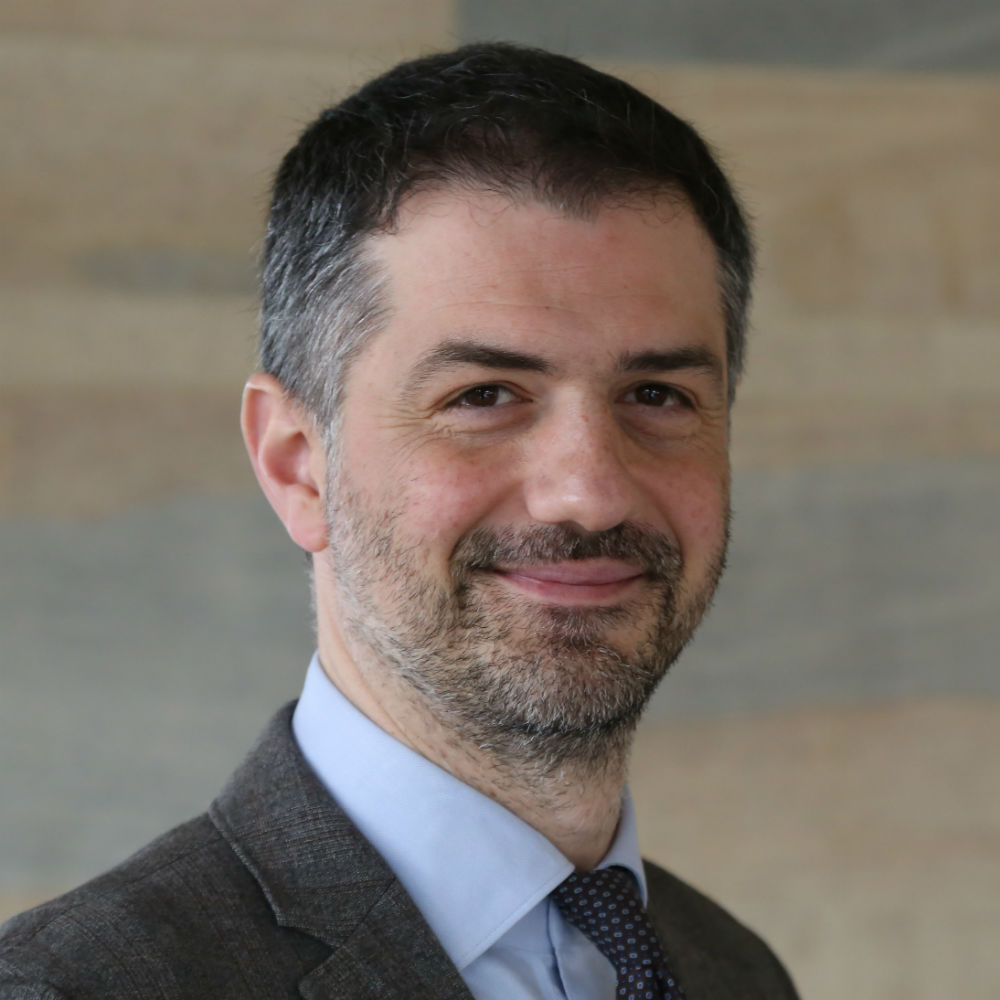
Dr Dimitrios Kyritsis serves as a Reader (equivalent to Associate Professor) at the Essex Law School, University of Essex, where he has been a faculty member since 2020. His academic trajectory includes prior appointments as Associate Professor at the University of Reading (2014-2020), Lecturer at the University of Sheffield (2007-2014), and Hauser Global Law Fellow at New York University (2006-2007), establishing him as a prominent scholar in constitutional and legal theory with over 15 years of specialized expertise. Dr Kyritsis holds advanced qualifications from the University of Oxford, including DPhil, MPhil, and MJur degrees, complemented by an LLB from the University of Athens. His educational background provides a robust foundation for his interdisciplinary research at the intersection of law and philosophy. DPhil, University of Oxford MPhil, University of Oxford MJur, University of Oxford LLB, University of Athens His research critically examines legal and political philosophy , constitutional theory , and human rights law , with particular focus on the moral foundations of constitutional review, separation of powers dynamics, and the normative relationship between courts and legislatures. His work engages deeply with philosophical frameworks from Rawls and Williams while addressing contemporary challenges in democratic constitutionalism through rigorous theoretical analysis. Analysis of his 15 most recent journal publications (2025-2006) reveals consistent thematic development across constitutional law and legal philosophy. Key trajectories include the evolution of proportionality doctrine, legitimacy debates in judicial review, and reinterpretations of legislative intent within democratic theory. His scholarship demonstrates increasing engagement with global constitutional challenges while maintaining philosophical precision, particularly evident in his 2025 monograph Essays on Freedom and Proportionality . Dr Kyritsis has not been documented as receiving specific scientific awards in the provided materials. He maintains active supervision of doctoral candidates including Oguzcan Kutkan and Abdulrahman Musallam B Alhejaili, having recently guided Abdullah Abdulaziz M Almajed to completion in March 2024. His teaching portfolio spans foundational courses such as Human Rights: Theories and Applications (HU901), Public Law (LW103), and Jurisprudence (LW301), reflecting his commitment to integrating cutting-edge research with pedagogical excellence. While specific grant funding isn't referenced in available materials, his publication record demonstrates sustained research productivity through major academic presses including Oxford University Press and Hart Publishing. Dr Kyritsis's scholarly impact is anchored by two seminal monographs: Shared Authority: Courts and Legislatures in Legal Theory (2015) which reconceptualizes institutional relationships in constitutional democracies, and Where Our Protection Lies: Separation of Powers and Constitutional Review (2017) which provides a comprehensive theoretical framework for understanding constitutional safeguards against governmental overreach.