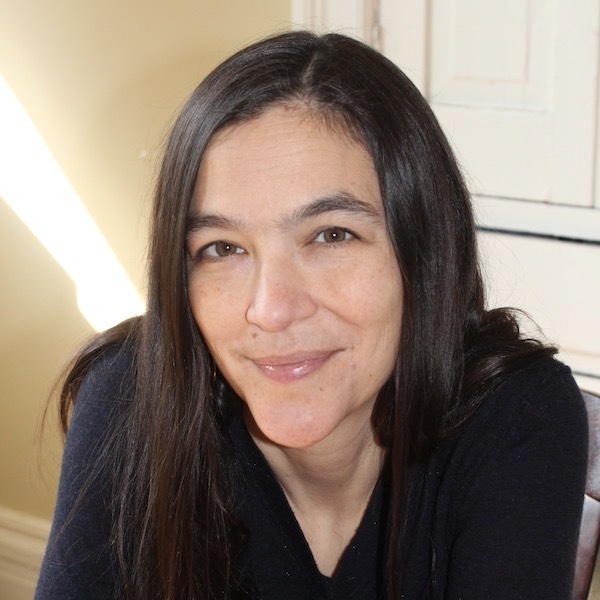
Dr. Luisa Calè is a Professor of Romantic and Nineteenth-Century Literature & Visual Culture and Research Lead at Birkbeck, University of London. She holds degrees from the University of Rome 'La Sapienza' (1993), University of Genoa (1997), and the University of Oxford (M.St. 1998, D.Phil 2002). Her research explores the interplay between literature and visual/material culture, focusing on book history, intermediality, and practices of reading/collecting. Her Leverhulme Trust-funded project 'The Book Unbound' examines how works by Blake, Walpole, and Dickens subverted traditional book formats. Education: PhD in Literary Studies, University of Genoa (1997) D.Phil., University of Oxford (2002) M.St. in English, University of Oxford (1998) Letters Degree, University of Rome (1993) Her research interests include Romantic aesthetics, material texts, and critical disciplinarity. Notable publications include Fuseli’s Milton Gallery (2006) and co-edited volumes like Dante on View (2007). She edits Blake/An Illustrated Quarterly and serves on editorial boards for Word & Image and Romantic Circles Gallery . Recent awards include a Leverhulme Trust Research Fellowship (2019) and a Mercator Fellowship (2018-19). She supervises graduate students in Romantic literature, material culture, and book history.
Kaya Şahin is an Adjunct Professor at Indiana University Bloomington's Hamilton Lugar School of Global and International Studies. He holds a Ph.D. in History from the University of Chicago (2007). His research focuses on the Ottoman Empire, early modern Eurasian empires, and the interplay of historiography, governance, and identity in early modern global contexts. Key areas include the Ottoman-Safavid rivalry, intercultural exchanges, and the construction of imperial discourses. Educational Background: Ph.D. in History, University of Chicago, 2007. Research Interests: - Institutional and ideological foundations of Ottoman imperialism - Comparative studies of early modern Eurasian empires - Ottoman historiography and its modern interpretations - Cultural and religious dimensions of the Ottoman-Safavid rivalry - Early modern Eurasia as a unified historical zone. Awards and Honors: NEH Fellowship (2015-16) SSRC Postdoctoral Fellowship (2012-2013) Sherman Emerging Scholar (2011-2012) Newberry Library Mellon Fellowship (2010-2011) Mellon Fellowship at Northwestern University (2007-2008) His work examines global interconnectedness in early modernity, emphasizing the Ottoman Empire’s role within a broader Eurasian framework. Recent publications explore Anthony Sherley’s Persian travels, Celalzade Mustafa’s bureaucratic writings, and apocalyptic interpretations of Ottoman conquests.
James J. O’Hara is the George L. Paddison Professor of Latin at the University of North Carolina at Chapel Hill. His academic journey includes a B.A. from the College of the Holy Cross and a Ph.D. from the University of Michigan. He has held significant roles, such as Department Chair (2003-2007), Director of Graduate Studies, and President of the Vergilian Society. His research focuses on Greek and Latin poetry, with a special emphasis on the Augustan period, epic, didactic literature, and satire. Education highlights include studies at the College of the Holy Cross (A.B., 1981) and the University of Michigan (Ph.D., 1986). He taught at Wesleyan University before joining UNC in 2001, where he has contributed extensively to teaching and scholarship. Research interests span Latin poetry, particularly Vergil, Catullus, Lucretius, and Ovid. Notable works include Death and the Optimistic Prophecy in Vergil’s Aeneid (1990), True Names: Vergil and the Alexandrian Tradition of Etymological Wordplay (1996), and Inconsistency in Roman Epic (2007). Current projects explore teaching authority in didactic and satirical works. Publications include over 40 articles and book reviews, with a focus on Vergilian studies, Lucretian analysis, and classical pedagogy. Recent lectures address topics like Aeneid Book 8 and Horace’s Ars Poetica . Grants/Awards: James Gilmore Fletcher Whitton Faculty Fellowship (2012), Loeb Classical Library Fellowship (2015-2016), SUTASA Teaching Award (2013). Students: Directed 15+ M.A. and Ph.D. theses, including works on Lucan, Lucretius, and Vergilian reception. Labs/Teams: Collaborative projects include the Focus-Hackett Aeneid commentary series and editorial work for Vergilius . Active in professional organizations like the Vergilian Society and Classical Association of the Middle West and South.
Dr. Fabian Schulz is a Senior Researcher in Ancient History at the University of Tübingen, where he works in the Department of History within the Faculty of Humanities. He leads a prestigious Junior Research Group under the Emmy Noether Programme of the German Research Foundation (DFG), titled 'Power and Influence: Influencing Emperors between Antiquity and the Middle Ages.' His academic profile also includes association with the Collaborative Research Center (SFB) 923 'Threatened Order - Societies under Stress' and active participation in the 'Tübingen Theosophy' research group. Previously, he contributed to the Heidelberg Academy of Sciences and Humanities project on John Malalas' Chronicle and the University of Tübingen's DFG project 'East and West 400-600 AD.' Dr. Schulz earned his PhD in Classics from Freie Universität Berlin (2006-2010), where he also served as a teaching assistant. During his doctoral studies, he was a Pensionnaire étranger at the École Normale Supérieure Paris. Prior to that, he completed an MA equivalent degree in Classics at Freie Universität Berlin, with time spent as a visiting student at the University of Oxford (1999-2005). His early career included teaching Latin and Greek at a grammar school in Lübeck (2006). His research specializes in power structures and influence mechanisms in ancient societies, with particular focus on how advisors shaped imperial decisions in Late Antiquity. He has made significant contributions to understanding councils of elders in Archaic Greece (especially the Spartan Gerousie), Byzantine chronography (particularly John Malalas' works), and the complex dynamics between Eastern and Western Roman empires during the 5th and 6th centuries. His methodological innovation lies in applying modern sociological models of interpersonal influence to historical analysis of ancient political culture, bridging literary representation with political reality in pre-modern monarchical states. Young researchers award for 'Ratgeber, Experten, Manipulatoren: Einfluss als Machtfaktor und Diskursobjekt in der Antike' As principal investigator of his Emmy Noether project, Dr. Schulz has secured substantial research funding from the German Research Foundation. His collaborative work includes multiple edited volumes on Late Antique history and Byzantine chronography, reflecting his strong international scholarly network. He currently serves as a deputizing member (non-professorial academic staff) on the faculty board of Humanities at the University of Tübingen. His research often intersects with contemporary concerns about power dynamics, political influence, and historical memory, as evidenced by his work on video game representations of ancient history. Dr. Schulz is an active contributor to the online commentary project on John Malalas' chronicle, specifically editing sections of Book XVIII. His work frequently involves detailed textual criticism and analysis of historical sources, with particular attention to how narratives are transmitted and reinterpreted across different cultural contexts. His scholarly approach combines philological precision with broader historical and sociological perspectives.
Professor Alison G. Salvesen (University of Oxford, Asian and Middle Eastern Studies) is a leading scholar in Early Judaism and Christianity, affiliated with the Oxford Centre for Hebrew and Jewish Studies and Mansfield College. Her work bridges textual criticism, translation history, and reception studies. Current Projects: Hexapla Institute Executive Committee (electronic database of Origen's Old Testament), monograph on Jacob of Edessa (d. 708 CE) Teaching: Septuagint studies, Patristic texts, Textual criticism, Syriac literature Specializing in ancient Hebrew Bible interpretations, she examines Greek (Septuagint), Aramaic (Targums), Syriac (Peshitta), and Latin (Vulgate) traditions. Her research spans rabbinic Judaism and early Christian exegesis. Scientific leadership includes co-editing major reference works and directing the Polonsky Fellowship. Current DPhil students include Joel Bell, Yael Krämer, and Paul Ulishney. Key grants/awards: Polonsky Fellow in Early Judaism and Christianity
Prita Meier is an Associate Professor of Art History at New York University's College of Arts & Science , affiliated with the Department of Art History & the Institute of Fine Arts. Her work bridges African art history, Indian Ocean world studies, and global modernity frameworks. Education: Ph.D. (2007) in History of Art, Harvard University M.A. (2000) in History of Art, University of Iowa B.A. (1996) in Art History, University of Florida Research Interests focus on the visual and architectural cultures of Africa, particularly Swahili Coast port cities, exploring globalization's cultural dimensions, Islamic art, and photography histories. Her work interrogates spatial-temporal dynamics in African modernity and colonial art frameworks. Scientific Awards include CASVA Senior Fellowship, NEH Implementation Grant (with Allyson Purpura), Mellon Collaborative Grant (with Kenny Cupers), Clark Art Institute Residential Fellowship, and Andrew W. Mellon Postdoctoral Fellowship. Notably, she declined the National Humanities Center Fellowship and Stanford Humanities Fellows Program. Publications highlight Indian Ocean trade networks, Swahili Coast architecture, and photography's global circulation. Recent works (2020-2017) examine infrastructure as identity, oceanic materiality, and itinerant art historiography. Earlier articles (2016-2009) analyze porcelain trade, modernist discontents, and Swahili funerary practices. Contact: spm9@nyu.edu | 100 Washington Square East, New York, NY 10003
Annette Yoshiko Reed is the Krister Stendahl Professor of Divinity and Professor of New Testament and Early Christianity at Harvard Divinity School (HDS). She joined HDS in 2022 after roles at New York University, the University of Pennsylvania, and McMaster University. Her expertise spans Second Temple Judaism, early Christianity, and Jewish-Christian relations, with a focus on how ancient texts shape identity and difference. Key research areas include apocalypses, demonology, and the Old Testament Pseudepigrapha. She has authored or co-authored books such as Fallen Angels and the History of Judaism and Christianity and Demons, Angels, and Writing in Ancient Judaism . Education: BA from McGill University, MTS from Harvard Divinity School, and MA/PhD from Princeton University. Her work integrates Biblical Studies, Patristics, Jewish Studies, and Classics. She serves on the editorial boards of Texts and Studies in Ancient Judaism and Studia in Veteris Testamenti Pseudepigrapha , and chairs the Society of Biblical Literature’s “Jewish Christianity/Christian Judaism” section. A Fellow of the American Academy of Jewish Research, her current project explores the cultural power of forgetting in ancient Jewish history. Her research highlights marginalized writings like 1 Enoch and Pseudo-Clementine literature to bridge Jewish and Christian histories. Recent publications include studies on Enochic reception, rabbinic historiography, and demonology in ancient texts. She teaches at both HDS and Harvard’s Faculty of Arts and Sciences.
Stephen Morris is the Peter A. Diamond Professor of Economics at the Massachusetts Institute of Technology (MIT). He specializes in economic theory, game theory, and financial economics. Born in England, he earned a degree in Mathematics and Economics from the University of Cambridge (1985) and a Ph.D. in Economics from Yale University (1991). Before MIT, he taught at the University of Pennsylvania, Yale, and Princeton. Morris has held leadership roles, including President of the Econometric Society (2019) and President of the Society for the Advancement of Economic Theory (2023). His research focuses on higher-order beliefs, strategic coordination, and financial market dynamics. Notable contributions include work on global games, contagion effects, and information design. Morris has advised numerous PhD students across institutions like Penn, Yale, Princeton, and MIT, many of whom hold academic and industry positions globally. His awards include the Sloan Fellowship (1996), Econometric Society Fellowship (2002), and membership in the American Academy of Arts and Sciences (2005), National Academy of Sciences (2021), and British Academy (2023). His work spans theoretical frameworks in mechanism design, macroeconomic policy, and political economy, emphasizing the role of information in shaping economic outcomes.
Stephen Spector is a Professor of English at Stony Brook University since 1972, with a PhD from Yale University (1973). His work bridges medieval literature, religious studies, and language history. He has held visiting positions at the Hebrew University (Jerusalem, 1996–97) and fellowships at the National Humanities Center and Wesleyan University. His research focuses on medieval English literature, particularly mystery plays and biblical texts, alongside modern topics like Christian Zionism and the Ethiopian Jewish rescue operation (Operation Solomon). He has authored influential books such as Evangelicals and Israel (2009), which won the London Book Festival Prize, and Operation Solomon (2005), honored with the JDC-Herbert Katzki Award. Education: B.A. in English and Psychology from Penn State University (1968), M.Phil. and Ph.D. from Yale University (1973). He has taught courses ranging from the history of the English language to medieval literature and the Bible as literature. Research highlights include pioneering studies on anti-Semitism in medieval mystery plays, textual editing of the N-Town Play, and modern analyses of religious-political intersections. His recent work explores biblical prophecy’s influence on US foreign policy and contemporary grammar usage guides. Awards include the Van Courtlandt Elliott Prize (1980) for medieval scholarship, National Endowment for the Humanities grants, and SUNY Research Foundation fellowships. He has also contributed op-eds on topics like Sarah Palin’s religious influences and Israel-Evangelical relations. Grants and fellowships span decades, including directing NEH summer seminars on Jewish presence in early English literature (1993, 1996). His work often integrates historical methodologies with contemporary cultural analysis. Labs/Teams: Not explicitly listed, but his research collaborations are evident in co-edited volumes like The Olde Daunce (1991) and contributions to interdisciplinary projects like the Early English Text Society.
Prof William Tooman is the Head of the School of Divinity and Principal of St Mary's College at the University of St Andrews. He holds the rank of Professor of Hebrew Bible and Ancient Judaism. His research focuses on the literary conventions and hermeneutics of ancient Jewish writers, particularly examining how poetics and textual evolution influenced interpretation. A co-PI of the Texture project, he explores historical poetics of ancient Jewish literature with Prof Andrew Teeter. Tooman earned his PhD in Hebrew and Semitic Studies from the University of Wisconsin-Madison (2006) and has held roles including Lecturer at St Andrews (2009) and co-director of the Institute of Bible, Theology, and Hermeneutics (2018). Teaching spans undergraduate modules like DI1003 Old Testament 1 and postgraduate courses such as Textual Criticism. His research areas include textual criticism, inner-biblical interpretation, and scribal practices, with notable publications on Ezekiel, Targum Jonathan, and Qumran texts. Awards include an Honorary Research Fellowship at Manchester and grants from Harvard and Swiss-European programs. His advising includes five PhD students focusing on ancient Jewish literature. Key grants include the Texture project (2022–2027), exploring how ancient Jewish writers used literary techniques to transmit and reinterpret scripture. Labs/teams include the Institute of Bible, Theology, and Hermeneutics, emphasizing interdisciplinary biblical studies.
Frederic Malherbe is a Professor of Economics and Finance at University College London (UCL), affiliated with the UCL School of Management. His research focuses on financial intermediation, banking regulation, macroeconomics, and political economy. He holds an Orcid identifier (0000-0003-1175-5487) and maintains an active academic profile via Google Scholar and personal website. His work explores critical issues such as bank capital requirements, systemic risk, and the cross-border effects of financial policies. Recent contributions include analyses of pipeline risk in leveraged loans and the forced safety effect of capital regulations. Malherbe is a key organizer of the EuroFIT and London FIT networks, fostering collaboration in financial intermediation theory research. Publications span top journals like the Journal of Finance, Journal of Political Economy, and Review of Financial Studies. His research bridges theory and policy, addressing real-world challenges such as regulatory design and economic stability. Malherbe’s work has been featured in VoxEU and MappingIgnorance.org. He actively participates in academic communities, organizing workshops and conferences on topics like syndicated loans and macroprudential regulation. These events have involved institutions such as the London Business School, Imperial College, and the ECB.
Joanna Grela is a Professor at the Department of Comparative Civilization Studies within the Faculty of Philosophy at Jagiellonian University (UJ) in Kraków, Poland. She holds habilitation in cultural studies (2016, SWPS University, Warsaw), a doctorate in religious studies (2004, Jagiellonian University), and is a certified Tibetologist (2000, INALCO, Paris). Her academic credentials also include an MA in philosophy (1996, Jagiellonian University) and postgraduate studies in gender (2009, Jagiellonian University). Her educational background includes: 2004: PhD in Humanities in religious studies, Jagiellonian University 2000: Diplôme Unilingue de Langue et Civilization Orientales de Tibétain, Institut National des Langues et Civilizations Orientales (INALCO), Paris 1996: Master of Philosophy, Jagiellonian University 2009: Postgraduate studies in gender, Jagiellonian University Professor Grela's research focuses on Tibetan, Himalayan, and Mongolian cultures, with particular emphasis on pre-Buddhist cults and their contemporary representations in popular culture, societal transformations, Tibetan ethnic and cultural identity, cultural stereotypes, and the comparative anthropology of Buddhism. Her work bridges religious studies, cultural anthropology, and Tibetan studies, examining both historical traditions and their modern adaptations. She has made significant contributions to understanding how traditional Buddhist practices interact with contemporary social contexts, digital technologies, and global cultural flows. Her scholarly output reveals consistent engagement with Tibetan religious culture, Buddhist textual traditions, and the adaptation of Buddhist practices in modern contexts. She has extensively explored the relationship between pre-Buddhist traditions and contemporary religious practices, the role of deities in Tibetan Buddhism, and the transformation of Buddhist thought in different cultural settings including Thailand and Poland. Her more recent work addresses how Buddhism is adapting to digital environments and contemporary social challenges. Her notable achievements include: 2017: Pro Arte Docendi Award from the Rector of Jagiellonian University Multiple teaching awards (2011/12, 2012/13, 2014/15) Membership in the International Association of Buddhist Universities (IABU) Collaboration with the Centre d'Etudes Himalayennes CNRS Professor Grela has led significant research projects including 'The impact of secularization and schooling on socio-religious relations between ritual specialists and the lay community in the Rebkong region' (2018-2020) and 'The Common Buddhist Text Project' (2009-2016). Her work demonstrates a strong commitment to both scholarly research and teaching excellence, with numerous publications spanning academic journals, edited volumes, and encyclopedia entries. She maintains active international collaboration and has presented her research at conferences across Europe and Asia.
Dr. Harry O. Maier is Professor of New Testament and Early Christian Studies at Vancouver School of Theology since 1994, with ongoing fellowships at the Max Weber Center for Advanced Cultural and Social Studies at the University of Erfurt since 2017. His academic career spans over 25 years with significant contributions to understanding early Christianity within the context of the Roman Empire. His educational background includes a D. Phil from Oxford University (1987), Master of Divinity from Lutheran Theological Seminary (1989), and B.A. from Pacific Lutheran University (1981). Maier's research focuses on the intersection of New Testament studies, early Christianity, and spatial theory within the Roman Empire. His work examines how early Christian communities navigated urban spaces, constructed religious identity, and engaged with imperial ideologies. He has pioneered approaches that analyze biblical texts through spatial theory, examining how geography, urban structures, and neighborhood dynamics shaped early Christian thought and practice. His research particularly emphasizes the Book of Revelation, the Shepherd of Hermas, and Pauline literature, with attention to how these texts engaged with Roman imperial culture. His scholarly contributions include significant publications such as New Testament Christianity in the Roman World (Oxford University Press, 2018) and Picturing Paul in Empire (Bloomsbury, 2013), which won recognition for their innovative approaches to understanding early Christian texts within their socio-spatial contexts. Canadian Christian Writers Association Award for Best Book in Philosophy and Christian Leadership (2003) for Apocalypse Recalled: The Book of Revelation after Christendom Canadian Corportation of Religion Award for Best Dissertation in Religion (1990) for The Social Setting of the Ministry as Reflected in the Writings of the Shepherd of Hermas, Clement and Ignatius Maier has organized numerous academic conferences including "The Shepherd of Hermas and Religious Experience" (2018), "Religion of Quarters" (2018), and "Locating Martyrs and Space/Time" (2017). He serves on editorial boards for several prestigious publications including as associate editor for the Bryn Mawr Classical Review since 2016 and co-editor of the Christian Religion and Public Life book series since 2020. His external reviewing work includes major academic presses such as Oxford University Press and Cambridge University Press. As founder and co-organizer of The Greater Vancouver Biblical Colloquium since 2008, Maier has fostered interdisciplinary dialogue among scholars of biblical studies and related fields. His academic leadership extends to professional societies including the Society of Biblical Literature and the North American Patristics Society.
Gaston Chaumont is an Assistant Professor of Economics at the University of Rochester, affiliated with the Department of Economics in the School of Arts & Sciences. He holds a PhD from Penn State University (2019). His research focuses on Macroeconomics, International Macroeconomics, Labor Economics, and Monetary Economics, with particular emphasis on topics like sovereign debt dynamics, self-fulfilling crises, and wealth inequality. His academic background includes significant contributions to understanding the interplay between monetary policy and fiscal interactions, sovereign risk, and the role of firm behavior in economic activity. He has also explored behavioral finance phenomena, such as the GameStop and AMC stock market events, through the lens of self-fulfilling beliefs. His work frequently integrates empirical evidence, including scanner data and case studies from emerging economies like Chile. Chaumont’s publications span theoretical and applied research, addressing issues like debt crises, financial market liquidity, and the implications of search frictions in labor and asset markets. His research highlights the interconnectedness of macroeconomic stability, policy design, and market dynamics. No academic awards or grants are explicitly listed in the provided materials. While no advisee students are mentioned, his research trajectory suggests active involvement in mentoring graduate students through his academic role. He is based at 229 Harkness Hall, with contact details including a university phone line and professional webpage.
Joyelle McSweeney is a Professor of English at the University of Notre Dame, specializing in creative writing, poetry, and translation. She holds an MFA from the Iowa Writers' Workshop, an M.Phil. from the University of Oxford, and a B.A. from Harvard University. Her work spans poetry, prose, drama, and critical essays, emphasizing ecopoetics, decadence, and genre hybridization. Research focuses on intersections of ecology, media, and occult symbolism, with key works like The Necropastoral: Poetry, Media, Occults (2015) proposing a decadent approach to ecological writing. Awards include a 2022 Guggenheim Fellowship and the Shelley Memorial Prize for Toxicon and Arachne (2020). She co-founded Action Books press, amplifying global poetry and translation. Education: MFA (2001, Iowa), M.Phil (1999, Oxford), B.A. (1997, Harvard) Awards: Guggenheim Fellowship, Arts & Letters Award, Shelley Memorial Prize Key publications include Dead Youth , Salamandrine , and Death Styles Teaching excellence recognized by the Rev. Edmund P. Joyce C.S.C. Award. Her creative output combines experimental form with thematic explorations of decay, prophecy, and ecological crisis.