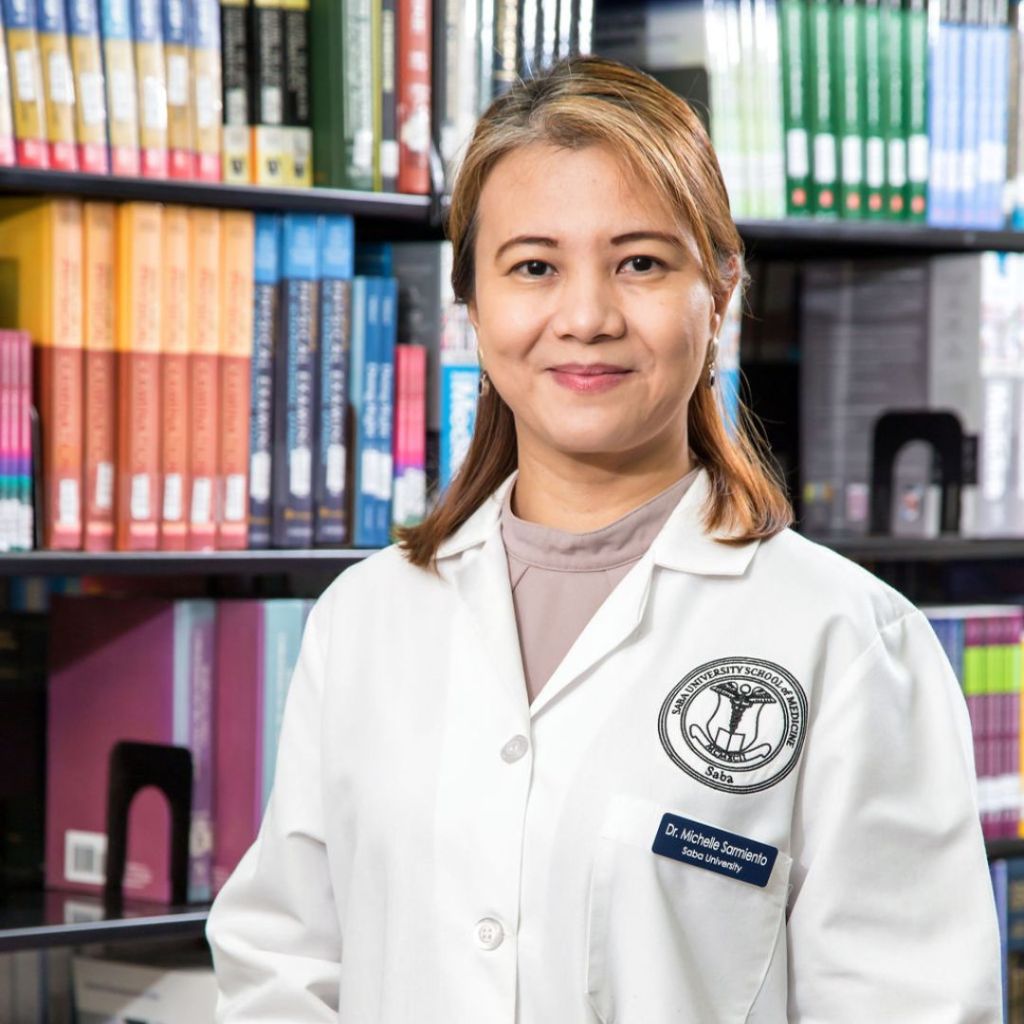
Dr. Michelle Sarmiento is an Assistant Professor and Course Director of Human Body Structure & Function at Saba University School of Medicine, where she chairs the Anatomical Department. With dual qualifications as a licensed pharmacist (BS Industrial Pharmacy) and physician (MD), she brings 23 years of teaching experience in Gross Anatomy and clinical disciplines. Her medical background includes Radiology residency and subspecialization in Maxillofacial Surgery at Universitatsspital Bern. She previously implemented Problem-Based Learning curricula in Bahrain and served in academic leadership roles including Assistant Dean. Research interests include medical education innovations and herbal medicine applications.
Johann Kastner is a Professor at Upper Austria University of Applied Sciences, leading the Research Center Wels Computed Tomography R&D-Headquarters. He is affiliated with Centers of Excellence in Automotive/Mobility, Energy, and Smart Production. His research focuses on advanced materials characterization using X-ray computed tomography (X-CT), with applications in non-destructive testing, composite materials, and biomedical engineering. Key research areas include porosity analysis in carbon fiber reinforced polymers, phase contrast imaging, and additive manufacturing. He has led over 10 projects, including the EU-funded xCTing initiative (2021–2025) and the X-PRO project (2020–2024), emphasizing industrial CT applications and cross-virtuality data analysis. His work spans 335+ publications, with notable contributions to XCT-based defect detection, material microstructure analysis, and AI-driven image segmentation. Collaborations include COMET K Projects and FTI-Structurförderung grants. He has advised 2 PhD students and actively participates in international conferences and workshops. Laboratory facilities include state-of-the-art XCT systems for 3D microstructural analysis, Talbot-Lau grating interferometry, and augmented reality visualization tools for industrial applications.
Dorin Boldor holds the Charles P. Siess Jr. Professorship at Louisiana State University's Department of Biological and Agricultural Engineering. His research specializes in microwave heating, bioprocessing, and bioenergy systems. He teaches BE 4303: Engineering Properties of Biological Materials and holds a Ph.D. from North Carolina State University. Research encompasses microwave-assisted biomass conversion, pyrolysis kinetics, and sustainable fuel production, with emphasis on reactor design and catalytic processes. Recent publications (2022-2025) explore lignin pyrolysis, biodiesel co-formulants, and oil containment technologies, reflecting applied engineering solutions for energy and environmental challenges.
Lukas Lange-Drenth serves as a Research Fellow at the Department of Medical Psychology within the Center for Psychosocial Medicine at the University Medical Center Hamburg-Eppendorf (UKE), affiliated with the Faculty of Medicine at the University of Hamburg. His academic credentials include both a Ph.D. and M.Sc., reflecting his expertise in psychological aspects of medical care with a particular focus on oncology. Dr. Lange-Drenth's research centers on digital health interventions for cancer patients, examining how technology can enhance patient care, improve health literacy, and support rehabilitation. His work specifically investigates internet usage patterns among cancer patients, trust in online health information, and the development of e-learning environments to improve digital health literacy. He has also conducted significant research on telerehabilitation programs and the psychosocial aspects of cancer care, particularly focusing on patient-reported outcomes and satisfaction metrics. Analysis of his publication history from 2017-2025 reveals a consistent research trajectory examining how digital tools can support cancer patients throughout their care continuum. His work spans multiple methodologies including randomized controlled trials, qualitative interviews with healthcare providers, systematic reviews, and psychometric validation studies. The research demonstrates increasing sophistication in examining not just the implementation of digital health tools, but also their effectiveness, patient acceptance, and impact on clinical outcomes. Dr. Lange-Drenth collaborates extensively with colleagues at UKE, particularly with researchers including Schulz H, Bleich C, and others specializing in psycho-oncology and patient-centered care. His work bridges clinical practice and technological innovation, addressing critical gaps in how cancer patients access and utilize digital health resources.
Alison C. Dunn is an Associate Professor in the Department of Mechanical Science and Engineering at the University of Illinois at Urbana-Champaign. She holds a PhD, MS, and BS in Mechanical Engineering from the University of Florida (2013, 2006, 2004). Her research focuses on tribology, biomechanics, and soft materials, particularly in frictional adaptations in insects and hydrogel-based materials. Dunn leads the Materials Tribology Laboratory and has been recognized with awards including the Engineering Council Award for Excellence in Advising (2017, 2020) and the STLE Early Career Award (2019). She teaches courses such as ME 371 (Mechanical Design II) and ME 472 (Introduction to Tribology). Education: PhD Mechanical Engineering, University of Florida (2013) MS Mechanical Engineering, University of Florida (2006) BS Mechanical Engineering, University of Florida (2004) Research Interests: Dunn explores frictional morphological adaptations in insects, soft matter tribology, and wear mechanisms in materials. Her work includes developing novel instrumentation for in situ friction testing and studying hydrogel lubrication in biological systems. Scientific Awards: University of Illinois Engineering Council Award for Excellence in Advising (2020, 2017) STLE Early Career Award (2019) ASME Award for Contributions to Tribology (2019) Advising & Grants: Dunn is noted for her excellence in mentoring, as highlighted by her advising awards. Her research is supported by grants focused on tribological systems and biomaterials. She collaborates on projects such as the TMS Frontiers award-winning work on tribology of soft materials. Labs & Teams: Directs the Materials Tribology Laboratory, advancing interdisciplinary tribology research in mechanical engineering and materials science.
Dr. Hossein Derakhshan is a Senior Lecturer in the School of Civil & Environmental Engineering at Queensland University of Technology. His research focuses on seismic risk assessment of unreinforced masonry structures using advanced technologies like AI and finite element analysis. He leads projects on community resilience against earthquakes and green concrete applications. PhD (Civil Engineering) - University of Auckland MSc (Civil/Structural) - University of Tehran MSc (Civil) - Shiraz University Research interests include: Seismic Evaluation of Masonry Components Artificial Intelligence in Structural Assessment Heritage Building Conservation Computational Mechanics Applications Recent publications analyze: 2025: Compressive strength models for grouted masonry 2025: Seismic fragility functions for reinforced masonry 2024: Vulnerability assessment of historical buildings 2023: Numerical modeling of masonry interactions Scientific recognition includes: 2018: ARC DECRA Fellowship 2016: F. Stan Shaw Best Paper Award 2015: Otto Glogau Practice Paper Award 2009: H.W.H. Timber West Award He supervises multiple PhD candidates and collaborates with the Centre for Materials Science , while serving as Associate Editor for the Structures journal.
Jarkko Isotalo is a University Lecturer in the Department of Computing Sciences at Tampere University, Finland. His affiliation is within the Faculty of Information Technology and Communication Sciences, focusing on theoretical and applied statistical research. His research interests span linear statistical models , covariance analysis , biostatistics , and computational statistics . Notably, he explores topics like the Best Linear Unbiased Estimator (BLUE), mixed models, and their applications in clinical trials and ecological studies. Recent work includes studies on permissible covariance structures in linear models, treatment outcomes for gambling disorder (using randomized controlled trials), and partitioning of forest CO2 emissions. His articles often emphasize theoretical foundations while addressing practical implications in health and environmental sciences. Isotalo has contributed to methodological advancements in statistical modeling without explicitly mentioned awards or grants. His research often involves interdisciplinary collaborations, bridging mathematics, computing, and applied sciences.
Yiannis Levendis is a Distinguished Professor in the Department of Mechanical and Industrial Engineering at Northeastern University's College of Engineering, where he has worked for 37 years. He is a Center Member of The Plastics Center and leads research on combustion of solid fuels, pollution containment, nanomaterial synthesis, fire suppression, and engine design. PhD (1987), Environmental Engineering Science, California Institute of Technology M.S. (1982) and B.S. (1981) in Mechanical Engineering, University of Michigan His research focuses on gasification, oxy-combustion of biomass, iron-based carbon-free fuels, and fire suppression technologies using liquid nitrogen. Recent projects include burning iron particles as circular fuels and developing renewable energy sources from agricultural waste. Levendis' publications highlight advancements in combustion physics, emissions reduction, and nanomaterial production from waste plastics. His work spans energy systems, environmental protection, and engineering education. ASEE Robert G. Quinn Award (2025) for experimental excellence National Academy of Inventors Fellow (2020) Combustion Institute Fellow (2018) ASME/AIME Percy Nicholls Award (2015) He has received multiple NSF grants, including a $600,000 award for iron powder combustion research and a $360,065 grant for heliostat education. Levendis also developed an experiential learning framework with hands-on combustion laboratories. His lab facilities span 303 SN and 012F FR spaces, focusing on high-temperature reactor experiments and fire suppression system design.
Dr. Simone Falco is a Research Fellow at the Department of Engineering Science, University of Oxford, and a Lecturer at Oriel College. He holds a DPhil (Oxon) in Engineering Science. His research focuses on numerical modeling of polycrystalline materials, micromechanical behavior of ceramics, and multi-scale approaches. He has contributed to projects involving high-rate testing, explosive materials simulation, and flash sintering techniques. His work bridges computational methods with experimental validation, emphasizing practical applications in materials engineering. Education: Bachelor’s and Master’s in Aerospace Engineering, University of Naples Federico II (2006, 2009) PhD in Engineering Science, University of Oxford (2015) Research Interests: Generation of numerical models for real polycrystalline microstructures Numerical simulation of brittle material failure Multi-scale homogenization techniques High-rate material testing Modeling of material manufacturing processes Key Awards: Ross Coffin Purdy Award, American Ceramic Society (2019) JCS 2018 Award, Journal of the Ceramic Society of Japan (2019) Excellence Award, University of Oxford (2019) Lab/Team Affiliations: Impact Engineering and Materials Engineering groups at the University of Oxford.
Haiyang Zhao is a Researcher at RMIT University's School of Engineering, specializing in multi-scale modelling for expansive soils and advanced materials analysis. His work focuses on waste management, computational modelling, and composite materials, with applications in civil engineering and environmental sustainability. He holds a PhD and is actively engaged in research projects involving discrete element method (DEM) simulations for soil, concrete, and granular materials. Key research interests include: Fracture mechanics of concrete and rock-like materials Recycled aggregate concrete performance DEM-based modelling of granular systems Biomineralization processes in geotechnical engineering He is open to supervising Masters and PhD students in topics such as multi-scale material modelling and sustainable construction materials. His research has been published in high-impact journals, with a focus on advancing numerical methods and experimental validation techniques.
Marie Wiberg is a Professor of Statistics with a specialty in Psychometrics at the Department of Statistics, Umeå School of Business, Economics and Statistics (USBE) at Umeå University, Sweden. She holds a PhD in Statistics from Umeå University (2003) and has held academic positions there since 2003, advancing from Lecturer (2004–2005) to Assistant Professor (2006–2010), Associate Professor (2010–2015), and full Professor (2015–present). She has also held visiting roles at McGill University (2005) and the University of Twente (2006). Her research focuses on educational measurement and psychometrics , with emphasis on test equating , item response theory (both parametric and nonparametric), and international large-scale assessments like PISA and TIMSS. She has contributed to methodological advancements in kernel equating, statistical modeling, and the analysis of educational data. Her work bridges theoretical psychometrics with practical applications in standardized testing and policy analysis. Prof. Wiberg has supervised numerous PhD students, including Gabriel Wallin (2020), Jonathan Wedman (2017), and Inga Laukityte (2017). She actively contributes to academic governance, serving as an editor for journals like Behaviormetrika and on editorial boards for International Journal of Testing . Her awards include the Young Researcher Career Award (2008) and the Royal Skyttean Prize (2008). She is also a former member of Sweden’s Young Academy (2014–2018). Her research projects include developing statistical methods for standardized achievement tests (2020–2025) and analyzing Swedish student performance in international assessments (2007–2012). She collaborates internationally, with publications in Applied Psychological Measurement , Journal of Educational and Behavioral Statistics , and others.
Alexander Bardelcik is an Associate Professor in the Department of Mechanical Engineering at the University of Guelph. His research focuses on advanced materials processing, particularly in metal forming, microstructural characterization of multi-phase steels, and energy absorption in composite structures. He specializes in hot stamping, coating growth dynamics, and finite element modeling of materials under extreme conditions. Education: MASc, PhD (Engineering) Licenses: Professional Engineer (PEng) His research interests include: Development of novel metal forming processes (e.g., tailored hot stamping) Constitutive modeling of dual-phase and precipitation-strengthened steels 3D-printed polymer composites for energy absorption applications Coating growth kinetics in Al-Si systems Recent work emphasizes the use of artificial neural networks to model coating growth and the application of realistic microstructural models (RVE) for predicting fracture behavior in multiphase steels. His studies span from low-temperature mechanical behavior of HSLA steels to high-strain-rate characterization of advanced alloys. Teaching responsibilities include graduate courses on mechanical metallurgy, micro-mechanics of multi-phase materials, and undergraduate courses in finite element analysis and dynamics. Bardelcik collaborates with the Stronach Center for Innovation (University of Toronto) on hot stamping education and industrial applications.
Assoc. Prof. Dr. Hakan Tunçdemir is an Associate Professor at the Department of Mining Engineering, Istanbul Technical University (ITU), Faculty of Mining. He holds a PhD in Mining Engineering from ITU (2002) and has over 25 years of academic and industry experience in mining and rock mechanics. Educational Background: Bachelor’s in Mining Engineering, ITU (1994) Master’s in Mine Excavation and Mechanization, ITU (1996) PhD in Mining Engineering, ITU (2002) Research Interests focus on: Rock mechanics and mine system analysis Numerical modeling of mining systems Geostatistical applications in mining Advanced tunneling technologies and slope stability Shotcrete behavior and mine support systems Key Projects include: Analysis of tunnel support pressures using FEM InSAR-based slope instability monitoring in open pits Development of shotcrete-rock interaction models Recipient of the 2007 Mining Scientific Incentive Award from the Chamber of Mining Engineers Istanbul Branch. Active member of international societies including International Society of Rock Mechanics and Society of Mining Metallurgy.
Gursat Altun is a Professor at the Department of Petroleum and Natural Gas Engineering, Istanbul Technical University (ITU), affiliated with the Mining Faculty. His academic journey includes roles as Dean of ITU (2020), Head of Department (2017-2019), and member of the Faculty Board of Directors. He holds a PhD from Louisiana State University (1994-1999) and has been a faculty member since 1989. Education: BS (1984, ITU), MSc (1991, ITU), PhD (1999, LSU). Postdoctoral studies at LSU (1999). Extensive administrative experience including Vice Dean (2016-2020) and Vice President of Department roles. Research focuses on drilling engineering, geothermal energy, and drilling fluid rheology. Key areas include sepiolite-based drilling fluids, borehole hydraulics, machine learning applications in drilling optimization, and geothermal reservoir management. Supervised 14+ PhD/MSc students. Publications emphasize rheological behavior of drilling fluids, pressure surge modeling, and geothermal resource analysis. Topical trends include sepiolite mud applications, nonlinear viscoelasticity, and machine learning-driven optimization. Awarded the 1993 Scholarship for Doctoral Studies Abroad. Active in professional societies (TMMOB Chamber of Petroleum Engineers, Society of Petroleum Engineers). Led 6+ research projects including sepiolite mud thermal properties and cement slurry design. Teaches advanced well log analysis and well control at ITU. Lab affiliations include the Petroleum Engineering Research Lab with focus on drilling fluids and formation evaluation.
Dr Giang Nguyen is an Associate Professor at the School of Architecture and Civil Engineering, University of Adelaide. Their research focuses on constitutive modeling of engineering materials, computational solid mechanics, and micromechanics of failure. Nguyen's work bridges theoretical, experimental, and numerical approaches to understand material behavior across scales, particularly in soils, rocks, and cement-based materials. Their contributions include advancements in smoothed particle hydrodynamics (SPH) for modeling geomechanical processes and fracture mechanics. Research interests emphasize: Constitutive modeling under multi-axial loading conditions Failure mechanisms in quasi-brittle materials Hydro-mechanical coupling in partially saturated soils 3D printing applications in construction materials Large deformation analysis using SPH Publications span topics like earthquake-induced liquefaction, backward erosion pipelines, and energy-based fracture criteria. Nguyen has developed novel testing methods (e.g., AUSBIT) to capture snapback behavior in indirect tensile testing. Their work integrates experimental validation with advanced computational frameworks.