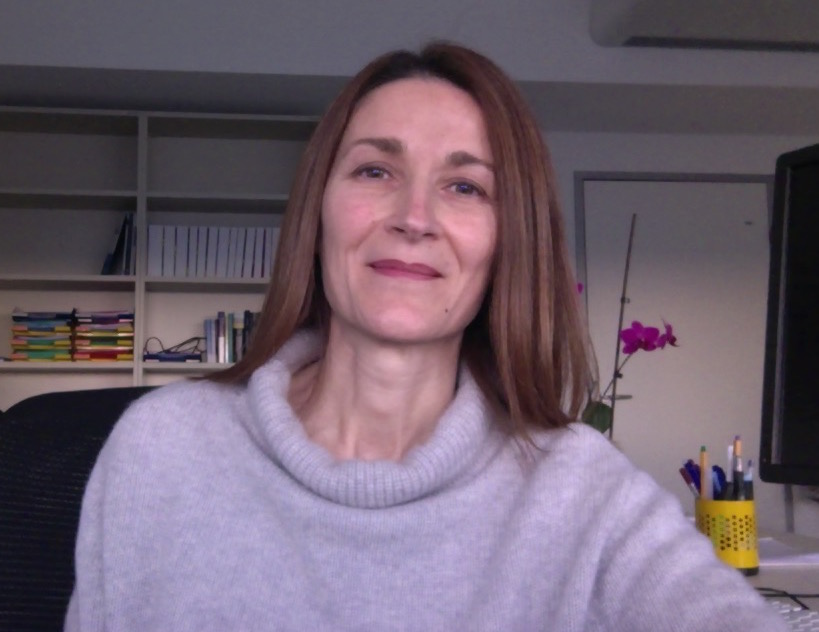
Beatrice Lerma is an Associate Professor at the Polytechnic University of Turin , affiliated with the Department of Architecture and Design and serving as Deputy Coordinator of the Doctoral School of Design and Technology: People, Environment, Systems . Research focuses on Innovative Materials , Sensory Design , and Design for Cultural Heritage Key skills in Environmental Engineering , Industrial Design , and Circular Economy Her recent work explores the intersection of Artificial Intelligence and Material Innovation , particularly in sustainable polymer systems and transparent wood technology. She leads the BIOMAPS (2025-2028) and AI-TRANSPWOOD (2024-2026) projects. 2025: AI applications in biobased materials 2024: Cultural heritage signage solutions 2024: Circular material taxonomic frameworks Scientific recognitions include ADI Design Index Selection Award (2015) and Young & Design (2013). She supervises PhD candidates Noemi Emidi and Eva Vanessa Bruno , and serves on the OFFICINA Scientific Committee since 2014.
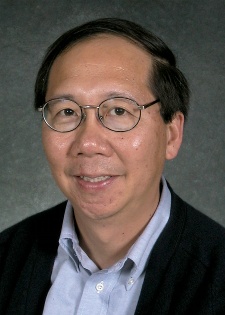
Teng-Fong Wong is a Research Professor in the Department of Geosciences at Stony Brook University, where he has been a faculty member since 1982. His research focuses on the intersection of rock mechanics, earthquake processes, and environmental applications, making significant contributions to understanding deformation mechanisms in geological materials. Education: Sc.B., Brown University, 1973 M.S., Harvard University, 1976 Ph.D., Massachusetts Institute of Technology, 1981 Research Interests: Professor Wong's research centers on rock mechanics with emphasis on earthquake mechanics, energy resources, and environmental applications. He investigates both phenomenological and micromechanical aspects of rock deformation and fluid flow using an integrated approach combining high-pressure deformation experiments, quantitative microstructure characterization, and theoretical analysis. His work spans brittle-ductile transitions in porous rocks, permeability evolution, strength properties of fault zone materials from SAFOD and TCDP drilling projects, and submarine groundwater discharge systems. Publication Trends: Wong's recent publications (2006-2008) demonstrate a consistent focus on strain localization mechanisms in porous rocks, particularly examining compaction bands and deformation bands in sandstones. His work integrates advanced imaging techniques (X-ray radiography, CT scanning) with mechanical testing to understand the micromechanics of rock failure. A significant thread connects his research on fault zone properties from major drilling projects (SAFOD, TCDP) with fundamental rock deformation processes. Scientific Recognition: U.S. Patent 6,874,371 for Ultrasonic Seepage Meter (2005) U.S. Patent 7,107,859 for Ultrasonic Seepage Meter (2006) Co-author of "Experimental Rock Deformation - The Brittle Field" (2nd Edition, Springer-Verlag, 2005) Professional Activities: Professor Wong maintains an active international research profile with numerous visiting appointments including at Australian National University, MIT, ETH Zurich, and institutions in China and France. His work involves extensive collaboration with USGS and international research teams on major fault zone drilling projects. He has developed specialized equipment like the ultrasonic seepage meter for measuring submarine groundwater discharge. Research Infrastructure: Wong's laboratory utilizes advanced capabilities including high-pressure deformation equipment, 3D visualization through laser scanning confocal microscopy and synchrotron microCT, and integrates these with analytic modeling and numerical simulation techniques (finite element and discrete element methods) to investigate micromechanics of dilatant and compactant failure in geological materials.
Lubomir P. Litov is the David M. Moffett Professor of Corporate Finance and an associate professor in the Finance Department at the Michael F. Price College of Business, University of Oklahoma. He also holds an appointment as Affiliate Associate Professor of Law at the OU College of Law. Dr. Litov received his Ph.D. in Economics from Leonard Stern School of Business at New York University. Prior to joining OU, he held faculty positions at the University of Arizona and Washington University in St. Louis. He is also a research associate at the Financial Institutions Center at the Wharton School of the University of Pennsylvania. Dr. Litov's research focuses on several key areas of finance and corporate governance: Corporate governance mechanisms and board structures Mergers and acquisitions processes and outcomes Venture capital and private equity investment strategies Entrepreneurial finance and growth equity Capital structure decisions and risk management International corporate finance and policy impacts His recent publications examine critical issues such as dual-class stock IPOs, policy uncertainty effects on venture capital, poison pill defenses, and the relationship between venture capitalist directors and managerial incentives. Dr. Litov's work consistently bridges theoretical frameworks with practical applications in corporate finance and governance, with articles published in top journals including the Journal of Finance, Journal of Financial Economics, and Journal of Accounting and Economics. Dr. Litov has received numerous teaching and research honors including: Harold E. Hackler Outstanding MBA Professor Award (2022) Merrick Foundation Teaching Award (2018) Hurley Roberson Teaching Excellence Award (2017) William Sharpe award for best paper in JFQA (2010) As an educator, Dr. Litov teaches courses on Mergers, Acquisitions & Corporate Restructuring across multiple programs including the MBA, Executive MBA in Aerospace & Defense, and MSc in Finance. He also co-organizes the Virtual Household Finance Seminar and the NYU-Georgia Tech-OU Economics Virtual Seminar on Artificial Intelligence and Decentralized Finance, bringing together leading researchers to discuss cutting-edge developments in finance.
Prof. Dr. Aliaksandr Bandarenka is a Professor at the Technical University of Munich (TUM) in the TUM School of Natural Sciences , leading the Assistant Professorship of Physics of Energy Conversion and Storage . His research focuses on electrochemical surface science and energy materials development. Education: PhD in Chemistry from Belarusian State University (2005) Key Collaborations: Ruhr University Bochum, University of Twente, Technical University of Denmark Prof. Bandarenka's research explores: Design of electrocatalytic materials via bottom-up approaches Characterization of electrified interfaces Development of sustainable energy conversion/storage systems Surface structure-activity relationships in catalysis Recent article trends (2024) include: ORR electrocatalyst optimization using ZIF-8 templating Advanced impedance spectroscopy for battery/electrolyzer diagnostics Mesoporous oxide materials for energy applications Surface structure effects on double layer capacitance Scientific Recognition: Ernst Haage-Prize (2016) Hans-Jürgen Engell Award (2013) He teaches graduate courses on: Electrified interfaces Energy materials science Electrocatalysis fundamentals Hands-on experiments in battery technology
Xiang Yin is a Research Associate at the Department of Computing in Imperial College London , affiliated with the Computational Logic and Argumentation group (CLArg) . His work bridges Explainable AI (XAI) and Computational Argumentation (CA) , focusing on the explainability of Quantitative Bipolar Argumentation Frameworks (QBAFs) through attribution and counterfactual explanations. Research Interests: Explainable AI (XAI) Computational Argumentation Quantitative Bipolar Argumentation Frameworks Model Interpretability Human-AI Interaction Logical Reasoning for AI Publication Trends reveal a focus on argumentation-based explainability, with 2025-2024 works addressing large language models for claim verification, truth-discovery frameworks, and counterfactual explanations. Earlier works (2023-2022) explore random forest explanations, faithfulness criteria, and QBAF analysis. His 2018 publications on aircraft prediction systems demonstrate applied machine learning expertise. Education PhD in Artificial Intelligence under Prof. Francesca Toni and Dr. Nico Potyka Pre-PhD: Machine Learning R&D Engineer at Baidu Labs & Teams Xiang is part of the CLArg group at Imperial College London, focusing on integrating computational argumentation with AI explainability and contestability.
Igor Kortchemski is a CNRS researcher at the Department of Mathematics and Applications (DMA) at École Normale Supérieure, Paris, and a lecturer in the Department of Applied Mathematics at École Polytechnique. His primary research focuses on the continuous limits of random discrete models, particularly examining how discrete combinatorial structures converge to continuous objects under appropriate scaling. His educational background includes a PhD in Mathematics (2012) under Jean-François Le Gall at École Normale Supérieure and a Habilitation à diriger des recherches (HDR) in Mathematics (2016). Kortchemski's research spans several interconnected areas: Random trees and Galton-Watson processes with heavy-tailed distributions Random planar maps and their geometric properties Growth-fragmentation processes and their connections to Lévy processes Scaling limits of combinatorial structures and their continuous counterparts His publication record shows a consistent focus on the geometric properties of random discrete structures, with recent work (2023-2025) exploring uniform attachment processes with freezing, critical tree phenomena, and the mesoscopic geometry of sparse random maps. His research often involves sophisticated probabilistic analysis combined with combinatorial insights. Scientific recognition includes: prix de thèse solennel Perrissin-Pirasset / Schneider de la chancellerie des Universités de Paris (2012) Kortchemski actively contributes to academic service: Examiner for the minor math exam at École Polytechnique (FUF) since 2023 Member of the mathematics jury for ENS International Selection (2023) Member of the jury for the external mathematics competitive examination (Agrégation) since 2021 Member of the jury for the Arts and Economic and Social Sciences Bank (B/L) mathematics exams (2015-2018) He mentors the next generation of researchers as co-director of Antoine Aurillard's and Vanessa Dan's theses (both since 2023), and previously directed Etienne Bellin's (2020-2023) and Paul Thevenin's (2017-2020) theses.
Pierre-Henri Paris is an Associate Professor (Maître de Conférences) at Paris-Saclay University since September 2024. Previously, he worked as a Postdoctoral Researcher at Telecom Paris (Institut Polytechnique de Paris) from September 2020 to August 2024. His academic journey includes a PhD in Artificial Intelligence from Sorbonne University and CNAM (Conservatoire National des Arts et Métiers) completed in 2020. Education: PhD in Artificial Intelligence, 2020, Sorbonne University and CNAM M.Sc. in Artificial Intelligence, 2016, CNAM M.Sc. in Mathematics, 2008, CY Cergy Paris University (incomplete) Pierre-Henri Paris's research focuses on the intersection of artificial intelligence, knowledge representation, and natural language processing. His work particularly emphasizes knowledge graphs, entity linking, and data quality. He has made significant contributions to projects like YAGO 4.5, which enhances knowledge bases with cleaner, logically consistent structures, and MAFALDA, a benchmark for fallacy classification. His research often bridges theoretical foundations with practical applications, particularly in how knowledge can be effectively represented, extracted, and utilized in complex systems. His recent publications reveal a strong focus on knowledge graph enhancement, semantic representation, and natural language understanding. The work on YAGO 4.5 demonstrates his commitment to creating more robust knowledge bases, while MAFALDA shows his interest in the intersection of language understanding and logical reasoning. His research trajectory indicates a consistent exploration of how structured knowledge can be integrated with linguistic analysis to create more intelligent systems. Advising: PhD students: Simon Coumes (2022-), Chadi Helwe (2022-2024), François Amat (2022-) Master's students: Syrine El Aoud (2021), Ayoub Mountassir (2013-2015) Bachelor's students: Khalil Halloul (2013-2014) Pierre-Henri Paris is actively involved in teaching at Paris-Saclay University, where he instructs courses including Introduction to Machine Learning, Introduction to Neural Networks, Algorithms for Data Science, Databases, and Data Warehousing. His teaching reflects his research expertise, providing students with both theoretical foundations and practical applications in artificial intelligence and data science.
Professor B M Azizur Rahman is a distinguished academic in the field of photonics at City University London, where he has served as Professor of Photonics in the Department of Electrical and Electronic Engineering since 2000. Previously, he was Reader in Photonics (1996-2000) and Lecturer (1988-1996) at the same institution. His academic journey began with a BEng (1971-1976) and MSc (1976-1979) from Bangladesh University of Engineering and Technology, followed by a PhD from University College London (1979-1982). His educational background laid the foundation for his extensive research career focusing on photonics, integrated waveguides, and optical sensors. Professor Rahman has made significant contributions to fields including plasmonic biosensors, fiber optic sensing technologies, supercontinuum generation, and metamaterial-based sensing systems. His research bridges theoretical modeling with practical applications in environmental monitoring, healthcare diagnostics, and engineering solutions. An analysis of his most recent publications (2022-2025) reveals a strong focus on advanced sensing technologies with applications across multiple domains. His work demonstrates expertise in combining photonics principles with nanotechnology, artificial intelligence, and novel materials to develop highly sensitive detection systems. Key research trends include the integration of deep learning with optical sensing, development of plasmonic-enhanced biosensors, and innovative waveguide designs for improved optical performance. Professor Rahman has maintained a highly productive research career with over 443 publications documented in his ORCID profile. His work shows extensive international collaboration with researchers from institutions in the UK, Bangladesh, Thailand, and other countries. While specific grant information is not provided in the available data, his sustained publication record across high-impact journals indicates successful research funding and supervision of numerous research projects over his career. His research group appears to focus on experimental photonics, computational modeling of optical systems, and development of novel sensing platforms.
Ilaria Perugia is a University Professor (Univ.-Prof.) and Chair of Numerics of PDEs at the Department of Mathematics, Faculty of Mathematics, University of Vienna. She also serves as Deputy Head of the Research Platform Erwin Schrödinger International Institute for Mathematics and Physics. Her research focuses on numerical methods for partial differential equations with applications in computational physics and engineering. Professor Perugia's primary research interests include: Numerical methods for PDEs Finite element methods Discontinuous Galerkin methods Trefftz methods Virtual element methods Space-time methods Computational electromagnetics Wave propagation problems Nonlinear reaction-diffusion problems Her work spans theoretical analysis, algorithm development, and practical implementation of numerical methods for solving complex physical phenomena. Her recent publications demonstrate a strong focus on space-time methods, virtual element methods, and structure-preserving discretizations for wave equations, heat equations, and other PDEs. She has made significant contributions to the development of stable and efficient numerical schemes that preserve important physical properties of the underlying continuous problems, particularly in the context of wave propagation and computational electromagnetics. Professor Perugia leads a research group comprising several researchers and students including Mattia Corti, Matteo Ferrari, Monica Nonino, Andrea Scaglioni, Paul Stocker, Enrico Zampa, and Marco Zank. Her group actively collaborates on projects related to numerical analysis and scientific computing, with particular emphasis on developing novel discretization techniques for challenging PDE problems.
Jennifer Ryan is a Professor of Numerical Analysis and Division Head of Numerical Analysis, Optimization, and Systems Theory at the Department of Mathematics, KTH Royal Institute of Technology. Her research focuses on designing and developing numerical schemes to extract accuracy from simulations, particularly through superconvergence properties and computational efficiency improvements. She applies these techniques to applications such as imaging, fluid visualization, and plasma dynamics. Education: PhD in Applied Mathematics, Brown University; MS in Mathematics, Courant Institute; BA in Applied Mathematics, Rutgers University. Professional Activities: Member of editorial boards for BIT Numerical Mathematics, ESAIM:M2AN, and Communications on Applied Mathematics and Computation; Steering committee member of AWM's Women in Numerical Analysis and Scientific Computing (WINASc). Her publications emphasize discontinuous Galerkin methods, SIAC filtering, and applications in fluid dynamics. She has served on multiple grant review panels and received awards for diversity and inclusion initiatives. Grants: Principal Investigator for projects funded by the Swedish Research Council, NSF, and US Air Force Office of Scientific Research. Awards: Fellow of UK Higher Education Academy, DAAD Fellowship, and Householder Fellowship.
Hao Zhang is a Professor and Associate Dean for Graduate Students at the Faculty of Engineering, Department of Chemical and Materials Engineering, University of Alberta. Prior to joining the University of Alberta in September 2007, he held a postdoctoral research associate position at Princeton University. He earned his B.E. and M.S. in Materials Science and Engineering from Tsinghua University and a PhD in Mechanical and Aerospace Engineering from Princeton University. Area of Focus: Computational Materials Science, Surface Science, and Thermodynamics Key Projects: Defect properties in materials, hydrogen embrittlement in pipeline steel, mechanical response in nanostructured materials, CO2 capture via hydrotalcite design Courses Taught: CME 900 (Directed Research), MAT E 374 (Computational Methods in Materials Engineering) Email: hao7@ualberta.ca
Hani Henein is a Professor in the Department of Chemical and Materials Engineering at the University of Alberta's Faculty of Engineering. He obtained his MEng from McGill University (1975) and PhD from UBC (1981), later joining Carnegie-Mellon University before moving to the University of Alberta in 1989. His research integrates ICME, machine learning, and physical modeling to study additive manufacturing, rapid solidification, pipeline steels, and thermophysical properties. Research Focus: Dr. Henein leads projects on ultrasonic atomization, Al-Ce/Al-Sc alloy solidification, hybrid investment casting, and in-situ composite formation for wear-resistant applications. His work emphasizes microstructure control in high-temperature processes and industrial collaborations with Syncrude, EVRAZ, and space agencies (ESA/DLR). Awards & Leadership: Killam Research Fellowship and 5 best paper awards Fellow of 5 major societies (CIM, ASM, CAE, TMS, IOM3) 2019 President of AIME and 2014 President of TMS Education Initiatives: Founded international work-abroad programs (80+ students placed since 2002) and a Dual Degree Program with Université de Lorraine. Currently advises 6 PhD and 7 MSc students on projects spanning rapid solidification, pipeline welding, and lattice composites.
Professor Soo-Yeun Lee is a leading Sensory Scientist and academic leader at Washington State University (WSU), serving as Director of the School of Food Science since 2023. She holds a Ph.D. in Food Science from the University of California, Davis, and a B.S. in Food Engineering from Yonsei University, Seoul. Previously, she served as a Professor at the University of Illinois, Urbana-Champaign (UIUC) from 2001-2022, with administrative roles including Assistant Dean and Associate Head. Her research focuses on sensory science and healthful eating, addressing challenges in sodium and sugar reduction, functional food development, and understanding consumer behavior. Notable projects include strategies to enhance taste retention in low-sodium foods and analyzing picky eating behaviors in children. She has published over 100 papers, with recent works exploring remote consumer testing methodologies and sodium reduction perceptions in the food industry. Lee has received numerous awards, including the Fred W. Tanner Lectureship (2021), Paul A. Funk Award (2018), and Samuel Cate Prescott Award (2011). She actively contributes to professional service roles, such as chairing USDA review panels and serving on the IFT Board of Directors. As a mentor, she has shaped food science education through teaching awards and leadership in curriculum development.
Professor Iwona M. Jasiuk is a multi-disciplinary academic affiliated with the University of Illinois, holding professorships in Mechanical Science and Engineering, Biomedical and Translational Sciences, Bioengineering, Aerospace Engineering, and other departments. She is also affiliated with the National Center for Supercomputing Applications (NCSA), Beckman Institute for Advanced Science and Technology, and the Carl R. Woese Institute for Genomic Biology. Her research focuses on composite materials, bio-inspired structures, additive manufacturing, and computational mechanics, with a strong emphasis on integrating artificial intelligence into materials science. Her work spans topics such as material characterization, metamaterials design, and radiation effects on materials. Notable research areas include thin-ply composites, lattice structures derived from geometric principles, and the mechanical properties of bio-inspired systems like equine hoof walls. She has pioneered the use of deep learning networks for predicting material behavior in complex systems. Professor Jasiuk has received prestigious awards, including the ASME Fellow, SES Fellow, and Vebleo Scientist Award. Her research is supported by collaborations across engineering, biology, and computational fields, leveraging advanced facilities like NCSA for high-performance computing.
Dr. Floris Peters is an Assistant Professor in Interdisciplinary Social Science at Utrecht University, specializing in Migration, Cultural Diversity, and Ethnic Relations. He holds a PhD from Maastricht University (2015) on citizenship's role in immigrant integration. His research focuses on citizenship policies, migration integration, and large-N administrative data analysis. Previously, he was a postdoctoral researcher in the ERC-funded 'Migrant Life Course and Legal Status Transition' (MiLifeStatus) project (2018–2021) and a Visiting Research Fellow at Malmö Institute for Studies of Migration, Diversity and Welfare (MIM). His work bridges migration studies, public policy, and social capital effects. Research interests include citizenship naturalization dynamics, socio-economic integration of migrants, and policy evaluation. Notable contributions explore the impact of dual citizenship, naturalization costs on immigrant decisions, and social capital's role in organ donation. Awards include the FASOS Valorisation Prize (2018) and APSA honors (2017). His interdisciplinary approach combines quantitative methods with policy analysis, addressing migrant life course trajectories and institutional conditions. He collaborates across institutions, leveraging administrative data to understand integration pathways and policy outcomes.