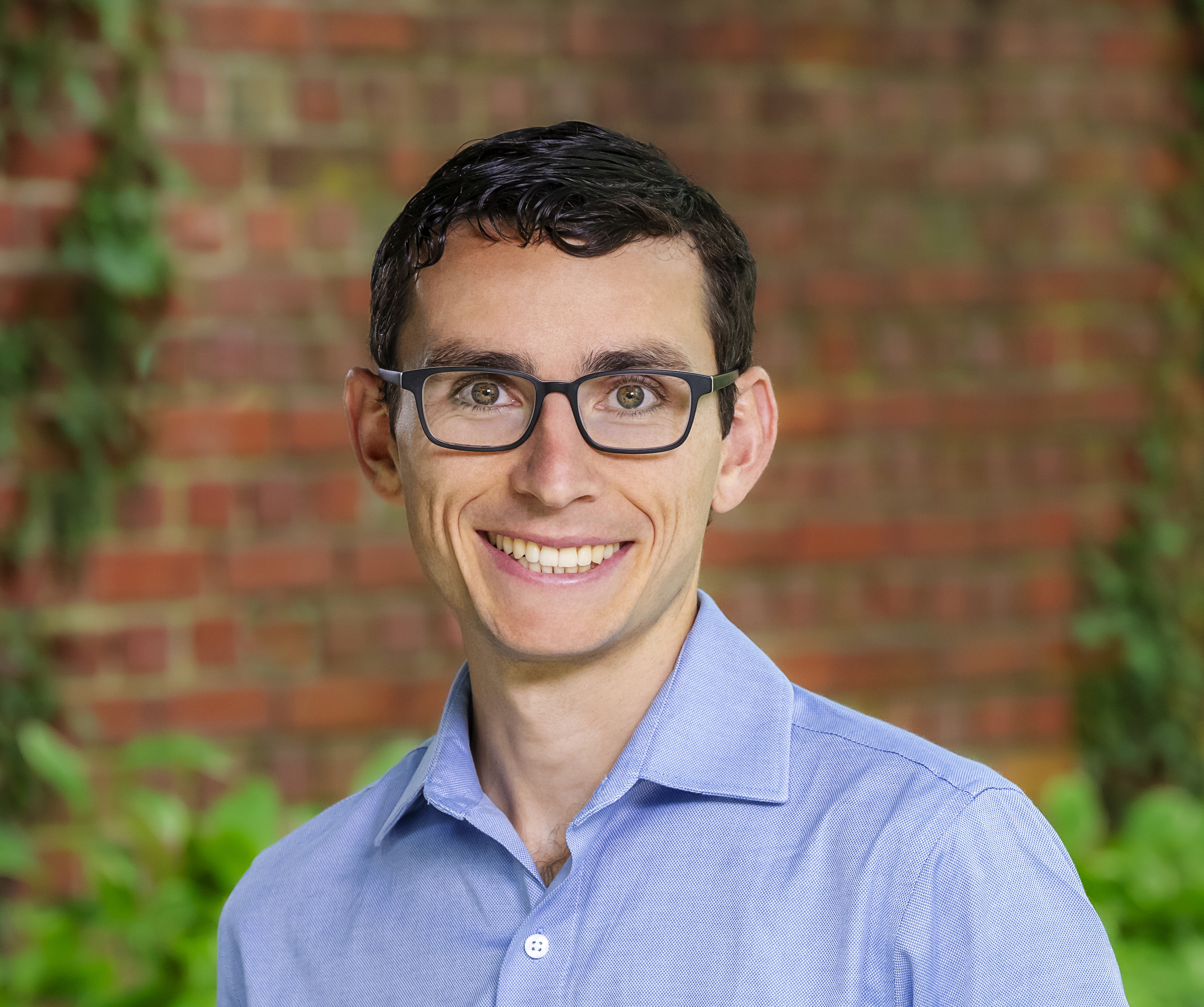
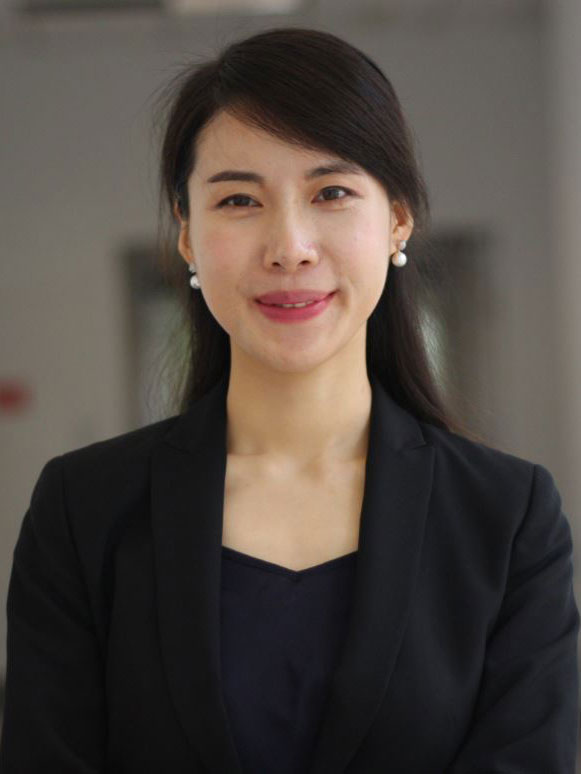
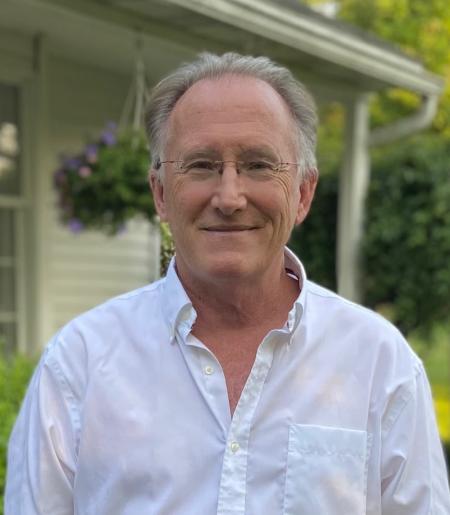
Daniel W. Green is an Assistant Professor of Business Administration in the Finance Unit at Harvard Business School , Harvard University. He teaches Finance II to MBA students and pursues research at the intersection of corporate finance, capital markets, and financial intermediation. Education: PhD in Financial Economics – MIT Sloan School of Management BA in Economics & Mathematics – University of Rochester Research Interests: Professor Green’s scholarship centers on how the organization of financial markets shapes firm capital structure and broader economic activity. Current projects explore socially responsible capital allocation, bank exit policies in energy lending, transaction-tax externalities in real-estate markets, and retirement-income innovation. His work spans both theoretical modeling and empirical analysis, drawing on settings as diverse as high-yield debt markets and microfinance. Publications Profile: Across 16 refereed articles, working papers, and Harvard cases, Green’s recent output tackles pressing policy and market questions—from the fiscal impact of Los Angeles’ mansion tax to the real effects of bank divestment from coal. Collectively, these studies illuminate how financing frictions, regulatory policies, and investor preferences jointly determine capital flows, firm behavior, and household welfare. Teaching & Case Development: In addition to Finance II, Green has authored or co-authored multiple award-winning HBS cases covering divestment strategy (Harvard Endowment), retirement product design (RTX Lifetime Income), and competitive bidding (Anadarko Petroleum). Contact: Email: dgreen@hbs.edu Office: 235 Baker Library, Harvard Business School, Boston, MA 02163
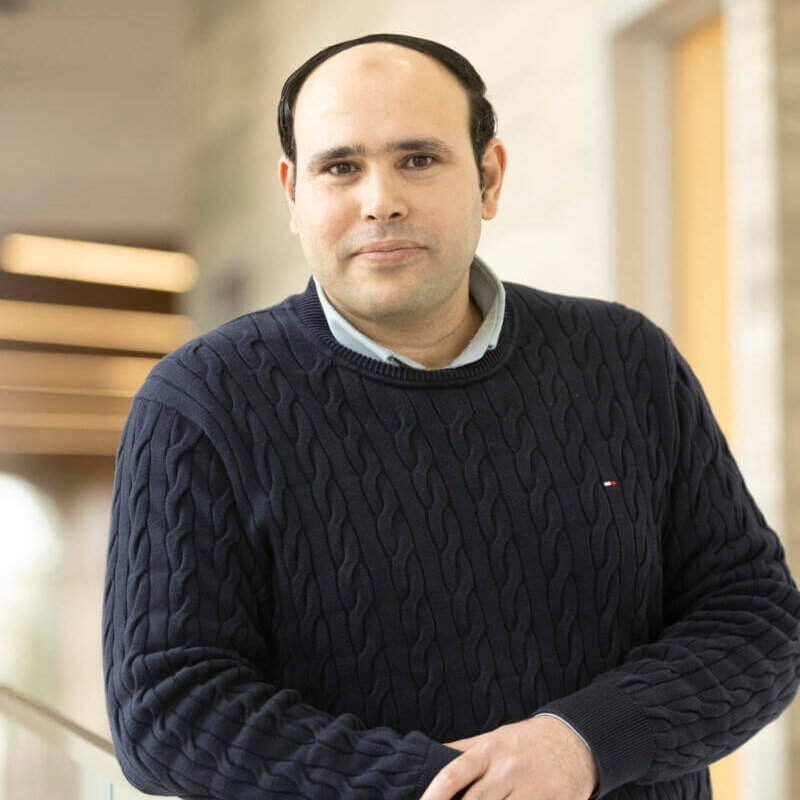
Mohamed Shaat is an Assistant Professor of Mechanical Engineering in the Engineering Department at St. Mary's University, San Antonio, Texas. Holding a Ph.D. from New Mexico State University (2017), he previously served as Assistant Professor at Abu Dhabi University (2019-2021) and held postdoctoral positions at Southern Methodist University (2022-2024) and Boston University (2021-2022). His research bridges energy storage systems, active matter physics, and advanced materials engineering. His educational foundation includes: Ph.D. in Mechanical Engineering, New Mexico State University, 2017 M.Sc. in Mechanical Engineering, New Mexico State University, 2016 M.Sc., Zagazig University (Egypt), 2012 B.Sc., Zagazig University (Egypt), 2007 Dr. Shaat's research program focuses on interdisciplinary innovation in energy storage (SOFCs & ASSBs), mechanics of active matter, nano-confined fluids, chiral metamaterials, and topological/non-Hermitian mechanics. He integrates machine learning with continuum mechanics to optimize electrochemical systems and additive manufacturing, exploring nontraditional phenomena in complex materials for next-generation engineering applications. Analysis of his 60+ journal articles reveals a dominant trajectory in nonlocal elasticity theory and topological mechanics, with increasing integration of machine learning (2020-2024). His work spans nanostructure mechanics, metamaterial design, and energy storage optimization, demonstrating consistent innovation in theoretical frameworks for complex material systems. His scholarly recognition includes: World's Top 2% Scientist (Stanford University, Mechanical Engineering & Transports, since 2019) Outstanding Graduate Award, New Mexico State University (2017) Merit-Based Enhancement Fellowship, New Mexico State University (2017) Best Master's Thesis Award, Zagazig University (2013) Committed to academic service, Dr. Shaat serves on the editorial board of Scientific Reports and as Specialty Associate Editor for Frontiers in Mechanical Engineering. His extensive peer review for Nature, Nature Communications, and Applied Physics Letters reflects his field authority. While specific grant details aren't disclosed, his postdoctoral appointments and publication volume indicate successful research funding. His teaching includes Materials Engineering and Materials Laboratory courses, emphasizing hands-on student mentorship. Though laboratory infrastructure isn't explicitly detailed, his research scope suggests computational modeling expertise and likely collaboration with experimental teams for materials characterization in energy storage and metamaterials development.
Dr. Wanlu Li is an Assistant Professor in the Department of Chemistry and Biochemistry at Montclair State University's College of Science and Mathematics. She holds a PhD from The Graduate Center-City University of New York and conducted postdoctoral research at Columbia University. Her work focuses on developing heteroatom-doped porous carbon materials for applications in sustainable energy and environmental remediation. Education: Bachelor of Science, Binzhou University Doctor of Philosophy, The Graduate Center-City University of New York Research Interests: Design of porous carbon materials for electrochemical CO₂ reduction Biowaste-derived supercapacitor applications Photocatalytic degradation of environmental pollutants Nickel-based catalysts for biomass conversion Her studies emphasize functional group engineering and porosity optimization to enhance material performance in energy storage and environmental remediation. Publications: Dr. Li has published over 20 peer-reviewed articles, with recent work exploring S,N-codoped carbon materials, biowaste-derived composites, and photocatalyst stability under environmental conditions. These studies highlight advancements in sustainable material design and energy conversion technologies. Affiliations: Member of the American Carbon Society, American Chemical Society, and Electrochemical Society. Lab & Teams: Leads the Wanlu Li Group focused on Material Chemistry for Environmental Remediation and Renewable Energy. Her lab investigates advanced carbon-based materials through collaboration with industry and academic partners.
Amity Doolittle is a Senior Lecturer II at the Yale School of the Environment (YSE), Yale University. Her research focuses on property rights, natural resource management, and the social and political processes shaping environmental inequities. She employs interdisciplinary methods from anthropology, political science, environmental history, and political ecology. Notable projects include historical land-use studies in New Haven, Connecticut, and analyses of indigenous rights in global climate policy. She teaches graduate courses on qualitative research methods, environmental justice, and property rights, emphasizing active, collaborative learning. Doolittle holds a B.A. from Harvard University and M.E.S./Ph.D. from Yale University. Her office is located in Kroon Hall, Yale’s environmental campus. Education: B.A., Harvard University; M.E.S., Ph.D., Yale University Her research interests include legal pluralism, historical resource conflicts, and the intersection of colonial and postcolonial discourses. Current projects examine urban land-use changes in New Haven and the rhetorical strategies of indigenous leaders in climate negotiations. She advises 10–12 master’s students annually on thesis projects and placements worldwide. Teaching highlights include Qualitative Research Methods , Environmental Justice , and Political Ecology of Tropical Forests . Her courses integrate hands-on methods, such as analyzing oral histories and policy documents. Labs/Teams: Collaborates with the Urban Resources Initiative (URI) on greenspace stewardship and community-led projects.
Benjamin Eysenbach leads the Princeton Reinforcement Learning Lab, where he designs algorithms that enable artificial intelligence systems to learn intelligent behaviors through trial-and-error, specializing in self-supervised methods that eliminate the need for human labels. He joined Princeton after completing his PhD in machine learning at Carnegie Mellon University under Ruslan Salakhutdinov and Sergey Levine, supported by the NSF Graduate Research Fellowship and Hertz Fellowship. His research bridges fundamental machine learning principles with practical applications in robotics and decision-making systems. Eysenbach's research focuses on developing self-supervised reinforcement learning algorithms that enable autonomous skill acquisition without external rewards. His investigations span contrastive learning methods, temporal abstraction techniques, and scalable architectures for goal-conditioned behaviors. These innovations aim to create more efficient and generalizable learning systems that can discover useful behaviors from unlabeled experience. Eysenbach's publications demonstrate consistent advancement in self-supervised RL methodologies, with recent work focusing increasingly on temporal abstraction and representation learning theory. His research shows progression from foundational contrastive RL frameworks toward more sophisticated analyses of generalization properties and uncertainty quantification. The 2025 works indicate expanding investigation into hierarchical control, probabilistic alignment, and hyper-deep network architectures. Eysenbach has been recognized with prestigious awards including the Hertz Fellowship and NSF Graduate Research Fellowship, supporting his doctoral research in self-supervised RL methodologies. His work has been presented at top machine learning conferences including NeurIPS, ICML, and ICLR. As director of the Princeton Reinforcement Learning Lab, Eysenbach oversees research initiatives in self-supervised RL, including projects on intention-conditioned modeling, horizon generalization, and contrastive learning frameworks. He has secured funding from the Princeton AI Lab to study neural correlates of temporal contrast in decision-making. Eysenbach teaches courses in reinforcement learning and has developed new benchmarks like JaxGCRL to accelerate research in goal-conditioned RL.
Jürgen Gauss is a Professor of Theoretical Chemistry at Johannes Gutenberg-Universität Mainz, Germany. With over 350 publications and an h-index of 85 (ISI WebOfScience)/96 (Google Scholar), his work focuses on high-accuracy quantum-chemical methods for energy and property calculations. Education: PhD in Theoretical Chemistry (1988), Universität zu Köln Positions: Full Professor (2001-present), Associate Professor (1995-2001), Research Associate (1991-1995), Postdoctoral Researcher (1990-1991) His research revolutionized NMR chemical shift calculations through the GIAO-MP2 scheme, extended to Cholesky decomposition techniques. He pioneered the first CCSD(T)-level analytic second derivatives for magnetic properties and developed the HEAT protocol for sub-kJ/mol thermochemical accuracy. Scientific Awards: Carl-Duisberg Gedächtnispreis (1996) Medal of International Academy of Quantum Molecular Science (1997) Akademiepreis (2003) Gottfried-Wilhelm Leibniz-Prize (2005) Foreign Member, Norwegian Academy of Science and Letters (2018) Advisees: Current PhD students include Sophia Burger, Florian Mast, Max Erichsen, and Malte Hellmann. His group develops the widely-used CFOUR quantum chemistry software package (over 1,000 licenses).
Jeffrey R. Errington is a Professor and Chair of the Department of Chemical and Biological Engineering at the University at Buffalo (SUNY). His research focuses on developing molecular simulation methods to study interfacial phenomena in complex fluids, including CO2 sequestration, enhanced oil recovery, and ionic liquid behavior. He holds a BS (1995) and PhD (1999) in Chemical Engineering from the University at Buffalo and Cornell University, respectively, and completed postdoctoral work at Princeton University. Education: BS, Chemical Engineering, University at Buffalo, 1995 PhD, Chemical Engineering, Cornell University, 1999 Research Interests: Computational methods for interfacial properties Molecular simulation of carbon capture and environmental systems Thermodynamic modeling of ionic liquids and nanomaterials Recent Work Trends: Recent articles emphasize advancing Monte Carlo and molecular dynamics techniques for studying fluid interfaces, with applications to energy storage, environmental engineering, and material science. Key themes include interfacial wetting, adsorption in nanoporous materials, and free-energy landscape analysis. Awards: NSF CAREER Award (2003) NYSTAR James D. Watson Investigator Award (2004) SUNY Chancellor’s Award for Excellence (2016) UB Exceptional Scholar Awards (2005, 2014) Leadership & Service: Director of Undergraduate Studies (2006–2014) Associate Dean for Undergraduate Education (2014–2023) Senior Associate Dean for Academic Affairs (2023–2024) Chair, CoMSEF Forum (American Institute of Chemical Engineers) His research group actively collaborates on CACHE Corporation initiatives and develops educational tools for undergraduate researchers.
Florian Strunk is a Professor in the Department of Mathematics at the University of Regensburg, working within the Faculty of Mathematics. His office is located in room M219 (phone: +49 941 943 2768) and his contact email is florian.strunk@ur.de. Dr. Strunk's research spans several interconnected areas of modern mathematics, with primary focus on Algebraic Geometry, Arithmetic Geometry, and Homotopy Theory. He has developed specialized expertise in Algebraic K-Theory, Motivic Homotopy Theory, and Derived Algebraic Geometry. His scholarly work bridges classical algebraic geometry with contemporary homotopy-theoretic methodologies, advancing our understanding of structural properties of algebraic varieties and schemes. His publication record demonstrates consistent contributions to Algebraic K-Theory and motivic homotopy theory, with significant work on descent properties, connectivity in motivic contexts, and algebraic cycles. His collaborative research with prominent mathematicians like Moritz Kerz and Georg Tamme has appeared in top-tier journals including Inventiones Mathematicae and Compositio Mathematica. As an educator, Dr. Strunk teaches across the mathematics curriculum, from foundational undergraduate courses to advanced graduate seminars. His teaching portfolio includes Algebraic Geometry I and II, Mathematics of Machine Learning, Introduction to Quantum Computing Mathematics, and specialized seminars on Algebraic K-Theory. He has developed comprehensive lecture notes for several courses, reflecting his commitment to effective pedagogy.
Ulrich Tallarek serves as Professor of Analytical Chemistry in the Faculty of Chemistry at Philipps University of Marburg, where he has held a W3 professorship since 2011. He also serves on the Board of Directors for the Materials Science Center at the university, a position he has held since 2007. His research group focuses on the fundamental understanding of transport phenomena in porous media with applications spanning chromatography, battery technology, and microfluidic systems. The group maintains strong collaborations with institutions worldwide and secures substantial research funding for advanced computational and experimental work. Professor Tallarek's research interests center on functional porous solids, with specific focus on morphology-transport-performance relationships. His work bridges multiple scales from molecular dynamics simulations of solute behavior in nanopores to macroscopic transport in chromatographic columns and battery electrodes. Key research areas include diffusion in hierarchical porous media, electrokinetic phenomena in microfluidic systems, molecular simulation of chromatographic processes, and advanced characterization of porous materials using tomography and other techniques. His group has pioneered multiscale simulation approaches that connect molecular-level surface chemistry to macroscopic transport properties. The research output demonstrates consistent focus on understanding fundamental transport mechanisms in porous systems, with recent publications emphasizing multiscale simulation techniques, molecular dynamics studies of solvent effects in chromatography, advanced characterization of mesoporous structures, and applications to separation science and energy storage. The work shows strong integration of computational modeling with experimental validation across multiple length scales. 2003: Desty Memorial Prize for Innovation in Separation Science, The Royal Institution of Great Britain, London 2006: Young Scientist Award from DECHEMA e.V. 2011: Named Discussion Leader at the 2011 Gordon Research Conference on Physics & Chemistry of Microfluidics 2011–2012: Chairman of the German Chemical Society (GDCh), Marburg 2013: Finalist, World Technology Awards, for category Environment 2013: Named as one of the 100 most influential analytical scientists in the world (The Analytical Scientist Power List) 2017: Recipient of the Silver Jubilee Medal 2017, The Chromatographic Society, UK Professor Tallarek's research has been supported by numerous grants enabling high-performance computing resources, advanced instrumentation, and international collaborations. His group maintains strong ties with industry partners in separation science and analytical instrumentation. The Tallarek Research Group includes postdoctoral researchers, PhD students, and technical staff working across experimental and computational domains. Current projects focus on molecular simulation of chromatographic processes, advanced characterization of porous battery electrodes, and development of novel separation methodologies. The Tallarek Research Group operates state-of-the-art facilities for computational modeling, including access to high-performance computing resources at Forschungszentrum Jülich. The group also maintains experimental capabilities for chromatographic analysis, materials characterization, and microfluidic device development. Their work on physically reconstructed porous media has established new standards for connecting microstructure to transport properties in complex materials systems.
Matt Nowinski is a Collegiate Associate Professor in the Department of Mechanical Engineering at Virginia Tech's College of Engineering. His professional roles include advisory board memberships and leadership positions within the department. He holds multiple degrees including a Ph.D. in Mechanical Engineering from ETH Zurich (1999), an M.S. in Computer Science from Syracuse University (2022), and prior mechanical/aerospace engineering degrees from Virginia Tech. His research focuses on asteroid dynamics (particularly D-type and V-type asteroids), gas turbine engines, aeroelasticity, and education technology. Notable areas include lightcurve analysis, surface mineralogy modeling, and machine learning applications in astronomy. His work bridges aerospace engineering with astrophysics, leveraging both experimental and computational methods. Dr. Nowinski has over 24 years of industry experience as a Boeing subject matter expert in military communications systems, complemented by academic roles at George Mason University and University of Chicago. He is a recipient of the John Jones Faculty Fellowship and Society of Distinguished Alumni honor. His research contributions span asteroid characterization, turbine blade flutter mechanisms, and telescope instrumentation. Current work emphasizes observational astronomy through the Stone Edge Observatory and Slack-based collaborative platforms. He actively contributes to advancing STEM education through innovative curricula and research integration.
Professor Catherine Easton serves as Professor in Information Technology and Intellectual Property Law at Lancaster University's School of Law, with additional affiliations at Security Lancaster and the Centre for Law and Society. Her work bridges legal scholarship with practical technology implementation, focusing on digital inclusion and governance frameworks. Her research centers on internet governance, domain name regulation, intellectual property law, and accessibility for disabled users. She examines how legal frameworks interact with human-computer interaction systems, particularly in crisis response scenarios and educational technology. Her scholarship consistently addresses the tension between regulatory compliance and genuine digital inclusion, with special attention to the UN Convention on the Rights of Persons with Disabilities. Her recent publications reveal growing emphasis on autonomous systems regulation, particularly regarding disability access in driverless vehicles, and ethical frameworks for cloud-based disaster response. The scholarly trajectory shows evolution from foundational website accessibility analysis toward complex systems governance in emerging technologies. Higher Education Academy International Scholarship recipient MMU Promising Researcher Fellow (2011) Co-chair of UN Internet Governance Forum's Internet Rights and Principles Dynamic Coalition Treasurer of British and Irish Law, Education and Technology Association Guest editor for Web Journal of Current Legal Issues Disability Special Edition Professor Easton actively develops legal education technologies, having created interactive teaching resources for major textbooks and pioneered clicker technology applications in law classrooms. She leads initiatives like the National Law Student Forum and has presented extensively on MOOCs and legal pedagogy. Her Security Lancaster affiliation connects her work to broader research on information transparency and crisis response ethics, where she examines big data's implications for inclusion and human rights.
Nicholas Vincent is an Assistant Professor in the School of Computing Science at Simon Fraser University. His research focuses on Human-Computer Interaction (HCI), Responsible Artificial Intelligence, and Human-Centric Machine Learning. He holds a Ph.D. in Technology and Social Behavior from Northwestern University (2022) and a B.Sc. in Electrical Engineering from UCLA (2016). Education: Ph.D., Northwestern University (2022); B.Sc., UCLA (2016) Affiliations: Simon Fraser University School of Computing Science His work examines the societal implications of AI, including data labor rights, algorithmic governance, and ethical design. Notable contributions include frameworks for measuring attentional agency on digital platforms and studies on collective action in tech contexts. He received the SIGCHI Outstanding Dissertation Award in 2024. Recent publications explore topics like AI ethics, governance of generative models, and Wikipedia's role in content ecosystems. He actively participates in policy discussions through media engagements and conference talks, advocating for public-oriented AI development.
Dr. Hongli (Julie) Zhu is an Associate Professor in the Department of Mechanical and Industrial Engineering at Northeastern University's College of Engineering. Her research focuses on sustainable energy storage, multifunctional materials, and advanced manufacturing, with emphasis on developing environmentally friendly biomass-derived materials, all solid-state batteries, and flow batteries. She leads the ZHU Lab at Northeastern University, which is dedicated to creating safer, cheaper, and higher performance energy storage solutions while exploring multifunctional materials derived from nature. Dr. Zhu received her PhD from South China University of Technology and Western Michigan University (2004-2009). She conducted postdoctoral research at KTH Royal Institute of Technology in Sweden (2009-2011), focusing on biodegradable and renewable biomaterials from natural wood, followed by additional postdoctoral work at the University of Maryland (2012-2015), where she researched nanocellulose and energy storage. Dr. Zhu's research spans multiple disciplines at the intersection of materials science, energy storage, and sustainable manufacturing. Her work addresses critical challenges in energy storage technology, including developing all solid-state batteries, flow batteries, and high energy density battery systems. She has pioneered research in sustainable biomass-derived materials, particularly investigating cellulose, hemicellulose, and lignin for applications in bendable, implantable, and biocompatible electronics. Her lab also focuses on advanced manufacturing techniques, including high-speed roll-to-roll processing for emerging advanced materials and devices. Analysis of Dr. Zhu's publication record reveals a strong focus on next-generation battery technologies, particularly solid-state systems. Her research demonstrates significant contributions to understanding and improving lithium dendrite suppression, electrode architecture optimization, and interface stabilization in solid-state batteries. She has also made substantial advances in sustainable materials derived from natural resources, developing applications for cellulose nanostructured fibers, paper, and aerogel/hydrogel systems. MRS Communications Early Career Distinguished Presenters and JMR Distinguished Invited Speakers (2024) Selected in Stanford University List of Top 2% Scientists Worldwide (2021-2024) College of Engineering Faculty Fellow (2023) Soren Buus Outstanding Research Award (2022) Women in Materials Science, Advanced Materials (2021 and 2022) Women Scientists at the Forefront of Energy Research, ACS Energy Letters (2020) Innovator of the Year 2013, Maryland Jakob Wallenberg Scholarship, Sweden Dr. Zhu has secured significant research funding from various sources, including the National Science Foundation and Department of Energy. Her current projects include "Uncovering the mechano-electro-chemo mechanism of fresh Li in sulfide based all solid-state batteries through operando studies" (NSF), "Enabling Advanced Electrode Architecture through Printing Technique" (DOE), and "Engineering the Metal Sulfide Interface in All Solid State Batteries through Operando Study" (NSF). She collaborates with industry partners including Rogers Corporation and has developed patented technologies related to sustainable materials and energy storage. Dr. Zhu serves as Codirector of Advanced & Intelligent Manufacturing, Editor of Progress in Materials Science, and on the Editorial Advisory Board of Chemical Society Reviews. The ZHU Lab at Northeastern University is a highly interdisciplinary research group that bridges scales from the nanoscopic to macroscopic and system level. The lab's work has led to numerous patents, including "Natural fiber composites as a low-cost plastic alternative" and "Fire-retardant Nanocellulose Aerogel, and Methods of Preparation and Uses Thereof." The group focuses on making energy storage safer, cheaper, and higher performing while exploring multifunctional materials derived from nature, with particular emphasis on applying high-speed roll-to-roll manufacturing to emerging advanced materials and devices.
David J. Field is a Professor of Psychology at Cornell University, affiliated with the College of Arts and Sciences. His research focuses on theories of sensory coding, visual processing, and the relationship between natural environmental structure and sensory system representations. He is an active member of the Graduate Field of Psychological Sciences and Human Development. His work spans computational neuroscience and visual perception, with a particular emphasis on efficient coding principles and neural responses to natural scenes. Key research interests include the spatiotemporal dynamics of visual processing, sparse coding models, and the application of advanced imaging techniques like dynamic electrode-to-image (DETI) mapping. His studies often bridge neuroscience with computer science, exploring how neural systems encode visual information efficiently. Recent publications emphasize the role of behavioral goals in shaping neural coding and the statistical properties of natural scenes. Dr. Field teaches courses such as PSYCH 3420 (Human Perception: Application to Computer Graphics, Art, and Visual Display) and contributes to graduate training programs in psychological sciences. His work has been published in top journals, reflecting a strong focus on interdisciplinary approaches to understanding perception and neural representation.
Dr. Reuben Binns is an Associate Professor of Human Centred Computing at the University of Oxford , where he investigates intersections between computer science, law, and philosophy. His research focuses on data protection , machine learning ethics , and regulation of technology .