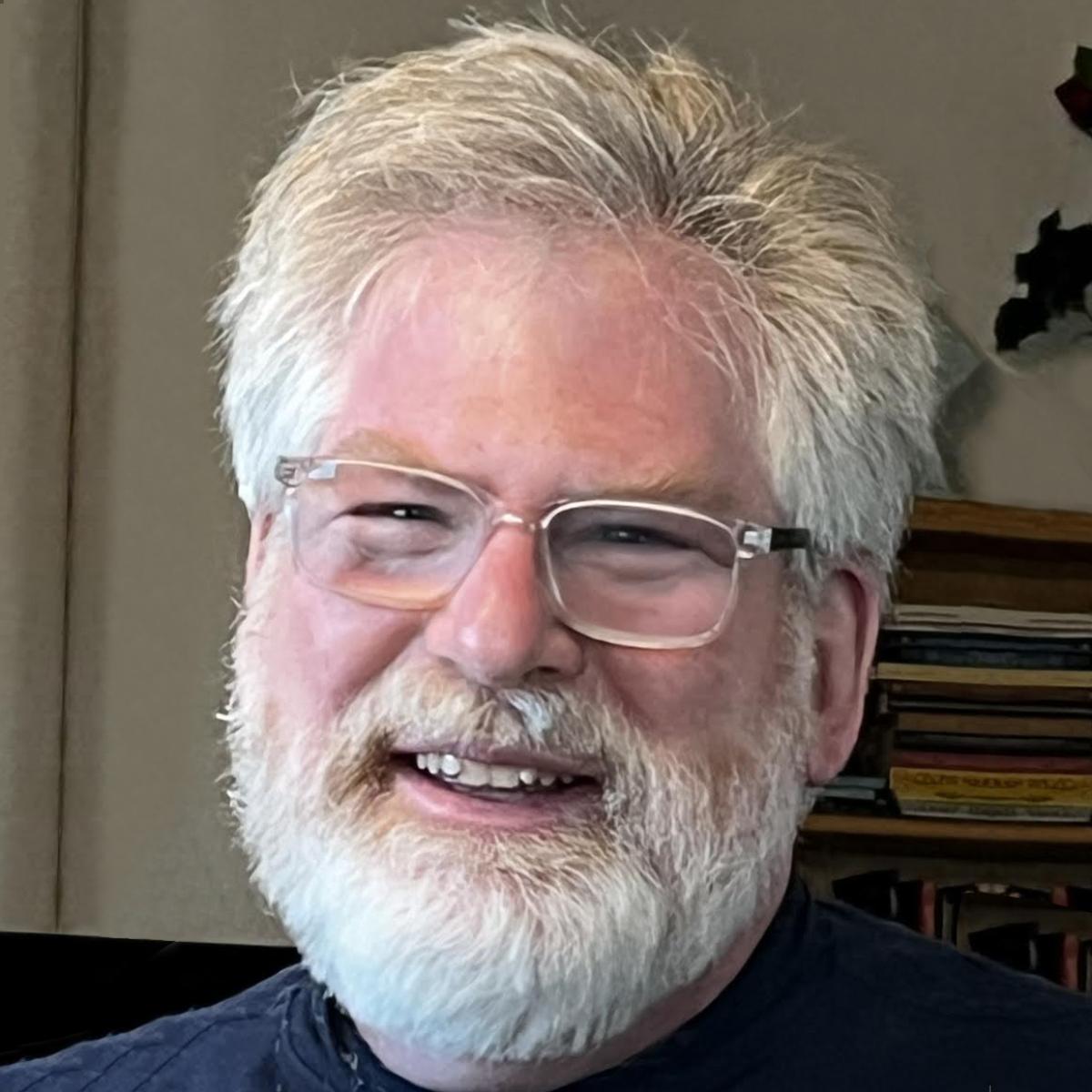
Russell Impagliazzo is a Professor in the Department of Computer Science and Engineering at the University of California, San Diego (UCSD). He has held positions as Assistant Professor, Associate Professor, and Professor at UCSD since 1991 and was a Visiting Professor at the Institute for Advanced Study (Princeton) from 2007 to 2012. His academic journey includes a BA in Mathematics from Wesleyan University and a PhD in Mathematics from UC Berkeley. His research focuses on computational complexity theory , with key contributions to: Randomness in computation Cryptography (e.g., pseudorandom generators) Circuit lower bounds Proof complexity (e.g., polynomial calculus, resolution) Structural complexity (e.g., average-case hardness) Optimization heuristics (e.g., local search) The trends in his publications include foundational work on derandomization, hardness amplification, and algebraic proof systems. His papers often bridge theoretical computer science with mathematics, particularly in analyzing the limits of computational models. Scientific awards and honors include: NSF Young Investigator Sloan Fellow Fulbright Scholar Guggenheim Fellow Simons Investigator Best Paper Award (Computational Complexity Conference) Best Paper Award (STOC) Outstanding Paper Award (SIAM) He actively advises students and has contributed to grants and programs such as the Simons Institute’s Fine-Grained Complexity and Algorithms and the Meta-Complexity program at the Simons Lab in Spring 2023.
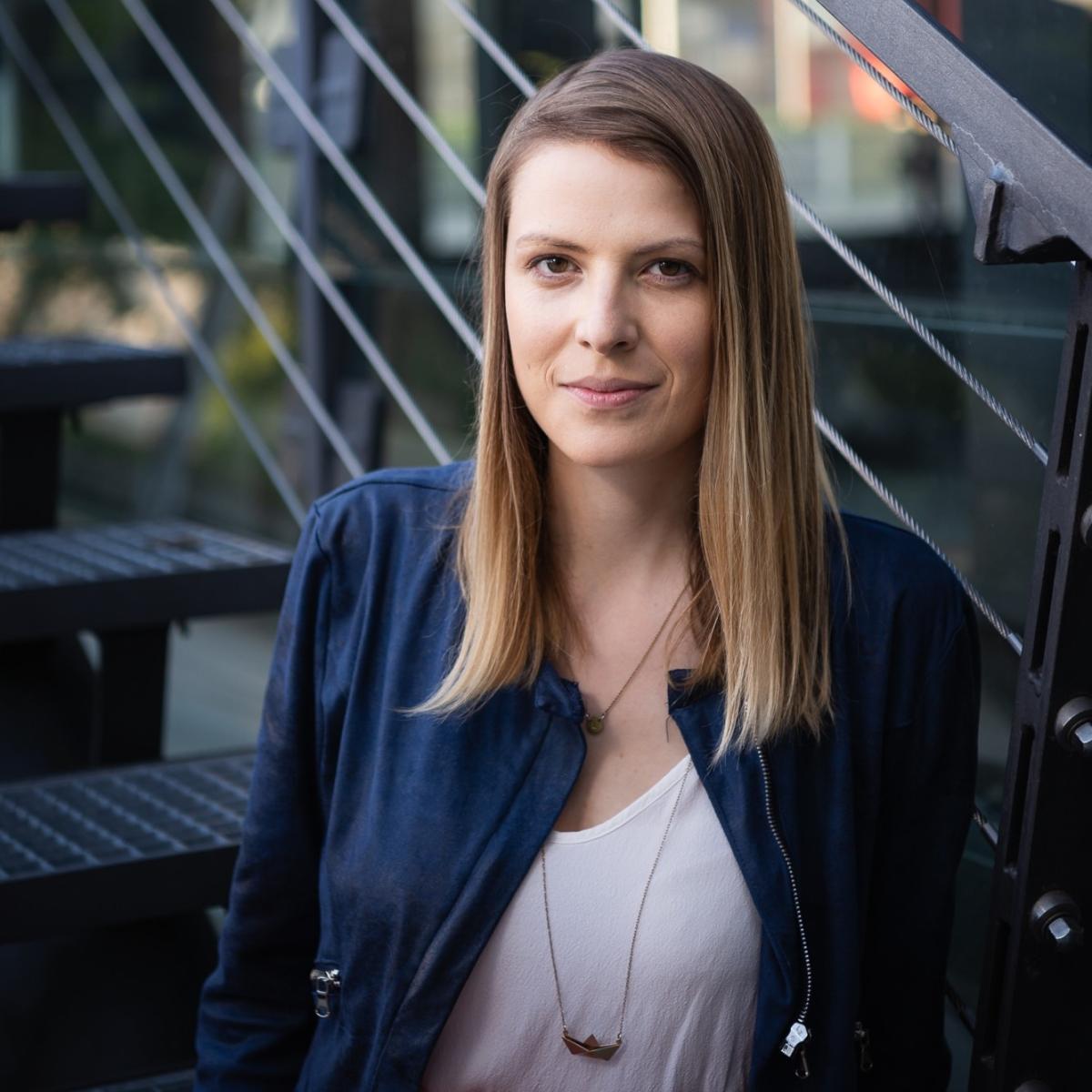
Lisa Maria Kohl is a tenured researcher in the Cryptology Group at CWI Amsterdam , where she has worked since 2020. She focuses on developing practical post-quantum secure protocols and secure multi-party computation . Her academic journey includes a PhD at Karlsruhe Institute of Technology (2019), postdoctoral research at Technion (2020), and a visiting researcher role at the FACT Center at IDC Herzliya during her PhD. Education : PhD from Karlsruhe Institute of Technology (2019) Previous Positions : Postdoctoral researcher at Technion (2020), visiting researcher at IDC Herzliya (2019), visiting student at CWI (2015) Current Role : Research Scientist at CWI Amsterdam (2020–present) Kohl’s research spans cryptographic theory and its practical applications. Key areas include secure multi-party computation , homomorphic secret sharing , oblivious transfer , and lattice-based cryptography . Her work often addresses efficiency, tight security reductions, and post-quantum resilience, as seen in her recent publications on scalable protocols and topology-hiding computation. Her 15 most recent publications (2025–2019) reveal a focus on secure computation (e.g., SPDZ extensions, RMS programs), pseudorandomness (e.g., LPN-based constructions), and privacy-preserving technologies (e.g., Privacy Pass, topology-hiding communication). Collaborations with prominent researchers like Elette Boyle, Yuval Ishai, and Ronald Cramer underscore her integration into global cryptographic research networks.
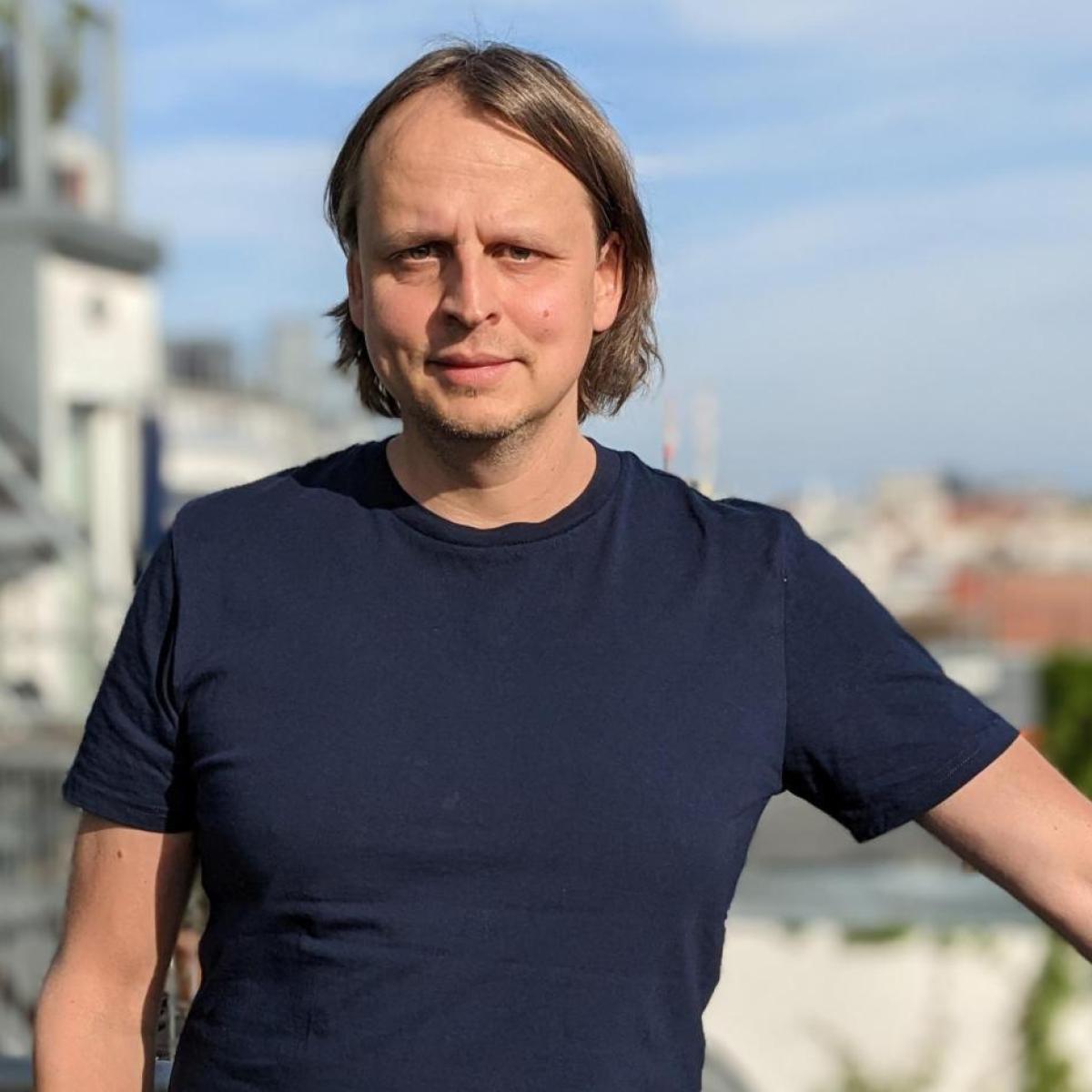
Krzysztof Pietrzak is a Professor at the Institute of Science and Technology Austria (IST Austria), where he leads the cryptography research group. He earned his PhD in computer science from ETH Zurich in 2005 and has held positions at Centrum Wiskunde & Informatica (CWI) in Amsterdam and École Normale Supérieure in Paris before joining IST Austria. His research focuses on theoretical and applied cryptography with several key projects: Sustainable Blockchains : Developing proof systems like proofs of space and verifiable delay functions for eco-friendly blockchain protocols Group Messaging : Creating scalable secure messaging protocols for large groups without compromising security Leakage-Resilient Cryptography : Building cryptographic schemes resistant to side-channel attacks Professor Pietrzak's work shows a strong trend toward practical cryptographic solutions for real-world problems, particularly in blockchain technology and secure communications. His recent publications demonstrate expertise in verifiable delay functions, payment channel networks, and post-compromise security for group messaging systems. His notable scientific achievements include: ERC Consolidator Grant (2015) for "Teaching Old Crypto New Tricks" ERC Starting Grant (2010) for "Provable security for physical cryptography" Professor Pietrzak advises several PhD students and postdocs in the cryptography group at IST Austria. His research is supported by prestigious European Research Council grants and he is part of the Vienna Cybersecurity and Privacy Research Cluster (ViSP) and the SPyCoDe research program. The cryptography group maintains strong connections with the broader research community, including collaborations with industry projects like chia.net for sustainable blockchain development.
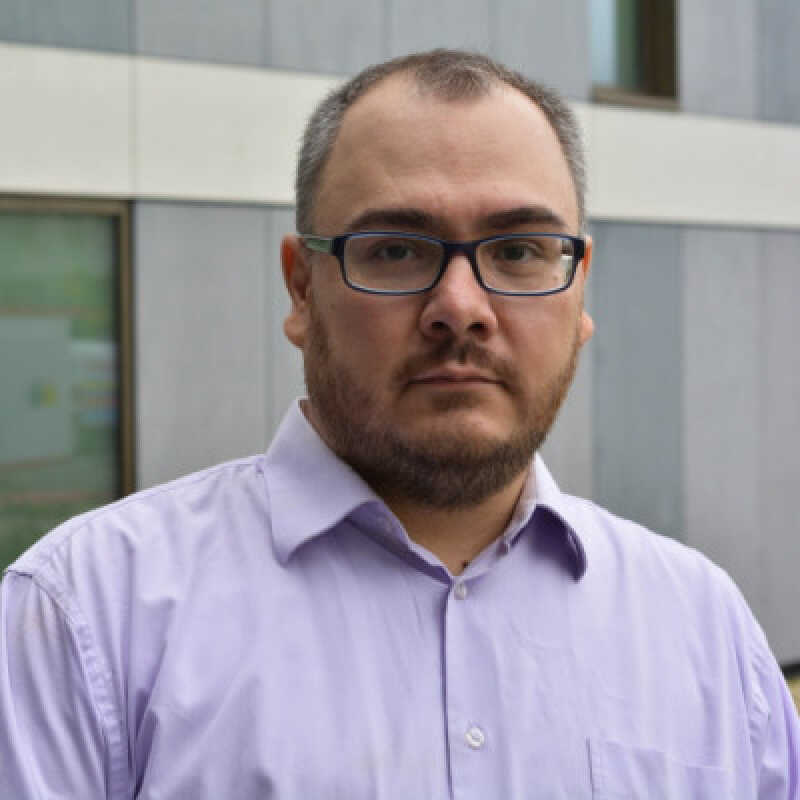
Guillem Perarnau Llobet is an Associate Professor at the Department of Mathematics, Universitat Politècnica de Catalunya (UPC), affiliated with CRM (Centre de Recerca Matemàtica), IMTech (Institut de Matemàtiques de la UPC), and BGSMath (Barcelona Graduate School of Mathematics). His academic journey includes a PhD at UPC under Oriol Serra, followed by a CARP Postdoc Fellowship at McGill University with Bruce Reed and Louigi Addario-Berry (2013–2015), and a Lecturer position at the University of Birmingham (2016–2019). Current Role: Associate Professor, UPC Past Roles: Lecturer, University of Birmingham; Postdoc, McGill University Affiliations: CRM, IMTech, BGSMath Research Focus: Probabilistic and Extremal Combinatorics, Random Combinatorial Structures, Discrete Stochastic Processes, and Analysis of Randomized Algorithms. His work bridges theoretical rigor with practical algorithmic insights, particularly in graph theory and random graph dynamics. Article Trends: Recent publications emphasize algorithmic combinatorics, probabilistic methods in random graphs, and hypergraph Hamiltonicity. Key themes include mixing times, synchronization, and percolation phenomena across diverse graph models. Scientific Awards: CARP Postdoc Fellowship Grants & Collaborations: COCOA Grant (coPI) RandNET MSCA Exchange Programme Participant Spanish Discrete and Algorithmic Mathematics Network Coordinator
Dr. Darija Domazet Jurašin is a Senior Research Associate at the Ruđer Bošković Institute , leading the Laboratory for Biocolloids and Surface Chemistry within the Division of Physical Chemistry. She earned her Ph.D. in Chemistry from the University of Zagreb in 2010 and has since focused on surfactant systems, nanomaterial interactions, and biomineralization processes. Current affliations: Ruđer Bošković Institute Division of Physical Chemistry Laboratory for Biocolloids and Surface Chemistry Education: Ph.D. in Chemistry, University of Zagreb (2004–2010) B.Sc. in Chemistry, University of Zagreb (1996–2004) Her research interests lie at the intersection of physical chemistry, nanomaterials, and biomedical applications. Key areas include: Surfactant self-assembly and mesophase formation Nanoparticle-protein corona dynamics Biomimetic synthesis of calcium phosphate nanomaterials Nanoparticle-lipid membrane interactions Environmental fate of engineered nanomaterials Functional nanocomposites for tissue regeneration Recent work focuses on metallosurfactants (HRZZ project MSurfnSWIM) and systematic studies on nanoparticle stabilization using amino acids and surfactants. Publications highlight her expertise in dynamic light scattering , FTIR spectroscopy , and AF4-spICP-MS for nanoparticle analysis. She has collaborated on multiple scientific projects , including EU Horizon 2020 (STOP), HRZZ (CaPBiomimNanocomp), and BICRO Proof of Concept grants. Her advising extends to graduate students working on surfactant systems, nanomaterial biointeractions, and biomineralization processes. As a member of the European Colloid & Interface Society and Croatian Microscopy Society , she contributes to advancing nanoscale characterization methodologies.
OKAMOTO Eiji is a Professor at the Department of Electrical and Mechanical Engineering, School of Engineering, Nagoya Institute of Technology. His research focuses on quantum cryptography, satellite communications, wireless networks, 5G/6G technology, information security, and Sub-THz imaging. He has made significant contributions to the fields of quantum key distribution, non-terrestrial networks, and secure wireless communications. OKAMOTO received his Doctor of Informatics from Kyoto University in 2003, Master of Engineering in 1995, and Bachelor of Engineering in 1993, all from Kyoto University. Prior to his current position, he worked at the Communications Research Laboratory, Ministry of Posts and Telecommunications (1995-2002), NICT (2011-2013), and Simon Fraser University (2004). Professor OKAMOTO's research interests span multiple cutting-edge areas in communications technology. His work in quantum cryptography focuses on improving information reconciliation for continuous-variable quantum key distribution using polar codes and raptor codes. In satellite communications, he has conducted extensive research on non-terrestrial networks and optical satellite data relay systems. His contributions to wireless networks include developing low-latency communication techniques, advanced multiple access methods, and secure communication protocols. His recent work in Sub-THz imaging has led to innovations in hazardous material identification and complexity reduction methods. Analysis of his recent publications reveals a strong focus on quantum key distribution systems, with multiple papers addressing information reconciliation efficiency. There's also a significant emphasis on non-terrestrial networks for 6G applications, particularly leveraging LEO satellites and optical communications. His research bridges theoretical advances with practical implementations, as evidenced by numerous papers on experimental demonstrations and system implementations. Education Achievement Award from IEICE (2025) Best Paper Award from IEICE Communications Society (2024) Satellite Communication Research Award (2023) Activity Merit Award (Review Committee) (2022) Meritorious Service Award (Research Committee Chair) (2022) Excellent Teaching Award from Nagoya Institute of Technology (2022) IEICE ComEX Top Downloaded Letter Award (2022) IEICE Fellow (2022) Professor OKAMOTO actively mentors numerous graduate students, with recent research involving M1 and M2 students working on quantum cryptography, Sub-THz imaging, and non-terrestrial networks. His laboratory at Nagoya Institute of Technology has received funding for research on quantum cryptography communication (2019), autonomous driving (2014), sensor networks (2009), and optical satellite communication (2008). He has served as a committee member for numerous academic societies including IEEE and IEICE. Professor OKAMOTO leads the Eiji Okamoto Laboratory at Nagoya Institute of Technology, which focuses on creating next-generation mobile and satellite communication systems. The laboratory aims to cultivate independent thinking engineers while developing new wireless (and wired) communication methods to realize a safer, more secure, and more convenient super-smart society. Current research projects include quantum cryptography, Sub-THz imaging for security applications, non-terrestrial networks for 6G, and low-latency communication techniques for autonomous driving and V2X applications.
Carlos Perez Delgado is a Senior Lecturer at the University of Kent , affiliated with the School of Computing . He serves as a Library Liaison Officer and is a member of the Cyber Security Group . His research focuses on quantum theory's implications for computation, communication, metrology, and security. His research explores: Quantum data structures with superior performance over classical counterparts Delegated quantum computation protocols with reduced communication overhead Quantum metrology limits and measurement accuracy Quantum cryptography and homomorphic encryption constraints Publications highlight his contributions to quantum algorithms, blockchain vulnerabilities, and metrology fundamentals. He teaches modules in computer science and has supervised research projects in quantum information processing. Key trends in his recent publications include: Quantum advantage in proof-of-work systems Coherent parallelization of classical computation Security challenges in blockchain technologies Measurement-driven analogs for adiabatic quantum computation Quantum metrology limits and Heisenberg uncertainty His work spans theoretical foundations and practical applications in quantum technologies. Education: PhD in Quantum Cellular Automata (University of Waterloo, 2007)
Richard Barwell is a Full Professor in the Faculty of Education at the University of Ottawa, where he served as Dean from 2017 to 2024. He joined the university in 2006 after completing his PhD in Education at the University of Bristol, UK, bringing extensive experience from teaching mathematics in the UK and Pakistan. His educational background includes a PhD in Education from the University of Bristol. Professor Barwell's research examines the role of language in mathematics education through a dialogical lens, investigating how teachers and students use language in multilingual classrooms and how mathematicians communicate complex ideas. He pioneers work on integrating climate change and environmental sustainability into mathematics pedagogy, arguing that education must address the planetary crisis through relational, justice-oriented approaches. His scholarship emphasizes Indigenous knowledge, social justice, and hope in sustainability education. His recent publications reveal a clear trajectory toward critical mathematics education for ecological justice, with increasing focus on language diversity, climate action, and decolonial perspectives. This interdisciplinary work bridges mathematics, linguistics, and environmental studies to reimagine education for planetary survival. He has held significant leadership roles including past President of the Ontario Association of Deans of Education and co-leader of the 2022 Education for a Sustainable Future Agreement, which advocates for transformative educational policy on the climate emergency. While his advisory roles and grant leadership are implied through major initiatives like the Sustainable Future Agreement, specific details about student mentorship or funded projects are not documented in available sources. His work operates at the nexus of academic leadership and grassroots educational change without dedicated laboratory structures.
Hassan Sartaj serves as a Postdoctoral Fellow within the Department of Engineering Complex Software Systems at Simula Research Laboratory. His research bridges advanced software engineering methodologies with critical healthcare applications, focusing on medical device safety and reliability through innovative digital twin frameworks. His research profile centers on AI-driven software engineering for healthcare systems , with core expertise in digital twin creation , uncertainty-aware simulation , and LLM-enhanced testing . Key contributions include developing meta-learning approaches for medical device digital twins (MeDeT) and quantum extreme learning machines for practical software testing. His work consistently addresses real-world challenges in healthcare IoT, particularly in medicine dispensers and cancer registry systems, emphasizing safety-critical validation. Analysis of his 15 most recent publications reveals a dominant trend toward integrating foundation models with cyber-physical systems engineering . Over 70% of his 2024-2025 output explores LLMs for uncertainty identification in self-adaptive robotics, differential testing of medical rule engines, and environment simulation for digital twins. This reflects a strategic pivot toward leveraging generative AI for validating safety-critical healthcare software, with strong emphasis on practical DevOps implementation in evolving healthcare applications.
Daniel Solow serves as Professor in the Department of Operations at Case Western Reserve University's Weatherhead School of Management, where he has maintained continuous faculty appointment since 1978. His interdisciplinary expertise bridges operations research, complex systems theory, and mathematics education within the university's business school framework. His educational background includes foundational training at premier institutions: PhD in Operations Research from Stanford University (1978) MS in Operations Research from University of California at Berkeley (1972) BS in Mathematics from Carnegie-Mellon University (1970) Solow's research program operates at three interconnected frontiers: (1) Mathematical modeling of complex adaptive systems to analyze leadership emergence and optimal central control in organizational contexts; (2) Development of advanced optimization algorithms for deterministic, combinatorial, and nonlinear problems; (3) Creation of systematic pedagogical frameworks for teaching mathematical proofs and quantitative methods. His work demonstrates consistent translational impact from theoretical mathematics to practical business applications, particularly in team dynamics and decision-making under complexity. Analysis of his 15 most recent publications reveals strong thematic continuity in applying mathematical rigor to organizational phenomena, with increasing focus on leadership modeling since 2014. His research evolves from pure optimization techniques toward complex systems applications, maintaining strong representation in top-tier journals like Management Science and Organization Science while expanding into interdisciplinary outlets such as Mathematics and The American Scientist . His scientific recognition includes: Weatherhead Teaching Excellence Award (1981, 2010, 2015) Solow's academic contributions extend beyond publications through significant educational leadership. He has developed influential textbooks including How to Read and Do Proofs and Linear Programming: An Introduction to Finite Improvement Algorithms , while teaching quantitative methods across Weatherhead's MBA, master's, and PhD programs. His course development spans foundational topics like Statistics and Decision Modeling to advanced subjects including Operations Analytics and Python Programming, with documented excellence through multiple teaching awards based on student nominations. External service includes editorial roles for INFORMS Journal on Computing and committee leadership for curriculum development and faculty recruitment.
Matthieu Rosenfeld is an Assistant Professor at the University of Montpellier, affiliated with the LIRMM laboratory and the ESCAPE team. He teaches in the Computer Science department of IUT Montpellier-Sète. His research interests include combinatorics , theoretical computer science , and discrete mathematics , focusing on combinatorics on words and graph theory . He frequently employs computer-assisted proofs for avoidability problems. Recent publications explore topics like nonrepetitive colorings in Euclidean space, undecidability in bilinear systems , Vizing's problem for triangle-free graphs, Shur's conjecture in power-free languages, and word reconstruction via subword queries . His work often intersects formal languages , graph coloring , and algebraic structures , with applications to automata theory, logic, and algorithm design.
Adam Chlipala is the Arthur J. Conner (1888) Professor of Computer Science at the Massachusetts Institute of Technology (MIT), where he is a faculty member in the Department of Electrical Engineering and Computer Science (EECS), the Computer Science and Artificial Intelligence Laboratory (CSAIL), and leads the Programming Languages & Verification Group. He has been a faculty member at MIT since 2011, following a postdoctoral position at Harvard University. PhD in Computer Science, UC Berkeley (2007) BS in Computer Science, Carnegie Mellon University (2003) His research lies at the intersection of programming languages and formal methods, with a strong emphasis on using the Coq proof assistant to build verified compilers, cryptographic systems, and hardware-software stacks. His work spans from high-level language design to gate-level hardware verification, aiming for end-to-end correctness proofs. Recent efforts focus on high-performance parallel computing systems with full formal assurance. The 15 most recent publications highlight a consistent trend in verified compilation, cryptographic security, hardware verification, and tensor/ML program optimization. His work increasingly integrates software and hardware verification, emphasizing modular, extensible frameworks and end-to-end correctness. Key themes include side-channel resistance, automated proof techniques, and practical deployment of formally verified systems. Advisory Board Member, BlueRock Systems (formerly BedRock Systems) Member, DARPA Information Science and Technology (ISAT) Study Group (2018–2022) Advisory Board Member, SiFive Former Advisor, krypt.co (acquired by Akamai) Chlipala has advised numerous PhD and Master’s students and regularly teaches core MIT courses such as 6.009 (Fundamentals of Programming), 6.042 (Mathematics for Computer Science), and 6.822/6.5120 (Formal Reasoning About Programs). He is the author of the widely used textbook Certified Programming with Dependent Types and co-developer of the FRAP (Formal Reasoning About Programs) educational materials. He is also the founder of Nectry, a startup based on Ur/Web and UPO, aiming to democratize enterprise application development through AI-assisted, type-safe programming. His research group develops tools and frameworks for modular verification, verified compilation, and formal analysis of complex digital systems. The work is deeply collaborative, involving students, industry partners, and open-source contributions via GitHub. Projects like Fiat Cryptography have been deployed in major web browsers, demonstrating real-world impact.
Ran Libeskind-Hadas is the Kravis Professor of Integrated Sciences and Founding Chair of the Kravis Department of Integrated Sciences. His research focuses on computational biology, particularly phylogenetics and the development of algorithmic methods for analyzing evolutionary relationships. He has pioneered work on phylogenetic reconciliation, gene family evolution, and cophylogeny analysis in host-symbiont systems. His contributions include the development of tools like eMPRess and xenoGI 3, which facilitate systematic reconciliation and gene family evolution studies. Education: A.B. in Applied Mathematics from Harvard University, Ph.D. in Computer Science from University of Illinois at Urbana-Champaign. Research emphasizes computational methods for evolutionary biology, including DTLOR model applications, reconciliation algorithms, and interdisciplinary curriculum design. His work bridges computer science and biology through algorithm design and software tools for genomic and phylogenetic analysis. Notable contributions include polynomial-time algorithms for species network analysis and NP-hardness proofs for reconciliation problems. He has led NSF-funded projects focusing on phylogenetic reconciliation methods and interdisciplinary computing education. His teaching integrates computational approaches with biological problems, exemplified by his biology-based CS1 course and CS+ X interdisciplinary curricula. He collaborates on studies of Fusarium-Euwallacea mutualisms and has contributed to understanding domestic PhD pipelines in computer science.
Philipp Rohde serves as a Researcher at the Scientific Data Management research group within the Leibniz Information Centre for Science and Technology (TIB) while pursuing his Ph.D. in Computer Science at Leibniz Universität Hannover. His work bridges academic research and practical implementation in knowledge graph technologies, with emphasis on query processing systems and data validation frameworks. Academic Background: Bachelor of Science (B.Sc.) in Computer Science, Leibniz Universität Hannover Master of Science (M.Sc.) in Computer Science, Leibniz Universität Hannover Research Focus: Rohde specializes in semantic data management with particular expertise in SHACL constraint validation during SPARQL query execution. His methodological contributions address critical challenges in knowledge graph reliability, including constraint propagation in distributed environments, healthcare data integration, and access control mechanisms. Recent work demonstrates innovative approaches to validate data constraints without compromising query performance through techniques like traversal optimization and runtime certification. Research Trends: Analysis of his publication history reveals a concentrated trajectory in knowledge graph validation technologies, with 85% of recent work (2021-2023) focused on SHACL-related constraint processing. His research increasingly intersects healthcare applications, as evidenced by the Knowledge4COVID-19 project, while maintaining strong foundations in distributed systems and semantic web standards. The emergence of certified query processing as a recurring theme indicates growing emphasis on verifiable data integrity in decentralized environments. Project Leadership: Rohde actively contributes to major EU-funded initiatives including: QualiChain (EU Horizon Europe): Developing blockchain-enhanced qualifications frameworks PLATOON (EU Horizon 2020): Creating energy data interoperability solutions P4-LUCAT (ERAMed): Advancing precision medicine for liver cancer iASiS (EU Horizon 2020): Building biomedical text-mining infrastructure Research Environment: As core member of TIB's Scientific Data Management group, Rohde operates within a specialized unit focused on scalable knowledge graph technologies. The team maintains strong connections with Leibniz Universität Hannover's computer science department, facilitating technology transfer between library science applications and academic research. Current infrastructure supports large-scale semantic processing through dedicated knowledge graph validation testbeds and healthcare data integration pipelines.
Sylvie Roke is a Full Professor at École Polytechnique Fédérale de Lausanne (EPFL), holding the Julia Jacobi Chair of Photomedicine and leading the Laboratory for Fundamental BioPhotonics (LBP). She is affiliated with the School of Engineering (STI) and also contributes to the School of Life Sciences (SV), the Institute of Materials (IMX), and doctoral education programs. Her work bridges engineering, chemistry, and biology through advanced optical methods. Her research focuses on the molecular behavior of water and interfaces in biological and chemical systems. Key areas include aqueous interfaces, nonlinear optics, ultrafast spectroscopy, multiphoton imaging, soft matter, and neuroimaging. She develops novel, label-free optical technologies to probe nanoscale and microscopic aqueous environments, particularly focusing on interfacial water structure, membrane dynamics, and ion effects. The 15 most recent articles highlight a strong trend in using second harmonic and sum frequency scattering to study lipid systems, ion interactions, and hydration shells. Her work consistently emphasizes non-invasive, real-time imaging of biological interfaces, with applications in membrane biophysics, neuroimaging, and colloidal science. Elected Member of the Swiss Academy of Engineering Sciences (SATW) Elected Fellow of Optica Winner of an ERC Synergy Grant Elected Fellow of the American Physical Society ERC Proof of Concept Grant ERC Consolidator and Startup Grants Hertha-Sponer-Preis Julia Jacobi Chair in Photomedicine Fellow of the Young Academy of BBAW and Leopoldina Sylvie Roke has advised over 20 PhD students and currently mentors several active doctoral candidates. Her research is supported by major grants, including multiple European Research Council (ERC) awards. She teaches advanced courses such as Nonlinear Optics, Nonlinear Spectroscopy, and Light, Liquids and Interfaces. She directs an institute at EPFL and serves on the Doctoral Program in Photonics committee, demonstrating strong leadership in academic governance and education. She leads a multidisciplinary research team at the Laboratory for Fundamental BioPhotonics (LBP), where they develop cutting-edge nonlinear optical instrumentation for probing complex aqueous systems. The lab focuses on real-time, label-free imaging of biological interfaces, including lipid membranes, neuronal systems, and nanodroplets, advancing understanding of water’s role in life processes.