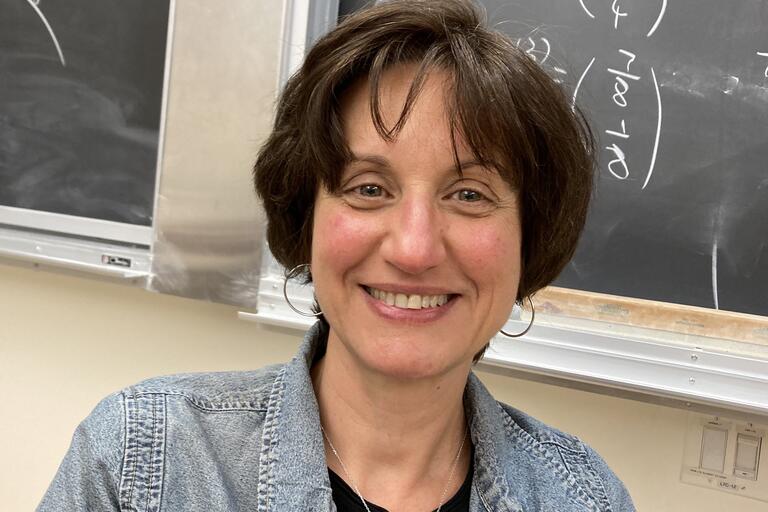
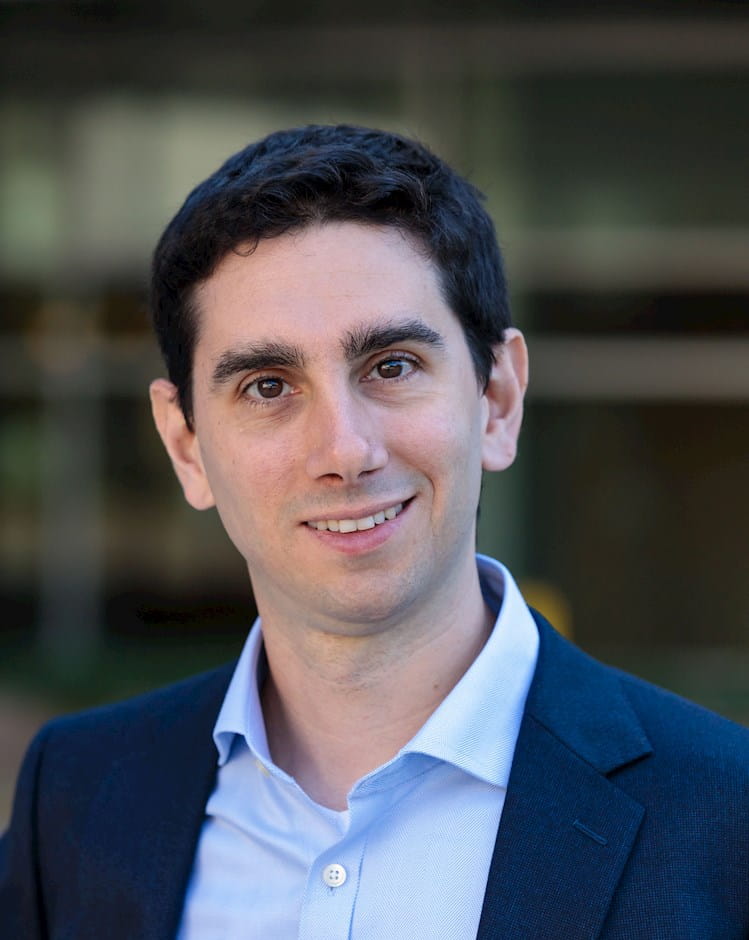
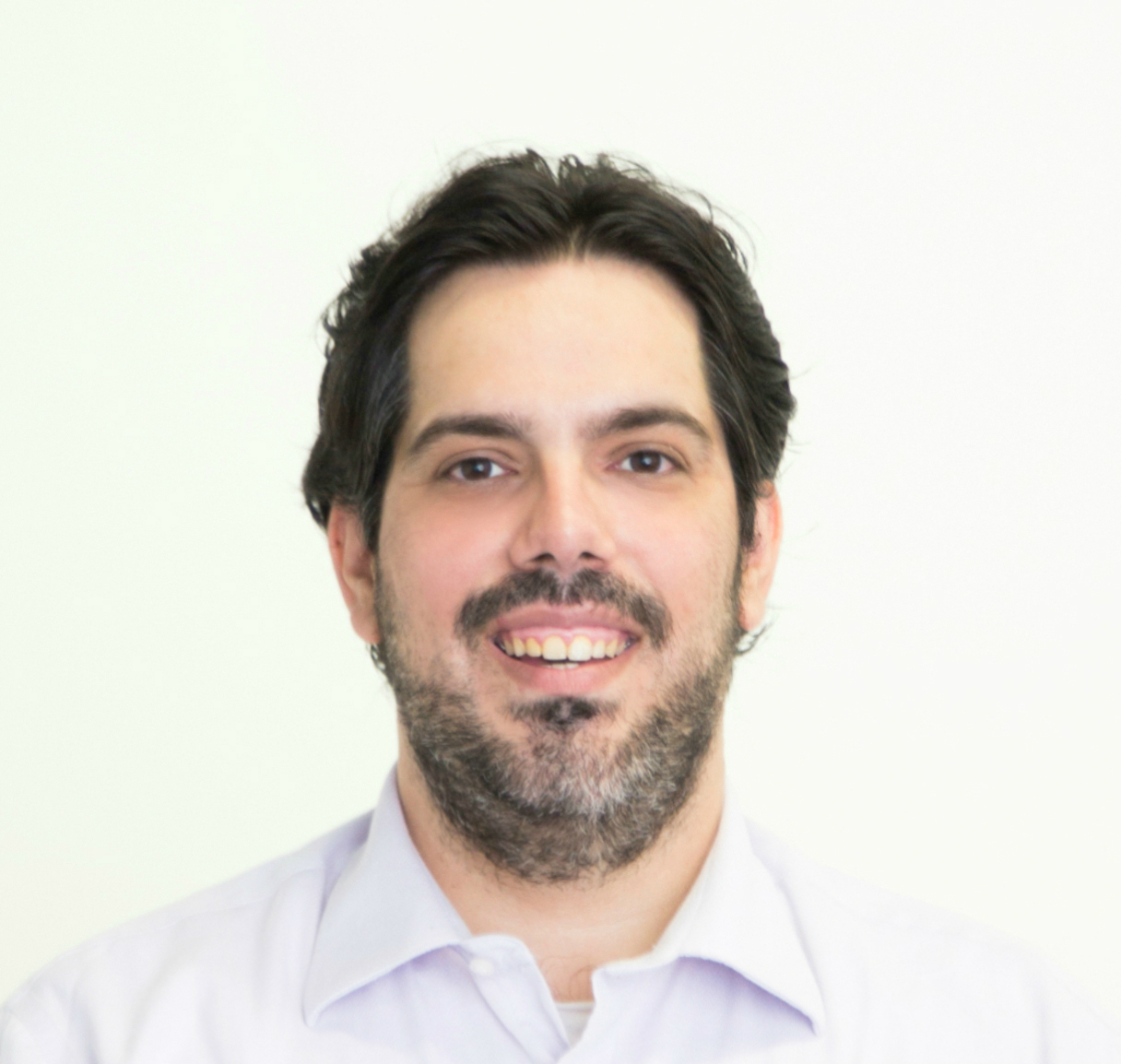
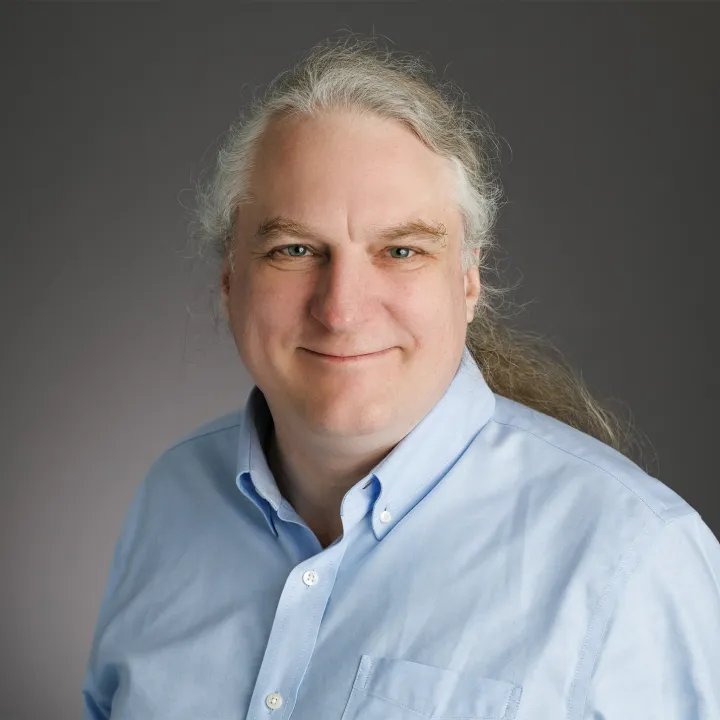
Professor Laurentiu Paunescu is a faculty member in the School of Mathematics and Statistics at the University of Sydney . His research focuses on Real and Complex Singularities , Stratifications , and Real and Complex Algebraic Geometry , with particular interest in geometric criteria for ignoring higher-order terms in analytic maps and blow-analytic equivalence. University: University of Sydney School: School of Mathematics and Statistics Academic Rank: Professor Email: laurentiu.paunescu@sydney.edu.au, laurent@maths.usyd.edu.au Address: F07 - Carslaw Building, The University of Sydney Paunescu's research aligns with the University of Sydney's Understanding the Universe and Fundamental Laws of Nature strengths. He investigates topological invariance under bi-Lipschitz homeomorphisms, Lipschitz stratification, and connections between real and complex Milnor fibers. His work often involves collaborations with researchers like S. Koike, A. Parusiński, and M. Tibar. Recent publications (2024–2019) emphasize Lipschitz geometry (e.g., directional bundles, stratification), cohomology of hypersurface singularities , and polynomial function finiteness . Notable collaborations include studies on vanishing cohomology , clustered polar curves , and CAD construction validity . Grants from DVC Research and ARC Discovery Projects support his work. He supervises research students in areas like O-minimal Geometry and contributes to Metric Spaces (Advanced) teaching. Paunescu co-edits workshops such as the Australian-Japanese Real and Complex Singularities Workshop , advancing international collaboration in singularity theory.
William Gasarch is a Professor of Computer Science at the University of Maryland, College Park, with an affiliation in Mathematics. He holds a Ph.D. from Harvard University (1985) and a B.S. from SUNY Stony Brook (1980). His research focuses on complexity theory, combinatorics, and Ramsey Theory, with applications to computer science theory. Education: Ph.D., Harvard University, 1985 (Computer Science) B.S., SUNY Stony Brook, 1980 (Math and Applied Math) Research Interests: Gasarch specializes in theoretical computer science, particularly applying Ramsey Theory to computational problems. His work bridges combinatorics, logic, and algorithm design, emphasizing foundational questions in complexity theory. He is known for exploring how Ramsey Theory informs program termination proofs and lower bounds in computational models. Labs/Teams: Affiliated with the Computer Science department’s theory group, he contributes to collaborative projects on Ramsey applications and combinatorial algorithms. His REU (Research Experiences for Undergraduates) program highlights mentorship in combinatorial algorithms. Advising & Grants: Mentored numerous high school and undergraduate students, including Breakthrough Prize winner Jacob Lurie and Intel Science Talent finalist Louis Wasserman. Active in NSF-funded initiatives through UMD’s theory group (details unspecified).
Chan Song Heng is an Associate Professor in the Division of Mathematical Sciences at the School of Physical and Mathematical Sciences, Nanyang Technological University (NTU), Singapore. He has been affiliated with NTU since 2007. His academic journey includes a B.Sc. (Hons) in Mathematics from the National University of Singapore (2001) and a Ph.D. in Mathematics from the University of Illinois at Urbana-Champaign (2005). His research focuses on advanced mathematical topics such as partition theory, q-series, mock theta functions, and number theory. Recent work includes studies on identities analogous to Jacobi, Fermat-Wilson theorems, and applications of Rogers-Fine identities. His publications explore combinatorial, analytic, and algebraic aspects of these fields, with notable contributions to modular forms, theta functions, and partition congruences. Dr. Chan’s articles often intersect with classical problems in mathematics, blending historical insights with modern analytical techniques. Notable themes include exploring identities through modular forms, analyzing partition statistics (ranks/cranks), and studying mock theta functions. Despite his prolific output, no specific scientific awards or student advisees are listed in the provided materials.
Elette Boyle is an Associate Professor at Reichman University (IDC Herzliya) and a Senior Scientist at NTT Research . She holds a Ph.D. in Mathematics from MIT (advised by Shafi Goldwasser and Yael Tauman Kalai) and an undergraduate degree from Caltech . Education Ph.D. in Mathematics, MIT B.S. in Mathematics, Caltech Her research focuses on cryptographic solutions for secure data processing , particularly in secure multi-party computation , function/homomorphic secret sharing , and distributed point functions . Recent work explores topology-hiding communication , memory checking complexity , and sublinear-communication MPC . Key trends in her publications include: Advancements in Function Secret Sharing for branching programs and sparse vectors. Efficient Secure Multi-Party Computation protocols with preprocessing. Information-theoretic and computational Topology-Hiding Broadcast schemes. Optimized Oblivious Transfer with constant computational overhead. Scientific Awards European Research Council (ERC) Award Israeli Science Foundation (ISF) Grant United States Air Force Office of Scientific Research (AFOSR) Grant Google Research Scholar Award International Association for Cryptologic Research (IACR) Recognition As Director of the Foundations & Applications of Cryptography (FACT) Research Center , she leads collaborative work with institutions like Technion Israel , Cornell University , and NTT Research . Her students include Pierre Meyer (Ph.D.) , Matan Hamilis (Ph.D.) , and D'or Banon (MSc.) .
Floris van Doorn is a Professor at the Mathematical Institute of the University of Bonn where he leads the Formalized Mathematics group. His research focuses on making it viable to formalize research mathematics in proof assistants that can check the correctness of such proofs. He primarily works with the Lean Theorem Prover and is a maintainer of its mathematical library (mathlib). University of Bonn: Professor (2023-present) University of Paris-Saclay: Postdoc with Patrick Massot (2021-2023) University of Pittsburgh: Postdoc with Tom Hales (2018-2021) Carnegie Mellon University: PhD under Jeremy Avigad and Steve Awodey (2013-2018) Van Doorn's research interests center on formalized mathematics, tools and automation for formalization, and homotopy type theory. He has made significant contributions to several major formalization projects including the Carleson project (proving Carleson's theorem), the sphere eversion project (formalizing Gromov's h-principle), the Flypitch project (formalizing the independence of the continuum hypothesis), and the Spectral sequences project. His work demonstrates that proof assistants can handle complex areas of mathematics beyond algebra, including differential topology and analysis. His recent publications show a consistent focus on advancing formalized mathematics, with his most recent work formalizing the Gagliardo-Nirenberg-Sobolev inequality and continuing the Carleson project. His publications span theoretical foundations of type theory, practical applications of formalization, and educational resources for learning proof assistants. Skolem award (2025) for the paper 'The Lean Theorem Prover (System Description)' Van Doorn actively mentors students and collaborators, with Maria, Michael, and Arend recently joining his formalization group in Bonn. He has taught various courses on formalized mathematics and proof assistants at the University of Bonn, University of Pittsburgh, and Carnegie Mellon University. His educational efforts include developing learning resources such as the Natural Number Game and the online book 'Mathematics in Lean.' He also maintains an active presence in the Lean community through the Formalized Mathematics group and collaborative projects like the Carleson project, which invites participation from those familiar with Lean.
Zvezdelina Stankova is a Teaching Professor of Mathematics and Director and Founder of the Berkeley Math Circle at the University of California, Berkeley . Her contact details include an office in 713 Evans Hall and the email stankova@math.berkeley.edu . Research Interests: • Algebraic Geometry • Representation Theory • Combinatorics • Olympiad Problem-Solving • Mathematics Education Publications and Research Trends: Her work bridges Combinatorics and Algebraic Geometry , with a focus on permutation patterns, avoidance, and moduli spaces of curves. She has also contributed significantly to Mathematics Education through her leadership in the Berkeley Math Circle, emphasizing problem-solving techniques and outreach programs for students. Teaching and Outreach: Stankova has taught various courses at UC Berkeley, including MATH 52 Calculus II (2025), MATH 110 Linear Algebra , and MATH 74 Transition to Proofs . She actively engages with the Berkeley Math Circle, providing resources for mathematical competitions and advanced training for students.
Crystal Noel is an Assistant Professor at Duke University in the Pratt School of Engineering and Trinity College of Arts & Sciences , with appointments in both the Department of Electrical and Computer Engineering and Physics since 2022. She is also a Member of the Duke Quantum Center since 2024. Ph.D. in Electrical and Computer Engineering from University of California, Berkeley (2019) B.S. in Massachusetts Institute of Technology (2013) Her research focuses on quantum computing and simulation with trapped ions , integrated photonics for scalable trapped ion systems , and electric-field noise from surfaces . Recent work includes developing non-invasive mid-circuit measurement techniques, sympathetic cooling for ion chains, and cross-platform quantum state comparison. She has secured significant grants from National Science Foundation , Rochester Institute of Technology , and Defense Advanced Research Projects Agency for quantum co-design and networking projects. Her lab ( Noel Lab ) explores scalable quantum computing architectures and surface noise mitigation. She teaches courses ranging from foundational Fields and Waves: Fundamentals of Information Propagation to advanced topics in Quantum Engineering with Atoms and Advanced Topics in Electrical and Computer Engineering .
Jacob D. Leshno is an Associate Professor of Economics and Robert H. Topel Faculty Scholar at the University of Chicago Booth School of Business. His research employs game theory, applied mathematics, and microeconomic theory to study allocation mechanisms and marketplace design, with applications spanning school choice systems, patient assignments to nursing homes, and decentralized cryptocurrency protocols. Professor Leshno's academic background includes: PhD in Economics from Harvard University, completed under Nobel laureate Alvin Roth M.Sc. in Pure Mathematics from Tel Aviv University B.Sc. in Pure Mathematics from Tel Aviv University His research program centers on market design theory with two primary strands. The first focuses on matching markets, where he developed tractable cutoff characterizations that clarify market structures for college admissions and medical residency matching (NRMP). His work demonstrates how price discovery mechanisms can streamline inefficient processes like college applications and subsidized housing allocation. The second strand examines cryptocurrencies and blockchain technology, investigating how open-source computer code functions as market rules in decentralized systems. This research explores both the economic security of permissionless consensus and fundamental limitations of proof-of-work protocols. Professor Leshno's publications reveal a cohesive research trajectory applying economic theory to increasingly complex market structures. His work consistently bridges theoretical rigor with practical implementation, evolving from traditional matching markets to the frontier of decentralized digital systems. Publications in top journals like American Economic Review and Journal of Political Economy demonstrate both analytical depth and real-world relevance across education, healthcare, and financial technology sectors. Professor Leshno has received significant recognition for his contributions: ACM SIGecom Test of Time Award for foundational work in matching markets INFORMS Frederick W. Lanchester Prize for outstanding contributions to operations research Prior to Chicago Booth, Professor Leshno served as Assistant Professor at Columbia Business School and completed a postdoctoral fellowship at Microsoft Research New England, following industry experience at Yahoo! and IBM. He teaches MBA courses in Competitive Strategy and Market Design, and developed a PhD seminar bridging computer science theory with economic principles for distributed systems. His research continues to influence both academic theory and practical implementations of market mechanisms across multiple sectors. Professor Leshno maintains active collaborations with leading researchers including Itai Ashlagi, Irene Lo, and Gur Huberman, advancing the theoretical foundations of market design while addressing contemporary challenges in digital marketplaces and allocation systems.
Arthur A. Danielyan is Professor in the Department of Mathematics and Statistics at the University of South Florida. His research focuses on complex analysis and approximation theory, particularly boundary behavior of analytic functions, polynomial and rational approximation, and functional analysis methods. Danielyan earned his PhD from the Armenian Academy of Sciences (1987) under S. N. Mergelyan. Research solves longstanding problems including Rubel's bounded analytic functions problem (2016) and von Renteln's boundary uniqueness problem. Recent work addresses Fatou's theorem extensions and interpolation in Hardy spaces. He has supervised multiple PhD students and organized international conferences including the Southeastern Analysis Meeting (2016). Funded by Simons Foundation and DAAD, Danielyan has published over 35 scholarly papers resolving problems from Hayman's list. Articles demonstrate consistent focus on boundary properties of analytic functions, interpolation theorems, and polynomial approximation in complex domains. Recent publications increasingly address Blaschke products and Baire classification problems. Honors and Grants Simons Foundation collaborative grant (2017-2022) DAAD Visiting Research Professorship (1996-1997) Henri Hecaen Award (1989)
Henry Corrigan-Gibbs is an Assistant Professor in MIT's Department of Electrical Engineering and Computer Science (EECS) and a member of the Computer Science and Artificial Intelligence Laboratory (CSAIL). He leads research in computer security, cryptography, and privacy-preserving systems. His work focuses on practical cryptographic systems that empower users while maintaining strong security guarantees. Notable contributions include the Tiptoe private search engine, Prio for privacy-preserving data aggregation, and Larch for secure authentication. His research has influenced industry standards at Apple, Google, and Mozilla, and has been recognized with awards such as the Best Young Researcher Paper at Eurocrypt and the Caspar Bowden Award. Education: PhD in Computer Science (Stanford University, advised by Dan Boneh), Postdoc at EPFL (hosted by Bryan Ford). B.S. in Computer Science from Yale University. Research Interests: Private Information Retrieval, Secure Authentication, Cryptographic Systems, Privacy-Preserving Analytics, and Hardware Security. His lab collaborates with PDOS and CSS research groups at MIT and co-hosts the MIT Security Seminar series. Grants and Funding: Supported by industry and government agencies (details in paper acknowledgments). Teaching roles include co-instructor for Applied Cryptography (6.5610) and Foundations of Computer Security (6.1600). Key Projects: Prio (used in iOS/Android), Tiptoe (private web search), Larch (backdoor-resistant authentication), and Whisper/Poplar systems for private data aggregation. His team includes postdocs, PhD students, and undergrad researchers working on cutting-edge cryptographic protocols.
Edith Hemaspaandra is a Professor in the Department of Computer Science at the Rochester Institute of Technology (RIT), located in the Golisano College of Computing and Information Sciences. She holds a BS, MS, and Ph.D. in Computer Science from the University of Amsterdam (the Netherlands). Her research focuses on computational social choice, computational complexity theory, logic complexity, and formal methods. She teaches courses such as CSCI-262/263 (Introduction to Computer Science Theory) and CSCI-664 (Computational Complexity). Her work explores the algorithmic aspects of voting systems, including election manipulation, control, and bribery, with a focus on their computational complexity. She has also contributed to formal methods for automata theory, educational tools like JFLAP extensions, and the study of complexity classes such as LWPP and WPP. Her research bridges theoretical computer science with practical applications in social choice theory and algorithm design. Her grants include an NSF-funded project on computationally protecting elections from manipulation (2011). She actively publishes in top venues like STACS and ISAAC, addressing topics ranging from graph reconstruction to hybrid election models. Though no awards are explicitly listed, her extensive publication record highlights her contributions to theoretical computer science. Her advising and grant activities include collaborative research projects and educational tool development. She is affiliated with RIT’s Department of Computer Science and maintains a personal website and ORCID profile.
Eugene Tang is an Assistant Professor in the Department of Mathematics and Physics at Northeastern University. His research focuses on quantum information theory and the theoretical limitations of quantum computing, particularly quantum error correction and efficient protocols using high-rate codes. He received his PhD from the California Institute of Technology in 2021. Dr. Tang's research interests include quantum error correction, the development of efficient quantum protocols surpassing conventional schemes, and the study of quantum algorithms such as QAOA. He explores the theoretical boundaries of quantum computing, with a focus on optimizing error detection and decoding methods for quantum LDPC codes and subsystem codes. His work also intersects with quantum gravity, particularly in the context of black hole interiors and bulk geometry construction through tensor methods. His recent publications highlight advancements in quantum error correction, including optimal locality in subsystem codes and efficient decoding strategies for quantum LDPC codes. His work on variational quantum optimization addresses challenges in scalability, such as QAOA's performance at large qubit scales and symmetry-related obstacles. Earlier contributions include research on superoscillations and hybrid quantum-classical algorithms for graph coloring. No scientific awards or grants are explicitly mentioned in the provided information. No specific labs or teams are associated with his work in the given data.
Ioannis Panageas is an Assistant Professor in Computer Science at UC Irvine's Donald Bren School, directing the GOALLab. His research develops theory for learning in multi-agent systems, game dynamics, and optimization. Funded by NSF and NRF, he focuses on last-iterate convergence guarantees in games, efficient equilibrium computation, and multi-agent reinforcement learning. Recent Work: Provides first exponential lower bounds for fictitious play in potential games (NeurIPS 2023), efficient Nash equilibrium computation methods (ICLR 2023), and semi-bandit learning dynamics with no-regret guarantees (ICML 2023). Teaching: Offers courses in Algorithmic Game Theory and Optimization for Machine Learning. Currently advising 3 PhD students and 2 MS students.
Venkatesan Guruswami is a Chancellor's Professor in the Department of EECS and a Senior Scientist at the Simons Institute for the Theory of Computing at UC Berkeley . He also holds a Professor position in the Department of Mathematics . His academic journey began with a B.Tech in Computer Science from the Indian Institute of Technology, Madras (1997) , followed by a Ph.D. in Computer Science from the Massachusetts Institute of Technology (2001) . After a Miller Research Fellowship at UC Berkeley (2001–02), he held faculty roles at the University of Washington and Carnegie Mellon University before returning to UC Berkeley in January 2022. Education : B.Tech, IIT Madras (1997) Ph.D., MIT (2001) Professional Affiliations : Chancellor's Professor, UC Berkeley (EECS) Senior Scientist & Interim Director, Simons Institute Professor, UC Berkeley (Mathematics) Guruswami's research spans multiple domains within Theoretical Computer Science , focusing on Error-Correcting Codes , Approximation Algorithms , Randomness in Computing , Probabilistically Checkable Proofs , and Computational Complexity . His groundbreaking work in List Decoding has enabled codes with minimal redundancy for correcting worst-case errors, while recent advancements include Polar Codes , Deletion-Correcting Codes , and Constraint Satisfaction Problems . He has also contributed to Quantum Coding Theory , Locally Recoverable Codes , and Approximation Hardness in various computational contexts. His publications reflect a deep engagement with interdisciplinary topics. Key trends include: Quantum Information Theory : Quantum LDPC codes, transversal gates, and quantum storage. Algebraic Coding : Reed-Solomon codes, AG codes, and polynomial-based constructions. Computational Complexity : Hardness of approximation, CSPs, and parameterized intractability. Data Transmission : Polar codes, deletion channels, and feedback mechanisms. Algorithmic Techniques : Spectral methods, semirandom models, and Lasserre hierarchy applications. Guruswami has received numerous accolades, including the Simons Investigator Award , Presburger Award , Packard Fellowship , Sloan Research Fellowship , ACM Doctoral Dissertation Award , and the IEEE Information Theory Society Paper Award . He is an ACM Fellow (2017) and IEEE Fellow (2019) , with recent honors like the Guggenheim Fellowship (2023) and AMS Fellow (2023) . As an advisor, he has mentored over 25 PhD and postdoctoral researchers , including Atri Rudra , Prasad Raghavendra , and Peter Manohar , whose work has won awards like the Edmund M. Clarke Doctoral Dissertation Award and CRA Outstanding Undergraduate Researcher Award . His research is supported by grants from the National Science Foundation , Packard Foundation , and Sloan Foundation . He also serves as Editor-in-Chief of the Journal of the ACM and holds leadership roles in IEEE and arXiv moderation. Guruswami is actively involved in Simons Institute programs and co-organized workshops on Coded Computation and Information Theory . His work bridges theoretical advancements with practical applications in Cloud Storage , Quantum Computing , and Group Testing , including pandemic-era contributions like AC-DC: Amplification Curve Diagnostics for SARS-CoV-2 .
James Aspnes is the Harold W. Cheel Professor of Computer Science at Yale University, specializing in distributed algorithms and randomized methods. He holds a PhD from Carnegie Mellon University and degrees from MIT. His research focuses on distributed systems, peer-to-peer networks, and sensor networks, emphasizing tools for efficient data management and fault-tolerance. Education: PhD (CMU, 1992), SM & SB (MIT, 1987) Affiliations: Yale since 1993, IBM Almaden Research Center (1992–1993) Research interests include distributed algorithms, randomization, and applications in biology and economics. Notable contributions include skip graphs, population protocols, and consensus algorithms. He has received the ACM-EATCS Dijkstra Prize (2020) and Dylan Hixon Prize (2000). Publications span distributed computing, algorithms, and cryptography. Recent work explores consensus protocols and privacy in population models. Grants include NSF awards totaling over $2M. Active in editorial roles (Algorithmica, Distributed Computing) and conference organization (PODC 2005, DCOSS 2007).