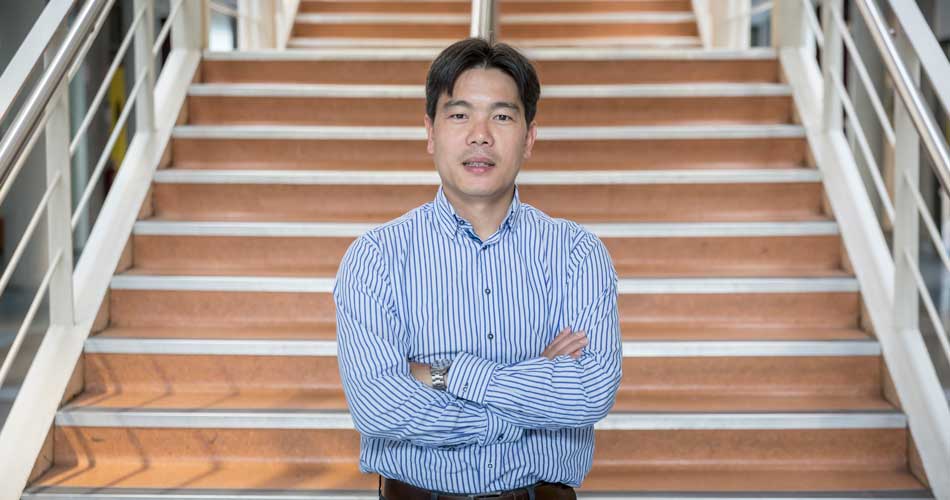
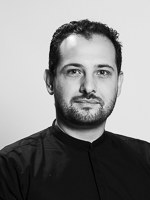
Dr. Le-Nam Tran is a researcher at the UCD School of Electrical & Electronic Engineering , University College Dublin. His work focuses on optimizing the last hop of 5G/6G wireless networks through mathematical programming, with emphasis on energy efficiency, interference management, and security against eavesdropping. Develops low-cost, low-complexity transmission techniques Projects supported by Science Foundation Ireland Career Development Award Author of over 80 peer-reviewed publications Research Keywords: Wireless Communications Network Security Signal Processing Energy-Efficient Systems Beamforming Optimization Interference Mitigation
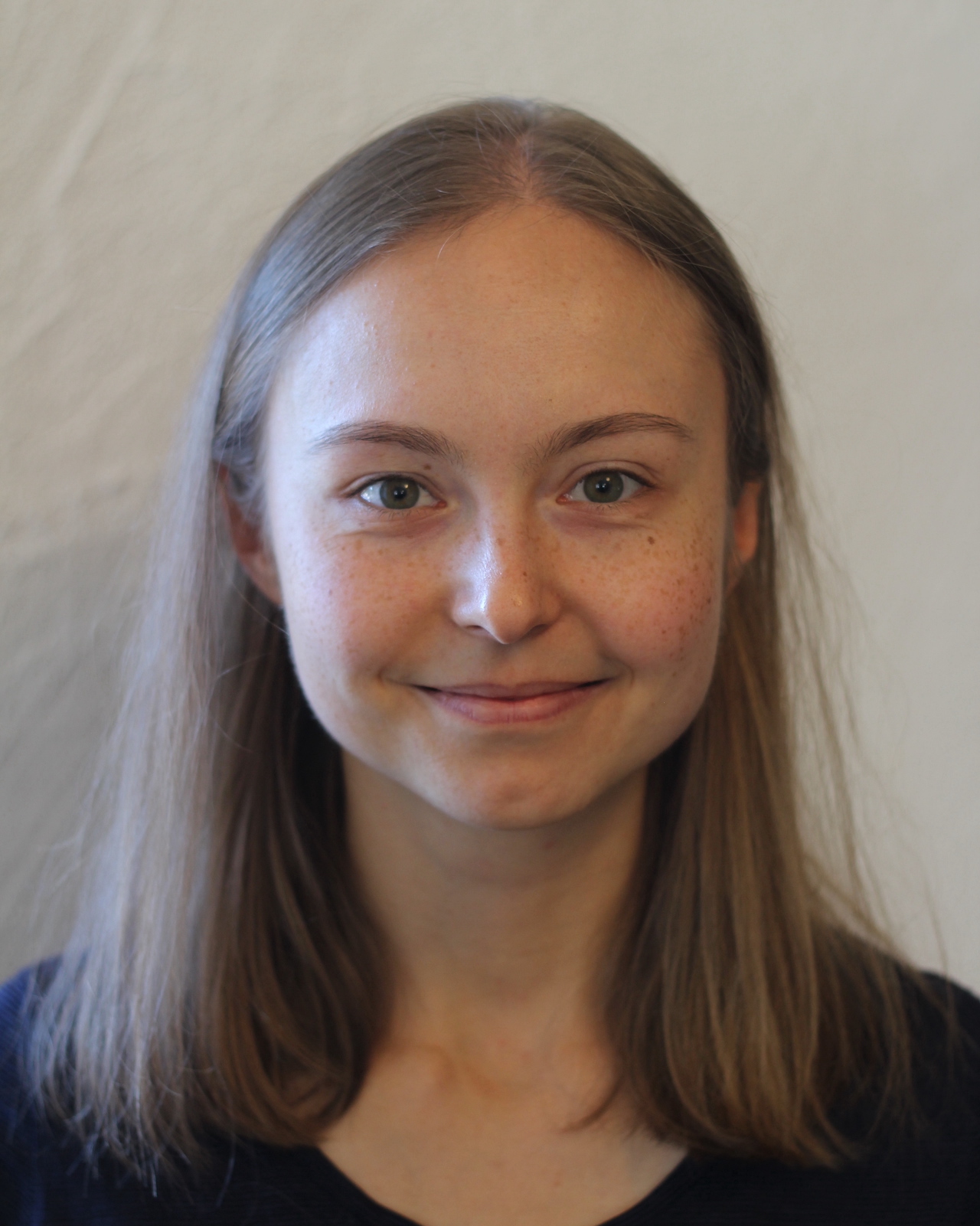
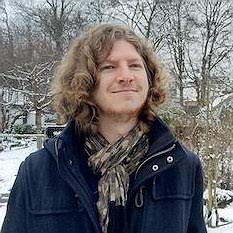
Dr. Lenka Mareková is a postdoctoral researcher in the Applied Cryptography Group at ETH Zürich. Previously, she completed her PhD in the Information Security Group at Royal Holloway, University of London, supervised by Martin R. Albrecht. Affiliation: ETH Zürich - Department of Computer Science Cryptographic analysis of secure messaging platforms Research focus on end-to-end encryption and real-world security implementations Her research interests span cryptographic protocol analysis, secure communication systems, and privacy-preserving technologies. The 10 most recent publications in her DBLP profile reflect expertise in: Secure messaging protocols (Telegram, Delta Chat) Cloud storage security (MEGA analysis) E-voting systems (Zerovote, E-cclesia) Mobile security frameworks (Android policy enforcement) Mesh network vulnerabilities Current work appears to focus on practical cryptographic implementations and their real-world security implications. Contact via hi@lenka.sh or lenka.marekova@inf.ethz.ch .
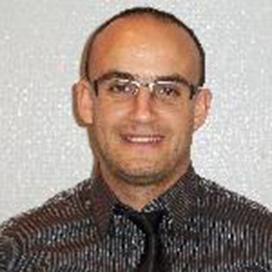
Professor Gerrit Jan Poelarends is a distinguished academic at the University of Groningen, holding the position of Professor of Pharmaceutical Biotechnology within the Faculty of Science and Engineering. He serves as Director of the Groningen Research Institute of Pharmacy and Head of the Department of Chemical and Pharmaceutical Biology. His extensive research portfolio spans biocatalysis, enzyme engineering, and sustainable pharmaceutical synthesis, with significant contributions to the UN Sustainable Development Goals through environmentally friendly chemical processes. Prof. Poelarends' research interests focus on the discovery and design of novel biocatalysts for pharmaceutical applications. His work centers on developing enzymatic pathways for asymmetric synthesis of noncanonical amino acids, creating enantioselective biocatalysts for various synthetic bond-forming methodologies, and characterizing promiscuous protein functions to understand enzyme evolution. His research group actively explores enzyme engineering guided by mutability landscapes, development of engineered peroxygenases, and discovery of ene- and nitroreductases for sustainable chemistry applications. Analysis of his recent publications reveals a strong trend toward sustainable pharmaceutical synthesis through enzyme engineering, particularly in the areas of nitroreductases, C-N lyases, and peroxygenases. His work consistently bridges fundamental enzymology with practical applications in green chemistry, demonstrating expertise in both understanding enzyme evolution and applying this knowledge to create biocatalysts for environmentally friendly production of pharmaceuticals. His scientific achievements have been recognized through numerous prestigious awards including NWO VENI, VIDI, and VICI grants, ERC Starting and Proof of Concept grants, and competitive fellowships for his students. These awards highlight the innovative nature and impact of his research in biocatalysis and enzyme engineering. Prof. Poelarends has supervised over thirty PhD students throughout his career, with current supervision of multiple doctoral candidates working on projects related to enzyme engineering and biocatalysis. His research has been supported by substantial grants from NWO, the European Union (including multiple ERC grants), and collaborative international projects, reflecting the significance and scope of his work. The Pharmaceutical Biotechnology group he leads includes technicians, postdocs, and PhD students working on various aspects of enzyme discovery and engineering. The research team operates within well-established laboratory facilities at the Groningen Research Institute of Pharmacy, with access to state-of-the-art equipment for protein expression, purification, structural analysis, and biocatalytic reaction screening. Their work is closely integrated with the University of Groningen's broader research initiatives in sustainable chemistry and pharmaceutical sciences, contributing to multiple EU-funded training networks and collaborative projects.
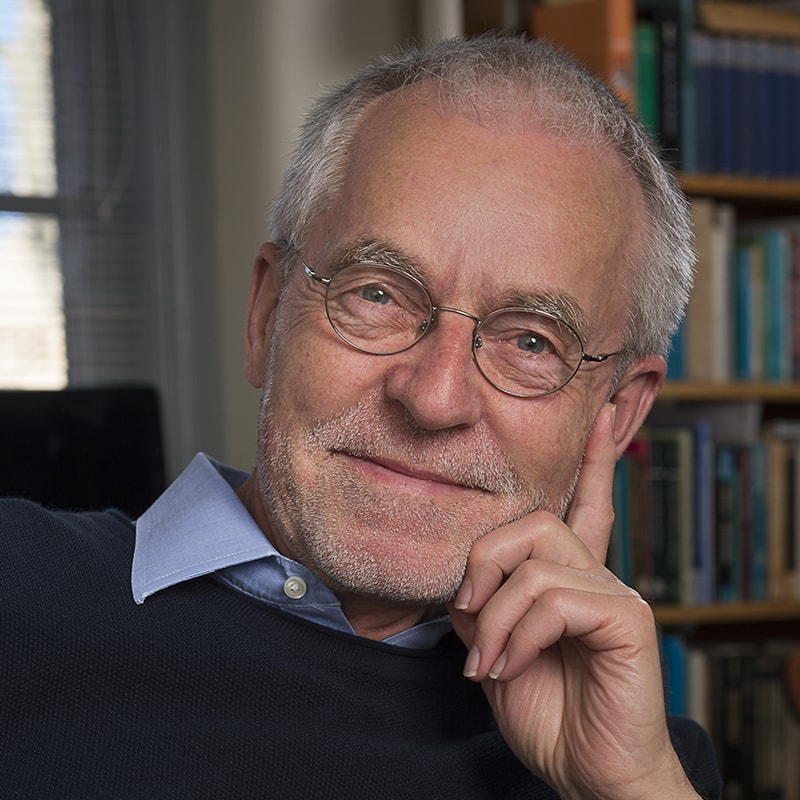
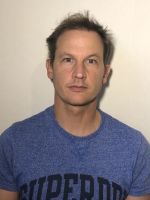
Nick Thieberger is an Associate Professor in the School of Languages and Linguistics at the University of Melbourne, Australia. He also holds adjunct positions at the University of Sydney, University of Hawai'i, LaTrobe University, Australian National University, and the University of Tasmania. Thieberger serves as Director of PARADISEC (Pacific and Regional Archive for Digital Sources in Endangered Cultures), President of DELAMAN (Digital Endangered Languages and Musics Archives Network), and Deputy Director of the Research Unit for Indigenous Language at the University of Melbourne. He is a Fellow of the Australian Academy of the Humanities and leads multiple major research projects including Nyingarn and Modularised cultural heritage archives. Thieberger's primary research interests focus on language documentation, endangered languages, and digital archiving methodologies. His work bridges linguistics, digital humanities, and Indigenous language preservation, with particular emphasis on Pacific and Australian Indigenous languages. He has developed innovative approaches to linguistic archiving, including the creation of PARADISEC, which has become a model for digital language archives worldwide. His research spans theoretical linguistics, practical archiving solutions, and community-based language work, with significant contributions to Nafsan (South Efate) language documentation and Australian Indigenous language preservation. His recent publications demonstrate a clear trend toward integrating digital humanities with language documentation, particularly focusing on computational approaches to endangered language preservation. Thieberger's work increasingly addresses ethical considerations in linguistic archiving, community-led documentation models, and the development of platforms that give Indigenous communities control over their linguistic heritage. His research shows a progression from descriptive linguistics toward infrastructure development for language preservation, with growing emphasis on access protocols, data sovereignty, and the technical challenges of long-term digital preservation. Open Scholarship Award (2025) for PARADISEC team Digital Repository of Ireland Award for Research and Innovation (2024) DASSH award for Research Partnership and Social Impact (2021) Fellow of the Australian Academy of the Humanities (2021) Ludwig Leichhardt Jubilee Fellowship by Alexander von Humboldt Foundation (2013-2015) ARC Australian Postdoctoral award (2004-2007) QEII Fellowship (2009-2014) Future Fellowship (2014-2018) Thieberger has secured substantial grant funding throughout his career, including multiple ARC grants as Chief Investigator. He leads the ARC LIEF grant 'Nyingarn: a platform for primary sources in Australian Indigenous languages' (2021-2025) and another ARC LIEF grant for 'Modularised cultural heritage archives – future-proofing PARADISEC' (2022-2025). He also serves as Chief Investigator in the ARDC-funded 'Online Heritage Resource Manager to Describo Collections' project (2023-2024) and in the ARC Centre of Excellence for the Dynamics of Language (2014-2025). His grant portfolio reflects his dual focus on theoretical linguistic research and practical infrastructure development for language preservation. Thieberger directs PARADISEC, a pioneering digital archive for endangered language materials that has become an international model. He also leads the Nyingarn project team, which is developing a platform specifically for Australian Indigenous language materials. Through DELAMAN, he coordinates with other language archives worldwide to establish best practices for digital language preservation. His work with the Language Data Commons of Australia (LDACA) further demonstrates his commitment to building research infrastructure that serves both academic researchers and Indigenous communities.
Peter Hastie is a Wayne T. Smith Distinguished Professor in the School of Kinesiology at Auburn University. With over 224 peer-reviewed publications, he is recognized as the top physical education scientist in the United States and ranks fourth globally. His work focuses on innovative pedagogical approaches, particularly the Sport Education Model, and has been adopted internationally across diverse educational contexts. Expertise: Sport Education Model, physical education curriculum design, teacher development, and motor skill progression in children. Global Impact: Implemented educational frameworks in Saudi Arabia, Russia, Spain, Ireland, Portugal, and China, contributing to widespread curriculum adaptations and teacher training programs. Hastie’s research emphasizes student engagement, inclusive education, and interdisciplinary integration (e.g., combining mathematics with PE). He co-created Auburn’s ActiveU and ActiveMe online physical education resources, now adopted by institutions nationwide and in multiple languages. Awards & Recognition: 2024 Creative Research and Scholarship Award from Auburn University. Inducted into the National Academy of Kinesiology, reflecting his status as a leading scholar and practitioner. Hastie has delivered keynote speeches on six continents, advanced the understanding of skill development in children with disabilities, and contributed to policy discussions on health-related fitness education. His work bridges research and practice, influencing both academic discourse and real-world teaching methodologies.
Wilfried Sieg serves as the Patrick Suppes Professor of Philosophy at Carnegie Mellon University within the Dietrich College of Humanities and Social Sciences, where he has been a core faculty member since 1985. He previously held appointments at Columbia University (1977-1985) and co-founded CMU's interdisciplinary Pure and Applied Logic program. His educational background includes: Ph.D. in Philosophy, Mathematical Logic, and Foundations of Mathematics from Stanford University (1977) M.S. in Mathematics and Logic from Westfälische-Wilhelms-Universität, Münster (1971) B.S. in Mathematics and Physics from Freie Universität, Berlin (1969) Sieg's research fundamentally explores the Foundations of Mathematics through proof theory, with significant contributions to the History of Modern Logic and Philosophy of Mathematics. His work critically examines Hilbert's Program, Gödel's incompleteness theorems, and the historical development of computability concepts. He emphasizes the dialectic between mathematical practice and philosophical reflection, revealing how foundational positions shape and are shaped by mathematical developments. Analysis of his recent publications shows a sustained trajectory from historical-philosophical investigations toward computational implementations, particularly through the AProS project. This evolution reflects growing integration of proof-theoretic insights with automated reasoning systems, focusing on heuristic search algorithms and cognitive modeling of mathematical reasoning. Sieg directs the Laboratory for Symbolic & Educational Computing (LSEC), which develops pedagogical tools like the AProS proof tutor. His grant-funded projects include editorial work on Hilbert, Gödel, and Bernays supported by the German National Science Foundation, Sloan Foundation, and National Endowment for the Humanities, alongside NSF-funded development of web-based logic education. He has advised numerous graduate students through research seminars while maintaining active collaboration with computer science and mathematics departments.
Eduard Kamburjan is a Researcher at the University of Oslo , affiliated with the Reliable Systems (PSY) and Data and Knowledge Systems (DKM) research groups. His work bridges formal methods , digital twin engineering , and knowledge graph applications . Research interests include: Formal verification of hybrid systems using deductive methods Digital twin architecture with compositional correctness guarantees Semantic lifting and ontology-driven modeling for complex systems Concurrency analysis and non-determinism in program verification Interactive visualization as serious games for formal methods His 2024-2023 publications demonstrate expertise in digital twin reconfiguration , semantic interoperability , and knowledge-based runtime enforcement . Key contributions include Crowbar for active object verification and ABS simulator toolchain for model-driven engineering. Collaborations span institutions like Springer , ACM , and IEEE , with work featured in Lecture Notes in Computer Science (LNCS) , Software and Systems Modeling (SoSyM) , and Science of Computer Programming . His research integrates RDF data management , behavioral contracts , and modular analysis for distributed systems.
Théo Winterhalter is a researcher at INRIA Saclay and a member of the Laboratory of Mathematics and Computer Science (LMF) at ENS Paris-Saclay . He previously held a postdoctoral position at the Max Planck Institute for Security and Privacy (MPI-SP) and completed his PhD at the Gallinette research team in Nantes, supervised by Nicolas Tabareau and Matthieu Sozeau. Education PhD in Computer Science, 2017–2020, University of Nantes (Gallinette/Inria) MSc in Computer Science, École Normale Supérieure de Rennes Research interests include type theory , proof assistants , formal verification , and dependent types . He actively works on improving the safety and usability of proof assistants like Rocq (formerly Coq), focusing on rewrite rules, erasure, and cryptographic verification. His work often involves formalizing results within proof assistants and developing tools for verified programming. Contributions span conferences like POPL, ICFP, CPP, and TYPES. Recent projects include foundational verification of high-speed cryptography ( The Last Yard ), type-preserving rewrite rules ( The Rewster ), and modular cryptographic proofs ( SSProve ). His publications emphasize formal methods and computational assumptions in type theory. Teaching includes the Proof Assistants course at MPRI , a joint master’s program. He co-supervises PhD students like Yann Leray and has mentored interns on topics such as erased data implementation and Autosubst tooling. Labs and Teams : Deducteam (INRIA Saclay) – Developing deduction tools and formal verification LMF (ENS Paris-Saclay) – Laboratory for Mathematics and Computer Science Gallinette (former) – Team at INRIA Nantes MetaCoq Project – Collaborative effort on Coq verification
Prof. Dr. Felix Bierbrauer is a faculty member at the University of Cologne, affiliated with the Department of Economics and the Center for Macroeconomic Research (CMR). His research integrates economic theory with public economics , focusing on taxation, political competition, and public good provision. Research fields: Economic Theory, Public Economics, Mechanism Design, Income Taxation, Political Competition, Public Good Provision His academic work examines how political competition affects welfare outcomes, the design of tax systems under uncertainty, and incentive mechanisms for efficient governance. Publications from 2009–2017 reflect a consistent emphasis on robust mechanism design and nonlinear taxation models. Key trends in his research include the interplay between political economy and welfare economics , the role of game theory in policy design, and empirical analyses of tax incidence and public goods provision. He is associated with the research group led by Prof. Dr. Matthias Engels, contributing to collaborative projects in public economics.
Ronald J. Allen is the John Henry Wigmore Professor of Law at Northwestern University in Chicago, Illinois. An internationally recognized expert in evidence, criminal procedure, and constitutional law, he has authored seven books and over 100 law review articles. His work has influenced legal reform in China and Tanzania, and he is frequently cited in national media and broadcast outlets for constitutional and criminal justice commentary. Professor Allen's educational background includes: BS magna cum laude from Marshall University JD magna cum laude from the University of Michigan His research focuses on evidence theory and juridical proof, with recent work examining relative plausibility models and the epistemological foundations of legal fact-finding. He has pioneered interdisciplinary approaches connecting law with cognitive science and philosophy, while maintaining strong practical applications in courtroom procedures and evidentiary standards. His scholarship bridges theoretical rigor with real-world legal reform. Analysis of his publication record reveals consistent thematic evolution from foundational constitutional criminal procedure texts toward sophisticated evidence theory and international evidence law reform. Recent works demonstrate increasing engagement with global legal systems, particularly through his Tanzanian evidence law reform project and decade-long collaboration with Chinese legal institutions. His scholarship maintains distinctive integration of philosophical epistemology with practical courtroom mechanics. His major honors include: Yangtze River Scholar designation by China's Ministry of Education (2007) - only the fourth American and first law professor ever honored University Distinguished Visiting Scholar at the University of Adelaide (1991) Professor Allen maintains active professional engagement through Of Counsel status at Eimer Stahl Klevor & Solberg law firm and high-level government consultations, including recent retention by the Tanzanian Government for evidence law reform. His international advisory work extends to Mexico, Spain, and Trinidad/Tobago governments, reflecting his global influence on legal procedure. He holds leadership positions including Chair of the Board of Advisors for Beijing's Evidence and Forensic Science Institute and inaugural Fellow at China University of Political Science and Law's Procedural Law Research Center. His institutional affiliations span the American Law Institute, Constitutional Rights Foundation-Chicago, and Marshall University's Yeager Society of Scholars, alongside cultural roles with the Joffrey Ballet.
Mallesh M Pai is the Lay Family Associate Professor in the Department of Economics at Rice University and a CEPR Research Fellow. His research bridges mechanism design, auction theory, and blockchain economics, with applications to decentralized finance (DeFi) and privacy economics. Prior to Rice, he was a Janice and Julian Bers Assistant Professor at the University of Pennsylvania. PhD in Managerial Economics and Strategy, Kellogg School of Management, Northwestern University Bachelor's in Computer Science and Engineering, Indian Institute of Technology, Delhi His work focuses on designing robust mechanisms in environments with information asymmetry, privacy constraints, and decentralized systems. Recent publications address dynamic transaction fees, blockchain centralization, and algorithmic collusion. He serves on program committees for major conferences in computer science and economics. Indirect Persuasion (Journal of Political Economy) Dynamic Transaction Fee Mechanism Design (with Max Resnick) Collusive Outcomes via Pricing Algorithms (Marketing Science) Mallesh has received significant recognition for his work, including the Best Paper award at the American Economic Journal: Microeconomics (2021) and Best Pricing Paper from the American Marketing Association RAPSIG (2023). His research is supported by NSF grants on fair data analysis and digital privacy foundations. He teaches graduate and undergraduate courses in microeconomic theory and market design at Rice, emphasizing practical applications of theoretical models. His Erdős number is 3, reflecting interdisciplinary collaborations.
Nicolas Godbout is a Full Professor and Department Director of the Department of Engineering Physics at Polytechnique Montréal. He holds a Ph.D. from Polytechnique Montréal and serves as Head of the Fiber Optics Laboratory and as a Researcher at the Center for Optics, Photonics and Lasers (COPL). His academic leadership extends to teaching courses including Fundamentals of Photonics, Waveguide Optics, Lasers, Quantum Optics, and Current Subjects in Photonics. Dr. Godbout's research spans multiple areas of photonics with particular emphasis on optical fiber components, quantum cryptography, quantum information, optical telecommunications, and nonlinear optics. His work bridges fundamental theoretical investigations with practical applications in telecommunications, biomedical imaging, and quantum technologies. He has made significant contributions to photonic lantern development, quantum key distribution systems, and optical fiber component design. Analysis of his recent publications reveals a strong trend toward interdisciplinary research combining photonics with biomedical applications, quantum information processing, and advanced computational modeling. His work demonstrates consistent innovation in optical fiber technology, with increasing focus on quantum applications and biomedical instrumentation over the past decade. The development of open-source tools like SuPyMode and PyMieSim highlights his commitment to advancing research methodology in the field. $377,000 awarded for Quantum Photonics Quebec projects (2022) Appointment as director of INTRIQ (2019) Dr. Godbout has supervised an extensive number of graduate students, with 9 completed Ph.D. theses and 21 Master's theses under his guidance, plus one currently in progress. His research has been supported by significant funding, including semiconductor research initiatives that received $120 million from the Canadian government as recently as July 2024. He actively collaborates with industry through Castor Optics, a company he co-founded with Professor Caroline Boudoux that specializes in optical fiber components. As Head of the Fiber Optics Laboratory and researcher at COPL, Dr. Godbout leads a dynamic research team focused on advancing photonics technology. His laboratory work spans from fundamental quantum optics research to practical applications in telecommunications and biomedical imaging. Recent activities include significant contributions to semiconductor research initiatives at Polytechnique Montréal, reflecting his leadership in positioning the institution at the forefront of advanced technology development.
Toufik AZIB is a Full Professor and scientific coordinator of the ECMS (Energy and Conception of Mechatronic Systems) research theme at ESTACA Engineering School in France. He leads a team of 6 teacher-researchers and 13 PhD students, focusing on optimal design of power electronics and energy management for hybrid power systems. His work bridges academic research and industrial applications in sustainable mobility, with strong collaborations across Europe and Algeria. Dr. AZIB received his Electrotechnical Engineering Diploma from the University of Setif, Algeria in 2006, followed by an M.Sc. in Electrical Engineering from ENSEM-INPL, France in 2007. He earned his Ph.D. in electrical engineering from the University of Paris South XI in 2010 and completed his HDR (Habilitation à Diriger des Recherches) from the University of Paris Saclay in 2021. His academic journey reflects a strong foundation in both theoretical and applied electrical engineering. His research focuses on the modeling, control, and optimal design of embedded energy systems under multi-physical constraints (electrical, thermal, electromagnetic compatibility, volume, reliability). He specializes in energy management strategies for hybrid systems combining fuel cells, batteries, and ultracapacitors, with applications in electric vehicles and the 'more electric aircraft.' His work integrates numerical and experimental approaches to develop methodologies for pre-dimensioning and real-time energy management, addressing challenges in sustainable transportation. Analysis of Dr. AZIB's recent publications reveals a strong trend toward multidisciplinary design optimization for automotive applications, particularly electronic throttle systems. His research increasingly incorporates knowledge management techniques and addresses reliability considerations in hybrid power source design. There's a clear progression from fundamental energy management strategies to sophisticated eco-driving solutions for electric vehicles, reflecting the evolving demands of sustainable mobility. Best Paper Award for 'Structure and Control Strategy for a Parallel Hybrid Fuel Cell/Supercapacitors Power Source' at IEEE VPPC'09 Dr. AZIB has supervised numerous PhD and Master's students across multiple institutions in France, Algeria, and Colombia. He leads significant research projects including MIMe (Module d'Intégration et de simulation Mécatronique), ECOS Nord (Eco-driving strategies for electric motorcycle), and AmCoAIR (improving air quality in vehicle cabins), securing funding from national and international sources. His work demonstrates strong industry collaboration with partners like Valeo, PSA, and Renault. As experimental platforms coordinator since 2012, Dr. AZIB oversees 10 specialized experimental facilities at ESTACA's S2ET-Paris Saclay research pole, including those for autonomous electric vehicles, drones, electric machines, and power modulators. His team regularly develops proof-of-concept demonstrators to validate research findings, such as the Formula Student electric vehicle and the 'Electric Appeal' streamliner project, demonstrating practical applications of their theoretical work.
Martin Fischer is a Professor at Ludwig Maximilian University of Munich (LMU), affiliated with the Faculty of Philosophy, Science Theory, and Religious Studies, and the Munich Center for Mathematical Philosophy. He holds the academic rank of Professor and has been a Privatdozent (PD) since 2019, leading a DFG-funded project on "Logics: From tolerance to pluralism." Prior roles include a visiting fellowship at MCMP, research at K.U. Leuven, and a stint at the Scuola Normale Superiore in Pisa. Educational Background: Fischer earned his Master's degree in 2003 and his Ph.D. in 2007 from LMU Munich. His studies included a DAAD-supported term at the University of Oxford in 2006. He has held research positions in Belgium, Germany, and Italy, contributing to projects like "Syntactical Treatments of Interacting Modalities" funded by the DFG. Research Interests: His work focuses on logic (axiomatic theories of truth, modal logics, interpretability), epistemology (realism/antirealism debate, Fitch paradox), and philosophy of language (Davidson, Quine, deflationism). He explores formal systems, non-classical logics, and the philosophical implications of truth theories. Publications: His recent works address sequent calculi for HYPE logic, nonclassical truth theories, and paradoxes. Key contributions include articles in Studia Logica , Review of Symbolic Logic , and Nous , advancing topics like truth's expressive power, iterated reflection principles, and the interplay between deflationism and instrumentalism. Grants & Projects: Fischer leads a DFG-funded project exploring logics' pluralism and has previously contributed to syntactical treatments of modalities research. His academic trajectory reflects a commitment to formal methods in philosophy. Labs & Affiliations: Affiliated with the Munich Center for Mathematical Philosophy, he collaborates on interdisciplinary projects bridging logic and epistemology.
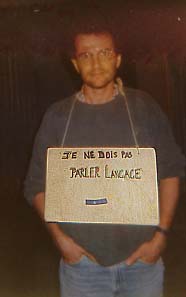
Martin Albrecht is a Professor of Cybersecurity and Chair of Cryptography in the Department of Informatics at King's College London, Faculty of Natural, Mathematical & Engineering Sciences. He is also a Principal Research Scientist for SandboxAQ, demonstrating his strong industry-academia connections in the cybersecurity field. His research focuses on lattice-based cryptography, post-quantum cryptography, applied cryptography, social foundations of cryptography and information security, and computational mathematics. Albrecht's work bridges theoretical cryptography with practical security concerns, examining cryptographic implementations 'in the wild' and addressing vulnerabilities in widely used communication platforms like WhatsApp, Telegram, and Matrix. His Erdős–Bacon Number is 6, reflecting his interdisciplinary connections. Recent publications reveal a strong trend toward practical cryptographic analysis of real-world systems while advancing theoretical foundations of post-quantum cryptography. His work spans from breaking end-to-end encryption implementations to developing new lattice-based cryptographic primitives resistant to quantum computing threats. Much of his recent research addresses the urgent need for quantum-resistant cryptography as demonstrated by his European-funded project developing algorithms to protect data encryption against future quantum computers. IEEE Symposium on Security and Privacy distinguished paper award (2023) for work revealing security vulnerabilities in popular chat platforms Major European funding (2023) for advancing encryption technology against quantum computing threats Professor Albrecht leads the Cybersecurity research group at King's which studies design, modeling, analysis, verification and testing of networks and systems, and is part of the Security Hub that consolidates security-related research. His work has demonstrated critical vulnerabilities in widely used platforms including WhatsApp, Matrix, and Nextcloud, with findings reported as recently as July 2025 regarding WhatsApp's persistent vulnerabilities. He has supervised numerous PhD students and maintains active collaborations across the cryptographic research community. Through his open-source projects including FPLLL, FPyLLL, G6K, Lattice Estimator, M4RI, and M4RIE, Albrecht has made significant contributions to the cryptographic tools ecosystem, providing researchers and practitioners with essential resources for lattice-based cryptography and computational mathematics.