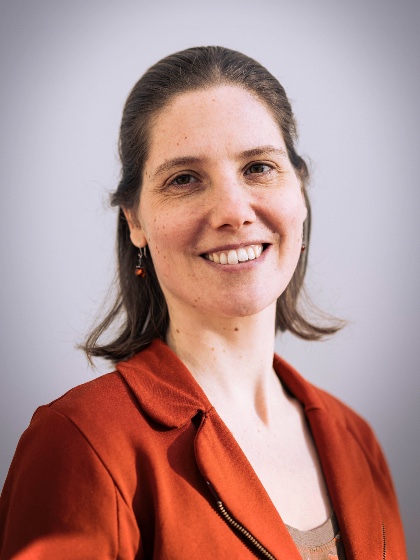
Dr. Charlotte Vlek is a Science Writer and Lecturer in Science Education and Communication at the University of Groningen's Faculty of Science and Engineering. She specializes in integrating Bayesian networks with legal reasoning, particularly in criminal case analysis. Her work bridges probabilistic modeling and forensic storytelling, focusing on how narratives and quantitative evidence interact in legal contexts. Her research emphasizes constructing transparent Bayesian network models for legal scenarios, ensuring that complex probabilistic analyses remain accessible to legal professionals. She has published extensively on the representation of crime scenarios, quality assessment of legal evidence, and the application of artificial intelligence in law. Her interdisciplinary work spans computer science, law, and education, with notable contributions to the JURIX and Artificial Intelligence and Law conferences. She holds a PhD from the University of Groningen (2016) and has collaborated with institutions like the Groningen Science LinX initiative.
Dino Rossegger is a mathematician working at the Institute of Discrete Mathematics at Technische Universität Wien. He serves as Principal Investigator for the international project "Structural Complexity Measures for Foundational Theories" funded by the Austrian Science Fund. Previously, he completed a Marie Skłodowska Curie fellowship called ACOSE (Algorithmic Complexity of Structural Equivalence Relations) which involved a two-year research phase at UC Berkeley under Antonio Montalbán's supervision followed by a return phase at TU Wien under Ekaterina Fokina's supervision. His research focuses on computability theory and its interactions with descriptive set theory and model theory. Rossegger investigates fundamental questions about the algorithmic complexity of mathematical structures, particularly examining degrees of categoricity, bi-embeddability spectra, and the relationship between computational and descriptive complexity measures. His work often bridges the gap between pure computability theory and broader mathematical contexts, as evidenced by his publications on linear orderings, models of arithmetic, and equivalence relations. Rossegger's publication record shows consistent output in top-tier logic journals including the Journal of Symbolic Logic, Proceedings of the American Mathematical Society, and Journal of Mathematical Logic. His recent work demonstrates growing influence in the field of computable structure theory, with particular attention to the interplay between Turing degrees and structural complexity measures. The pattern of his publications reveals a deepening exploration of how computational constraints affect the classification of mathematical structures. Marie Skłodowska Curie Global Fellowship recipient Principal Investigator for Austrian Science Fund project Extensive publication record in mathematical logic journals Rossegger has taught courses at multiple institutions including Technische Universität Wien, University of California Berkeley, and University of Waterloo. His teaching spans advanced mathematical logic topics, recursion theory, and calculus for honors mathematics students. He has developed comprehensive course materials including detailed notes for computability theory and mathematical logic courses. At TU Wien, he has also taught exercise sessions for first-year mathematics courses for computer scientists. His involvement in the local research seminar at TU Wien and organization of the "Computable Structure Theory and Interactions" conference demonstrates his active engagement with the research community.
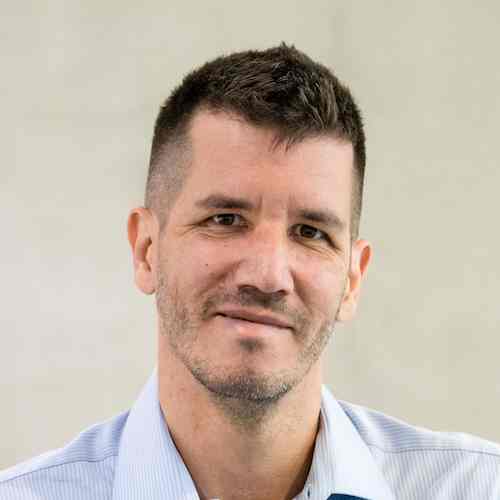
Antoine Dailly is a Research Fellow at INRAE within the TSCF research unit. Previously, he held postdoctoral positions at LIMOS (2022–2024) under Florent Foucaud, UNAM Juriquilla (2019–2021), and teaching roles (ATER) at IUT2 Grenoble (2021–2022) and University of Grenoble Alpes (2018–2019). He completed his PhD at Université Claude Bernard Lyon 1 (2015–2018) in the LIRIS laboratory. Research Focus: Dailly specializes in graph algorithms, combinatorial optimization, and sensor networks. His work includes: Algorithmic approaches to metric problems in graphs, uncertainty representation, and autonomous agent trajectory optimization. Combinatorial games, graph criticality, and structural/algorithmic challenges in vertex deletion, coloring, and equilibrability. Current projects: ANR GRALMECO (metric covering in graphs) and ConnecSenS (sensor networks). Publication Trends: His 15 most recent articles (2017–2025) primarily explore combinatorics, discrete mathematics, and algorithmic theory. Key themes include: Planar graphs, geodetic games, and temporal graph resolving sets. Complexity of Arc-Kayles, path covers in DAGs, and digraph metric dimensions. Applications in game theory, optimization, and information theory. Teaching & Outreach: Dailly has taught algorithms, programming (C/Python/XML), and graph theory at ISIMA, IUT, UNAM, and Grenoble. He co-leads the ISO group, promoting computer science education without computers. Affiliations: Member of AlCoLoCo (algorithmic research group) and labs including G-SCOP, LIRIS, and LIMOS.
Prof. Dr. Till Tantau is a Full Professor of Theoretical Computer Science at the University of Lübeck , Germany. He has served as Dean of Studies for the Faculty of Technology and Natural Sciences (MINT sections) since 2008 and chairs the Scientific Advisory Board of the German National Computer Science Competition from 2014. His research focuses on computational complexity, parameterized algorithms, and bioinformatics, particularly logspace problems and descriptive complexity theory. Born 1975 in Berlin, Germany 1994–1999: Studied at TU Berlin 1999–2005: Research Assistant at TU Berlin 2003: Doctorate in Natural Sciences (Dr. rer. nat.) at TU Berlin 2004: Research stay at ICSI, Berkeley with Richard Karp 2005: Appointed W2 Professor at University of Lübeck 2015: Promoted to W3 Professor (highest professorial rank in Germany) His research interests include: Computational Complexity: Logspace problems, weak cardinality theorems, and structural similarities across computation models Parameterized Algorithms: Color coding, kernelization techniques, and parallelization of fixed-parameter tractable problems Bioinformatics: Haplotyping problems under perfect phylogeny models Descriptive Complexity: Logical characterizations of computational problems Graph Algorithms: Shortest/longest paths in series-parallel graphs and smoothed analysis of binary search trees Publications since 2000 demonstrate expertise across theoretical computer science, with 15 recent works focusing on parameterized complexity, parallel algorithms, and applications in bioinformatics. He contributes to algorithmic metatheorems, color coding techniques, and kernelization for hitting set problems. Scientific Awards & Scholarships : 1992: Federal winner of German computer science competition 1993: Silver medal at International Olympiad in Informatics 1993: German National Academic Foundation scholarship 1994: Dr. Habbena Prize for Abitur excellence 1999: Erwin Stephan Prize, TU Berlin 2002: Best student paper award at MFCS 2003: GI Dissertation Prize nomination 2007–2021: Heliprof Teaching Awards (5x recipient) His teaching includes courses on algorithm design, complexity theory, LaTeX/TikZ, and theoretical computer science. He chairs the Scientific Advisory Board of the German National Computer Science Competition and participates in academic governance as Dean of Studies.
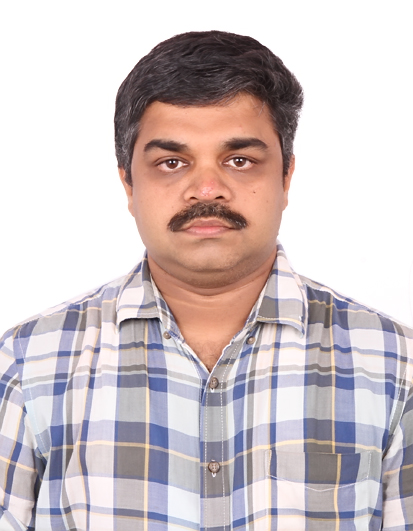
L. Sunil Chandran is a Professor at the Department of Computer Science and Automation, Indian Institute of Science (IISc), Bangalore. His research spans graph theory, combinatorics, algorithms, and quantum computing, with extensive work on graph coloring, boxicity, rainbow connectivity, and computational complexity. He leads a large research group, advising PhD, MSc, and ME students, many of whom hold faculty positions at premier institutions like IITs, NITs, and international universities. Chandran's research focuses on combinatorial graph algorithms, structural graph theory, and applications in quantum physics. Key areas include approximation algorithms for NP-hard problems, graph representation (boxicity/cubicity), and rainbow coloring variants. His recent work explores quantum entanglement via hypergraphs and parameterized complexity for vertex deletion problems. His publications (15 most recent shown) demonstrate a consistent focus on graph-theoretic problem-solving, with innovations in algorithmic techniques for graph coloring, combinatorial optimization, and quantum-graph intersections. Trends include increased interdisciplinary work bridging computer science, physics, and discrete mathematics. Awards and Recognitions: Adjunct Professorship at NIT Calicut (2023) INSA Fellow (2022) & INAE Fellow (2015) Alexander von Humboldt Fellowship NASI-SCOPUS Young Scientist Award (2012) MSR India Outstanding Young Faculty Award (2009-2010) INSA Young Scientist Award (2007) He has secured grants from DST, UGC, SERB, and NBHM to support postdoctoral researchers and students. Current projects include quantum-graph theory applications and parameterized algorithms. His group maintains active collaborations with institutions globally.
Reuben Rowe is a Senior Lecturer in the Department of Computer Science at Royal Holloway, University of London . He previously held postdoctoral positions at the University of Kent (PLAS group) and University College London (PPLV group), and served as a Teaching Fellow at Imperial College London for their MSc in Computing Science. Educational Background BA in Computer Science from University of Cambridge Computer Lab (2004), Fitzwilliam College MSc (Distinction) in Advanced Computing from Imperial College London (2008) PhD in Computer Science from Imperial College London (2013) Research Interests focus on formal program verification , non-wellfounded proof theory , and type systems , particularly intersection types and guarded recursive types . His work explores fundamental models of computation (Lambda Calculus, Term Rewriting Systems), Curry-Howard Isomorphism , and logics for computer science . He has advanced cyclic proof systems for program termination and contributed to tools like ROTOR (OCaml refactoring) and Cyclist (cyclic theorem proving). Publication Trends highlight expertise in automated verification frameworks, cyclic proof structures, and formal models for functional and imperative programming. Key collaborations include James Brotherston , Liron Cohen , and Simon Thompson , funded by EPSRC grants EP/N028759/1 and EP/K040049/1 . Teaching includes first-year programming labs (CS1822) and Object-Oriented Programming II (CS1812/13). He maintains an academic webpage and ORCID profile .
John Saccoman is a Professor and Chair of the Department of Mathematics and Computer Science at Seton Hall University. He holds a Ph.D. in Graph Theory from Stevens Institute of Technology (1995), an MS in Mathematics (1987), and a BS in Mathematics from Seton Hall (1986). His research focuses on Network Reliability Analysis, Algebraic Graph Theory, and Baseball Analytics, with over 50 publications and multiple authored/co-authored books. He leads the Seton Hall-Stevens Institute Graph Theory Group, producing collaborative research with students and faculty. Research interests include Laplacian eigenvalues, multigraph spectra, and sabermetric methodologies. He teaches undergraduate and graduate courses in discrete mathematics, network analysis, and calculus. Awards include the Bishop Bernard J. McQuaid Medal (2025) and recognition in Who's Who in America's Teachers (2006). He actively serves on academic committees, including leadership roles in Middle States accreditation and university strategic planning. His work bridges theoretical graph theory with practical applications in sports analytics and education pedagogy.
Lorenz Hartmann is an Ambizione Fellow at the Faculty of Business and Economics at the University of Basel, specializing in microeconomic theory with a focus on decision making under uncertainty and ambiguity. His research contributes to foundational aspects of economic decision theory through rigorous mathematical analysis. Dr. Hartmann's educational background isn't explicitly detailed in the available information, but his research profile suggests advanced training in economics and mathematical methods. His work demonstrates deep engagement with the theoretical foundations of economic decision making. His research interests center on axiomatic decision theory, particularly examining foundational concepts like Savage's representation theorem, the Sure-Thing Principle, and MEU preferences. He investigates how individuals make choices when facing uncertain outcomes and ambiguous probabilities, with particular attention to mathematical foundations and axiomatic characterizations of preference relations. His work often involves refining and extending existing theoretical frameworks in decision theory. Dr. Hartmann's publication record shows consistent output in top economics journals including Econometrica, Journal of Economic Theory, and Journal of Mathematical Economics. His research demonstrates progression from examining foundational axioms to developing more complex models of decision under ambiguity, with recent work focusing on strength of preference and binary diversification. Ambizione Fellowship (Swiss National Science Foundation) Dr. Hartmann teaches Decision Theory at the University of Basel and co-teaches Advanced Microeconomics with Professors Georg Nöldeke and Cedric Wasser. He previously taught at the University of Freiburg and Central University of Finance and Economics in Beijing. His current research includes leading the project 'Incomplete preferences in choice under uncertainty' as Principal Investigator. As part of the Microeconomic Theory Group at the University of Basel, Dr. Hartmann contributes to a vibrant research environment focused on theoretical economics. His work bridges mathematical rigor with economic insights, advancing our understanding of how decisions are made under conditions of uncertainty and ambiguity.
John E. McCarthy is the Spencer T. Olin Professor of Mathematics at Washington University in St. Louis, with a courtesy affiliation as Professor of Statistics and Data Science. He holds a PhD from the University of California at Berkeley and maintains an active research program spanning multiple mathematical disciplines. His research interests focus on Operator Theory, Complex Variables, and their interaction , with particular emphasis on One and Several Complex Variables. Professor McCarthy believes that pure mathematicians can bring valuable perspectives to many areas of science and actively seeks collaborations with scientists open to mathematical approaches. His scholarly output shows consistent engagement with fundamental questions in functional analysis and complex variables, with recent work extending into applications including ultrasound signal interpretation and mathematical perspectives on public health issues like the COVID-19 pandemic. His publications reveal a trajectory from deep theoretical work in operator theory and interpolation problems toward increasingly interdisciplinary applications while maintaining rigorous mathematical foundations. Faculty member in the Neuroscience Program of the Division of Biology and Biomedical Sciences (DBBS) Founder/editor of the Journal of Xenomathematics, exploring alternative mathematical systems Author of multiple influential books including Pick Interpolation and Hilbert Function Spaces and Operator Analysis: Hilbert Space Methods In Complex Analysis Professor McCarthy is married to Suzanne Langlois, founder of Kaldi's Coffee and interim CEO of Meds and Food for Kids, indicating his connection to entrepreneurial and humanitarian efforts beyond academia.
Prof. Dr. Volker Kaibel is a full-time Professor for Mathematical Optimization at Otto-von-Guericke Universität Magdeburg since 2007. His research focuses on Discrete Optimization , Polyhedral Combinatorics , and Extended Formulations , with applications in combinatorial optimization , quantum computing , and genomic epidemiology . His recent work includes studies on Polytope Extensions with Linear Diameters , Steiner Cut Dominants , and Scale-Free Spanning Trees . Publications span journals like SIAM Journal on Discrete Mathematics , Mathematics of Operations Research , and Journal of Computational Biology , emphasizing theoretical advancements in mathematical programming and polyhedral theory . Key projects include the long-running Mathematical Complexity Reduction (2017–2026) and earlier DFG-funded initiatives on Extended Formulations and Orbitopes . His collaborations extend to institutions like the Zuse-Institute Berlin and DFG Research Center MATHEON .
Petr Jancar is a Professor at the Department of Informatics, Faculty of Science, Palacký University in Olomouc. He has previously held academic positions at VŠB-Technical University of Ostrava and the University of Ostrava. His research is centered in theoretical computer science, with deep contributions to automata theory, Petri nets, system verification, and computational complexity. Education RNDr, Theoretical Cybernetics and Mathematical Informatics, Faculty of Mathematics and Physics, Charles University, Prague (1982) CSc. (PhD equivalent), Dissertation: "Questions of Decidability of Dynamic Properties of Petri Nets", Charles University (1989) Appointed Associate Professor in Informatics, Faculty of Informatics, Masaryk University (1996) Appointed Professor in Informatics, VŠB-TU Ostrava (2008) His primary research interests include theoretical computer science , focusing on language and automata theory, computability and complexity, algorithm theory, and mathematical logic. A significant portion of his work addresses system verification , particularly using Petri nets and infinite-state systems. He investigates fundamental questions of bisimilarity, equivalence checking, decidability, and complexity in models like pushdown and one-counter automata. Jancar's recent publications (2020–2025) show a strong trend in advancing the theory of Petri nets, especially structural liveness, reachability, and home-space problems, often establishing high complexity bounds (e.g., Ackermann-complete). His work combines deep theoretical insight with formal rigor, frequently published in top venues like LICS, CONCUR, and LogMethCS. He has long-standing collaborations with researchers such as Jérôme Leroux, Zdeněk Sawa, and Antonín Kučera. Scientific Service and Recognition Member, Editorial Board, Information and Computation (since 2015) Member, Scientific Councils at Masaryk University, VŠB-TU Ostrava, Palacký University, and Brno University of Technology Chairman, GAČR Panel P202 Informatics (2015–2017) Member, Program Committees of major international conferences He has been a co-investigator and researcher on multiple GAČR projects, including those on algorithms for infinite-state systems, computational complexity of verification, and modeling of parallel systems. He has also participated in the Center for Applied Cybernetics. He has held research stays supported by grants in Germany, France, Sweden, and the UK. Laboratories and Research Groups His work is closely associated with formal methods and verification research groups at Palacký University and former affiliations. He has contributed to collaborative projects involving MPI verification and infinite-state system analysis.
Katherine St. John is a Professor in the Department of Computer Science at Hunter College of the City University of New York (CUNY). She holds joint appointments with the doctoral faculty in Anthropology and Computer Science at CUNY's Graduate Center and serves as a Research Associate at the American Museum of Natural History in the divisions of Invertebrate Zoology and NYCEP. Her research focuses on the intersection of biology, computing, and mathematics, specializing in: Phylogenetic tree reconstruction and visualization Rotation distance of ordered trees Random structures and algorithms Computational biology and discrete mathematics Her publications demonstrate consistent focus on phylogenetic methods, tree comparison algorithms, and computational biology. Recent work emphasizes tree space geometry, dissimilarity metrics, and optimization techniques for evolutionary analysis. She has secured substantial research funding including multiple NSF grants (00-96080/99-73874, ITR 01-21651, MRI 02-15942, UBM 03-37561, SEI 05-13660, 09-20920, 11-16921, REU 14-61094, 18-13575) and a Simons Collaboration Grant (2014-2022). Dr. St. John actively mentors undergraduate and graduate researchers through programs like the Treespace Research Experience for Undergraduates. She supervises student teams investigating phylogenetic networks, tree comparison, and algorithm design.
Florian Frohn is a tenured lecturer ("Lehrkraft für besondere Aufgaben") in the Programming Languages and Verification research group at the Department of Computer Science, RWTH Aachen University. He holds a Dr. rer. nat. (2018), MSc (2013), and BSc (2011) in Computer Science, all from German institutions, with his bachelor's studies completed part-time. His research interests center on formal methods for software verification, including automated termination and complexity analysis of imperative programs, satisfiability of Constrained Horn Clauses (CHCs), SMT solving with integer exponentiation, loop acceleration, term rewriting systems, and abstract interpretation. He is a key contributor to several influential tools: LoAT (Loop Acceleration Tool), AProVE (Automated Program Verification Environment), and SwInE; he also worked on Astrée and the CAGE toolchain developed under the DARPA STAC program. His recent publications (2023–2024) demonstrate continued leadership in top venues such as FM, IJCAR, FoSSaCS, and SAS, with work advancing loop acceleration, non-termination proofs, and SMT solving. These contributions reflect a strong trend in developing practical, automated techniques for program verification and analysis. IJCAR Best paper honourable mention (2024) EASST Award for best ETAPS paper (2020) iFM Best Tool Paper Award (2017) ISR Best Poster Award (2017) SEFM Recognition Award (2016) CADE Woody Bledsoe Travel Award (2016) Florian Frohn actively contributes to the research community through program committee roles for major workshops and conferences including TACAS, HCVS, WST, SMT, and LPAR. He has advised no listed students but has been involved in mentoring through research collaborations. His teaching portfolio includes courses on verification techniques, satisfiability checking, and advanced programming concepts. He leads the Termination and Complexity Competition (termCOMP) and participates in organizing key events in the formal methods community.
Professor Herve Moulin holds the Donald J Robertson Chair in Economics at the University of Glasgow, where he has been since 2013. Previously, he taught at Virginia Tech, Duke, and Rice Universities in the U.S. His academic journey includes a PhD from the Université de Paris (1975) and graduate studies at the Ecole Normale Supérieure in Paris (1971). Moulin's research focuses on microeconomics , game theory , social choice theory , and mechanism design , with a particular emphasis on fair division . His work bridges theoretical foundations with real-world applications, addressing issues like resource allocation, cost-sharing mechanisms, and algorithmic fairness. He has been recognized as a Fellow of the Econometric Society (1983), Royal Society of Edinburgh (2015), and British Academy (2018). His recent research trends emphasize fair division under congestion, algorithmic fairness in resource allocation, and mechanism design for strategic environments. Over 140 publications highlight his impact, including foundational work on random assignment, cost-sharing methods, and axiomatic fair division principles. Key contributions include pioneering studies on envy-free division, strategic-proof mechanisms, and the application of game theory to public economics. His work often blends mathematical rigor with policy relevance, addressing challenges in economics, computer science, and public policy.
Ovidiu Bagdasar is an Associate Professor in Mathematics at the University of Derby, United Kingdom. He holds dual PhDs in Applied Mathematics (University of Nottingham, 2011) and Pure Mathematics (Babeș-Bolyai University, 2015), with the latter focusing on "On the geometry and applications of complex recurrent sequences." PhD in Applied Mathematics, University of Nottingham (2011) PhD in Pure Mathematics, Babeș-Bolyai University (2015) His research bridges mathematics and computer science, specializing in number theory, optimization, computational mathematics, discrete mathematics, and applied mathematics. Recent work explores recurrence sequences, traffic assignment, and mathematical modeling through interdisciplinary applications. Ovidiu's recent publications highlight geometric analysis of triangle configurations, synchronization in complex dynamical networks, acoustic resonance modeling, and algorithm design in CAT(0) spaces. His work demonstrates a strong synergy between pure and applied mathematics, with emerging trends in discrete mathematics and computational problem-solving. He has collaborated with researchers from institutions like University of Pisa, MIFT (University of Messina), and others, reflecting a network of 118 co-authors and global interdisciplinary contributions.