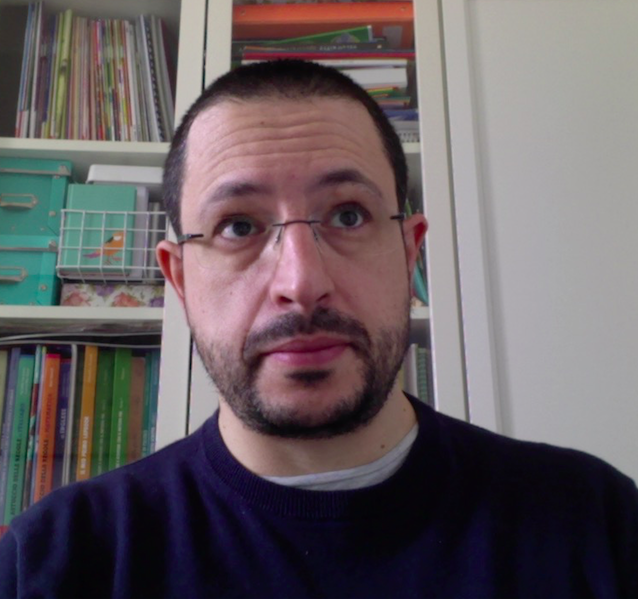
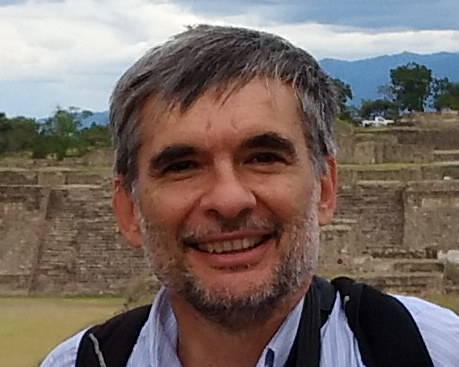
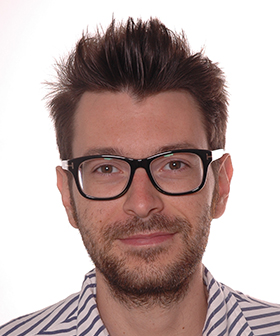
Paola Cristofori is an Associate Professor in the Department of Physical, Computer and Mathematical Sciences at the University of Modena and Reggio Emilia. Her research focuses on Algebraic Topology, Differential Geometry, and Manifold Theory, with contributions to PL topology, 4-manifolds, and combinatorial structures like crystallization theory. She teaches courses in Geometry, Linear Algebra, and Algebraic Topology for undergraduate and graduate programs in Mathematics, Civil Engineering, and Strategic Sciences. Her work emphasizes topological invariants, combinatorial methods in manifold classification, and applications of colored graphs. Key areas include trisections of 4-manifolds, Kirby diagrams, and G-degree theory. She collaborates extensively on projects involving geometric topology and computational topology tools. Dr. Cristofori’s teaching spans foundational topics in linear algebra, Euclidean geometry, and advanced algebraic topology, emphasizing rigorous proofs and practical applications. Her research is published in top journals and includes over 40 articles, reflecting her deep engagement with low-dimensional topology and geometric structures.
Gabriele Pulcini is an Assistant Professor in Logic and Philosophy of Science at the Philosophy Department, University of Rome 'Tor Vergata'. He holds dual PhDs in Philosophy and Theory of Human Sciences from the University of Rome 3 and in Discrete Mathematics from the University of Aix-Marseille II. Since 2020, he has served as a council member of the Italian Society for Logic and Philosophy of Science (SILFS). Previously, he was a postdoctoral researcher at the Institute for Logic, Language and Computation (ILLC) in Amsterdam, and has taught master courses in proof theory and set theory at institutions including the Sorbonne, University of Campinas, and the University of Lisbon. His research focuses on proof theory, Hilbert's 24th problem, and the philosophy of mathematics, with contributions to linear/nonmonotonic logics, refutation calculi, and Gödel's incompleteness theorems. His work bridges formal logic with interdisciplinary applications, such as integrating logical frameworks into molecular biology. Key themes include deductive saturation, context-sensitiveness in logical systems, and foundational questions in mathematical logic. Pulcini's publications explore advanced topics like cut-elimination, complementary proof nets, and fractional semantics, often addressing the interplay between classical and non-classical logics. His recent work emphasizes innovations in refutation systems and their philosophical implications.
Stefan Weltge is a Professor of Discrete Mathematics at the Technical University of Munich (TUM). His research focuses on combinatorial optimization, linear and integer programming, and polyhedral combinatorics. He has received multiple teaching awards at TUM, including the Best Lecturer in Electrical and Computer Engineering (2019) and Best Advanced Course awards in Mathematics (2020/21, 2019). He also earned the Best Dissertation Award from the University of Magdeburg (2016). Education: PhD in Mathematics (University of Magdeburg), Postdoc (ETH Zurich) Research Grants: Funded by the German Research Foundation (DFG) via an Individual Grant (NextGen) and the PhD Program AdONE Professional Roles: Program Committee member for IPCO 2023, MIP 2022, ISCO 2022, ISCO 2020, ISCO 2018; Organizer of OR 2024, MIP 2022, and Cargese Workshops on Combinatorial Optimization (2024, 2022)
Daniele Cappelletti is an Associate Professor in the Department of Mathematical Sciences (DISMA) at the Politecnico di Torino, where he conducts research in stochastic modeling of biochemical reaction networks. He holds a PhD from the University of Copenhagen and has held postdoctoral positions at ETH Zurich, University of Wisconsin-Madison, and the University of Copenhagen. He is affiliated with the 'Probability and Applications' research group and leads the ConStRAINeD project funded by the Italian PRIN program. PhD in Probability, University of Copenhagen (2012–2015) M.S. in Mathematics, Pisa University (2009–2012) B.S. in Mathematics, Pisa University (2005–2009) His research focuses on stochastic processes, probability theory, and mathematical biology, particularly in the modeling and analysis of chemical reaction networks. He investigates the long-term behavior, stability, and model reduction in both deterministic and stochastic frameworks, with applications in systems biology and synthetic biology. His work bridges theoretical mathematics with practical biological systems, especially those exhibiting absolute concentration robustness. The trend in his recent publications shows a strong emphasis on the mathematical foundations of stochastic reaction networks, including tier structures, non-explosivity, and approximation techniques. He has also extended his work into computational applications such as using chemical networks to approximate probability distributions and analyzing security in blockchain protocols, demonstrating interdisciplinary reach across mathematics, biology, and computer science. Daniele Cappelletti currently supervises PhD student Giulio Cuniberti in the Mathematical Sciences program at Politecnico di Torino. He has been involved in competitive research grants, most notably as Scientific Manager of the ConStRAINeD project (2023–2026), which aims to advance the convergence and stability theory of reaction network dynamics. He has not received any explicitly mentioned scientific awards in the provided text. He is actively involved in teaching across multiple programs, including Mathematical Engineering, Data Science and Engineering, and Management Engineering. He teaches courses on stochastic processes, statistics, and time series analysis, both as course instructor and collaborator. He is a member of the Doctoral College in Mathematical Sciences and participates in the College of Management and Production Engineering and the College of Mathematical Engineering.
Nicola Galesi serves as an Associate Professor in the Department of Computer, Control and Management Engineering (DIAG) at Sapienza University of Rome since 2022, following 17 years in Sapienza's Department of Computer Science (2005-2022). His academic journey began with an Associate Professorship at Universitat Politecnica de Catalunya (2001-2005) after postdoctoral positions at the Institute for Advanced Studies in Princeton (2000-2001) and University of Toronto (2002-2003) under Stephen Cook and Toni Pitassi. His educational background features a PhD from Universitat Politecnica de Catalunya supervised by Maria Luisa Bonet, complemented by dual Italian habilitations as full professor in Mathematical Logic (2012) and Computer Science. These qualifications underpin his rigorous theoretical approach across research domains. Galesi's research program centers on Computational Complexity and Logic in Computer Science , with specialized expertise in Proof Complexity (investigating resolution refinements and algebraic proof systems), SAT-Solving , Optimization , and applied domains like Group Testing and Network Tomography . His seminal work on space complexity in algebraic proof systems (JACM 2015) established foundational frameworks, while recent network tomography research develops mathematical models for node failure identification in communication networks using Boolean algebra and graph connectivity principles. Analysis of his 15 most recent publications (2022-2025) reveals a cohesive research trajectory bridging theoretical proof complexity and practical network analysis. Key trends include depth lower bounds in stabbing planes for combinatorial principles, vertex-connectivity metrics for failure localization, and algebraic investigations of vanishing sums in polynomial calculus. His work consistently applies combinatorial principles to derive tight bounds across graph structures while advancing the theoretical understanding of proof systems through tensor isomorphism and roots of unity analyses. His scientific recognition includes: ACM Computing Review Most Notable paper in Theory of Computing for 2012 Galesi mentors the next generation through PhD supervision of Massimo Lauria (2009), Ilario Bonacina (2015), and Fariba Ranjbar (2021), while hosting postdocs including Alan Skelley, Olaf Beyersdorff, and Massimo Lauria. His research is amplified through prestigious visiting positions at the Simons Institute for Theory of Computing (2015, 2021) and Tokyo Institute for Technology (2015), building on his foundational work at IAS Princeton and Toronto. He actively shapes the theoretical CS landscape as organizer of the Sapienza LOC3 (Logic, Complexity, Combinatorics, Computability) seminar series and founder of the RaTLoCC workshops (Ramsey Theory in Logic, Complexity and Combinatorics). His editorial role for Logical Methods in Computer Science (LMCS) and program committee service for CIAC, IJCAI, and FSTTCS conferences demonstrate sustained community leadership beyond his core research and teaching responsibilities in Calculus, Mathematical Logic, and Computational Complexity.
Duccio Pianigiani serves as a University Researcher in the Department of Information Engineering and Mathematical Sciences at the University of Siena. He teaches the Master's Degree course "Formal Systems" for the 2025/2026 academic year and has instructed this course continuously since 2020/2021. His office hours are held Thursdays 11:00-13:00 in room 215 (subject to change), with appointments recommended via email or phone due to scheduling constraints. His research centers on Mathematical Logic with specialized expertise in Proof Theory and Computational Complexity . Key contributions include foundational work on dialectical systems, weak arithmetical theories, and the empirical dimensions of metamathematics. His methodology bridges theoretical computer science and mathematical philosophy, particularly through collaborations with Andrea Sorbi and Luca San Mauro on trial-and-error mathematics frameworks. Analysis of his 2016-2021 publications reveals consistent focus on mathematical logic's structural aspects. His work demonstrates progressive exploration of dialectical systems' computational properties, density phenomena in weak theories, and philosophical implications of metamathematical practice. These studies predominantly appear in high-impact venues like the Archive for Mathematical Logic and Review of Symbolic Logic, establishing his niche in computational foundations. While no student advisement or grant activities are documented, Dr. Pianigiani maintains active scholarly engagement through his forthcoming book "Lectures in Proof-Theory and Complexity" (USiena Press FU) and comprehensive course materials including video lectures, notes, and slides accessible via Moodle. His pedagogical approach emphasizes resource accessibility for graduate mathematics education.
Alberto Marcone is a Full Professor of Mathematical Logic at the University of Udine, where he serves as the Director of the Department of Mathematical, Computer and Physical Sciences (DMIF) since October 1, 2024. His academic home is within the Department of Mathematical, Computer and Physical Sciences at the University of Udine, located at Via delle Scienze, 208 -- Loc. Rizzi, 33100 Udine, Italy. Professor Marcone's research spans several interconnected areas within mathematical logic. His primary interests include reverse mathematics, descriptive set theory, well-quasi-order and better-quasi-order theory, and computable analysis with particular emphasis on the Weihrauch lattice. His work explores the logical strength of mathematical theorems, classification problems in continuum theory, and the computational content of mathematical principles. He has made significant contributions to understanding the relationships between different mathematical principles and their proof-theoretic strength. Analysis of his recent publications reveals a consistent focus on the intricate connections between order theory, reverse mathematics, and descriptive set theory. His work often examines the logical strength of combinatorial principles related to well-quasi-orders and better-quasi-orders, while increasingly exploring connections to computable analysis through the Weihrauch lattice framework. Recent publications demonstrate growing international collaboration, particularly with researchers across Europe, and an expanding application of logical methods to topological and metric space problems, including connections to knot theory and fractal geometry. Member of editorial board of the journal Computability Member of the board of the PhD program in Mathematics and Physics Organizer of Logic Colloquium 2018 (Udine) Organizer of Special Session on Computability Theory at AMS-UMI International Joint Meeting (Palermo, July 2024) Organizer of XXVIII Incontro di Logica AILA (Udine, September 2024) Professor Marcone teaches Mathematical Logic for both undergraduate and graduate mathematics programs at the University of Udine. His office is located on the 2nd floor, room A2 90, where he holds student reception hours either in person or via Microsoft Teams by appointment. As department director, he oversees the academic and administrative functions of the Department of Mathematical, Computer and Physical Sciences.
Carlo Sanna is an Associate Professor at the Department of Mathematical Sciences (DISMA) of Politecnico di Torino, Italy. His research focuses on algebraic and analytic number theory, cryptography, and their intersections, particularly in post-quantum and public-key cryptographic systems. Research Interests : Algebraic Number Theory, Analytic Number Theory, Cryptanalysis, Post-Quantum Cryptography, Public-Key Cryptography, Discrete Mathematics. Teaching : He teaches Linear Recurrences (PhD level) and Advanced Cryptography (Master's level) at Politecnico di Torino, while also lecturing Linear Algebra and Geometry for Aerospace and Management Engineering. Publications : His recent work spans Fibonacci partitions, Lucas sequences, post-quantum cryptographic algorithms, and properties of linear recurrences. Supervised PhD Students : Leonardo Errati (Post-Quantum Cryptography, 2025) Giulia Salvatori (2024) Federico Accossato and Enrico Guglielmino (2022) Giuliano Romeo (2021-2025, p-adic continued fractions) Research Projects : Algebraic Methods in Cryptanalysis (2025-2027, Scientific Director) QUBIP (Quantum-oriented browser updates, 2023-2026, Scientific Head) SERICS Spoke 5 (Cybersecurity, 2023-2025, Scientific Manager) Email : carlo.sanna@polito.it
Mattia Zorzi is an Associate Professor in the Department of Information Engineering at the University of Padova, Italy. He has held academic positions since 2014, transitioning from Assistant Professor to Associate Professor in 2020. His research focuses on system identification, machine learning, and robust control, with applications in dynamic brain networks, robotic systems, and quantum information processing. Education: Ph.D. and M.S. in Information Engineering from University of Padova International Experience: Visiting Scientist at University of Cambridge (2013-2014), Research Associate at University of Liege (2013-2014) Zorzi's research integrates robust and distributed filtering, inverse dynamics learning, and nonparametric identification of Kronecker networks. His work bridges theoretical advancements in spectral estimation with practical applications in neuroscience (e.g., effective connectivity analysis) and control systems (e.g., robust Kalman filtering under uncertainty). Recent publications (2024-2023) demonstrate expertise in ARMA graphical models, kernel-based estimation, and optimal transport for Gaussian processes. He has contributed to the IEEE and IFAC communities as Associate Editor and actively participates in editorial roles for leading journals. Scientific Awards: IEEE Senior Member (2021) Member of IFAC Technical Committee TC 1.1 (2018) Associate Editor roles in Automatica, IEEE Control Systems Letters, and major conferences Grants & Collaborations: Collaborated on projects involving quantum channel estimation, free-space quantum communication, and biomedical signal processing.
Chiara Foglietta is a Lecturer associated with the Department of Civil, Computer and Aeronautical Engineering at Roma Tre University. Her research focuses on cybersecurity for critical infrastructure and industrial systems. She specializes in developing advanced security solutions using machine learning, anomaly detection (particularly Kalman Filter variants), and simulation modeling (CISIApro framework). Her work addresses protection strategies for Industrial Control Systems (ICS), Cyber-Physical Systems (CPS), and interdependent critical infrastructure networks. Recent publications demonstrate a consistent theme of enhancing infrastructure security through innovative algorithms and modeling techniques. Key contributions include anomaly detection frameworks for testbeds like Hydra, security extensions for industrial systems, and uncertainty management methods within simulation environments.
Luca Spalazzi is an Associate Professor at the Department of Information Engineering , Università Politecnica delle Marche , Italy. His research spans multiple domains including cybersecurity , blockchain technology , machine learning , and telerehabilitation systems for Parkinson's disease. He applies formal methods to software verification and security analysis, with a focus on real-time systems and distributed architectures . Key research areas: Cybersecurity, Blockchain, Machine Learning, IoT, Formal Verification Recent work: Blockchain-based sustainable supply chains, Zero-Knowledge Proofs, Smartphone health monitoring His publications (2013-2025) demonstrate expertise in malware detection , smart contract verification , and AI-driven health solutions . Articles include BRAIN 2024 workshop organization and RAPIDO system for Parkinson's telerehabilitation.
Ovidiu Bagdasar is an Associate Professor in Mathematics at the University of Derby, United Kingdom. He holds dual PhDs in Applied Mathematics (University of Nottingham, 2011) and Pure Mathematics (Babeș-Bolyai University, 2015), with the latter focusing on "On the geometry and applications of complex recurrent sequences." PhD in Applied Mathematics, University of Nottingham (2011) PhD in Pure Mathematics, Babeș-Bolyai University (2015) His research bridges mathematics and computer science, specializing in number theory, optimization, computational mathematics, discrete mathematics, and applied mathematics. Recent work explores recurrence sequences, traffic assignment, and mathematical modeling through interdisciplinary applications. Ovidiu's recent publications highlight geometric analysis of triangle configurations, synchronization in complex dynamical networks, acoustic resonance modeling, and algorithm design in CAT(0) spaces. His work demonstrates a strong synergy between pure and applied mathematics, with emerging trends in discrete mathematics and computational problem-solving. He has collaborated with researchers from institutions like University of Pisa, MIFT (University of Messina), and others, reflecting a network of 118 co-authors and global interdisciplinary contributions.
Simona Tecco serves as Associate Professor of Odontostomatological Diseases at Vita-Salute San Raffaele University in Milan since 2017, concurrently holding a consultancy position at San Raffaele Hospital's Dentistry Unit. Her academic career spans over two decades with clinical and research expertise in pediatric dentistry, orthodontics, and temporomandibular disorders. Her educational foundation includes: Graduation with honors in Dentistry and Dental Prosthetics (University of Chieti, 1999) PhD in Odontostomatological Sciences (University of Chieti) PhD in Physiology of Mastication and Dental Materials (University of Turin) Specialization in Orthodontics (Catholic University of the Sacred Heart, Rome) Professor Tecco's research centers on clinical applications in pediatric dentistry and orthodontic innovation , with significant contributions to temporomandibular joint pathology and craniocervical biomechanics . Her work emphasizes digital dentistry integration, particularly in clear aligner therapy, implant navigation, and TMD management protocols. Analysis of her 15 most recent publications (2024-2025) reveals dominant themes in digital workflow optimization across implantology, orthodontics, and prosthodontics. Key trends include mixed reality navigation for implant placement, predictability analysis of clear aligner treatments, and comprehensive digital approaches for temporomandibular disorders management. She maintains active research funding from European Community agencies and private dental companies since 2000, with teaching responsibilities spanning orthodontics courses for both undergraduate dental hygiene and graduate dentistry programs. Her clinical work integrates with San Raffaele Hospital's Dentistry Unit, focusing on evidence-based approaches to complex craniofacial conditions.
Alessandra Bernardi is an Associate Professor in the Department of Mathematics at the University of Trento. Her research focuses on algebraic geometry, computational methods, tensor algebra, and information extraction. She investigates decomposition techniques for tensors and polynomials, with applications ranging from computational mathematics to quantum physics and ecological modeling. Her research interests span algebraic structures, geometric properties of varieties, and computational approaches to solving mathematical problems. Key areas include tensor decomposition methods, polynomial rank analysis, and applications in quantum computing frameworks. Dr. Bernardi's publications demonstrate a consistent focus on developing theoretical frameworks for tensor analysis and applying algebraic methods to solve computational challenges. Her work frequently intersects with physics and ecology through advanced mathematical modeling.
Alberto Saracco is an Assistant Professor of Geometry at the Architecture Faculty of the University of Parma , where he has been since 2009. He completed his PhD in Mathematics at Scuola Normale Superiore, Pisa (2003-2005) under advisor G. Tomassini , who also supervised his earlier academic work. His research focuses on complex analysis, differential geometry, and hyperbolicity, with significant contributions to understanding irregular curves and analytic varieties. PhD in Mathematics, Scuola Normale Superiore, Pisa (2005) Laurea in Mathematics, Scuola Normale Superiore, Pisa (2003) Laurea in Mathematics, Pisa University (2002) Research Interests span complex dynamics , non-Euclidean geometry , and geometric analysis . His work on hyperbolicity in unbounded domains and Carleson measures has advanced understanding of complex analytic structures. Recent publications explore irregular curves , elastic energy , and graph theory , reflecting his interest in bridging abstract mathematics with educational applications. Publications over the past decade reveal a focus on geometric measure theory (2024), complex dynamical systems (2024), and non-smooth geometric analysis (2025). His 2023 work on Euler's graph theorem emphasizes pedagogical approaches, while his 2021-2022 articles on spherical curves and curvature analysis highlight technical depth. Teaching roles include instructing Geometry , Mathematical Analysis , and Advanced Geometry across multiple departments (Architecture, Engineering, Pharmacy). He has also served as Teaching Assistant for courses in Complex Geometry and Discrete Mathematics at various Italian universities. Labs and Teams : While not explicitly mentioned, his collaborations with institutions like Scuola Normale Superiore, Milan-Bicocca University, and Rome Tor Vergata University indicate ongoing engagement with international research networks in geometric and complex analysis.