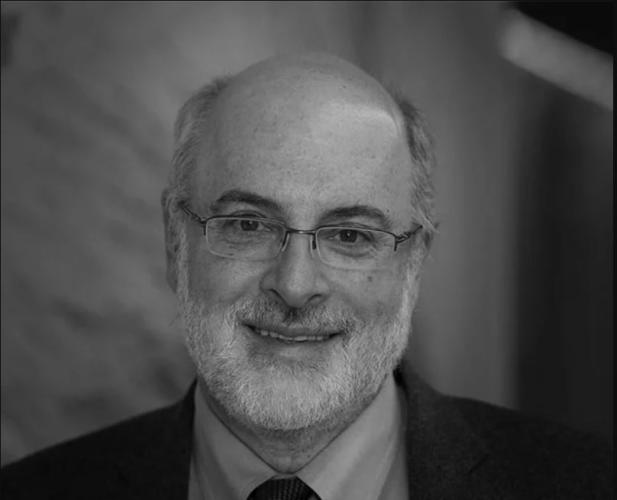
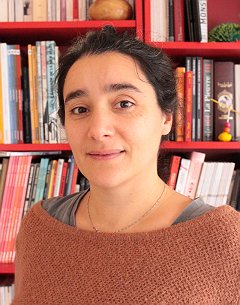
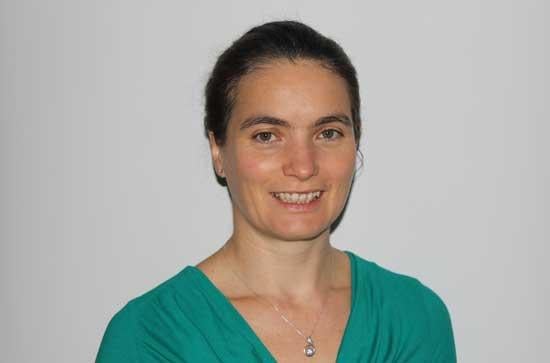
Greg Durrett is an Associate Professor in the Department of Computer Science at University of Texas at Austin, leading the TAUR Lab (Text Analysis, Understanding, and Reasoning ). His research focuses on advancing Large Language Models (LLMs) for knowledge-intensive tasks in medical information processing scientific discovery legal reasoning . He received his B.S. in Computer Science and Mathematics from MIT (2010) and Ph.D. in Computer Science from UC Berkeley (2016). His work develops techniques to train LLMs with new capabilities augment models for reliability assess model outputs improve reasoning frameworks . His 15 most recent publications (2021-2025) span knowledge propagation in LLMs chain-of-thought reasoning code generation benchmarks multi-modal reasoning fact verification discourse analysis . Scientific honors include NSF CAREER Award (2024) NSF grants (2018, 2024) Bloomberg Data Science Grant (2017) Facebook Fellowship (2014) Best Paper Finalist (EMNLP 2013) . Teaching: CS388: Natural Language Processing (graduate) CS371N: NLP (undergraduate) High school NLP module .
Kenneth P. Birman is the N. Rama Rao Professor of Computer Science at Cornell University, where he has had a long and impactful career in distributed systems, cloud computing, and AI/ML infrastructure. He is known for foundational contributions to reliable and scalable distributed systems, and for leading high-impact projects such as Cascade, Vortex, and Derecho. He is also the author of a widely used textbook on reliable distributed systems and has founded multiple companies based on his research. Education: Ph.D. in Computer Science, University of California, Berkeley M.S. in Computer Science, University of California, Berkeley B.A. in Computer Science, Columbia University Research Interests: Professor Birman's research focuses on building reliable, secure, and scalable distributed systems . His current emphasis is on AI and ML infrastructure , particularly in reducing latency and improving performance through hardware acceleration, RDMA-based communication, and edge computing. He explores how to eliminate data movement bottlenecks in AI pipelines and how to support real-time, mission-critical applications in domains like healthcare, smart grids, and industrial IoT. His work spans systems programming, cloud computing, fault tolerance, and formal verification . He has designed systems that have been deployed in high-stakes environments such as the New York Stock Exchange, the Swiss Exchange, and the French Air Traffic Control system. Scientific Awards: ACM Fellow (1999) IEEE Fellow (2014) IEEE Tsutomu Kanai Award for innovations in distributed computing Teaching and Mentorship: Professor Birman teaches two courses in the fall semester: CS4414: Systems Programming and CS5416: Cloud and ML Systems Programming . He has advised numerous Ph.D. and M.S. students, including Alicia Yang, Tiancheng Yuan, Yifan Wang, Weijia Song, Edward Tremel, Sagar Jha, Jonathan Behrens, and Mae Milano. He has announced that Fall 2025 will be his last semester teaching, and he is no longer recruiting new students, though he will continue supervising current ones. Labs and Projects: He leads the Derecho Project and the Cascade/Vortex Project , both focused on high-performance distributed systems. These projects are collaborative efforts with students and industry partners, and the software is released under open-source licenses. He also maintains strong ties with Cornell's systems group and collaborates with faculty across CS, ECE, IS, and the Cornell Tech NYC campus.
Jenna Wise DiVincenzo is an Assistant Professor at the Elmore Family School of Electrical and Computer Engineering at Purdue University. She specializes in research areas such as software verification, formal methods, and programming languages, with a focus on gradual verification techniques that combine static and dynamic analysis. Her work emphasizes usability and scalability in verification tools, and she has contributed to projects like Gradual C0 and gradual null-pointer analysis. Dr. DiVincenzo earned her PhD in Software Engineering from Carnegie Mellon University (2023) and a BS in Mathematics and Computer Science from Youngstown State University (2017). She has interned at IBM Research, MIT Lincoln Laboratory, and the Software Engineering Research and Empirical Studies Lab at YSU. Her awards include the Google PhD Fellowship, NSF GRFP Fellowship, and 2022 Rising Star in EECS. Her research projects span theoretical advancements in gradual verification, empirical studies on usability, and practical tool development. She advises PhD students (e.g., Craig Liu, Conrad Zimmerman) and collaborates on initiatives like gradual verification for Rust and educational tools to teach verification concepts. Her work also explores leveraging large language models for specification generation and enhancing verification tool soundness through formal proofs.
Benedikt Bünz is an Assistant Professor of Computer Science at New York University's Courant Institute of Mathematical Sciences. He is also a co-founder and chief scientist of Espresso Systems, where he applies his research expertise to real-world blockchain solutions. His academic work bridges theoretical cryptography with practical blockchain implementations, focusing on enhancing privacy, security, and usability of decentralized systems. Dr. Bünz's research centers around applied cryptography, consensus mechanisms, and game theory as they relate to cryptocurrencies. His work spans zero-knowledge proofs, verifiable delay functions, secure multi-party computation, and privacy-preserving protocols. He has made significant contributions to Bulletproofs, a zero-knowledge proof system deployed on blockchains like Monero, and pioneered research in verifiable delay functions which are now part of Ethereum 2.0's design. His recent work focuses on recursive proof systems, accumulation schemes, and efficient verification techniques for blockchain scalability. His publication record shows a consistent progression from foundational cryptographic primitives to practical blockchain implementations. Recent work demonstrates increasing sophistication in recursive proof systems (ProtoStar, HyperPlonk), novel accumulation techniques (ARC, DewTwo), and foundational work on randomness generation (VDFs). His research consistently bridges theoretical cryptography with real-world blockchain applications, resulting in protocols that are both theoretically sound and practically implementable across multiple blockchain platforms. Dr. Bünz actively contributes to the academic community through teaching and mentorship. He teaches courses on cryptography of blockchains and computer security at NYU, providing students with hands-on experience in blockchain security and cryptographic protocols. His industry engagement through Espresso Systems demonstrates his commitment to translating academic research into practical solutions for the blockchain ecosystem.
Paolo Ienne is a Professor at the Swiss Federal Institute of Technology in Lausanne (EPFL), where he leads the Processor Architecture Laboratory (LAP) within the School of Computer and Communication Sciences. His research focuses on advancing reconfigurable computing systems through innovative FPGA architectures and high-level synthesis methodologies. His primary research domains include reconfigurable computing, FPGA architecture design, dynamically scheduled dataflow circuits, and hardware acceleration techniques. Recent work emphasizes memory system optimization for FPGAs, formal verification of circuit transformations, and rapid C-to-hardware compilation flows. He has pioneered approaches for handling thousands of outstanding memory misses in FPGA accelerators and developed novel techniques for switch-block exploration without explicit pattern enumeration. Analysis of his 2023-2025 publications reveals a strong trend toward practical FPGA deployment challenges, with increasing focus on HBM integration, virtual memory systems for PCIe-attached devices, and formally verified circuit transformations. His work consistently targets real-world bottlenecks in high-level synthesis toolchains while maintaining theoretical rigor in dataflow architecture design. Professor Ienne's laboratory receives support from the Swiss National Science Foundation and industry partners including Huawei, enabling cutting-edge research in FPGA-based acceleration. His collaborative network spans major semiconductor companies and academic institutions worldwide, with frequent co-authorship on conference proceedings and journal publications in IEEE and ACM venues.
Assia Mahboubi is a tenured researcher ( directrice de recherche ) at INRIA in the Gallinette team, Nantes, France, and an endowed professor in the Algebra and Number Theory section of the Vrije Universiteit Amsterdam, Netherlands. Her work bridges theoretical computer science and formal mathematics, with significant contributions to proof assistants and formal verification. Her research focuses on the foundations and formalization of mathematics in type theory, particularly on the automated verification of mathematical proofs. She explores the interplay between computer algebra and formal proofs, and is a key contributor to the Rocq prover (formerly Coq) and the Mathematical Components libraries. Her work often examines how familiar mathematical objects can be optimally represented for computer-aided proof checking. Recent publications show a strong trend toward categorical reasoning, diagram chasing, and continuity properties in constructive type theory, with increasing focus on practical applications of formal methods in computational mathematics. Her work demonstrates the maturation of formal verification techniques from theoretical foundations to practical tools for mathematical research. ERC Consolidator grant for the FRESCO (Fast and Reliable Symbolic Computation) project Mahboubi actively supervises doctoral students including Vojtěch Štěpančík, Tomás Vallejos Parada, and Alain Chavarri Villarello. She has received significant research funding through her ERC Consolidator grant for the FRESCO project, which aims to develop fast and reliable symbolic computation techniques. She is deeply involved in the international research community, serving on program committees for major conferences including POPL, CPP, and ICFP. She leads research in the Gallinette team at INRIA, which focuses on the intersection of proof assistants, programming languages, and formal mathematics. Her work has helped establish formal verification as a practical tool for mathematical research, moving beyond theoretical foundations to real applications in computational mathematics.
Stefania Dumbrava is an Associate Professor of Computer Science at ENSIIE (École Nationale Supérieure d'Informatique pour l'Industrie et l'Entreprise) and a permanent member of the ACMES team in the SAMOVAR laboratory at Télécom SudParis, Institut Polytechnique de Paris. She is also actively involved in the Property Graph Schema Working Group and the European Research Network on Formal Proofs (EuroProofNet). Education PhD in Computer Science, Université Paris-Sud (2016) MSc in Computer Science, Jacobs University Bremen (2012) BSc in Mathematics, Jacobs University Bremen (2010) Research Interests Dumbrava's research lies at the intersection of formal methods and data management . She designs and verifies algorithms and systems for graph databases , with emphasis on property graphs , schema discovery , query optimization , and distributed graph processing . Recently, her work focuses on certifying large-scale distributed graph systems under the ANR JCJC VERDI project (2025–2029). Awards & Honors SIGMOD Best Paper Award 2023 – “PG-Schema: Schemas for Property Graphs” SIGMOD Research Highlight Award 2023 – “Threshold Queries” VLDB 2022 Best Regular Research Paper Runner-Up – “Threshold Queries in Theory and in the Wild” SIGMOD 2025 Distinguished Reviewer Award ICDE 2025 Best Program Committee Member Award EASST Best Software Science Paper Award, ICGT 2025 Students & Grants Dumbrava has supervised numerous research interns and is actively recruiting PhD students for her ANR VERDI project on verified foundations of large-scale distributed graph systems. She has also served on six PhD thesis committees as examiner since 2021. Labs & Teams She leads the ACMES research group within the SAMOVAR laboratory (Télécom SudParis, Institut Polytechnique de Paris), where her team develops formally verified graph-database engines and tools such as GRASP, VerDILog, and DatalogCert.
Dr. Chunyan Mu serves as a Senior Lecturer in the School of Natural and Computing Sciences at the University of Aberdeen, actively contributing to both academic instruction and cutting-edge research in computing science while currently accepting new PhD students. Her research program centers on Trustworthy AI and Safe Autonomy, with specialized expertise in formal verification of responsibility, accountability, and privacy mechanisms within multi-agent systems. She investigates resilience frameworks for autonomous intelligent systems and develops advanced methodologies for information flow security analysis, bridging theoretical computer science with practical security implementations. Analysis of her publication trajectory (2014-2025) reveals consistent innovation in applying formal methods to security-critical systems. Key thematic developments include probabilistic strategy logic for observability analysis, quantitative verification of opacity properties, and game-theoretic approaches to security verification, demonstrating increasing sophistication in handling multi-agent accountability and system resilience challenges. Dr. Mu currently supervises PhD candidates and offers a fully funded doctoral position focused on formal verification of safety properties in autonomous systems, providing comprehensive financial support including tuition coverage, £20,780 annual stipend, and dedicated research funding for candidates with strong backgrounds in formal methods and artificial intelligence.
Matteo Maffei is a Full Professor at TU Wien, leading the Security and Privacy group. He joined in 2017 after 11 years at Saarland University's CISPA. He holds a Ph.D. in Computer Science from Ca’ Foscari University of Venice (2006). He coordinates the TU Wien Cybersecurity Center, the SecInt Doctoral School, and the FWF Special Research Program SPyCoDe. His research focuses on formal methods for security and privacy, blockchain technologies, and web security. Roles: Full Professor, Coordinator of TU Wien Cybersecurity Center, Module Head of Christian Doppler Lab for Blockchain Technologies (CDL-BOT), Board Member of Vienna Cybersecurity and Privacy Research Cluster (ViSP). His work emphasizes formal verification of cryptographic protocols, smart contracts, and decentralized systems. Key achievements include ERC Advanced (2024) and Consolidator (2018) Grants, and leadership roles in conferences like IEEE Computer Security Foundations Symposium (CSF). Research Interests: Formal methods, smart contracts, blockchain scalability, web security, privacy-preserving protocols, and decentralized systems. His recent projects include optimizing Lightning Network channels, secure multi-hop payments, and AI-driven robustness verification. Publications: Over 200 publications in top venues like CCS, IEEE S&P, and CRYPTO. Recent work includes advancements in blockchain interoperability (e.g., Alba bridges), light client protocols (Blink), and neural network verification techniques. Grants & Awards: ERC Advanced Grant (2024), ERC Consolidator Grant (2018), DFG Emmy Noether Fellowship (2009). Led projects funded by EU Horizon, FWF, and industry partners like ABC Research GmbH. Advising & Labs: Supervised over 20 PhD/Master theses. Active in the Christian Doppler Lab for Blockchain Technologies and the SPyCoDe SFB. Collaborates with institutions like SBA Research and Stanford University.
Floris van Doorn is a Professor at the Mathematical Institute of the University of Bonn where he leads the Formalized Mathematics group. His research focuses on making it viable to formalize research mathematics in proof assistants that can check the correctness of such proofs. He primarily works with the Lean Theorem Prover and is a maintainer of its mathematical library (mathlib). University of Bonn: Professor (2023-present) University of Paris-Saclay: Postdoc with Patrick Massot (2021-2023) University of Pittsburgh: Postdoc with Tom Hales (2018-2021) Carnegie Mellon University: PhD under Jeremy Avigad and Steve Awodey (2013-2018) Van Doorn's research interests center on formalized mathematics, tools and automation for formalization, and homotopy type theory. He has made significant contributions to several major formalization projects including the Carleson project (proving Carleson's theorem), the sphere eversion project (formalizing Gromov's h-principle), the Flypitch project (formalizing the independence of the continuum hypothesis), and the Spectral sequences project. His work demonstrates that proof assistants can handle complex areas of mathematics beyond algebra, including differential topology and analysis. His recent publications show a consistent focus on advancing formalized mathematics, with his most recent work formalizing the Gagliardo-Nirenberg-Sobolev inequality and continuing the Carleson project. His publications span theoretical foundations of type theory, practical applications of formalization, and educational resources for learning proof assistants. Skolem award (2025) for the paper 'The Lean Theorem Prover (System Description)' Van Doorn actively mentors students and collaborators, with Maria, Michael, and Arend recently joining his formalization group in Bonn. He has taught various courses on formalized mathematics and proof assistants at the University of Bonn, University of Pittsburgh, and Carnegie Mellon University. His educational efforts include developing learning resources such as the Natural Number Game and the online book 'Mathematics in Lean.' He also maintains an active presence in the Lean community through the Formalized Mathematics group and collaborative projects like the Carleson project, which invites participation from those familiar with Lean.
Rosemary Monahan is a Professor in the Department of Computer Science at Maynooth University and an affiliate of the Hamilton Institute. She holds BSc and MSc degrees from University College Dublin and a PhD from Dublin City University. As Maynooth University's institutional lead for ADAPT (SFI Research Centre for AI-Driven Digital Content Technology), she focuses on advancing software dependability through formal methods and AI integration. Her research interests include safety-critical systems, dependable software, formal verification, and computational thinking education. She co-founded the VerifyThis competition series and leads projects such as MAIVV (Modular AI Verification and Visualisation) funded by SFI, and VALU3S (Verification and Validation of Automated Systems) funded by Horizon 2020. She has secured over €2.5M in EU funding for the Erasmus Mundus programs in dependable software systems. Monahan’s educational contributions include pioneering computational thinking resources (CoCoA and InSPECT projects) and teaching modules on software verification and rigorous software processes. She supervises PhD students in data science and advanced networks and collaborates with institutions like INRIA, Microsoft Research, and Amazon Web Services. Her professional roles include editorships in journals like Science of Computer Programming and leadership in conferences like iFM and FMICS. She actively promotes gender equality in computing through initiatives like INGENIC and TechMate toolkits.
Elette Boyle is an Associate Professor at Reichman University (IDC Herzliya) and a Senior Scientist at NTT Research . She holds a Ph.D. in Mathematics from MIT (advised by Shafi Goldwasser and Yael Tauman Kalai) and an undergraduate degree from Caltech . Education Ph.D. in Mathematics, MIT B.S. in Mathematics, Caltech Her research focuses on cryptographic solutions for secure data processing , particularly in secure multi-party computation , function/homomorphic secret sharing , and distributed point functions . Recent work explores topology-hiding communication , memory checking complexity , and sublinear-communication MPC . Key trends in her publications include: Advancements in Function Secret Sharing for branching programs and sparse vectors. Efficient Secure Multi-Party Computation protocols with preprocessing. Information-theoretic and computational Topology-Hiding Broadcast schemes. Optimized Oblivious Transfer with constant computational overhead. Scientific Awards European Research Council (ERC) Award Israeli Science Foundation (ISF) Grant United States Air Force Office of Scientific Research (AFOSR) Grant Google Research Scholar Award International Association for Cryptologic Research (IACR) Recognition As Director of the Foundations & Applications of Cryptography (FACT) Research Center , she leads collaborative work with institutions like Technion Israel , Cornell University , and NTT Research . Her students include Pierre Meyer (Ph.D.) , Matan Hamilis (Ph.D.) , and D'or Banon (MSc.) .
Albert Atserias is a Professor in the Department of Computer Science at the Universitat Politècnica de Catalunya (UPC), affiliated with the Faculty of Informatics of Barcelona (FIB) and the ALBCOM research group (Algorithms, Bioinformatics, Complexity, and Formal Methods). He is also associated with the Institut de Matemàtiques de la UPC-BarcelonaTech. His research is central to theoretical computer science, with a strong emphasis on logic and complexity. Atserias's research interests span Computational Complexity, Logic in Computer Science, Finite Model Theory, Proof Complexity, and Constraint Satisfaction Problems . His work explores the fundamental limits of computation, the expressive power of logical languages over finite structures, and the complexity of proving mathematical statements. He investigates the algebraic and combinatorial properties of proof systems, the limits of efficient algorithms for constraint solving, and the theoretical foundations of databases. His research often bridges logic, algebra, and combinatorics to provide deep insights into computational phenomena. The trends in his recent publications show a sustained focus on the logical and algebraic underpinnings of computational problems. Key themes include the consistency and complexity of database queries , the power and limitations of proof systems (like resolution and sum-of-squares), and the expressive power of homomorphism counts in graph theory. His work on the hardness of automating resolution and the development of circular proof systems are particularly significant contributions to proof complexity. The 2024 PODS Best Paper Award for work on relational consistency underscores the impact and timeliness of his research. Among his notable scientific awards are the prestigious ICREA Acadèmia , the PODS 2024 Best Paper Award , the Premi Extraordinari de Doctorat (Extraordinary Doctoral Prize), and the Kleene Award for Best Student Paper . These accolades reflect both the excellence of his early work and his continued leadership in the field. Atserias has been a principal investigator on numerous competitive research projects, including funding from the European Research Council (ERC) and the Spanish Ministry of Science. He has advised doctoral students, such as Toni Hakoniemi, whose thesis on proof complexity he supervised. His extensive collaborative network includes leading researchers like Phokion Kolaitis, Anuj Dawar, and Victor Dalmau. He has also served on the scientific committees of major conferences, contributing to the academic community. He is a core member of the ALBCOM research group , a leading team at UPC focused on theoretical aspects of computer science, which provides a vibrant environment for research in algorithms, complexity, and formal methods. His work is also connected to the broader Institut de Matemàtiques de la UPC, fostering interdisciplinary collaboration between computer science and mathematics.
Alastair F. Donaldson is a Professor and Director of Research in the Department of Computing at Imperial College London, where he leads the FastPL research group. His work bridges formal methods, software testing, and programming languages, with a focus on enhancing the reliability of high-performance and parallel software systems. He has held key roles including Director of Research (since 2023) and previously served as Lecturer (2011–2014), Senior Lecturer (2014–2017), and Reader (2017–2020) before being promoted to Professor in 2020. His research interests include formal verification, compiler testing, GPU programming, concurrency, and fuzzing. He has made significant contributions to the verification of GPU kernels, metamorphic testing of graphics drivers, and the development of tools like GPUVerify and GraphicsFuzz. His work combines theoretical rigor with practical impact, demonstrated by the acquisition of his startup GraphicsFuzz by Google in 2018 and his subsequent roles as Senior Software Engineer and Visiting Researcher at Google. His recent publications reflect a sustained focus on compiler and system reliability, with trends in fuzzing, formal specification, and automated testing of complex systems such as WebGPU, CXL cache coherence, and large language models for code generation. His work increasingly integrates empirical validation with formal techniques to uncover subtle bugs in real-world systems. Scientific awards and recognitions include: 2017 BCS Roger Needham Award EPSRC Early Career Fellowship Fellow of the British Computer Society Best Paper awards at EuroSys 2024, MET 2021, IISWC 2019, IWOCL 2019, and ICST 2016 Best Industry Paper at ICST 2024 ACM SIGSOFT Distinguished Paper at ISSTA 2023 ACM SIGPLAN Most Influential OOPSLA Paper Award (2012 paper), awarded in 2022 Best Student Paper at PPoPP 2014 He has advised numerous PhD students and leads a vibrant research group. He has secured significant research funding and collaborates extensively with industry and academia. His service includes leadership roles such as General Chair of PLDI 2020, PC Chair of ECOOP 2019, and Steering Committee Chair of PLDI (2022–2025). He also serves on the advisory board of PACM-PL and on program committees for top venues including POPL, OOPSLA, PLDI, ICSE, and ISSTA. He leads the FastPL research group, which focuses on the design and implementation of programming tools and techniques for reliable software. The group conducts cutting-edge research in compiler testing, formal methods, and high-performance systems, fostering collaboration across academia and industry.
Elette Boyle is an Associate Professor at the Efi Arazi School of Computer Science, Reichman University (IDC Herzliya), Israel. She serves as the Director of the FACT Research Center and is a Senior Scientist at NTT Research. Additionally, she heads the RRIS International Program. Her academic career spans prestigious institutions including MIT, Technion, and Cornell. Dr. Boyle received her Ph.D. in Mathematics from MIT under the guidance of Shafi Goldwasser and Yael Tauman Kalai. Following her doctorate, she completed postdoctoral research at the Technion Israel Institute of Technology (2013-2015) hosted by Yuval Ishai, and a short-term postdoc at Cornell University (Summer 2013) hosted by Rafael Pass. She completed her undergraduate studies in mathematics at Caltech. Her research focuses on the theoretical foundations of computer security and cryptography, with particular expertise in secure multiparty computation, function secret sharing, distributed point functions, and memory checking protocols. Her work bridges theoretical computer science with practical cryptographic applications, developing protocols that balance security guarantees with computational efficiency. Dr. Boyle's research has significantly advanced the field of cryptography, particularly in understanding the fundamental limits and possibilities of secure computation protocols. Analysis of her recent publications reveals a strong focus on the theoretical foundations of secure computation, with particular emphasis on understanding computational and communication complexity limits. Her work spans multiple dimensions of cryptography including foundational protocols, complexity analysis, and practical implementations. A recurring theme in her research is developing efficient cryptographic primitives that minimize communication overhead while maintaining strong security guarantees. Her contributions to function secret sharing, distributed point functions, and pseudorandom correlation generators have been particularly influential in the field. Dr. Boyle has advised several graduate students including Pierre Meyer (Ph.D., co-advised with Geoffroy Couteau), Matan Hamilis (Ph.D.), and D'or Banon (MSc., co-advised with Ran Cohen). Her research has been supported by various grants enabling her to lead significant projects in cryptography and secure computation. As Director of the FACT Research Center, she leads a team focused on foundational aspects of computer science and cryptography. Her center collaborates with researchers worldwide and serves as a hub for advancing cryptographic research in Israel and internationally.