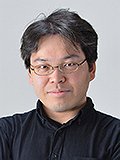
Ken-etsu Fujita is a Faculty Member at Tokyo Denki University and an Associate Professor at Gunma University's Department of Computer Science. His research focuses on theoretical computer science, particularly lambda calculus, type theory, and formal systems. With 62 publications that have received 2,052 reads and 238 citations, Fujita has established himself as a significant contributor to the foundations of computation and programming language theory. His research expertise spans Theoretical Computer Science, Abstract Algebra, Calculus, Semantics, and Lambda Calculus. Fujita's work consistently bridges mathematical logic with computational theory, exploring deep connections between proof systems and computation. His investigations into confluence properties, reduction systems, and type theories demonstrate sustained focus on foundational computational questions. Analysis of Fujita's publication timeline reveals consistent contributions from the 1990s through 2024, with recent work addressing undecidability in second-order propositional intuitionistic logic and properties of shuffling calculus. His research shows progression from foundational lambda calculus studies to more complex systems incorporating classical logic, existential types, and advanced reduction strategies, maintaining theoretical rigor while addressing increasingly sophisticated computational problems. Fujita has received recognition through citations of his work (238 citations), indicating his contributions are valued by the theoretical computer science community. His dual institutional affiliation provides a rich academic environment for research and collaboration, though specific awards aren't detailed in the available information. As a supervisor, Fujita appears to focus on theoretical computer science topics with emphasis on formal methods. His research group likely engages with fundamental questions about computation, programming language semantics, and logical foundations. Prospective students interested in these areas would find a supervisor with deep expertise and a strong publication record in core theoretical topics, offering opportunities to contribute to foundational research with potential implications for programming language design and formal verification.