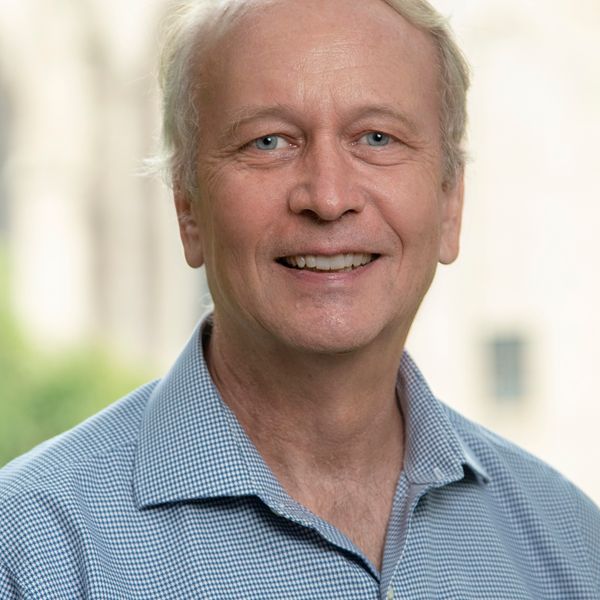
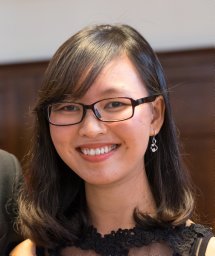
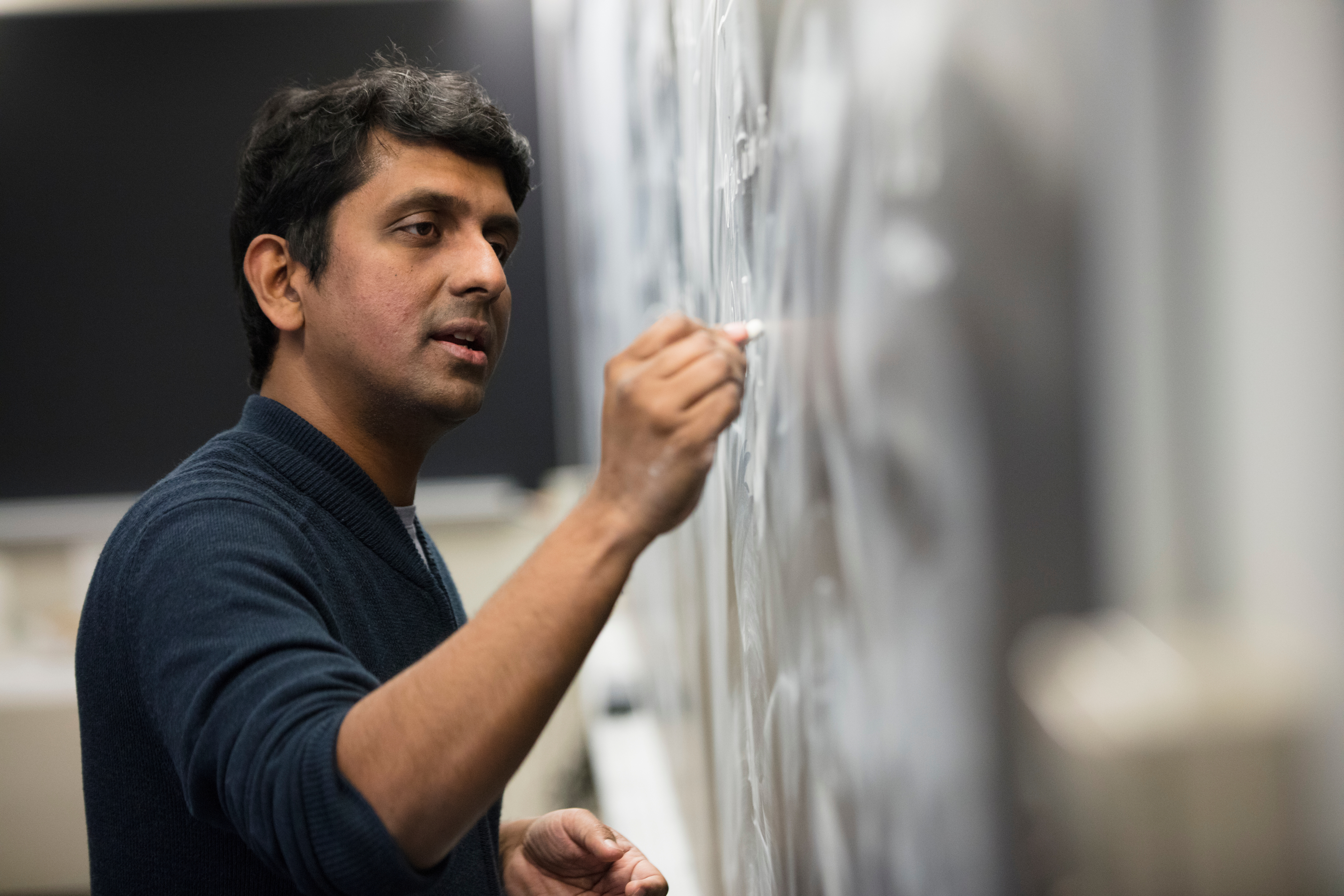
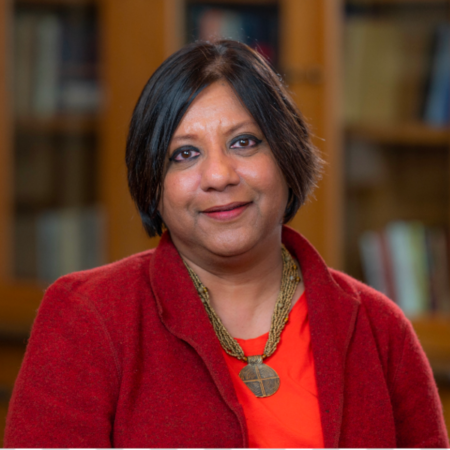
Nargiz Humbatova is a postdoctoral researcher at the Testing Automated (TAU) research group within the Software Institute (SI) at Università della Svizzera italiana (USI). She holds a PhD from USI (2023), an MSc in Advanced Computing from the University of Bristol, and a BSc in Mathematics from Moscow State University. Her research focuses on mutation testing of deep learning systems, fault localization, and program repair, with a particular emphasis on real-world fault analysis and testing methodologies for AI systems. Education: PhD in Informatics, Università della Svizzera italiana (2023) MSc in Advanced Computing, University of Bristol BSc in Mathematics, Moscow State University Research interests include mutation testing techniques, test input prioritization, deep learning fault benchmarks, and the application of large language models (LLMs) to fault localization and repair. She has contributed to the ERC-AdG project PRECRIME, dedicated to testing AI-based systems. Her work emphasizes practical validation through empirical studies and real-world fault injection. Her publications span topics such as mutation testing pipelines (e.g., muPRL), spectral analysis of neural activation values, and the development of tools like DeepCrime for deep learning testing. These articles highlight advancements in evaluating and improving the robustness of AI systems through rigorous testing frameworks. Labs/Teams: Member of the TAU (Testing Automated) research group at USI’s Software Institute, collaborating on interdisciplinary projects at the intersection of software engineering and artificial intelligence.
Dr. Adam Skinner is a Research Fellow at the University of Sydney's Sydney Medical School, affiliated with the Central Clinical School and the Brain and Mind Centre. His work focuses on applying system dynamics modeling to analyze mental health policy, public health economics, and healthcare access. He collaborates extensively with institutions like the Lancet Psychiatry and the World Health Organization. His research emphasizes evaluating intersectoral strategies for youth mental health, modeling the impact of economic policies on mental health outcomes, and improving healthcare system resilience during crises like the COVID-19 pandemic. Skinner's studies often integrate participatory methods to ensure community engagement in policy design. Recent work includes analyses of suicide prevention programs, cost-effectiveness of mental health services, and the role of technology in care coordination. His interdisciplinary approach bridges epidemiology, economics, and clinical practice to address systemic challenges in mental healthcare delivery. Key collaborations include projects with Professors Ian Hickie and Joseph Occhipinti, focusing on dynamic modeling for mental health systems reform. Skinner's findings have informed policy recommendations in Australia, Colombia, and globally through platforms like the Bulletin of the World Health Organization.
Randall P. Ellis is a Professor of Economics at Boston University, specializing in Health Economics, Industrial Organization, and Econometrics. His research focuses on healthcare payment systems, insurance design, predictive modeling, and international health economics. He holds a PhD from MIT and has contributed extensively to understanding managed care systems, risk adjustment frameworks, and healthcare policy evaluation. Education: PhD in Economics from Massachusetts Institute of Technology. Research Interests: Ellis’s work spans health care payment reforms, risk selection mechanisms, and the application of machine learning to health economics. He examines issues such as Medicaid managed care, obesity treatment economics, and the impact of anti-corruption programs on healthcare systems. His research emphasizes improving equity and efficiency in healthcare markets, particularly through innovative payment systems and risk adjustment models. Key Contributions: Ellis has developed frameworks for disease surveillance and risk adjustment (e.g., Diagnostic Items Classification System), evaluated payment system performance, and analyzed factors influencing healthcare utilization and costs. His work bridges theoretical economic models with practical policy applications, informing both academic and policy audiences. Grants & Collaborations: While specific grants are not detailed here, his research frequently involves collaborations with institutions like Harvard and MIT through the Health Economics Seminar. His work often addresses global health challenges, including pandemic financing and healthcare corruption in developing regions. Labs/Teams: Ellis is affiliated with Boston University’s economics department and collaborates with interdisciplinary teams on projects related to health policy and econometric modeling.
Baishakhi Ray is an Associate Professor at Columbia University, specializing in improving software reliability and developers' productivity for both traditional and AI-driven systems. She leads the ARiSE Lab, focusing on interdisciplinary research at the intersection of software engineering and artificial intelligence. Her research interests include software testing for AI systems, adversarial robustness, automated testing of autonomous systems, and leveraging AI techniques such as neural networks for dynamic analysis and fuzzing. Notable projects include DeepTest for autonomous car testing and NEUZZ for efficient fuzzing. Awards: VMware Early Career Faculty Award (2020), IBM Faculty Award (2019), NSF CAREER Award (2019), and multiple best paper awards including EAPLS FASE (2020) and ACM Distinguished Papers (FSE 2017, MSR 2017). Grants: NSF CAREER grant (2019-2024) for deep learning testing, NSF grants for workshops and security bug detection, and collaborative grants on persistent memory and SSL/TLS implementations. Her recent work emphasizes advancing code generation with large language models (LLMs), evaluating model robustness under data contamination, and developing tools like CodeSense and CrashFixer for code semantics and kernel debugging. The ARiSE Lab also explores causal performance debugging and transfer learning for configurable systems.
Michel Leseure serves as a Senior Lecturer in Mechanical Engineering within the School of Electrical and Mechanical Engineering at the University of Portsmouth, where he is affiliated with the Centre for Operational Research and Logistics and Centre of Operational Research and Decision Analysis. As an active PhD Supervisor accepting new doctoral candidates, he contributes to both academic instruction and research supervision in technology-focused programs. His research centers on evolutionary analysis of technical systems, notably applying cladistics (a biological classification method) to manufacturing systems. Additional expertise spans engineering economy, real options theory, and scenario analysis, with recent expansion into sustainable operations management, microgrid optimization, and renewable energy integration. His work bridges industrial engineering with environmental sustainability through lean methodologies and strategic decision frameworks. Analysis of his 2023-2025 publications reveals dominant themes in collaborative microgrid systems, where he pioneers approaches to mitigate renewable energy volatility using lean-heijunka strategies and precontracted order mechanisms. His research consistently addresses supply chain resilience, policy impacts on manufacturing investment, and sustainability-performance trade-offs across energy and industrial sectors. Leseure actively mentors doctoral researchers through the Centre for Operational Research and Logistics, focusing on operational decision-making in energy systems and sustainable manufacturing. His collaborative projects frequently involve international researchers, particularly with H. Feleafel and J. Radulovic, examining microgrid economics and supply chain adaptability under turbulent conditions.
Professor Håkan Larsson holds the position of Professor and Head of the Department of Movement, Culture, and Society at the Swedish School of Sport and Health Sciences (GIH). He specializes in Educational Science with a focus on gender, sexuality, and sport didactics. His academic leadership includes directing research initiatives such as the PIF group (Pedagogical Sport Research) and the FIHD Graduate School, which trains teachers in physical education and health. Larsson supervises eight doctoral students and teaches in GIH’s master’s and doctoral programs, notably leading mandatory courses in sports science. Research Interests: Pedagogical processes in club and school sports Gender, sexuality, and embodiment in physical education Heteronormativity and LGBTQ+ inclusion in sports Collaborations: Norwegian School of Sport Sciences (part-time leave) Swedish National Agency for Education (Skolverket) Riksidrottsförbundet (Swedish Sports Confederation) His research spans projects like 'Heteronormativitet inom idrotten' (2012–2013) and the KUL project (2011–2013), funded by the Swedish Research Council. Larsson also chairs evaluation committees for academic programs and collaborates with interdisciplinary groups like Research in Education & Movement Culture. Publications emphasize critical pedagogy, transgender embodiment in education, and innovative teaching methods. His work bridges theory and practice, addressing contemporary challenges in physical education and sport equity.
Nguyen Dang is a Lecturer at the School of Computer Science, University of St Andrews, actively supervising PhD students and teaching AI-related modules including Artificial Intelligence (CS3105), Artificial Intelligence Practice (CS5011), Machine Learning (CS5014), and Uncertainty in Artificial Intelligence (CS5016). He leads the Centre for Interdisciplinary Research in Computational Algebra and maintains an active research profile with numerous publications in top conferences. University of St Andrews, School of Computer Science Lecturer (equivalent to assistant professor) Supervising PhD students including Tai Nguyen Teaching multiple AI and Machine Learning courses Dr. Dang's research focuses on the intersection of machine learning and optimization, particularly automated algorithm configuration and design. His work centers on leveraging machine learning techniques to automate the development of optimization algorithms, with special emphasis on deep reinforcement learning for Dynamic Algorithm Configuration and integrating machine learning into constraint programming. His research has significant applications across various domains, especially in automated constraint modeling. The publications reflect strong activity in combinatorial optimization, algorithm selection, and benchmark instance generation. His recent publications demonstrate consistent output in top venues including Artificial Intelligence Journal, GECCO, FOGA, and CP conferences, with notable achievements including Best Paper Awards at GECCO'2025 and GECCO'2022. The research spans theoretical foundations of parameter control, practical applications in constraint programming, and innovative approaches to algorithm configuration. Best paper award at GECCO'2025 Best paper award at GECCO'2022 Nomination for best paper award at FOGA'2023 Best paper award at GECCO'2017 Dr. Dang holds a Leverhulme Early Career Fellowship (2020-2023) worth £90,000 for his project on constraint-based automated generation of synthetic benchmark instances. He has secured additional funding including EPSRC High Performance Computing grants totaling over 2.2 million CPU hours and a COST Action grant. His research group actively develops tools and frameworks for automated algorithm configuration and benchmark instance generation, with several open-source datasets available on GitHub. He is involved with multiple research groups including the Centre for Interdisciplinary Research in Computational Algebra and collaborates extensively with researchers at University of St Andrews and internationally, including at Université de Paris I Panthéon-Sorbonne where he conducted visiting research.
Dr. Miguel Olivo-Villabrille is a Research Fellow at the Tax & Transfer Policy Institute and Assistant Director of the Economic Analysis Team in the Australian Government Department of Education. He holds a PhD in Economics from the University of Calgary and has prior affiliations with UNSW and the University of Sydney. His research focuses on Labour Economics , Public Economics , and Family Economics , employing structural econometrics and causal analysis. Current projects include studying the elasticity of taxable income among high-income individuals, retirement behavior of couples, and the interplay between labor and marriage markets. His recent publications address disability insurance policy impacts, marital earnings dynamics, and household income inequality through assortative marriages. His work appears in journals like Labour Economics and Empirical Economics . He advises on policy-relevant research and leads economic analysis initiatives within government frameworks.
Sara Schaefer, MD, MHS, FAAN is an Associate Professor of Neurology at Yale School of Medicine, where she serves as Program Director for the Movement Disorders Fellowship and Adult Neurology Residency Program Director. She specializes in treating patients with movement disorders including Parkinson's disease, tremors, chorea, dystonia, and Huntington's disease, and evaluates patients for deep brain stimulation surgery. Dr. Schaefer is also deeply involved in medical education innovation, having designed interactive video-based curricula used worldwide. Dr. Schaefer's educational background includes: ScB from Brown University (2007) MD from The Ohio State University College of Medicine (2012) Internship in Medicine at Yale-New Haven Hospital (2013) Residency in Neurology at Yale-New Haven Hospital (2016) Chief Residency in Neurology at Yale-New Haven Hospital (2016) MHS with focus on medical education from Yale University (2019) Dr. Schaefer's primary research interests center on movement disorders and medical education. She has a particular focus on developing innovative educational tools for neurology training, including video-based curricula and podcasts. Her work aims to improve how movement disorders are taught to medical students, residents, and practicing physicians, with the goal of reducing diagnostic delays and improving patient care. She has designed an interactive, video-based online training curriculum in movement disorders that is used by learners worldwide and co-founded the MDS podcast. She also founded The Grey Matter Project, a virtual high school neuroscience club engaging students globally. Dr. Schaefer's scholarly work demonstrates a clear trajectory from clinical research in movement disorders toward an increasing focus on medical education innovation. While her early publications addressed specific movement disorder conditions and treatments, her more recent work centers on educational methodology, curriculum development, and assessment in neurology training. Her research bridges clinical neurology with educational science, creating practical tools that have been implemented across multiple institutions. Dr. Schaefer has received numerous honors and awards for her work: Fellowship Director of the Year from American Academy of Neurology (2025) Burton A. Sandok Visiting Professor of Neurologic Education from Mayo Clinic Department of Neurology (2024) Attending of the Year from Yale Department of Neurology (2023) Education Innovation Poster Award at Yale Medical Education Day (2018) Creative Expression of Human Values in Neurology award from American Academy of Neurology (2016) Alpha Omega Alpha Honor Medical Society (2012) Gold Humanism Honor Society (2012) As an educator and program director, Dr. Schaefer has mentored numerous neurology residents and fellows. She serves as co-founder and deputy editor of the MDS podcast, launched in January 2019, and founder and producer of the Neurology Nuts and Bolts: Constructing your Career podcast, launched in February 2022. She is the Movement Disorders Section Head of the Annual Academy of Neurology Resident In-Service Training Examination (RITE) Committee and CME editor for the Movement Disorders Journal. Her educational initiatives have received institutional support through Yale's educational infrastructure, though specific grant funding isn't detailed in the provided text. Dr. Schaefer founded The Grey Matter Project, a virtual high school neuroscience club that engages students worldwide with lectures, career panels, and projects related to neurology. She is also actively involved with the Movement Disorders Society Education Committee and has contributed to developing educational resources through this professional organization.
Rita Wilson is Professor of Translation Studies in the School of Languages, Literatures, Cultures and Linguistics at Monash University and Founding Director of the Monash Intercultural Lab (MIL). She has been a faculty member since 2005 and has previously taught at the University of the Witwatersrand and the University of Melbourne. Her research centers on the interplay between translation, migration, and cultural identity. Key areas include transcultural narrative practices, self-translation, women's writing, and intercultural competence. Her work addresses themes such as language, mobility, citizenship, and social inclusion in migratory contexts. She contributes to the growing field of migration and translation studies, emphasizing the role of language in settlement and representation. Her recent publications span crisis translation, urban translation, and community-based interpreting. The 15 most recent articles reflect a strong trend in applying translation theory to real-world issues such as public health communication, volunteer interpreter training, and multicultural policy, often with a focus on Australia and transnational communities. Faculty of Arts Dean’s Award for Excellence in Graduate Research Supervision (2015) Faculty of Arts Dean's Award for Research Impact (2017) Victoria’s Multicultural Awards for Excellence (2010) Rita Wilson has successfully supervised over 40 postgraduate students in Italian Studies and Translation Studies. She has led and participated in numerous research grants, including projects funded by Caritas Australia and the Department of Education (Australia), focusing on community translation, social cohesion, and crisis communication. Her editorial roles include co-editing The Translator , a leading journal in the field. She is a key figure in the Monash Intercultural Lab, which fosters interdisciplinary research on cultural contact and exchange. She also collaborates with institutions such as Goldsmiths, University of London, and engages in national and international academic networks through seminars, lectures, and editorial responsibilities.
Associate Professor Vic Ciesielski is affiliated with RMIT University's School of Computing Technologies. His research focuses on Artificial Intelligence, Evolutionary Computing, Computer Vision, and Genetic Programming, with applications in areas like robot soccer and aesthetic analysis of images. He has supervised projects including efficient neural architecture search and off-line handwritten text recognition. His work bridges computational techniques with creative fields such as art history and digital media. Key research interests include machine learning, data management, and graphics/augmented reality. He actively contributes to conferences like GECCO and IJCNN, publishing on topics ranging from neural architecture optimization to sensor-based activity recognition. His research often integrates evolutionary algorithms with deep learning methodologies. He can be contacted via vic.ciesielski@rmit.edu.au and has an ORCID identifier: 0000-0001-7273-9566 .
Vinod Vaikuntanathan is the Ford Foundation Professor of Engineering in the MIT EECS department and a principal investigator at MIT CSAIL. He holds a BTech from IIT Madras (2003), and SM/PhD degrees from MIT (2005/2009). His research focuses on cryptography, particularly fully homomorphic encryption (FHE), lattice-based cryptography, and quantum-resistant systems. He co-founded Duality Technologies as Chief Cryptographer. **Education:** BTech in Computer Science (2003), Indian Institute of Technology Madras SM in Electrical Engineering & Computer Science (2005), MIT PhD in Computer Science (2009), MIT **Research Interests:** His work spans FHE (enabling computations on encrypted data), lattice-based cryptography (post-quantum security), and intersections with quantum computing, machine learning, and privacy. He explores applications in secure computation, algorithm design, and cryptographic protocols. **Awards:** Recipient of the Gödel Prize (2022), Simons Investigator (2023), and MacVicar Faculty Fellow (2024). His work on FHE and lattice algorithms has earned widespread acclaim in cryptography and theoretical computer science. **Teaching & Mentorship:** Advanced cryptography courses at MIT (e.g., 6.5630, 6.876J) Advised PhD students (e.g., Sergey Gorbunov, Tianren Liu) and postdocs (e.g., Nir Bitansky, Mark Zhandry) now leading positions in academia and industry **Collaborations:** Organizer of the Charles River Crypto Day and MIT Cryptography Seminar Principal investigator on grants from NSF, DARPA, and Microsoft
Ishita Sinha Roy is a Professor at Allegheny College in the Department of Communication, Media, & Performance. She earned her Ph.D. in Communication from the Annenberg School for Communication at the University of Southern California and her B.A. and M.A. in English Literature from the University of Bombay. Her expertise spans media studies, nation branding, global media, integrated marketing communication, and digital media communities. Education: B.A. & M.A. in English Literature, University of Bombay M.A. & Ph.D. in Communication, Annenberg School for Communication, University of Southern California Her research focuses on postcolonial media analysis, nation branding, and the ethics of sustainable development through community-engaged learning. She has co-designed projects like the Global Citizen Scholars program, emphasizing gender equality (SDG 5) and collaborative partnerships with organizations like Women’s Services Inc. and the Green Belt Movement. Her work bridges academic theory with real-world applications, including anti-domestic abuse book projects and student-led research on topics like QAnon conspiracies and political podcasting. Scientific Awards: Student-nominated Teaching Award, Annenberg School for Communication (USC), 2000 Thoburn Award for Excellence in Teaching, Allegheny College, 2008 She mentors students in media literacy, storytelling, and ethical communication, with alumni like John Meyer and Hillary Santel engaging her classroom. Her collaborations with institutions like the Andrew W. Mellon Foundation and the National Council for Undergraduate Research highlight her commitment to interdisciplinary and experiential learning.
David A. Bergin is a Professor of Educational Psychology in the College of Education at the University of Missouri. With over 30 years of experience, his work focuses on motivation for learning in both academic and informal settings, particularly among underrepresented student populations. He has made significant contributions to understanding how interest enhances learning, achievement, and career choice. His research explores key areas including student motivation, the development of academic interest, engagement in STEM fields, classroom dynamics, and the role of teacher-student relationships. He has also investigated low-stakes testing motivation, college access initiatives for students of color, middle school engineering education, and summer research programs for teachers in neural engineering. These diverse yet interconnected themes reflect a deep commitment to equitable and effective learning environments. Bergin is the co-author of the widely used textbook Child and Adolescent Development in Your Classroom , now in its third edition, designed for pre-service teachers. His scholarly leadership includes serving as Past President of Division 15 (Educational Psychology) of the American Psychological Association and editorial roles in leading journals such as Journal of Educational Psychology , Educational Psychology Review , Contemporary Educational Psychology , and Journal of Counseling Psychology . His notable recognitions include: Outstanding College Teaching Award, University of Missouri College of Education (2018) Fulbright Scholar, Temuco, Chile (2013) Past President, APA Division 15 Bergin holds a PhD and an Educational Specialist degree in evaluation from Stanford University. His teaching excellence extends internationally, having taught a master’s course on motivation in Spanish during his Fulbright year. While specific advisees are not listed, his extensive research and academic leadership suggest active mentorship of graduate students. He has also contributed to grant-funded initiatives related to teacher development and equity in STEM education. Though no formal lab or research team name is mentioned, his work appears to be conducted through collaborative projects involving K–12 schools, teacher training programs, and university-based research initiatives focused on motivation and learning sciences.
Alexander M. Petersen is an Associate Professor and Graduate Chair in the Management of Complex Systems (MCS) department and the Ernest and Julio Gallo Management of Innovation Sustainability and Technology (MIST) graduate group at the University of California Merced (UCM). He is affiliated with the School of Engineering and serves as a key faculty member driving research and academic programs in complex systems and innovation management. His educational background includes a Ph.D. (2011) and M.A. (2008) from Boston University, and a B.S. (2003) in physics and mathematics from the University of Utah. Prior to joining UC Merced, he was a tenure-track faculty member at the IMT Institute for Advanced Studies Lucca in Italy. Petersen's research focuses on the evolution of large multiscale socio-economic systems by applying concepts and methods from complex systems, statistical physics, management, and innovation science. His work spans Science of Science, Computational Social Science, Complex Systems, Quantitative Finance, and Sports Analytics. He has made significant contributions to understanding research collaboration networks, innovation dynamics, convergence science, and the impact of socio-economic shocks on various systems. His publication record demonstrates a clear trend toward increasingly complex interdisciplinary work, particularly in convergence science and network analysis. His most recent publications (2024-2025) focus on global science structure, disruption metrics, national park systems, and the impact of crises on economic behavior. These works often integrate multiple disciplinary perspectives and leverage large-scale data analysis. NSF award #1738163 for research on convergence science Petersen has advised numerous graduate students, including current PhD student Andrea del Pilar Montaño Ramirez and former students Felber J. Arroyave Bermudez (PhD in Environmental Systems) and Dr. Dong Yang (MCS Postdoctoral Scholar). His research has been supported by competitive grants and has resulted in publications in high-impact journals including Nature Communications, Science Advances, and Research Policy. He is actively involved in developing new academic programs, including upcoming B.A. majors in Management of Innovation, Sustainability & Technology (2025) and Data Science & Analytics (Fall 2024). His lab focuses on complex systems analysis, with current projects examining university digital media networks, disruption metrics in science, and the integration of regional innovation systems. The research group maintains an active presence in the science of science community, regularly presenting at conferences like the Science of Team Science conference (INSciTS).