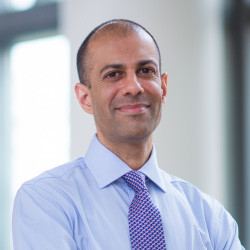
Vipin Narang is the Frank Stanton Professor of Nuclear Security and Political Science at MIT's Security Studies Program. He served as Principal Deputy Assistant Secretary of Defense for Space Policy (2022–2024), awarded the Department of Defense Medal for Distinguished Public Service. His research focuses on nuclear proliferation, strategy, and South Asian security. Narang holds a PhD from Harvard University (2010) and advanced degrees from Stanford and Oxford. He has authored seminal works like *Nuclear Strategy in the Modern Era* (2014) and *Seeking the Bomb* (2022). Education: PhD (Harvard), M.Phil (Oxford), MS/BS (Stanford). Fellowships: Harvard Olin Institute, Belfer Center, Stanford CISAC. Research interests include North Korea's nuclear program, deterrence theory, and geopolitical competition. Key achievements: 2020 ISSS Emerging Scholar Award (ISA), 2015 ISA Best Book Award. Advising focuses on defense policy and nuclear strategy. Active in policy circles, often commenting on India-China tensions, North Korea, and US defense strategy. Labs/Teams: MIT Security Studies Program, affiliated with Project on Managing the Atom (Harvard). Ongoing work explores multipolar deterrence, AI in command systems, and hypersonic weapons implications.
Andreas Richter is a Professor of Organisational Behaviour at Cambridge Judge Business School (University of Cambridge), specialising in creativity and innovation in teams, leadership development, and team effectiveness. His research integrates theoretical insights with practical applications in healthcare, pharmaceutical, and financial sectors. He holds a PhD in Management from Aston University and advanced degrees from Giessen University. He advises multinational corporations and public institutions globally, including TomTom, UNICEF, and the UAE Ministry for Internal Affairs. His work focuses on enhancing team collaboration through psychological safety, leadership training, and resource distribution. Richter serves on editorial boards of top journals like the Academy of Management Journal and Journal of Applied Psychology . Key research themes include: Team processes & creative environments Leadership learning mechanisms Failure recovery systems Temporal dynamics in innovation Notable contributions include frameworks for converting workplace shame into creativity and analyzing team effectiveness through multiplex leadership networks. His 2019 study on learning from failure highlights team resource systems' role in transforming adversities into growth opportunities. Executive education expertise includes designing positive leadership programs addressing empathy and dark triad traits in management. Richter has developed innovative team-building models for organisational change, such as the 'twelve steps to heaven' framework for successful transitions.
Professor Mohamed Naim is a distinguished academic at Cardiff Business School, Cardiff University, where he holds the position of Professor in Logistics and Operations Management. He has served in several leadership roles, including former Head of the Logistics and Operations Management Section and former Deputy Dean at the Business School. He was also the founding director of the Centre for Advanced Manufacturing Systems at Cardiff (CAMSAC). He is actively engaged in high-impact research and industrial collaboration, currently leading a Knowledge Transfer Partnership (KTP) with Tower Cold Chain Solutions Ltd. and contributing to major research programs such as ASTUTE, ASTUTE2020, and AFAIR. His research interests center on the development of business systems engineering approaches to resilient supply chains, with a focus on sustainability, circularity, and flexibility in lean and agile systems. He has made significant contributions to supply chain dynamics, particularly in engineer-to-order (ETO) sectors such as construction and shipbuilding. His recent work explores digital transformation in logistics, including 5G-enabled smart ports, building information modelling (BIM), and AI-driven decision-making. The analysis of his recent publications reveals a strong trend toward interdisciplinary research, integrating operations management with healthcare (trauma systems), digital technologies, and sustainable industrial practices. His work frequently employs system dynamics, simulation, and empirical case studies to address complex supply chain challenges. Scientific Awards: Institution of Electrical Engineers' Manufacturing Division Premium (1996) Royal Academy of Engineering Global Research Award (2003) Professor Naim is actively involved in research supervision and has contributed to two Research Excellence Framework (REF2021) impact cases on innovative procurement and financially sustainable supply chains. He is a founding member of the Logistics Systems Dynamics Group (LSDG) and has led and co-directed multiple large-scale research initiatives. His work is characterized by strong industry engagement, particularly through Knowledge Transfer Partnerships and collaborations with public sector bodies like the Welsh European Funding Office (WEFO). Research Centers and Teams: Logistics and Operations Management Section, Cardiff Business School Centre for Advanced Manufacturing Systems at Cardiff (CAMSAC) Logistics Systems Dynamics Group (LSDG) ASTUTE / ASTUTE2020 / ASTUTE East programmes AFAIR project (Expert Advisor)
Jennifer G. Cromley is a Professor in the Department of Educational Psychology at the University of Illinois at Urbana-Champaign. Her research focuses on comprehension of illustrated scientific text and the achievement and retention of undergraduate students in STEM majors. She employs both basic (eye tracking, think-aloud protocols) and applied research methods (randomized control trials, quasi-experiments) across educational settings from middle school to undergraduate programs. PhD in Human Development from University of Maryland, College Park Her work spans experimental and technology-delivered instruction, funded by the US Department of Education, National Science Foundation, and university grant programs. She has been recognized twice as one of the world's most productive Educational Psychologists. Research areas: STEM Education Learning Theories Instructional Design Student Motivation Educational Research Methodology Key Collaborations: ASEE (American Society for Engineering Education) University of Illinois Urbana-Champaign Scientific Awards & Funding National Science Foundation Grants US Department of Education Awards University Grant Programs World's Most Productive Educational Psychologist Recognition (x2) She mentors graduate students through an apprenticeship model, integrating them into active research projects for authorship opportunities in peer-reviewed publications.
Torgeir Welo is a Professor at the Department of Mechanical and Industrial Engineering , Norwegian University of Science and Technology (NTNU) . He specializes in metal forming , particularly aluminum alloy structures , with a focus on plastic bending behavior , dimensional stability , and 3D forming technologies . His research also encompasses Lean Product Development , emphasizing knowledge reuse and maximizing customer value in automotive and aerospace applications. Key Research Areas : Metal Forming, Aluminum Processing, Springback Control, Lean Development, Additive Manufacturing, Material Substitution Teaching : Courses on Aluminum Technology , Metal Forming Analysis , and Machine Element Design Publications (15 most recent): Focus on springback monitoring , charge weld evolution , flexible forming , machine learning applications , and circular economy frameworks in metal manufacturing.
Professor Bonnie Buchanan is the Director of the Sustainable and Explainable FinTech (SAEF) Center and a Professor of Finance at the University of Surrey's Surrey Business School (SBS). She previously served as Head of the Department of Finance and Accounting (2019–2023). Her affiliations include fellowships at the University's Center for Sustainability, the Center for AI, and the Centre for Digital Economy (CoDE). Professor Buchanan holds a BSc (Hons), MAppSc, and PhD. Her research focuses on FinTech, AI in financial services, securitization, CSR, and synthetic/alternative data. Notable projects include work on biodiversity in FinTech and regulatory frameworks for financial technologies. Recent grants include a 2020–2022 grant from the Liikesivistysrahasto in Finland (€200,000). She actively supervises PhD students in FinTech, AI, securitization, CSR, and law-related finance topics. Teaching roles include courses on FinTech (MANM493), Banking and Money (MAN3124), and historical financial crises. Her research aligns with UN Sustainable Development Goals, emphasizing environmental and social impacts. Key publications explore sustainability in private investing, creditor governance, and AI's role in UK financial services. Current initiatives include promoting biodiversity-friendly FinTech solutions and advising the Bank of England-FCA consortium (2025).
Amy C. Edmondson is the Novartis Professor of Leadership and Management at Harvard Business School, holding a chaired position dedicated to human interactions in successful enterprises. She has been consistently ranked among Thinkers50's top management thinkers since 2011, achieving #1 status in 2021 and 2023. Her research focuses on psychological safety, teaming, and organizational learning, with significant contributions to understanding how organizations learn from failure. Key publications include The Fearless Organization (2019) and Right Kind of Wrong (2023), the latter winning the Financial Times and Schroders Best Business Book of the Year award. Her work spans organizational behavior, healthcare management, and innovation science, with articles in top journals like Administrative Science Quarterly and Harvard Business Review . Recent research trends show increasing focus on psychological safety dynamics in constrained environments, cross-boundary teaming, and the science of intelligent failure. Her 15 most recent articles (2021-2025) demonstrate expanding applications from healthcare to general management contexts, with growing emphasis on temporal dimensions of team learning and data-driven decision pitfalls. Major awards include: Thinkers50 #1 Management Thinker (2021, 2023) Thinkers50 Breakthrough Idea Award (2019) Financial Times Best Business Book Award (2023) Accenture Award for California Management Review (2003) Edmondson advises on organizational transformation through numerous Harvard Business School cases, including culture change initiatives at Microsoft, LEGO, and Cleveland Clinic. Her research has secured funding for studies on teaming in pharmaceutical development, smart city projects, and healthcare innovation. Current work examines psychological safety erosion in new hires and cross-boundary team dynamics in complex innovation projects.
Marisa Exter serves as Associate Professor of Learning Design and Technology within Purdue University's Department of Curriculum and Instruction since 2020, following promotion from Assistant Professor (2013-2020). With 15+ years of software design and development experience, she holds dual expertise in Computer Science (BS/MS) and Instructional Systems Technology (PhD). Her educational foundation includes: PhD in Instructional Systems Technology, Indiana University (2011) MS in Computer Science, Illinois Institute of Technology (2003) BS in Computer Science, Elmhurst College (1999) Dr. Exter's research pioneers transdisciplinary educational innovation , focusing on how design processes transform technology-creation fields like Instructional Design, Computing, and Engineering. She investigates formal and non-formal learning experiences to enhance undergraduate education through interdisciplinary programs, while simultaneously examining online graduate program structures that support adult learners' connection to faculty and peers. Her work integrates heutagogical principles for lifelong learning and rigorously documents design successes/failures through scholarly design cases. Analysis of her 15 most recent publications reveals accelerating focus on dispositional development in computing professions , competency-based curriculum models, and transdisciplinary experience design. Her methodological evolution includes increased use of Q methodology and collaborative autoethnography to capture diverse perspectives in educational innovation. As Purdue PI for a $3M multi-institutional computing competencies grant and co-coordinator of AECT's Summer Research Symposium, she drives national curriculum reform. Her mentorship approach cultivates the Exploring Disruptive Education research family group, which investigates interdisciplinary design processes across technology-rich learning environments. Professional service spans Computing Curriculum 2020 Task Force leadership and ACM/AERA membership. The Exploring Disruptive Education research collective she co-leads operates as an interdisciplinary incubator for educational innovation. This team examines how design thinking transforms learning experiences through technology integration, with particular emphasis on creating connections between formal education and industry practices in computing and engineering fields.
Kajsa Haag is an Assistant Professor and Associate Dean of Faculty at Jönköping International Business School (JIBS), affiliated with the Centre for Family Entrepreneurship and Ownership (CeFEO). She holds a dual role as former Co-Director of CeFEO and collaborates with stakeholders to co-create knowledge with practical relevance for family businesses. Her research focuses on succession practices, strategic renewal, legal ownership frameworks, and the Swedish furniture industry, employing interpretative methodologies. Research & Projects: She leads a multidisciplinary research project funded by Jan Wallanders och Tom Hedelius Stiftelse and Tore Browaldhs Stiftelse, investigating ownership dynamics in private businesses. Her doctoral work, 'Rethinking Family Business Succession: From a Problem to Solve to an Ongoing Practice,' redefines succession as an evolving process within family enterprises. Teaching & Engagement: Teaches strategy, family business management, and thesis supervision across academic levels. Engages with practitioners through seminars, executive training for owner families, and advising on succession strategies. She collaborates with accountants, bankers, and family business councils to bridge academic and practical insights. Key Research Themes: Family Business Succession Mechanisms Legal and Regulatory Challenges Gender Dynamics in Family Enterprise Corporate Entrepreneurship in Family Contexts Historical Perspectives on Family Business Longevity
Jef Poortmans is a Visiting Professor at KU Leuven, Belgium, specializing in photovoltaic technologies and solar energy systems. His research spans multiple applications including conventional solar installations, agrivoltaics, vehicle-integrated photovoltaics, and tandem solar cell configurations. Affiliated with the Electa department at KU Leuven, he maintains an active research profile with numerous publications extending into 2025. His research interests focus on advancing photovoltaic technology across multiple dimensions. Poortmans investigates thermal modeling to improve energy yield predictions, develops lightweight PV modules for vehicle integration, explores agrivoltaic systems that combine agriculture with solar energy production, and works on next-generation perovskite and tandem solar cell technologies. His work often addresses practical implementation challenges including reliability under various environmental conditions, mechanical integration requirements, and performance optimization for specific applications. Analysis of his recent publications reveals a strong emphasis on practical implementation challenges of photovoltaic systems. His work spans fundamental materials science (particularly for perovskite and thin-film technologies), system integration challenges (especially for vehicle applications), and innovative approaches to land use optimization through agrivoltaics. A recurring theme is addressing reliability and performance issues under real-world operating conditions rather than ideal laboratory settings. Poortmans frequently collaborates with researchers across multiple institutions, indicating strong industry and academic connections within the photovoltaics community. His work appears in high-impact journals including Solar Energy Materials and Solar Cells, Scientific Reports, and Advanced Functional Materials, demonstrating recognition within the field. While specific grant information isn't detailed in the provided materials, his extensive publication record across diverse photovoltaic applications suggests successful funding acquisition for multiple research projects. His involvement in PhD theses supervision indicates active mentorship of next-generation researchers in the photovoltaics field. His research group appears to focus on bridging fundamental photovoltaic science with practical engineering applications, particularly addressing the reliability and integration challenges that prevent wider adoption of solar technologies in non-traditional applications like vehicles and agricultural settings.
Professor Catherine Wang is a Professor of Entrepreneurship and Strategy at Brunel Business School, Brunel University London. She serves as the Research Excellence Framework (REF) Lead and founded the Interdisciplinary Research Centre for Entrepreneurship and Sustainability, directing it for seven years. Previously, she held academic positions at Royal Holloway (University of London) and Oxford Brookes University. Her research focuses on the integration of entrepreneurship, strategy, and innovation, with emphasis on: Digital/social/sustainable entrepreneurship Entrepreneurial orientation across organizational contexts Dynamic capabilities and organizational ambidexterity AI applications in strategic decision-making Cross-cultural innovation comparisons (UK-China) Her publication portfolio demonstrates strong emphasis on innovation processes, organizational learning, and strategic adaptation, with recurring themes of entrepreneurial failure analysis, dynamic capabilities, and high-tech SME management across geographical contexts. Awards and recognitions include: Fellow of the British Academy of Management Inaugural Fellow of British Academy of Management Peer Review College ESRC Peer Review College Member Top 2% global researcher in Business & Management (Stanford/Elsevier) She supervises doctoral students in digital entrepreneurship, AI strategy, and sustainable business models, and leads industry projects including: Digital Technology Adoption in UK Charities Collaborative Innovation between Small Firms and Large Corporations Social Enterprises: Ten Years On
Lavagnon Ika is a Full Professor of Project Management at the Telfer School of Management, University of Ottawa. He serves as MSc Program Director for both Management and Health Systems Programs and is the Founding Director of the Major Projects Observatory. With a joint doctoral program background from Université du Québec (UQAM) and affiliations with institutions in France, Australia, China, Benin, Senegal, South Africa, and Ghana, he bridges global research and practice in project management. BAC C (Collège Père-Aupiais) B.B.A. (Institut National d'Économie) BAC G2 (National Examination) M.Sc. (UQO) Ph.D. (UQAM) His research focuses on major infrastructure delivery, project behavior, risk management, and tackling grand challenges like climate change through projects. He is recognized as a world leader in global development project management, particularly for World Bank and Global Affairs Canada-funded initiatives in Africa. Professor Ika has authored over 65 peer-reviewed papers and co-authored a book on fuzzy projects (McGraw-Hill, 2023). His work appears in top journals like International Journal of Project Management and World Development , with over 5,280 Google Scholar citations and 173,000 ResearchGate reads. He serves as Associate Editor for the International Journal of Project Management . IPMA Global Research Award (2017, 2022) Emerald Outstanding Paper Award (2017) Telfer Established Researcher Award (2021) Finalist - UK APM Research Paper of the Year (2023) He has supervised over 70 graduate students globally and contributed to policy-making as a World Bank Fellow (2021) and Carnegie African Diaspora Fellow (2022). His advisory roles include SSHRC, FQRSC, and PMI grant adjudication committees. Current funded projects total over $296,500, including SSHRC grants and industry partnerships. As an Extraordinary Professor at the University of Pretoria and contributor to Cambridge University Press' upcoming Handbook on Project Behavior , he advances cross-disciplinary collaboration. His teaching spans B.Com to PhD levels across five continents, with consulting clients like Transport Canada and the African Capacity Building Foundation.
Dr. Emad Elwakil is a Professor and Associate Head for Graduate Programs and Research at the Purdue Polytechnic Institute, Purdue University. He is a certified Professional Engineer (PE), Certified Cost Professional (CCP), and Project Management Professional (PMP) with extensive experience in infrastructure management, construction management, and organizational performance assessment. Education: Ph.D. in Construction Engineering and Management/Building Engineering, Concordia University, Montreal, Canada M.Sc. in Construction Engineering and Management/Civil Engineering B.Sc. in Civil Engineering Dr. Elwakil's research focuses on Infrastructure/Asset Management, Simulation and Modeling, Risk Management, Construction Management, Disaster Restoration & Reconstruction Management, and Water Infrastructure Management. His work integrates advanced computational methods like fuzzy logic, machine learning, and stochastic modeling to address complex challenges in construction and infrastructure systems. He has made significant contributions to understanding organizational performance in construction, water infrastructure management, and post-disaster recovery processes. His publications reveal a strong trend toward applying artificial intelligence and advanced modeling techniques to infrastructure management problems, particularly in water distribution systems, bridge and tunnel condition assessment, and disaster recovery housing. There's a clear progression from theoretical models to practical applications that address real-world infrastructure challenges with increasing sophistication in methodology. Scientific Awards: 2021 Purdue University Faculty Scholar 2019 Purdue University Seed of Success Award 2018 Purdue University ProSTAR's Featured Faculty Member 2018 Purdue Polytechnic Institute Exceptional Early Career for Outstanding Undergraduate Teaching Award 2018 The School of Construction Management Outstanding Faculty Awards (Discovery and Learning) 2017 The School of Construction Management Exceptional Early Career Teaching Award 2014 The School of Construction Management Outstanding Faculty in Discovery Award Dr. Elwakil has demonstrated exceptional mentorship, having chaired or co-chaired 7 PhD students and 28 thesis and non-thesis MSc students while serving on 11 additional graduate committees. His grant success is substantial, with nearly $1 million secured as sole principal investigator and $14.7 million as principal investigator with collaborators, demonstrating his ability to secure significant research funding for complex infrastructure projects. As Associate Editor for two ASCE journals and active reviewer for multiple prominent engineering journals, Dr. Elwakil plays a significant role in advancing scholarship in civil engineering and construction management. His industry experience with USAID projects, Caltrans, and Infrastructure Canada provides valuable practical context for his academic work.
Dr. Fatemeh Azhari is a Lecturer in Structural Engineering at the Faculty of Engineering, Monash University, specializing in multi-scale computational tools for advanced materials and structures. She holds a Ph.D. from Monash University (2018), an M.Sc. and B.Sc. from Isfahan University of Technology (2012, 2010). Her research focuses on composite materials, additive manufacturing, and structural mechanics, with applications in sustainable construction and defense projects. Education: Ph.D. Structural Engineering, Monash University (2018) M.Sc. Structural Engineering, Isfahan University of Technology (2012) B.Sc. Civil Engineering, Isfahan University of Technology (2010) Research Interests: Multi-scale modeling, finite element analysis, composite materials (CFRP/GFRP), titanium alloys, fire dynamics, and structural stability. She leads projects funded by DST Group and collaborates with institutions like UNSW and the University of Melbourne. Research Trends: Her work emphasizes integrating computational models with experimental data to predict material behavior under extreme conditions, with recent studies focusing on pseudo-ductile composites, fire dynamics, and additive manufacturing. Awards: 2023 Advancing Women’s Success Grant 2023 ECA Seed Program Best Research Paper Award (2018, 2021) Supervision & Grants: Supervises multiple PhD candidates and co-leads projects on titanium alloys and dental implant mechanics. Active in teaching structural mechanics and materials courses at Monash. Teams/Labs: Collaborates on ICME projects and leads multi-institutional teams focusing on advanced materials and structural systems.
Brandon F. De Bruhl is a Senior Technical Analyst at RAND Corporation and Professor of Policy Analysis at the RAND School of Public Policy. He previously served as a Senior Policy Analyst at the Office of Management and Budget (OMB) and taught at Loyola Marymount University (LMU). His research focuses on the societal impacts of emerging technologies, particularly artificial intelligence (AI), cryptocurrencies, and big data, in contexts of public finance and national security. He holds a B.A. in Political Economics from Seattle University, an M.A. in International Relations from Syracuse University’s Maxwell School, and an M.P.P. from the USC Sol Price School, where he is pursuing a Ph.D. in Public Policy and Management. De Bruhl’s work bridges technology, policy, and security. His research explores how AI and biotechnologies reshape conflict scenarios, military strategies, and public sector operations. Notable themes in his publications include the mitigation of human bias in military intelligence, the sustainability of veteran employment programs, and the application of 5G-era technologies for defense. His interdisciplinary approach integrates technical, ethical, and organizational dimensions of technology adoption. Education: B.A., Political Economics, Seattle University M.A., International Relations, Maxwell School, Syracuse University M.P.P., USC Sol Price School (currently pursuing Ph.D.) Key Research Contributions: His work on AI project failures offers actionable frameworks for avoiding technical and organizational pitfalls. He advocates for stronger public-private partnerships to support veterans and emphasizes the dual-use challenges of biotechnologies in warfare. Advising & Grants: While no formal advisees are listed, his academic role suggests mentorship of graduate students. His research has been supported by federal agencies, though specific grants are not detailed in the text.