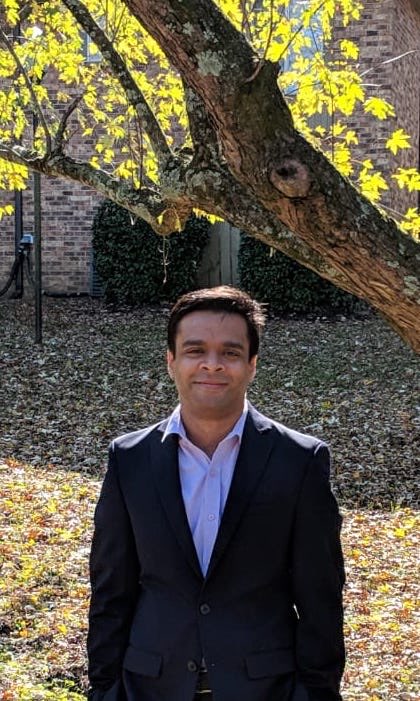
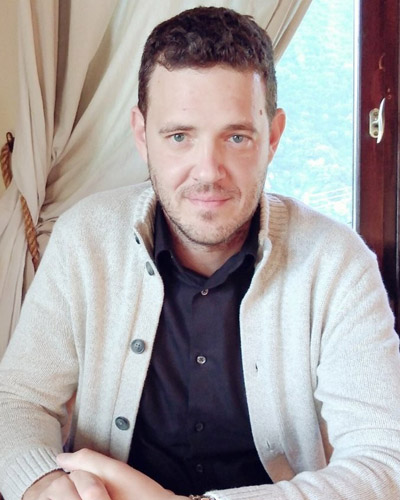
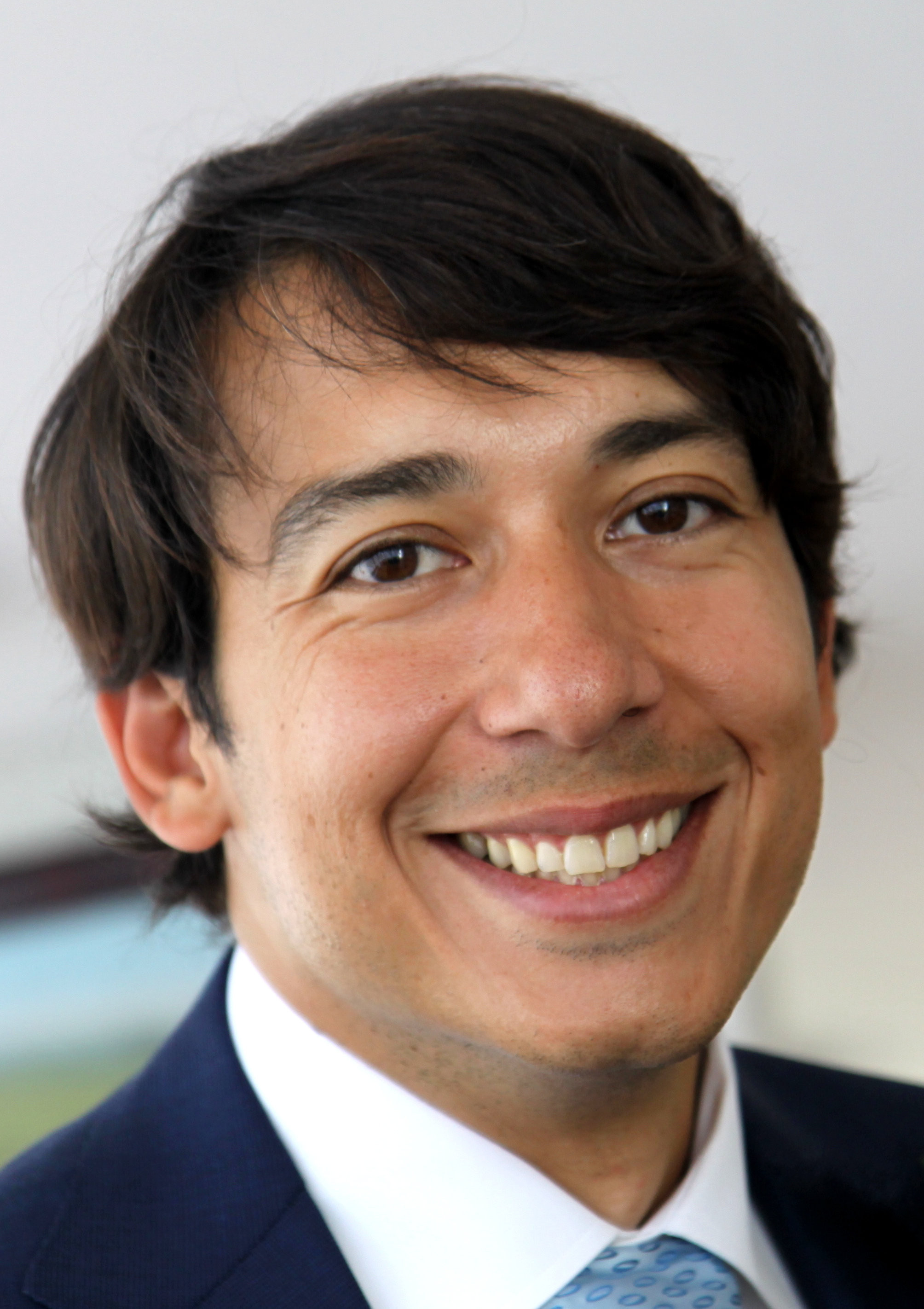
Dr. André Artelt is a researcher at the University of Bielefeld within the Faculty of Engineering and affiliated with the Machine Learning Group at the Center for Cognitive Interaction Technology (CITEC). His work focuses on Explainable AI (XAI), particularly counterfactual explanations, and their applications in critical infrastructure like water distribution networks. Current Research: Explainable AI Counterfactual explanations Water network monitoring Physics-informed graph neural networks Scientific Contributions: His recent publications explore reinforcement learning for water pump scheduling, scalable graph neural networks for water systems, and benchmark frameworks like EPyT-Flow. He investigates how training data affects explanation quality and develops tools for robust counterfactual reasoning. Awards: Project Lamarr Fellowship
Lena M. Lopez Bradley serves as Assistant Professor and Program Director for the Marital and Family Therapy MS program (on-campus and online) within the Counseling and Family Science department at Loma Linda University's School of Behavioral Health. Her extensive teaching portfolio spans clinical training, case presentation, law and ethics, and dissertation supervision across terms from 2020 through projected 2025 schedules. Her academic credentials include: PhD in Counseling and Family Science, Loma Linda University (2013) MS in Counseling and Family Science, Loma Linda University (2002) BS, University of California Riverside (2000) AA, Chaffey College (1998) Research focuses on integrating clinical family therapy with community health frameworks, particularly through the Promotora model for social change and evidence-based parenting interventions. Her work examines systemic applications of family therapy principles in employment navigation and relational dynamics, emphasizing social justice within therapeutic contexts. Publication analysis reveals progression from foundational clinical techniques (2018 parenting skills) toward societal-level systemic interventions (2025 Promotora framework), demonstrating evolving emphasis on community impact through family therapy lenses. No scientific awards were documented in source materials. As Principal Investigator for the completed 'Internal Wedding Planners' Perspective' study (2021), she investigated couples' relational dynamics during wedding planning. Her consistent supervision of dissertation and project research courses since 2020 confirms active graduate student mentorship in clinical and research domains. While no formal labs were specified, her presentations on three-tier supervision models ('Exploring student-faculty perspectives,' Fort Worth 2019; 'Systemic supervision process,' San Diego 2018) indicate structured clinical training frameworks.
Dr. Antoni Gili Pascual is a full Professor of Criminal Law at the Faculty of Law, University of the Balearic Islands (UIB). He holds the prestigious position of Catedrático de Universidad in the Department of Criminal Law and maintains an active teaching schedule across multiple campuses including Mallorca, Menorca, and Ibiza. His academic office is located in room DA218 on the second floor of the Gaspar Melchor de Jovellanos building. Professor Gili Pascual specializes in various aspects of criminal law including accessory crimes, statute of limitations, desistance, complicity, and private sector corruption. His research has been significantly influenced by international perspectives, with research stays at the Max Planck Institute for Foreign and International Criminal Law in Germany and the European University Institute in Italy. His scholarly work demonstrates consistent focus on theoretical aspects of criminal law with practical judicial applications. Professor Gili Pascual has served as a Substitute Judge at the Provincial Court of Balearic Islands from 2001 to 2014 and previously held the position of General Secretary of the University of the Balearic Islands. His publications reveal a career-long dedication to analyzing specific criminal law concepts within the Spanish legal framework while incorporating comparative perspectives. Professor Gili Pascual has been consistently active in competitive research projects through Spain's National Research Plan (Plan Nacional). His work shows particular interest in how theoretical criminal law concepts translate into practical judicial application, with notable contributions to understanding accessory crimes, criminal responsibility in multi-offender scenarios, and corruption in private sectors. As an educator, he teaches core criminal law courses and supervises final degree projects for law students across multiple campuses. His teaching responsibilities include the foundational course 'Criminal Law: Concept and Theory of Crime' and specialized courses like 'Criminal Law and Gender Violence' at the Master's level.
Dr. Ayan Mukhopadhyay serves as a Senior Research Scientist in the Department of Electrical Engineering and Computer Science at Vanderbilt University's School of Engineering. Previously, he was a Post-Doctoral Research Fellow at Stanford Intelligent Systems Lab where he received the 2019 CARS post-doctoral fellowship. His academic journey includes a Ph.D. from Vanderbilt University's Computational Economics Research Lab with a doctoral thesis nominated for the Victor Lesser Distinguished Dissertation Award 2020. His research spans critical domains in smart infrastructure systems with particular focus on: Developing robust decision-making frameworks for cyber-physical systems under uncertainty Creating multi-agent solutions for emergency response optimization Designing machine learning approaches for urban mobility and energy management Building proactive incident detection pipelines using heterogeneous data sources Analysis of his recent publications reveals strong thematic continuity in applying artificial intelligence to real-world infrastructure challenges, particularly in transportation systems, emergency response, and energy management. His work consistently bridges theoretical AI advances with practical implementation in smart city contexts, demonstrating expertise in both algorithmic innovation and systems integration. Award highlights include: CARS Post-Doctoral Fellowship (2019) Best Paper Award at ICLR's AI for Social Good Workshop Victor Lesser Distinguished Dissertation Award Nomination (2020) Dr. Mukhopadhyay leads significant research initiatives through ScopeLab, focusing on creating deployable solutions for public transit, emergency response, and energy systems. His work on vehicle-to-building charging, traffic incident localization, and equitable transit network design demonstrates commitment to solving high-impact urban challenges through rigorous computational methods. Current projects involve developing simulation environments for non-stationary environments (NS-Gym) and explainable planning frameworks integrating formal logic with large language models.
Evgeny Khorov is a Full Professor and Deputy Chair at Moscow Institute of Physics and Technology (MIPT) and Head of the Wireless Networks Lab at the Institute for Information Transmission Problems of the Russian Academy of Sciences (IITP RAS) and the Telecommunication Systems Lab at Higher School of Economics (HSE). His research focuses on 5G/6G systems , next-generation Wi-Fi , Wireless IoT , and QoS-aware optimization. Ph.D. (2012) and D.Sc. (2022) in Telecommunications from IITP RAS and MIPT Visiting Research Fellow at King's College London (2015) His work includes mathematical modeling of networking protocols, Wi-Fi standardization (IEEE 802.11), and contributions to Wi-Fi 6 (802.11ax) and Wi-Fi 7 (802.11be) . He supervises students and has co-authored over 200 papers. Recent articles highlight advancements in Wi-Fi 7/8 , URLLC , 5G multi-connectivity , and machine learning for traffic classification . Scientific Awards: Best Demo Award, ACM Mobihoc (2022) Best Paper Awards: IEEE ISWCS (2012), Elsevier Computer Communications (2018), IEEE PIMRC (2019) Moscow & Russian Government Prizes for Young Scientists (2013, 2016) Scopus Award Russia (2018) Best Cooperation Project Leader (multiple times) He serves as Editor-in-Chief of Problems of Information Transmission (since 2024) and chairs major IEEE conferences (Globecom 2018 Workshop, BlackSeaCom 2019).
Prof. Andreas Hotz serves as Music Director of the Opera School at the University of Music Würzburg since the summer semester of 2021. He is recognized as one of the outstanding conductors of his generation with an impressive career spanning major opera houses and orchestras across Europe and beyond. His professional trajectory includes: General Music Director at Theater Osnabrück (2012/2013 season onwards) First Kapellmeister at Staatstheater Mainz and Pfalztheater Kaiserslautern Lecturer in orchestral conducting at Frankfurt University of Music and Performing Arts (2005-2013) Extensive guest conducting engagements across Germany, Israel, Australia, Poland, Russia, and Korea Prof. Hotz's artistic focus centers on both preserving classical traditions and rediscovering neglected works. His repertoire spans from Mozart to contemporary compositions, with particular emphasis on bringing forgotten masterpieces back to contemporary audiences. His conducting portfolio includes major productions such as Elektra, Otello, Tannhäuser, Idomeneo, Così fan tutte, and Tristan und Isolde, alongside numerous opera premieres including Lohengrin, Falstaff, Dr. Faust (Busoni), Tosca, La Bohème, and Fidelio. His commitment to musical recovery is exemplified through projects like the excavation of Albéric Magnard's French opera GUERCOEUR, named 'Rediscovery of the Year 2019' by the opera world, and his recordings of works by Christian Westerhoff and Hans Gál's 'Lied der Nacht' (nominated for 'Opus Klassik'). His major recognitions include: Prizes at Sir Georg Solti International Conducting Competition and German Conductors' Competition Young Conductor of the Year nomination by Opernwelt (2015) German Record Critics' Prize for 'Beethoven in Stalingrad' DVD recording Multiple nominations for excellence in musical recovery and performance Prof. Hotz has collaborated with prestigious orchestras including the Bremen Philharmonic, Düsseldorf Symphony, Melbourne Victoria Symphony Orchestra, and Israel Sinfonietta. His 2015 concert tours with the Osnabrück Symphony Orchestra through Volgograd, Moscow, Kyiv, and Minsk promoted international understanding through music. Mentored by figures including Pierre Boulez, he continues to influence the next generation of musicians through his position at the University of Music Würzburg while maintaining an active international performance schedule.
Jonas Sjöberg is a Full Professor of Mechatronics at Chalmers University of Technology, where he leads the Mechatronic research group in the College of Engineering. His research spans multiple aspects of mechatronic systems with a strong focus on automotive applications. Sjöberg holds leadership roles in numerous research projects related to autonomous vehicles, vehicle control systems, and transportation safety. His research interests encompass a broad spectrum of mechatronics applications, with particular emphasis on model-based methods, signal processing, control systems, system identification, and optimization for design and product development of mechatronic systems. Sjöberg's work bridges theoretical control engineering with practical automotive applications, especially in the domains of Automotive Active Safety and Hybrid Electric Vehicles. Analysis of Sjöberg's recent publications reveals a strong research trajectory focused on autonomous vehicle technologies, with particular attention to vehicle dynamics control, intersection safety, road surface condition estimation, and optimization of vehicle maneuvers. His work demonstrates a consistent approach of applying advanced control theory to solve real-world transportation challenges, with increasing emphasis on machine learning techniques integrated with traditional control systems. Sjöberg actively supervises research and education at both undergraduate and graduate levels while leading multiple research projects funded by VINNOVA, the European Commission, and other organizations. His research group collaborates extensively with both academic institutions and industry partners in the automotive sector. His laboratory work focuses on mechatronic systems development, particularly for automotive applications including autonomous bicycles, bus docking systems, and vehicle control algorithms. The research group maintains strong connections with the automotive industry, particularly in Sweden's robust vehicle technology ecosystem.
Miltos Alamaniotis is an Associate Professor and GreenStar Endowed Fellow in the Department of Electrical and Computer Engineering at the University of Texas at San Antonio (UTSA). His research focuses on applied artificial intelligence in nuclear security, smart grids, and radiation detection systems, with a particular emphasis on maritime nuclear applications and nonproliferation. Academic Appointments: Associate Professor (2023–Present), UTSA Education: Ph.D. in Applied Intelligent Systems, Purdue University Research interests include: Nuclear Security and Nonproliferation Smart Grids and Distributed Energy Systems Explainable AI for Radiation Detection Quantum Machine Learning Applications Intelligent Control of Nuclear Reactors Fuzzy Logic in Energy Management Recent publications highlight trends in AI-driven nuclear security systems, matrix profile methods for radiation anomaly detection, and quantum neural networks for thermographic image analysis. His work bridges nuclear engineering, cybersecurity, and smart city technologies. Scientific honors include: Top 0.5% ScholarGPS Ranking (2024) Best Paper Award at IEEE Texas Power and Energy Conference (2025) Luthcher Brown Fellowship (2023) GreenStar Endowment Fellowship (2023) NAE Frontiers of Engineering Symposium Selection (2023) UTSA President’s Distinguished Achievement Award (2022) He has supervised PhD students like Thanos Arvanitidis and secured over $15M in grants from DOE, NSF, and NRC for projects including the $25M NNSA Consortium. His AI Lab at UTSA collaborates with Argonne, Idaho, and Los Alamos National Laboratories.
Michael M. Zavlanos is the Yoh Family Professor in the Thomas Lord Department of Mechanical Engineering and Materials Science at Duke University's Pratt School of Engineering. He also holds secondary appointments in the Department of Computer Science and the Department of Electrical and Computer Engineering. Currently serving as the Director of the Healthcare Systems Optimization program with Duke AI Health and as an Amazon Scholar with Amazon Robotics, his academic career spans control theory, optimization, and artificial intelligence with applications across multiple domains. Dr. Zavlanos received his educational foundation from prestigious institutions: Diploma in Mechanical Engineering from the National Technical University of Athens (NTUA), Greece (2002) M.S.E. in Electrical and Systems Engineering from the University of Pennsylvania (2005) Ph.D. in Electrical and Systems Engineering from the University of Pennsylvania (2008) His research program spans multiple interconnected domains, with a strong foundation in control theory, optimization, and learning methodologies . This theoretical work directly enables applications in robotics and autonomous systems , where his team develops algorithms for multi-robot coordination, motion planning under complex constraints, and network connectivity maintenance. A significant portion of his work addresses networked and distributed control systems , focusing on how multiple agents can coordinate effectively with limited communication. More recently, he has expanded his research into cyber-physical systems with healthcare applications, leveraging his expertise to optimize healthcare delivery systems through the Duke AI Health initiative. Dr. Zavlanos' work demonstrates a consistent trajectory from theoretical foundations to real-world applications. His early work established fundamental principles for maintaining connectivity in mobile robot networks, which evolved into more sophisticated approaches for temporal task planning and risk-averse decision making in uncertain environments. The most recent phase of his research integrates machine learning with traditional control theory to address complex healthcare system optimization problems. His significant contributions to the field have been recognized through prestigious awards: Office of Naval Research Young Investigator Program (YIP) Award (2014) National Science Foundation Faculty Early Career Development (CAREER) Award (2012) National Science Foundation Faculty Early Career Development (CAREER) Award (2011) Duke University Distinguished Faculty Rank (2019) Duke University Distinguished Professor designation (2018) As an educator, Dr. Zavlanos has taught courses including ME 627: Linear System Theory, ME 592: Research Independent Study, ECE 391/291: Projects in Electrical and Computer Engineering, and CEE 627: Linear System Theory. His research program has been supported by multiple grants from the National Science Foundation and the Office of Naval Research, enabling him to mentor numerous graduate students and postdoctoral researchers in the development of cutting-edge control and optimization algorithms. Dr. Zavlanos leads research efforts at the intersection of control theory, optimization, and artificial intelligence, with particular focus on translating theoretical advances into practical applications. His recent work with Duke AI Health represents a strategic expansion of his research portfolio into healthcare systems optimization, where he applies his expertise in algorithmic decision making to improve patient scheduling, resource allocation, and operational efficiency in medical settings. Through his Amazon Scholar role, he also contributes to advancing robotics technologies for real-world applications.
Abdelkader Mekhalef Benhafssa serves as a Teacher-Researcher at CESI Engineering School within the Engineering and Digital Tools research team. His work spans industrial engineering, robotics, and sustainable manufacturing systems. Education: Doctorate in Electrical Engineering (2017) Master's degree in Electrical Engineering specializing in Electrical Networks and High Voltage Techniques (2013) His research focuses on optimizing production systems through multi-agent simulations, human-robot collaboration in Industry 5.0 contexts, and energy-efficient manufacturing. Key areas include flow simulation, autonomous vehicle scheduling in logistics, and electrostatic separation techniques for plastic waste recycling. His experimental work examines tribocharging mechanisms and particle behavior in recycling processes. Publications reveal a strong trend toward human-centric manufacturing systems, with recent work (2023-2025) emphasizing collision avoidance algorithms, dynamic scheduling for autonomous vehicles, and energy-conscious production planning. Earlier research (2014-2018) established expertise in electrostatic separation for plastic waste recycling. Supervision & Projects: Supervised Kader Sanogo's 2024 thesis on optimizing transport tasks for collaborative robots in Industry 5.0 Currently supervising Nesrine Hebbadj's research (2024-2027) on human-centered production planning Leading DYNALOG project (2025-2027) on robotic intra-logistics systems His work integrates industrial engineering with environmental sustainability, particularly through advanced recycling technologies for plastic waste and energy-efficient production systems.
David Schubert serves as Professor of Voice and Department Chair in the School of Music at Wittenberg University, joining the faculty in 2007. He holds a D.M.A. from the University of Oklahoma and degrees from Baldwin-Wallace College and Boston University. His educational background: Baldwin-Wallace College Boston University University of Oklahoma, D.M.A. A distinguished baritone, Schubert specializes in English art song (particularly Gerald Finzi) and German Lieder, with extensive performance experience in opera roles including Faust and Don Giovanni. His research integrates vocal pedagogy with historical performance practices, emphasizing lyric diction and art song repertoire. He actively collaborates through the Doscher Vocal Quartet and international projects focused on United Kingdom music. Honors include the competitive 1994 NATS Internship Program selection. As Department Chair, he oversees curriculum development while maintaining an active performance schedule, including premieres like David Caudill's The Shepherd's Story. His mentorship extends to vocal coaching with renowned artists including George Shirley and John Wustman.
Pontus Ekberg is an Associate Professor at Uppsala University's Department of Information Technology. His email address is pontus.ekberg@it.uu.se , and he can be reached at +46 18 471 73 41. He is affiliated with the Division of Computer Systems and holds the academic merit 'Docent' in real-time scheduling theory. Ekberg's research focuses on algorithms and computational problems in real-time scheduling theory. His work addresses NP-hardness in scheduling, fixed-priority algorithms, and formal verification of task feasibility. Current projects include applying pseudo-polynomial time analysis, combating butterfly attacks, and integrating deep learning for schedulability verification in safety-critical systems. His recent publications span topics like pseudo-polynomial time analysis (2025), optimistic period predictions (2024), and explainability in real-time schedulability (2023). He collaborates frequently with Sanjoy Baruah and others on uniprocessor and multiprocessor scheduling models. Although no formal awards are listed, his contributions to real-time scheduling theory are evident through 15+ publications in top conferences like RTSS and ECRTS.
Nicolas Mansard is a permanent researcher at LAAS-CNRS in Toulouse, France, where he has been working since October 2008. He is a member of the Gepetto research group alongside Philippe Souères, Florent Lamiraux, Olivier Stasse, and Jean-Paul Laumond. He defended his Habilitation à Diriger des Recherches (HDR) in July 2013 on the topic of motion semiotics. In 2013, he was an invited researcher at Emo Todorov's lab at the University of Washington, Seattle. His research focuses on sensor-based control, particularly the integration of sensor-based schemes into humanoid robot applications. His work spans the intersection of robotics, automatic control, signal processing, and numerical mathematics, with humanoid robotics as his primary application field. Mansard has made significant contributions to hierarchical quadratic programming for fast online humanoid-robot motion generation, inverse dynamics control, and sensor-based control systems. Mansard has received prestigious awards including the CNRS Bronze Medal in 2015 and the Grand Prix de l'ANR in 2016 for his project ANR Entracte. His research has resulted in numerous publications in top robotics journals and conferences, with a focus on motion generation, control theory, and humanoid robotics applications. His work has been particularly influential in developing efficient algorithms for hierarchical task control and inverse dynamics. 2015 CNRS Bronze Medal for research in robotics Grand Prix de l'ANR in 2016 for project ANR Entracte Associate Editor for IEEE TRO since July 2013 Mansard has advised numerous PhD students including Justin Carpentier, Mathieu Geisert, Oscar Ramos, and Sovannara Hak. He has secured significant research funding including leading the ANR project ENTRACTE (starting November 2013) and serving as CNRS coordinator and work package leader for the FP7 EuRoc project. He has also taught courses in advanced robotics at Supaero, mathematics for motion generation at École Normale Supérieure, and experimental humanoid robotics at INSA, all in Toulouse. His research group has been involved in developing open-source software for motion generation, notably the Stack of Tasks framework, which has been widely adopted in the robotics community. His work on humanoid robot dance with HRP-2 demonstrated the practical applications of his theoretical contributions to motion generation and control.
Markus Richter serves as Professor of Horticultural Plant Production and Production Technology at the Berlin University of Applied Sciences (BHT), within Department V - Life Sciences and Technology. His academic career combines extensive industry experience with scholarly research, focusing on the practical application of botanical knowledge to solve horticultural challenges. Since joining BHT in 2008, he has established himself as a specialist in ornamental plant cultivation technology and precision irrigation systems. Prof. Richter earned his foundational education as a Horticultural Engineer from the Technical University of Applied Sciences Berlin (1987-1990), followed by an MSc in Technology of Crop Protection from the University of Reading (1990-1991). He completed his doctorate (Dr. rer. hort) at Humboldt University of Berlin between 1996 and 2001. Prior to his academic appointment, he gained valuable industry experience as a test engineer at the Chamber of Agriculture Westphalia-Lippe (1991-2003), and later as Head of the Horticultural Research Center in Münster-Wolbeck (2003-2006) and Head of ornamental plant trials at GBZ Straelen/Cologne-Auweiler (2006-2007). His research interests center on ornamental plant cultivation , technology in horticulture , and irrigation systems , with a particular emphasis on developing sensor-based solutions for resource-efficient plant production. Prof. Richter has pioneered work in photogrammetric monitoring systems for irrigation management, with applications spanning both greenhouse and field production environments. His expertise bridges plant physiology, engineering, and practical horticulture, addressing critical challenges in water conservation and plant health monitoring. Analysis of his recent publications reveals a dominant focus on the PLANTSENS research initiative, which has evolved through multiple phases (2017-2023). This work demonstrates a consistent trajectory toward increasingly sophisticated multi-sensor systems for detecting plant water stress and automating irrigation. His research spans agricultural engineering, plant physiology, and computer vision, with applications in both ornamental and vegetable production systems. A secondary research thread examines nutrient management issues in specialty crops like Helleborus and Hydrangea. At BHT, Prof. Richter actively supervises student theses on topics including sensor systems for irrigation management, growth control of ornamental plants, and sustainable production methods. His research has been supported through multiple projects, including the PLANTSENS project (2017-2020), PlantSens II (2020-2023), and ongoing doctoral research on Helleborus cultivation. He serves on the Training Commission and Audit Committee, and acts as an academic advisor and officer for recognition of academic achievements.
Alejandro Russo is a Professor at Chalmers University of Technology , specializing in Information Flow Control (IFC) , Secure Programming Languages , and Functional Programming . His research bridges theoretical foundations and practical implementations, focusing on mitigating timing channels , covert channels , and data leakage in concurrent systems. Developed novel frameworks for Differential Privacy with provable accuracy bounds Pioneered COWL integration for browser security and instruction-based scheduling to prevent cache timing attacks Led major projects like HIPSTER (hybrid static/dynamic IFC) and AppFlow (practical IFC deployment) His publications reveal expertise in security libraries for Haskell and Python , with a focus on faceted execution , label manipulation , and mechanized security proofs . Students under his supervision have explored topics ranging from secure eDSLs to privacy-preserving compilation techniques . Scientific awards : Google Research Award (2011) for Python taint analysis Advising and grants : Principal Investigator for VR , STINT , and Google Research Award Supervised 12+ PhD and Master’s students in security and functional programming research