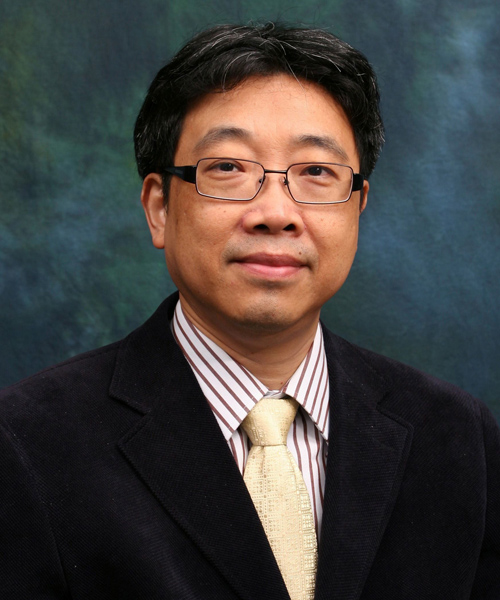
Jan Madsen is a Professor at DTU Compute, Technical University of Denmark, and Head of the Embedded Systems Engineering section. His research focuses on system-level modeling and design of embedded computing systems, particularly cyber-physical systems, microfluidic biochips, and synthetic biology applications. Develops design automation tools and methodologies for embedded systems Supervises numerous PhD students and leads major research projects Research Interests Key areas include: Embedded systems-on-a-chip Cyber-Physical Systems (Internet-of-Things) Microfluidic Lab-on-Chip devices Synthetic biology with molecular computing Design, modeling, and optimization of complex systems Scientific Awards DATE Fellow (2019) IEEE CEDA Outstanding Recognition (2019) DTU Scientific Advise Award (2013) Best Paper Awards at MECO (2013) and CASES (2009) Jorck’s Foundation Research Award (1995) Publications His 14+ journal papers and 115+ conference papers demonstrate expertise in: SystemC-based modeling frameworks Energy-aware sensor networks Self-healing eDNA architectures Microfluidic biochip synthesis RTOS modeling and MPSoC exploration
Illya V. Hicks is a Professor in the Computational and Applied Mathematics Department at Rice University. He holds a PhD from Rice University (2000) and a BS from Texas State University (1995). His research focuses on combinatorial optimization, integer programming, graph theory, and matroid theory, with applications in social networks, cancer treatment, and network design. He has advised numerous doctoral, post-doctoral, and masters students. Education: PhD and MA in Computational and Applied Mathematics, Rice University, 2000 BS in Mathematics, Texas State University, 1995 Research Interests: Utilizing graph decomposition techniques to solve NP-complete problems, including branch decompositions and matroid circuit problems. Applications include sensor network design, healthcare logistics, and algorithmic graph theory. Awards: Recognized with the 2015 Presidential Mentoring Award (Rice University), 2010 Forum Moving Spirit Award (INFORMS), and the 2005 Optimization Prize for Young Researchers. Grants and Projects: Includes NSF-funded research on branch decomposition techniques, submodular optimization, and healthcare service distribution. Active in promoting minority participation in operations research through travel grants and mentoring initiatives. Labs/Teams: Engaged in collaborative research on graph algorithms, combinatorial optimization, and interdisciplinary applications in healthcare and engineering.
Amit Kumar is the Jaswinder and Tarwinder Chadha Chair Professor in the Department of Computer Science and Engineering at IIT Delhi. His research focuses on combinatorial optimization, online algorithms, and algorithmic fairness. He has taught courses such as Approximation Algorithms (COL 754), Design and Analysis of Algorithms (COL 351), and Numerical Analysis (COL 726). His work spans theoretical computer science with applications to clustering, scheduling, and fairness in evaluation processes. Research Interests Kumar's research emphasizes developing efficient algorithms for online and dynamic settings, particularly in constrained optimization and biased evaluation systems. He explores theoretical foundations of clustering, load balancing, and resource allocation, with recent contributions to fair food delivery systems and coreset constructions. Publications His recent work includes advancements in online convex paging (STOC 2025), consensus clustering (SODA 2025), and fairness-aware algorithms (AAAI 2024). Over 70 papers across top venues like STOC, SODA, and ICML reflect his expertise in algorithm design and analysis. Awards Best Paper Award at ISAAC 2023 for 'Clustering What Matters in Constrained Settings' Teaching & Mentorship Kumar instructs graduate and undergraduate courses in algorithms, data structures, and numerical methods. He advises students through these courses and collaborates with researchers on NSF-funded projects related to approximation algorithms and streaming systems.
Dr. Nanpeng Yu is a Full Professor at the University of California, Riverside , serving as Vice Chair and Graduate Advisor in the Department of Electrical and Computer Engineering . He maintains cooperative faculty affiliations with the Department of Computer Science and Department of Statistics , and directs the Energy, Economics, and Environment Research Center at UCR. Education : B.S. in Electrical Engineering from Tsinghua University (2006), M.S. in Electrical Engineering and Economics, and Ph.D. from Iowa State University (2010) Prior Industry Experience : Senior Power System Planner and Project Manager at Southern California Edison (2011-2014) Dr. Yu’s research bridges smart grid technologies , data-driven optimization , and machine learning for energy systems. Key areas include voltage control , renewable energy integration , transportation electrification , and grid resilience . His recent work focuses on physics-informed graph learning for unit commitment problems and adversarial purification in power system classifiers. The AI-Energy Nexus Laboratory under Dr. Yu has produced impactful publications in Applied Energy , IEEE Transactions on Power Systems , and Transportation Research series, covering topics like heavy-duty EV charging infrastructure and dynamic distribution network reconfiguration . Lab members have won the American-Made Digitizing Utilities Grand Prize ($300,000) from the U.S. DOE. Leadership Roles : Chair, IEEE Power and Energy Society Distribution System Operation and Planning Subcommittee Chair, IEEE Power and Energy Society Working Group on Data-Driven Modeling for Power Distribution Networks Associate Editor, IEEE Transactions on Smart Grid and IEEE Power Engineering Letters Scientific Awards : Regents Faculty Fellowship Regents Faculty Development Award Multiple IEEE Best Paper Awards
Daniel Adelman is the Charles I. Clough, Jr. Professor of Operations Management at the University of Chicago Booth School of Business. He joined the faculty in 1997 after completing his PhD in industrial engineering and operations research at Georgia Tech. Adelman is a leading expert in Business Analytics and Management Analytics, helping companies deploy data and decision analysis to build world-class strategic and tactical management capabilities. Adelman received his PhD in industrial engineering and operations research in 1997, along with a bachelor's degree in industrial engineering and a master's degree in operations research, all from the School of Industrial and Systems Engineering at the Georgia Institute of Technology. Daniel Adelman's research focuses on applying analytical models to solve complex business problems across multiple industries. He has worked with firms from diverse sectors including internet services, chemical distribution, airlines, third party logistics, fiber-optics manufacturing, semiconductor manufacturing, oil, and healthcare. His research integrates real-world data with analytical models to bring structure and discipline to decision and control processes, enabling firms to achieve higher profits with lower risk. Adelman's recent work has concentrated heavily on healthcare analytics, where he leads the Healthcare Analytics Laboratory at Chicago Booth. This lab works with teams of doctoral and MBA students on projects with major healthcare institutions to optimize clinical, operational, and financial outcomes. His research spans foundational operations research including approximate dynamic programming, inventory theory/supply chain management, and revenue management/pricing optimization, as well as examining the linkage between operational performance metrics and financial performance of firms. Adelman's publications show a clear trend toward increasing focus on healthcare applications while maintaining strong theoretical foundations in operations research. His earlier work focused more on general operations management problems like inventory control and supply chain optimization, while his recent publications demonstrate a strategic shift toward healthcare analytics, particularly examining surgical team dynamics, hospital performance metrics, and resource allocation during public health emergencies like the COVID-19 pandemic. George B. Dantzig Prize (1998) for the best dissertation in operations research and management sciences that is innovative and relevant to practice Adelman regularly advises doctoral and MBA students through the Healthcare Analytics Laboratory at Chicago Booth. He has served as Associate Editor for Management Science, currently serves as Associate Editor for Manufacturing and Service Operations Management, and is the Area Editor for Operations and Supply Chain at Operations Research. His industry collaborations include significant projects with Akamai on internet pricing, with GE Global Research Labs on the electricity smart grid, with BP on gasoline supply contract portfolio optimization, and with Symantec on software release planning. Adelman leads the Healthcare Analytics Laboratory at Chicago Booth, which brings together interdisciplinary teams of doctoral and MBA students to work on a portfolio of projects with major healthcare institutions. The lab focuses on optimizing clinical, operational, and financial outcomes through advanced analytics and decision modeling.
Phuong H. Nguyen is an Associate Professor at the Department of Electrical Engineering at Eindhoven University of Technology (TU/e). He leads the digital Power & Energy Systems (digi-PES) lab, focusing on smart energy systems, distributed control, and IoT integration for future energy grids. His research addresses energy transition challenges, including microgrid optimization, flexibility markets, and data-driven grid management. Nguyen holds a PhD from TU/e (2010) and has held visiting researcher positions at Clemson University. His work contributes to UN SDG goals related to affordable and clean energy. Education: Bachelor's in Electrical Engineering, Hanoi University of Science and Technology (2002) Master's in Electrical Engineering, Asian Institute of Technology (2004) PhD in Electrical Engineering, TU/e (2010) Key Research Areas: Smart Grids and Cyber-Physical Systems Distributed Energy Resource Management Local Energy Markets and Flexibility Provision IoT and Big Data in Energy Systems Awards & Recognition: Best Paper Award SEST 2020 Projects & Grants: REACT-D: Reactive Power Management (Project Manager) Al-driven Applications to Smarten Power System Operation (Project Lead) UNIversity Campus as a Self-Regulated Network (Co-Manager) Labs & Teams: The digi-PES lab develops cyber-physical tools for energy transition, including microgrid simulations, flexibility markets, and grid resilience strategies.
Chen Li is a Professor in the Department of Computer Science at the University of California, Irvine (UCI), affiliated with the Donald Bren School of Information and Computer Sciences (ICS). He holds a Ph.D. from Stanford University and bachelor's and master's degrees from Tsinghua University. His research focuses on data management, including databases, query optimization, machine learning systems, and open-source tools like AsterixDB and Texera. He has received prestigious awards such as the NSF CAREER Award and IEEE Fellow recognition. Li is also a board member of the VLDB Endowment and the former Faculty Director of UCI's ICS Master of Computer Science Program. Education: Ph.D., Computer Science, Stanford University M.S. and B.S., Computer Science, Tsinghua University Research interests span next-generation databases, approximate query processing, and AI-driven data analytics. Notable contributions include the Texera system for collaborative data science workflows and the Apache AsterixDB project. He has led NIH-funded initiatives in diabetes research and pandemic prediction, emphasizing real-world applications of data science. Professional roles include PC co-chair of VLDB 2015, General Co-chair of SIGMOD 2027, and a visiting research scientist at Google. His awards highlight his impact in both academia and industry. Advising and mentoring are central to his career, with a focus on graduate education. He has pioneered outreach programs like DS4ALL to teach high-school students data science using Texera.
Allen Murphree is an Assistant Professor in the Department of Civil, Construction, and Environmental Engineering at the University of Alabama at Birmingham (UAB). He joined UAB as a full-time faculty member after over 24 years of professional experience in civil engineering, construction management, and architectural fields. His teaching and research focus on construction engineering and management, including specialized areas such as construction project management, risk management, safety, ethics, scheduling, estimating, and Building Information Modeling (BIM). Education: B.S., Architectural Engineering M.S., Civil Engineering (Construction Management) Certifications: Alabama Licensed Contractor, Georgia Engineer Intern, Certified Professional Building Designer (CPBD), and additional industry certifications. Dr. Murphree's expertise bridges academia and industry, emphasizing practical applications in construction project lifecycle management. He is actively involved in graduate education within the Construction Engineering Management (CEM) track and maintains an office in Hoehn Engineering Building, Room 310.
Dr. Ahmet Acar is an Associate Professor at the Department of Biological Sciences, Middle East Technical University (METU), Ankara, Turkey. He leads the Cancer Precision Medicine and Drug Resistance Laboratory, focusing on understanding mechanisms of drug resistance in cancer. His research integrates experimental models, next-generation sequencing, and deep learning to address clinical challenges in cancer therapy. Dr. Acar holds a B.Sc. from METU's Biological Sciences department and a Ph.D. from the Cancer Research UK Manchester Institute. He completed postdoctoral training at the Institute of Cancer Research, London, and the University of Manchester. Research Interests: Drug resistance mechanisms, precision oncology, tumor microenvironment modeling, patient-derived organoids, computational pathology, and evolutionary cancer biology. His lab develops 2D/3D co-culture systems, PDO biobanks, and AI-driven histopathology tools to improve treatment strategies. Recent Work Trends: Recent publications emphasize tumor evolution modeling, matrix mechanics in drug resistance, and AI applications in histopathology. Collaborations with hospitals in Turkey and Europe support PDO biobank initiatives. His team explores evolutionary steering strategies to exploit collateral drug sensitivities. Labs/Teams: Precision Medicine and Drug Resistance Lab at METU focuses on interdisciplinary approaches combining wet-lab experiments with computational methods. Current projects include ex vivo tumor modeling and AI-driven diagnostic tools for oncology.
Ferdinando Fioretto is an Assistant Professor of Computer Science at the University of Virginia, leading the Responsible AI for Science and Engineering (RAISE) group. His research focuses on foundational challenges in AI, privacy, fairness, and the intersection of machine learning and optimization. He holds a dual PhD in Computer Science from the University of Udine and New Mexico State University. Affiliations: University of Virginia (current), Syracuse University (former), Georgia Institute of Technology (postdoc), University of Michigan (research fellow) Education: PhD (Udine & NMSU), B.S. (University of Parma) Research Interests: Machine Learning, Responsible AI, Optimization, Differential Privacy, Algorithmic Fairness. His work emphasizes practical applications in energy systems, court scheduling, and privacy-preserving machine learning. Recent projects include neuro-symbolic diffusion models, fairness-aware optimization, and privacy guarantees in LLMs. Grants & Funding: NSF CAREER Award, Google Faculty Research Award, Amazon Research Award, NVIDIA Academic Grant, and grants from the LaCross Institute and 4-VA. His group collaborates with institutions like George Mason University and Virginia Tech. Key Awards: NSF CAREER (2022), IJCAI Early Career Spotlight (2022), Caspar Bowden PET Award (2022), ACP Early Career Researcher Award (2021) Labs/Teams: RAISE group at UVA, focused on trustworthy AI, fair optimization, and privacy-preserving systems. Active in organizing workshops like NeurIPS Algorithmic Fairness and AAAI Privacy-Preserving AI.
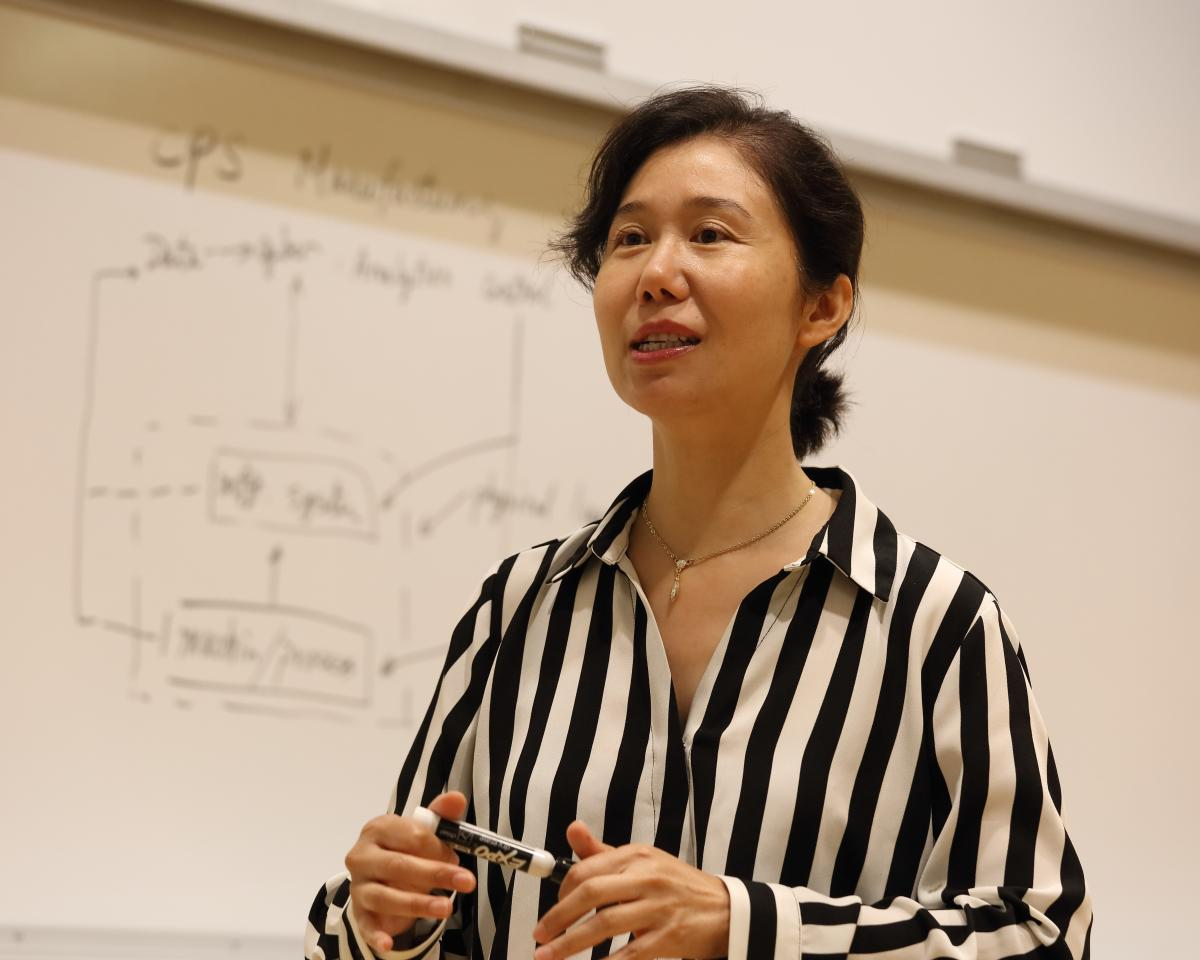
Qing (Cindy) Chang is a Professor in the Department of Mechanical and Aerospace Engineering at the University of Virginia, where she directs the Intelligent Systems Lab. She joined UVA in 2019 after serving as an associate professor at Stony Brook University. Prior to academia, she spent a decade at General Motors R&D, receiving their highest innovation awards. Education: M.S. from University of Wisconsin-Madison Ph.D. in Manufacturing from University of Michigan Research Focus: Chang's work integrates math-based modeling and data-driven methods to optimize manufacturing systems. Key areas include: Adaptive control and machine learning for production efficiency Human-robot collaboration frameworks Sustainable manufacturing through energy management Real-time control of cyber-physical production systems Reinforcement learning applications in industrial automation Research Trends: Her recent publications (2024-2025) demonstrate strong focus on AI-driven manufacturing optimization, with 80% leveraging reinforcement learning/LLMs for robotic control. Key themes include multi-agent coordination (67% of papers), energy efficiency (53%), and flexible production systems (47%). Awards & Recognition: Inducted as SME Scholar (2024) 20 Most Influential Professors in Smart Manufacturing - SME (2020) NSF CAREER Award (2014) Three-time GM Boss Kettering Award winner (2005,2006,2008) ASME and SME Fellow Leadership & Funding: Serves on NAMRI/SME Board of Directors with editorial roles across ASME/IEEE/SME journals. Research supported by NSF (including CAREER), Department of Energy, and multiple industry partners. Leads projects on human-robot collaboration and sustainable manufacturing. Lab & Collaboration: Directs the Intelligent Systems Lab at UVA, focusing on industrial AI applications. Collaborates with automotive and energy sectors to translate research into practical solutions for smart factories.
Kostas Bekris is a Professor in the Department of Computer Science at Rutgers University, specializing in Robotics and Artificial Intelligence. His research focuses on motion planning, autonomous manipulation, and robot control, with notable contributions to tensegrity robotics, perception-driven systems, and large-scale package handling. He leads a team conducting groundbreaking work in robotics, supported by grants from NSF, NASA, and industry collaborators like ExxonMobil. His group emphasizes interdisciplinary approaches, combining machine learning, topological methods, and differentiable physics modeling to advance robot capabilities in complex environments. Education details are not explicitly stated in the provided texts, but his academic career has included significant mentorship of PhD students and postdoctoral researchers. Key projects involve vision-driven manipulation pipelines, obstacle detection systems (PROBE), and resilient robot designs inspired by biological structures. He has been recognized for his work through prestigious awards including the NASA Early Career Grant and multiple NSF grants, as well as team achievements in robotics competitions like the Amazon Picking Challenge. Research interests span robotics subfields such as: Autonomous manipulation in cluttered environments Learning-based control for dynamic systems Topological data analysis for motion reasoning Tensegrity and soft robotics architectures Sim-to-real transfer in robotic tasks His team's work has produced open-source software tools and datasets, advancing benchmarks in manipulation and perception. Recent articles emphasize scalable solutions for industrial automation and robust navigation strategies in unstructured settings. Scientific achievements include: Development of PROBE for proprioceptive obstacle detection Advances in differentiable physics engines for tensegrity systems NSF-funded projects on robotic rearrangement and modular morphologies Advising contributions span over a decade, with current advisees focusing on topics like non-prehensile manipulation and large-scale storage optimization. Collaborations with industry (e.g., ExxonMobil) and academic partners (Yale University) reflect his commitment to applied robotics research. Labs and teams under his leadership include the Rutgers CS Robotics Group, contributing to projects like the ARIAC challenge platform and packing/industrial automation systems. Future work targets improved robot resilience in disaster scenarios and enhanced human-robot collaboration paradigms.
Cao Jiannong is currently a Chair Professor and Director of the University Research Facility in Big Data Analytics at Hong Kong Polytechnic University . He has held academic roles including Assistant Professor at City University of Hong Kong and University Lecturer at the University of Adelaide and James Cook University. His research spans Cloud and Edge Computing , Parallel and Distributed Systems , Big Data Analytics , and Wireless Sensing . Ph.D. in Computer Science, Washington State University (1990) MSc in Computer Science, Washington State University (1986) BSc in Computer Science, Nanjing University, China (1982) His work focuses on solving theoretical and practical challenges in distributed computing , mobile cloud systems , and wireless sensor networks . Recent projects include coupled network embedding models for heterogeneous networks and SDN architectures for vehicular communication. His research also pioneers WiFi-based non-invasive health monitoring and fault-tolerant sensor deployment for structural health applications. Dr. Cao's publications highlight advancements in network embedding , edge computing , and WSN optimization . Key papers address multi-user computation partitioning , energy-efficient SHM systems , and consensus protocols for mobile networks. These works have been cited over 15,000 times, with an h-index of 60. Ministry of Education (China) Natural Science Award (2018) Distinguished Member, ACM (2017) Fellow, IEEE (2014) Best Paper Awards at IEEE DSAA, SMARTCOMP, and WCNC Dr. Cao has advised multiple PhD students, including Linchuan Xu and Weigang Wu , whose research on WSN-based SHM and coupled network embedding has practical impact. His leadership includes directing Hong Kong Polytechnic University's Big Data Research Facility and serving on technical committees for IEEE INFOCOM and ACM/IEEE conferences.
Marco Platzner is a Professor for Computer Engineering at Paderborn University , Germany. He serves as the Dean of Research for the Faculty of Computer Science, Electrical Engineering and Mathematics and heads the Department of Computer Science. Previously, he held research positions at ETH Zurich, Stanford University, GMD (now Fraunhofer IAIS), and Graz University of Technology. Education: Diploma and PhD in Telematics (Graz University of Technology, 1991 and 1996), Habilitation in Hardware-Software Co-Design (ETH Zurich, 2002) Research Interests focus on reconfigurable computing, approximate computing, self-* computing, and embedded systems. His work addresses hardware security, FPGA design, and sustainable AI in data centers. Current projects include energy-efficient AI through deep neural network approximation for FPGAs (EKI-App) and lifecycle sustainability of socio-technical systems (SAIL). Publication Trends show expertise in FPGA security, approximate circuit synthesis, robotics, and hardware acceleration. Collaborations span robotics (ROS 2 integration), AI (transformer optimization), and cybersecurity (Trojan detection). Scientific Awards: ACM SIGDA Hall of Fame (2020) Significant Paper Award (FPL 2015) Best Paper Awards at IEEE ISVLSI (2024), ARC (2018), IEEE ReConFig (2015), and others Weierstraß Prize for Teaching (2008) Leadership Roles include membership in the board of Paderborn Center for Parallel Computing (PC2) and the Jenny Aloni Centre for Early Career Researchers. He has contributed to EU FP7 FET project EPiCS and German priority programs on embedded systems and organic computing.
Pinar Keskinocak serves as the H. Milton and Carolyn J. Stewart School Chair and Professor in the H. Milton Stewart School of Industrial and Systems Engineering at the Georgia Institute of Technology. She co-founded and directs the Center for Health and Humanitarian Systems, demonstrating leadership in both academic administration and research innovation. Her career includes prior roles as College of Engineering ADVANCE Professor and interim associate dean for faculty development, alongside industry experience at IBM T.J. Watson Research Center. Her educational foundation includes a Ph.D. in Operations Research from Carnegie Mellon University and M.S. and B.S. degrees in Industrial Engineering from Bilkent University. This rigorous training underpins her interdisciplinary approach to complex societal challenges. Dr. Keskinocak's research pioneers operations research applications for societal impact , with dual emphases on health systems and humanitarian logistics . She develops advanced models for infectious disease dynamics (including COVID-19, malaria, and Guinea worm), vaccination strategies, disaster response, and supply chain optimization. Her work uniquely bridges engineering analytics with real-world implementation through partnerships with the CDC, American Red Cross, Carter Center, and Children's Healthcare of Atlanta. Analysis of her 2023-2025 publications reveals intensifying focus on eradication program modeling for polio and Guinea worm, with increasing integration of machine learning for predictive accuracy in vaccine distribution. A pronounced trend addresses health equity through targeted interventions for under-immunized populations in Sub-Saharan Africa, emphasizing resource allocation under constraints and cross-border coordination challenges. Her scientific recognition includes: INFORMS Fellow (2015) NSF CAREER Award (2001) Outstanding Professional Education Award, Georgia Tech (2018) Denning Award for Global Engagement, Georgia Tech (2016) Women in Engineering Excellence Teaching Award (2005) Moving Spirit Award, INFORMS (2005) Dr. Keskinocak has secured extensive project funding through collaborations with federal agencies and NGOs, directing research on pandemic response systems, vaccine logistics, and disaster debris management. While specific advisees aren't publicly cataloged, her leadership in the Center for Health and Humanitarian Systems mentors numerous graduate researchers through interdisciplinary projects. She significantly influences national policy via National Academies committees addressing supply chain resilience and vaccine distribution infrastructure. The Center for Health and Humanitarian Systems operates as a dynamic hub where engineering rigor meets humanitarian action, coordinating multi-institutional teams to develop deployable solutions for global health crises and disaster response systems.