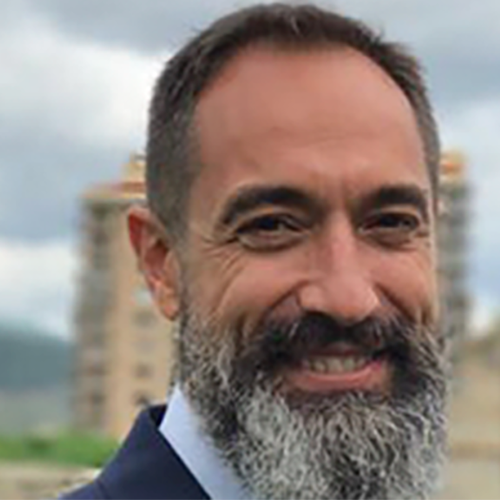
Flavio Vasconcellos Comim is a Full Professor at IQS School of Management in Barcelona, Spain, holding the Chair of Ethics and Christian Thought (intercenter). His research focuses on the intersections of Sustainability, Economics, and Ethics. Fields of Interest : Human Development, Capability Approach, Social Exclusion, Regional Development, AI Ethics, Poverty Stigma (Aporophobia), Sustainable Development, Social Welfare, Justice, and Happiness. Recent research includes publications on youth HDI in Spain (2025), AI bias against the poor (2024), and critiques of Sen's social choice theory (2024). He leads projects like Big data applied to the study of aporophobia and Population Medicine and Sustainable Development collaborations with China. His academic output spans journals like Regional Studies , AI and Society , and Cambridge Journal of Regions, Economy and Society , with keywords spanning Economics, Machine Learning, Human Development, and Social Justice. No formal students or awards are listed in available records.
Roberto Berjón Gallinas is a Professor at the School of Computer Science, Deusto University. His research focuses on semantic technologies, internet of things, and data integration, with a strong emphasis on mobile applications and open data. He leads two research groups: ICS (Innovación en Ciencias Sociales) MARATON (Mobile applications, internet of things, data processing, semantic technologies, open data) His recent work includes developing smart tracking frameworks for IoT workflows and digital twins, event-driven architectures for IoT systems, and semantic integration solutions for university research. His projects often bridge technical innovation with practical applications in collaborative e-learning and spatial analytics. Key trends in his publications highlight advancements in IoT frameworks , semantic technologies for data integration, and real-time systems using BLE and open data. These works frequently intersect with collaborative e-learning , university transparency , and adaptive mobile platforms .
Alberto Navarro Garcia serves as Full Professor of Financial and Tax Law in the Department of Public Law at the Faculty of Law, University of Girona, while concurrently holding the position of Deputy to the Rector for Electronic Administration and Digital Transformation. He also collaborates as a professor at the Open University of Catalonia (UOC). His academic foundation includes a Doctor of Law from the University of Girona, honored with the Extraordinary Doctorate Award in 2014. Dr. Navarro Garcia's research centers on Tax Law and Financial Law with critical applications in Public Finance, particularly examining fiscal policies for housing rights preservation, tax mechanisms for affordable housing, urban economic promotion area (APEU) financing, municipal finance sustainability, and tax justice frameworks. His work integrates legal theory with actionable policy solutions for contemporary urban fiscal challenges. Research Group on Public Law Analysis: special reference to financial and tax law Consolidated Interuniversity Research Group on Tax Law (IDEF), recognized by Generalitat de Catalunya His scholarly excellence is evidenced by the Extraordinary Doctorate Award (2014) and two six-year research degrees from the Agency for the Quality of the University System of Catalonia (AQU). Dr. Navarro Garcia has supervised two doctoral theses (on taxation of telework and cross-border workers) and over sixty master's theses in public law and tax management. He currently contributes to a Ministry of Science and Innovation-funded project titled "A multidimensional approach to housing: an approach from tax law and public spending" and maintains active collaborations with public administrations through competitive research initiatives.
Astrid Wagner is a Senior Scientist and Deputy Director at the Institute of Philosophy (IFS) of the Spanish National Research Council (CSIC) in Madrid. She holds a PhD in Philosophy from Technische Universität Berlin, recognized by the National University of Distance Education (UNED), and previously served as professor for 20 years at TU Berlin. Her research focuses on philosophy of culture, science epistemology, and digital society challenges. Key interests include philosophy of language, perception phenomenology, pragmatism, and ethical implications of digital transformation. Recent work examines uncertainty dynamics, trust frameworks, post-truth phenomena, infodemics, conspiracy theories, cognitive vulnerability, and digital citizenship. Wagner leads major research initiatives including the INconRES project on ethical-epistemological keys to digital social dynamics (2021-2025), the ORTEGA-CM interdisciplinary innovation consortium on José Ortega y Gasset's legacy (2024-2026), and previously directed the RESPONTRUST project combating COVID-19 disinformation (2021-2023). She co-leads the DESTERRA project analyzing disinformation's societal foundations (2022-2025) and participates in UCM's Rationality, Knowledge and Action research group. She serves on Spain's Committee of Experts for National Security against disinformation, advises the Congressional Science Office, and holds editorial positions at the Journal of Ortega Studies. Wagner contributes to GENET Association's Gender Studies Network and juries for the Princess of Asturias Award and Javier Muguerza Philosophy Prize.
Miguel Ángel Bernal Merino serves as a Part-Time Lecturer in the Department of Modern Philology, Translation and Interpretation at the University of Las Palmas de Gran Canaria. Concurrently, he acts as convener of the MA in Translation at the University of Roehampton in London, managing its Specialised Translation, Audiovisual Translation, and Intercultural Communication pathways since 2005. His academic profile bridges theoretical research and industry application in localization disciplines. PhD in The Localisation of Video Games, Imperial College London MSc in The Localisation of Multimedia Interactive Entertainment Software, Imperial College London Certificate in Software Localisation, University of Limerick CELTA, University of Cambridge MPhil in Lip-Synched Dubbing, Universidad de Alicante MA in Hispanic Literature, University of Rhode Island BA in English & Spanish Linguistics, Universidad de Alicante Bernal Merino's research pioneers the expansion of Translation Studies into interactive media domains. His work on video game localization examines interactivity, cultural adaptation, glocalisation, and playability, while his audiovisual translation research investigates creativity in lip-synched dubbing, subtitling, and audiodescription. He extends these frameworks into gaming-based language learning through haptic environments and multisensory reinforcement, exploring physiological aspects of multilingual cognition and polysemiotic neural networks. This multidisciplinary approach fundamentally challenges traditional boundaries in translation theory. His publication trajectory reveals evolving industry-academia integration, shifting from foundational game localization frameworks (2008-2015) toward user-centered research and educational applications (2018-2024). Recent work emphasizes measurable business impacts through quality localization, regional market adaptations, and crowd-sourced methodologies, demonstrating consistent influence on professional standards across gaming and translation sectors. Fellow of the Higher Education Academy Bernal Merino supervises doctoral research on mobile game localization, transmedia fan experiences, and historical game content translation while developing industry-academia pipelines through projects like AHRC's Media Across Borders. His funded initiatives—including Maximising ROI through Quality Game Localisation and Video Games for Language Learning—bridge theoretical innovation with commercial implementation, focusing on glocalisation strategies, interactivity metrics, and playability optimization. These collaborations connect European universities, gaming studios, and localization service providers. As chair of the IGDA Localization SIG and member of GIR Discourse, Communication and Society, he directs international forums for game localization discourse. His work with Routes into Languages promotes audiovisual media in language education, while REF-readiness collaborations enhance research excellence across European institutions through his professional network spanning industry conferences like GDC Summit and Game Global.
Carlos Alvarez Martinez is a faculty member at the Universitat Politècnica de Catalunya (UPC), affiliated with the Department of Computer Architecture at the Barcelona School of Informatics (FIB). He is a key member of the Programming Models (PM) research group and collaborates closely with the Barcelona Supercomputing Center (BSC). His research focuses on high-performance computing, FPGA acceleration, task-based programming models like OmpSs, and hardware-software co-design for heterogeneous systems. His research interests center on advancing parallel computing through innovative programming models and hardware acceleration. He investigates efficient task scheduling, resource management in multicore and FPGA-based systems, and runtime support for dataflow models. His work enables high-performance execution of complex applications in domains such as scientific computing and cyber-physical systems. He actively contributes to European initiatives like TEXTAROSSA and AXIOM, aiming to develop next-generation exascale supercomputing technologies. The trend in his recent publications shows a strong focus on leveraging FPGAs for HPC, optimizing SpMV operations, improving task scheduling with hardware support, and developing frameworks for multi-FPGA clusters. His work consistently bridges theoretical models with practical implementations, emphasizing performance, scalability, and energy efficiency in heterogeneous computing environments. Scientific Awards: Premi UPC al Compromís Social 2019 Premi Disseny per al Reciclatge 2013 Alvarez Martinez has advised or collaborated with several doctoral students, including Jaume Bosch, Xubin Tan, and Fahimeh Yazdanpanah. He has been involved in numerous competitive R&D projects, often related to high-performance computing and parallel programming models. His work includes significant contributions to educational innovation, particularly in active learning methodologies and formative assessment using interactive systems. He leads and participates in research labs and teams focused on programming models and computer architecture, notably the PM group at UPC/BSC. These teams develop runtime systems, compilers, and hardware accelerators to push the boundaries of parallel computing efficiency and programmability.
Luis Botella Garcia Del Cid is a Full Professor at the Department of Psychology and Speech Therapy, Faculty of Psychology, Educational Sciences and Sports, Ramon Llull University. His work focuses on therapeutic alliance, constructivism, and clinical psychology. University: Ramon Llull University School: Faculty of Psychology, Educational Sciences and Sports Department: Psychology and Speech Therapy Email: lluisbg@blanquerna.url.edu His research spans therapeutic alliance, psychometrics, constructivist approaches, and clinical psychology. He investigates therapist personal style, team solutions in psychotherapy, and adolescent interactions with social media influencers. His recent projects include ACM Psicopersona and Proceso Terapéutico funded by AGAUR. Key publications (2022-2023) address dyadic coping during the pandemic, fuzzy cognitive mapping in clinical supervision, and teamwork in psychotherapy. Articles span interdisciplinary collaborations across 27 countries with a focus on psychological distress and relationship quality. He collaborates with the Psicopersona research group and participates in systems-thinking-based clinical models. His work integrates constructivist theory with practical applications in therapeutic contexts and adolescent digital behavior.
Ricardo Filipe da Silva Pocinho is an academic researcher affiliated with the Higher School of Education and Social Sciences (ESECS) at the Polytechnic Institute of Leiria, Portugal. He joined the faculty in March 2022 and holds the role of Assessor in the Regional Health Administration of the Center (ARS Centro). His primary research focuses on educational evaluation , social competence development , and pedagogical innovation , with emphasis on school-based interventions and socioemotional learning programs. He has supervised five doctoral students and published extensively on topics including family involvement in education, pandemic impacts on teaching, and workplace happiness initiatives. His work integrates interdisciplinary approaches, combining educational psychology with social work methodologies. Recent publications highlight projects like the 'Smiling Team' workplace well-being program and evaluations of educational interventions for youth transitioning from residential care. He collaborates closely with institutions like the University of Coimbra and has presented at major conferences such as TEEM20 and the International Conference on Childhood and Adolescence. Key contributions include designing programs to promote socioemotional competencies in schools and analyzing social policies during pandemics. His research emphasizes practical applications, evidenced by projects like the 'Third Age Universities' study in Portugal and Brazil, and pedagogical innovations in technical director training.
Guillermo Toral is an Assistant Professor of Political Science at IE University and a Faculty Affiliate at MIT GOV/LAB. He holds a PhD from MIT (2020), an MPhil from the University of Oxford (2011), and a Licenciatura from Universidad Complutense de Madrid (2009). His research focuses on comparative politics, political economy, and governance, with a regional emphasis on Latin America and Southern Europe. He examines relationships among state actors, anti-corruption policies, and their impact on public service delivery and human development. His academic experience includes tenure-track roles at IE University (2022–present) and Vanderbilt University (2020–2022). He previously worked at the World Bank (2011–2014) on education policy and human development programs. His research has been published in top journals like the American Journal of Political Science and Journal of Politics , earning awards such as the AJPS Best Article Award and APSA Health Politics Best Paper Award. Key research areas include bureaucratic accountability, political budget cycles, and the political uses of public employment. His book project explores how lame-duck governments disrupt bureaucracy and service delivery. Teaching evaluations highlight his expertise in comparative politics and political economy at both undergraduate and graduate levels. Awards: Harold D. Lasswell Award, AJPS Best Article Award, APSA Health Politics Best Paper. Grants: Ramón y Cajal fellowship (IE University). Labs/Teams: MIT GOV/LAB Affiliate.
Angel Saz Carranza is a Professor and Associate Professor at the Department of Strategy and General Management in the Esade Business School, Ramon Llull University. His research focuses on global governance, intergovernmental organizations, regulatory networks, and public-private partnerships. He contributes to the UN Sustainable Development Goals through his work on institutional frameworks and policy design. He leads research projects funded by the EU and Spanish Ministry of Science, including 'EU-VALUES' (2023-2026) and 'LegitGov' (2022-2025). His work explores accountability mechanisms in EU regulatory networks and governance structures of intergovernmental organizations under the UN system. Key research outputs analyze board design in intergovernmental organizations, network tasks in regulatory frameworks, and determinants of public-private partnership policies. His projects often involve semantic big data analysis and configurational approaches. He is part of the Grup de Recerca en Lideratge i Innovación en la Gestión Pública (GLIGP), a research group focusing on public management innovation. Current and past projects address global governance legitimacy, strategic foresight for Spain's foreign policy, and regulatory network governance.
Francesc Miralles Torner is an Associate Professor affiliated with the Department of Enterprise and Technology, specializing in digital innovation, artificial intelligence, and entrepreneurial ecosystems. He leads the BOCETO: Boosting Comfort in Educational Environments project and participates in initiatives like Digital Innovation and AI as an agent for Digital Transformation . His work focuses on sustainability frameworks, innovation intermediaries, and technology's role in addressing global challenges. Academic Rank: Associate Professor Department: Enterprise and Technology Key Research Areas: Digital Innovation, Entrepreneurial Ecosystems, Sustainability, AI Recent research explores configurational approaches to startup innovativeness, orchestration of innovation networks, and digital transformation through global and sustainable lenses. His collaborations span institutions like AGAUR and international researchers.
Ana Adan Puig is a University Professor in the Department of Clinical Psychology and Psychobiology at the University of Barcelona's Faculty of Psychology. She serves as Academic Secretary of her department and is a member of the Board of Directors of the Institute of Neurosciences of the University of Barcelona (UBNEURO). Her research focuses on psychobiology, neuropsychology, and dual disorders (comorbid mental illness and substance use disorders), with emphasis on circadian rhythms, clinical outcomes, and neurobiological mechanisms. Education: Holds dual bachelor's degrees in Psychology from the Autonomous University of Barcelona (1986) and University of Barcelona (1988), followed by a doctoral degree in Psychology from the University of Barcelona (1995). Teaching: Over the past five years has taught courses including Psychopharmacology, Neurophysiology, Neuropsychology of Development and Dementias, and Sleep Disorders at the University of Barcelona. Research Projects: Lead investigator (IP) of the 2016-2019 PSI2015-65026-P project on Psychobiology of Dual Disorders. Collaborated in several initiatives including the DIANA project studying pandemic mental health impacts. Doctoral Supervision: Advised four PhD candidates whose research addressed topics like personality profiles in dual diagnosis patients, circadian rhythm influences in addiction treatment, and neurocognitive performance in dual disorder patients. Publications: Over 30 indexed articles focusing on schizophrenia-spectrum disorders, substance use comorbidity, circadian rhythm dysregulation, and mental health outcomes.
Jordi Perelló Muntan is an Associate Professor in the Department of Computer Architecture at the Universitat Politècnica de Catalunya (UPC), Barcelona, Spain, where he is also affiliated with the Escola Tècnica Superior d'Enginyeria de Telecomunicació de Barcelona (ETSETB). He is a member of the Broadband Communications Systems and Architectures (CBA) and IDEAI-UPC research groups, focusing on advanced optical and future internet networking technologies. Research Interests: His research spans telecommunications networks, optical fiber and optical networking, resource optimization, network architectures, and the Future Internet. He investigates performance optimization in 5G transport networks, Spatial Division Multiplexing (SDM), Recursive Inter-Network Architecture (RINA), elastic optical networks, and cognitive networking. His work integrates SDN, network virtualization, and green networking principles for scalable and efficient infrastructures. Publication Trends: His recent publications focus on probabilistic constellation shaping in multicore fiber networks, cognitive strategies for optical margin reduction, RINA-based QoS assurance, and migration planning toward spectrally-spatially flexible optical networks. These reflect a strong trend toward intelligent, adaptive, and energy-efficient network design for future communication systems. Scientific Awards: Co-recipient of the 2020 Fabio Neri Best Paper Award Runner-up (Elsevier Journal of Optical Switching and Networking) Co-recipient of the ONDM 2021 Best Paper Award Co-recipient of the 2019 IEEE Communications Society Charles Kao Award Co-recipient of the ONDM 2012 Best Student Paper Award Advising and Grants: He has advised multiple PhD students on topics including RINA, optical network planning, and virtual provisioning. He has led or participated in major European (H2020, FP7) and national (PID, TEC) research projects such as SLICENET, PRISTINE, TRAINER, and ALLIANCE, focusing on 5G, RINA, and sustainable network infrastructures. Labs and Teams: He is an active member of the CBA research group at UPC, contributing to experimental and theoretical advancements in optical and programmable networks. His team collaborates internationally on testbed development and standardization efforts in next-generation networking.
Anna Villarroya Planas is a Professor at the Universitat de Barcelona, serving as Director of the Research Center for Information, Communication and Culture. She holds a law degree and economics degree from the Universitat de Barcelona, and a PhD in Public Sector Economics from the same institution. Affiliated with both the Faculty of Information and Audiovisual Media and the Department of Economics, she has been teaching courses related to cultural economics and cultural policies since 1993. Her research focuses on digital culture and content, with special emphasis on open access to science and economic studies on culture, particularly examining gender perspectives in cultural sectors. She serves as President of the European Association of Cultural Researchers and coordinates the Interuniversity Doctoral Program in Gender Studies: Cultures, Societies and Policies. Analysis of her recent publications (2022-2024) reveals a strong focus on gender equality in cultural sectors, particularly examining gender discrimination in the performing arts, LGBTQ perspectives in information studies, and cultural policies with gender perspectives. Her work spans multiple disciplines including cultural economics, gender studies, library science, and policy analysis, demonstrating interdisciplinary approaches to understanding cultural production, consumption, and policy implementation. She has participated in numerous research projects funded by public entities including the World Bank, Council of Europe, ERICarts, Organization of Ibero-American States, Spanish Ministry of Culture, Catalan Department of Culture, and Barcelona Provincial Council, as well as private foundations like "la Caixa" Banking Foundation, Carulla Foundation, and Alternativas Foundation. Since 2006, she has authored the report on cultural policy in Spain included in the Compendium of Cultural Policies and Trends, and since 2017 has been a member of the Council of the Association of the Compendium of Cultural Policies and Trends. Her leadership extends to directing research projects focused on gender perspectives in information and media studies, including the GEMPIMS (Gender Perspective Mentoring Program in Information & Media Studies) initiative at the University of Barcelona.
Seth Blumsack is a Professor at the Pennsylvania State University in the Department of Energy and Mineral Engineering and serves as Director of the Center for Energy Law and Policy . He holds an Adjunct Research Professor position at the Carnegie Mellon Electricity Industry Center and is affiliated with the Santa Fe Institute as an External Faculty member. His research spans energy economics , power grid reliability , and complex infrastructure networks . Key projects include: Interdependent natural gas and electricity systems analysis Governance of regional transmission organizations Smart grid consumer behavior studies Power grid reliability tools development He has secured funding from the U.S. National Science Foundation , Department of Energy , Environmental Protection Agency , and private industry. His Best paper award at Hawai’i International Conference on System Sciences (2011) and John T. Ryan, Jr. Fellowship (2011-17) highlight his scientific recognition. Publications emphasize electricity market deregulation , energy infrastructure resilience , and consumer response to smart grid technologies . His work has been cited in major media outlets like The New York Times and The Los Angeles Times , and he has consulted for National Renewable Energy Laboratory , U.S. Department of Energy , and other industry stakeholders.