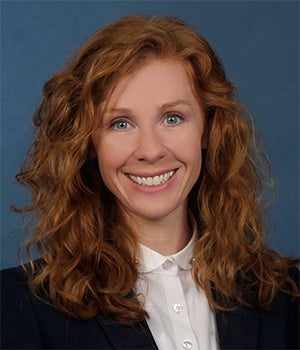
Professor Kalpana Shankar is a Full Professor at the School of Information and Communication Studies at University College Dublin (UCD). She holds roles such as former Head of School (2015-2018) and Co-Director of the UCD Centre for Digital Policy. Her research focuses on data management, peer review processes, research evaluation, and digital policy, with notable projects funded by Science Foundation Ireland, the Irish Research Council, and the U.S. National Science Foundation. Key contributions include studies on the sustainability of social science data archives and peer review at SFI. Education: PhD in Library and Information Science from UCLA, postdoctoral fellowships at UCLA (Center for Embedded Networked Sensing) and NIH (Science Policy). Professional Roles: Editor-in-Chief of Online Information Review , member of the Royal Irish Academy’s Equity Diversity and Inclusion committee, and representative on the National Open Research Forum (NORF). Teaching: Coordinator for UCD’s MSc/Diploma in Digital Policy and PhD supervision in critical data studies, open data, and research evaluation. Research Interests: Sociotechnical imaginaries of data, peer review fairness, digital policy frameworks, and the impact of pandemic responses on academia. Awards include the 2020 UCD College of Social Sciences and Law Teaching Excellence Award.
Parker VanValkenburgh is an Associate Professor of Anthropology and Associate Professor of Archaeology and the Ancient World at Brown University. His research employs archaeological methods to address anthropological questions, focusing on colonialism and imperialism's impacts on Indigenous people and environments in the Peruvian Andes. He directs the Brown Digital Archaeology Laboratory and co-directs several major projects including the Paisajes Arqueológicos de Chachapoyas (PACha) project and GeoPACHA (Geospatial Platform for Andean Culture, History and Archaeology). His educational background includes: PhD from Harvard University (2012) MA from University of London (2005) MPhil from University of Cambridge (2004) BA from Stanford University (2003) VanValkenburgh's research focuses on the long-term impacts of colonialism and imperialism on Indigenous people and environments in the Peruvian Andes. Through studying architecture, ceramics, environmental datasets, and archival documents, he explores how relationships between people, institutions, and environments transform during imperial histories. His work emphasizes how survival and resilience strategies developed by communities dealing with empires are passed down across generations. He applies digital methodologies, particularly GIS, to map and analyze social, political, and environmental change in space and time, while also critically examining how digital mediation transforms archaeological practice. His recent publications reveal a strong trend toward integrating advanced computational methods with archaeological research. There's a clear emphasis on using AI, machine learning, and remote sensing technologies to enhance archaeological survey and analysis in the Andes. His work spans traditional archaeological topics like landscape, ceramics, and colonial architecture with cutting-edge digital approaches including vision foundation models, point cloud processing, and semi-supervised learning for identifying ancient urbanization patterns. His scientific achievements have been recognized with numerous awards: John Carter Brown Faculty Fellow (2023-24) Meenakshi Narain Excellence in Research Mentoring Award (Brown University, 2023) William G. McLoughlin Award for Excellence in Teaching in the Social Sciences (2021) Cogut Center for the Humanities Faculty Fellowship (2018) American Council of Learned Societies Fellowship (2017) VanValkenburgh has successfully secured substantial research funding for multiple projects. His Paisajes Arqueológicos de Chachapoyas (PACha) project has received NSF funding through 2025, while his GeoPACHA initiative has garnered support from ACLS and SPARC grants. He also co-directs the 'Mapping Historical Trauma in Tulsa, 1921-2021' project. His teaching portfolio includes courses on Geographic Information Systems, cartography, critical digital archaeology, and the archaeology of the Andean region, for which he received Brown's prestigious teaching award. He directs the Brown Digital Archaeology Laboratory, which serves as a hub for integrating digital methodologies with archaeological research. His collaborative network includes scholars from institutions like Vanderbilt University (Steven Wernke) and the University of Tulsa (Alicia Odewale), reflecting his commitment to interdisciplinary research that bridges archaeology, anthropology, and digital humanities.
Timothy D. O'Connor is an Associate Professor in the Department of Medicine at the University of Maryland School of Medicine, serving as Co-Director for the Program in Health Equity and Population Health (HEPH). His research focuses on the evolutionary and population genetic influences on disease and phenotypic diversity, integrating evolutionary theory with large genomic datasets. He leads the O’Connor Evolutionary Genomics Group, emphasizing collaboration and multi-omics approaches. Education: B.S. Bioinformatics, Brigham Young University (2001-2007) Ph.D. Evolutionary Genetics, University of Cambridge (2007-2011), supported by the Gates Cambridge Scholarship Senior Research Fellow, University of Washington (2010-2013) Research Interests: Dr. O’Connor’s work spans human evolutionary genetics, computational biology, and genetic epidemiology. His lab develops novel algorithms to analyze large genomic datasets, with a focus on New World populations, including studies of Peruvian genomic dynamics, malaria parasite migration, and the evolutionary origins of phenotypic diversity. He emphasizes interdisciplinary collaboration and the application of evolutionary principles to modern biomedical challenges. Grants & Awards: NIH/NIAID R01 (2020-2025): $499,998 for malaria genomic migration studies in Cambodia/Thailand NIH/NIGMS R35 (2019-2024): $299,713 for evolutionary multi-omics research 2021 Faculty Mentoring Award 2019 Teacher of the Year Award Labs & Collaborations: His lab is part of the TOPMed Program, co-leading the Population Genetics Working Group. He also collaborates on projects like the Peruvian Genome Project and the Gynecological Cancer Center of Excellence. His work bridges academia and clinical practice, addressing disparities in genomic medicine through initiatives like the PENGUIN model for patient engagement.
Kaitlyn Crawford is an Associate Professor of Materials Science and Engineering at the University of Central Florida, with a secondary appointment in Chemistry. She directs the Functional Materials and Sensors Lab, focusing on sustainable soft materials for flexible electronics and biomedical applications. Her research integrates polymer science and engineering to develop wearable sensors for health monitoring, biodegradable materials to reduce e-waste, and natural polymer composites. Current projects include a $1.5M DHS-funded wearable for firefighter heat-stress monitoring and NASA-funded space applications. Her recent publications emphasize sustainable polymers, bionic devices, and AI-driven diagnostics. Awards include the 2024 ACS PMSE Early Investigator Award and a Jewish National Fund fellowship. She leads multiple graduate students in biomedical and materials research. Awards: 2024 ACS PMSE Early Investigator Award Faculty Fellowship Program in Israel, Jewish National Fund Faculty Excellence Honoree, Women’s History Month (UCF)
Dr. Mohamed Ibnkahla is a Full Professor and NSERC/Cisco Senior Industrial Research Chair in Sensor Networks for the Internet of Things (IoT) at Carleton University's Department of Systems and Computer Engineering. He holds a Ph.D. and HDR from the National Polytechnic Institute of Toulouse (INP), France. His research focuses on IoT, wireless sensor networks, cognitive radio systems, and adaptive signal processing, with applications in smart cities, healthcare, energy, and transportation. He has led numerous industry and government-funded projects, including the Carleton-Cisco IoT Testbed. Education: Ph.D. and HDR (INP Toulouse, 1996/1998), Engineering and MSc in Electronics/Signal Processing (INP Toulouse, 1992). He previously served at Queen’s University (2000–2015) and INP Toulouse (1996–1999). Research Interests: IoT security, energy harvesting, cognitive radio networks, smart grid communication, and machine learning for wireless systems. His work spans theoretical contributions (e.g., 5 books on signal processing and IoT) and applied innovations (e.g., sensor network architectures for environmental monitoring). He has published over 150 peer-reviewed papers, 4 books, and supervised ~40 graduate students. Awards include the INP Leopold Escande Medal (1997) and Ontario’s Prime Minister’s Research Excellence Award (2000). His lab develops solutions for IoT trust management, edge computing, and decentralized access control using blockchain. Key Projects: Cisco-funded IoT sensor networks for smart cities, NSF-funded cognitive radio projects, and collaborations on eHealth systems. His research addresses IoT security challenges in healthcare, transportation, and energy grids, emphasizing scalable, energy-efficient solutions.
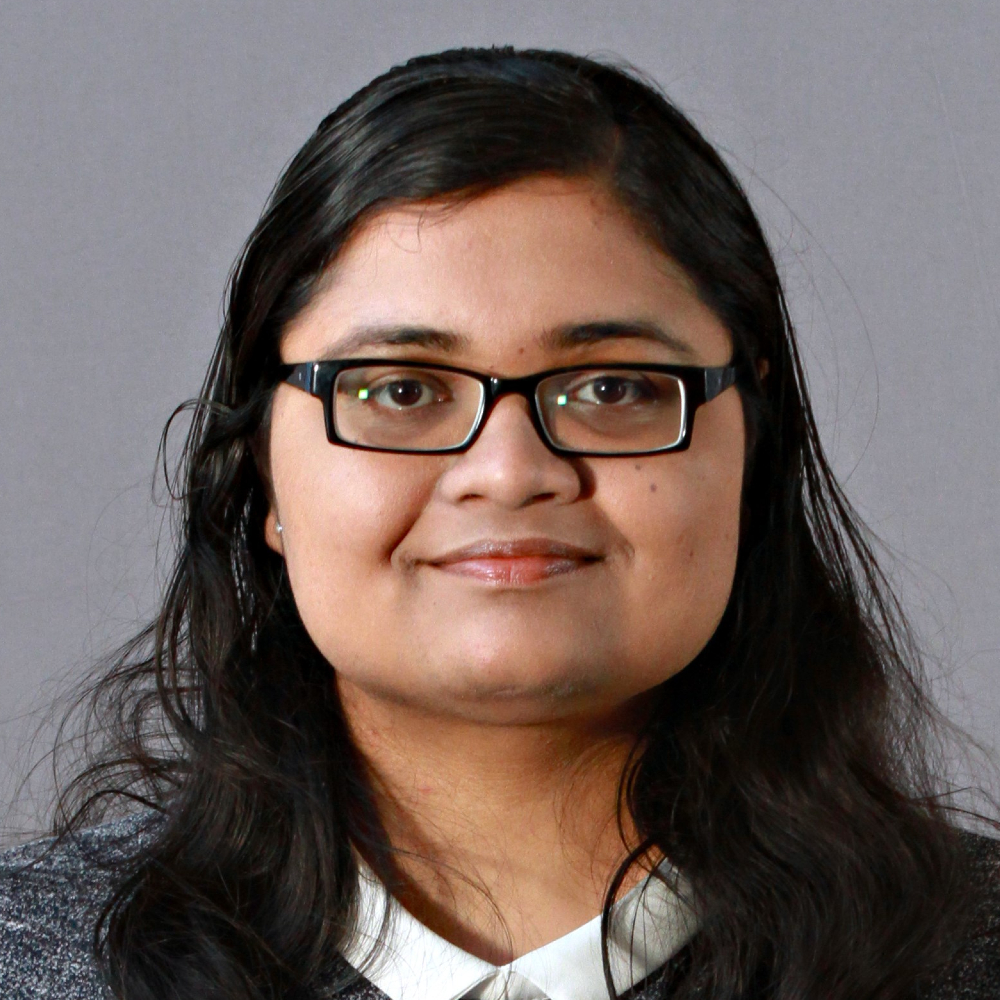
Dr. Debashree De is a Lecturer in Supply Chain Management at the Essex Business School, University of Essex, specializing in the Strategy, Operations and Entrepreneurship department. Based at Southend Campus, she focuses on sustainability-driven solutions for manufacturing and food supply chains, with active research in digital transformation and resilience. Her research centers on green supply chain management, low-carbon strategies, and circular economy adoption in SMEs. Key projects examine digital technologies in fresh food supply chains during pandemics, food-bank resilience amid cost-of-living crises, and sustainable farming practices in India and Togo. She actively collaborates with SMEs and farming communities to develop practical sustainability frameworks. Recent publications (2020-2025) reveal strong thematic focus on SME sustainability performance, circular economy implementation, and food supply chain resilience. Her work consistently integrates lean management principles with sustainability innovation, emphasizing empirical validation through European and Indian case studies. Digital transformation emerges as a critical enabler for supply chain resilience across multiple sectors. Scientific recognition includes: Fellow of the Higher Education Academy She supervises PhD candidates Oluwole Olabode (Business Administration) and Puttiporn Legkhow (Management Studies). Current funded projects address food supply chain resilience during pandemics, regenerative agriculture in Togo's cotton farming, and sustainable plastic reduction in Colchester. Her grant portfolio includes British Academy, University of Essex, and ESRC IAA funding.
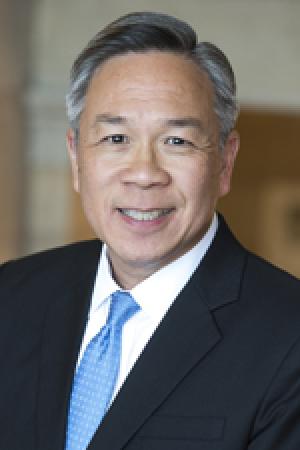
Michael Goh serves as Professor and Campbell Leadership Chair in Education and Human Development at the University of Minnesota's College of Education and Human Development, where he coordinates Graduate Programs in Higher Education. Previously (2017-2022), he held the systemwide position of Vice President for Equity and Diversity across the university's five campuses. His educational foundation includes: PhD in Counseling and Student Personnel Psychology from the University of Minnesota MS in Counseling and Counselor Education from Indiana University BA in Psychology and Sociology (double major) from Indiana University Goh's research centers on cultural intelligence (CQ) and intercultural competence development within higher education contexts, examining cross-cultural counseling practices, leadership for inclusive excellence, and culturally intelligent frameworks for mental health services. His interdisciplinary approach bridges psychology, sociology, and educational leadership to address diversity, equity, and inclusion challenges in global academic environments, with particular focus on international student development and culturally responsive administration. His 2020-2025 publications reveal consistent exploration of intercultural competence in higher education internationalization, with strong emphasis on Asian case studies (Japan, Singapore) and practical applications for DEI leadership. Recurring themes include global citizenship education frameworks, equity-driven institutional transformation, and cross-cultural therapeutic expertise development, demonstrating both theoretical depth and practical implementation strategies across diverse educational settings. Notable recognitions include: Fellow of the American Psychological Association (2024) Commissioner for Midwestern Higher Education Compact (2021-2025) Senior Fellow at Minnesota Institute for Trauma Informed Education (2021-present) Pacific Circle Consortium Honors Recognition for cross-border scholarly work (2018) Exemplary Diversity Leadership Award from American Counseling Association (2010) Multiple distinguished teaching and mentorship awards from University of Minnesota His grant leadership includes NSF-funded Louis Stokes North Star STEM Alliance targeting underrepresented students in STEM fields, and NIH Partners in Research Grant developing culturally responsive children's mental health practices. Current projects focus on linguistic access to mental health services and multinational studies of expert counselors across Asia. Goh previously directed the University of Minnesota's Institute for Diversity, Equity, and Advocacy (IDEA), fostering interdisciplinary equity research, and maintains connections with the Workforce Development and Research Lab through his focus on culturally intelligent leadership development.
Professor Daniel Fitzpatrick is an Adjunct Professor at the Faculty of Law, Monash University. Previously, he served at the Australian National University (ANU) as Director of the Centre for Commercial Law and established the Masters in Law, Governance and Development. He has held visiting roles globally, including at New York University School of Law, National University of Singapore, University of Muenster, and University of Toronto. In 2022, he was a Scholar-in-Residence at the Woodrow Wilson Institute for International Scholars. His research focuses on property rights in disaster and climate-affected contexts, contributing to UN Sustainable Development Goals. Key areas include land tenure systems in fragile states, climate mobility governance, and adaptive legal frameworks for environmental displacement. He has authored or co-authored 6 books and published in leading journals such as the Yale Law Journal and American Journal of Comparative Law. With over A$1,031,690 in ARC funding since 2012, Fitzpatrick’s work addresses property resilience in Indonesia, the Solomon Islands, and other disaster-prone regions. He advises international organizations like the World Bank on land policies for disaster risk management and climate mobility. His expertise also includes post-conflict land policy, having served as the UN’s land rights adviser in East Timor and Aceh, and as a consultant for Oxfam, OECD, and UN agencies. Fitzpatrick has been recognized with the Hart Article Prize (2007) and Australian Research Council Future Fellowship (2012–2016). His teaching excellence was acknowledged through nominations at ANU (2010–2011). Current affiliations include the expert advisory committee for the Platform on Disaster Displacement and collaborative projects with the Pacific Islands Forum Secretariat.
Daniel Lee Peters is a Limited Term Assistant Professor in the Department of Geography at the University of Victoria, holding additional roles as Associate Fellow at the Canadian Rivers Institute (University of New Brunswick) and Sessional Lecturer at UVic. His research focuses on watershed hydrology, climate impacts, and flow regulation effects, with specialties in northern deltas and instream flow needs. Peters holds a BSc (Environmental Geography, Concordia University), MSc and PhD (Watershed Ecosystems, Trent University). Key research areas include: Hydrological impacts of climate variability/change Flow regulation effects on river systems Runoff processes in northern deltas Instream flow standards for agricultural watersheds Hydrological modeling using isotopic/geochemical tracers His publications (2000-2008) emphasize northern hydrology, with notable contributions to understanding Peace-Athabasca Delta dynamics and Mackenzie Basin hydroclimatology. Awards include the D.M. Gray Award and recognition for student research excellence. Professional roles include editorial board membership for the Canadian Water Resources Journal and active participation in national hydrology organizations (CGU, CWRA, IAHS). Technical reports address water resource management challenges in agricultural and northern environments. Current projects involve climate impact assessments on Okanagan streams and Sooke Lake Reservoir hydrology.
Rei Sanchez-Arias is a Teaching Professor and Director of the Master of Applied Data Science (MADS) program at UNC Chapel Hill's School of Data Science and Society. His expertise includes data mining, machine learning algorithm development, and data science pedagogy. He previously held positions at Florida Polytechnic University and St. Thomas University. Research interests span educational tools, health informatics, and optimization methods. Recent work involves AI for endoscopic surgery evaluation, meta-analysis of MLOps tools, and curriculum design for data science programs. Awards include the Excellence in Teaching Award from Florida Polytechnic. Student mentorship focuses on data wrangling and analytics projects.
Dr Scott A. Hale is an Associate Professor and Senior Research Fellow at the Oxford Internet Institute (OII), University of Oxford, and a Fellow of the Alan Turing Institute. His work bridges computer science and social sciences, focusing on equitable information access, multilingual online dynamics, and misinformation mitigation. He holds degrees in Computer Science, Mathematics, and Spanish from Eckerd College, followed by a DPhil (PhD) in Social Data Science from the OII. Hale’s research has been supported by grants from UK Research and Innovation, the US National Science Foundation, and organizations like the Omidyar Network and the Alan Turing Institute. Key Roles: Programme on AI, Government & Policy; Director of Research at Meedan; Co-Director of the Social Data Science MSc Research Focus: Misinformation, multilingual systems, social media impact, and AI ethics Education: Eckerd College (BS), OII (MSc, DPhil). His DPhil explored social media design’s role in cross-language information sharing. Recent projects include the Digital Good Network and AI alignment studies. Articles highlight trends in multilingual misinformation detection, LLM cultural biases, and hate speech dynamics. Hale’s work bridges technical innovation with social science rigor to address global digital challenges. Awards: Alan Turing Institute Fellowship, recognition in Oxford’s Teaching Excellence Awards. Grants: Over 20 funding sources including DSO National Laboratories and Meta.
Professor Mathew White serves as Deputy Dean (International) in the Faculty of Arts, Business, Law, and Economics (ABLE) at the University of Adelaide, where he holds the title of Professor of Education. He earned his PhD in Education from the University of Adelaide in 2004 while teaching full-time in secondary schools. His academic career began with part-time lecturing at the Melbourne Graduate School of Education (2006–2018), transitioning to academia as an Associate Professor in 2018 and promoted to Professor in 2025. His leadership spans strategic internationalization efforts across ABLE’s seven schools, overseeing over 80 global partnerships. He also serves as an Honorary Principal Fellow at the University of Melbourne and has held visiting roles at the University of Oxford. Research interests include integrating wellbeing science into education leadership, policy, and pedagogy, focusing on theoretical frameworks like PERMA, character strengths, and the 'wellbeing learning poverty cycle.' He has authored eight books and 69 peer-reviewed publications, recognized with awards such as the Hedley Beare Award (2024) and the Stephen Cole the Elder Award (teaching excellence). Education: PhD in Education (University of Adelaide, 2004) Professional Roles: Deputy Dean (International), ABLE; International Ambassador, University of Adelaide Grants: Secured funding from institutions like The Moreton Bay Colleges and Catholic Education West Australia (e.g., $35,000 in 2021–2022). Teaching focuses on wellbeing in education, leadership, and pedagogy, with courses like Introduction to Wellbeing in Education (Masters level). He supervises PhD/Masters students in wellbeing education, leadership, and curriculum development. Fellowships include Senior Fellow of the UK Higher Education Academy and Fellow of the Royal Society for the Encouragement of Arts. Labs/Teams: Leads ABLE’s international strategy team and collaborates with global institutions through the Division of External Engagement. Research projects emphasize interdisciplinary wellbeing models and post-pandemic educational recovery.
René Belland is a Professor in the Department of Renewable Resources at the University of Alberta, specializing in bryophyte (mosses and liverworts) ecology, conservation, and large-scale distribution patterns. He serves as Curator of the department's Bryophyte Herbarium and teaches undergraduate and graduate courses focusing on field skills, moss identification, and conservation. His research emphasizes environmental and historical factors influencing moss diversity, with a focus on Alberta's ecosystems and rare species protection. Education: Holds BSc, MSc, and PhD degrees (institutions unspecified). His teaching excellence is recognized through awards such as the William Hardy Alexander Award (2018) and multiple ECSA Teacher of the Year titles (2015–2024). He also mentors undergraduate research, earning the 2024 Outstanding Mentorship Award. Research interests span bryophyte biogeography, conservation strategies for rare species, and ecological impacts of forestry practices. His publications explore moss diversity in boreal forests, national parks, and contaminated environments. He collaborates on projects like assessing heavy metal contamination in sphagnum bogs and analyzing post-harvest forest recovery. Teaching responsibilities include specialized courses such as REN R 327: The Mosses of Alberta and directed research programs for undergraduates. His work bridges field-based identification, conservation science, and ecological restoration.
Professor Yahya Fathi specializes in optimization and operations research at North Carolina State University. His research includes mathematical programming, production systems, and quality engineering, with applications in manufacturing and data analytics. Awarded multiple teaching excellence honors.
Dr. Svetlana Yanushkevich is a Professor in the Department of Electrical and Software Engineering at the Schulich School of Engineering, University of Calgary. She is also a Full Member of the Hotchkiss Brain Institute and the Mathison Centre for Mental Health Research and Education. Her research focuses on biometric technologies, decision support systems, biomedical applications, and computational intelligence. She leads the Biometric Technologies Laboratory, developing strategies for risk assessment in biometric systems and healthcare monitoring through machine reasoning and signal processing. Education : BSc/MSc in Electrical Engineering (1989), State University of Informatics and Radioelectronics, Minsk PhD in Electrical Engineering (1992), same institution Dr. Habilitated in Technical Sciences (1999), Warsaw University of Technology Research Interests : Dr. Yanushkevich’s work spans biometric system design (e.g., gait analysis, facial attributes), decision support via probabilistic models (Bayesian networks, causal inference), biomedical applications (stroke rehabilitation, wearable sensors), and computational intelligence for data science. She emphasizes fairness, bias mitigation, and trustworthiness in AI systems, particularly in healthcare and accessibility contexts. Recent Research Trends : Her recent publications address causal modeling for accessibility barriers, UAV operator cognitive workload, and medical device optimization in radiation therapy. She explores AI ethics, stress contagion in human-robot teams, and cross-spectral biometric systems. Awards & Recognition : 2024 FEIC Fellow (Engineering Institute of Canada) 2019 Research Excellence Award (Schulich School of Engineering) 2001 Senior IEEE Membership Advising & Grants : She coordinates courses like ENCM 509 (Biometric Systems Design) and ENEL 610 (Biometric Technologies). Her research is supported by grants focusing on healthcare AI, accessibility technologies, and computational epidemiology. Labs & Collaborations : Her Biometric Technologies Lab collaborates with institutions like Hokkaido University and the IEEE Computational Intelligence Society. Projects include wearable health monitoring, decision support platforms, and AI-driven epidemiological modeling.