Professor Bronagh Byrne is a leading academic at Queen's University Belfast's School of Social Sciences, Education and Social Work. She serves as Co-Director of the Centre for Children's Rights and co-founder of the Disability Research Network. Her expertise spans international disability rights, children's rights under the UN Conventions, and inclusive education. She holds leadership roles including Programme Director for the MSc Children's Rights and has taught modules on disability, social policy, and childhood studies. Her research focuses on implementing UNCRPD and UNCRC frameworks into national policies, with particular attention to disabled and d/Deaf children. She has published widely in journals like the International Journal of Children's Rights and Disability and Society , and contributed to policy evaluations on pandemic impacts, educational transitions, and service accessibility. Award-winning scholar, Byrne has received recognition for research impact (UNICEF 2019) and teaching excellence (Most Involved Teaching Staff 2016). She leads projects like the B-RADICALb initiative and UNICEF Child Rights Partners Programme, emphasizing rights-based approaches in policy and practice. Her work aligns with UN SDGs related to quality education, reduced inequalities, and peaceful societies. PhD Supervision Areas: Disability rights, inclusive education, UN Convention implementation Grants: 6 active/funded projects since 2011 addressing children's rights, disability inclusion, and policy evaluation Labs/Teams: Centre for Inclusion, Transformation and Equality (CITE), Disability Research Network
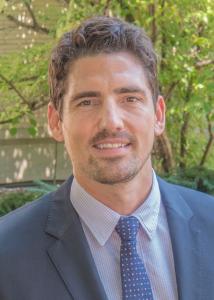
Stephen Kodish, Ph.D. is an Associate Professor in Biobehavioral Health and Nutritional Sciences at Pennsylvania State University. He holds affiliations with the Population Research Institute (PRI) and Social Science Research Institute (SSRI). His work focuses on designing and evaluating interventions to improve global nutrition in vulnerable populations, particularly maternal and child nutrition in low-resource settings. He earned his Ph.D. in International Health from Johns Hopkins University (2015). Key research themes include formative research methodologies, social and behavioral change strategies, and global health program implementation. His work spans countries like Niger, Guinea, Sri Lanka, and Burkina Faso, addressing chronic and acute malnutrition through humanitarian food assistance programs. Recent studies emphasize understanding cultural determinants of feeding practices, pandemic impacts on nutrition, and innovative mHealth interventions. Dr. Kodish collaborates with international organizations to strengthen monitoring systems for large-scale nutrition programs. His research integrates qualitative and quantitative methods to identify multi-level barriers in nutrition service delivery. Current projects explore decision-making autonomy in maternal nutrition and the efficacy of micronutrient supplements in crisis settings. He has advised no formally listed graduate students but actively participates in interdisciplinary teams through PRI. His work is supported by NIH funding (P2CHD041025) and Penn State institutional grants.
Dr. Leah Casabianca is an Associate Professor in the Department of Chemistry within Clemson University's College of Science. She joined the faculty in 2014 and was promoted to associate professor with tenure in 2020. Her research group, the NanoBio NMR Lab, focuses on developing advanced NMR methodologies to study interactions between nanomaterials and biologically relevant molecules. She teaches undergraduate and graduate courses including Physical Chemistry, Atomic and Molecular Structure, and Computational Quantum Chemistry. Educational Background: Postdoctoral Fellow, Chemical Physics, Weizmann Institute of Science (2010-2013) Postdoctoral Fellow, Analytical Chemistry, University of Illinois at Chicago (2008-2010) Ph.D., Physical Chemistry, Georgetown University (2008) B.S., Chemistry, Rice University (2002) Dr. Casabianca's research program centers on developing NMR methods for studying nanomaterial-biomolecule interactions, with applications in drug delivery, biomedical devices, materials science, and nanomaterials toxicity. Her group utilizes a variety of NMR techniques including solution and solid-state NMR, calculated chemical shifts, and Dynamic Nuclear Polarization. She has pioneered applications of Saturation-Transfer Difference (STD) NMR for examining molecular binding to nanoparticle surfaces, which has become a significant methodology in nanotoxicology and nanomedicine research. Analysis of her publication record reveals a consistent focus on methodological advancements in NMR for nanomaterial characterization, with increasing emphasis on environmental implications of nanoscale plastics. Her recent work shows expansion into multiphase NMR studies and dual-modality approaches combining fluorescence with NMR. The research demonstrates strong interdisciplinary connections between chemistry, materials science, environmental science, and biomedical engineering. Scientific Recognition: 2018 College of Science Rising Star in Discovery Award Multiple student awards under her mentorship including ENC travel awards and poster prizes Mandel Fellowship and SciSAB Grant awarded to her students Dr. Casabianca has successfully mentored numerous graduate and undergraduate students, with several completing Ph.D. dissertations under her supervision. Her research program is supported by significant funding from the National Science Foundation through multiple grants including Environmental Chemical Science (CHE-2304888), Chemical Measurement and Imaging (CHE-1751529), and Major Research Instrumentation Program (CHE-1725919 and CHE-2407820). She also receives support from the American Chemical Society Petroleum Research Fund (58738-DNI6). Beyond research, she is actively involved in educational outreach through Project WISE Summer Camp, Peer-Wise Experience, and as faculty co-advisor for Clemson Student Affiliates of the American Chemical Society. The NanoBio NMR Lab maintains an active research program with regular participation in conferences including the Southeastern Magnetic Resonance Conference (SEMRC), which Dr. Casabianca helped organize in 2018. The lab has a strong collaborative network and regularly publishes in high-impact journals across chemistry, materials science, and environmental science disciplines.
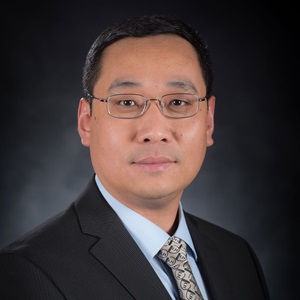
Dr. Tao Xing is a Professor in the Department of Mechanical Engineering at the University of Idaho. He holds a Ph.D. in Mechanical Engineering from Purdue University (2002) and is a licensed Professional Engineer (P.E.). His research focuses on computational fluid dynamics (CFD), verification/validation (V&V), biofluids, and wind turbine design. He directs the 3D Imaging and Printing Laboratory and has secured $3.8M+ in research funding from NSF, NIH, and industry. Key awards include the 2019 University Excellence in Interdisciplinary Collaboration Award and 2018 Mid-Career Faculty Award. His educational contributions include developing adaptive learning modules for ABET outcomes and integrating CFD into engineering curricula. He has advised 6 graduate students and currently mentors 2 Ph.D. candidates. Notable projects include aerogel insulation systems, CSF drug delivery modeling, and offshore wind turbine simulations.
Dr. Tria Moore is a Senior Lecturer in Psychology at Sheffield Hallam University, serving as Course Leader for the MSc Health Psychology program since 2009. She leads modules on Healthcare Contexts, Perspectives in Health Research, and Academic Development. Her teaching emphasizes critical health psychology perspectives. She holds a PhD from the University of Sheffield (2006) on cognitive adaptation to venous thrombosis, complemented by training as a life coach and ABA therapist during her doctoral studies. Her research focuses on psychosocial dynamics in healthcare, including professional-patient relationships, healthcare policy, health inequalities, and gender studies (e.g., 'lad' culture in universities). She is a member of the Health Psychology Research Group and the Sociology, Psychology, Politics, and Policy Research Group at Sheffield Hallam. Tria is an Associate Fellow of the British Psychological Society and holds a diploma in psychotherapy. Awarded chartered psychologist status (2007) and registration as a health psychologist (2013), she also earned a Postgraduate Certificate in Learning and Teaching in Higher Education (PG Cert LTHE). Her work integrates qualitative methods to explore resistance to medicalization, moralization of health, and chronic illness experiences. Teaching and Research Interests: Healthcare professional-patient dynamics Social policy implications of healthcare practices Gendered behaviors in university settings Chronic illness adaptation and coping strategies Grants & Advising: While no specific grants are listed, her role as course leader involves curriculum development and student mentorship. She has advised several health psychology projects through her teaching roles. Labs/Teams: Active member of the Health Psychology Research Group and the cross-disciplinary Sociology, Psychology, Politics and Policy Research group.
Dr. Clair Reynolds Kueny serves as Associate Professor, Department Chair, and Graduate Program Director for the Master of Science in Industrial-Organizational Psychology within the Psychological Science Department at Missouri University of Science and Technology's College of Arts, Sciences, and Education. She joined as full-time faculty in August 2016 after completing her doctorate, and assumed program leadership in 2020 while teaching core graduate courses including Organizational Development and Ethics. Her educational foundation includes a Ph.D. and M.S. in Industrial-Organizational Psychology from Saint Louis University, complemented by dual B.S. degrees in Psychology and Political Science with Statistics minor from Truman State University. Dr. Kueny's research centers on employee discretionary behaviors, workplace stress, and person-environment fit , with specialized focus on healthcare applications in rural settings. She integrates Industrial-Organizational Psychology principles to improve healthcare professional experiences and radiation therapy delivery, while also examining safety culture in transportation industries. Her methodology frequently employs simulation modeling and cross-sectional surveys. Recent publications (2021-2025) reveal strong emphasis on rural healthcare innovation (particularly mobile radiation oncology systems), global health disparities in low-resource cancer care, and safety behavior analysis in transportation. Her work consistently bridges organizational psychology theory with practical healthcare implementation challenges. Her accolades include multiple university teaching awards, service recognitions, and Outstanding Reviewer honors from Group & Organization Management journal: 2022 Faculty Service Award 2021 Outstanding Contributions to Graduate Studies 2021 CASB Alumni Student Impact Award 2020 CASB Community Outreach Award 2019 Faculty Teaching Award 2020-2021 Outstanding Teaching Commendations 2020-2021 Outstanding Reviewer Awards As Graduate Program Director, Dr. Kueny oversees curriculum development for the MS I-O program while securing research funding for rural healthcare improvement initiatives. Her teaching portfolio spans undergraduate Industrial Psychology to graduate Ethics courses, with demonstrated excellence through repeated commendations. She actively contributes through R-NetWORC collaboration and GIOP Executive Team leadership, focusing on interdisciplinary applications of organizational psychology in healthcare systems improvement and community-engaged senior design projects.
Germán Pérez-Sánchez is a Researcher in the Department of Chemistry at the University of Aveiro, Portugal. His research focuses on molecular simulations, materials science, and computational chemistry. He holds a PhD in Physics from the University of Vigo (2010) with an award-winning thesis on liquid-liquid critical phenomena. His work spans computer modeling of porous materials, surfactant systems, and drug delivery mechanisms. He has collaborated with institutions globally, including the University of Massachusetts and École Normale Supérieure Paris. His research interests include silica-based nanomaterials synthesis, ionic liquids, and the development of coarse-grained molecular dynamics (CG-MD) frameworks. He has supervised multiple PhD and Master’s students and contributed to projects like SILVIA (reactive CG-MD modeling) and DataCor (corrosion inhibitor database). He has over 40 peer-reviewed publications and holds grants from FCT (Portugal) and international bodies. Key achievements include modeling methane hydrates, drug-nanocarrier interactions, and silica polymerization via the Sticky MARTINI model. His work bridges theoretical simulations with experimental applications in energy, environmental science, and biomedical fields.
Cheng-Yu Lai is an Associate Professor in the Department of Mechanical and Materials Engineering at Florida International University (FIU), with a secondary appointment in the Department of Chemistry and Biochemistry. His research focuses on advanced functionalized materials, including layered nonlinear crystals for optoelectronics and quantum information science, porous nanomaterials for environmental and catalytic applications, and additively manufactured electronics. He also explores nanomedicine, biomaterials, and plant-based nanocomposites for tissue engineering and biomedical applications. His research interests span synthesis of nanomaterials, energy harvesting systems (e.g., dye-sensitized solar cells), and biomedical nanodevices for drug delivery and cancer therapy. He is affiliated with the CELL-MET ERC and PATHS-UP ERC research initiatives. Lai’s work bridges materials science, engineering, and biomedicine, emphasizing sustainable and scalable solutions. He advises students in graduate research and oversees projects in his lab. Office hours are held Mondays and Wednesdays at 12:00-3:00 PM, and appointments can be arranged through Ms. Ana Muñoz (anmuno@fiu.edu). Contact details: clai@fiu.edu and his lab website .
Graham Smyth is a Senior Lecturer in the Department of Sociology at Manchester Metropolitan University. He holds academic qualifications including an LLB, MA in Economic & Social Studies, a Certificate of Qualification in Social Work, and a Postgraduate Certificate in Academic Practice. His career spans 26 years in criminal justice roles, including probation service management, youth offending service leadership, and community safety coordination. He is Programme Leader for the MA in Applied Criminology and supervises a PhD on youth justice. Education: Bachelor of Law (LLB) MA Economic & Social Studies Certificate of Qualification in Social Work Postgraduate Certificate in Academic Practice Affiliations: Member of the Higher Education Academy Co-founder of Transport for Sick Ugandan Children (TUSC) His research focuses on offender rehabilitation, probation systems, youth justice, restorative justice, and crime prevention. Notable projects include evaluations of probation initiatives, resettlement programs, and the Dordrecht Initiative (a precursor to national PPO programs). He has led studies on offender housing pathways, youth offender demographics, and restorative peer panels. Teaching emphasizes bridging theory and practice through interactive methods, with a focus on criminology placements and practice-oriented MA programs. His work integrates real-world criminal justice experiences into academic frameworks. Outside academia, he contributes to TUSC, a charity supporting sick Ugandan children, and maintains interests in football, cycling, and performance poetry.
Terry McGovern is a Professor and Senior Associate Dean for Academic and Student Affairs at the CUNY Graduate School of Public Health and Health Policy. She holds a JD and is internationally recognized for expertise in health and human rights, sexual and reproductive rights, gender justice, and environmental justice. Previously, she served as the Harriet and Robert H. Heilbrunn Professor and Chair of Columbia University’s Heilbrunn Department of Population and Family Health, founding the HIV Law Project and leading advocacy efforts in HIV-related policy. Her research focuses on global health justice, with a particular emphasis on marginalized populations. Key areas include reproductive justice, maternal-child health, and environmental health equity. McGovern has authored federal regulations on clinical trial inclusion and litigated landmark cases like S.P. v. Sullivan , expanding disability criteria for HIV patients. Professional roles include serving on the Lancet Commission on Adolescent Health, UNFPA Global Advisory Council, Council on Foreign Relations, and NYCLU Board. Her recent work addresses pandemic impacts on gender-based violence services, U.S. abortion access post-Roe v. Wade, and global policy effects of the Global Gag Rule. Advocacy and grants include litigation funding through the HIV Law Project and institutional leadership shaping academic health policy. McGovern’s transnational collaborations advance health equity through legal frameworks and multidisciplinary research.
Professor Brenda Happell is a registered mental health nurse with over 28 years of academic experience across Australia. She holds a Professorship in the Faculty of Health at Southern Cross University and has held leadership roles including Director of the Centre for Psychiatric Nursing at the University of Melbourne and Executive Director of SYNERGY Research Centre at the University of Canberra. Her research focuses on mental health service improvement, physical health of people with mental illness, and nursing education. She has published over 400 peer-reviewed articles and attracted $14M in research funding. Education: PhD (La Trobe University, 1995). Key research interests include consumer participation in mental health services, nurse education reforms, and addressing health inequalities. She is a Fellow of the Australian College of Mental Health Nurses and former Editor of the International Journal of Mental Health Nursing. Leadership roles: Inaugural Director of Centre for Psychiatric Nursing (Melbourne), Director of Institute for Health and Social Science Research (CQU) Current roles: Board Director of Australian College of Mental Health Nurses Advocacy: Queensland Mental Health and Drug Advisory Council member Her recent work emphasizes nurse-led physical health interventions and expert-by-experience integration in education. She supervises higher-degree students with a 100% completion rate. Awards: Fellowship from Australian College of Mental Health Nurses. Grants/Research: $14M in competitive funding; projects include Mental Health Nurse Consultant roles and Safewards initiatives. Active in curriculum development for mental health nursing education. Labs/Teams: SYNERGY Nursing and Midwifery Research Centre (formerly), currently leading research in Southern Cross University's Faculty of Health.
Dr. Paula Nottingham is an Associate Professor in the Department of Education at Middlesex University, London. She holds a PhD and multiple advanced qualifications, including a Senior Fellowship of the Higher Education Academy (HEA). Her roles include Research Degrees Coordinator, Director of Studies for PhD Work-Based Learning, and Supervisor for Doctor of Professional Studies programs. She previously co-led the BSc Professional Practice in Business Sales Degree Apprenticeship program with Consalia Ltd. Her work focuses on work-based and work-integrated learning, degree apprenticeships, and inclusive pedagogy aligned with UN Sustainable Development Goals (SDGs 4 and 8). Education: Bachelor of Fine Art (BFA), First Class Honors Master of Fine Art (MFA), Distinction MSc in Applied Professional Studies in Lifelong Learning (Merit) PhD in Education PGCertHE Research Interests: Paula’s expertise lies in innovative higher education practices, particularly in professional practice, lifelong learning, and the integration of digital technology. She emphasizes inclusive learning communities, assessment design for workplace contexts, and bridging theory with professional practice through degree apprenticeships. Her work addresses challenges in equitable access to education and adapting pedagogy for Gen Y/Z learners. Teaching & Leadership: Paula has led program validations for Professional Practice pathways (BA/BSc/MA/MSc/PG Cert) and developed curriculum frameworks for Middlesex’s Marketing, Branding, and Tourism Department. Her teaching focuses on practitioner research methodologies and work-integrated learning systems. Advising & Grants: Supervising 10+ doctoral students across Professional Doctorates and PhDs. Active in grant projects like 'Mobilising provider insights for degree apprenticeship delivery.' Labs & Collaboration: Collaborates with industry partners (e.g., Consalia Ltd) and contributes to international conferences on work-applied management and inclusive education.
Kimberly A. Smith, PhD, is an Assistant Professor in the Department of Family and Community Medicine at the University of Alabama at Birmingham (UAB) School of Medicine. She also serves as Director of Evaluation at the UAB Center for Clinical and Translational Science (CCTS). Her roles include developing program evaluation models focused on outcome measurement, implementation, and study design. She holds a PhD in Education from the University of Southern Mississippi, with concentrations in Research, Evaluation, Statistics, and Assessment, along with master’s degrees in Educational Research Studies and Human Performance (Exercise Physiology). Dr. Smith’s research focuses on advancing translational research and outcomes in healthcare delivery, particularly through collaborative programs addressing cardiovascular health disparities and public health initiatives. She leads teams in designing research agendas, capacity assessments, and evaluation plans to drive evidence-based practices. Her expertise includes advanced statistical methodologies, program evaluation, and quality improvement projects across disciplines. Her professional activities include membership in the NSCA’s Long-Term Athletic Development Special Interest Group Executive Council and roles in journal reviewing (e.g., Journal of Clinical and Translational Science ). She has secured grants from the Alabama Department of Public Health and NIH-funded CTSA programs, emphasizing rural health engagement and cardiovascular disease reduction. As an educator, Smith teaches courses like Research Methods and Applied Multivariate Statistics, mentoring graduate students in doctoral committees. Her teaching philosophy emphasizes active, goal-oriented environments to foster lifelong learning and community impact.
Ricardo Melo Czekster is a Lecturer in Software Engineering & Cybersecurity at Aston University's School of Computer Science and Digital Technologies. His research develops methods for securing critical infrastructure through formal modeling and threat intelligence. Education: PhD in Performance Evaluation, Pontifical Catholic University of Rio Grande do Sul (2010) MSc in Analytical and Environmental Chemistry, University of Benin (2009) BSc in Industrial Chemistry, Ambrose Alli University (2004) Research Focus: Czekster specializes in cybersecurity for cyber-physical systems, particularly smart grids and active buildings. His work develops STIX-based threat intelligence frameworks, attack path modeling with BDMPathfinder, and dynamic risk assessment methods. Recent projects address security in medical IoT and transportation systems. Teaching: Leads modules on Secure Programming, Security Governance, and Secure Software Delivery.
Professor Catherine Hennessy is a social gerontologist and the Professor of Ageing at the University of Stirling's Faculty of Social Sciences. She holds degrees in anthropology (BA, MA), public health (MPH, DrPH from the University of California, Berkeley). Her research focuses on healthy ageing, care delivery, rural ageing, family caregiving, civic engagement, and dementia. She has over 30 years of experience in the U.S. and U.K., including roles at the CDC and leadership in UK Research Council-funded initiatives. She currently directs the MSc Gerontology and Global Ageing program. Education: BA and MA in Anthropology MPH and DrPH from University of California, Berkeley (1991) Research interests bridge individual and community perspectives on ageing, with a focus on digital health interventions (e.g., GOALD project), intergenerational collaboration, and reducing social isolation through technology. She has contributed to policy and practice via initiatives like the Growing Older Programme and UK National Collaboration on Ageing Research. Scientific Awards: Fellow of the Gerontological Society of America Advising and Grants: Her work spans interdisciplinary projects, including studies on military spouses' adaptability and rural connectivity, funded by UK Research Councils. She collaborates with stakeholders in designing technology to enhance older adults' physical and social well-being. Labs/Teams: She leads the Dementia & Ageing research group at the University of Stirling, fostering interdisciplinary approaches to ageing challenges.