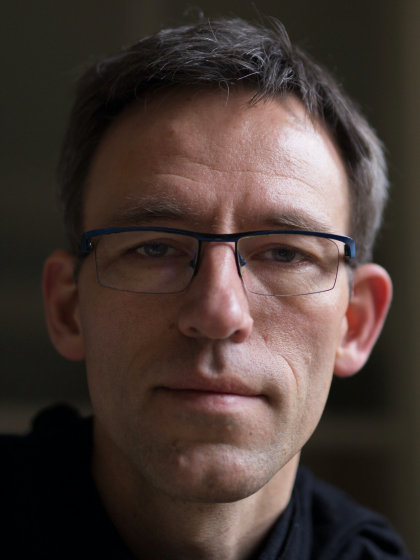
Tom A.E. Oomen is a Full Professor in the Department of Control Systems Technology at the Eindhoven University of Technology (TU/e). He holds affiliations with the Mechanical Engineering School and the EAISI High Tech Systems institute. His research focuses on data-driven control, motion control of mechatronic systems, and system identification, with applications in industries like automotive, medical, and energy systems. Academically, he earned his MSc and PhD from TU/e, and held visiting positions at KTH (Sweden) and the University of Newcastle (Australia). He has received notable grants (NWO Veni/Vidi) and awards, including IEEE and Mechatronics Paper Prize recognition. Oomen is a Senior Member of the IEEE and serves as an Associate Editor for IFAC Mechatronics and IEEE Control Systems Letters. His work bridges fundamental research and industry collaboration, emphasizing advanced motion control and learning algorithms. Projects include PROACTHIS (projection-based control) and ML4CONTROL (AI-driven motion control). He has supervised 99+ works and contributed to over 500 research outputs.
Karsten Lambers is Professor of Digital and Computational Archaeology at the Faculty of Archaeology, Leiden University, where he leads research and teaching in the application of computational methods to archaeological data. His work integrates machine learning, remote sensing, text mining, and citizen science to advance archaeological prospection and heritage management. He is affiliated with the Department of Archaeological Sciences and plays key roles in research groups and university-wide initiatives such as SAILS and ARCHON. His research interests span Digital Archaeology , Machine Learning in Archaeology , Remote Sensing , Geoarchaeology , and Human-Environment Interaction . He investigates how computational tools can extract meaningful archaeological information from large datasets, including LiDAR imagery and excavation reports. His fieldwork spans Central Europe and Latin America, with a focus on prehistoric landscapes and cultural heritage. The analysis of his recent publications reveals a strong trend toward automated detection using deep learning (e.g., R-CNN, WODAN), named entity recognition in archaeological texts (e.g., ArcheoBERTje), and citizen science integration for data validation. His work bridges archaeology with computer science, geomatics, and environmental science, emphasizing interdisciplinary collaboration and methodological rigor. His scientific awards include: Best Thesis Award (University of Zurich, 2005) EUROPA NOSTRA Award (2020, 2022) Membership in the German Archaeological Institute (since 2022) Lambers actively supervises students and leads major research projects such as ABMA, EXALT, and Heritage Quest. He has secured substantial research funding and collaborates widely with computer scientists, geophysicists, and palaeoecologists. His teaching includes digital methods, modeling, and simulation, often linked to ongoing research. He has also contributed to open educational resources and digital textbooks in archaeology. He leads or participates in several research labs and teams, including the Digital Archaeology Research Group (which he chairs), the Heritage Quest citizen science project, and interdisciplinary teams focusing on alpine terraces and Iraqi prospection. His work emphasizes the integration of digital tools into practical archaeological workflows, advocating for complementary human-computer strategies.
Javier Alonso-Mora is a Professor in the Department of Mechanical Engineering at Delft University of Technology, specializing in Learning & Autonomous Control. His research focuses on autonomous systems, robotics, motion planning, and transportation logistics, with applications in mobile manipulation, dynamic environments, and urban mobility. He leads key projects such as INTERACT (Intuitive Interaction for Robots among Humans) and ACT (Perceptive Acting Under Uncertainty), exploring human-robot interaction, autonomous vehicles, and healthcare robotics. Notable achievements include an ERC Starting Grant (2022) and a Veni Grant (2017). His work addresses challenges in robot navigation, control systems, and fleet optimization, with contributions to both theoretical advancements and practical implementations. Projects like TRiLOGy focus on sustainable water transportation, while HARMONY advances assistive robotics in healthcare. Alonso-Mora’s research leverages geometric fabrics for motion planning, probabilistic modeling for dynamic environments, and multi-agent coordination. He collaborates internationally and contributes to open-source frameworks for robotics. His recent publications emphasize safety-aware control, instance-aware semantic mapping, and adaptive systems for cluttered environments.
Dr. Jeewanie Jayasinghe Arachchige is a Lecturer in the Department of Computer Science at Vrije Universiteit Amsterdam, Faculty of Science. She teaches undergraduate courses including Bachelor Project Computer Science, Professional Development, and Software Engineering Processes for the academic year 2024–2025. Her research focuses on process mining , healthcare informatics , and data security . She applies process mining to analyze healthcare pathways and subpopulation treatment variations, develops explainable AI frameworks for predictive analytics, and examines data governance in emerging architectures like Data Lakehouses. Her work intersects legal informatics, particularly formalizing Sri Lankan civil court processes using ontology engineering. Recent publications highlight trends in balancing simplicity and complexity in process modeling, Industry 4.0 healthcare applications, and cybersecurity in model-driven web development. She has contributed to over 20 peer-reviewed articles since 2006, spanning topics from service-oriented architectures to value network analysis. Her teaching and research emphasize practical applications of IT in healthcare, legal systems, and enterprise environments. No ancillary activities are currently recorded.
Lorena Sosa is an Associate Professor at the Faculty of Law, Economics and Governance, Utrecht University, specializing in International and European Law. She is affiliated with the Netherlands Institute of Human Rights (SIM) and the research program Family & Law (UCERF). Her roles include membership of the management board of the Center for Global Challenges, Director of Education at UGlobe since 2022, and a community-engaged learning ambassador for her faculty since 2023. Education: PhD (cum laude) in Law from Tilburg University (2015), LL.M. in International Public Law (cum laude, National University of Córdoba), and a law degree from the same institution. Prior to Utrecht, she held positions at the University of Buenos Aires, University of Turku, and others. Research focuses on intersectional discrimination, gender-based violence, and human rights law. Key areas include the Istanbul Convention, feminist legal frameworks, and trans rights in criminal procedures. She employs socio-legal methods and collaborates with international organizations like the EU, Council of Europe, and UN. Publications span topics like femicide, domestic violence, and transgender experiences. Recent works include contributions to the Routledge International Handbook on Femicide and Feminicide (2023) and Preventing and Combating Violence Against Women (2023). Awards include the Marie Skłodowska-Curie Fellowship (2018), VENI Grant (2020), and the Max van der Stoel Award (2015) for her PhD on intersectionality in violence against women frameworks. Teaching includes courses on human rights law at Utrecht’s Legal Research Master, PIL Master, and University College Utrecht. She advises on projects related to victim rights, gender diversity, and empirical legal studies.
Phuong H. Nguyen is an Associate Professor at the Department of Electrical Engineering at Eindhoven University of Technology (TU/e). He leads the digital Power & Energy Systems (digi-PES) lab, focusing on smart energy systems, distributed control, and IoT integration for future energy grids. His research addresses energy transition challenges, including microgrid optimization, flexibility markets, and data-driven grid management. Nguyen holds a PhD from TU/e (2010) and has held visiting researcher positions at Clemson University. His work contributes to UN SDG goals related to affordable and clean energy. Education: Bachelor's in Electrical Engineering, Hanoi University of Science and Technology (2002) Master's in Electrical Engineering, Asian Institute of Technology (2004) PhD in Electrical Engineering, TU/e (2010) Key Research Areas: Smart Grids and Cyber-Physical Systems Distributed Energy Resource Management Local Energy Markets and Flexibility Provision IoT and Big Data in Energy Systems Awards & Recognition: Best Paper Award SEST 2020 Projects & Grants: REACT-D: Reactive Power Management (Project Manager) Al-driven Applications to Smarten Power System Operation (Project Lead) UNIversity Campus as a Self-Regulated Network (Co-Manager) Labs & Teams: The digi-PES lab develops cyber-physical tools for energy transition, including microgrid simulations, flexibility markets, and grid resilience strategies.
Susan Schreibman serves as Full Professor and Key Domain Chair of Digital Arts and Culture within the Faculty of Arts and Social Sciences at Maastricht University. She concurrently holds board positions at the National Library of Ireland and Research School Media Studies, and serves as Academic Editor for the University of Illinois Press. Her research centers on computationally-driven analysis of digital archives, cultural innovation, and participatory engagement design, with core specializations in Digital Humanities, Media Studies, Literary Modernism, and Irish Cultural Studies. She pioneers methodologies for remediating analog publication modalities into born-digital paradigms while critically examining their societal impact. Analysis of her 2022-2025 publications reveals dominant trends in 3D digital scholarship (particularly multimodal historical narratives like the Battle of Mount Street Bridge project), feminist approaches to digital humanities infrastructure, and social justice applications in archival systems. Her work consistently bridges technical innovation with cultural critique across heritage, education, and gender studies contexts. No scientific awards were documented in the source materials. Professor Schreibman leads significant research initiatives including PURE3D Contested Memories and #dariahTeach, indicating active grant-funded collaborations though specific funding sources remain unmentioned. Her editorial role for University of Illinois Press and co-edited volumes like Feminist Digital Humanities: Intersections in Practice (2025) demonstrate scholarly leadership. She directs the PURE3D project developing 3D reconstructions of historical events, contributes to the #dariahTeach digital humanities education platform, and participates in the IGNITE initiative advancing digital scholarly practices. These efforts operate within Maastricht University's Faculty of Arts and Social Sciences infrastructure with external partnerships at cultural institutions like the National Library of Ireland.
Prof. Albert Postma is a full professor in Experimental Psychology (Clinical Neuropsychology) at Utrecht University. He holds the chair in Clinical Neuropsychology and has served as department head of Experimental Psychology (2010–2017) and later as head of the Psychology Department (FSW, UU). His research focuses on spatial cognition, memory disorders, and sensory impairments, with notable contributions to understanding spatial navigation in neurological patients and the neurocognitive basis of spatial memory. Education: PhD in Psychology (1991, University of Nijmegen). Affiliations: Director of the Memory & Space Lab; Head of Research Committee at Korsakov Centrum Slingedael; Editorial roles in Cognitive Processing and Acta Psychologica . Research Interests: Spatial cognition, neuropsychology of memory (episodic, prospective), sensory deprivation effects (blindness/deafness), and neuroimaging studies of spatial processing. Key projects include EU-funded studies on spatial memory and the NWO Pioneer grant on spatial cognition development. Grants & Awards: Multiple EU Marie Curie grants, NWO Pioneer Grant (2000–2007), and coordination of the EU NEST Fp6 program on spatial orientation. His work emphasizes translational research in clinical settings, such as Korsakoff syndrome interventions. Labs & Teams: Leads the Memory & Space Lab, collaborating internationally on spatial cognition and neurological rehabilitation. Active in multidisciplinary initiatives like the Dynamics of Youth (DoY) research theme.
Prof. dr. Steven Hoekstra is an Associate Professor of Atomic and Molecular Physics at the University of Groningen's Faculty of Science and Engineering, within the Van Swinderen Institute. His research focuses on precision measurements using cold molecules to explore fundamental physics, including Stark deceleration, laser cooling, and searches for physics beyond the Standard Model. He leads the NL-eEDM program at Nikhef, investigating the electron's electric dipole moment. Hoekstra is also involved in educational innovation, having received the Teacher of the Year award (2020) and a Senior Teacher Qualification (2023). He has supervised over 11 PhD theses and currently mentors 5 students. His work combines experimental techniques with theoretical insights, addressing questions like symmetry violations and quantum dynamics. Key projects include manipulating BaF molecules with electrostatic fields and exploring levitated nanoparticles as sensors. Hoekstra has secured major grants, including NWO VICI (2022) and VIDI (2013), and collaborates internationally on projects like the European Strategy for particle physics. Recent articles highlight advancements in molecular beam control, spin-precession methods for EDM searches, and opportunities in radioactive molecules. He actively participates in the Physics Olympiad Netherlands as chair, contributing to science outreach and education.
Prof. Hens Runhaar is a Full Professor of Sustainable Food System Governance at Utrecht University's Copernicus Institute of Sustainable Development. His research focuses on reconciling food production with biodiversity recovery, environmental sustainability, and health through innovative governance frameworks. He emphasizes connectivity issues in food systems, such as disconnects between production and environmental conditions, and advocates for transformative practices like agroecology and nature-inclusive agriculture. Key roles include chairing the Board of Examiners for Sustainable Development and membership in Future Food Utrecht. His projects include NWO-funded initiatives like COMBINED (grassland biodiversity) and REWIRE (circular agricultural missions). He actively engages in policy dialogues, such as advising BirdLife Netherlands and contributing to the Dutch Biodiversity Council. Research highlights systemic barriers to sustainability transitions in agriculture, with recent work analyzing dairy farming and farmer collectives. His outreach includes media appearances on nitrogen policy, nature restoration, and sustainable food systems. Professional memberships span international networks like Earth System Governance and the Wageningen School of Social Sciences.
Confidence Duku is a researcher at Wageningen University & Research, specializing in climate resilience and agricultural systems. Their work integrates climate science, hydrology, and machine learning to address food security, deforestation impacts, and flood forecasting in data-scarce regions. Research Interests: Climate change modeling in Eastern Africa Hydrology-guided neural networks for flood forecasting Agricultural resilience (common bean, green gram) under climate stressors Economic impacts of deforestation in Brazil Climate services for financial institutions and SMEs Notable Contributions: Developed frameworks for climate-smart business planning and flood prediction, with a focus on regions like East Africa and Brazil. Their work emphasizes ecosystem services and adaptation strategies. Collaborations: Active in multi-institutional projects, including partnerships with SNV and Copernicus. Led LVVN projects on cascading climate risks and reforestation impacts.
Jampel Dell'Angelo is an Associate Professor with ius promovendi in Water Governance and Politics at the Department of Environmental Policy Analysis, Institute for Environmental Studies (IVM), Vrije Universiteit Amsterdam. He holds concurrent roles as a Visiting Scholar at the University of California, Berkeley's Ecohydrology Lab, and an Environmental Governance Affiliate Scholar at SESYNC, Maryland. His research focuses on multilevel dimensions of water governance, climate adaptation in African irrigation systems, and transnational land investments' impacts. He leads the EU-funded NEWAVE project, coordinating 15 Early Stage Researchers across 10 institutions. Educated with a dual PhD in Environmental Science (Autonomous University of Barcelona) and International Cooperation (Sapienza University), he also holds advanced degrees from the LSE, Sapienza, Curtin, and the University of Siena. As Editor-in-Chief of World Development , he promotes interdisciplinary research on socio-environmental systems. His work contributes to UN SDGs related to clean water, sustainable cities, and responsible production. Research interests span water grabbing dynamics, socio-ecological resilience, and policy frameworks for equitable resource management. Recent projects address Mediterranean water scarcity solutions and the socio-political implications of global land rushes. He supervises PhD candidates exploring themes like water democracy, agrifood transitions, and environmental justice. Key contributions include pioneering analysis of 'water commons grabbing' and documenting the Global Water Grab Syndrome. His documentary work complements field research, such as Working Together: Research and Water Governance on Mount Kenya . Current projects emphasize innovative governance models and climate-resilient water management in transboundary contexts.
Thomas Bäck is a Professor at the Leiden Institute of Advanced Computer Science (LIACS) , Leiden University , Netherlands, and a member of the interdisciplinary programme Society, Artificial Intelligence and Life Sciences (SAILS) . His academic career spans roles at Leiden University (1996–present) and leadership positions at the Center for Applied Systems Analysis in Dortmund (1994–2000). Education : Diplom-Informatiker (Computer Science), Technische Universität Dortmund (1990) Dr. rer. nat. (Computer Science), Technische Universität Dortmund (1994) Research Interests : Dr. Bäck specializes in evolutionary computation , machine learning , and their applications in sustainable smart industry and healthcare . Recent work focuses on integrating large language models (LLMs) and quantum computing into optimization frameworks, with projects like CIMPLO (predictive maintenance), ECOLE (experience-based optimization), and SAPPAO (airline operations optimization). Scientific Contributions : His 526+ publications cover evolutionary algorithms, quantum optimization, and LLM-driven design, with recent trends including: Quantum computing (e.g., quantum approximate optimization, quantum advantage challenges) LLM integration (e.g., hyperparameter tuning, mutation control, code evolution graphs) Healthcare and industry (e.g., predictive maintenance, anomaly detection, melt quality prediction) Algorithm benchmarking (e.g., IOHprofiler, MA-BBOB, explainable benchmarking) Scientific Awards : IEEE Fellow (2022) Royal Netherlands Academy of Arts and Sciences (KNAW) member (2021) Academia Europaea member (2022) IEEE Computational Intelligence Society Evolutionary Computation Pioneer Award (2015) Fellow, International Society of Genetic and Evolutionary Computation (2003) Best Ph.D. thesis award, German Society of Computer Science (GI) (1995) Advising and Grants : He supervises Ph.D. candidates in evolutionary computation and machine learning and has secured 7 major grants from organizations like the Dutch Research Council , European Commission , and The Research Council of Norway . His editorial roles include Editor-in-Chief of the Evolutionary Computation Journal and associate editorships in leading AI journals.
Arjan F. Kirkels is an Assistant Professor and University Lecturer in the Department of Technology, Innovation & Society within the School of Industrial Engineering and Innovation Sciences at Eindhoven University of Technology (TU/e). His work focuses on sustainability assessments, decision-making in transitions, and interdisciplinary education for sustainable innovation. His research interests include Life Cycle Assessment (LCA), Multi-Criteria Assessment (MCA), sustainability transitions, industrial ecology, and systems engineering. He applies these to emerging technologies such as batteries, hydrogen systems, and heat pumps, with a strong emphasis on integrating stakeholder values and addressing deep uncertainties in sustainability decisions. The recent articles highlight a consistent focus on assessing emerging technologies, particularly in renewable energy and circular economy applications. Trends include prospective LCA, experience curves in solar technology, socio-technical impact assessment, and educational innovations in sustainability. His work bridges technical analysis with social and governance dimensions of sustainability transitions. Best Teacher Award, 1st year Bachelor Sustainable Innovation, for course 0SV20 'Industrial Ecology' (2013) Best Teacher Award, 1st year Bachelor Sustainable Innovation, for course 0SV20 'Industrial Ecology' (2018) Best Teacher Award, 1st year Bachelor Sustainable Innovation, for course 0SV20 'Industrial Ecology' (2020) Educational award nomination, bachelor Sustainable Innovation, course 0SK30 Inter-University Sustainability Challenge (2023) Education Award 2024 - master Innovation Sciences (2025) Arjan F. Kirkels has supervised over 100 thesis students and more than 100 interdisciplinary student groups. He has developed and taught over 20 courses and co-authored 4 textbooks and 7 publications on educational innovation. He is currently supervising four researchers: Huiying Liu, Prapti Maharjan, Rishi Bhatnagar, and Seyed Mousavi. His research is supported by projects such as the EU-funded cVPP (Community-based Virtual Power Plant) and studies on Dutch sustainability transitions. He is actively involved in educational initiatives, including MOOC development and challenge-based learning, and contributes to public discourse through media appearances and workshops on sustainability education and systems thinking.
Elly Konijn is a Full Professor at the Faculty of Social Sciences and Humanities and Network Institute of Vrije Universiteit Amsterdam, holding the Fenna Diemer-Lindeboom Endowed Chair. As chair of the Media Psychology Amsterdam program, her work bridges media psychology, social robots, affective processing, and adolescent media use . Research Pillars : Relating to media figures, virtual humans, and social robots Media-based reality perceptions and moral standards Adolescent media effects (cyberbullying, video games, body image) Recent Publications explore emotional bonding with robots, narrative complexity in film, and media's impact on adolescent cognition. Her 2025 Communication Theory article introduces a framework for human-artificial others relationships. Scientific Recognition : KNAW/NWO Eurekaprijs (2015) Computable Award (2021) Network Institute Competitive Research Funding (2025) She supervises 16 PhD students and leads projects like ROBOT-BOND (ERC Advanced Grant 2025-2029) and Communicating with Social Robots (2020-2025). Her documentaries (e.g., Alice Cares ) translate research into public discourse.