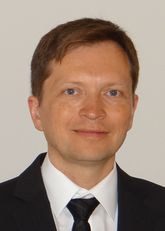
Zhen Tao is a Research Associate at the Chair of Software Engineering & AI , part of the TUM School of Computation, Information and Technology at the Technical University of Munich. They hold an academic affiliation in Heilbronn, Germany, and their email address is zhen.tao@tum.de . Education M.Sc. in Machine Learning and Computer Vision from The Australian National University Bachelor of Advanced Computing (Honours) from The Australian National University Bachelor of Computer Science and Technology from Shandong University (Weihai) Zhen Tao's research focuses on Usable Privacy and Security and Privacy Policy Analysis , with contributions to topics such as GUI testing, code vulnerability detection, and LLM-based agents for personalized app reviews. Their work intersects software engineering, human-computer interaction, and AI ethics, reflecting a multidisciplinary approach to improving user interface design and software security. They are part of a research team led by Prof. Chunyang Chen, collaborating on projects related to large language models, code optimization, and compliance with AI regulations like the EU AI Act.
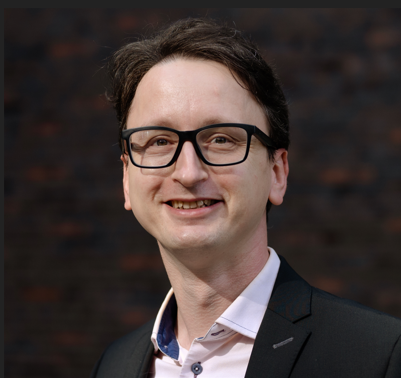
Nico Reeb is a Researcher at the Technical University of Munich , affiliated with the Chair for Robotics, Artificial Intelligence and Real-time Systems (I6). He joined the group in December 2020 and focuses on spiking neural networks and neuromorphic computing applications. Education : B.Sc. in Physics (2018) from Ludwig-Maximilians University M.Sc. in Physics (2020) from Ludwig-Maximilians University His research bridges machine learning and computational neuroscience , with applications in automotive radar processing , 3D point cloud reconstruction , and neuromorphic hardware . He has contributed to the KI-ASIC project for energy-efficient AI in autonomous vehicles. Recent publications highlight his work on spiking network optimization, phase-encoded signal processing, and sensor fusion techniques. His educational background includes a semester at the University of Queensland and research experience at the Max Planck Institute for Astrophysics . Key Projects : KI-ASIC (Neuromorphic AI for autonomous vehicles) ANTARES Neutrino Telescope (bioluminescence and neutrino detection) He teaches courses like the SoSe 2021 Seminar on Bio-inspired Data Processing , and his work integrates physics-based approaches with computer science challenges.
Dr. Marcel Köster is a researcher affiliated with the Ubiquitous Media Technology Lab at the German Research Center for Artificial Intelligence (DFKI) and the Saarland Informatics Campus. His work focuses on GPGPU computing, particle simulations, compilers, and optimization techniques. Email: Marcel.Koester@dfki.de Phone: +49 681 85775 7750 Location: Gebäude D3 1, Room 0.13, Saarbrücken Research Interests Dr. Köster's research integrates GPU computing with simulation algorithms and compiler optimization. He contributes to advancements in parallel processing, domain-specific languages, and scientific visualization through both theoretical exploration and practical implementations. His publications highlight innovative applications of GPU acceleration to heuristic optimization, state generation, and particle simulations. These works demonstrate expertise in thread compaction, shared memory utilization, and warp scheduling. Teaching Experience Dr. Köster has taught multiple courses at HBK Saar, including: Artificial Intelligence (Summer 2019) Grundlagen der Medieninformatik (Winter 2016/17) Physical Simulations on Media Facades (Winter 2015/16) Core Lecture: Compiler Construction (Winter 2013/2014)
Dr. Nico Herbig is a researcher at the Ubiquitous Media Technology Lab (UMTL) at Saarland University, holding a Dr.-Ing. degree awarded in 2022 for his PhD thesis on multi-modal post-editing of machine translation. His work bridges human-computer interaction and language technologies, focusing on enhancing translator productivity through innovative interface design. Herbig's primary research explores Machine Translation and Human-Computer Interaction , with specific expertise in multi-modal post-editing systems that reduce cognitive load. His investigations into gesture-based interfaces, handwriting recognition, and speech commands for translation workflows represent significant contributions to the field. Recent work extends into E-Learning applications where multi-modal cognitive load detection improves adaptive learning systems, and Retail Technology focusing on sustainable food systems and intelligent shopping interfaces. Analysis of his 15 most recent publications (2018-2022) reveals a consistent focus on multi-modal translation interfaces, with 70% dedicated to post-editing enhancement. His work increasingly integrates physiological sensors for cognitive load measurement (2019-2021) and expands into cross-domain applications like e-learning (2020) and retail (2017-2018). The publications demonstrate strong industry relevance through collaborations with professional translators and practical implementations in CAT tools. As an academic advisor, Herbig has supervised 7 Master's theses and 3 Bachelor's theses between 2017-2020. Key projects include ImpoWord MTQE (2020), IPE visualization (2020), and tangible AR systems for retail (2018). His teaching portfolio includes Web Development courses (2017-2018) and the 'Livestreaming Meets HCI' seminar (2017), reflecting his interdisciplinary approach. Herbig operates within the Ubiquitous Media Technology Lab led by Prof. Dr. Antonio Krüger, collaborating on projects including MMPE (Multi-Modal Post-Editing), VICAR, HyperCOG, and KOALA. The lab's research spans intelligent retail systems (e.g., 'intelligent fruit stand'), factory layout planning (DEPlata), and sports technology (OmniSports), with Herbig contributing core expertise in human-centered translation interfaces and cognitive load optimization.
Dr. Anne Köker is a Researcher at the Faculty of Education, University of Bielefeld, Germany. She specializes in German as a Second Language (DaZ) competence development for teachers and prospective educators, with a focus on school development and educational research. Key research areas: Teacher training in multilingual contexts, performance-based competence measurement, and research-based learning Her work is prominently featured in BMBF-funded projects like DaZKom and DaZKom-Transfer , which examine German language competencies in teacher education through video-based assessments. She collaborates with institutions in Bremen, Lüneburg, and Paderborn as part of interdisciplinary research initiatives. Köker actively contributes to the academic community as a member of the German Educational Research Association (DGfE) and the German Association for Teaching as a Foreign Language (FaDaF). She serves as a spokesperson for Working Group 4 and represents the Faculty of Education in library affairs.
Prof. Dr. Elke Schimpf is a faculty member at the Evangelical University of Applied Sciences Darmstadt in the Department of Social Work . She holds the academic rank of Professor and serves as the Equal Opportunities Officer / Women's Representative (deputy) for the university. Her office hours are held on Wednesdays from 1:00 PM to 2:00 PM in room H 501. Academic career since 1995 Key research areas: Gender Studies, Conflict Analysis, Lifeworld-Oriented Social Work, Youth and Social Media Leadership roles: Senate member of EHD, liaison lecturer for Hans Böckler Foundation Active in professional networks: German Society for Social Work (DGSA), gFFZ Gender Research Center Her research focuses on gendered knowledge production in social work education and practice, with empirical studies on how young people navigate conflicts through social media. She leads funded projects like Gender*Knowledge in Practice-Oriented Modules (HMWK 2022-ongoing) and Gender Power Knowledge (HMWK 2020-2022). Her methodological approach emphasizes participatory research and critical analysis of institutional power dynamics. Recent publications explore topics such as feminist language criticism, conflictual addressing in social work, and the interplay between gender knowledge and professional practice. She contributes to debates on the productivity of intrafeminist conflicts and the visualization of non-binary identities in pedagogy. Scientific Awards & Memberships: Liaison lecturer, Hans Böckler Foundation Academic management, Gender and Women's Research Center of Hessian Universities (gFFZ) Jury member, Award for Outstanding Final Theses in Social Work (DBSH/FBTS) Member, International Society for Residential Care (IfGH) State Working Group on Girls' Policy in Hesse
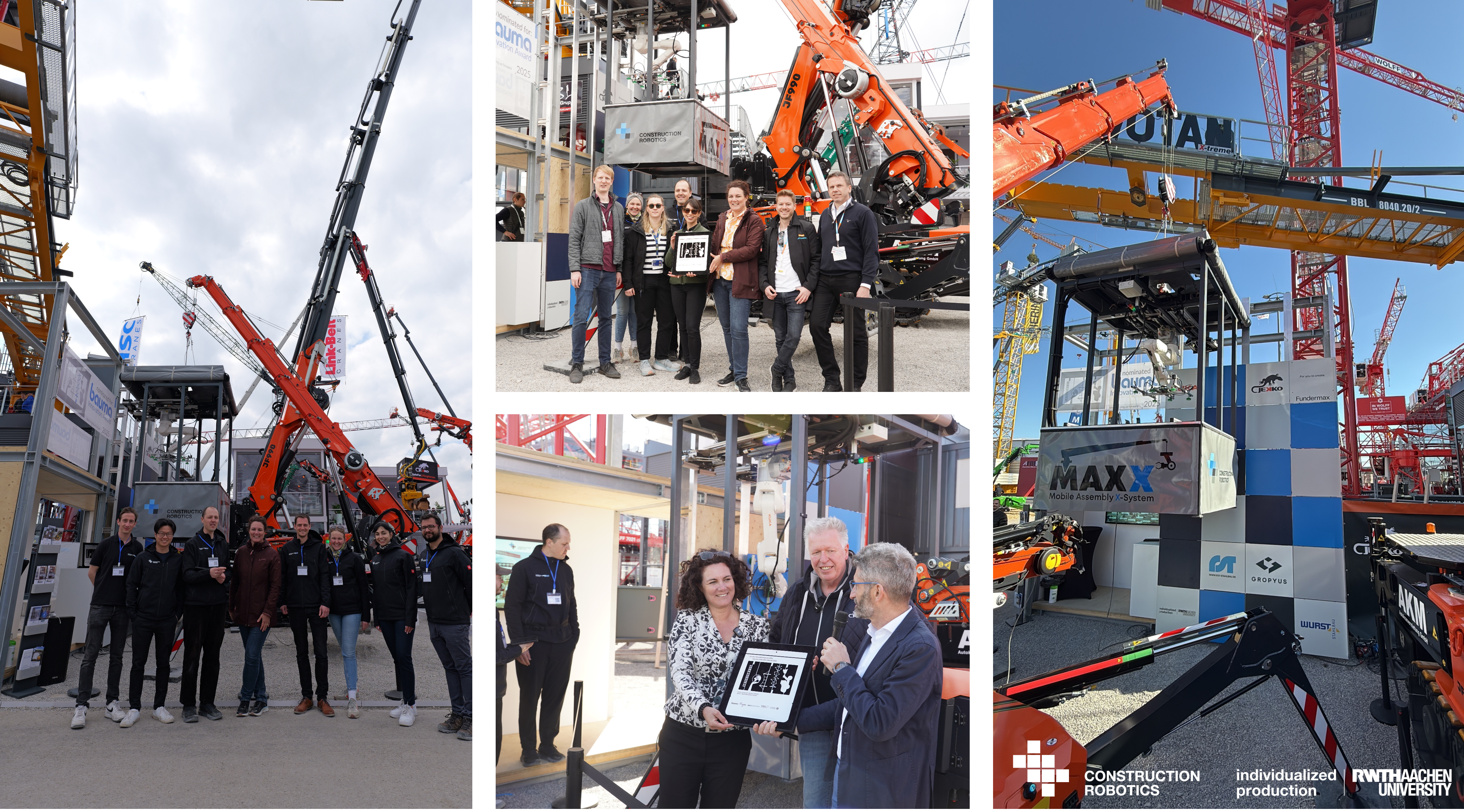
Prof. Dr. Sigrid Brell-Cokcan is a full-time Professor at the Chair of Individualized Building Production at RWTH Aachen University. Her work focuses on integrating construction robotics , 5G networks , digital twins , and BIM to advance automation in the construction industry. She leads projects like MAXX (awarded the bauma Innovation Award 2025 ) and TARGET-X, emphasizing interdisciplinary collaboration with industry partners such as KUKA AG, Jekko Srl., and Fraunhofer Institutes. Research Highlights: 5G-enabled robotic deconstruction Semantic data connectivity for steel assembly Ontology-driven automation frameworks Human-robot collaboration in unstructured environments Recent Trends: Focus on 5G networks for real-time construction monitoring Development of semantic digital twins for steel fabrication Integration of Vision Transformers and edge computing in robotic systems Rule-based automation for acoustic façade analysis Scientific Awards: bauma Innovation Award 2025 (Research category) for the MAXX project Her collaborations span HOCHTIEF ViCon , UNIBERG GmbH , and the 5G-Industry Campus Europe . She also contributes to teaching and international research programs like the Research-Driven Project on construction robotics.
Laura Christin Charlott Gonnermann is a Research Associate at the University of Leipzig's Institute for Old Testament Studies, affiliated with the Theological Faculty's Department of History and Religion of Israel and its Environment. Since 2017, she has worked under Prof. Angelika Berlejung while pursuing her doctoral dissertation on Egyptian amulets in the Southern Levant. She also serves as Equal Opportunities Officer (2019-2024) and Faculty Council member. Her research integrates archaeology, philology, and iconography to study: Egyptian amulets in 1st-millennium BC Palestine/Israel Biblical archaeology through the Tell el-Badawija excavation Cognitive metaphors in ancient texts Semitic-Egyptian multilingualism Publications reflect interdisciplinary work spanning archaeology, religious studies, and educational technology. Recent articles analyze ancient fear embodiment (2024), digital learning tools (2023), and hieroglyphic amulets (2021), demonstrating expertise in both ancient Near Eastern studies and modern pedagogical methods. Awards include the Evangelical Studienwerk Villigst Scholarship (2011-2016). She leads the project 'Crafting for the God(s): Dynamics of Cult, Craft Production, and Socio-Technological Identities' (2022-present) and contributes to excavations at Tell el-Badawija/Hannathon (2023-2030). Teaching activities include courses on Old Testament exegesis, biblical studies, and ancient writing systems, with excursions to archaeological collections.
Dr. Oksana Turkevych serves as a Lecturer for Ukrainian at the Institute of Slavic Studies, University of Regensburg, Germany. She teaches comprehensive Ukrainian language courses including beginner sequences (Ukrainisch I-IV), specialized writing training, translation modules, and culture-focused instruction for university staff and the general public. Her work bridges academic linguistics with practical language education within Germany's evolving multilingual landscape. Education: B.A. in Ukrainian Philology, Ivan Franko National University of Lviv (2003-2007) Magisterstudium in Ukrainian Applied Linguistics, Ivan Franko National University of Lviv (2007-2008) Doctorate in Ukrainian Linguistics (defended 2013) Turkevych's research centers on Ukrainian heritage language pedagogy, examining motivational dynamics, cultural identity preservation, and task-based teaching methodologies. She investigates terminology standardization in language education and develops practical frameworks for teaching Ukrainian to German speakers, with particular focus on refugee communities. Her work addresses critical gaps in heritage language maintenance through sociolinguistic analysis and curriculum innovation. Her 2022-2024 publications reveal a strategic shift toward integrating Ukrainian into Germany's formal education systems, analyzing refugee-driven language policy changes, and creating accessible resources like the '1000 and 1 Words' lexical minimum. These works consistently emphasize culturally responsive pedagogy, multilingual competence development, and practical applications for heritage language classrooms. Grants and Projects: EU Researcher, MSCA4Ukraine project at Humboldt-Universität zu Berlin (2023-2024) Project 'Ukrainian in the Context of Multilingualism in Germany: Theory and Didactics' (Volkswagen Foundation, 2022-2023) She coordinates nationwide teacher training initiatives through the Refugee Teachers Programme at University of Potsdam and leads the Association of Ukrainian Language Teachers' workshop series. Her summer school coordination in Lviv (2020-2022) and Greifswald (2014-2024) demonstrates sustained international engagement. Current work focuses on developing frameworks that incorporate refugee experiences into heritage language curricula. Turkevych actively shapes academic discourse through presentations at venues including Universität Hamburg, Bielefeld University, and international forums in Poland and Portugal. Her collaborations with BIVEM (Berlin Interdisciplinary Network for Multilingualism) and the German-Ukrainian Academic Society drive practical implementations of multilingual education policies.
Prof. Dr. Artur Andrzejak is a full professor (W3) at Heidelberg University since 2010, serving as the Head of the research group Artificial Intelligence for Programming (AIP), and currently as Executive Director of the Institute of Computer Science. He has held significant academic roles including Deputy Dean of the Faculty of Mathematics and Computer Science (2019-2024), Dean of Studies for Computer Science (2015-2017), and Liaison Professor of the German National Academic Foundation (2014-2023). Habilitation in Computer Science (2009), Freie Universität Berlin Ph.D. in Computer Science (2000), ETH Zurich Diploma in Mathematics (1995), Freie Universität Berlin His research focuses on artificial intelligence applications in software engineering, particularly code generation and error correction techniques. He has also made significant contributions to software aging analysis, distributed systems, and cloud computing, with publications spanning federated learning, secure computation, and software rejuvenation. Recent publications demonstrate a strong focus on code generation and error correction methods using large language models, while earlier work includes foundational studies in distributed systems, grid computing, and software rejuvenation techniques. His research combines theoretical computer science with practical applications in enterprise software systems. As an academic leader, he has organized Dagstuhl Seminars on Parallel Data Analysis (2013) and Self-Healing Systems (2009), and served on editorial boards for the journals Parallel Processing Letters and Multiagent and Grid Systems. He has held various leadership roles in academic institutions and research networks.
Volker Tresp is a Professor at the Ludwig-Maximilians-Universität München (LMU) and a leading researcher in machine learning for relational structured domains . His work bridges cognitive AI , knowledge graphs , and quantum computing . He is a PI in the Munich Center for Machine Learning (MCML) and co-director of the ELLIS program on Semantic, Symbolic, and Interpretable Machine Learning . His research interests focus on temporal knowledge graphs , foundation models , multimodal learning , and quantum machine learning . Recent projects include WebPilot (multi-agent web task execution) and FedBiP (federated learning with diffusion models). His work on PyKEEN and RESCAL has advanced knowledge graph embeddings . Volker Tresp's scientific contributions are recognized through ELLIS Fellowship (2020) , Siemens Inventor of the Year (1996) , and Best Paper Awards at ISWC 2021 and IEEE ICHI 2020 . His students have published extensively at top AI venues like AAAI , CVPR , and ECCV . Awards and Honors: ELLIS Fellow (2020) Siemens Inventor of the Year (1996) Best Paper Award, ISWC 2021 Student Best Paper Award, ISWC 2017 Best Paper Runner-up, PKDD 2005
Janine Strotherm is a researcher at Bielefeld University, affiliated with the Faculty of Engineering and the Machine Learning Group within the Center for Cognitive Interaction Technology (CITEC). Her office is located at CITEC 2-112, and she actively contributes to the EU Grant 'Water Futures' project focused on water distribution systems. She works within Bielefeld's strategic research area in the Socio-Technical World, which examines capabilities enabling agents like humans, robots, and AI to function in complex environments. Dr. Strotherm's research bridges machine learning and hydraulic engineering, with particular expertise in physics-informed graph neural networks for water infrastructure. Her work addresses critical challenges in water distribution networks including leak detection, system monitoring, and infrastructure optimization. A significant portion of her recent research focuses on fairness-enhancing methods for AI systems applied to water networks, developing techniques that account for non-binary sensitive features to ensure equitable resource allocation and monitoring. Analysis of her publication trends reveals a clear progression from foundational machine learning applications toward sophisticated hybrid approaches that integrate physical domain knowledge with neural architectures. Her work demonstrates growing attention to ethical considerations in AI deployment for critical infrastructure, with publications spanning theoretical analyses of hydraulic states to practical fairness-enhancing classification methods. Within Bielefeld University's research ecosystem, Dr. Strotherm contributes to the Center for Cognitive Interaction Technology (CITEC), one of the university's central academic institutes that fosters interdisciplinary collaboration across faculties. Her work aligns with Bielefeld's strategic focus on transcending disciplinary boundaries to address complex societal challenges through innovative research approaches.
Thomas Liebig is an Assistant Professor of Smart City Science at TU Dortmund University's Artificial Intelligence Unit and a Principal Investigator at the Lamarr Institute for Machine Learning and Artificial Intelligence. He also serves as a senior AI architect supporting Materna SE in integrating artificial intelligence into the public sector and industry, and previously held an Adjunct Professor position in Data Privacy and Ethics at the University of Nicosia. His research focuses on distributed data mining, reinforcement learning, multi-agent systems, privacy-preserving learning, and spatio-temporal modeling. Liebig has made significant contributions to graph neural networks, probabilistic modeling with sum-product networks, and traffic flow prediction systems. His work bridges theoretical machine learning with practical applications in smart cities, transportation, and healthcare. Liebig's recent publications demonstrate a strong trend toward privacy-preserving machine learning techniques, particularly differential privacy applied to distributed settings. His work on sum-product networks has advanced interpretable probabilistic modeling, while his research on graph neural networks has explored novel connections with classical algorithms like PageRank. His practical applications span transportation systems, healthcare, and smart city infrastructure. Liebig has supervised numerous graduate students working on topics including blockchain-based data analysis, traffic prediction systems, and privacy-preserving machine learning. His research has been supported by projects including SFB876 (Providing Information by Resource-Constrained Data Analysis) and collaborations with industry partners. He is actively involved in the academic community, having co-organized workshops such as Mining Urban Data at ICML and Computational Transportation Sciences. His work appears in top venues including IEEE International Conference on Knowledge Graph, ECML/PKDD, and IEEE Transactions on Intelligent Transportation Systems.
Derya Dinçer serves as a Researcher and doctoral candidate at the Department of Modern Languages within the Faculty of Humanities at the University of Tübingen. Since January 2020, she has been affiliated with the 'German as a Second Language - Language Diagnostics and Language Support' division under Prof. Dr. Doreen Bryant at the Deutsches Seminar, contributing to both research initiatives and teaching activities in the German linguistics domain. Her academic qualifications include: Bachelor of Arts in 'German as a Second Language - Language Diagnostics and Language Support' (University of Tübingen, 2014-2017), with thesis research on passive acquisition diagnostics in primary school children Master of Arts in 'German Linguistics - Theory and Empirics' (University of Tübingen, 2017-2019), focusing on reference chains in secondary school students' text competence Dinçer's research examines multilingualism, language education in early childhood settings, and subject-sensitive language teaching methodologies. Her doctoral dissertation investigates language actions in preschoolers' first and second language German acquisition, specifically analyzing hypothesizing behaviors during early science learning processes. This work bridges theoretical linguistics with practical educational applications, emphasizing science education for multilingual learners. Her publication record demonstrates consistent focus on language support interventions, particularly through performative approaches like theater-based pedagogy. Recent conference presentations (2023-2024) expand on multilingualism in children, language as a tool for scientific cognition, and epistemic modality in preschool language development, reflecting evolving research trajectories in early language acquisition. Within the Deutsches Seminar, Dinçer actively participates in the language diagnostics research team while conducting professional development workshops for educators. She regularly teaches specialized seminars on language diagnostics in schools, research methods for German as a second language, and supervises colloquia on DaZ research projects, maintaining strong connections between academic research and practical educational implementation.
Marcel Mauri is a researcher in the field of Business Informatics at Goethe University Frankfurt. His work focuses on agile workflow management, business process management, case-based reasoning, cloud computing and knowledge management. He has been actively involved in research projects like EVER and WFCF that investigate methods for transferring workflows between domains and managing cloud-based workflow systems. Research Interests Marcel's research interests center around: Agile workflow management and business process management Case-based reasoning and knowledge extraction from processes Cloud computing and resource management in distributed systems Recent Publications His recent publications show a strong focus on autonomous mobility systems and cloud management. He has published extensively on: Integration of BDI agents with traffic simulation tools Workflow transfer learning between domains Experience management approaches for cloud task placement Projects Marcel has been involved in several research projects: Project EVER - Extraction and Processing of Procedural Experience Knowledge in Workflows WFCF - Workflow Cloud Framework for process-oriented case-based reasoning CAKE - Collaborative Agile Knowledge Engine for workflow management