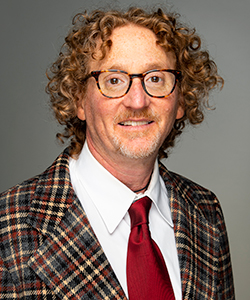
Dr. Edyta Chlebowska is an Assistant Professor at the Cyprian Norwid Research Center, John Paul II Catholic University of Lublin. Specializing in the visual art and literary legacy of Cyprian Norwid, she explores intersections between Polish Romanticism, art history, and cultural studies. Her work extends to album art analysis and interdisciplinary connections with music (e.g., Pink Floyd, Czesław Niemen). Her research focuses on Norwid's self-portraits, eschatological themes in his drawings, and comparative studies with 19th-century Warsaw painting. She reconstructs lost artworks, documents private collections (e.g., Konstancja Górska, Victor Gomulicki), and examines Norwid's reception in Florence and Odessa. Key projects include translating Studia Norwidiana and critical editing of Norwid's complete works. As editor-in-chief of multiple On Cyprian Norwid. Studies and Essays volumes and organizer of conferences like Niemen Non Stop and Colloquia Norwidiana , she bridges academic rigor with public engagement. Her publications span peer-reviewed books, journal articles, and popular science pieces, emphasizing Norwid's unpublished works and symbolic programs.
Paul D. Asimow is the Eleanor and John R. McMillan Professor of Geology and Geochemistry at the California Institute of Technology (Caltech), part of the Division of Geological and Planetary Sciences. He holds a B.A. from Harvard University (1991), an M.S. (1993), and a Ph.D. (1997) from Caltech. His career progression includes roles as Assistant Professor (1999–2005), Associate Professor (2005–2010), and Professor (2010–present), with the McMillan Professorship since 2016. Education: A.B. in Geology, Harvard University, 1991 M.S. in Geology, Caltech, 1993 Ph.D. in Geology, Caltech, 1997 Research Interests: Focuses on computational, experimental, and observational approaches to igneous petrology and mineral physics. Key areas include adiabatic mantle melting, water's role in mantle dynamics, high-pressure mineral physics, and processes at mid-ocean ridges. His research utilizes advanced facilities like the Lindhurst Laboratory of Experimental Geophysics and the alphaMELTS software package for thermodynamic modeling. Articles Overview: Recent work spans planetary crust formation, Martian petrogenesis, and high-pressure mineral behavior. Themes include experimental techniques, computational modeling, and cosmochemical studies of meteorites. Awards and Honors: James B. Macelwane Medal (AGU) Frank Wigglesworth Clarke Medal (Geochemical Society) Richard P. Feynman Prize for Teaching Excellence (Caltech) Fellow of the American Geophysical Union Fellow of the Mineralogical Society of America Grants and Labs: Received NSF funding for developing an interactive phase equilibria curriculum. Leads the Lindhurst Laboratory, focusing on shock-wave experiments and high-pressure mineral physics. Collaborates on software tools like alphaMELTS and MAGMASOURCE. Labs and Teams: Active in the Caltech Shock Wave Laboratory, advancing experimental methods for planetary material studies. Engages in interdisciplinary projects on Mars geology and terrestrial planet formation.
Prof. Waldemar Kolanus leads the Molecular Immunology and Cell Biology department at the University of Bonn's Life & Medical Sciences Institute (LIMES) . His research bridges immunoregulation , stem cell dynamics , and metabolic stress responses in immune cells. Unit 2 member at LIMES Principal investigator in SFB 704 and ImmunoSensation Cluster Leads a multidisciplinary lab with postdocs, PhD students, and technical staff His work focuses on intracellular signaling pathways connecting immune activation to tissue homeostasis, particularly through: Cytohesin proteins in integrin-mediated adhesion and migration TRIM71 in stem cell regulation and congenital hydrocephalus High-salt environments affecting macrophage function Publication trends show expertise in immune cell migration , genetic models , and chemical inhibition , with frequent use of mice and zebrafish for in vivo studies. Key articles explore: TRIM71's dual role in auditory development and germ cell maintenance Cytohesin family's Golgi regulation and insulin signaling Ruxolitinib's off-target migration inhibition of dendritic cells Contact details: Address: LIMES Institute, Carl-Troll-Straße 31, Bonn Email: kolanus.sekretariat@uni-bonn.de Phone: +49 228 73-62788
Dr. Simon A. Morrison is a Senior Lecturer in the Division of Communication, Screen & Performance within the Faculty of Arts, Humanities and Social Sciences at the University of Chester. He serves as Programme Leader for the Music Journalism degree, which he helped design, build and deliver from its first cohort in 2014. With 25 years of experience as a writer, broadcaster, and academic, Morrison brings extensive industry knowledge to his teaching and research, having worked as a music journalist reporting from locations worldwide including Beijing, Brazil, Moscow, and Marrakech. Dr. Morrison holds a PhD from the University of Leeds (completed 2018), an MA from the University of Manchester (1995-1997), and a BA Hons from the University of Manchester (1989-1992). Prior to his position at Chester, he worked as an Associate Lecturer at Manchester Metropolitan University (2012-2014) and as a Visiting Lecturer at Leeds University (2011-2013). His academic journey follows a substantial career in media where he presented TV for Rapture TV, hosted radio shows in Ibiza, produced and presented for Kiss Radio, and appeared on BBC Breakfast and BBC 5 Live. Dr. Morrison's research centers on the intersection of words and music , with particular focus on Popular Music , Musico-Literary Intermediality , and Electronic Dance Music Culture . His work explores how music subcultures, particularly rave and dance music scenes, are represented in literature and journalism. He examines the connections between different countercultural movements, notably drawing parallels between the Beat Generation writers and contemporary 'Chemical Generation' authors who write about club culture. His research also investigates the relationship between music journalism and subcultural movements across different historical periods. His recent publications reveal a clear trajectory connecting historical dance music developments across continents and eras. Morrison's work traces the evolution of electronic dance music from its American roots in Chicago and Detroit through its transatlantic journey to Europe and back again, examining how cultural exchange shaped musical innovation. His analyses of Pink Floyd demonstrate how rock bands interact with media landscapes, while his investigations of music journalism document the changing nature of music criticism in digital eras. The recurring theme across his scholarship is the examination of how subcultural experiences are translated into written form, whether through journalism, fiction, or academic analysis. Dr. Morrison actively supervises undergraduate dissertation projects and Negotiated Study production projects across all three years of undergraduate study. He has successfully supervised an MRes project to completion and examined PhDs (including one internal and two external, one being an Australian PhD by Artefact & Exegesis). He has served as an External Examiner for Music Journalism programs at Southampton Solent University (2016-2019) and BIMM London, Birmingham and Manchester (2016-2020). His teaching spans modules including Introduction to Journalism, Live Journalism, Dancing About Architecture: Popular Music Media, Histories and Technologies, The Cultural Politics of Music Journalism, The Politics of Social Media, Magazine Publishing and Music PR and Promotional Writing.
Hsueh-man Shen is the Director of Masters Studies and Ehrenkranz Associate Professor in World Art at New York University’s Institute of Fine Arts. She holds a D.Phil. from Oxford University in Archaeology, an M.A. in Art History from National Taiwan University, and an LL.B. in Law from the same institution. Her research focuses on medieval Chinese art and archaeology, particularly how cross-cultural exchanges shaped artistic practices through translation, replication, and hybridization. She has curated major exhibitions such as Gilded Splendor: Treasures of China’s Liao Empire (2006) and contributed to the Cave Temples of Dunhuang project (2016), emphasizing Silk Road cultural networks. Her current book project explores maritime activities’ impact on Buddhist art during the 10th–14th centuries. Shen’s work bridges art history, archaeology, and material culture studies, addressing topics like relic deposits, shipwrecks, and cross-cultural curatorial practices. She has held prestigious fellowships, including the Leiden University Hulsewé-Waznieski Professorship (2019) and a Wissenschaftskolleg zu Berlin residency (2008–2009). Education: D.Phil., Archaeology, University of Oxford M.A., Art History, National Taiwan University LL.B., Law, National Taiwan University Her research interests include Buddhist art’s transformation across dynasties, the role of replication in devotion, and maritime trade’s influence on cultural boundaries. She teaches courses such as Colors in the Visual Culture of Medieval China and Shipwrecks and the ‘Other’ Silk Road , integrating theoretical and material perspectives. Shen’s awards reflect her global academic contributions, including the EURIAS Senior Fellowship (2018–2019) and Progress 100 Visiting Professorship at Kyushu University (2017). Her publications span exhibition catalogues, monographs like Authentic Replicas: Buddhist Art in Medieval China (2019), and peer-reviewed articles analyzing Silk Road networks, Liao dynasty funerary practices, and cross-cultural material exchanges.
Sarah Hill is Associate Professor of Music at the University of Oxford and Fellow of St Peter's College, specializing in the historiography of popular music. Her research examines the intersection of musical cultures with political activism, particularly focusing on Welsh-language music preservation, countercultural movements, and music's role in identity formation. Dr. Hill's monograph 'San Francisco and the Long 60s' (Bloomsbury, 2016) offers a microhistory of the Haight-Ashbury music scene and its contemporary legacy. Current projects include co-editing 'The Oxford Handbook of Progressive Rock' and investigating women rock critics' contributions to second-wave feminism. As Coordinating Editor of Popular Music journal since 2012, she maintains active engagement with international music research communities. Dr. Hill was elected Fellow of the Learned Society of Wales in 2023.
Dr. Garth Alper is a Professor and Program Coordinator for Jazz Studies at the University of Louisiana at Lafayette's School of Music and Performing Arts. He holds a Doctor of Arts in Music Theory/Composition from the University of Northern Colorado, a Master of Arts in Piano Performance (Jazz Track) from New York University, and a Bachelor of Professional Studies in Jazz Studies from SUNY Empire State College. His research focuses on Jazz Piano, Jazz History, and Popular Music, with notable contributions to understanding improvisation techniques, postmodernism in music, and the cultural legacy of jazz icons like Duke Ellington. Dr. Alper has authored numerous articles in journals such as College Music Symposium , Rock Music Studies , and Jazz Perspectives , and guest-edited a special jazz issue of Popular Music and Society . His music compositions are featured on multiple CDs, including the acclaimed Spider’s Web (2022) and Stratus (2017). He has received significant grants and awards, including the BORSF Endowed Professorship and funding for jazz pedagogy and recording projects. Education: Doctor of Arts in Music Theory/Composition (University of Northern Colorado) Master of Arts in Piano Performance (Jazz Track, New York University) Bachelor of Professional Studies in Jazz Studies (SUNY Empire State College) Research Contributions: Includes analysis of jazz improvisation, postmodern music theory, and the sociocultural impact of jazz. He has authored encyclopedia entries on influential jazz musicians and contributed to critical discussions on popular music pedagogy. Teaching & Courses: Teaches Jazz Piano, Jazz Theory, Jazz History, Film Scoring, and directs the Jazz Combo program. Courses include MUS 312: Jazz Theory I and MUS 438: Film Scoring I . Grants & Recognition: Over $100K in grants for recording projects, multimedia facilities, and pedagogical initiatives. Holder of the Ruth Stodghill Girard BORSF Endowed Professorship since 2001. Labs/Teams: Coordinates the Jazz Studies program and collaborates on projects blending jazz with film scoring and modern media.
Behzad Alaei serves as an Associate Professor in the Section for Study of Sedimentary Basins within the Department of Geosciences at the University of Oslo's Faculty of Mathematics and Natural Sciences. His office is located in room K38 of the Geology Building at Sem Sælands vei 1, 0371 Oslo, with a professional email contact at behzad.alaei@geo.uio.no. Dr. Alaei maintains an active research profile with publications spanning from 2005 to the present, demonstrating his ongoing contributions to geological sciences. Dr. Alaei's research spans multiple critical areas within structural geology and sedimentary basin analysis, with particular expertise in fault zone architecture, seismic interpretation techniques, and CO2 storage site assessment. His work bridges theoretical geological concepts with practical applications in petroleum geology and carbon sequestration. A significant portion of his research focuses on the Norwegian Barents Sea region, where he has conducted extensive studies on normal fault systems and their geometric characteristics. His recent work increasingly integrates machine learning and deep learning approaches with traditional geological analysis, reflecting the evolving nature of geoscience research methodology. The analysis of Dr. Alaei's publication record from 2018-2024 reveals a strong thematic continuity in fault characterization research, with progressive incorporation of advanced computational methods. Early publications focused primarily on traditional structural analysis of fault systems in sedimentary basins, while more recent work demonstrates increasing integration of machine learning techniques for fault detection and characterization. A notable trend is the application of these geological insights to practical challenges in carbon capture and storage, particularly regarding fault risk assessment for CO2 storage sites in the North Sea region. His collaborative work with Anita Torabi appears consistently throughout this period, suggesting a strong research partnership. Dr. Alaei maintains an active research program with multiple ongoing projects related to sedimentary basin analysis and fault characterization. His work appears to involve significant collaboration with both academic and industry partners, particularly in the context of CO2 storage research. While specific grant details aren't provided in the available information, his consistent publication record across multiple high-impact journals suggests successful funding of his research activities over the past two decades.
Dmitri Tymoczko is a Professor of Music at Princeton University, where he has taught composition and theory since 2002. His work bridges the gap between academic music theory and contemporary composition, creating a unique interdisciplinary approach that has earned him recognition as a leading figure in modern music scholarship and creation. Tymoczko's research interests focus on the geometric modeling of musical structures, polystylistic composition that draws from genres spanning Renaissance to rock, and the mathematical foundations of tonality. His theoretical work explores how harmonic structures can be represented geometrically, revealing fundamental patterns that connect diverse musical traditions. He approaches composition as 'a logical deduction from absurd premises,' blending rigorous structural thinking with playful musical exploration. His scholarly publications and compositions reveal a consistent interest in the intersection of mathematical precision and expressive freedom. The articles demonstrate expertise across music theory, composition, and the cognitive aspects of musical perception, with recurring themes of geometric modeling, tonal structure, and genre hybridization. His work often challenges traditional boundaries between academic and popular music forms. Guggenheim fellowship Rhodes Scholarship Leonard Bernstein fellowship from Tanglewood Fellowship from the Radcliffe Institute for Advanced Study Block lectureship from the Society for Industrial and Applied Mathematics First music-theory article published in Science magazine Tymoczko maintains an active performance career alongside his academic work, with his compositions performed by leading ensembles including the Brentano Quartet, Newspeak, and Roomful of Teeth. His teaching integrates theoretical insights with practical composition, fostering a generation of musicians who understand music's structural foundations while embracing creative freedom. He has developed innovative tools like the musical programming language 'arca' to explore new compositional possibilities.
Professor L.J. Sluys is a Full Professor and Chair of Computational Mechanics at the Faculty of Civil Engineering and Geosciences, Delft University of Technology (TU Delft). He has been a leading figure in computational mechanics since 1999, heading the Computational Mechanics group and serving as head of the Department of Materials, Mechanics, Management and Design (3MD) from 2018 to 2024. His research is centered on the computational modeling of material behavior, particularly focusing on failure processes and high-performance materials. His research interests include computational mechanics of materials, modeling of failure and fracture processes, multi-scale methods, and the computational modeling of high-performance materials such as composites and concrete. He employs advanced numerical techniques including the finite element method, extended finite element method (XFEM), level-set methods, and cohesive zone modeling to simulate complex mechanical behaviors under static and dynamic loading conditions. His work spans civil, mechanical, and materials engineering domains, with applications in infrastructure, energy, and sustainable materials. The recent publications highlight a strong trend in modeling fracture, fatigue, and degradation in heterogeneous materials such as composites, concrete, and geological formations. His work integrates multi-physics and multi-scale approaches, often coupling mechanical, thermal, and chemical effects. There is a consistent focus on numerical robustness, model validation, and the development of adaptive computational frameworks for simulating progressive damage and failure. Research Fellow of the Netherlands Academy of Arts and Sciences (KNAW) Professor Sluys has taught core courses such as Introduction to the Finite Element Method and Computational Methods in Non-linear Solid Mechanics for over a decade, indicating a strong commitment to academic education. He has supervised numerous students, though specific names are not listed in the provided texts. He leads an active research group in computational mechanics, contributing to both fundamental and applied research in solid mechanics. His work involves collaboration with international institutions and industry partners, particularly in the areas of infrastructure durability and advanced materials.
Assoc. Prof. Dr. Gökçen Kurtuluş ÖZTAŞKIN is a Byzantine art history specialist at Anadolu University's Institute of Social Sciences, Department of Art History. Holding a PhD in progress since 2007, she completed her Master's and undergraduate studies in Art History at the same institution. Fluent in English, she actively participates in international conferences and contributes to archaeological projects across Turkey. Educational Background : PhD (2007-), Master's (2004-2007), BA (1998-2004) in Art History at Anadolu University Key Research Areas : Byzantine architecture, ancient Anatolian cities (especially Olympos), mosaic analysis, 3D documentation of historical structures Notable Projects : Muğla/Stratonikeia excavations (2008-2009), Topkapı Palace 3D survey (2008), Antalya/Olympos excavations (2006-2009) Courses Taught : Introduction to Art History I-II, Byzantine Art I-II, Pre-Islamic Turkish Art I-II Administrative Role : Farabi Program Department Coordinator (2009-)
Dr. Ashvin Immanuel Devasundaram is a Reader in Global Cinemas at Queen Mary University of London, specializing in World Cinemas with a focus on New Independent Indian Cinema, emerging cinemas from South Asia, the Middle East, Latin America, and Africa. He actively engages in transdisciplinary and intercultural exploration, connecting cinematic representations with themes such as postcolonialism, decolonisation, LGBTQ+ issues, urban violence, and cultural heritage. Current Research: Principal Investigator for the AHRC-funded India-UK project 'Connecting Creative Industries and Cultural Heritage: India-UK Film Festival Federation, Youth Curation and Community Co-creation' (2024-2027). Leadership Roles: Associate Director of the UK Asian Film Festival (UKAFF) and founder of its Edinburgh edition (2016). Key Themes: Intersections of cinema with philosophy, politics, migration, postmodernism, and urban transformations across India, South Africa, Bhutan, Singapore, and Brazil. His work has led to the establishment of an international interdisciplinary research network on global urban violence and its impact on marginalized communities, alongside ongoing editorial roles in academic series and journals. He mentors through the B-MEntor scheme and integrates philosophical themes into his music with the transglobal neo-progressive rock project The Multitude. Scientific Awards: Edinburgh University Literary Award (2012), QMUL Community Engagement Prize (2018).
Prof. Ksenija A. Stojanović holds the position of Full Professor at the University of Belgrade's Faculty of Chemistry , Department of Applied Chemistry. She has been affiliated with the Faculty since 2008, progressing from Assistant Professor (2008–2013), to Associate Professor (2013–2018), and Full Professor since 2018. Education: PhD in Chemistry (2000–2004), Faculty of Chemistry, University of Belgrade Postdoctoral studies at the Institute of Petroleum Chemistry, Russian Academy of Sciences (2006–2007) Research focuses on organic geochemistry , chemometry , and environmental chemistry . Her work includes biomarker analysis, oil-source rock correlations, and studies on lignite and lacustrine sediments. She has led or contributed to national and international projects, including investigations into lignite utilization and organophosphate flame retardants. Awards: 2006: Best Paper Prize for Young Researchers at the International Conference on Oil and Gas Chemistry 2011: American Chemical Society Reviewing Award Administrative roles include serving as Chair of the Admission Committee for Basic and Integrated Studies (2016–2022) and Deputy Chairman of the Faculty Board (2018–2020). She is a member of the Serbian Chemical Society and European Association of Organic Geochemists. Her teaching covers courses such as Industrial Chemistry , Geochemistry and Soil Pollutants , and Biomarkers in Geological Evolution .
Dr. Peter Cole is a Professor of History at Western Illinois University (WIU), affiliated with the College of Arts & Science. He holds the title of Distinguished University Professor and serves as a Research Associate at the University of the Witwatersrand’s Society, Work and Development Institute (SWOP) in South Africa. His research focuses on social movements, labor history, and racial dynamics in the U.S. and South Africa, with notable work on dockworkers and anti-apartheid activism. Cole co-directs the Chicago Race Riot of 1919 Commemoration Project (CRR19), which uses public art to memorialize racial violence in Chicago. He has authored several award-winning books, including Ben Fletcher: The Life & Writings of a Black Wobbly and Dockworker Power , and contributes to both academic and popular media. Education: B.A. from Columbia University; Ph.D. from Georgetown University. Research interests emphasize comparative labor history, deindustrialization, and historical memory. His work bridges academia and public engagement, including bike tours, media interviews, and partnerships with art studios for commemorative projects. Awards include the Philip Taft Labor History Book Award and multiple teaching excellence recognitions at WIU. Grants and fellowships include NEH support and international collaborations like the Germany Residency in American History program. Labs/Teams: CRR19 Project and SWOP Institute. Leisure activities include trail running, rock climbing, and vegan cooking.
Prof. Dr. Frank Erik Pointner serves as Professor of English Literature at the University of Duisburg-Essen within the Faculty of Humanities and Department of English and American Studies. He holds critical administrative roles including academic advisor for Bachelor/Master Anglophone Studies and Teacher Training programs, Chair of the Examination Board for Bachelor/Master programs, and Deputy Chair of the Commission for Teaching and Study Affairs. His institutional presence spans curriculum development, examination oversight, and gender equality initiatives. Pointner earned his MBA from the University of Mannheim (1991), followed by a PhD in Linguistics (1994) with thesis Cockney Glottalling: A Statistical Analysis of Contemporary London Speech , and completed his Habilitation at the University of Duisburg (2001) with Bawdy and Soul: A Revaluation of Shakespeare’s Sonnets . His 2008 professorial appointment solidified his specialization in Medieval/Renaissance studies, Romanticism, and British/American popular culture. His research traverses British/American literary traditions with concentrated expertise in Byron studies, Shakespearean sonnets, phonetics, and cultural representations of identity. Notable intersections include comics as literary adaptation tools, protest music as political expression, and working-class identity construction in popular culture. Methodologically, he bridges historical linguistics with contemporary cultural analysis, examining phenomena from Chaucerian lyrics to Hurricane Katrina's cultural aftermath. Pointner's publication trajectory reveals evolving thematic clusters: early work on phonetics and medieval literature expanded into Romanticism (particularly Byron reception in Germany), then progressively incorporated comics studies and protest music analysis. His recent scholarship demonstrates increasing interdisciplinary reach, connecting graphic narratives with pedagogical applications while maintaining rigorous philological foundations in English literary history. As an educator, he directs curriculum development for English language and literature programs, teaching courses ranging from historical phonology to graphic novels. His administrative leadership in examination boards and study advisory roles directly shapes degree structures across Bachelor, Master, and Teacher Training programs at the university level.