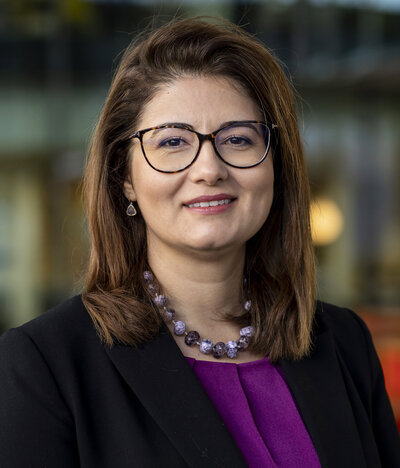
Dr. Paul D. Miller is a Professor of the Practice of International Affairs at Georgetown University’s School of Foreign Service (SFS), where he co-chairs the Global Politics and Security concentration in the MSFS program. He also serves as a non-resident Senior Fellow at the Atlantic Council’s Scowcroft Center for Strategy and Security. His expertise spans American foreign policy, just war theory, Christian nationalism, and security strategy. Previously, he held roles as Director for Afghanistan and Pakistan on the National Security Council, CIA analyst, and U.S. Army intelligence officer. Dr. Miller holds a PhD and BA in Government from Georgetown University and an MPP from Harvard Kennedy School. His research examines the intersection of faith, political theory, and international relations, with notable works including Just War and Ordered Liberty (2021) and American Power and Liberal Order (2016). His writing appears in Foreign Affairs , Survival , and The National Interest . His articles analyze grand strategy, ethical warfare, and U.S. foreign policy challenges, reflecting a focus on historical context, religious influences on governance, and the resilience of liberal international order. Miller contributes to Providence Journal and AEI’s Initiative on Faith and Public Life, emphasizing faith’s role in healthy democracies.
Barbara Bruns is an Adjunct Professor at Georgetown University's Walsh School of Foreign Service and a Visiting Fellow at the Center for Global Development. She holds degrees from the University of Chicago and the London School of Economics. Her career spans three decades as an education economist at the World Bank, focusing on Latin America's education systems. Her research emphasizes teacher quality, systemic reform politics, and accountability mechanisms. Notable works include 'Great Teachers: How to Raise Student Learning in Latin America and the Caribbean' (2015) and studies on Brazil's education challenges. She analyzes how political dynamics influence educational outcomes, particularly in Peru, Ecuador, and sub-Saharan Africa. Publications highlight classroom observation techniques, teacher performance incentives, and the role of learning data in policy. Her work bridges academic research with actionable policy insights, addressing both regional specifics and global SDG frameworks. Bruns collaborates with international organizations to translate evidence into reform strategies.
Aida Todri-Sanial is a Full Professor in the Integrated Circuits group of the Electrical Engineering department at Eindhoven University of Technology (TU/e). She leads the NanoComputing Research Lab and is affiliated with the Center for Quantum Materials and Technology Eindhoven (CQMT-E), EAISI, and the Integrated Circuits group. Her research focuses on energy-efficient circuits, novel computing paradigms (e.g., 3D integration, neuromorphic computing, quantum computing), and nanotechnology-driven architectures. Education: PhD in Electrical and Computer Engineering, University of California Santa Barbara (2009) Bardeen Fellow at Fermi National Accelerator Laboratory (2009–2010) Scientist/Research Director at CNRS (2011–2021) Visiting Fellow at the University of Cambridge (2016–2017) Research Interests: Dr. Todri-Sanial’s work integrates physics and electronics to design unconventional computing systems. Key areas include: Physical design optimization for energy efficiency Oscillatory neural networks (ONNs) for edge AI Quantum computing hardware and error mitigation 3D integration and monolithic-3D architectures Nanomaterials (e.g., VO₂, MoS₂) for neuromorphic and sensing applications Awards & Grants: ERC Consolidator Grant THERMODON (2023) NWO AiNed Fellowship (2024) NWO Quantum Technology Grant (2024) CNRS Bronze Medal (2016), IBM Quantum Open Science Prize (2021), and IEEE Distinguished Lecturer (2022) Labs & Teams: Principal Investigator of the NanoComputing Research Lab Lead researcher in EAISI (Eindhoven Artificial Intelligence Systems Institute) Collaborator with global institutions (e.g., IBM, STMicroelectronics)
José Herrera Sanz is an Assistant Professor at the Department of Automation, University of Alcalá (Spain). He holds a Doctorate from Universidad Complutense de Madrid (2008) with a thesis titled Modelo de programación para infraestructuras Grid computacionales , supervised by Dr. Rubén Manuel Santiago Montero and Dr. Ignacio Martín Llorente. His research focuses on Grid computing, distributed systems, and sustainability in programming models. He is affiliated with the PROGRESSUS research group (Programming & Sustainability), exploring topics like distributed task scheduling, grid middleware, and high-performance computing applications. His work spans over 15 peer-reviewed articles since 2003, addressing challenges in virtual machine placement, genetic algorithms, and bioinformatics grid benchmarking. Key contributions include the GridWay DRMAA implementation, optimization of fusion physics workflows, and distributed loop execution frameworks. His research emphasizes sustainable computing practices and scalability in grid environments.
Dr. Edyta Łukasik is a Professor at the Department of Computer Science, Faculty of Electrical Engineering and Computer Science, Lublin University of Technology. She is actively involved in teaching core computer science courses such as “Basics of Algorithms” and “Fundamentals of Algorithms”, and maintains regular consultations for students. Her academic work is supported by institutional resources including Moodle, Microsoft Azure Dev Tools, and Visual Paradigm. Her research spans interdisciplinary areas in computer science, with a focus on motion acquisition, 3D digital modeling, and accessible technology. She contributes to innovative projects such as the Movement Acquisition and Analysis Laboratory, where contemporary dance is recorded and preserved using advanced digital techniques. Other notable initiatives include the “Save from oblivion” project, which applies 3D technology to safeguard national and regional dance traditions, and the development of digital twins for accessibility, including aiding the visually impaired. Dr. Łukasik is also involved in the T1DCoach project and the expansion of traffic acquisition systems, indicating expertise in data acquisition and software development. These efforts reflect a strong commitment to universal design and integrated technological development at Lublin University of Technology. Her scholarly profile is registered with ORCID (0000-0003-3644-9769), affirming her engagement in the broader academic community. Though specific publications and awards are not listed in the provided text, her project leadership and teaching responsibilities underscore her active role in both research and education. Dr. Łukasik participates in international scientific expeditions, including the 10th Lublin University of Technology expedition to Central Asia, focusing on digital 3D technology applications. This global outreach highlights the international relevance of her work. Active Faculty Member Professor in Computer Science Research in 3D Modeling, Motion Analysis, Accessibility Involved in Digital Preservation Projects Teaching Algorithms and Programming Fundamentals ORCID: 0000-0003-3644-9769
Mark V. Pezzo serves as an Associate Professor at the University of South Florida, conducting research at the intersection of cognitive and social psychology with a specialized focus on judgmental biases in medical contexts. His work examines how motivational factors (self-presentation) and cognitive processes (sensemaking) interact in phenomena including hindsight bias, planning fallacy, and algorithm aversion. Education: Ph.D. in Experimental Psychology (Social/Cognition), Ohio University M.S. in Experimental Psychology (Social/Cognition), Ohio University Dr. Pezzo's research program centers on judgmental error mechanisms across diverse contexts, from rumor propagation to clinical diagnostics. His methodology emphasizes experimental paradigms revealing how cognitive shortcuts lead to systematic misjudgments, particularly in high-stakes medical environments where computerized diagnostic aids are increasingly prevalent. Recent work investigates physician resistance to AI tools and patient preferences for algorithmic versus human decision-makers. Analysis of his 2013-2021 publications reveals a clear evolution toward applied medical psychology, with 80% of recent work (2020-2021) focused on human-AI interaction in healthcare. Key thematic threads include algorithm aversion (three publications), diagnostic aid utilization (two publications), and medical judgment biases (all five publications), demonstrating consistent application of core cognitive principles to contemporary healthcare challenges. Scientific Awards: No awards listed in source material Advising and Grants: The provided documentation contains no references to student advisees, research grants, or funded projects. Teaching responsibilities include 13 courses spanning Advanced Cognitive Psychology, Medical Judgments, and Computer Programming in Psychology.
Marek Zaionc is a Professor at the Faculty of Mathematics and Computer Science, Jagiellonian University in Kraków, Poland. He specializes in theoretical computer science, logic, and computability theory. His research focuses on asymptotic properties of logical systems, lambda calculus, and the quantitative analysis of fuzzy logics. He has held visiting positions at institutions including the University of Alabama (USA), University of Buffalo (USA), and Université de Versailles (France). Education and Career: PhD in Mathematics, University of Warsaw (1985) Habilitation, Jagiellonian University (1993) Professor of Mathematical Sciences, Jagiellonian University (2003) Deputy Dean of Faculty of Mathematics and Computer Science (2002–2003) Research Interests: Asymptotic probability in logic and computability Typed lambda calculus and functional programming Quantitative studies of fuzzy logics and non-classical logics Combinatorial analysis of logical terms and structures Grants and Projects: NCN Grant (2019–2023): Investigating asymptotic equivalence in set theories NCBR Grant (2014–2017): Asymptotic methods in lambda calculus and combinatory logic Narodowe Centrum Badań (2010–2013): Quantitative studies in logic and computation Awards and Recognition: While no specific awards are listed, his extensive publications and leadership roles reflect significant contributions to theoretical computer science and logic. Labs and Teams: Active contributor to the Algorithmics Research Group and Foundations of Computer Science initiatives at Jagiellonian University.
Prof. Alexandru Gafton is a Professor and Head of the Department of Romanian Language and General Linguistics at Alexandru Ioan Cuza University in Iași. His academic career spans roles from preparator (1995–1997) to professor since 2005. He holds a doctorate in philology (2000) and has led doctoral programs since 2008. Gafton is an editor of the journal Diacronia and has organized national conferences on religious discourse. His research focuses on diachronic linguistics, historical phonetics, biblical translation, and cultural anthropology. Key contributions include studies on the evolution of the Romanian language through biblical translations, paleography, and the foundational texts of the Iași School of Linguistics. He has authored over 30 books and numerous articles, including Elemente de istorie a limbii române and Evolutionismul Parabolelor . Gafton’s work emphasizes the interplay between language, culture, and history, with a focus on Romanian linguistic norms and their socio-historical contexts. He has held visiting professorships in Germany and Switzerland and has received grants, including the Prince Dimitrie Sturdza Fellowship. His editorial work includes critical editions of historical texts like Codicele Bratul and Palia de la Orăştie . Gafton’s research also explores the philosophical foundations of science and the role of metaphor in language evolution.
Ashley Parker is a Visiting Assistant Professor in the Department of Communication Science and Disorders at the University of Pittsburgh’s School of Health and Rehabilitation Sciences (SHRS), where she joined as a Postdoctoral Associate in 2022 and transitioned to a faculty role in 2024. She has extensive experience teaching hearing sciences at both the University of Pittsburgh and the University of Connecticut. Ph.D., Speech, Language and Hearing Sciences, University of Connecticut M.A., Linguistics, Indiana University B.A., English and Secondary Education Her research lies at the intersection of audiology and neuroscience, focusing on hearing loss , biomarkers of hearing , and auditory electrophysiology . She investigates physiological indicators such as prestin in blood and their correlation with functional measures like otoacoustic emissions and auditory brainstem responses. Her work bridges laboratory findings with real-world hearing environments. The recent publications reflect a strong trend in identifying non-invasive biomarkers for cochlear health, particularly serological prestin, and validating hearing assessment tools outside clinical settings. Her research contributes to early detection of noise-induced hearing damage and improves diagnostic accessibility through home-based testing paradigms. Dr. Parker has been recognized with competitive awards: National Institutes of Health Loan Repayment Program Awardee ASHFoundation Audiology Student Grant She actively contributes to academic training in hearing sciences and is involved in translational research aimed at improving audiological diagnostics and interventions. While no formal advisees are listed, her mentorship is evident through grant-funded research and collaborative publications. Her work is supported by federal and foundation-level recognition, indicating strong potential for future independent research.
Dr. Hanieh Shakeri is an Assistant Professor in the Faculty of Computer Science at Dalhousie University, where she conducts research at the intersection of Human-Computer Interaction, Ubiquitous Computing, and Design Research. She leads the Calm Lab, a research group focused on developing computing systems that operate in the periphery of awareness and integrate seamlessly into everyday routines. Her research interests emphasize the design of technology for social good, with a particular focus on pro-social applications and calm computing paradigms. These systems aim to reduce cognitive load and enhance user experience by blending into daily life without demanding constant attention. The trends in her research, though specific publications are not listed, center on interactive technologies that support human well-being and social connectivity. Her work aligns with broader disciplines such as interactive systems, user-centered design, and context-aware computing. Research Cluster: Human-Computer Interaction, Visualization & Graphics Dr. Shakeri advises students through her lab and research group, the Calm Lab, where she mentors emerging scholars in human-centered technology design. While specific grants are not mentioned, her research program is likely supported by academic and innovation funding bodies given her active research profile. The Calm Lab serves as the primary research team under her leadership, fostering interdisciplinary collaboration in the development of non-intrusive, socially beneficial technologies.
Gianluca Aloi serves as an Associate Professor in Telecommunications (IINF-03/A) at the Department of Computer Engineering, Modeling, Electronics and Systems (DIMES) of the University of Calabria, Italy. He holds the position of scientific director for the Telecommunications and Information Theory for Advanced Networking Laboratory (TITAN Lab.). Dr. Aloi earned his PhD in Systems Engineering and Computer Science from the University of Calabria in 2003 and became a University Researcher in Telecommunications (ING-INF/03) in 2004 before advancing to his current academic rank. His research expertise spans wireless networks, cellular networks, sensor networks, Internet of Things systems and their interoperability, management of resources and services in the Cloud/Edge and IoT (CEI) Continuum, and management and orchestration of network resources using Artificial Intelligence. His work particularly focuses on UAV-assisted IoT systems for industrial applications, geological hazard monitoring, and maritime environments. Analysis of Dr. Aloi's recent publications (2023-2025) reveals a strong emphasis on applying reinforcement learning and deep learning techniques to solve complex networking challenges. His research shows a clear trajectory toward developing intelligent network architectures that optimize data collection, improve system resilience, and enhance resource management across the edge-to-cloud continuum. Key application areas include smart factories, disaster monitoring, and urban vehicular systems. Dr. Aloi teaches courses including Fundamentals of Telecommunications Networks and Telecommunications Networks for both Electronic Engineering and Computer Engineering programs. He maintains regular reception hours every Tuesday from 9am to 11am or by appointment via email. As scientific director of TITAN Lab, Dr. Aloi leads research initiatives focused on advanced networking technologies, with particular emphasis on developing solutions for next-generation communication systems that integrate artificial intelligence with traditional networking paradigms to address real-world challenges in telecommunications and IoT applications.
Philipp David Schaller is a Professor of Business Administration/Management at Harz University of Applied Sciences, where he coordinates the Bachelor's program in Service Management and the Sustainable Management program. He supervises doctoral theses through the Doctoral Center for Social, Health, and Economic Sciences (SGW) and leads projects like Gründerwald (promoting startups) and KlimaPlanReal (climate neutrality initiatives). Based in Wernigerode, Germany, he teaches in areas such as corporate management, change management, and evidence-based practices. Education: B.Sc. & M.Sc. in Economics and Organizational Sciences from UniBw Munich (2007-2011). His research bridges organizational development with military leadership concepts (e.g., 'mission tactics'), scaled agile frameworks, and sustainable transformation. He advocates for experimental methodologies in organizational change, emphasizing learning from failure and evidence-based approaches. His recent publications explore agile management inspired by Prussian military strategies and practical experimentation in corporate settings. Selected publications highlight his work on hybrid organizational structures, experimental development, and agile leadership. He has presented at conferences including the European Group for Organizational Studies Colloquium and the Nachwuchswissenschaftler:innenkonferenz. Despite extensive contributions, no specific scientific awards are explicitly listed. Projects & Collaborations: Schaller co-leads KlimaPlanReal and founded the consultancy explayn Management Consulting (2017-2023). His military background (2003-2007) and roles at the Bundeswehr Planning Office and Command College inform his research on leadership and organizational design.
Nathan Weis is a Visiting Researcher at the Wissenschaftszentrum Berlin für Sozialforschung (WZB) within the Research Group Globalization, Work, and Production. He holds a scholarship from the Hans-Böckler-Foundation in the doctoral program 'Good Work in a Transformative World.' Institution: WZB Berlin Role: Visiting Researcher Research Focus: His work critically examines industrial policy measures and digitalization's political economy, particularly analyzing: Electromobility transition in the automotive sector Regional dynamics and worker initiatives State-corporate collaboration in technological shifts Digitization's impact on labor and production Publication Trends: Recent works explore digitalization's ideological dimensions, electromobility's structural challenges, and geopolitical implications of technological shifts across Europe and Africa. Scientific Awards: Hans-Böckler-Foundation scholarship Collaborations: Frequently collaborates with Peter Schadt and other scholars on political economy topics, contributing to edited volumes and academic journals. Contact: nathan.weis@wzb.eu , Reichpietschufer 50, Berlin
Todd Schack is an Associate Professor of Journalism and Media Studies at Ithaca College's Roy H Park School of Communications, where he also serves as Associate Director of the Park Center for Independent Media. His academic work focuses on the intersection of media, power, and social justice, with particular emphasis on independent media forms and critical approaches to journalism. Education: Professional Certificate in Online Teaching, University of Wisconsin-Madison (2013) Ph.D., Media Studies, University of Colorado at Boulder (2006) M.A., Communications, Colorado State University (1996) B.A., English, Creative Writing, Colorado State University (1992) Schack's research interests span multiple dimensions of contemporary media studies, with particular focus on independent media ecosystems, the historical evolution of literary journalism, and critical examinations of media representations related to the wars on terror and drugs. His work explores how social media platforms have become sites of political struggle, examining the weaponization of digital communication and its relationship to rising illiberal tendencies globally. Schack also investigates niche journalism forms including graphic non-fiction, comics journalism, and music journalism, analyzing how these formats challenge conventional journalistic paradigms through innovative narrative techniques and visual-verbal integration. Schack's recent publications reveal a consistent thematic trajectory examining media's role in shaping public understanding of complex social issues. His research demonstrates how media narratives construct meaning around drug policy, border politics, and social control mechanisms, often revealing tensions between journalistic objectivity and committed reporting. The scholarship shows particular attention to how marginalized voices and alternative media forms challenge dominant narratives, especially regarding international sex trafficking, opioid addiction, and the cultural production of war discourse. Schack has been an active participant in academic discourse, presenting his research at numerous international conferences across multiple continents. His recent work includes presentations on social media weaponization, literary journalism traditions, and the cultural production of drug war discourse. He has also engaged in scholarly exchange through visiting positions at the Institut Américan Universitaire in Aix-en-Provence, France. As an educator, Schack has developed curriculum in independent media studies, narrative journalism, journalism history, graphic non-fiction, and critical examinations of the cultural production surrounding the wars on drugs and terror. His teaching reflects his research interests, emphasizing critical media literacy and the historical context of contemporary media challenges.
Dr. Luchuo Engelbert Bain is a Research Fellow in Global Health Foresighting at York University's Dahdaleh Institute for Global Health Research. He concurrently serves as Associate Professor of Global Health and Bioethics at EUCLID University and Head of International Programs at the African Population and Health Research Center (APHRC) in Nairobi. Previously, he was a Senior Program Officer at Canada's International Development Research Centre (IDRC) and consultant for WHO, UNFPA, Gates Foundation, and other global health organizations. Education includes: PhD in Transdisciplinary Global Health Solutions (Vrije Universiteit Amsterdam) Executive MBA in Strategic HR Management (UNIR) MSc Bioethics (KU Leuven) MPH (Hebrew University) MD (University of Yaounde I) Executive Training in Global Health Diplomacy (University of Toronto) His research examines structural inequities in global health systems, focusing on decolonization paradigms, epistemic justice, and power redistribution. Key interests include dismantling Global North dominance in funding/research agendas, community-led health solutions, climate-health intersections, and ethical frameworks for low-income countries. His transdisciplinary approach integrates political science, history, and indigenous knowledge systems. Honors include being an Inaugural Fellow on Climate Change and Health at the Geneva Learning Foundation. He holds advisory roles with WHO's Sexual Health Research Group and Africa CDC's Public Health Intelligence unit.